Requirement 1
2017
2018
Requirement 2
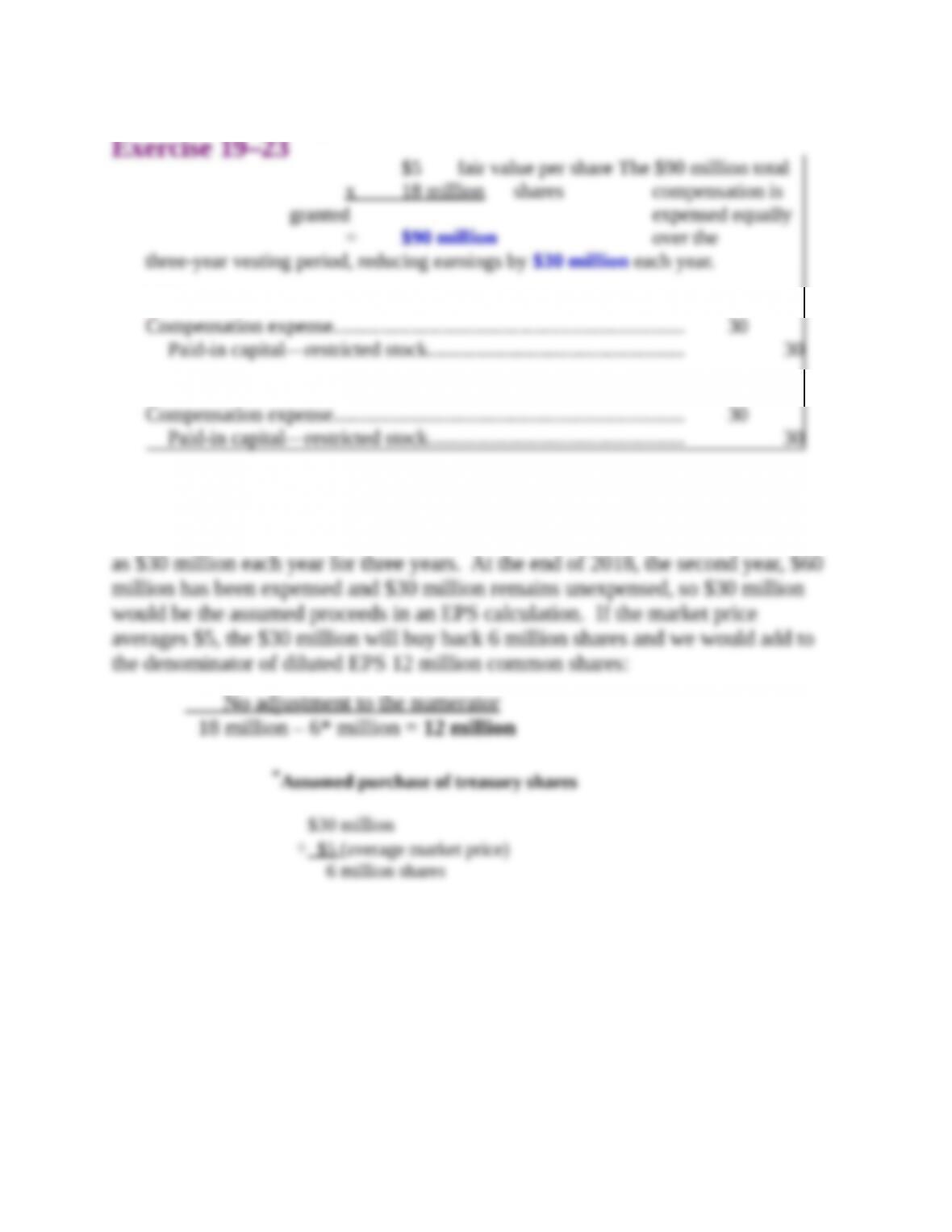
The total compensation for the award is $90 million ($5 market price per share x
18 million shares). Because the stock award vests over three years, it is expensed
(amounts in millions, except per share amounts)
Exercise 19–24
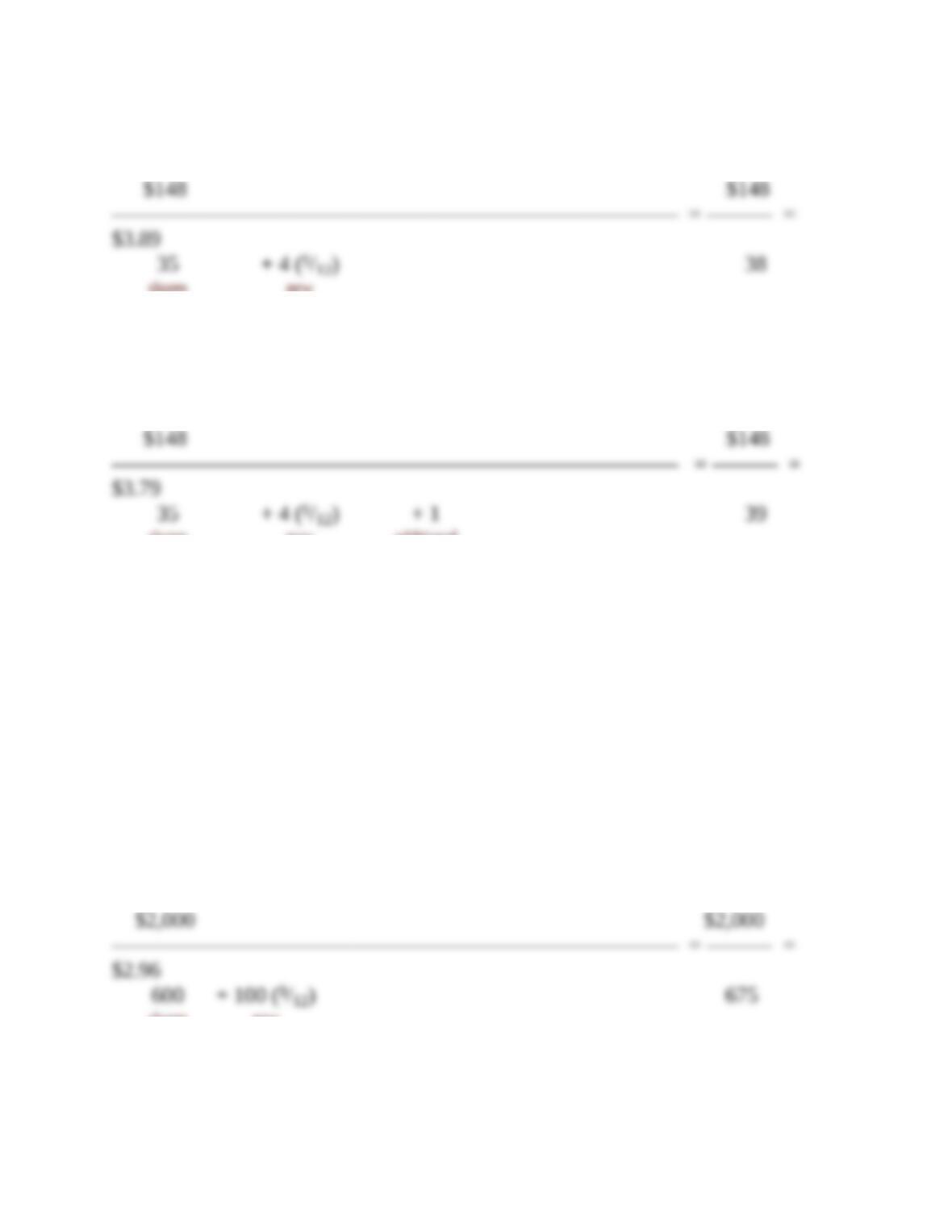
Basic EPS
net
income
shares new
at Jan. 1 shares
Diluted EPS
net
income
shares new additional
at Jan. 1 shares shares
Because the conditions are met for issuing 1 million shares, those shares are
assumed issued for diluted EPS. Conditions for the other 1 million shares are not
yet met, so as they are ignored.
(amounts in thousands, except per share amounts)
Basic EPS
net
income
shares new
at Jan. 1 shares
Exercise 19–25
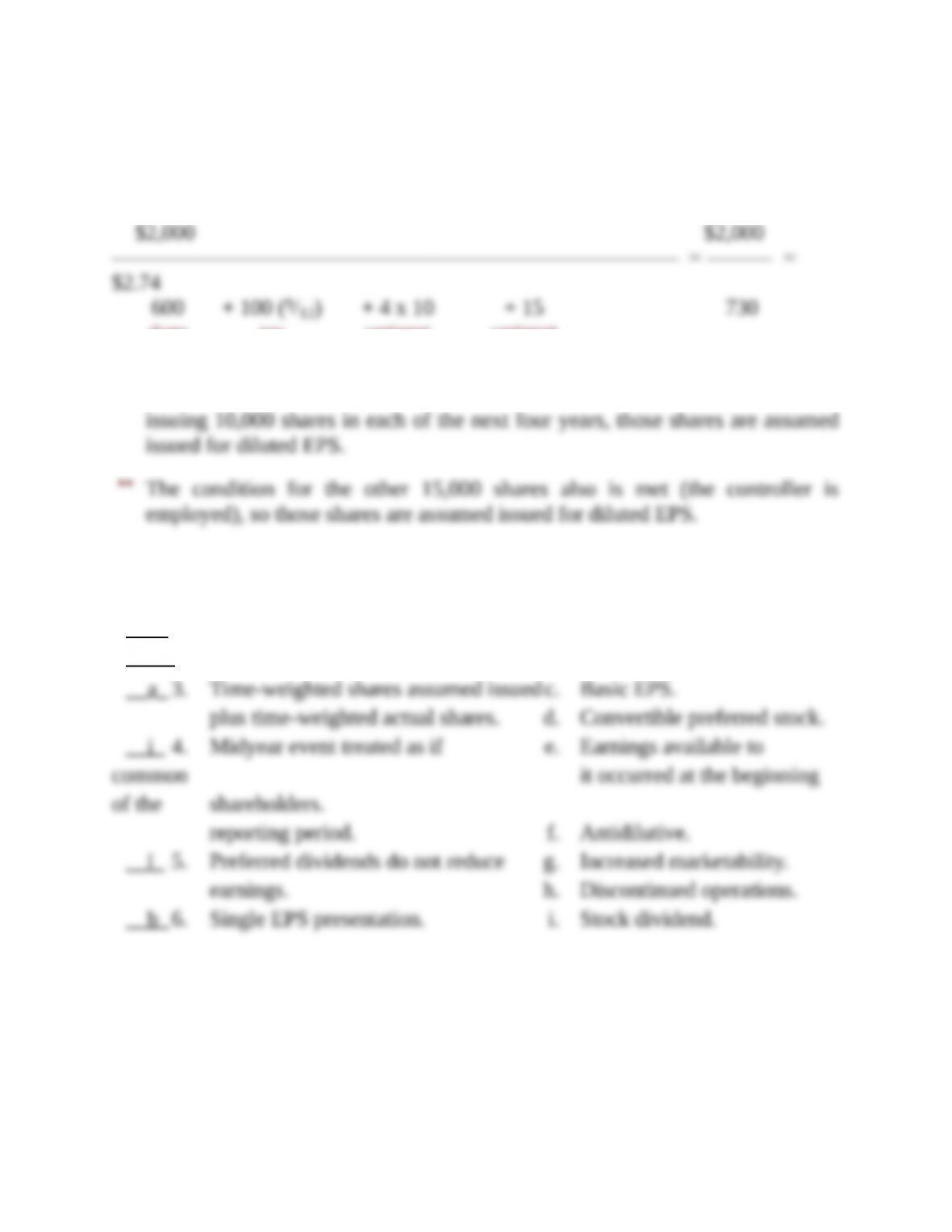
Diluted EPS
net
income
shares new contingent contingent
at Jan. 1 shares shares* shares**
*Because the conditions currently are met (i.e., market price exceeds $48) for
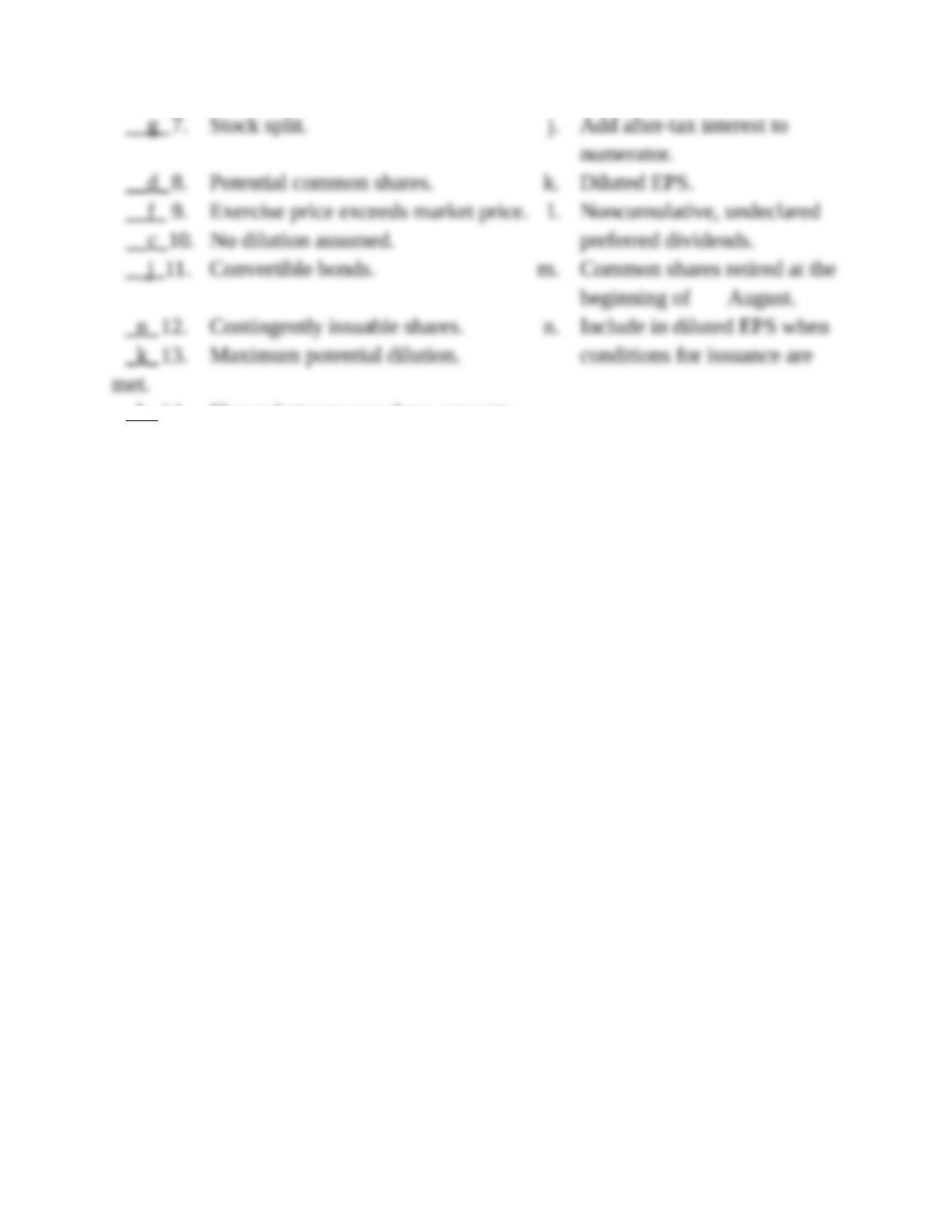
List A List B
__e_ 1. Subtract preferred dividends. a. Options exercised.
__m_2. Time-weighted by 5/12. b. Simple capital structure.
Exercise 19–26
_h_14. Shown between per share amounts
for net income and for income from
continuing operations.
Exercise 19–27
Requirement 1
The FASB Accounting Standards Codification® represents the single source of
Requirement 2
For the most recent year for which an income statement is provided, both of the
following:
1 The number and weighted-average exercise prices (or conversion ratios) for
each of the following groups of share options:
Exercise 19–28
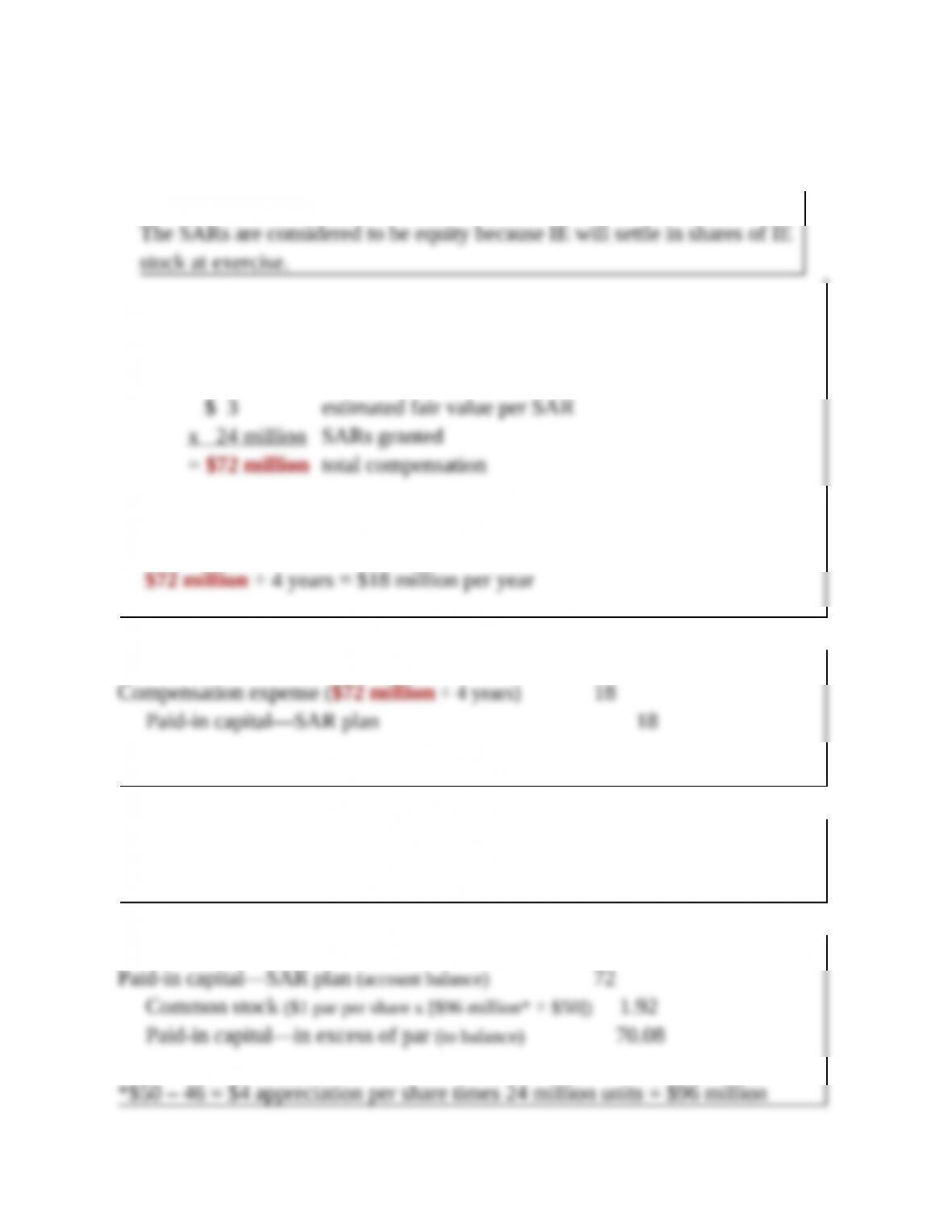
The FASB Accounting Standards Codification® represents the single source of
authoritative U.S. generally accepted accounting principles. The specific citation
for each of the following items is:
1. Stock options:
2. The measurement date for share-based payments classified as liabilities:
3. The formula to calculate diluted earnings per share.
4. The way stock dividends or stock splits in the current year affect the
presentation of EPS on the income statement.
Exercise 19–29
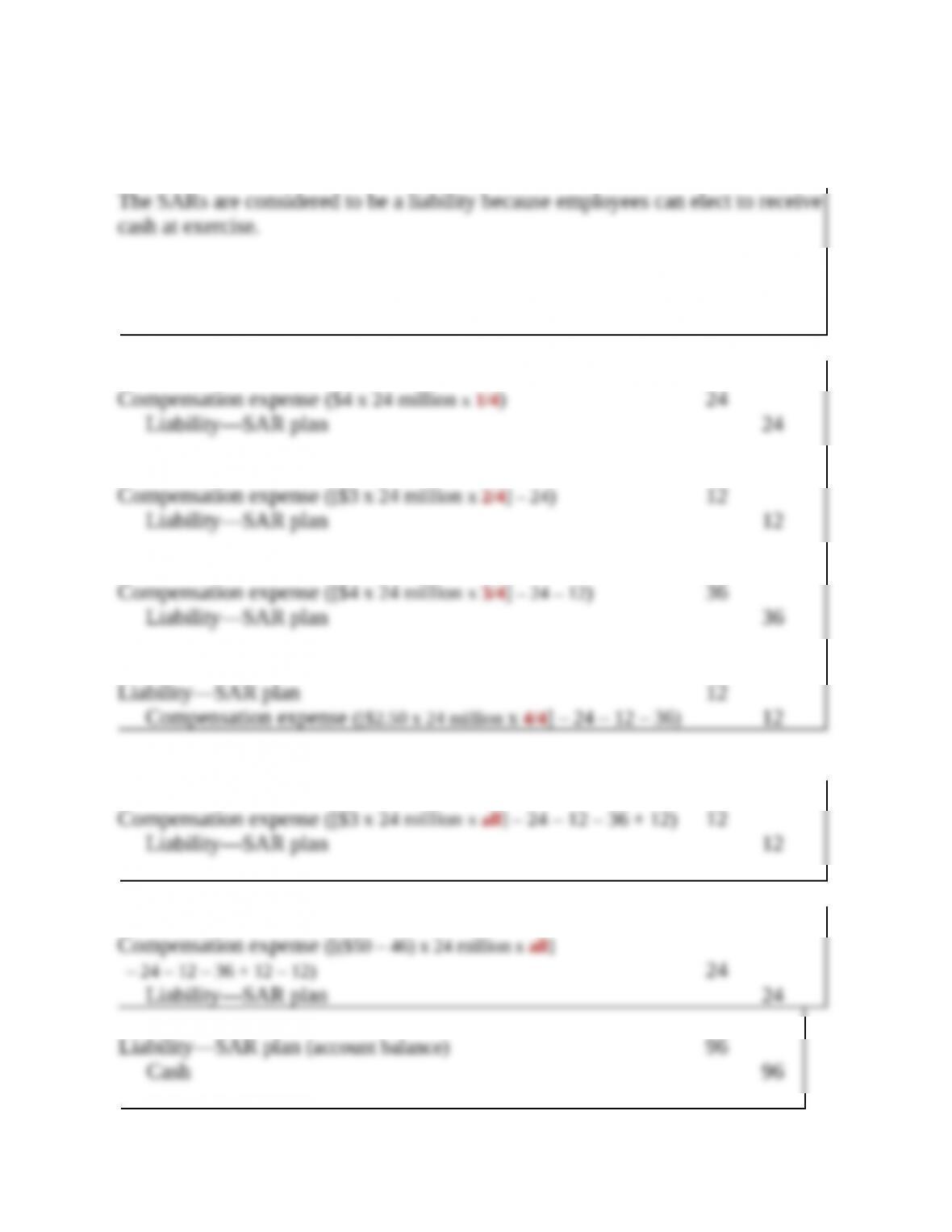
Requirement 1
January 1, 2018
No entry
Calculate total compensation expense:
The total compensation is allocated to expense over the four-year service
(vesting) period: 2018 – 2021
Requirement 2
December 31, 2018, 2019, 2020, 2021 ($ in millions)
Requirement 3
The total compensation is measured once — at the grant date — and is not
re-measured subsequently.
Requirement 4
June 6, 2023
Exercise 19–30
Requirement 1
January 1, 2018
No entry
Requirement 2
December 31, 2018 ($ in millions)
December 31, 2019
December 31, 2020
December 31, 2021
Requirement 3
December 31, 2022
Requirement 4
June 6, 2023
Exercise 19–31
Requirement 1
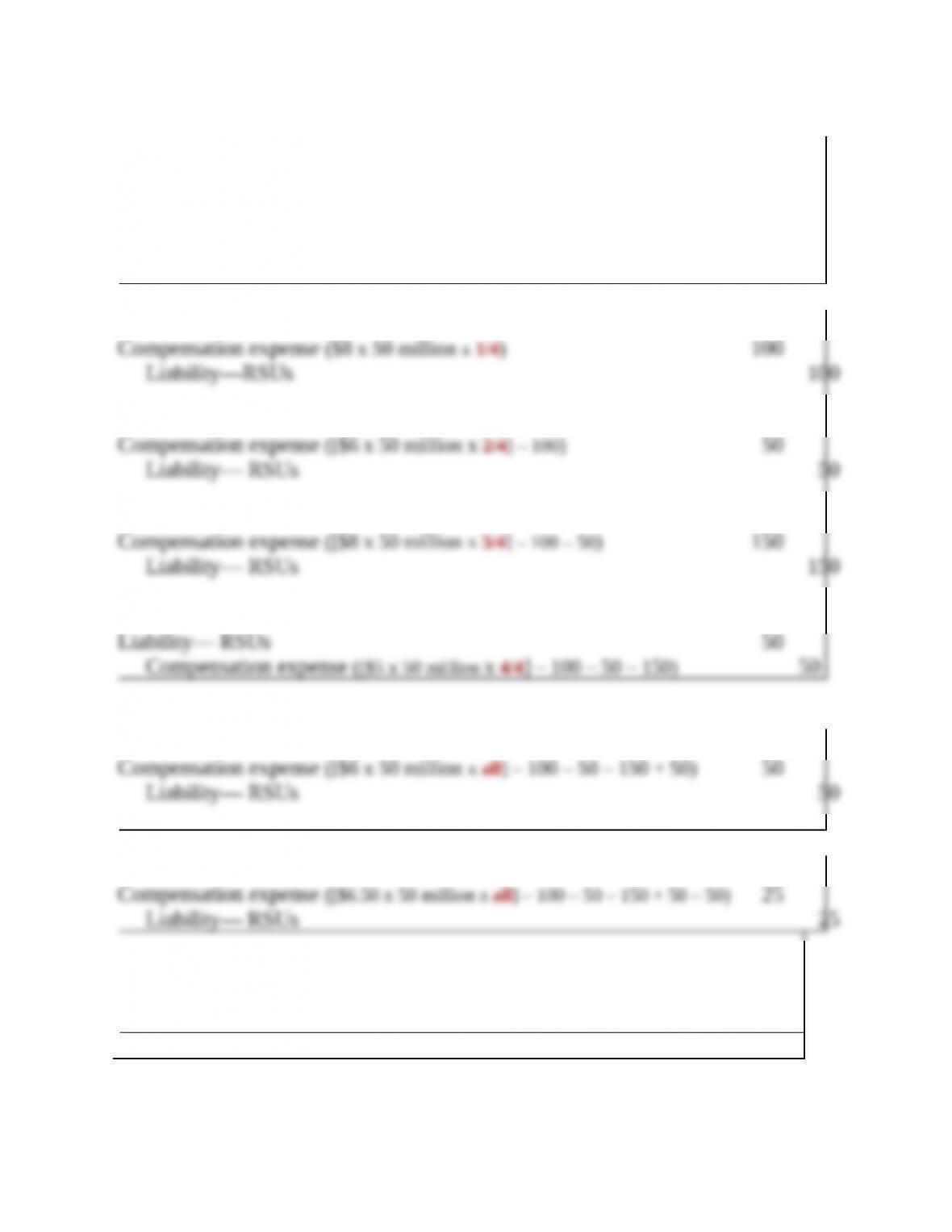
The RSUs are considered to be a liability because employees can elect to receive
cash at exercise.
January 1, 2018
No entry
Requirement 2
December 31, 2018 ($ in millions)
December 31, 2019
December 31, 2020
December 31, 2021
Requirement 3
December 31, 2022
Requirement 4
June 6, 2023
Liability— RSUs (account balance) 325
Cash
25
Problem 19–1
PROBLEMS
Requirement 1
Requirement 2
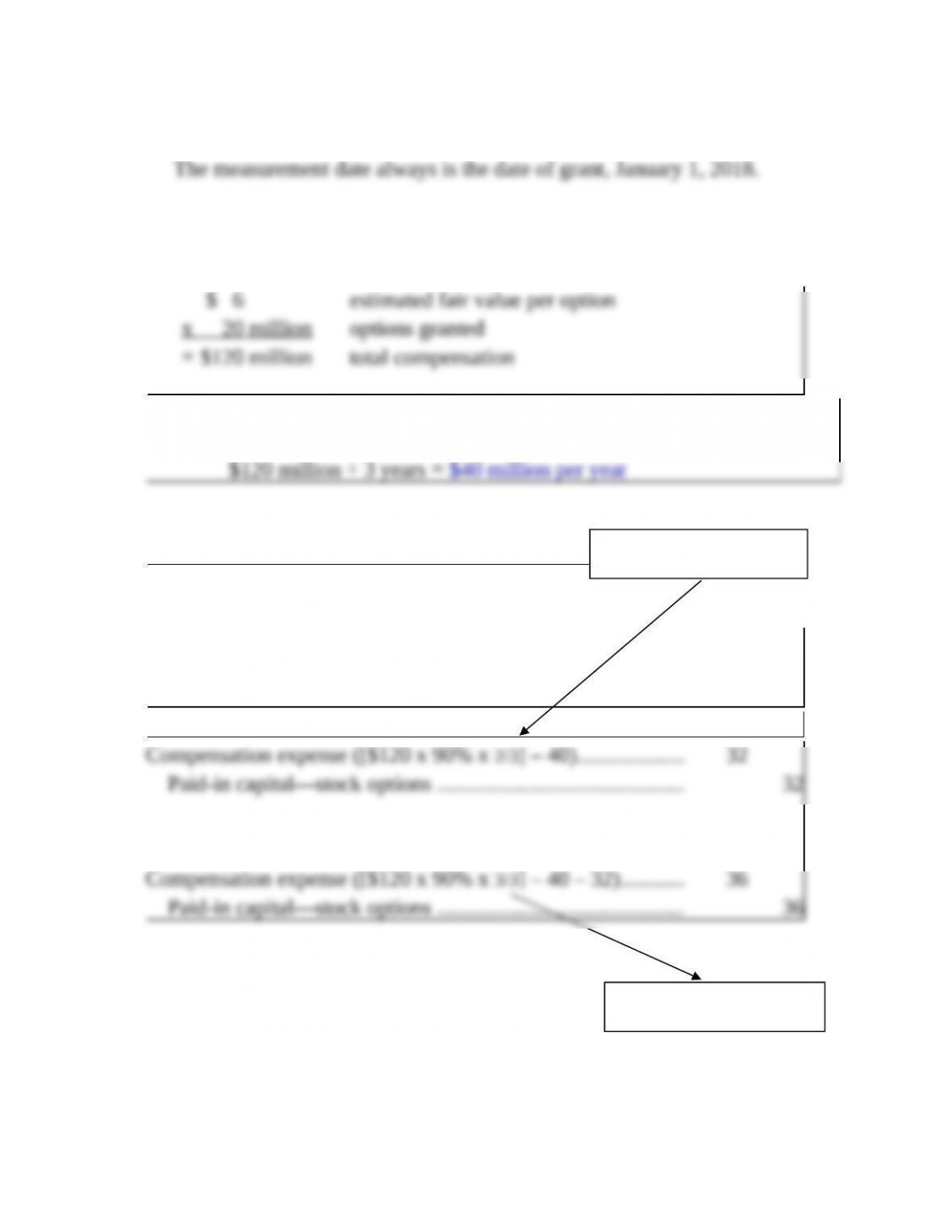
The total compensation is to be allocated to expense over the three-year service
(vesting) period: 2018–2020
Requirement 3
Ensor should adjust the cumulative amount of compensation expense
recorded to date in the year the forfeiture occurs.
($ in millions)
2019
2020
2 years of the 3-year vesting
period have passed
All of the 3-year vesting
period has passed
Problem 19–1 (concluded)
Requirement 4
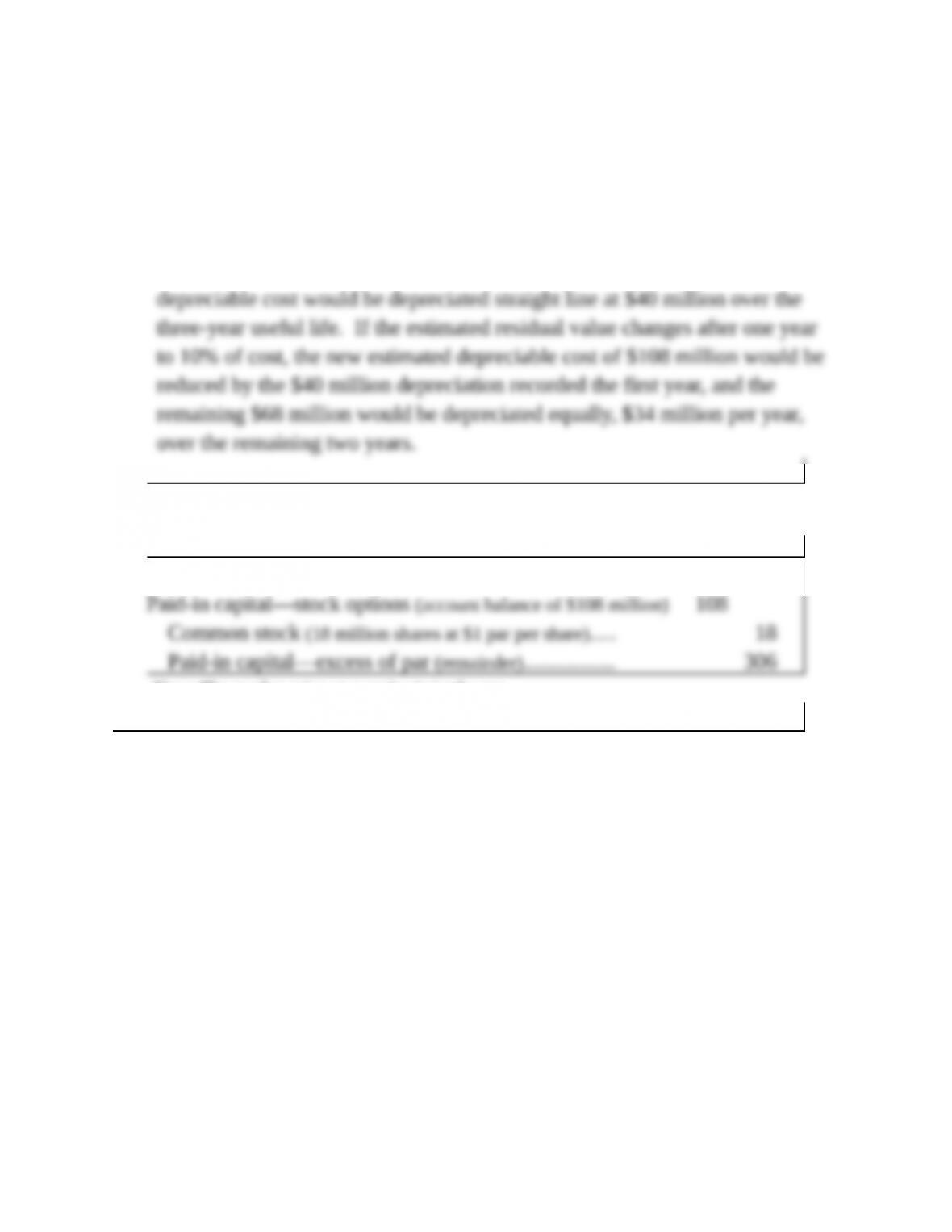
This approach is contrary to the usual way companies account for changes in
estimates. For instance, assume a company acquires a three-year depreciable
asset having no estimated residual value for $120 million. The $120 million
Requirement 5
($ in millions)
Cash ($15 x 80% = $12 exercise price x 18 million shares).... 216
Note: The market price at exercise is irrelevant.