Real World Case 19–7
Requirement 1
The note indicates that Best Buy does not include potentially dilutive shares of
common stock when calculating EPS for the twelve months ended March 3, 2012.
Requirement 2
Best Buy’s diluted earnings per share assumes the conversion of the
company’s previously outstanding convertible bonds into 8.8 million shares
The actual conversion would cause an actual increase in shares when the
conversion occurred. These would be time-weighted so the denominator would
We still would assume conversion for the period before actual conversion
because they were potentially dilutive during that period. The 8.8 million shares
Case 19–7 (concluded)
Requirement 3
Best Buy does not include potentially dilutive shares when calculating EPS
for the twelve months ended March 3, 2012. Whenever a company reports a net
loss, as Best Buy did, it reports a loss per share. In that situation, stock options or
? 366.3 = $3.36, or
$1,231 366.3 = $3.36.
If Best Buy had 40 million common equivalent shares and included them in
Requirement 1
When calculating basic earnings per share, the
numerator in the computation is the earnings available to common shareholders.
Requirement 2
When calculating basic earnings per share, the denominator in the
computation is the weighted-average number of common shares outstanding during
Analysis Case 19–8
Requirement 3
When calculating diluted earnings per share, the numerator in the computation
is the earnings available to common shareholders. Proactive will not reduce net
income by dividends payable to preferred shareholders because it will treat the
Case 19–8 (continued)
Requirement 4
When calculating diluted earnings per share, the denominator in the
computation is the weighted-average number of common shares outstanding during
We begin by determining the weighted-average of the number of common
shares outstanding during 2018, the 8 million shares outstanding at January l, 2018,
plus a portion of the shares sold. The 3 million common shares issued during 2018
must be included in computing the weighted-average number of shares
For diluted EPS, two adjustments are needed to the denominator. First, we
treat the convertible preferred stock as if the preferred shares were converted and 4
Second, we treat the stock options outstanding under the employee stock
option plan as having been exercised. The number of common shares represented
The weighted-average number of shares outstanding for 2018 includes the

Case 19–8 (concluded)
The options outstanding for only part of the reporting period are included in
the denominator on a time-weighted basis. For the 1.5 million options granted
during the year, the denominator would include the appropriate incremental shares
(determined by the treasury stock method) times the appropriate time-weighting
Analysis Case 19–9
Requirement 1
Earnings per share is a way to summarize the performance of business
enterprises into a single number. It is simply earnings expressed on a per share
Requirement 2
When calculating earnings per share, shares outstanding prior to a stock split
(or stock dividend) are retroactively restated to reflect the increase in shares.
That is, it is treated as if the split occurred at the beginning of the year. EPS is
When reported again for comparison purposes in the comparative income
Requirement 3
If the number of shares changes, it’s necessary to find the weighted-average
of the shares outstanding during the period the earnings were generated. If
Although net income declined during the period, a
combination of events caused EPS to increase in
spite of declining profits. Specifically, retiring the preferred shares increased
earnings available to common shareholders; retiring common shares and retiring
convertible debt each decreased the weighted-average number of common shares.
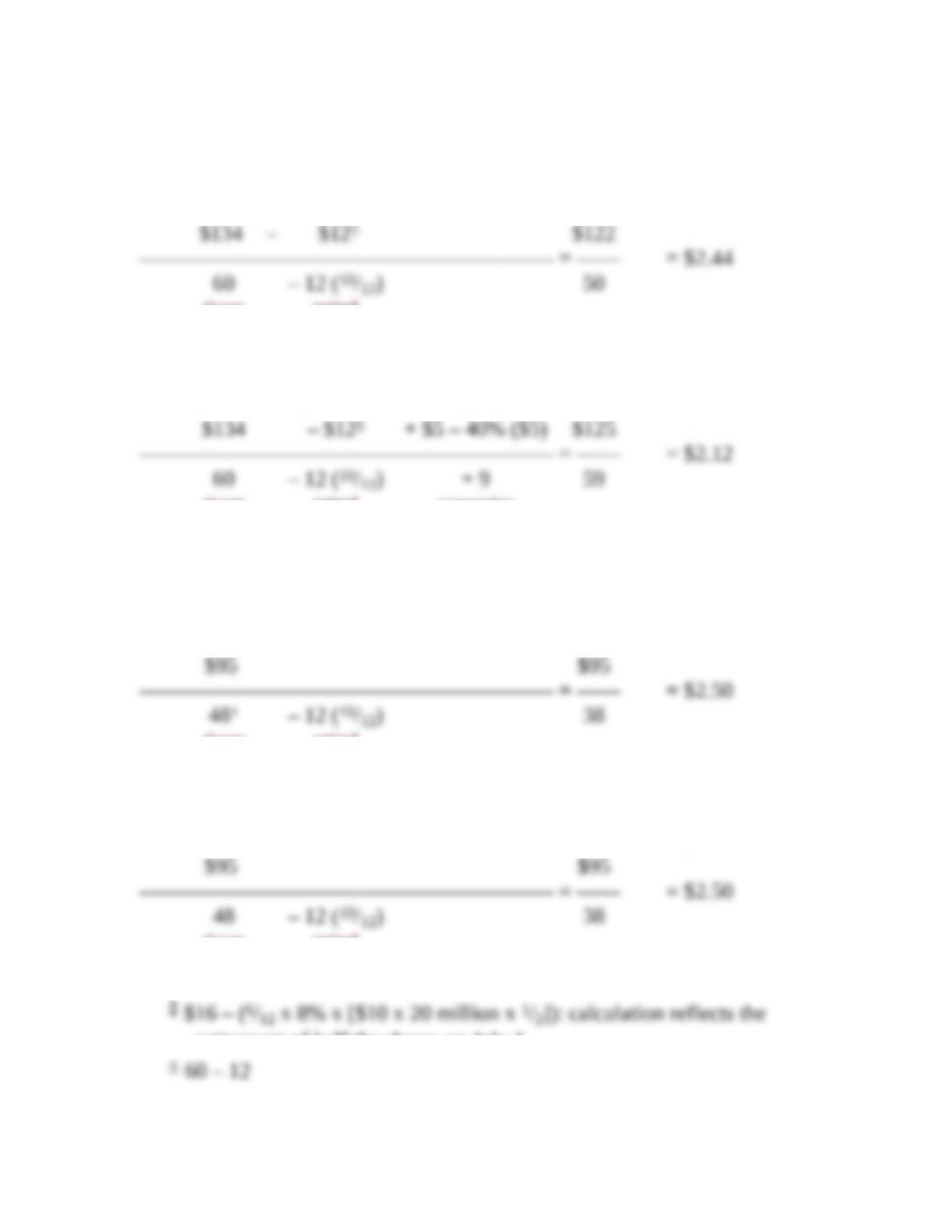
The following calculations show the effect of these events:
Judgment Case 19–10
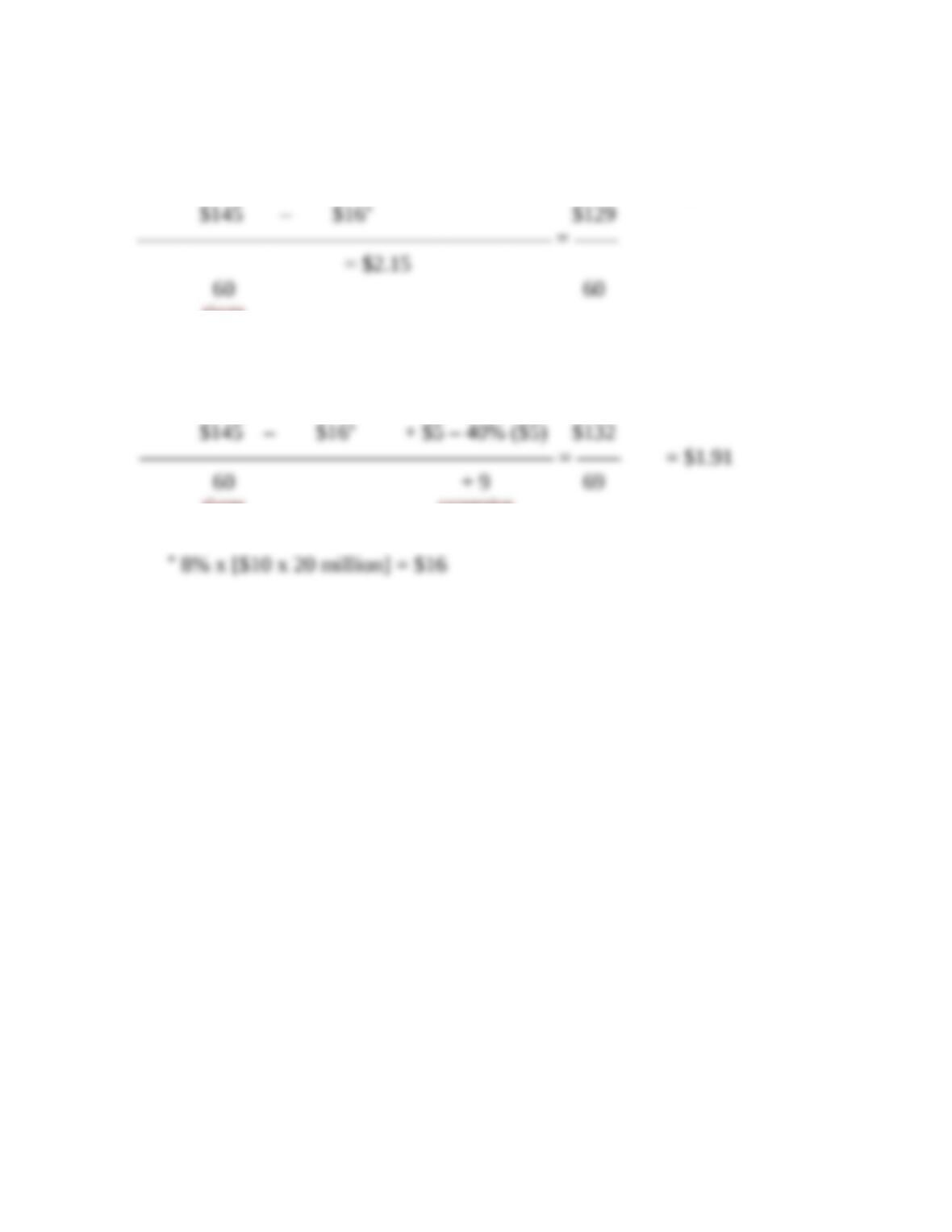
(amounts in millions, except per share amount)
2016
net preferred Basic
income dividends EPS
shares
at Jan. 1
net preferred after-tax Diluted
income dividends interest savings EPS
shares conversion
at Jan. 1 of bonds
Case 19–10 (concluded)
2017
net preferred Basic
income dividends EPS
shares retired
at Jan. 1 shares
net preferred after-tax Diluted
income dividends interest savings EPS
shares retired conversion
at Jan. 1 shares of bonds
2018
net Basic
income EPS
shares retired
at Jan. 1 shares
net Diluted
income EPS
shares retired
at Jan. 1 shares
retirement of half the shares on July 1

Communication Case 19–11
Suggested Grading Concepts and Grading Scheme:
Content (80%)
60 Convertible securities are included in the computation.
Of diluted earnings per share.
By assuming they were converted, the “if-
converted” method, as it’s called.
The denominator of the EPS fraction is increased by the
additional common shares that would have been issued upon
conversion.
The numerator is increased by the interest (after-tax) or
preferred dividends that would have been avoided.
20 Antidilutive securities.
Antidilutive means EPS increases rather than decreases.
Ignored when calculating earnings per share.
Bonus (4) Provides detail regarding the tax effect calculation
for convertible bonds.
Interest on bonds is tax deductible.
Tax expense will increase by the tax rate times interest.
80–84 points
Writing (20%)
5 Terminology and tone appropriate to the audience of
division managers.
6 Organization permits ease of understanding.
Introduction that states purpose.
Paragraphs separate main points.
9 English
Word selection.
Spelling.
Grammar.
20 points
Real World Case 19–12
Requirement 1
Other potential common shares might include stock options, restricted stock,
RSUs, convertible bonds and contingently issuable shares.
Stock options give their holders the right to purchase common stock at a specified
exercise price. The dilution that would result from their exercise should be
reflected in the calculation of diluted EPS, but not basic EPS. To include the
The proceeds for the calculation should include the amount received from the
hypothetical exercise of the options, but should also include an additional amount.
The second component of the proceeds is the total compensation from the award
that’s not yet been expensed. When options or restricted stock are fully vested, all
Case 19–12 (continued)
Similarly, we would assume convertible securities had been converted into shares.
Sometimes an agreement specifies that additional shares of common stock will be
issued, contingent upon the occurrence of some future circumstance. For instance,
shares might be issuable to shareholders of an acquired company, to certain key