Exercise 16–7
1. Liability—loss contingency
2. Liability—deferred subscription revenue
3. Prepaid rent
Exercise 16–8
($ in thousands) Situation
1 2 3 4
a. Taxable income $ 85 $215 $195 $260
b. Future deductible amounts $15 $20 $20
d. Future taxable amounts $15 $15 $30
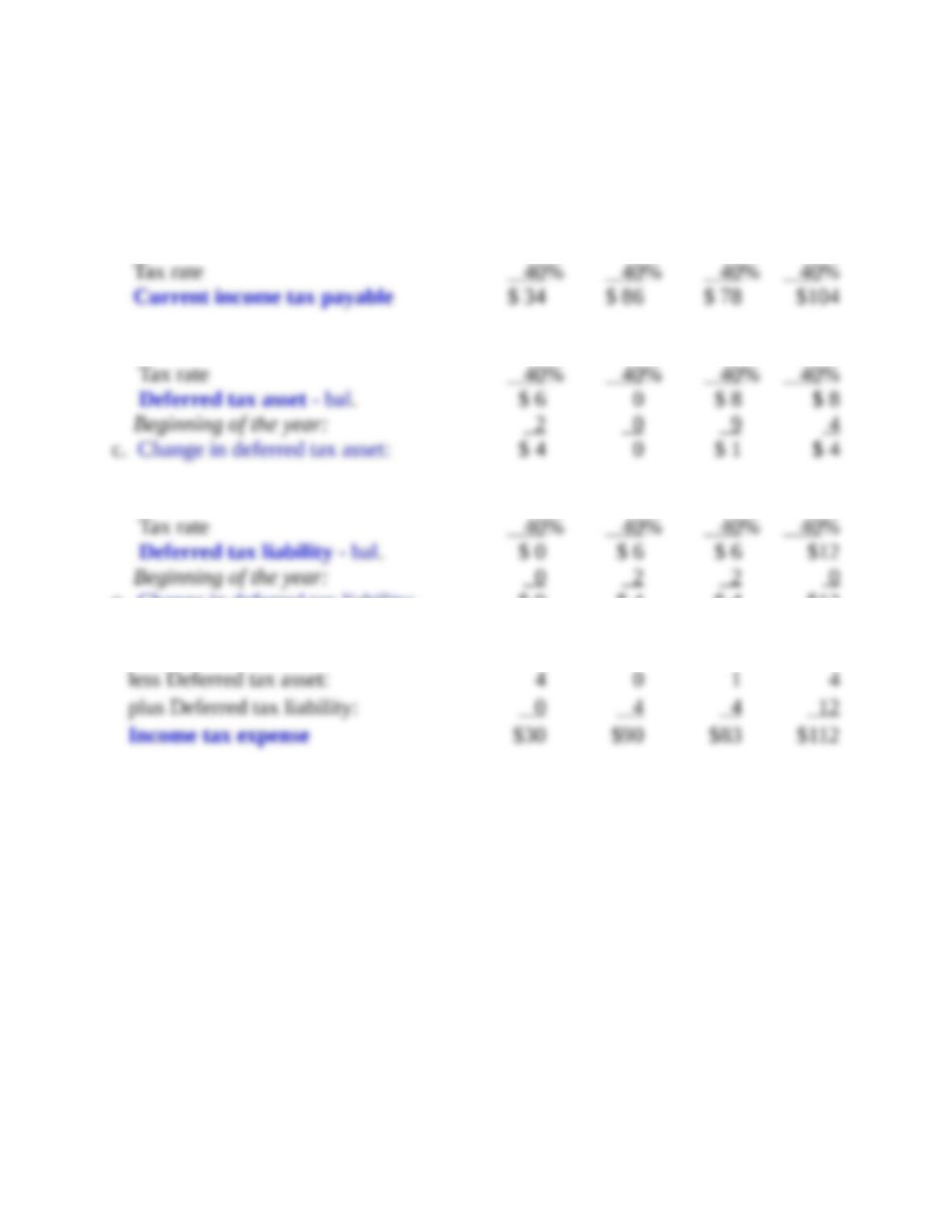
e. Change in deferred tax liability: $ 0 $ 4 $ 4 $12
f. Income tax payable currently $34 $ 86 $78 $104
Exercise 16–9
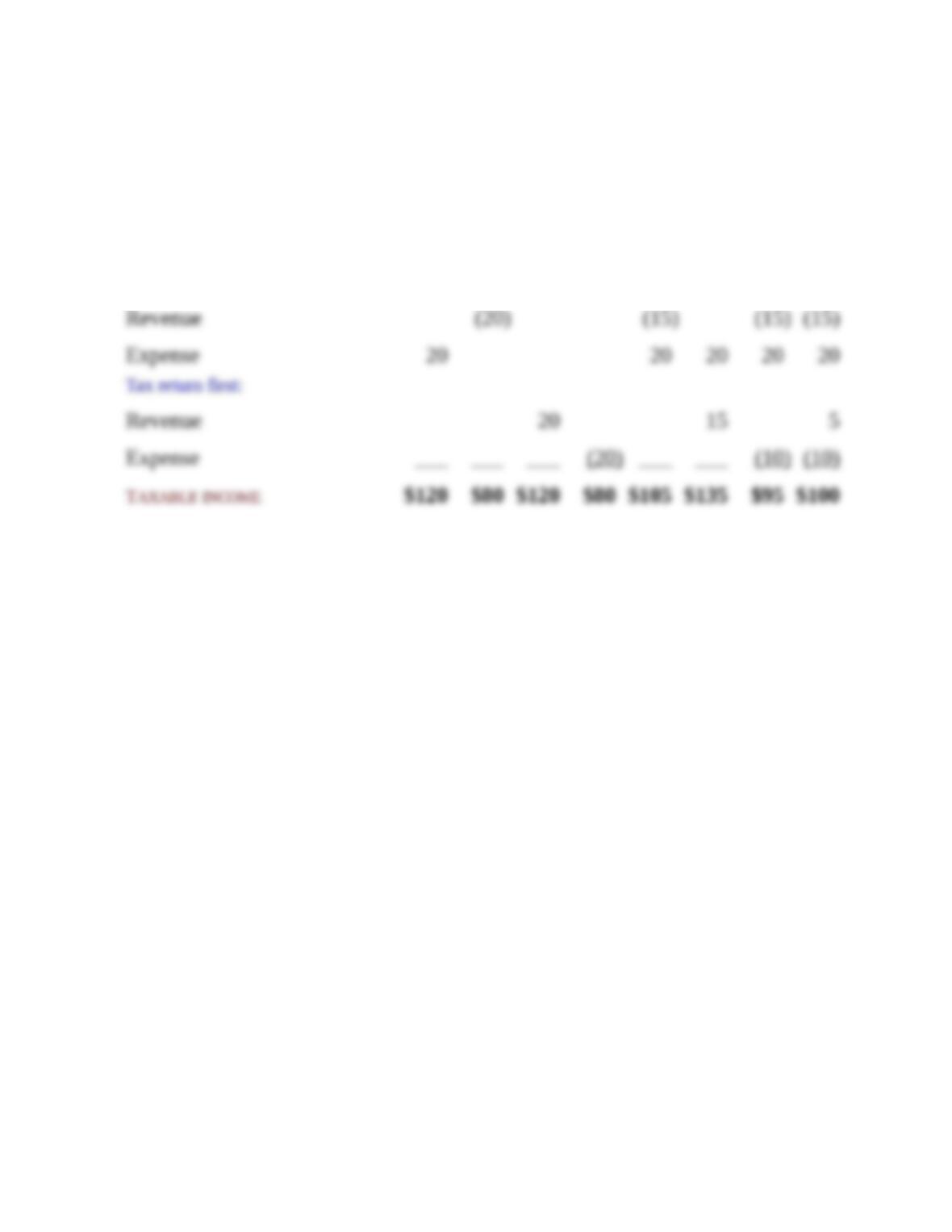
($ millions) 12345678
PRETAX ACCOUNTING INCOME $100 $100 $100 $100 $100 $100 $100 $100
Temporary differences:
Income statement first:
Exercise 16–10
Requirement 1
($ in millions)
Current Future
Year Deductible
2018 Amounts
Temporary difference: (70)
Deferred Tax Asset Deferred Tax Asset:
Journal entry at the end of 2018
Exercise 16–10 (concluded)
Requirement 2
($ in millions)
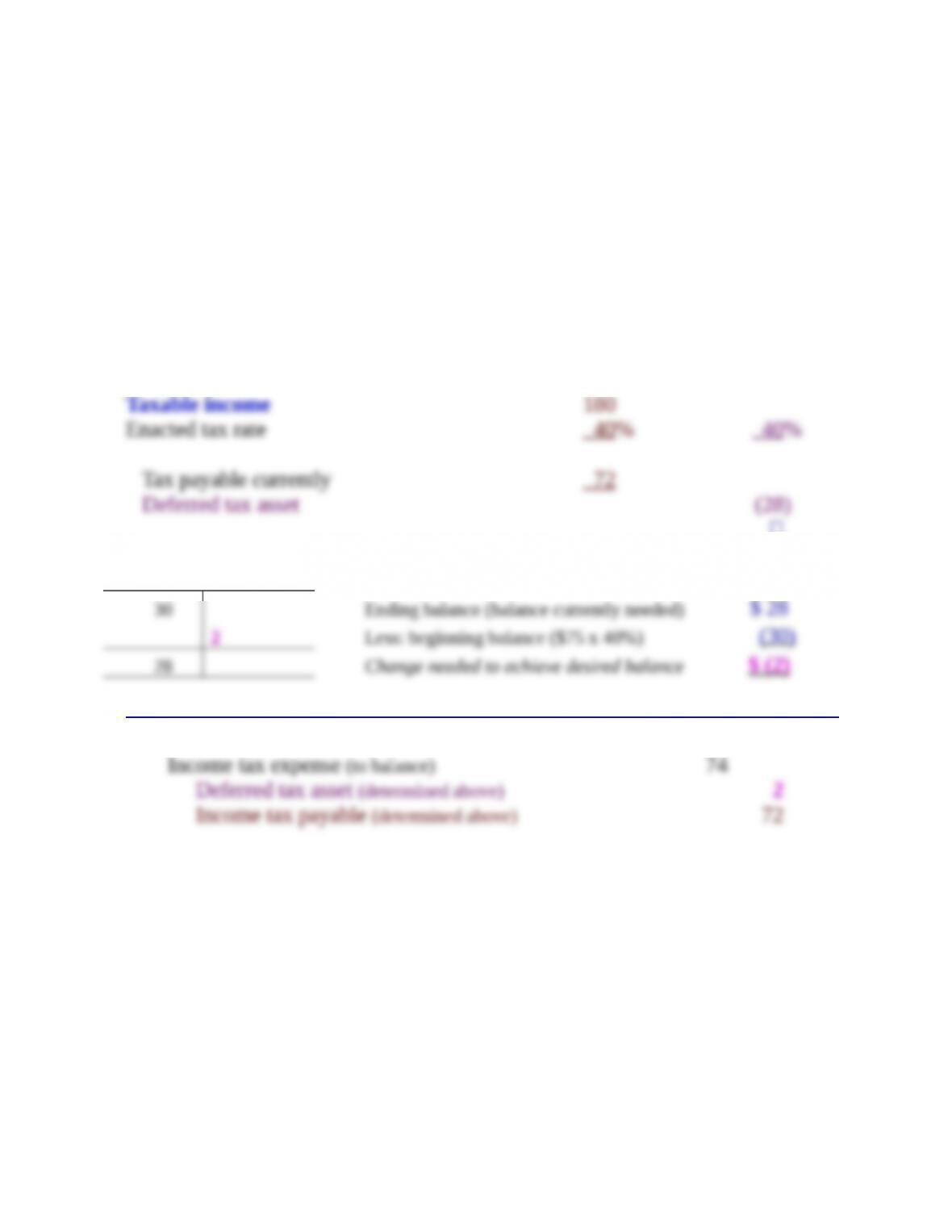
Income tax expense (to balance) 74
Deferred tax asset (determined above) 2
One-fourth of the deferred tax asset will be realized, which means
three-fourths of the deferred tax asset will not be realized, so three-fourths of
the deferred tax asset will be recognized in a valuation allowance.
Of course, these two entries can be combined, as follows:
Exercise 16–11
Requirement 1
($ in millions)
Current Future
Year Deductible
2018 Amounts
Temporary difference: (70)
Taxable income 180
Deferred Tax Asset Deferred Tax Asset:
30 Ending balance (balance currently needed) $ 28
Since it is more likely than not that the deferred tax asset will be realized, there
is no need for a valuation allowance and the account is removed.
Of course, these two entries can be combined, as follows
Exercise 16–11 (concluded)
Requirement 2
($ in millions)
Income tax expense (to balance) 74
Deferred tax asset (determined above) 2
One-fourth of the deferred tax asset will be realized, which means
three-fourths of the deferred tax asset will not be realized, so three-fourths of
Of course, these two entries can be combined, as follows:
Income tax expense (to balance) 85
Exercise 16–12
Requirement 1
The specific citation that specifies how a firm should determine whether a
Requirement 2
Specifically, the guidelines are:
740–10–30-17: All available evidence, both positive and negative, is
considered to determine whether, based on the weight of that evidence, a
valuation allowance for deferred tax assets is needed. Information about
an entity’s current financial position and its results of operations for the
Exercise 16–13
Requirement 1
($ in thousands)
Current Future
Year Taxable
2018 Amounts
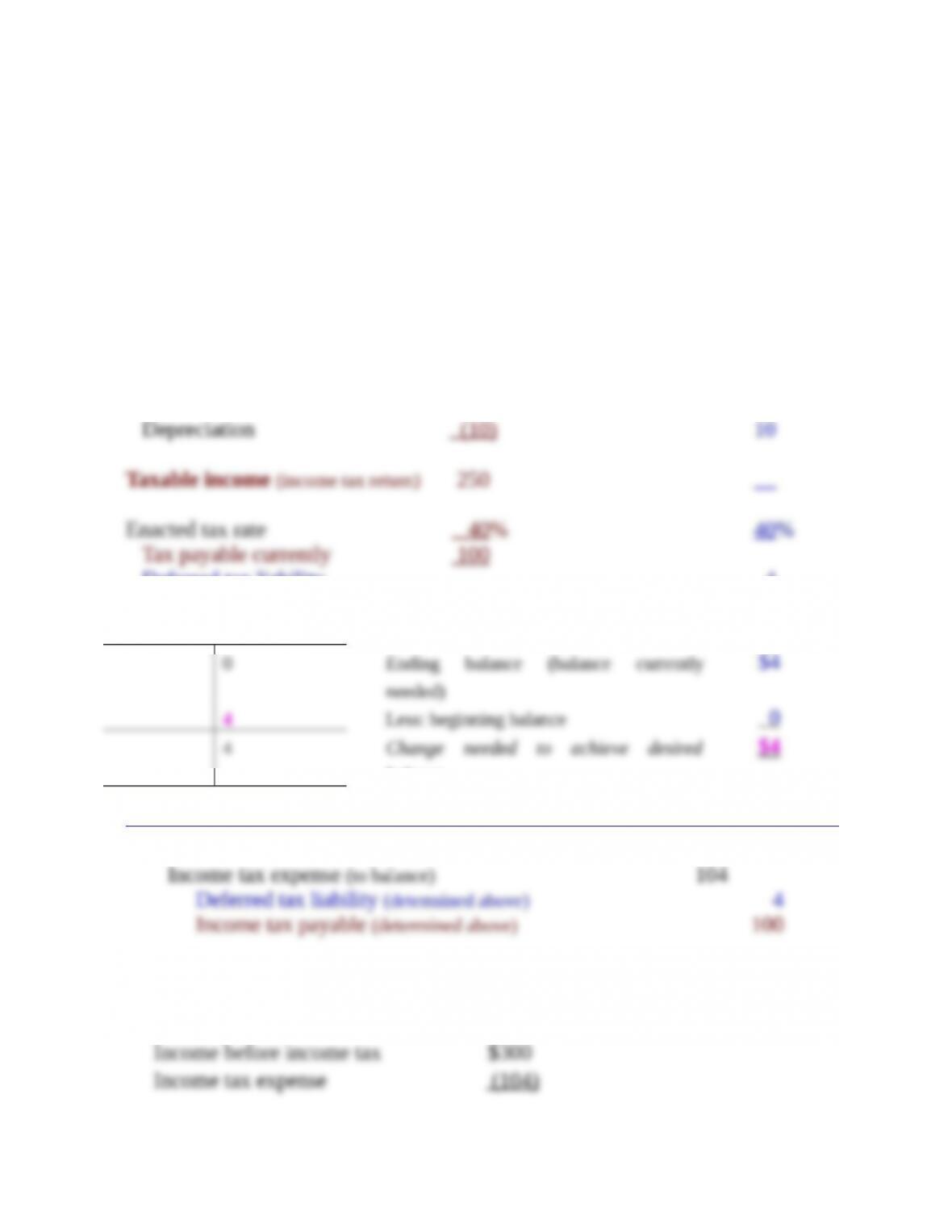
Pretax accounting income 300
Permanent difference:
Municipal bond interest (40)
Temporary difference:
Deferred tax liability 4
Deferred Tax Liability Deferred Tax Liability:
balance
Journal entry at the end of 2018
Requirement 2
($ in thousands)

Exercise 16–14
Requirement 1
($ in thousands)
Current Future Future
Year Taxable Deductible
2018 Amounts Amounts
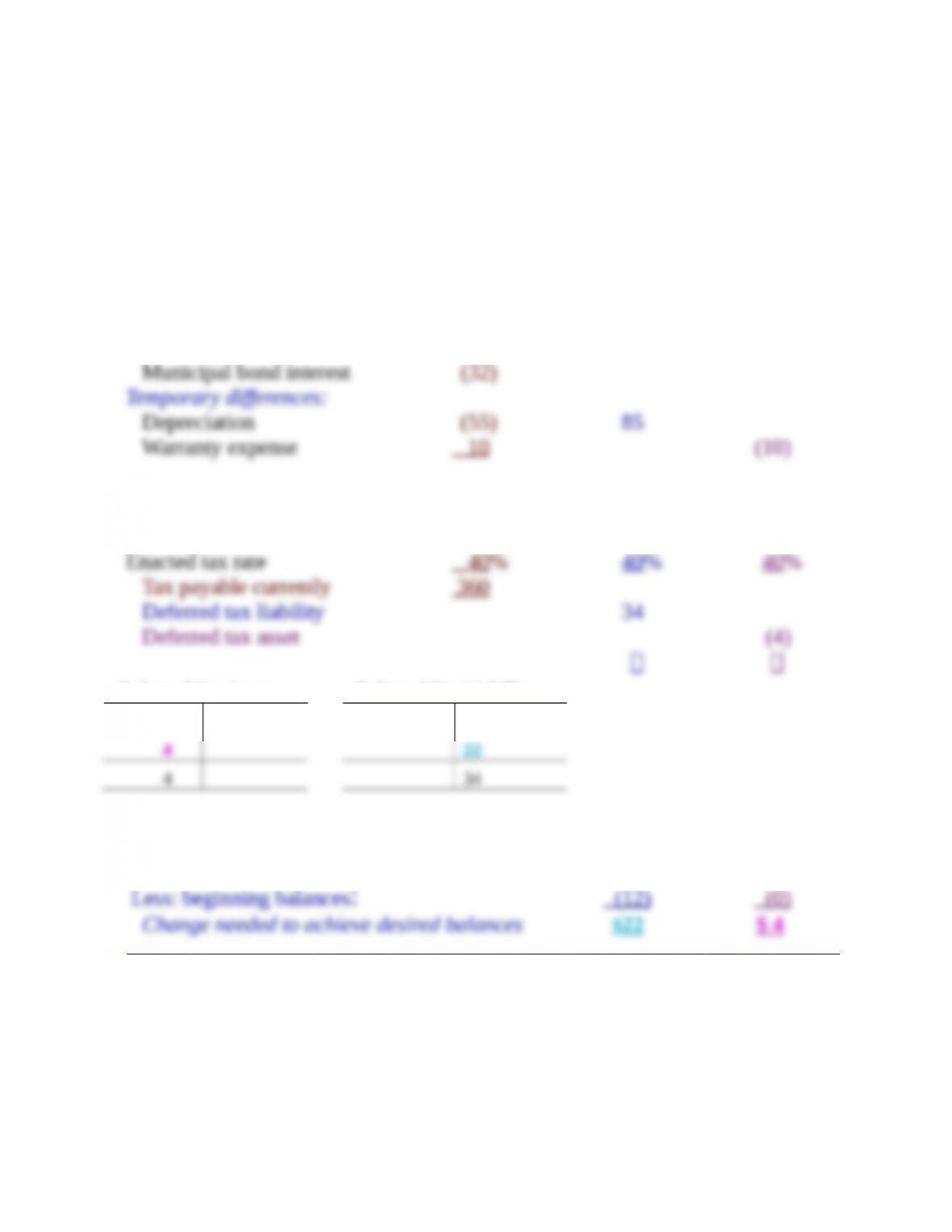
Pretax accounting income 977
Permanent difference:
Taxable income (income tax return) 900
Deferred Tax Asset Deferred Tax Liability
0 12
Deferred tax Deferred tax
liability asset
Ending balances (balances currently needed): $34 $ 4
Exercise 16–14 (concluded)
Journal entry at the end of 2018
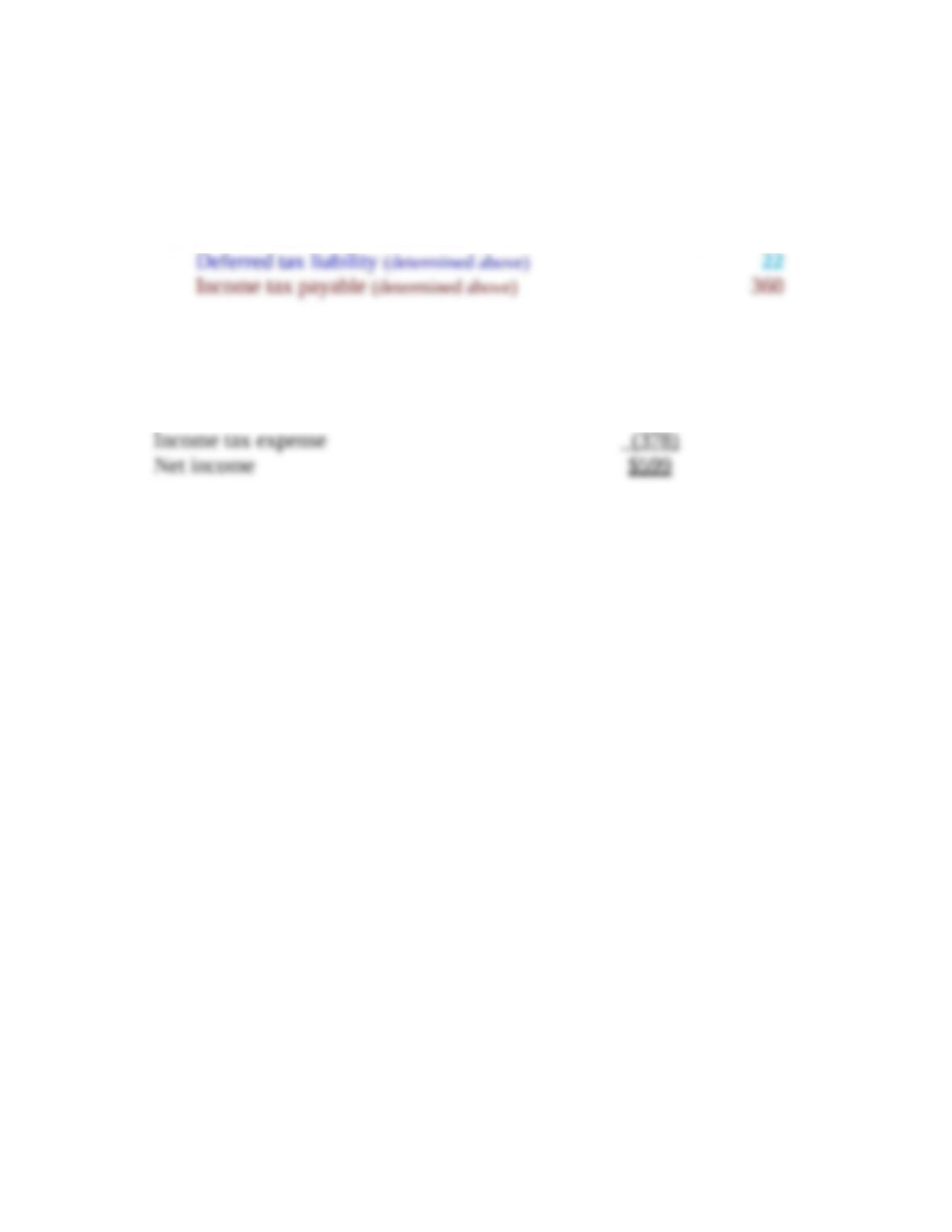
Income tax expense (to balance) 378
Deferred tax asset (determined above) 4
Requirement 2
($ in thousands)
Income before income tax $ 977
Air France–KLM Case
Requirement 1
AF reported an €11 million noncurrent deferred tax liability at December 31,
Requirement 2
This policy is not consistent with U.S. GAAP, which requires that
Requirement 3
This policy is not consistent with U.S. GAAP, which requires that all deferred
tax assets be recorded and then reduced by a valuation allowance when it is