Analysis Case 16–1
Requirement 1
Temporary differences originate in one or more years and reverse in one or
more future years. Differing depreciation methods are a common example of a
Requirement 2
Intraperiod tax allocation allocates the total income tax expense for a reporting
period among the financial statement items that gave rise to the income tax
expense. As a result, certain items should be reported net of their respective
income tax effects:
Interperiod tax allocation recognizes the tax consequences of events in the year
in which the events are recognized for financial reporting purposes. It results in
Requirement 3
Deferred tax liabilities are not reported individually, but instead combined with
deferred tax assets into a net noncurrent amount. That amount is reported as
CASES
Integrating Case 16–2
Requirement 1
Because postretirement costs aren’t tax deductible until paid to, or on behalf
of, employees, accruing compensation expense produces temporary differences
Requirement 2
Unlike most temporary differences, the temporary difference for
postretirement benefits is related to an estimated liability—postretirement benefit
Integrating Case 16–3
a. This is a correction of an error.
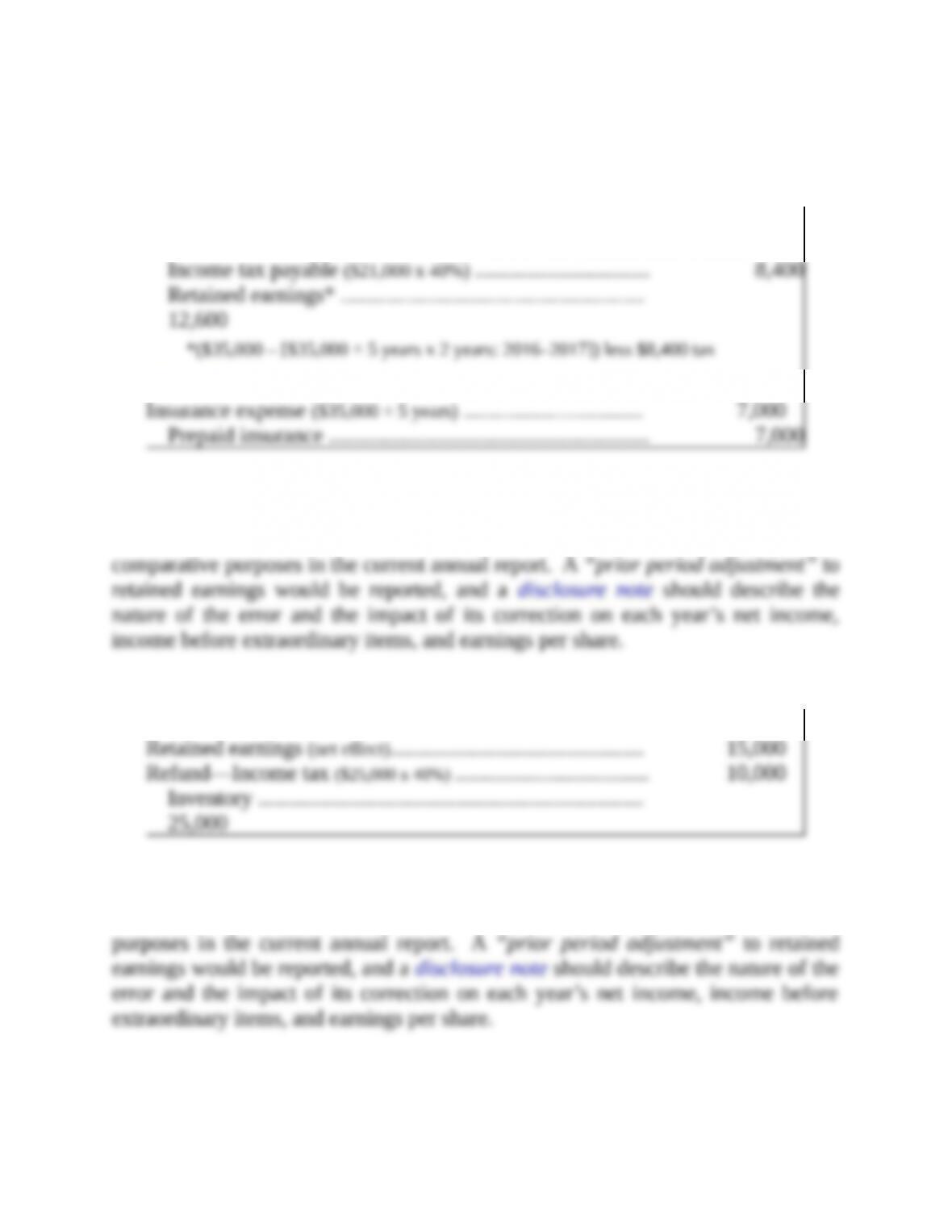
To correct the error:
Prepaid insurance ($35,000 ÷ 5 yrs x 3 yrs: 2018–2020) ………. 21,000
2018 adjusting entry:
The financial statements that were incorrect as a result of the error would be
retrospectively restated to report the prepaid insurance acquired and reflect the
correct amount of insurance expense when those statements are reported again for
b. This is a correction of an error.
To correct the error:
The financial statements that were incorrect as a result of the error would be
retrospectively restated to report the correct inventory amounts, cost of goods sold,
and retained earnings when those statements are reported again for comparative
Case 16–3 (continued)
c. This is a change in accounting principle and is reported retrospectively.
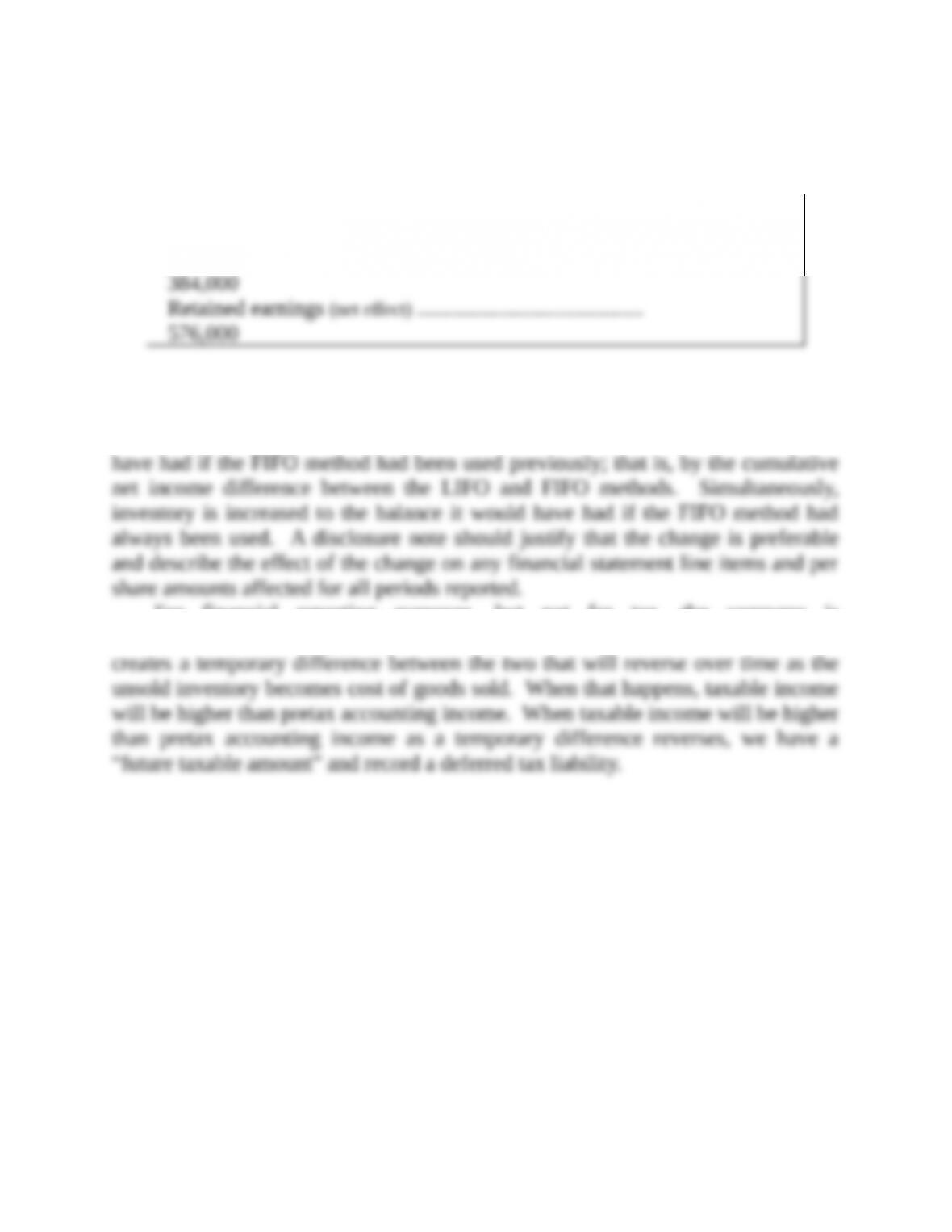
To record the change:
Inventory (given)………………………………………………………… 960,000
Deferred tax liability ($960,000 x 40%) ……………………….
Most changes in accounting principle are accounted for retrospectively. Prior
years’ financial statements are recast to reflect the use of the new accounting
method. The company should increase retained earnings to the balance it would
For financial reporting purposes, but not for tax, the company is
retrospectively increasing pretax accounting income, but not taxable income. This
Case 16–3 (continued)
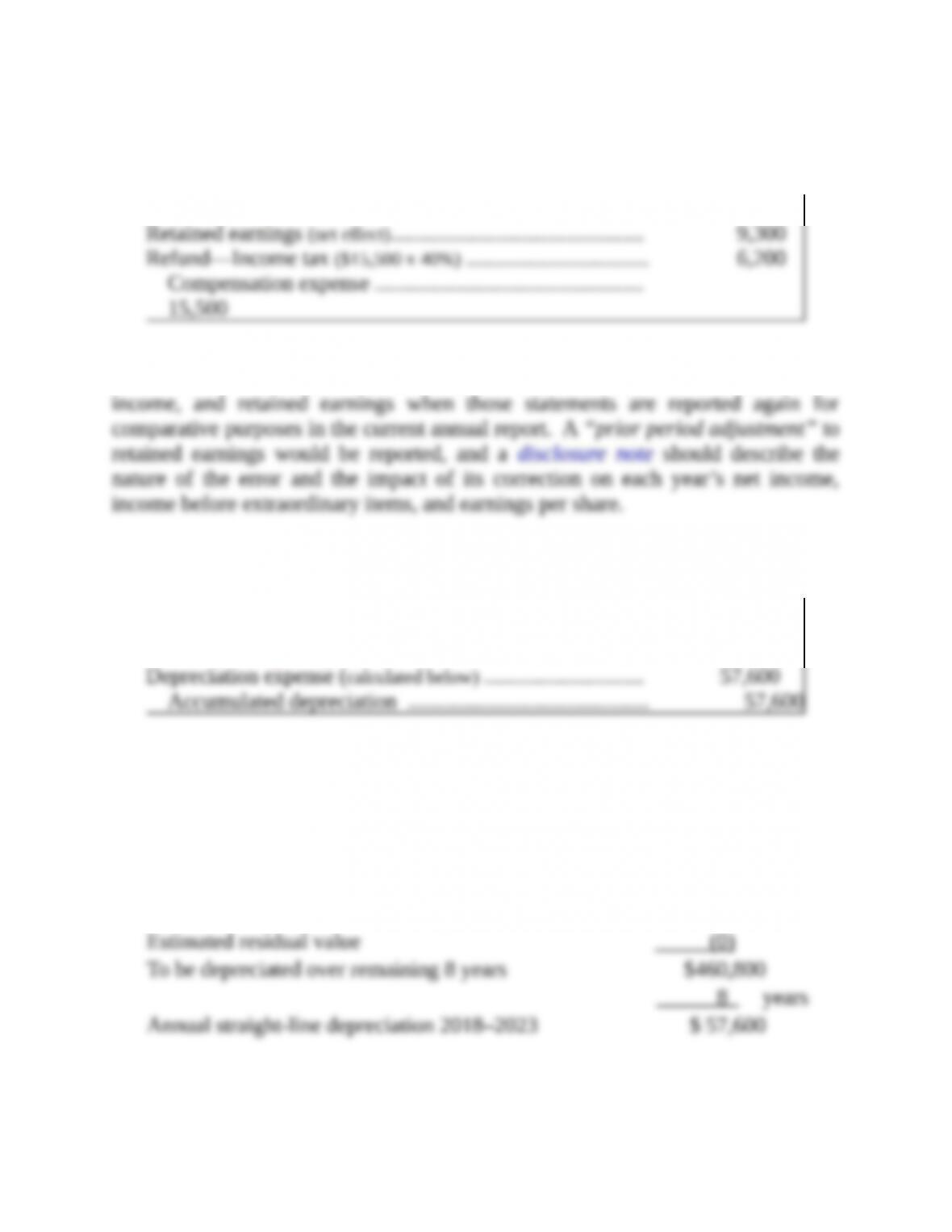
d. This is a correction of an error.
To correct the error:
The 2017 financial statements that were incorrect as a result of the error
would be retrospectively restated to report the correct compensation expense, net
e. This is a change in estimate resulting from a change in accounting principle and
is accounted for prospectively.
No entry is needed to record the change
2018 adjusting entry:
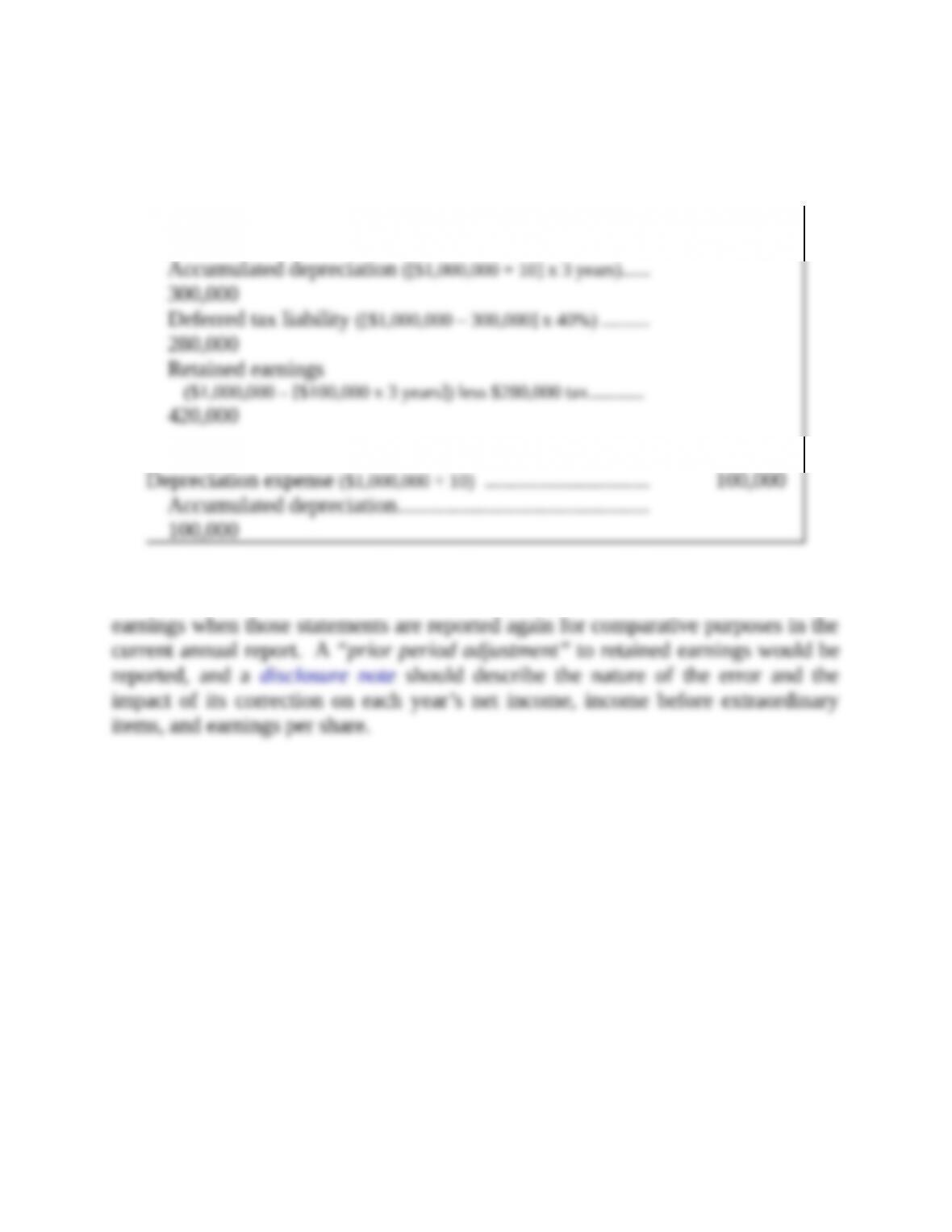
A change in depreciation method is considered a change in accounting
estimate resulting from a change in accounting principle. Accordingly,
Williams-Santana reports the change prospectively; previous financial statements
are not revised. Instead, the company simply employs the straight-line method
from now on. The undepreciated cost remaining at the time of the change is
depreciated straight-line over the remaining useful life.
Undepreciated cost, Jan. 1, 2018 (given) $460,800
Case 16–3 (concluded)
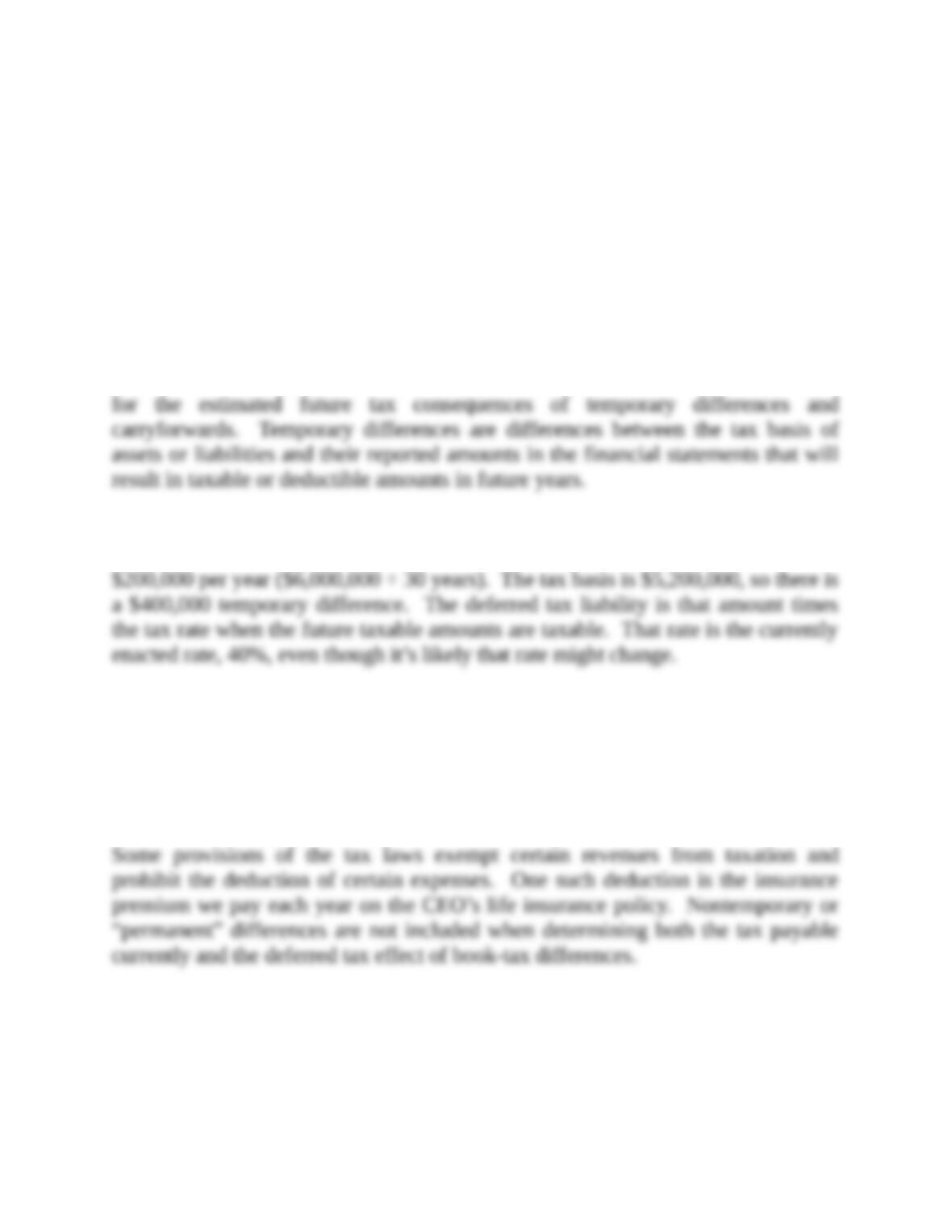
f. This is a correction of an error.
To correct the error:
Equipment (cost)………………………………………………………… 1,000,000
2018 adjusting entry:
The financial statements that were incorrect as a result of the error would be
retrospectively restated to report the correct depreciation, assets, and retained
Communication Case 16–4
To: Mr. Randy Patey
From: <your name>
Re: Accounting for income taxes
Below is a brief overview of accounting for income taxes and its application to our
situation.
The objectives of accounting for income taxes are to recognize the amount of taxes
payable (or refundable) for the current year and deferred tax liabilities and assets
The reported amount in the financial statements for our building is $5,600,000,
which is its $6,000,000 cost reduced by two years’ straight-line depreciation of
The measurement of deferred tax assets is reduced if necessary, by a valuation
allowance to reflect the net asset amount that is “more likely than not” to be
realized.
Nontemporary or “permanent” differences are caused by transactions and events
that under existing tax law will never affect taxable income or taxes payable.
Please let me know if you have any questions or concerns.
Real World Case 16–5
Requirement 1
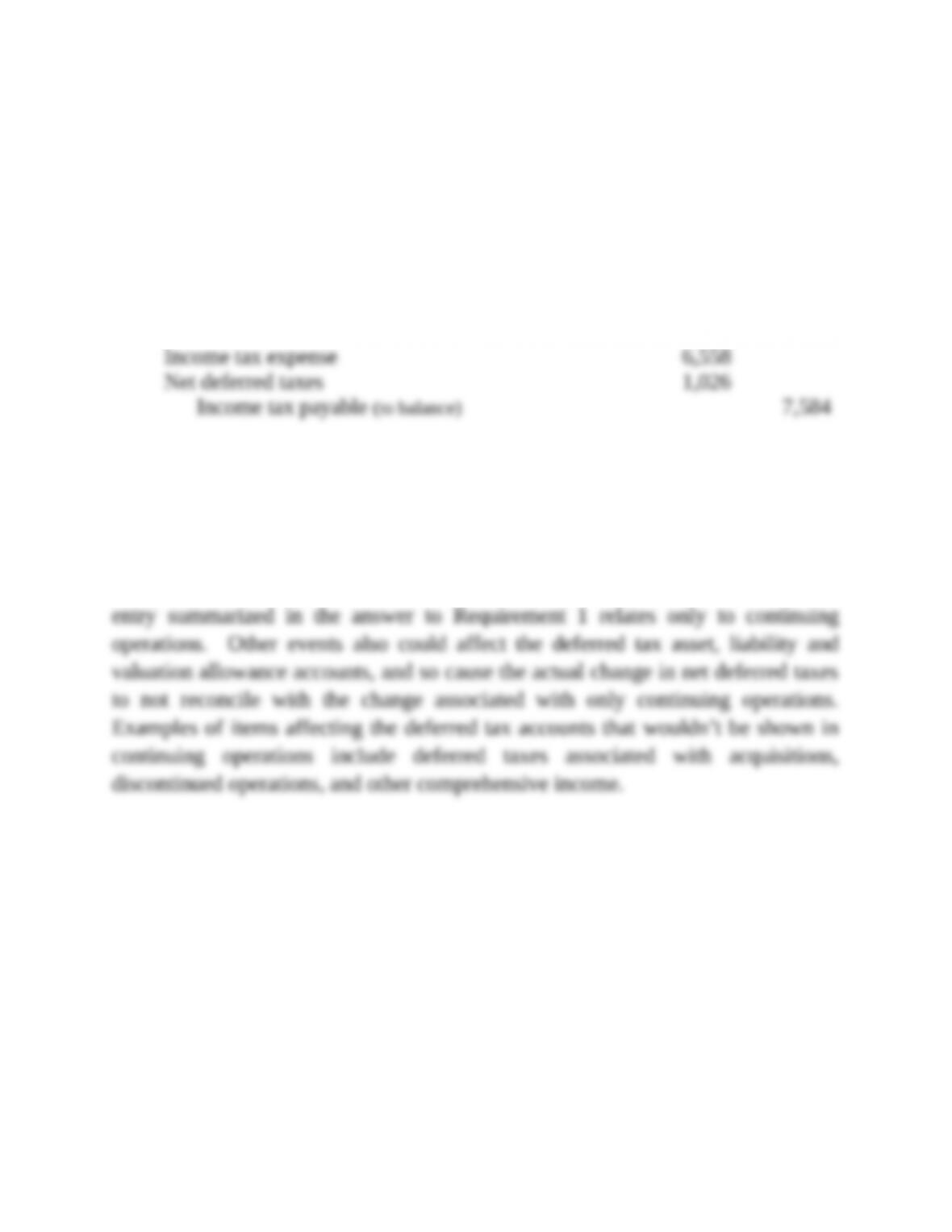
The journal entry that summarizes the entries Walmart used to record fiscal
year-end 2016 income taxes associated with continuing operations can be
reconstructed from the information provided in the note:
($ in millions)
Requirement 2
The net deferred tax liability decreased by $1,113 ($2,966 – 1,853), which
differs from the debit to net deferred taxes amount of $1,026 shown in the answer
to requirement 1. That difference can be explained by the fact that the journal
Research Case 16–6
An objective of this case is to acquaint the student with information provided
by the Treasury Department and the IRS on the Internet, and in particular the
Specific deductions are listed that are deductible from “total income” to arrive
at “taxable income.” On the 2016 Form 1120 these are items 12 (compensation of
A “net operating loss deduction” would be reported if a company reported a
Temporary differences between taxable income and pretax accounting income
in the income statement are created when the amounts for various deductions differ
Analysis Case 16–7
1. Ford shows a net deferred tax asset of $11,007 million.
2. Ford shows a valuation allowance of $1,831 million. It indicates that it is
“primarily for deferred tax assets related to our South America operations.”
3. Ford indicates that it has operating loss carryforwards of $6 billion, resulting in