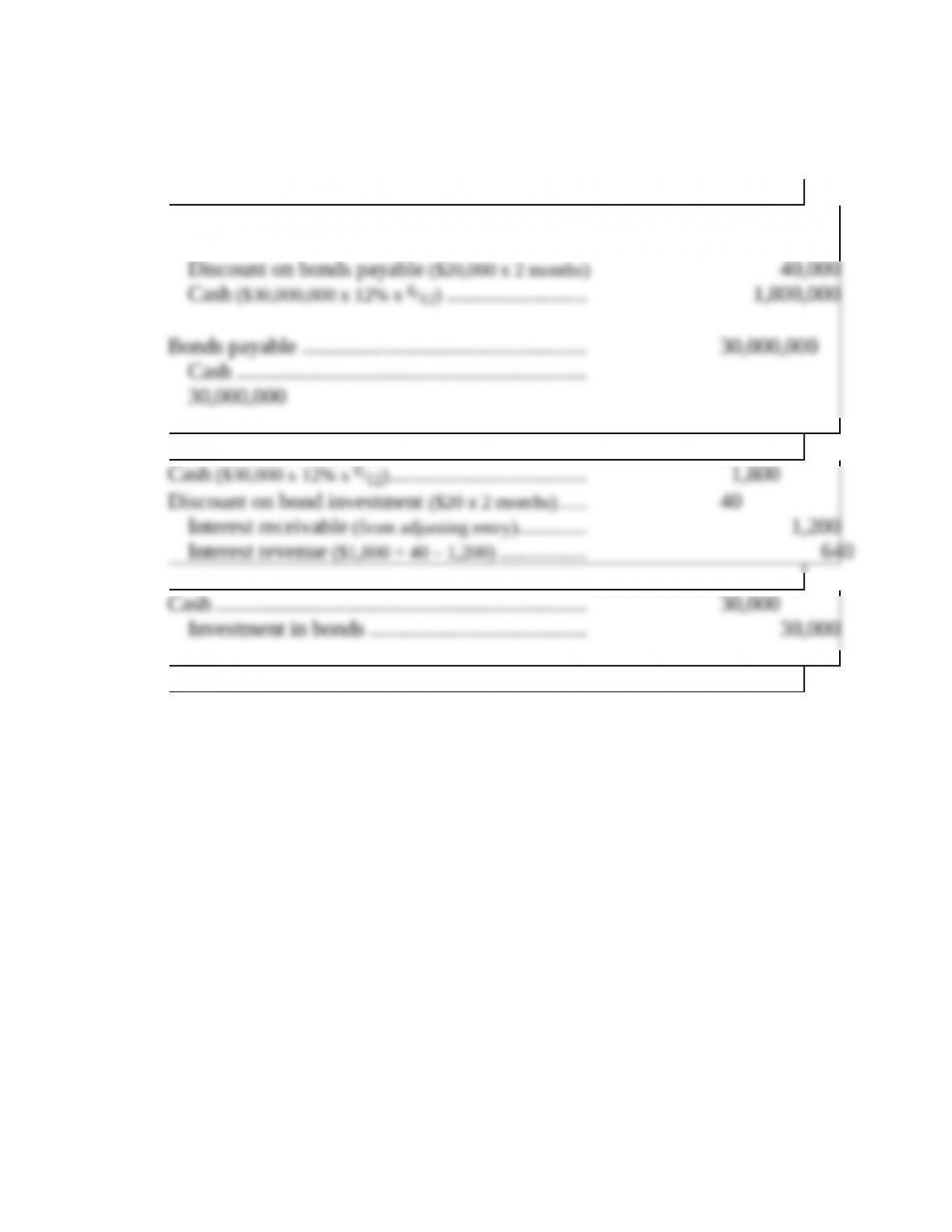
Problem 14–6 (concluded)
February 28, 2021 (Western)
Interest expense ($1,800,000 + 40,000 – 1,200,000). 640,000
Interest payable (from adjusting entry)……………….. 1,200,000
February 28, 2021 (Stillworth)
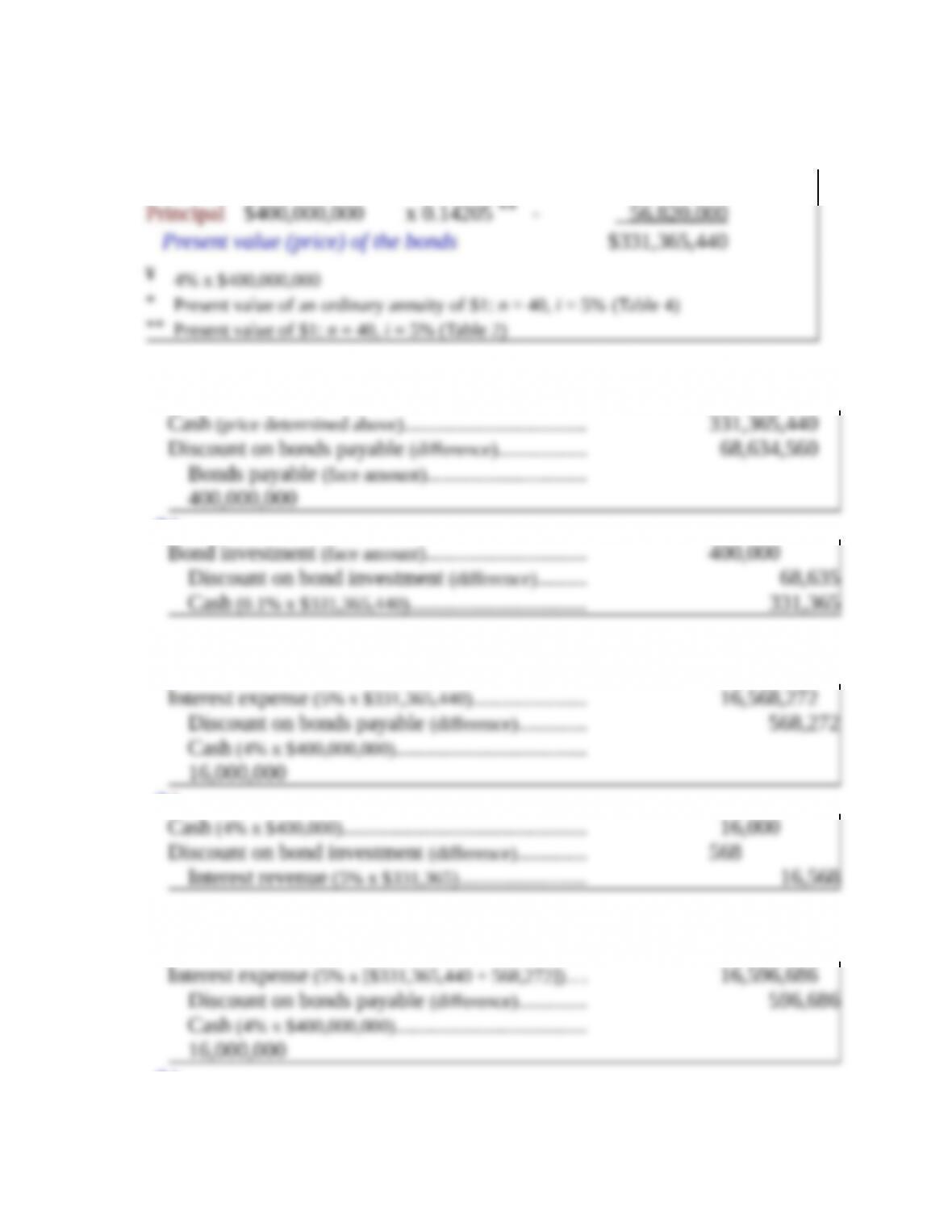
Problem 14–7
Requirement 1
Interest $16,000,000¥x 17.15909 * = $274,545,440
Requirement 2
(a)
(b)
Requirement 3
(a)
(b)
Requirement 4
(a)
(b)

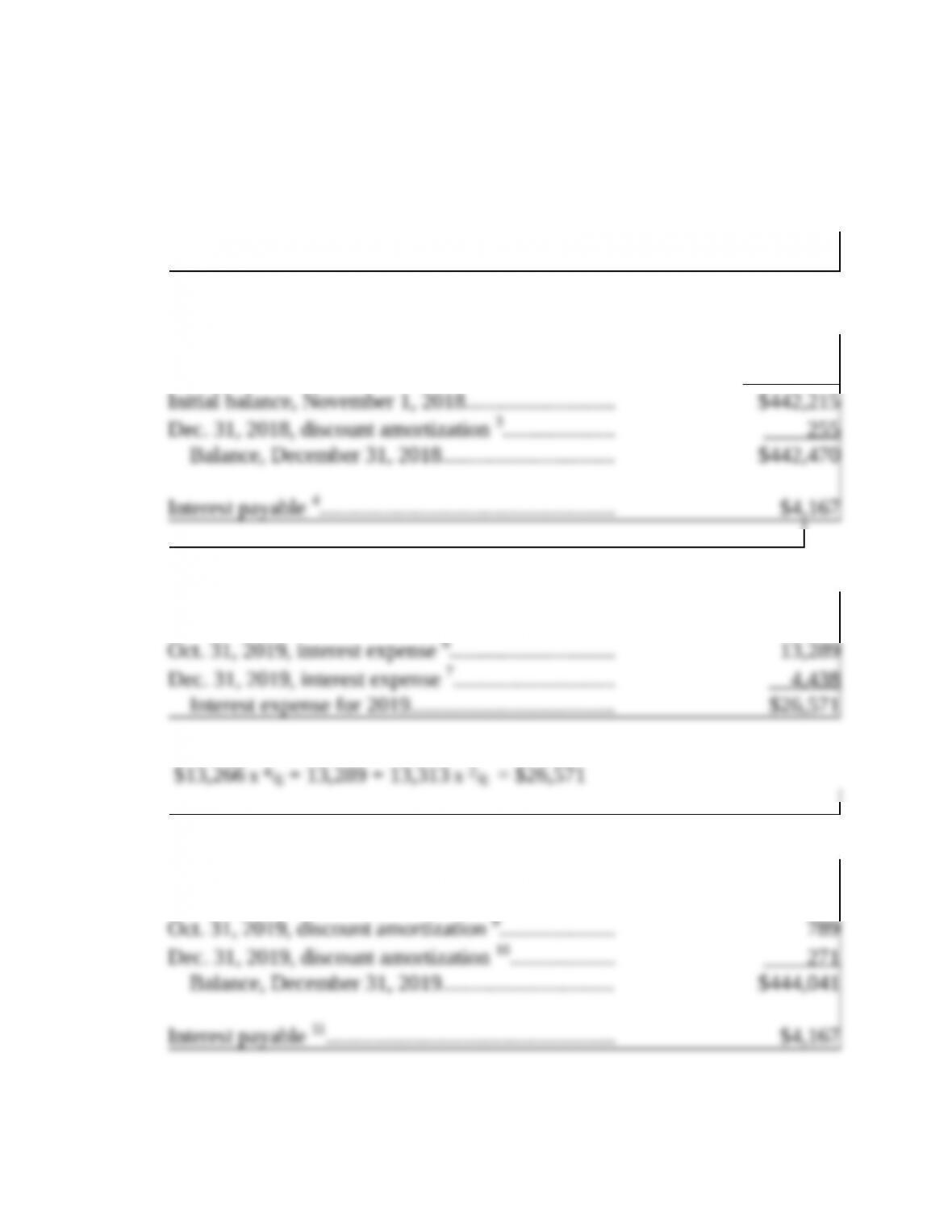
Problem 14–8
1. Interest expense for year ended December 31, 2018
Dec. 31, 2018, interest expense (calculated below 1). . $4,422
2. Liabilities at December 31, 2018
Bonds payable (face amount)……………………………….. $500,000
Less: Discount 2……………………………………………….. (57 ,785)
3. Interest expense for year ended December 31, 2019
April 30, 2019, interest expense 5………………………. $ 8,844
Or, using the amortization schedule below:
4. Liabilities at December 31, 2019
Balance, December 31, 2018 (from req. 2 above)... $442,470
April 30, 2019, discount amortization 8………………. 511
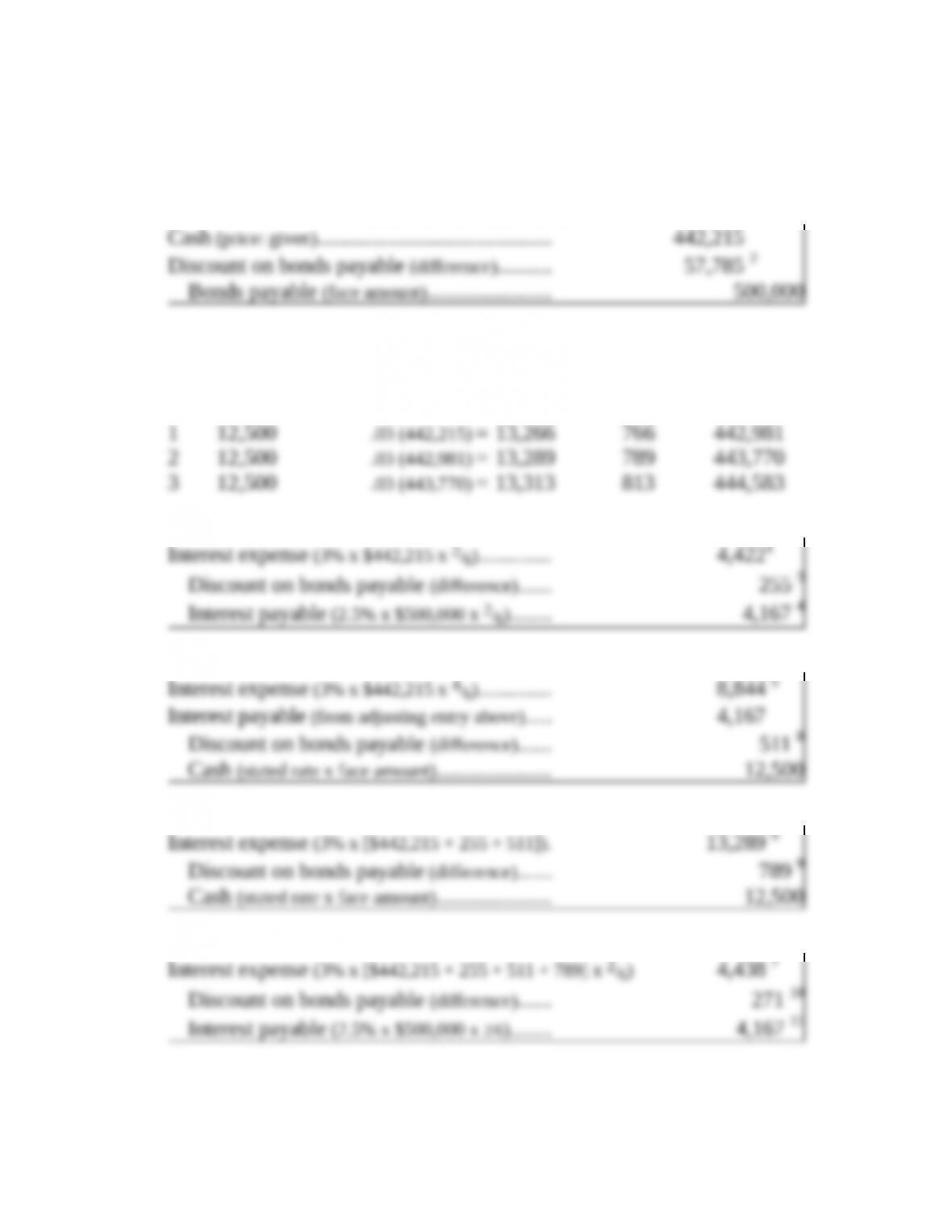
Problem 14–8 (concluded)
Calculations:
November 1, 2018
Partial amortization schedule (not required)
Cash Increase in Outstanding
Payment Effective Interest Balance Balance
442,215
December 31, 2018
April 30, 2019
October 31, 2019
December 31, 2019
Problem 14–9
Requirement 1
Requirement 2
Requirement 3
Requirement 4
Requirement 5
Problem 14–10
Requirement 1
Requirement 2
$94,643 ÷ $106,000 = 0.8929—the Table 2 value for n = 1, i = ?
In row 1 of Table 2, the value 0.8929 is in the 12% column. So, this is the
effective interest rate. A financial calculator will produce the same rate.
PROOF:
¥ 6% x $100,000
*Present value of an ordinary annuity of $1: n = 1, i = 12% (Table 4)
** Present value of $1: n = 1, i = 12% (Table 2)
Problem 14–10 (concluded)
Not required, but recorded at the same date (may be combined with interest
entry):
Requirement 3
…………….Notes payable (present value determined above)