Case 14–9 (continued)
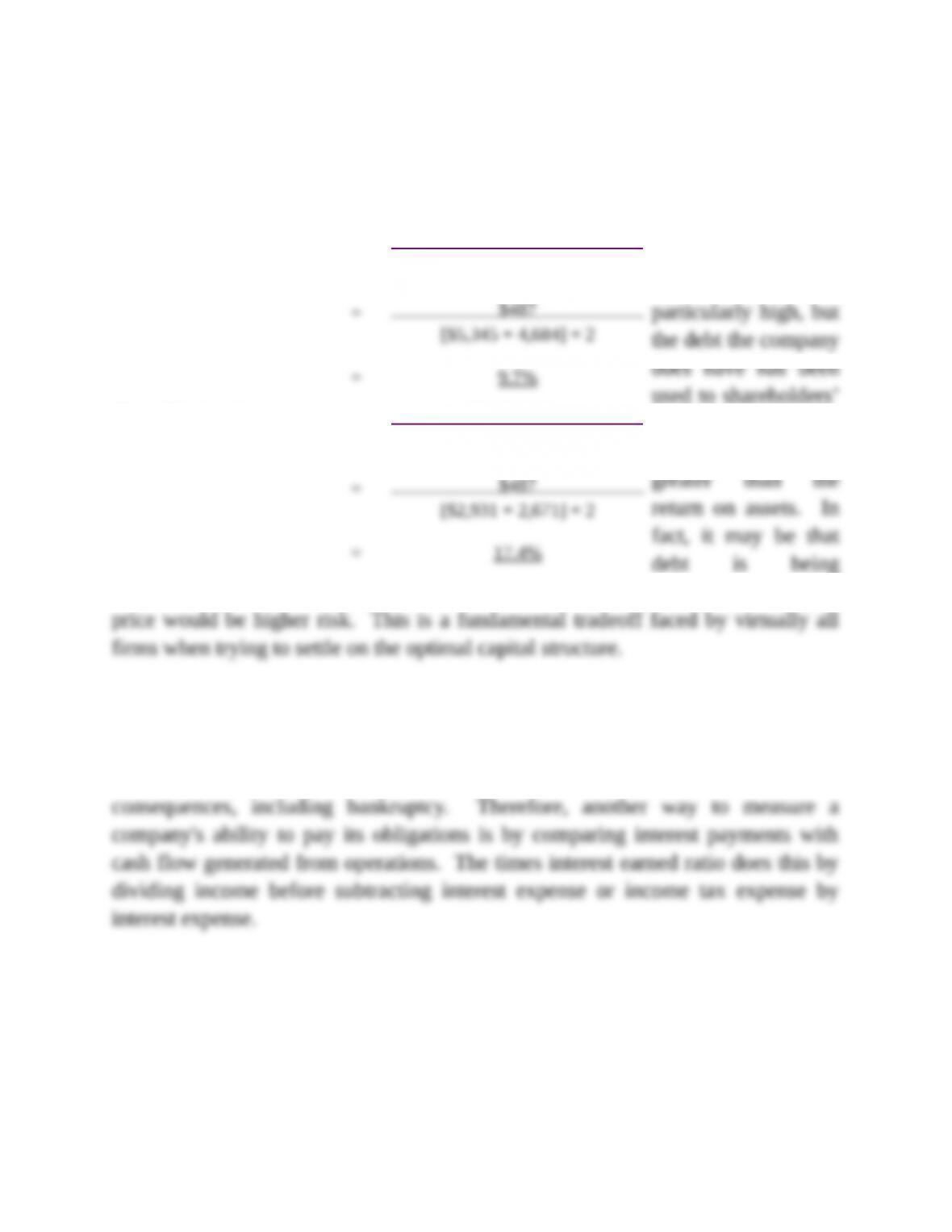
AGF has experienced favorable leverage, as demonstrated by calculating and
comparing the return on assets and the return on shareholders’ equity for 2016:
The debt to
equity ratio is not
used to shareholders’
advantage. The
return on equity is
greater than the
debt is being
underutilized by AGF. More debt might increase the potential for return, but the
Requirement 3
Creditors generally demand interest payments as compensation for the use of
their capital. Failure to pay interest as scheduled may cause several adverse
Rate of return on = Net income
assets Average total assets
Rate of return on = Net income
shareholders’ equity Average shareholders’ equity
Case 14–9 (concluded)
Two points about this
ratio are important. First,
because interest is deductible
for income tax purposes,
interest and taxes (i.e., net
income). Second, income
before interest and taxes is a
rough approximation for cash flow generated from operations. The primary
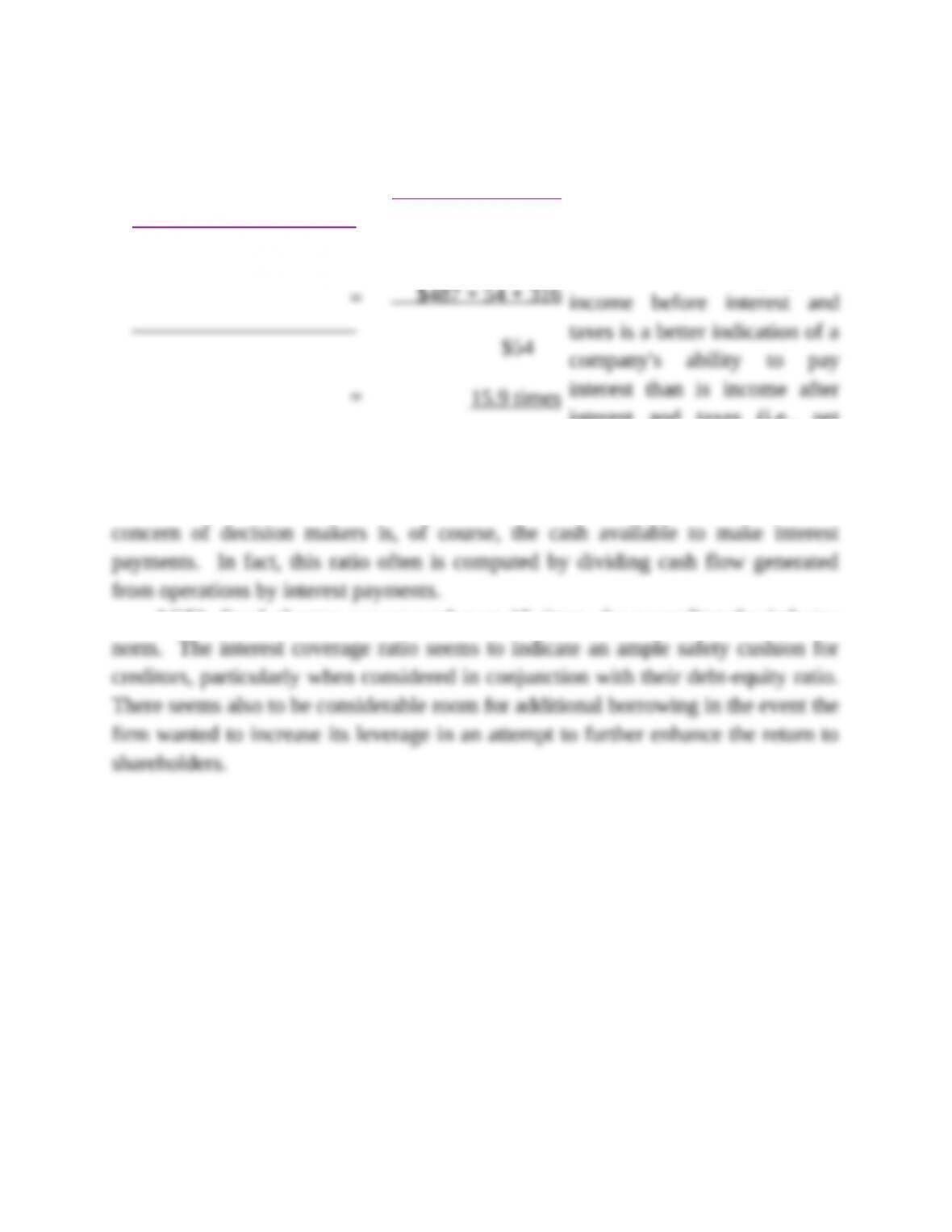
AGF’s fixed charges are covered over 15 times, far exceeding the industry
Times interest earned = Net income +
interest + taxes
Interest
Industry average
= 5.1 times
Real World Case 14–10
Requirement 3
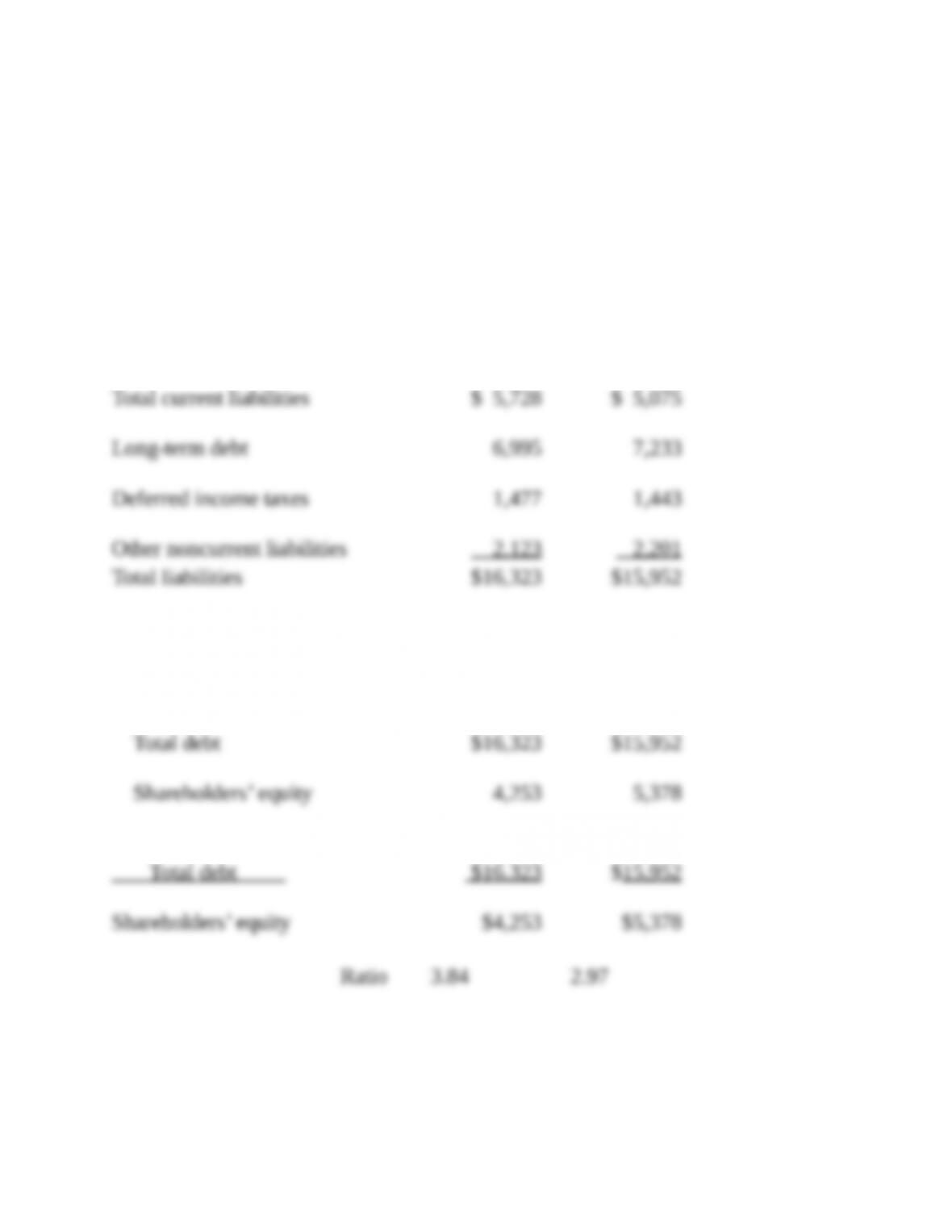
The following is from Macy’s annual report:
January 30, January 31,
2016 2015
($ in millions)
Total debt has increased by about 2.3%.
Requirement 4
The debt to equity ratio in fiscal 2015 is 29% higher than in fiscal 2014.
Case 14–10 (concluded)
Requirement 5
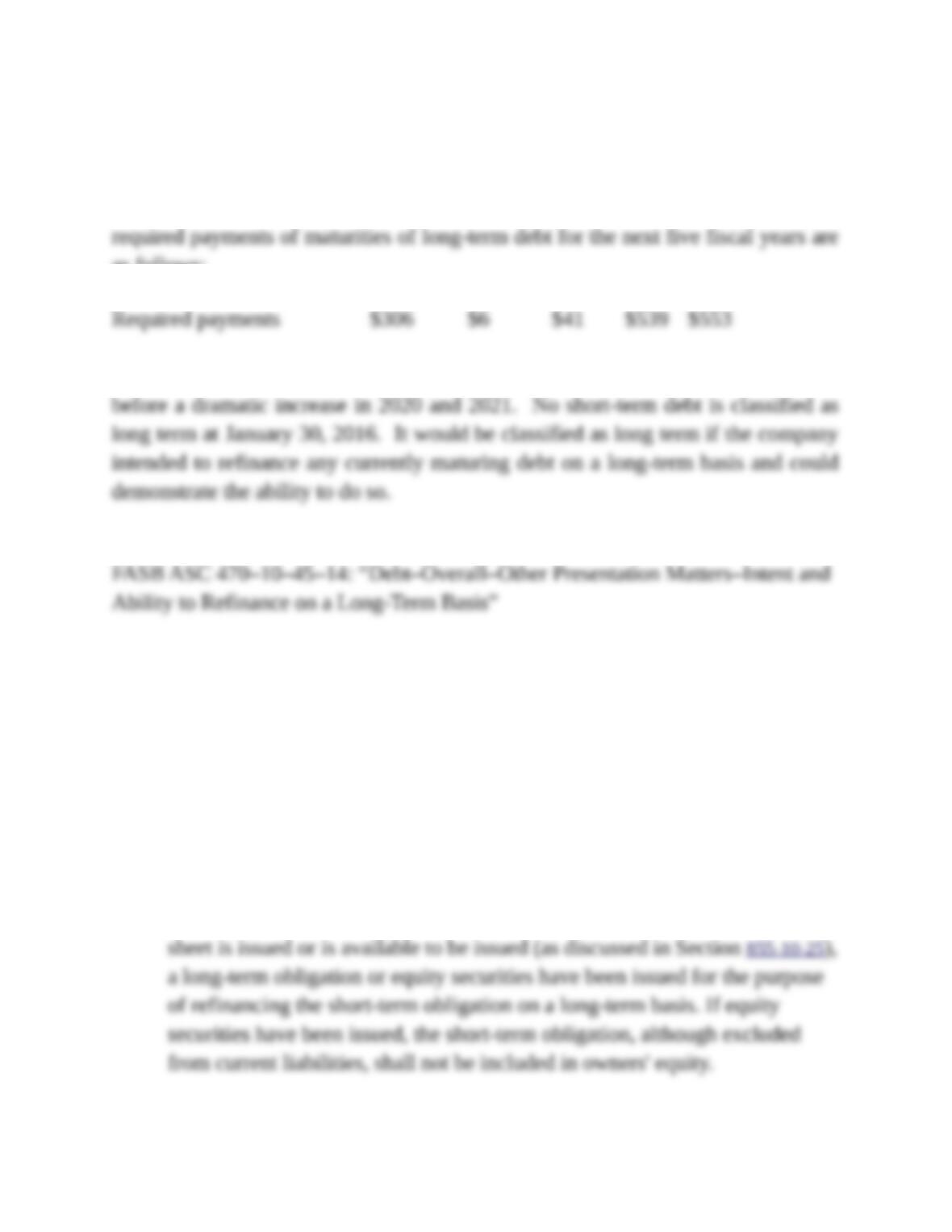
The vast majority is in the form of notes. From Note 6: Financing: Aggregate
as follows:
Dollars in Millions 2017 2018 2019 2020 2021
There is a general decline in the pattern of payments due over the next three years
Requirement 6
Macys could report the debt as noncurrent if the company had the intent and ability
to refinance on a long-term basis:
Intent and Ability to Refinance on a Long-Term Basis
45-14 A short-term obligation shall be excluded from current liabilities if the
entity intends to refinance the obligation on a long-term basis and the intent to
refinance the short-term obligation on a long-term basis is supported by an ability
to consummate the refinancing demonstrated in either of the following ways:
a. Post-balance-sheet-date issuance of a long-term obligation or equity
securities. After the date of an entity’s balance sheet but before that balance
Case 14–10 (concluded)
b. Financing agreement. Before the balance sheet is issued or is available to be
1. The agreement does not expire within one year (or operating cycle
from the date of the entity’s balance sheet and during that period the
agreement is not cancelable by the lender or the prospective lender or
2. No violation of any provision in the financing agreement exists at the
3. The lender or the prospective lender or investor with which the entity
Analysis Case 14–11
Requirement 1
Earnings are not affected by conversion under the book value method. On the
other hand, a gain or loss is recorded and thus earnings are affected by
Requirement 2
The 7% bonds were issued at a discount (less than face amount). We know
Requirement 3
The amount of interest expense would be less in the first year of the term to
Requirement 4
We determine gain or loss on early extinguishment of debt by comparing the
book value of the bonds at the date of extinguishment with the purchase
Target Case
Requirement 1
We compute the debt to equity ratio by dividing a company’s total liabilities
by total shareholders’ equity. The ratio summarizes the capital structure of the
Generally, debt
increases risk. Debt
because the claims of
creditors must be
satisfied first in case of liquidation. Moreover, debt requires payment, usually on
specific dates. Failure to pay debt interest and principal on a timely basis may
Debt to equity ratio = Total liabilities
Shareholders’ equity
Industry = 1.6
Target Case (continued)
Requirement 2
Lenders demand interest payments as compensation for the use of their
capital. Inability to pay interest as scheduled may cause several adverse
Note three points about
this ratio. First, because
interest is deductible for
income tax purposes, income
before interest and taxes is a
rough approximation for cash
flow generated from
operations. The primary concern of decision makers is, of course, the cash
available to make interest payments. In fact, this ratio often is computed by
Times interest earned = Net income +
interest + taxes
Interest
times
Target Case (concluded)
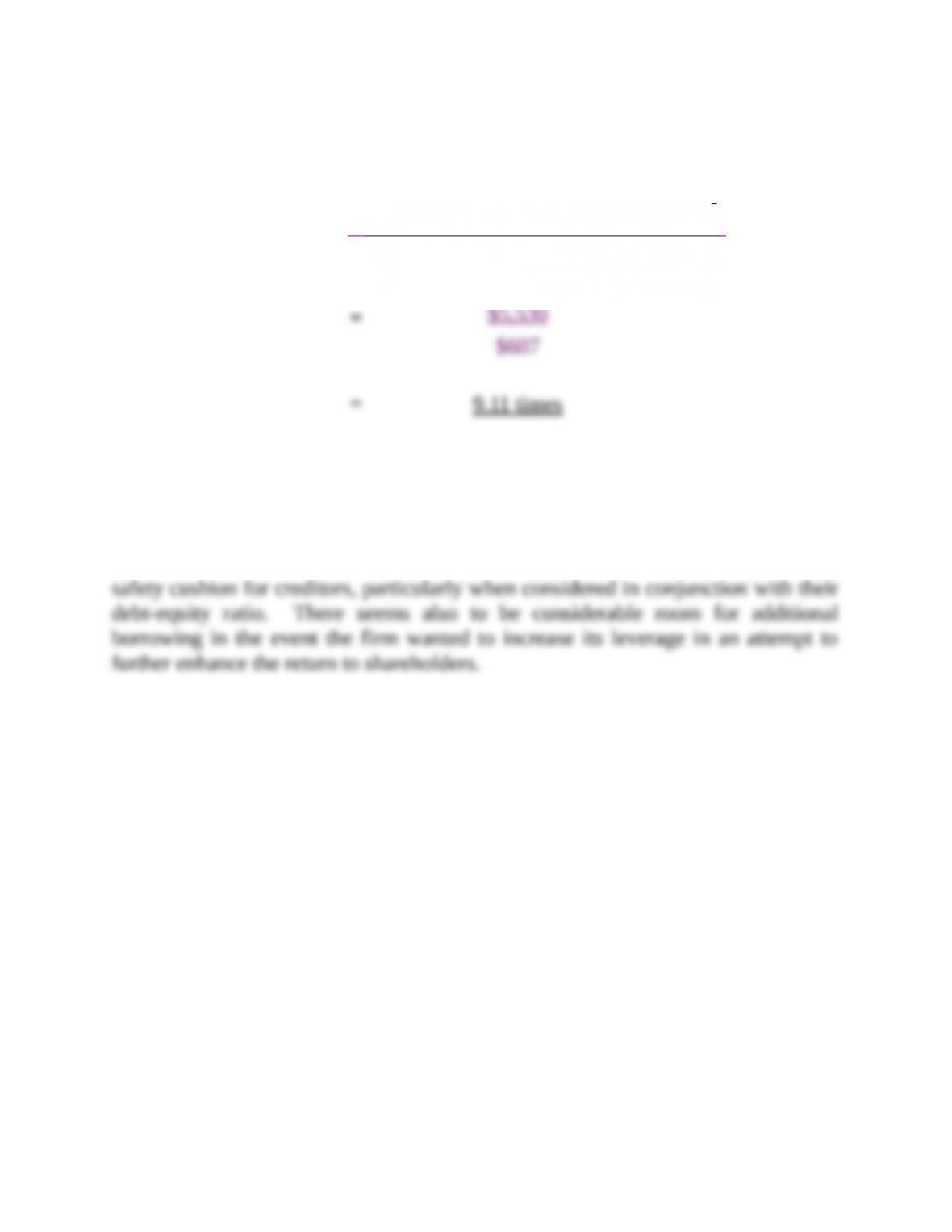
Times interest earned =Earnings from continuing operations
before interest expense and income taxes
Interest
Industry = 10.6 times
By either measure, Target’s fixed charges are covered over 9 times, slightly
less than the industry norm. The interest coverage ratio seems to indicate an ample
Air France-KLM Case
Requirement 1
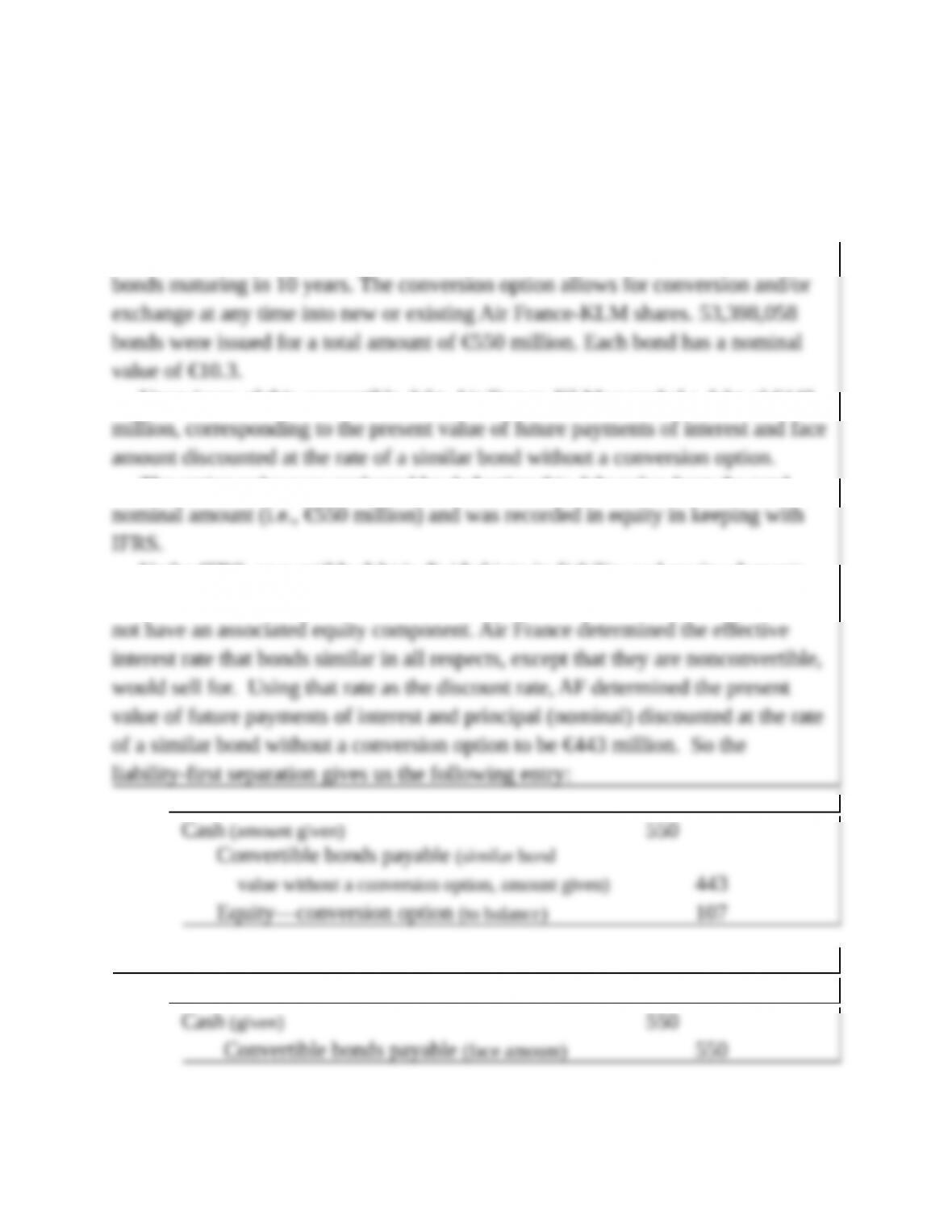
From Note 33.2.2, we see that in March 2013, Air France issued convertible
Upon issue of this convertible debt, Air France-KLM recorded a debt of €443
The option value was evaluated by deducting this debt value from the total
Under IFRS, convertible debt is divided into its liability and equity elements.
We achieve separation by measuring the fair value of a similar liability that does
Under U.S. GAAP, the entire issue price of convertible debt is recorded as debt: