Problem 14–25
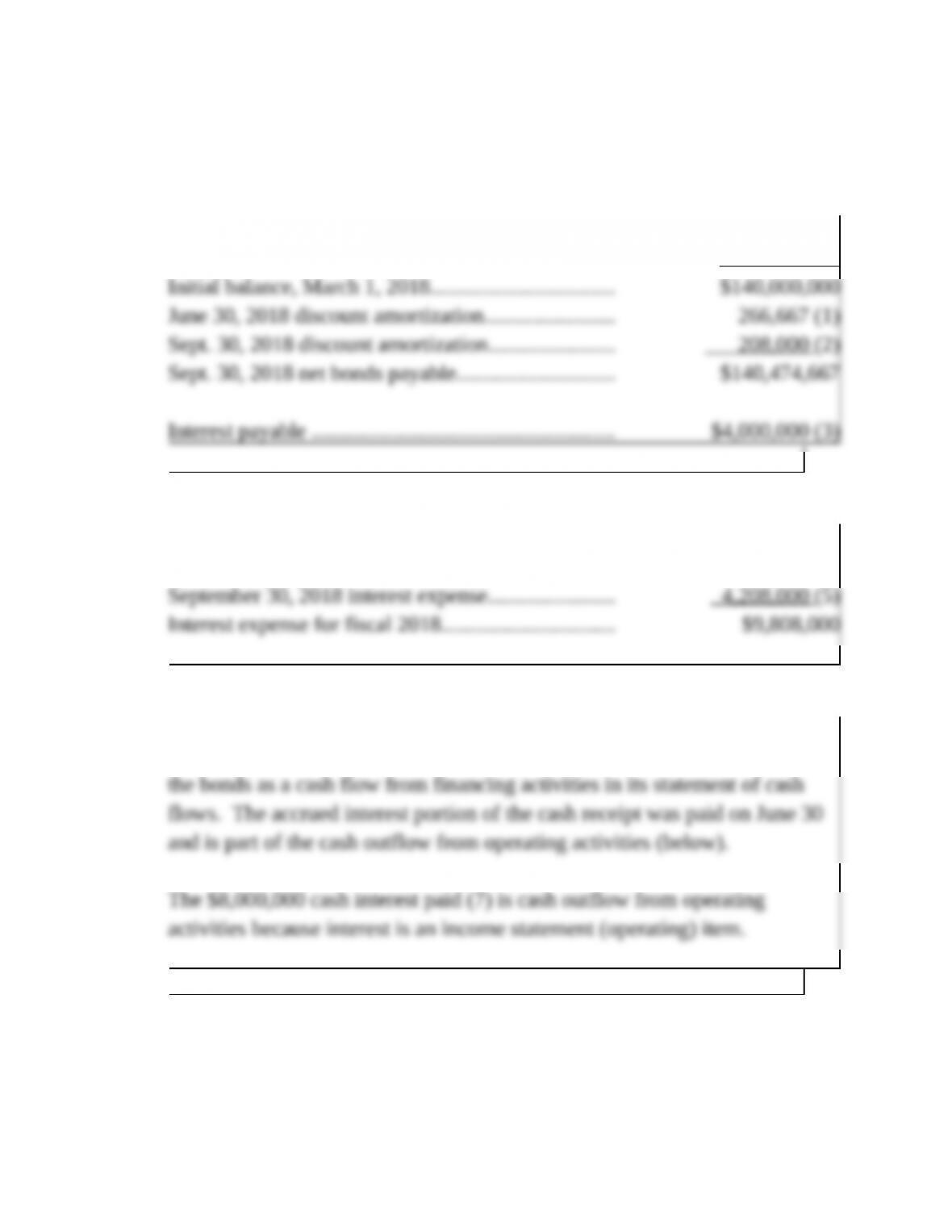
1. Liabilities at September 30, 2018
Bonds payable (face amount)……………………………….. $160,000,000
Less: discount………………………………………………….. 20 ,000,000
2. Interest expense for year ended September 30, 2018
June 30, 2018 interest expense…………………………… $5,600,000 (4)
3. Statement of cash flows for year ended September 30, 2018
Baddour would report the cash inflow of $140,000,000(6) from the sale of
Problem 14-25 (concluded)
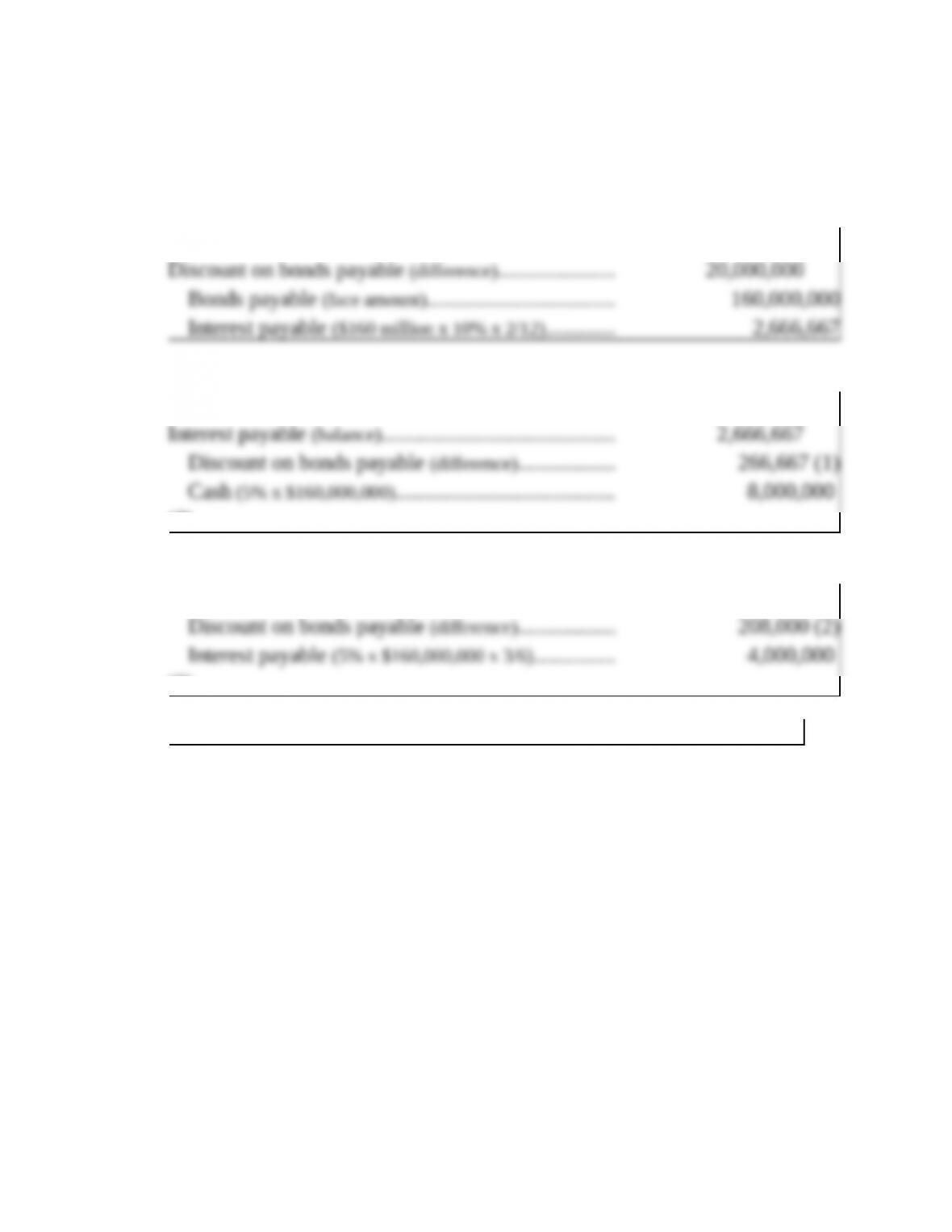
Calculations:
March 1, 2018
Cash ($140(6) million plus accrued interest)……………….. 142,666,667
June 30, 2018
Interest expense (6% x $140,000,000 x 4/6)………………… 5,600,000(4)
(7)
September 30, 2018
Interest expense (6% x [$140,000,000 + 266,667] x 3/6). 4,208,000 (5)
(3)
Problem 14–26
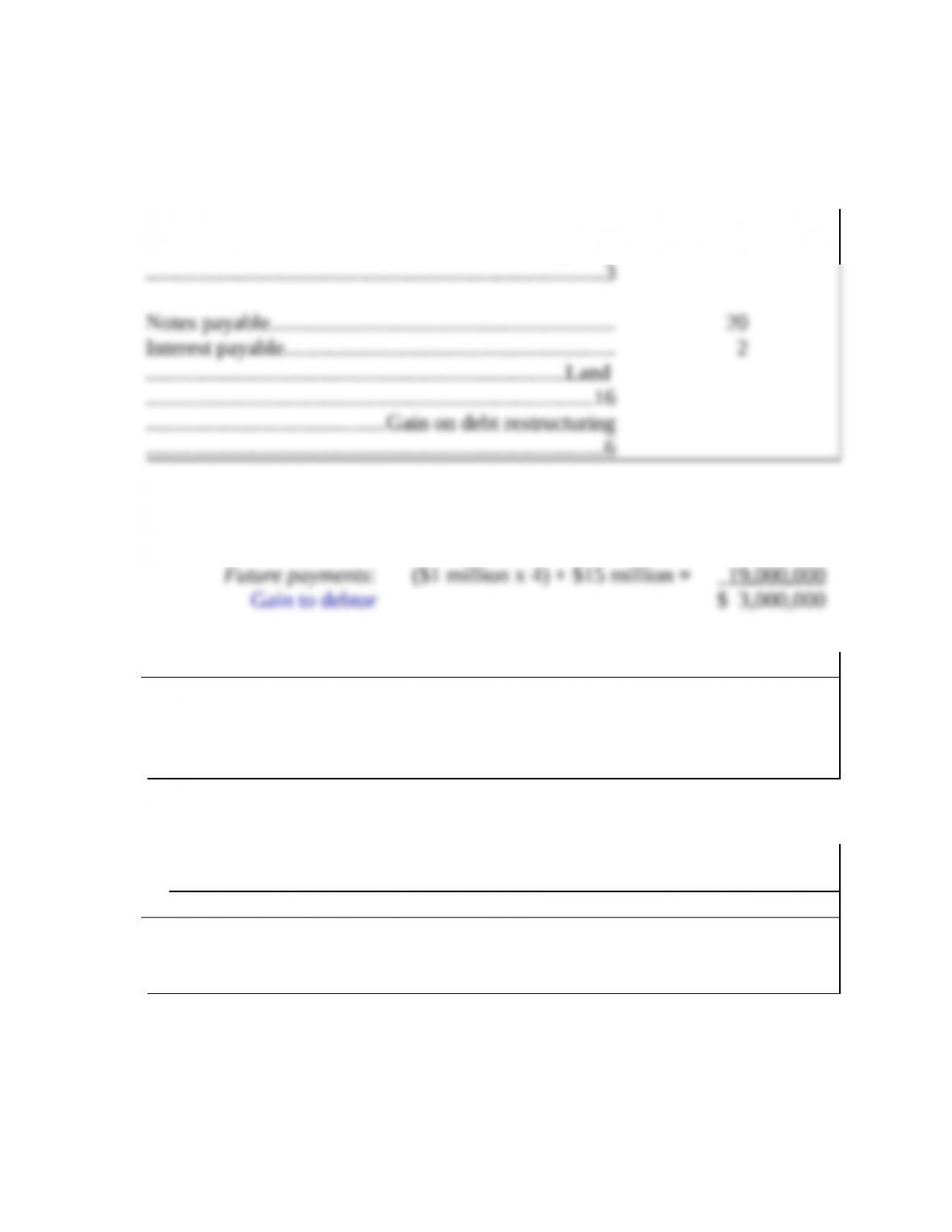
Requirement 1
($ in millions)
Land…………………………………………………………………… 3
………………………………………………….Gain on disposal
Requirement 2
Analysis: Book value: $20 million + 2 million = $22,000,000
($ in millions)
(a) January 1, 2018
Interest payable…………………………………………………… 2
Notes payable *…………………………………………………… 1
……………………………………..Gain on debt restructuring
…………………………………………………………………………3
*establishes a balance in the note account equal to the total cash payments under the
new agreement ($20 million – 1 million = $19 million)
(b) December 31, 2018, 2019, 2020, and 2021 revised “interest” payments
Notes payable……………………………………………………… 1
…………………………………………………………………..Cash
…………………………………………………………………………1
Note: No interest expense should be recorded after the restructuring. All subsequent cash
payments result in reductions of principal.

(c) December 31, 2021 revised principal payment
Problem 14–26 (continued)
Requirement 3
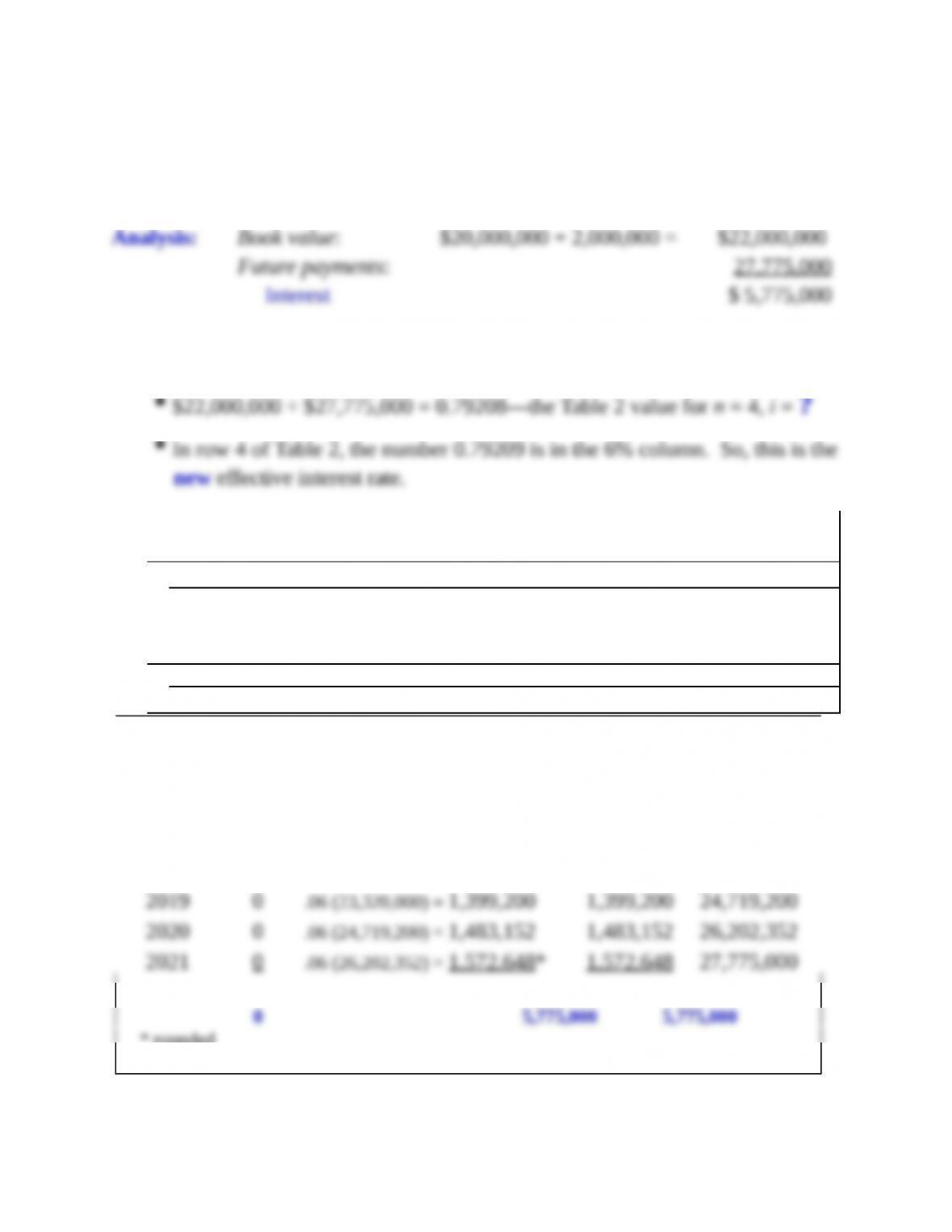
Calculation of the new effective interest rate:
(a) January 1, 2018
[Since the total future cash payments are not less than the book value of the
debt, no reduction of the existing debt is necessary and no entry is required at
the time of the debt restructuring.]
Amortization Schedule (not required)
Cash Effective Increase in Outstanding
Dec.31 Payment Interest Balance Balance
6% x Outstanding Balance
22,000,000
2018 0 .06 (22,000,000) = 1,320,000 1,320,000 23,320,000
* rounded
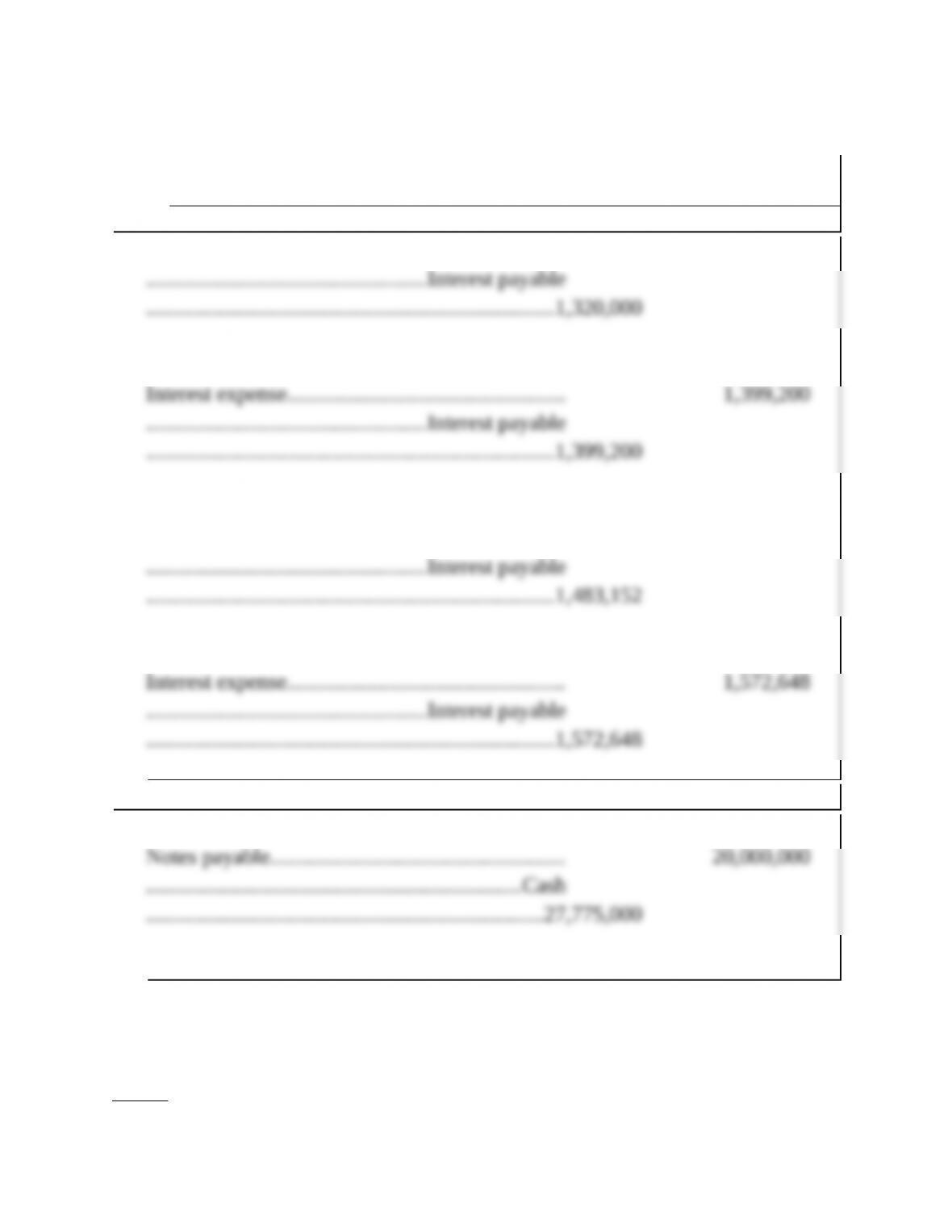
Problem 14–26 (concluded)
(b) December 31, 2018
Interest expense…………………………………………… 1,320,000
December 31, 2019
December 31, 2020
Interest expense…………………………………………… 1,483,152
December 31, 2021
(c) December 31, 2021 revised payment
Interest payable ($2,000,000 + 4 years’ interest above) 7,775,000
Communication Case 14–1
Suggested Grading Concepts and Grading Scheme:
Content (80%)
20 Convertible bonds
Cases
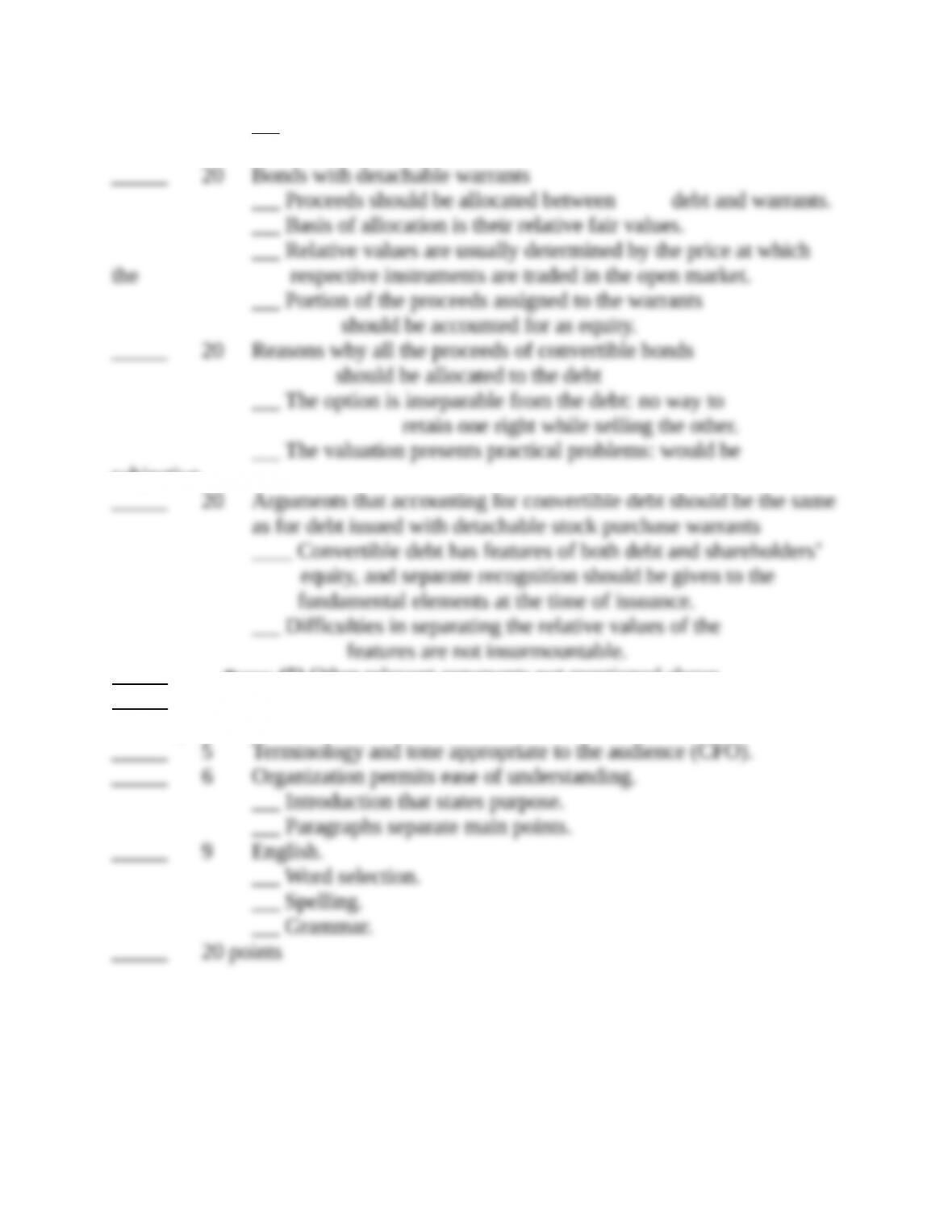
Entire proceeds of the bond issue should be allocated to the
debt and the related premium or discount accounts.
subjective.
Bonus (5) Other relevant arguments not mentioned above
80–85 points
Writing (20%)
Real World Case 14–2
Requirement 1
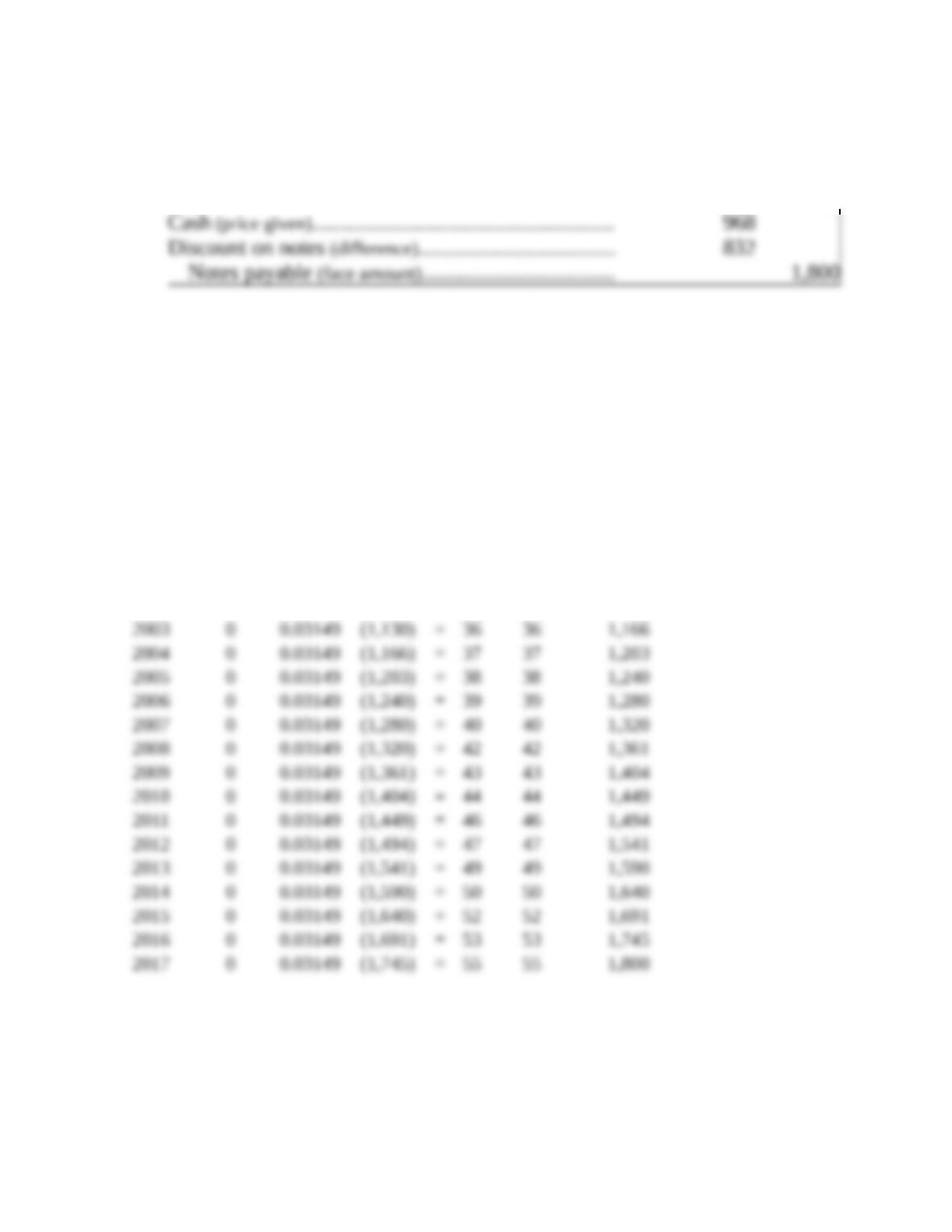
($ in millions)
Requirement 2
($ in millions)
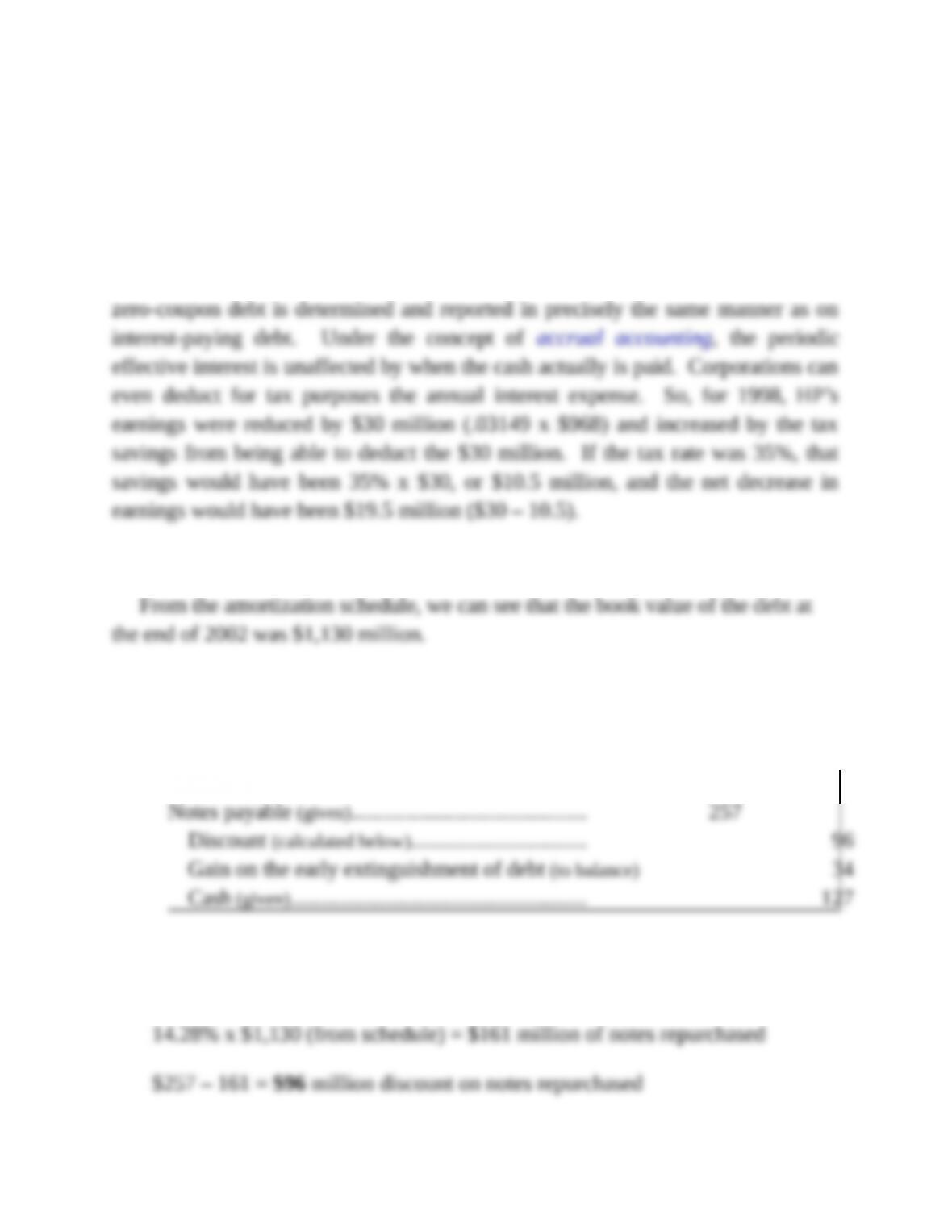
Fiscal Increase Outstanding
Year-end Cash Interest Expense in Balance Balance
1997 968
1998 0 0.03149 (968) = 30 30 998
1999 0 0.03149 (998) = 31 31 1,030
2000 0 0.03149 (1,030) = 32 32 1,062
2001 0 0.03149 (1,062) = 33 33 1,096
2002 0 0.03149 (1,096) = 35 35 1,130
Case 14–2 (continued)
Requirement 3
In a strict sense, zero-coupon debt pays no interest. “Zeros” offer a return in the
form of a “deep discount” from the face amount. In fact, though, interest accrues
at the effective rate (3.149% in this case) times the outstanding balance ($968
million during 1998), even though no interest is paid periodically. Interest on
Requirement 4
Requirement 5
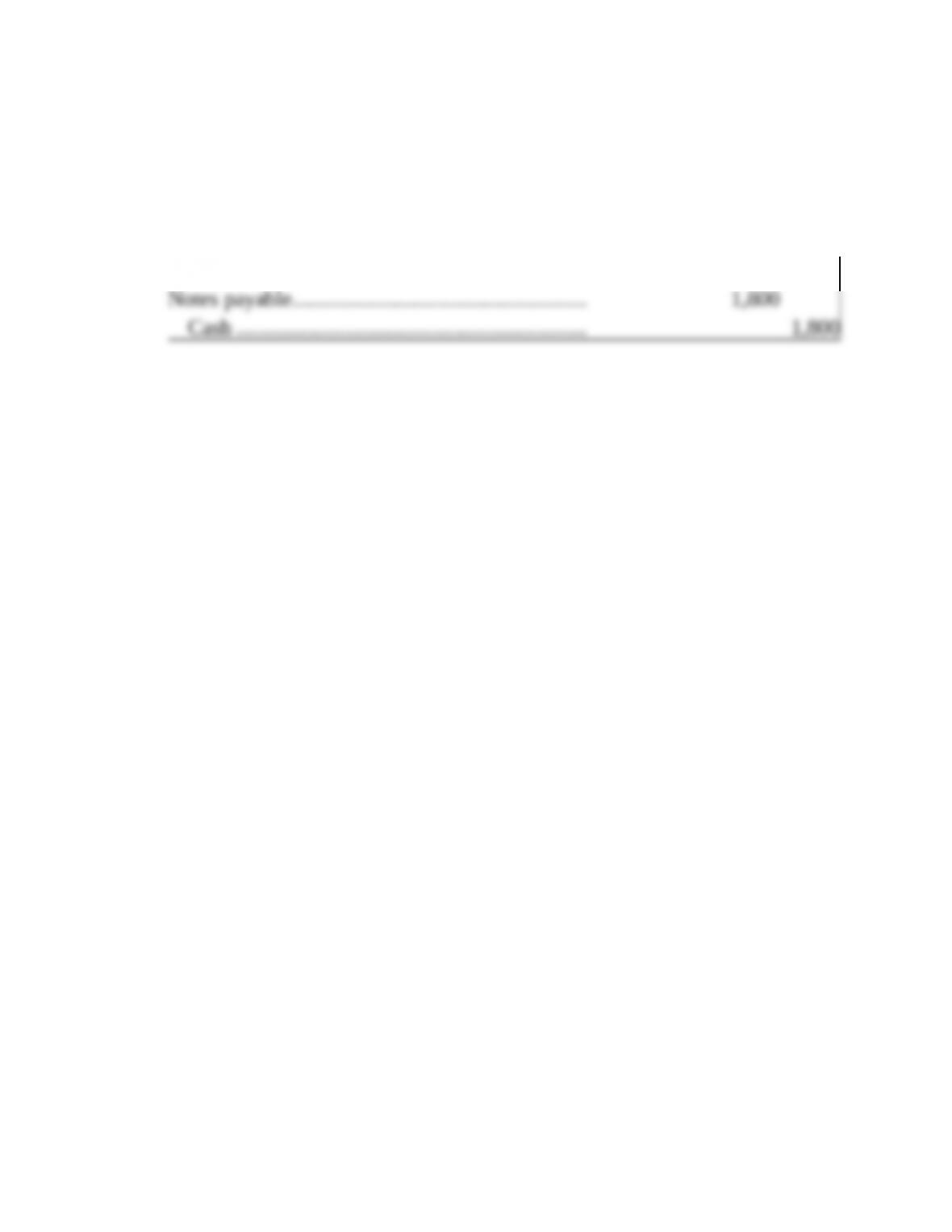
The journal entry Hewlett-Packard used to record the early extinguishment of
debt in 2002, assuming the purchase was made at the end of the year was:
Calculations:
$257 ÷ $1,800 = 14.28% of notes were repurchased
Case 14–2 (concluded)
Requirement 6
The journal entry Hewlett-Packard used to record the extinguishment of debt
at its 2017 maturity would be:
Communication Case 14–3
You may wish to suggest to your students that they consult the FASB 1990
Discussion Memorandum, “Distinguishing between Liability and Equity
There is no right or wrong answer. Both views can and often are convincingly
defended. The process of developing and synthesizing the arguments likely will be
Arguments brought out in the FASB DM include the following: