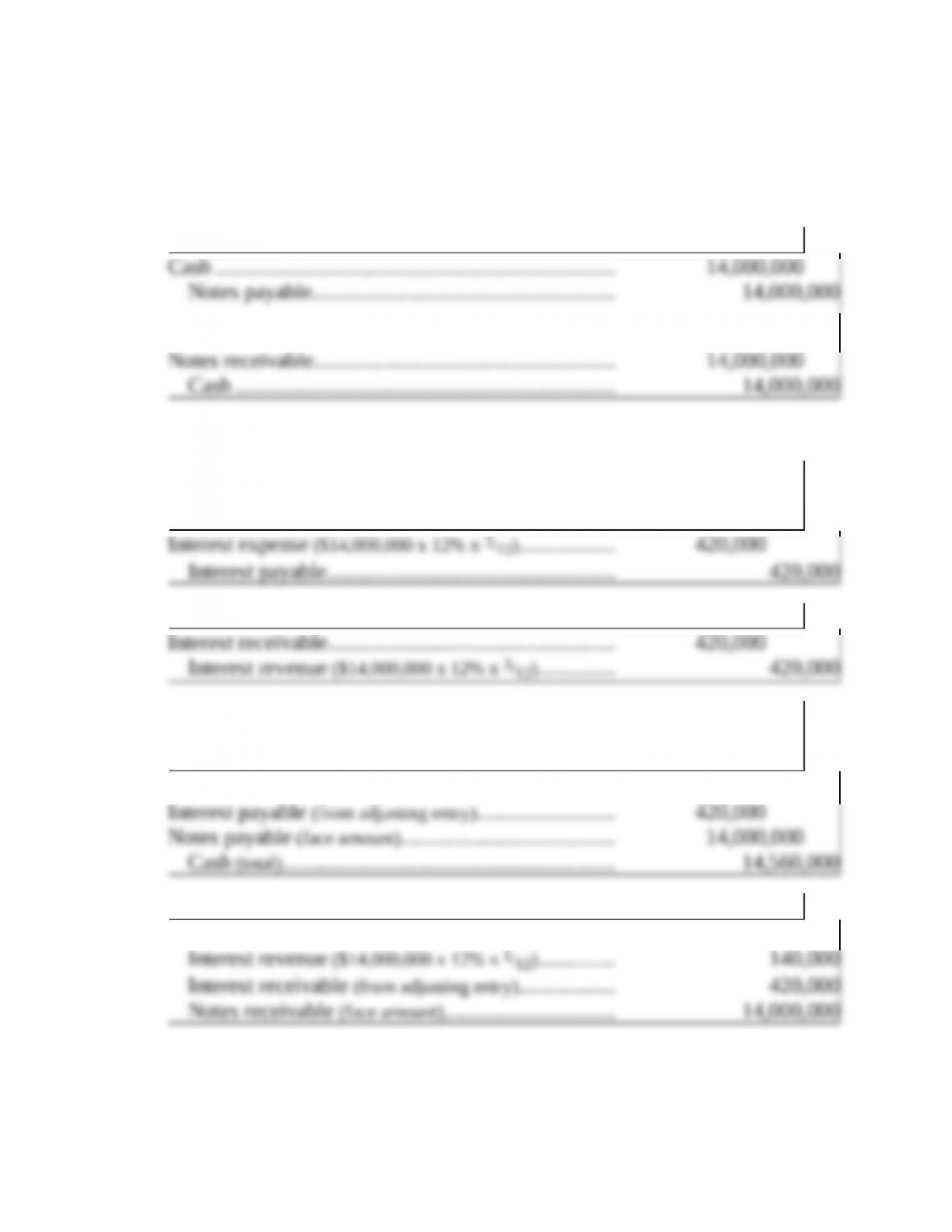
Problem 13–1
Requirement 1
Blanton Plastics
L & T Bank
Requirement 2
Adjusting entries (December 31, 2018)
Blanton Plastics
L & T Bank
Maturity (January 31, 2019)
Blanton Plastics
Interest expense ($14,000,000 x 12% x 1/12)…………….. 140,000
L & T Bank
Cash (total)……………………………………………………….. 14,560,000
Problems
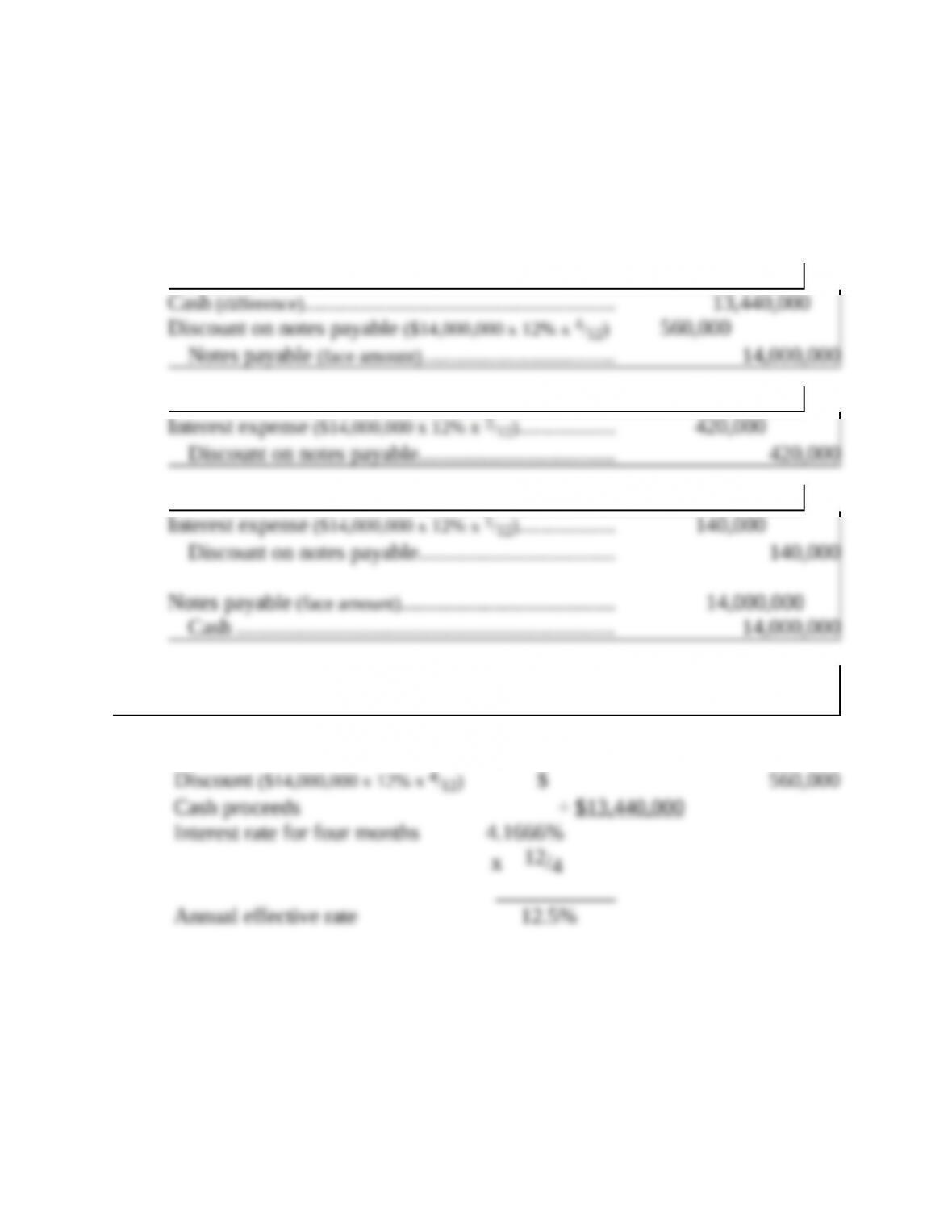
Problem 13–1 (concluded)
Requirement 3
a.
Issuance of note (October 1, 2018)
Adjusting entry (December 31, 2018)
Maturity (January 31, 2019)
b.
Effective interest rate:
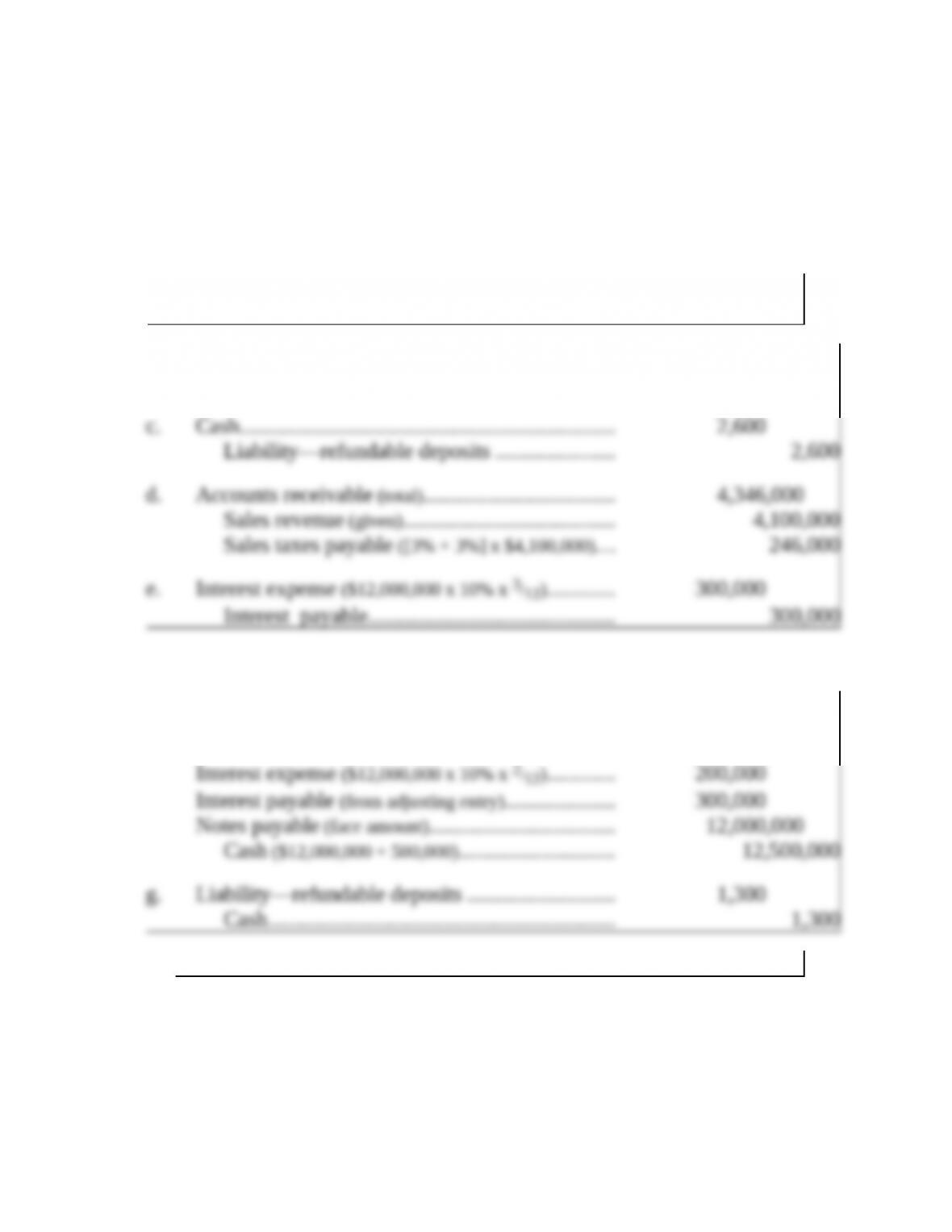
Problem 13–2
Requirement 1
2018
a. No entry is made for a line of credit until a loan actually is made. It
would be described in a disclosure note.
b. Cash ………………………………………………………….. 12,000,000
Notes payable…………………………………………. 12,000,000
2019
f. Cash ………………………………………………………….. 10,000,000
Bonds payable………………………………………… 10,000,000
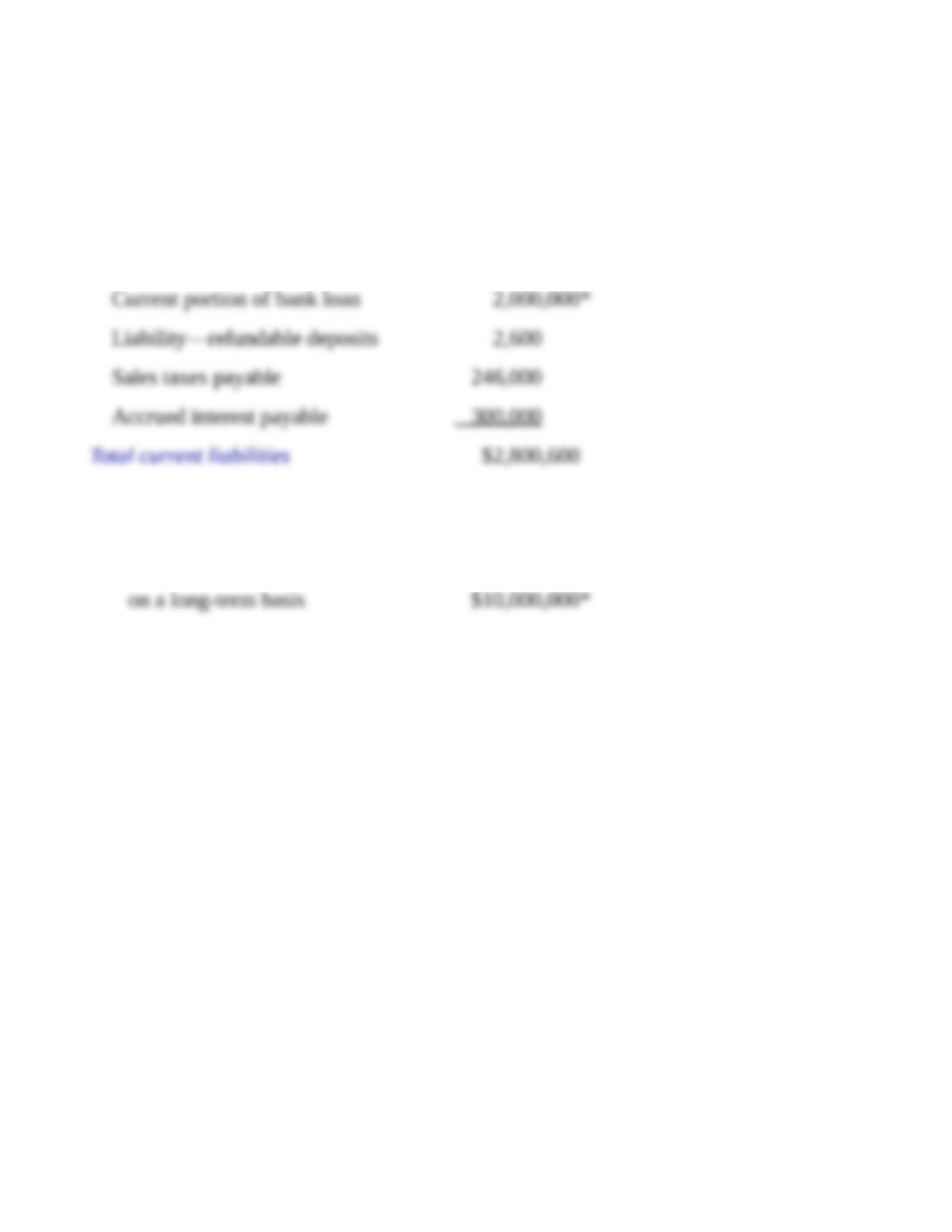
Problem 13–2 (concluded)
Requirement 2
CURRENT LIABILITIES:
Accounts payable $ 252,000
LONG–TERM LIABILITIES:
Bank loan to be refinanced
* The intent of management is to refinance all $12,000,000 of the bank loan, but the
actual refinancing demonstrates the ability only for $10,000,000.
Problem 13–3
Requirement 1
a. The requirement to classify currently maturing debt as a current liability
b. $5 million can be reported as long term, but $1 million must be reported as
a current liability. Short-term obligations that are expected to be refinanced
can be demonstrated by either an existing refinancing agreement or by
c. The entire $20 million maturity amount should be reported as a current
d. The entire $12 million loan should be reported as a long-term liability
because that amount is payable in 2022 and it will not be refinanced with
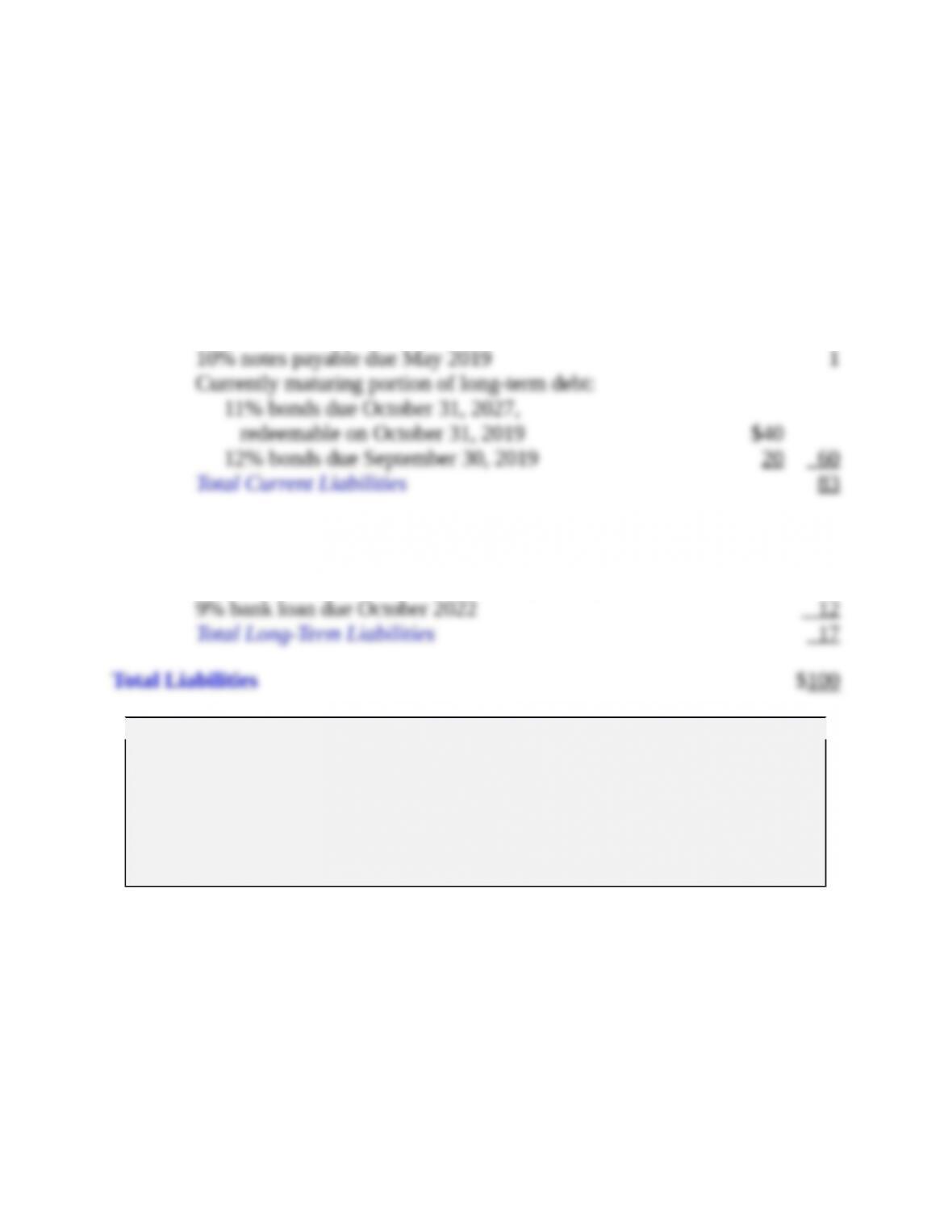
Problem 13–3 (concluded)
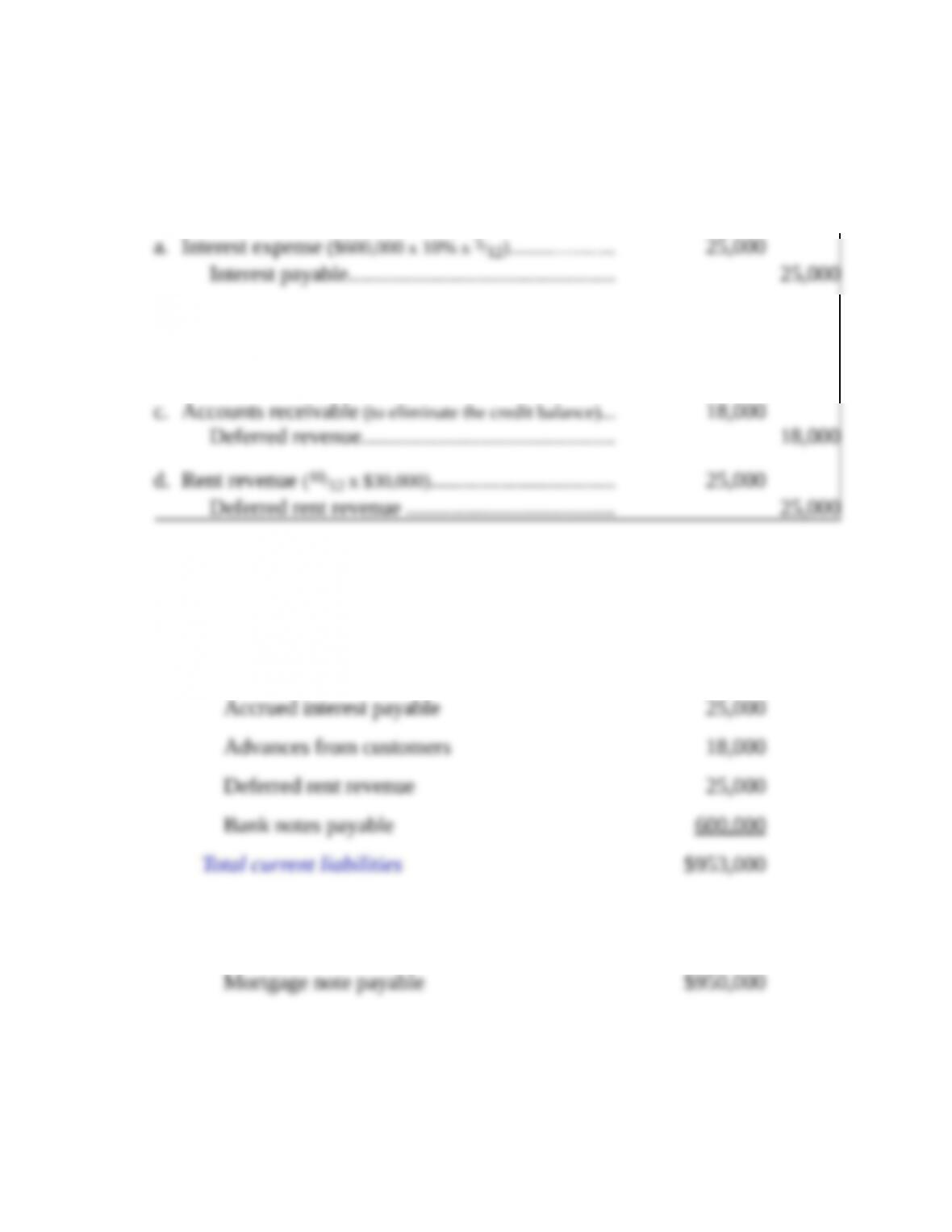
Requirement 2
December 31, 2018
($ in millions)
Current Liabilities
Accounts payable and accruals $ 22
Long-Term Debt
Currently maturing debt classified as long-term:
10% notes payable due May 2019 (Note X) 5
NOTE X: CURRENTLY MATURING DEBT CLASSIFIED AS LONG–TERM
The Company intends to refinance $6 million of 10% notes that mature in May
of 2019. In March, 2019, the Company negotiated a line of credit with a
commercial bank for up to $5 million any time during 2019. Any borrowings
will mature two years from the date of borrowing. Accordingly, $5 million was
reclassified to long-term liabilities.
Problem 13–4
Requirement 1
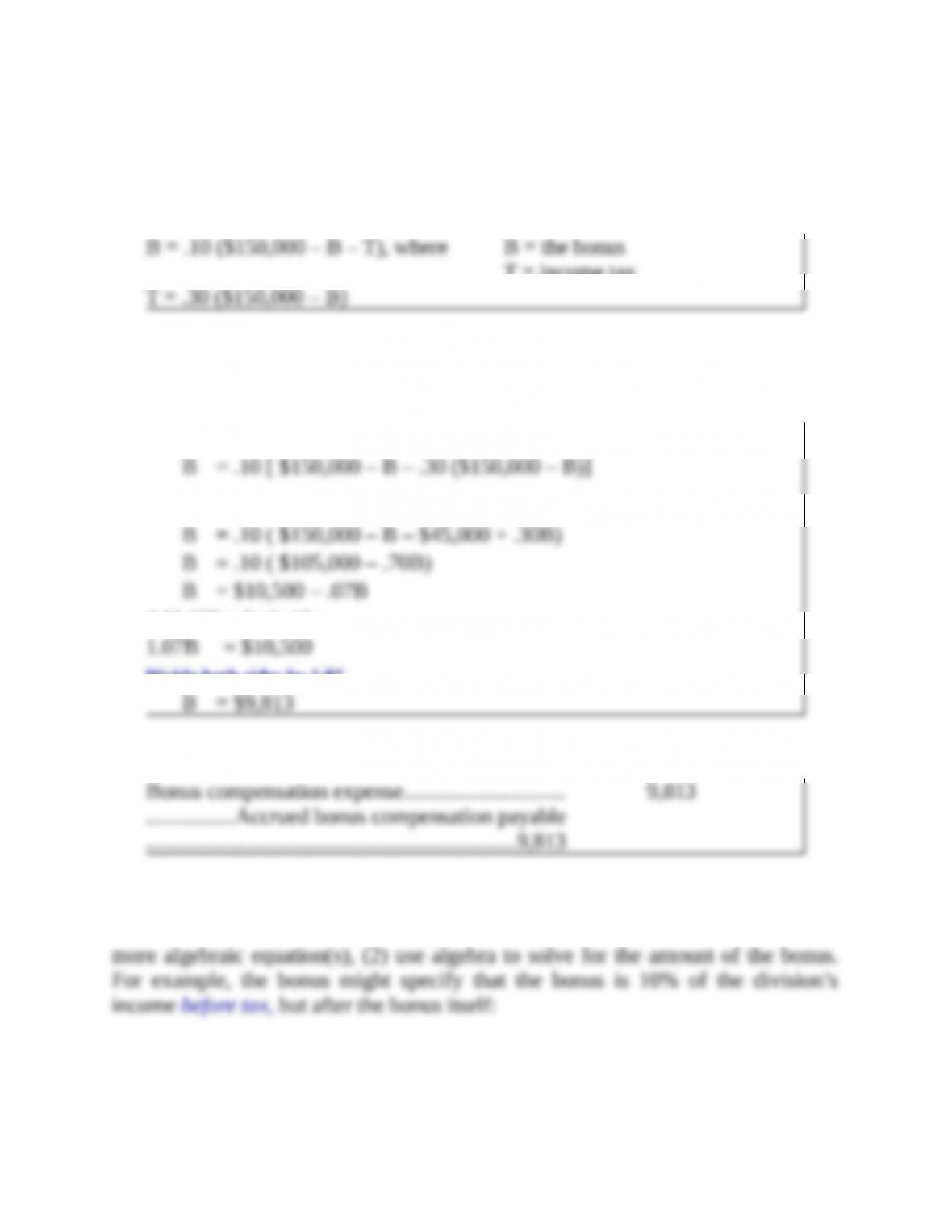
b. No adjusting entry since interest has been paid up to December 31.
$950,000 can be reported as a noncurrent liability, because (a) intent and
(b) ability to refinance has been demonstrated for that amount.
Requirement 2
CURRENT LIABILITIES:
Accounts payable $ 35,000
Current portion of long-term debt 250,000
LONG–TERM LIABILITIES:
Problem 13–5
Requirement 1
T = income tax
Requirement 2
Since income tax (T) is a component of both equations, we can combine the
two and then solve for the remaining unknown amount (B):
Substitute value of T for T:
Reduce the right-hand side of the equation to one known and one unknown value:
Add .07B to both sides
Divide both sides by 1.07
Requirement 3
Requirement 4
The approach is the same in any case: (1) express the bonus formula as one or
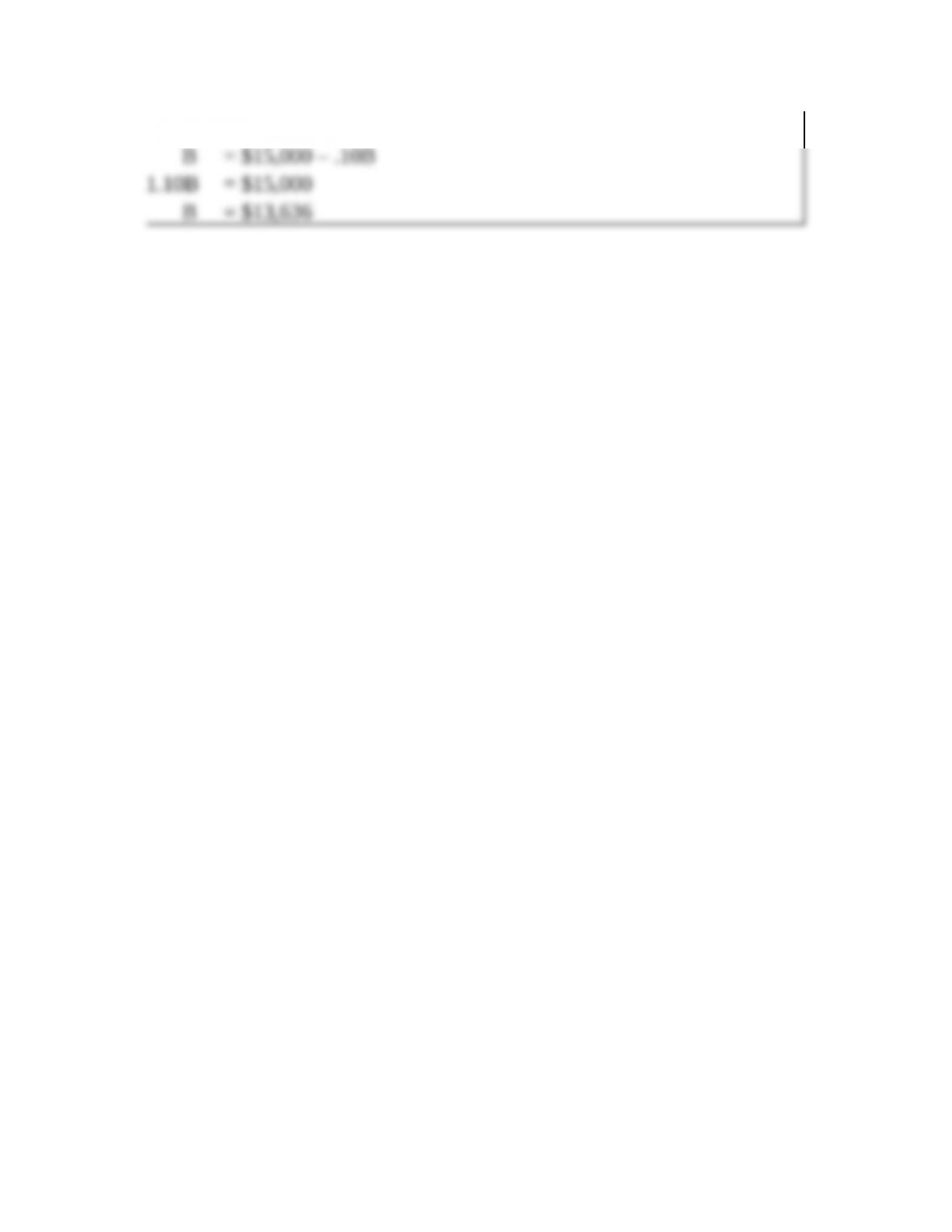
B = .10 ($150,000 – B)
Problem 13–6
a. This is a loss contingency. Eastern can use the information occurring after the
end of the year in determining appropriate disclosure. It is unlikely that
_______________________________
Note X: Contingency
In a lawsuit resulting from a dispute with a supplier, a judgment was rendered
against Eastern Manufacturing Corporation in the amount of $107 million plus
interest, a total of $122 million at February 3, 2019. Eastern plans to appeal the
judgment. While management and legal counsel are presently unable to predict
the outcome or to estimate the amount of any liability the company may have
with respect to this lawsuit, it is not expected that this matter will have a
material adverse effect on the company.
b. This is a loss contingency. Eastern can use the information occurring after the
_______________________________
Note X: Contingency
Eastern is the plaintiff in a pending lawsuit filed against United Steel for
damages due to lost profits from rejected contracts and for unpaid receivables.
The case is in final appeal. No amount has been accrued in the financial
statements for possible collection of any claims in this litigation.
d. No disclosure is required because the claim is as yet unasserted (no lawsuit has