Exercise 13–18
Requirement 1
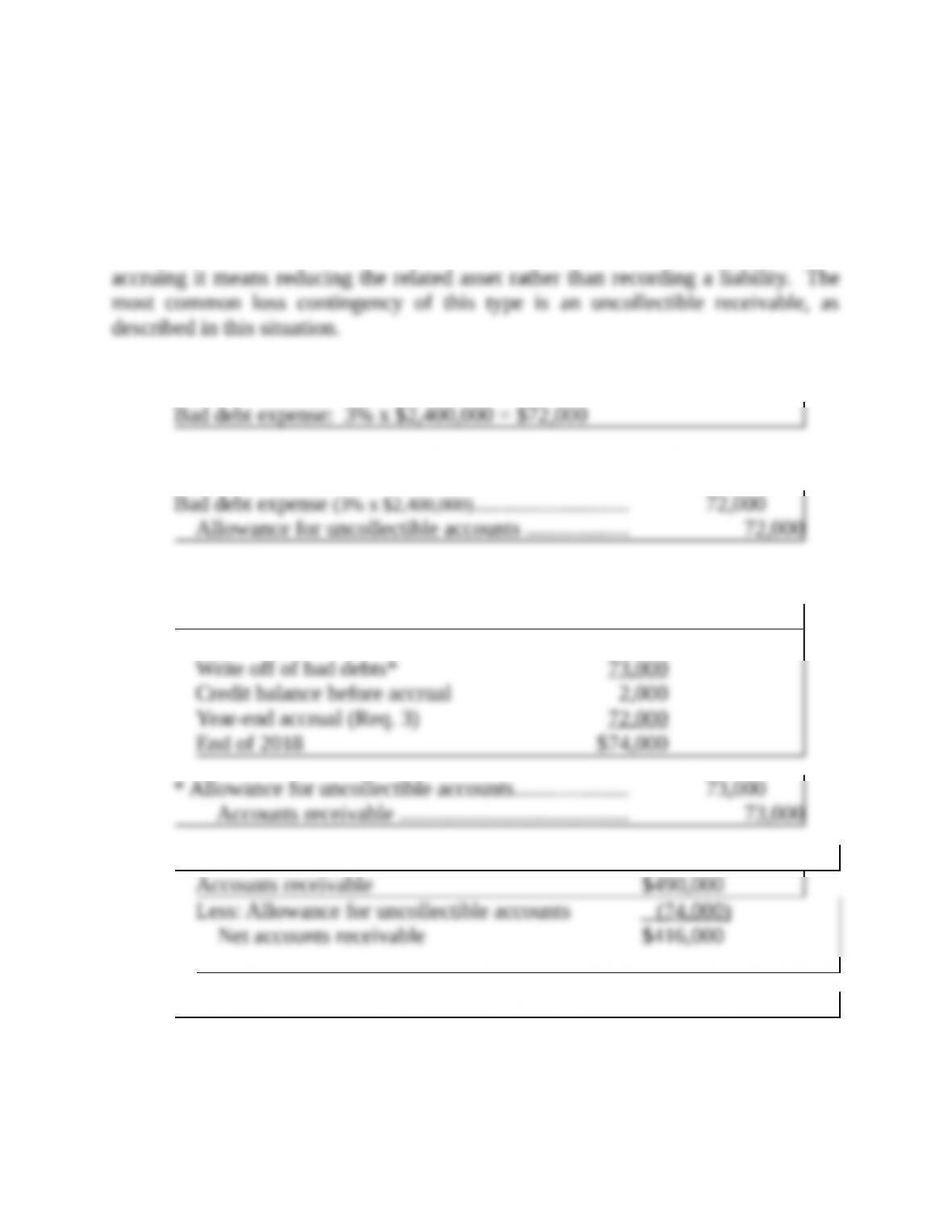
This is a loss contingency. Some loss contingencies don’t involve liabilities at
all. Some contingencies when resolved cause a noncash asset to be impaired, so
Requirement 2
Requirement 3
Requirement 4
Allowance for uncollectible accounts:
Beginning of 2018 $75,000
Net accounts receivable:
Exercise 13–19
Scenario 1
Scenario 2
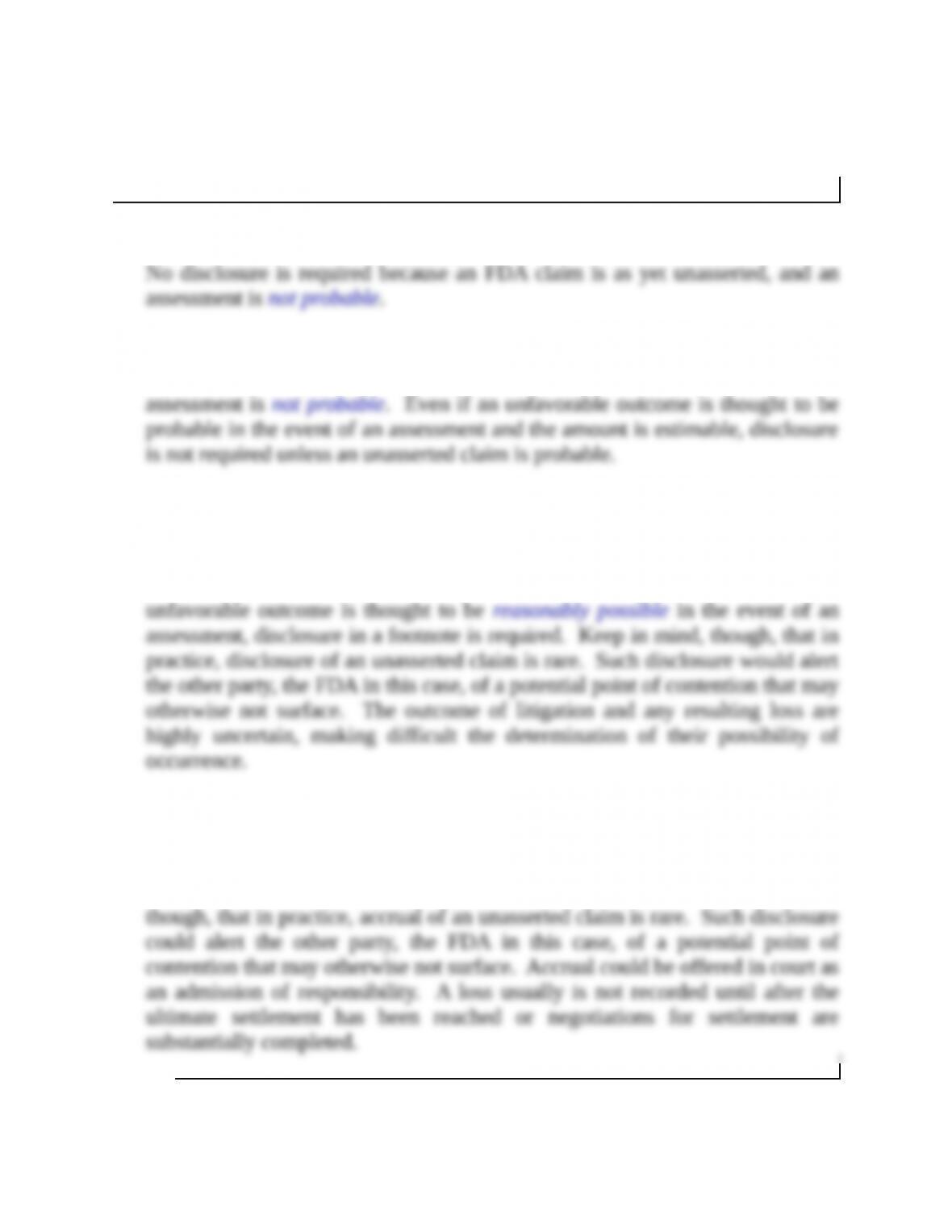
No disclosure is required because an FDA claim is as yet unasserted, and an
Scenario 3
A disclosure note is required because an FDA claim is as yet unasserted, but an
assessment is probable. Since an unfavorable outcome is not thought to be
probable in the event of an assessment, no accrual is needed, but since an
Scenario 4
Accrual of the loss is required because an FDA claim is as yet unasserted, but
an assessment is probable. Since an unfavorable outcome also is thought to be
probable in the event of an assessment, accrual is needed. Keep in mind,
Exercise 13–20
Requirement 1
Requirement 2
Requirement 3
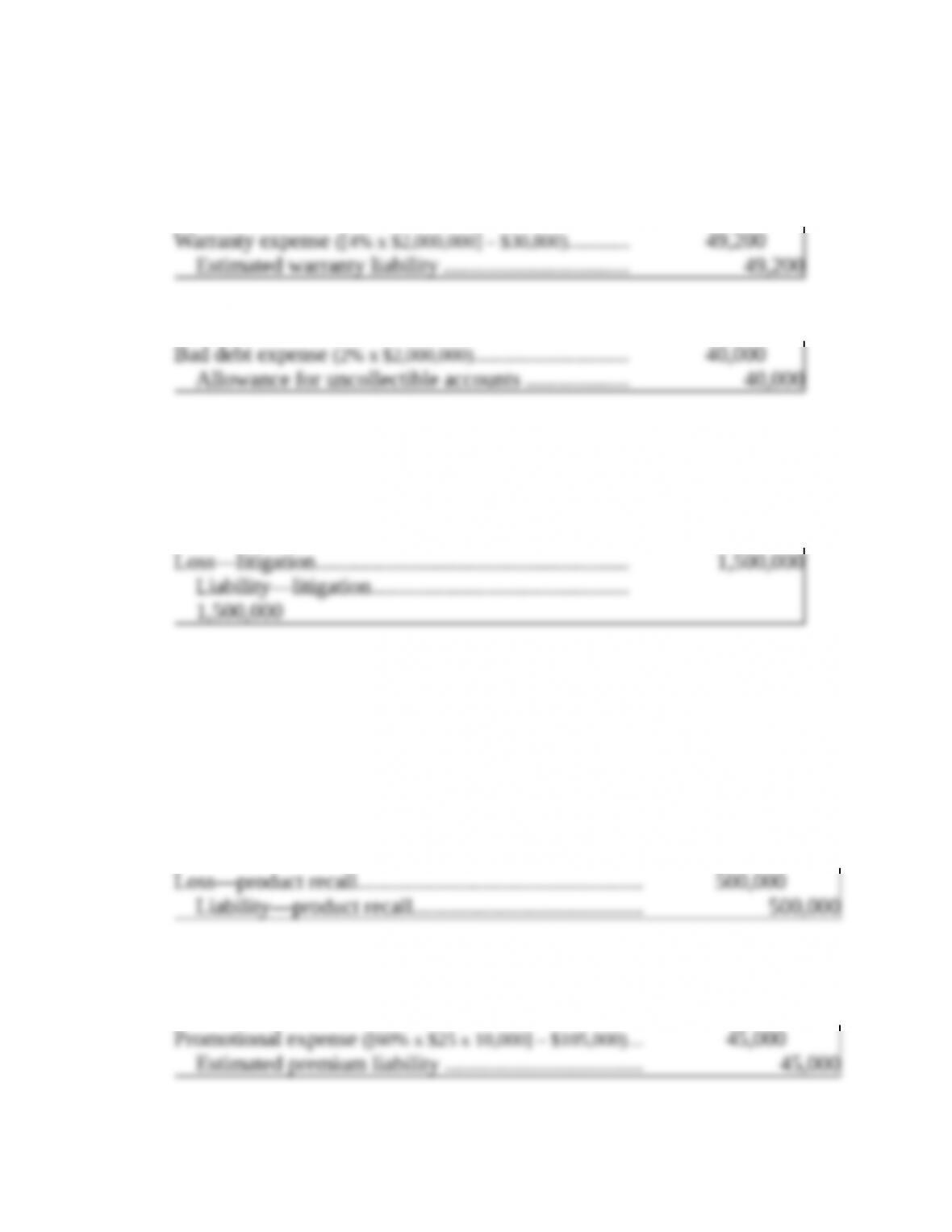
This is a loss contingency. Classical can use the information
occurring after the end of the year and before the financial statements are
issued to determine appropriate disclosure.
A disclosure note also is appropriate.
Requirement 4
This is a gain contingency. Gain contingencies are not accrued even if
the gain is probable and reasonably estimable. The gain should be
recognized only when realized. A disclosure note is appropriate.
Requirement 5
A disclosure note also is appropriate.
Requirement 6
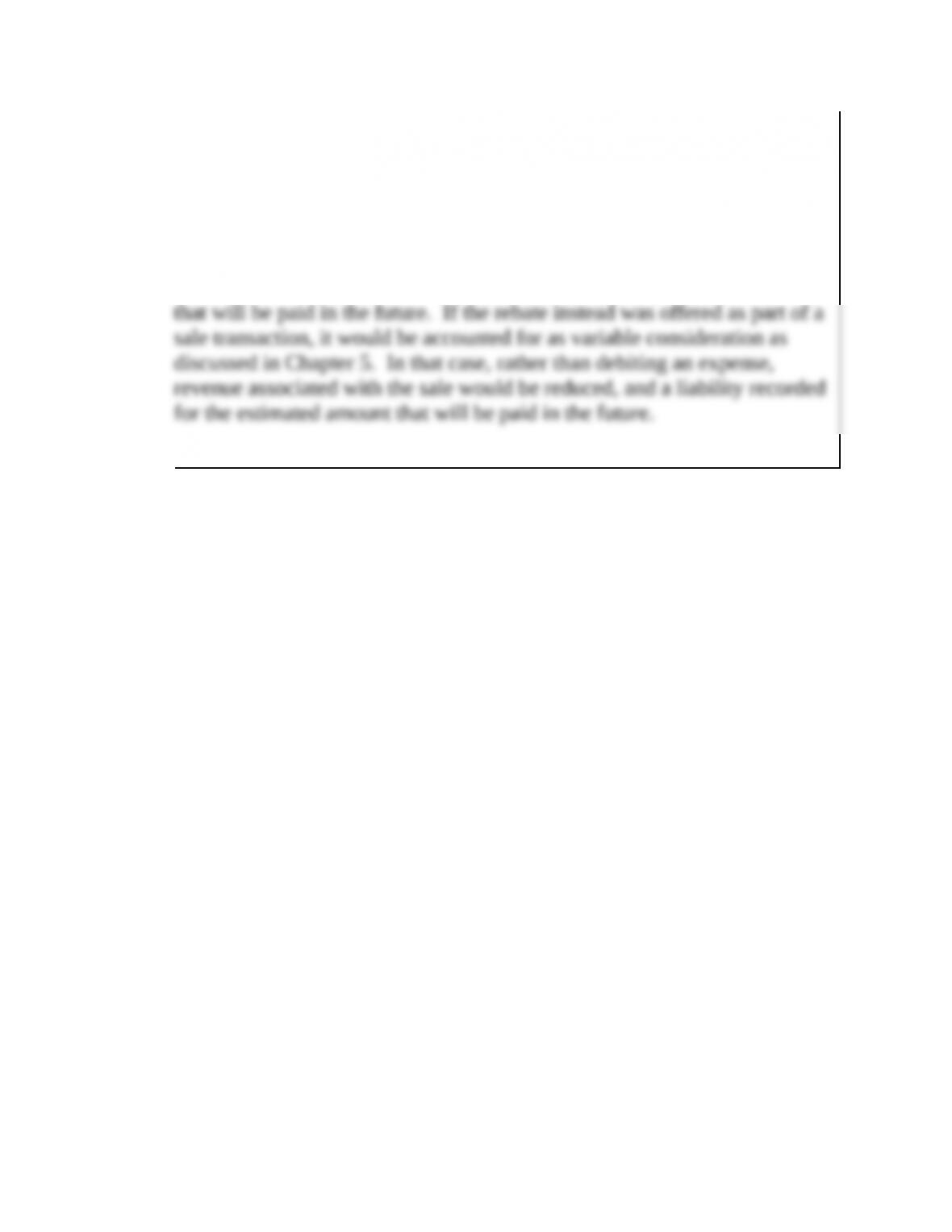
Note: Because the rebate is offered as a promotion rather than provided
as part of a sales transaction, it really is a “coupon” as discussed in the
Additional Consideration Box in the text section for product warranties and
guarantees. An expense and liability is recorded for the estimated amount
Exercise 13–21
Requirement 1
Erismus would not recognize a liability, as U.S. GAAP defines
Requirement 2
Erismus would recognize a liability of $2,000,000, as it is probable
Requirement 3
Erismus would recognize a liability of $5,000,000, as it is probable
Requirement 4
Requirement 5
Exercise 13–22
Requirement 1
Erismus would recognize a liability of $1,000,000, as IFRS defines
Requirement 2
Erismus would recognize a liability of $3,000,000, as it is more likely
Requirement 3
Erismus would recognize a liability of $3,500,000, as it is more likely
Requirement 4
This is a gain contingency. Gain contingencies are accrued under
Requirement 5
This is a gain contingency. Gain contingencies are accrued under
Exercise 13–23
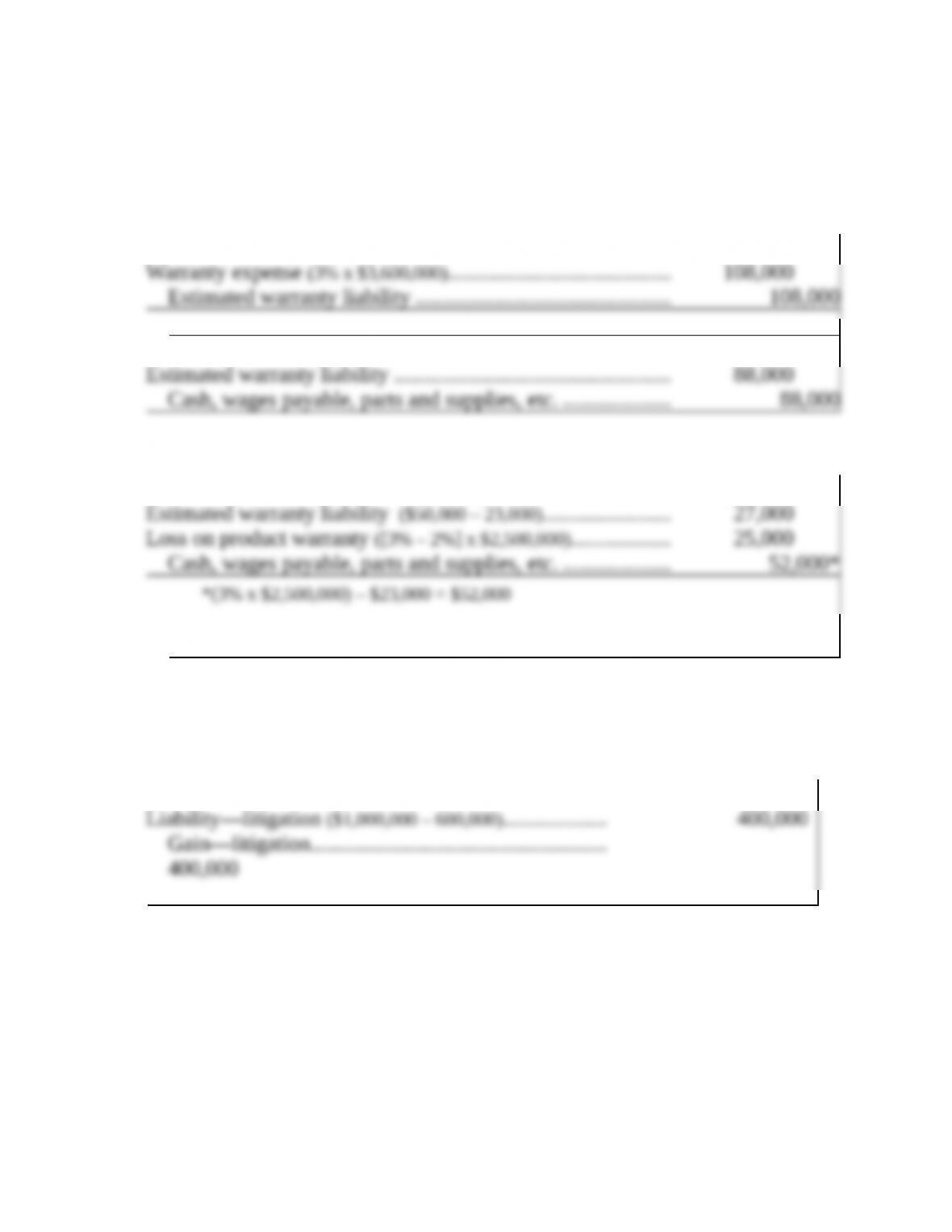
Item Reporting Method
__C_ 1. Commercial paper. N. Not reported
__D_ 2. Noncommitted line of credit. C. Current liability
__C_ 3. Customer advances. L. Long-term liability
__C_ 4. Estimated quality assurance warranty cost. D. Disclosure note
only
Exercise 13–24
Requirement 1
Accrued liability and expense
Actual expenditures (summary entry)
Requirement 2
Actual expenditures (summary entry)
Exercise 13–25
1. This is a change in estimate.
To revise the liability on the basis of the new estimate:
2. A disclosure note should describe the effect of a change in estimate on income
before extraordinary items, net income, and related per-share amounts for the
current period.
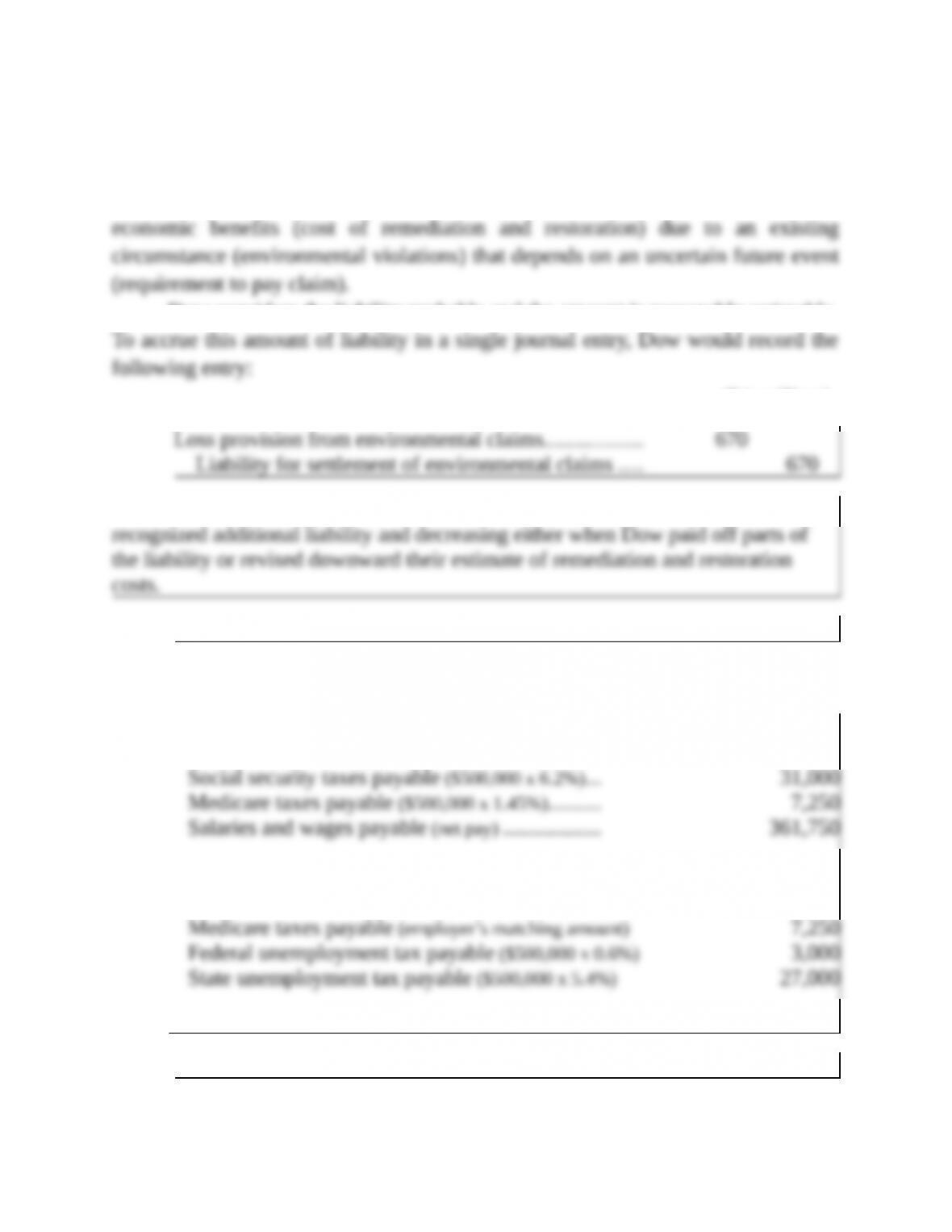
Exercise 13–26
The note describes a loss contingency. Dow anticipates a future sacrifice of
Dow considers the liability probable and the amount is reasonably estimable.
($ in millions)
In practice this liability would be accrued in multiple entries, increasing when Dow
Exercise 13–27
Salaries and wages expense (total amount earned)….. 500,000
Withholding taxes payable (federal income tax)…. 100,000
Payroll tax expense (total)………………………………… 68,250
Social security taxes payable (employer’s matching amount) 31,000