Exercise 13–7
Requirement 1
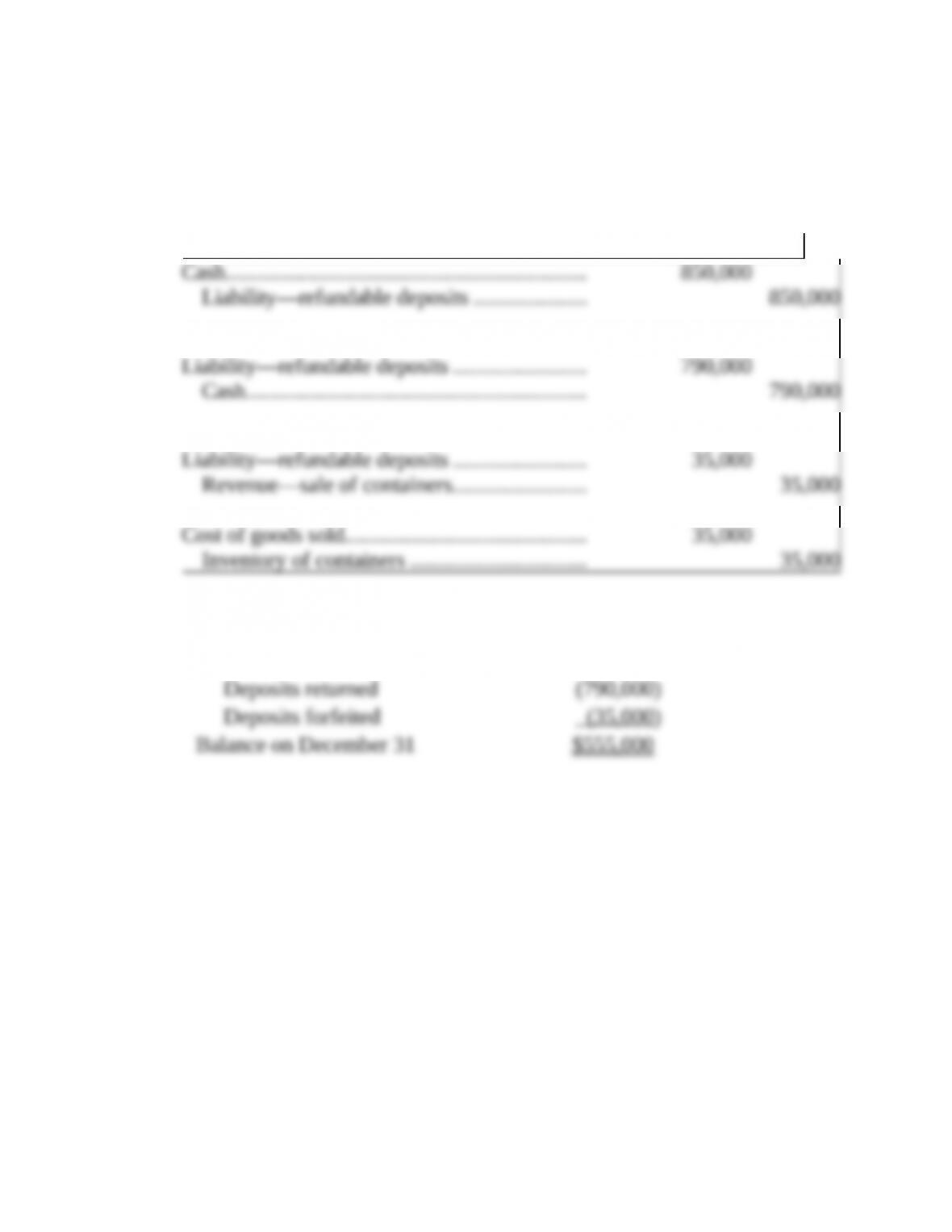
Deposits Collected
Containers Returned
Deposits Forfeited
Requirement 2
Balance on January 1 $530,000
Deposits received 850,000
Exercise 13–8
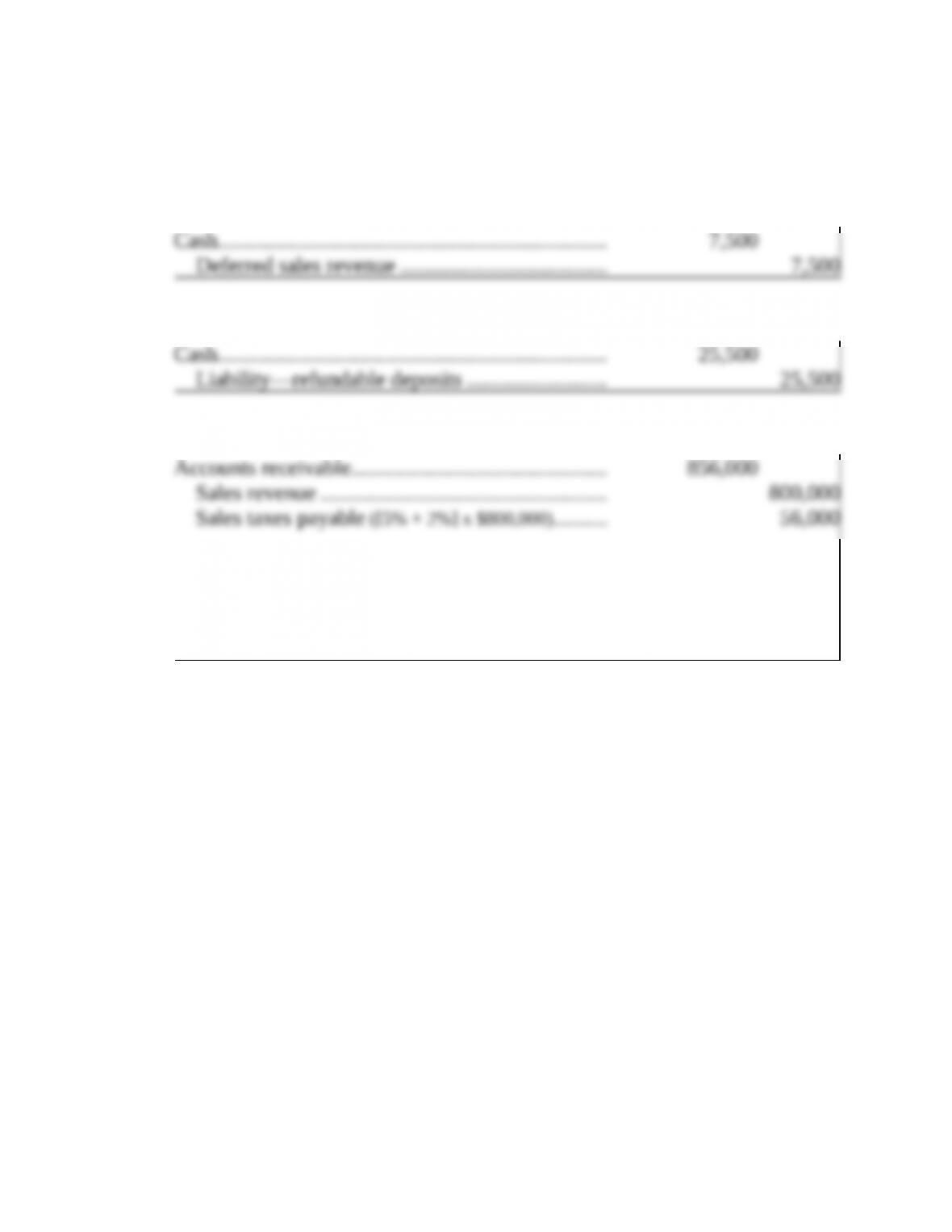
Requirement 1
Requirement 2
Requirement 3
Exercise 13–9
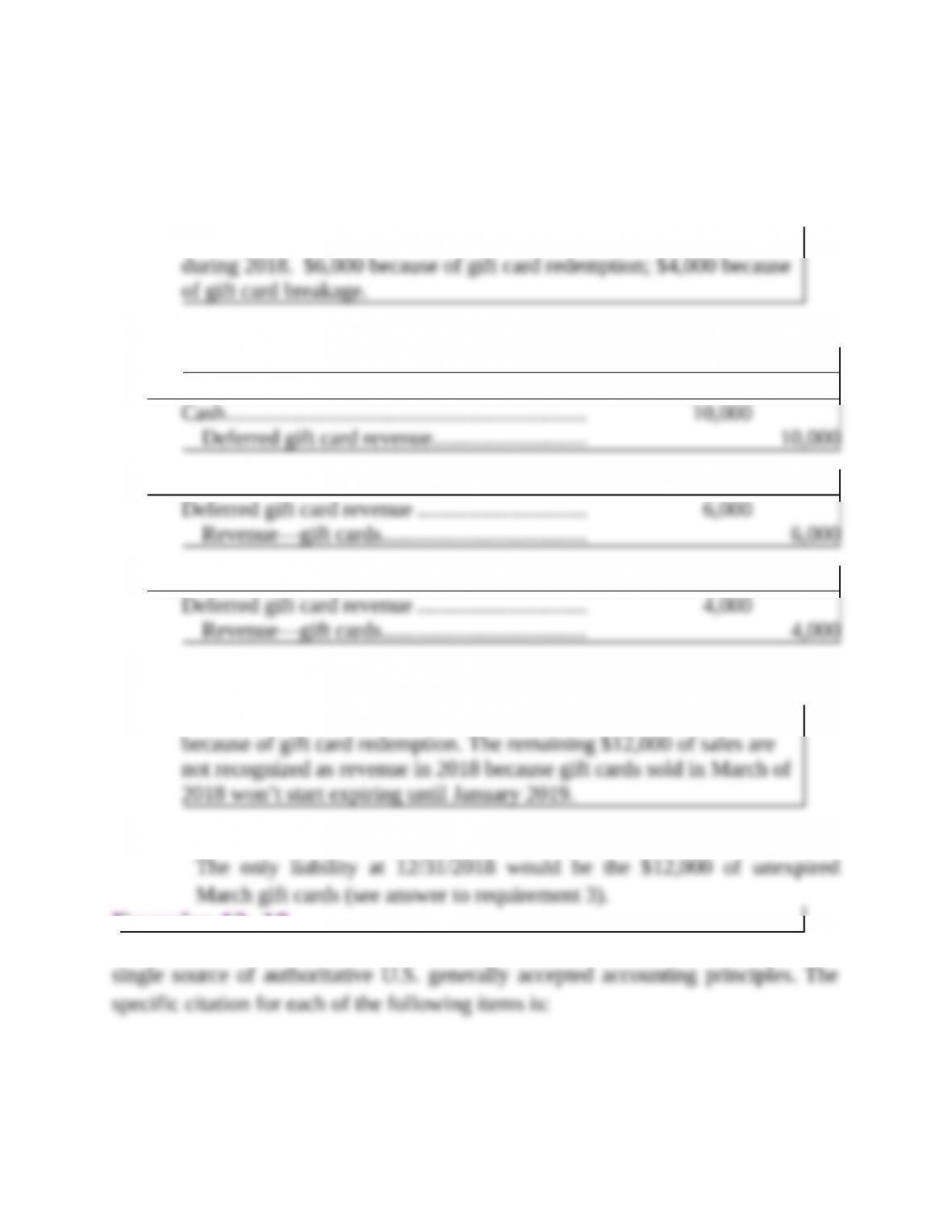
Requirement 1
The entire $10,000 sold in January will be recognized as revenue
Requirement 2
January Gift Card Sales
Redemption of January Gift Cards
Expiration of January Gift Cards
Requirement 3
Of the $16,000 sold in March, : $4,000 will be recognized as revenue
Requirement 4
The FASB Accounting Standards Codification represents the
1. If it is only reasonably possible that a contingent loss will occur, the
contingent loss should be disclosed:
Exercise 13–10
2. Criteria allowing short-term liabilities expected to be refinanced to be
classified as long-term liabilities:
3. Accounting for separately priced extended warranty contracts:
4. The criteria to determine if an employer must accrue a liability for
vacation pay.
Exercise 13–11
Normally, short-term debt (payable within a year) is classified as current
liabilities. However, when such debt is to be refinanced on a long-term basis, it
Exercise 13–12
Requirement 1
Normally, IFRS requires that short-term debt (payable within a year) be
classified as current liabilities. However, when such debt is to be refinanced on a
Requirement 2
IFRS requires that the refinancing capability be in place as of the balance sheet
Exercise 13–13
1. Current liability: $10 million
The requirement to classify currently maturing debt as a current liability
2. Noncurrent liability: $14 million
The current liability classification includes (a) situations in which the
creditor has the right to demand payment because an existing violation of a
3. Current liability: $7 million
Exercise 13–14
Requirement 1
The specific citation that specifies the guidelines for accruing loss contingencies is
Requirement 2
Specifically, the guidelines are that an estimated loss from a loss contingency be
accrued by a charge to income if both of the following conditions are met:
a. Information available prior to issuance of the financial statements indicates
b. The amount of loss can be reasonably estimated.
Exercise 13–15
Requirement 1
This is a loss contingency. There may be a future sacrifice of economic
benefits (cost of satisfying the warranty) due to an existing circumstance (the
The liability is probable because product warranties inevitably entail costs.
Requirement 2
2018 Sales
Accrued liability and expense
Actual expenditures
Requirement 3
Warranty Liability
__________________________________________
Exercise 13–16
Requirement 1
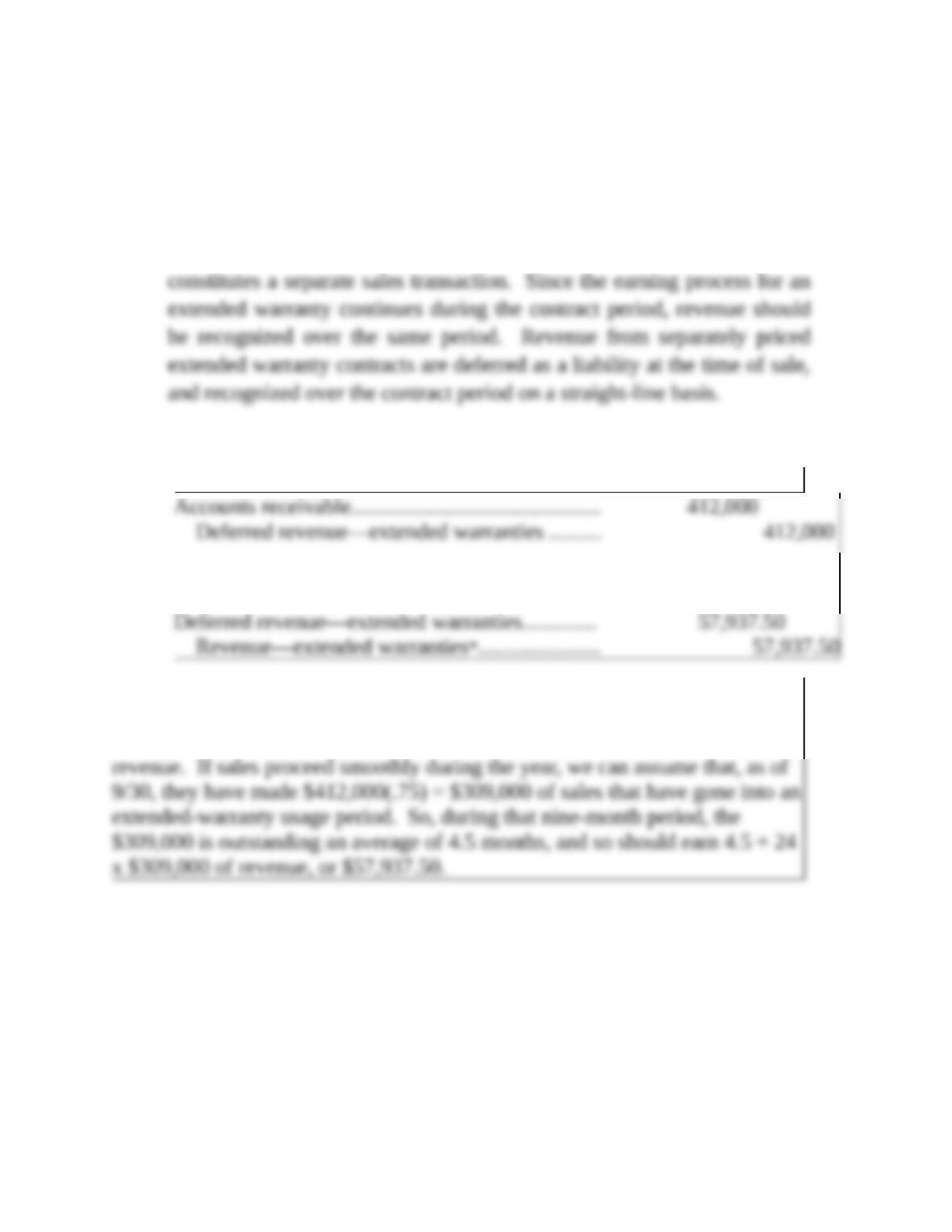
This is not a loss contingency. An extended warranty is priced and sold
separately from the warranted product and therefore essentially
Requirement 2
During the year
December 31 (adjusting entry)
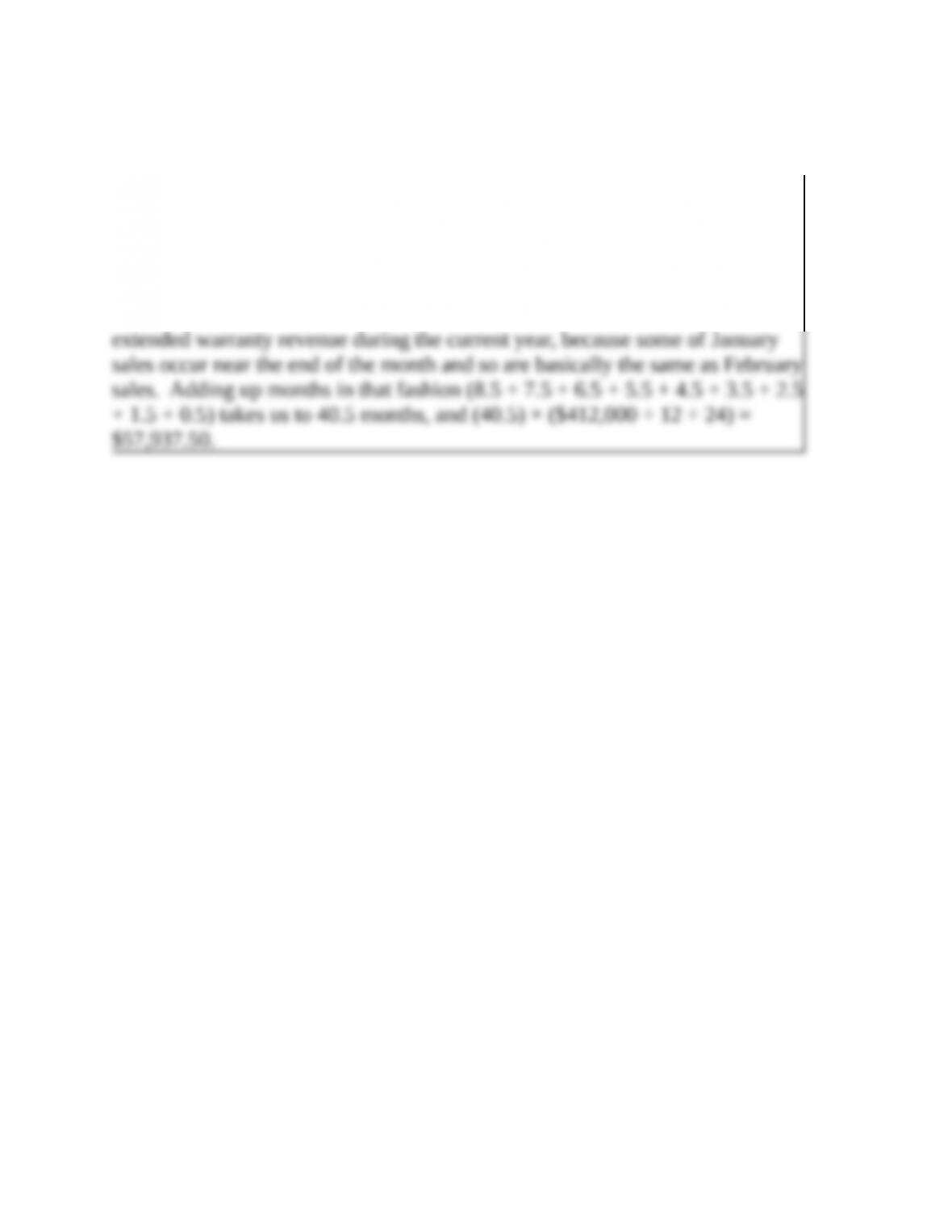
*If warranties don’t earn any revenue for 90 days (after the free warranty
expires), then only sales up until 9/30 can earn any revenue, with sales on 1/1
earning nine months’ worth of revenue, and sales on 9/30 earning one day of
Exercise 13–16 (concluded)
Note: Students may be tempted to solve this exercise by believing that January
sales produce 9 months of extended warranty revenue, February sales produce
8 months, and so on. Those sum to 45 months of extended warranty revenue,
which would imply revenue of 45 months × ($412,000 ÷ 12 months of sales ÷
24 months over which revenue is earned) = $64,375. That is incorrect. The
key is to understand that, on average, January sales only produce 8.5 months of
Exercise 13–17
Requirement 1
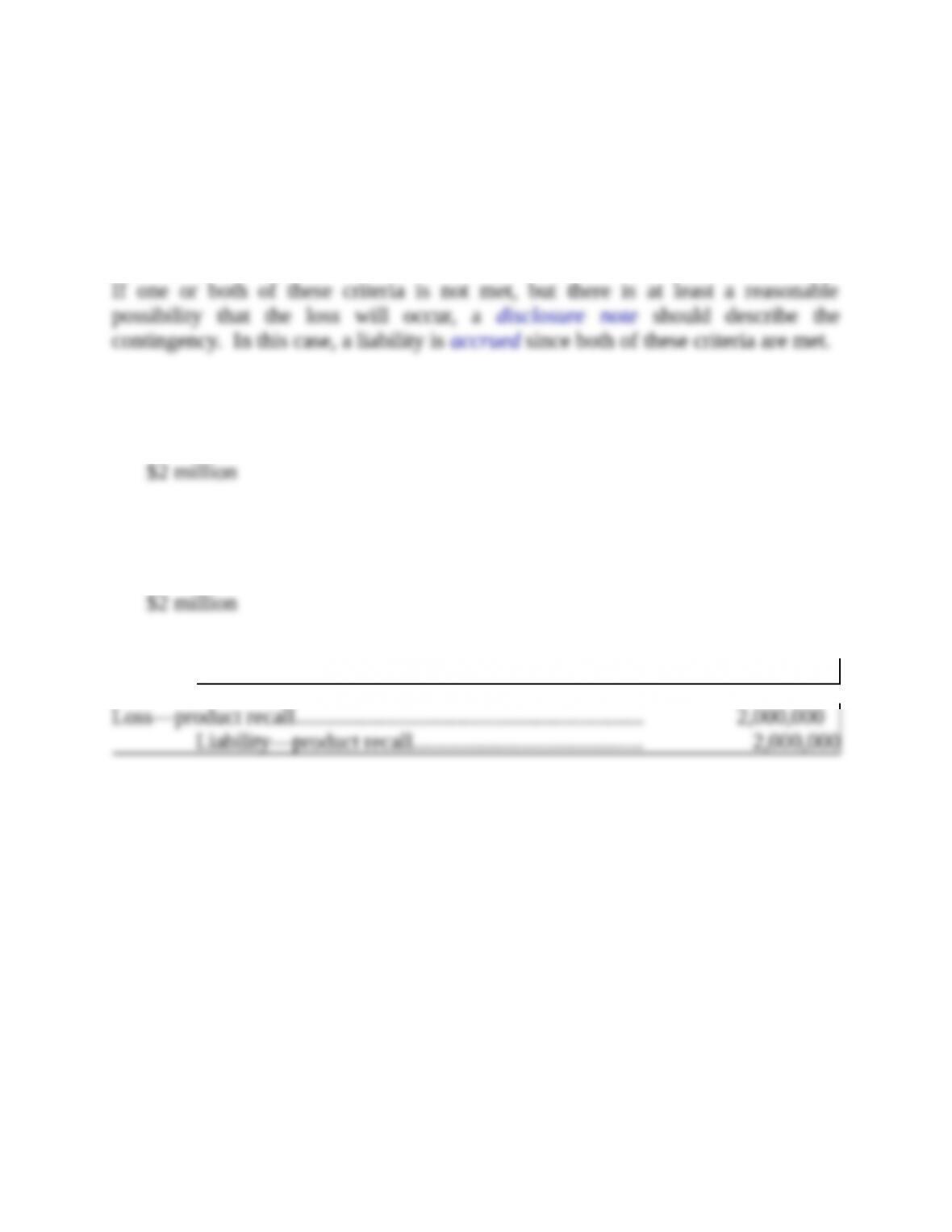
This is a loss contingency. A liability is accrued if it is both probable that the
confirming event will occur and the amount can be at least reasonably estimated.
Requirement 2
Loss:
Requirement 3
Liability:
Requirement 4
A disclosure note also is appropriate.