TARGET CASE
Requirement 1
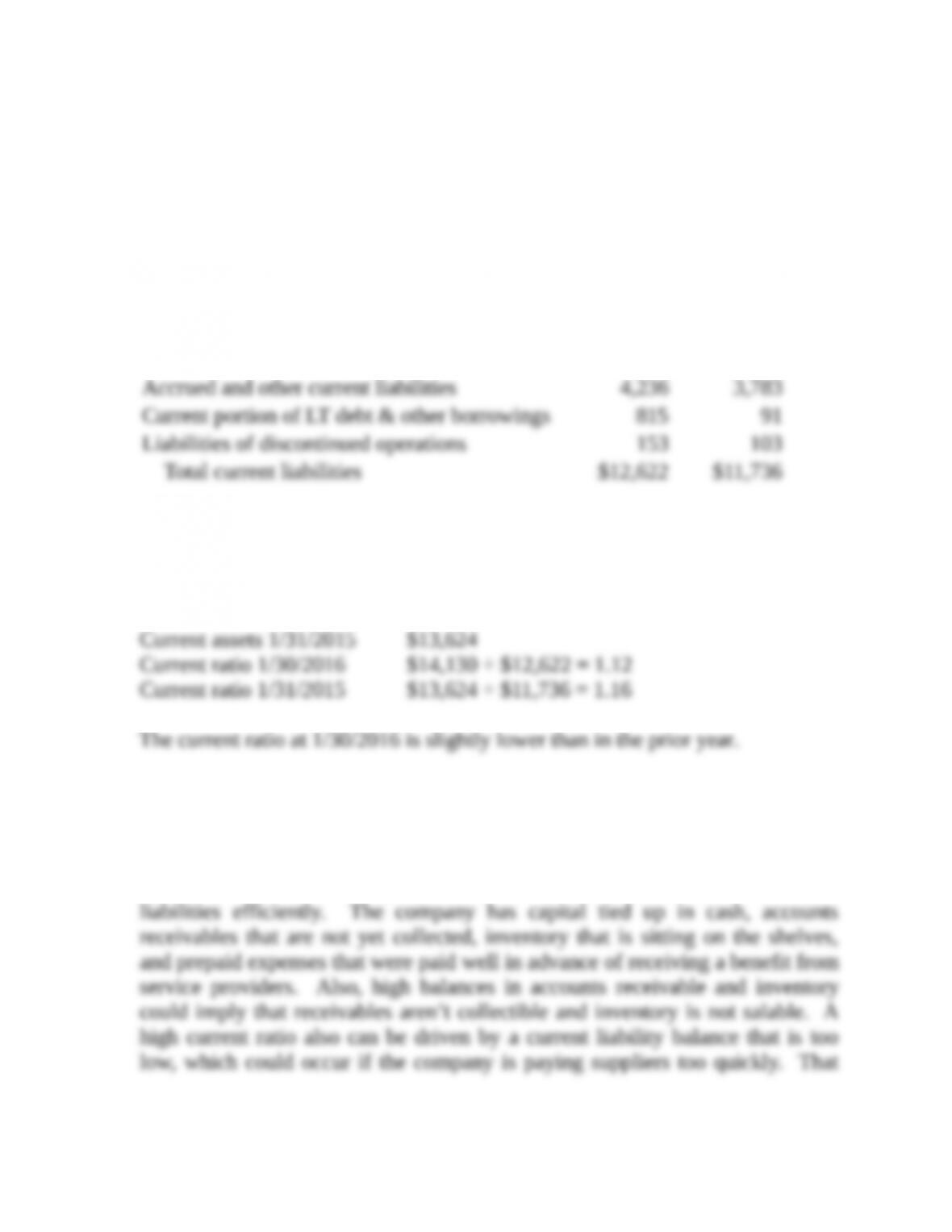
a. The four components of current liabilities are:
($ in millions) 1/30/2016 1/31/2015
Current Liabilities:
Accounts payable $ 7,418 $ 7,759
b. Current assets are sufficient to cover current liabilities in both the fiscal years
ended 1/30/2016 and 1/31/2015:
Current assets 1/30/2016 $14,130
c. A current ratio of 1 to 1 or higher sometimes is considered a rule-of-thumb
standard. A current ratio that is too low implies that the company may not have
sufficient current assets to meet its current obligations. That company is under
pressure to raise cash to meet current obligations. A current ratio that is too
high implies that the company is not using its current assets and current

Target Case (continued)
Requirement 2
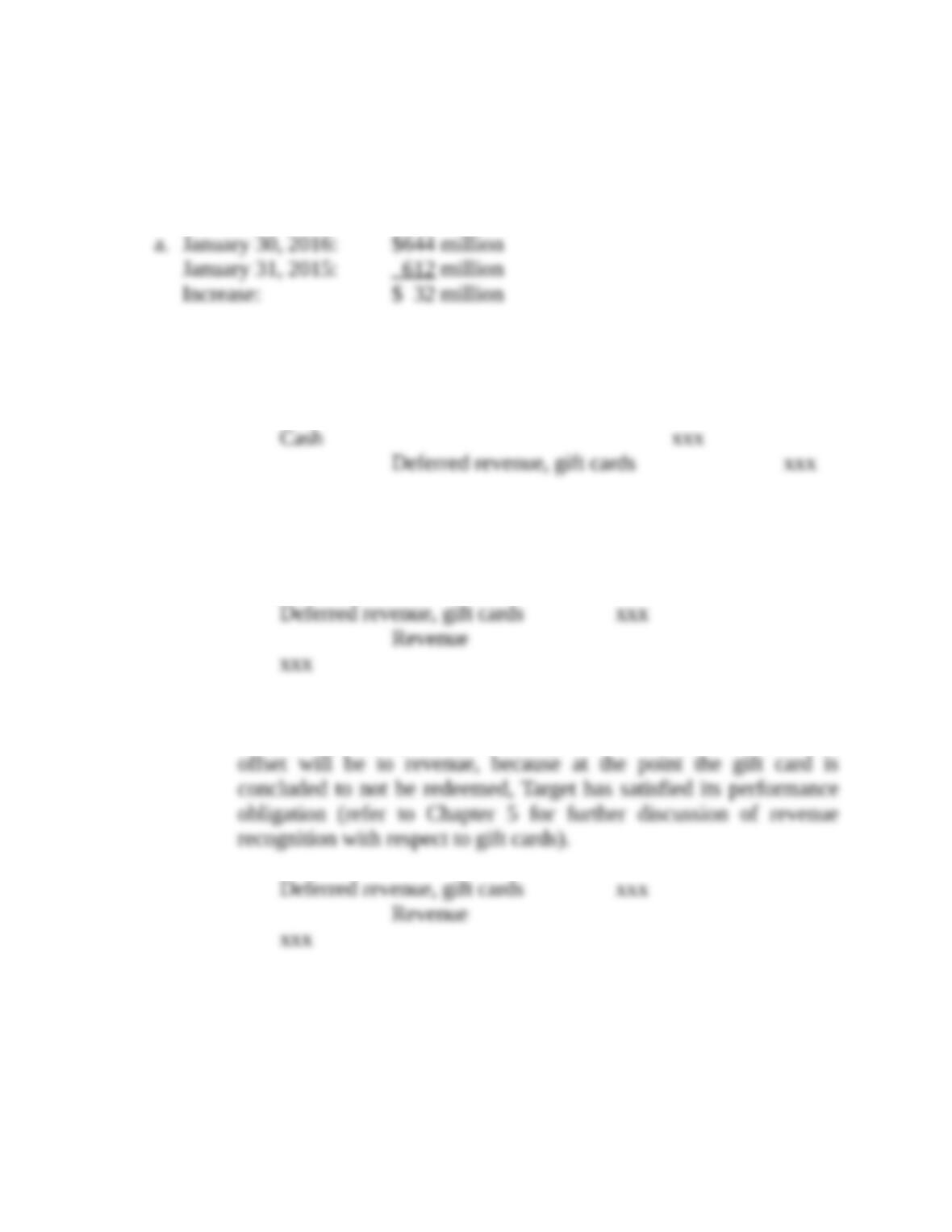
b. The liability will be affected as follows:
i. The liability will increase for sales of gift cards, because that will
increase deferred revenue with a journal entry of the form:
ii. The liability will decrease when gift cards are redeemed, because the
deferred revenue associated with the gift card can now be
recognized.
iii. The liability will decrease for an increase in estimated breakage,
because it is anticipated that fewer gift cards will be redeemed. The
Target Case (concluded)
Requirement 3
Target states that “Our accrual for estimated probable losses is based on actual
settlements reached to date and the expectation of negotiated settlements in the
pending actions. We have not based our accrual on any determination that it is
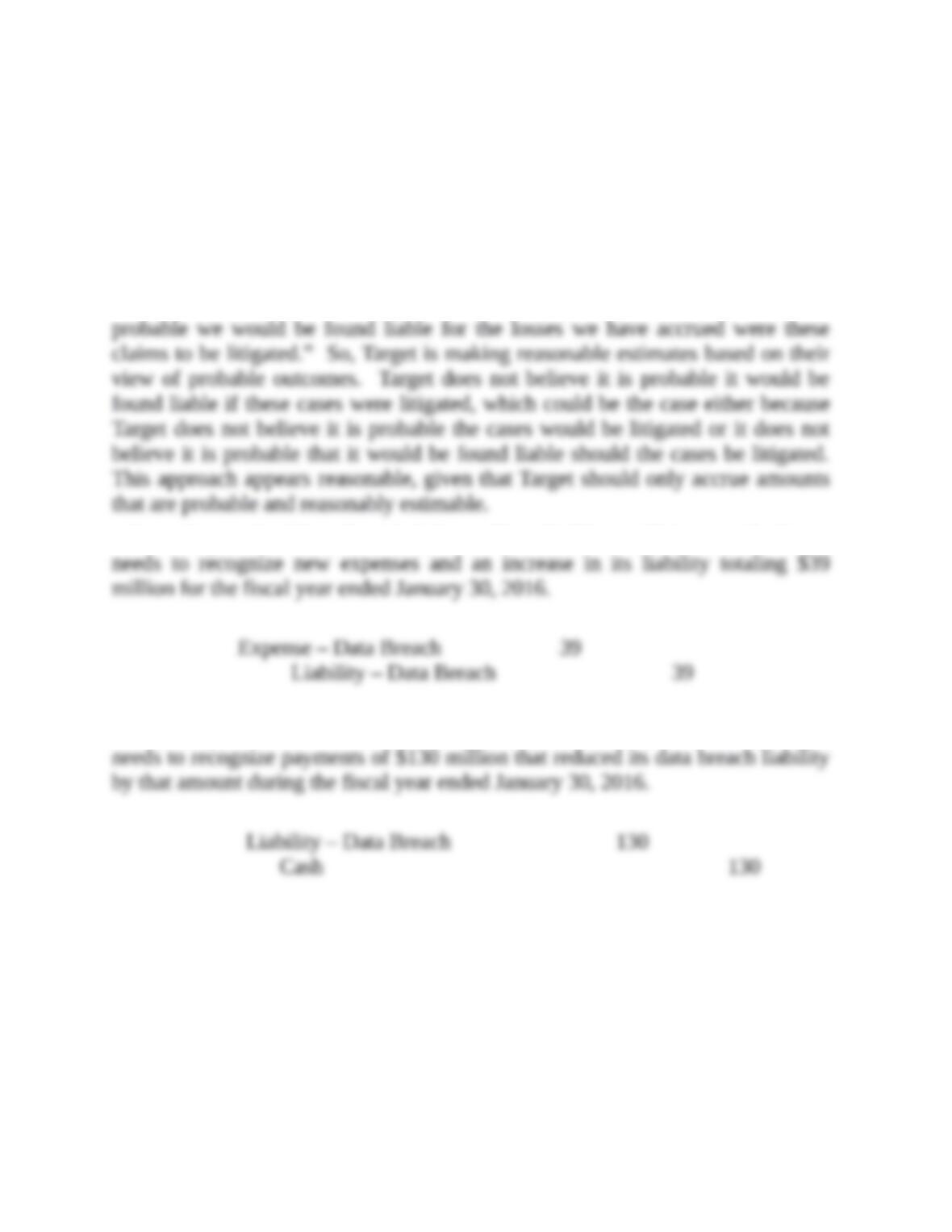
According to the “Data Breach Balance Sheet Rollforward” in note 19, Target
According to the “Data Breach Balance Sheet Rollforward” in note 19, Target
Air France–KLM Case
Requirement 1
AF-KLM receives payment for flight services in advance of delivery of those
Requirement 2
Under both U.S. GAAP and IFRS, liabilities associated with a past event are
recorded when the obligation is probable and the amount of the obligation can be
Requirement 3
a. Yes, the total beginning balances (totaling €2,135, consisting of €1,404 noncur-
rent and €731 current) and ending balances (totaling €2,255, consisting of
Air France Case (concluded)
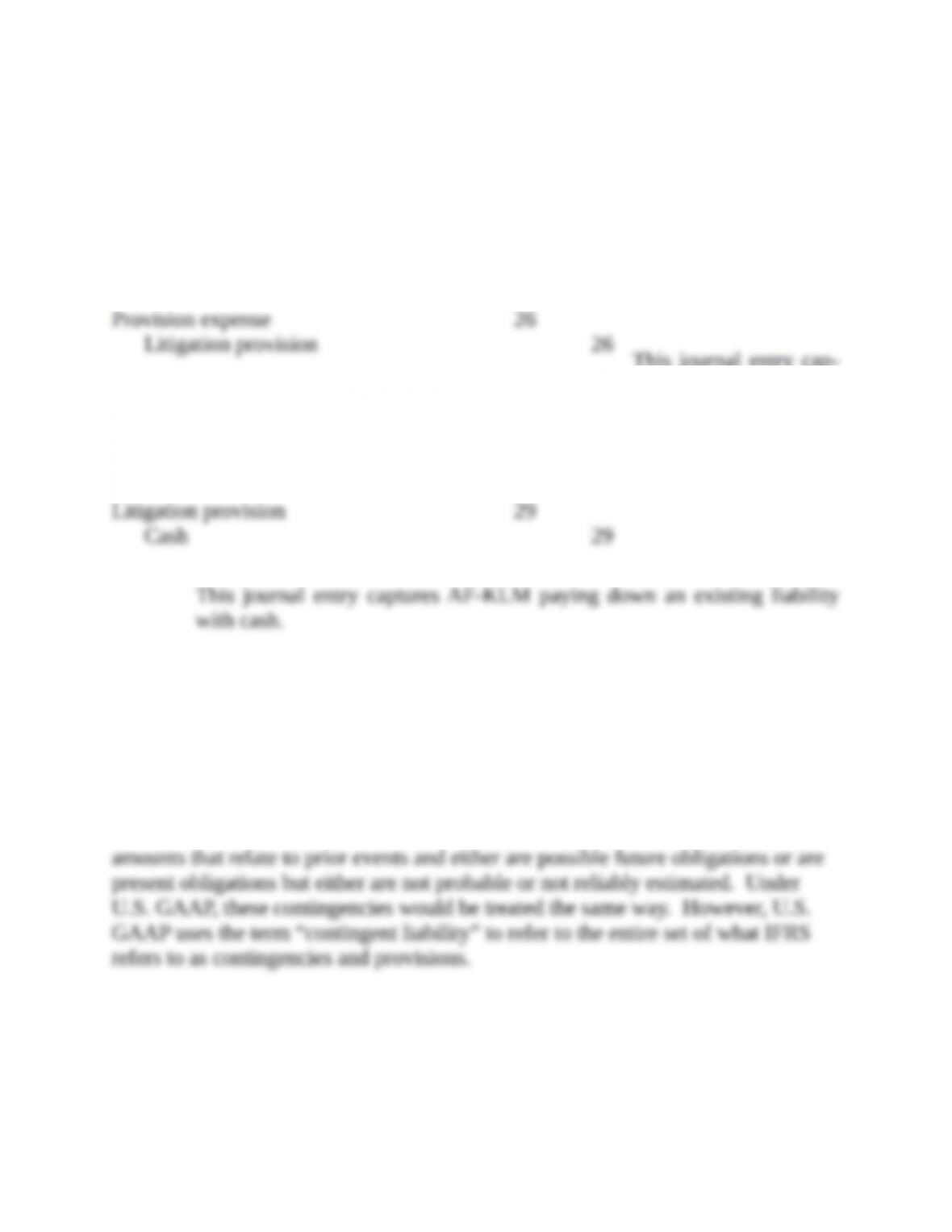
b. Journal entries for the following changes in the litigation provision that oc-
curred during fiscal 2015:
i. New provision
This journal entry cap-
tures AF-KLM establishing an additional liability for future litigation-related ex-
penditures.
ii. Use of provision
c. AF-KLM’s treatment of litigation provision under IFRS is consistent with how
these items would be treated under U.S. GAAP.
Requirement 4
Under IFRS, “contingent liabilities” are disclosed and not accrued as a liability in
the balance sheet or recognized as an expense in the income statement. These are
amounts that relate to prior events and either are possible future obligations or are
present obligations but either are not probable or not reliably estimated. Under
U.S. GAAP, these contingencies would be treated the same way. However, U.S.
GAAP uses the term “contingent liability” to refer to the entire set of what IFRS
refers to as contingencies and provisions.
Provision expense 26
Litigation provision 26
Litigation provision 29
Cash 29