Exercise 12–29
Requirement 1
Requirement 2
Exercise 12–30
Requirement 1
Bloom believes it is more likely than not it will have to sell the investment
before fair value recovers, so the portion of the impairment that consists of credit
and noncredit losses is not relevant. Bloom must recognize the entire OTT
impairment in earnings as follows:
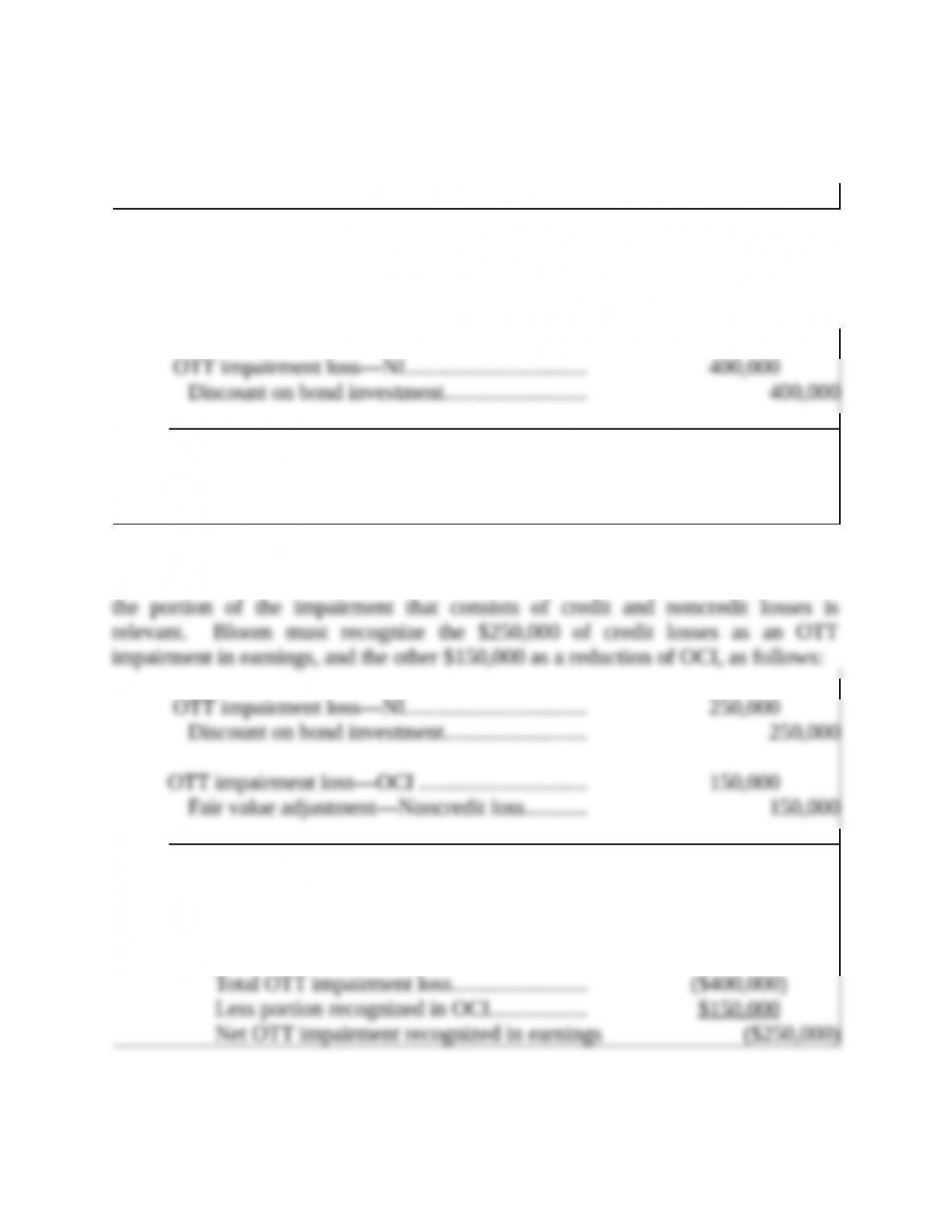
In the income statement, the entire $400,000 will be shown as an OTT impairment
loss.
Requirement 2
Bloom does not plan to sell the investment, and does not believe it is more
likely than not that it will have to sell the investment before fair value recovers, so
In the income statement, the entire $400,000 will be shown as an OTT impairment
loss, then the amount of noncredit loss is subtracted to leave only the credit loss
reducing earnings:
OTT impairment on HTM investments
Exercise 12–31
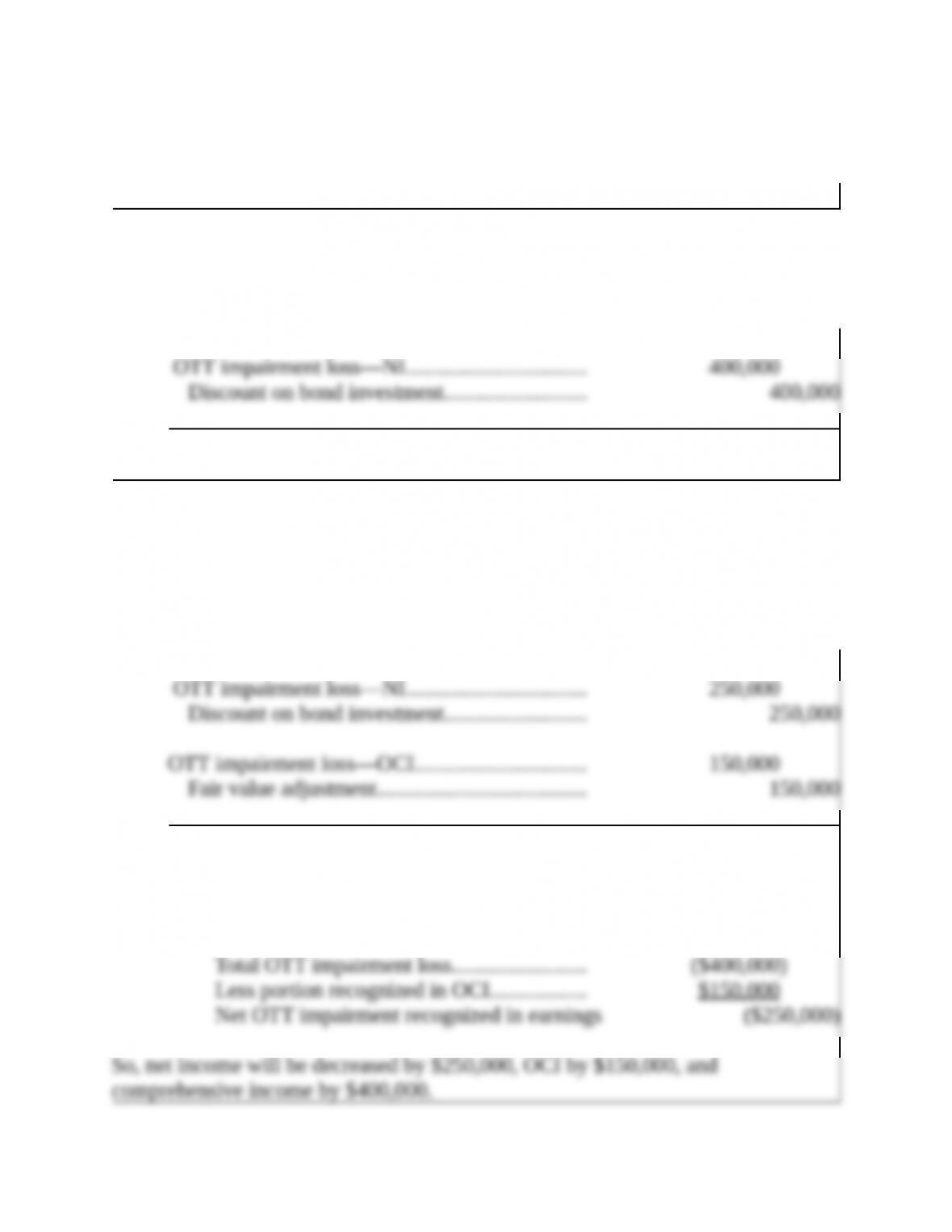
Requirement 1: Assuming Bloom has not previously recorded a $100,000 loss
Scenario 1: Bloom believes it is more likely than not it will have to sell the
investment before fair value recovers, so the portion of the impairment that
consists of credit and noncredit losses is not relevant. Bloom must recognize the
entire OTT impairment in earnings. Bloom makes the following entry:
In the income statement, the entire $400,000 will be shown as an OTT impairment
loss. There is no effect on OCI, and a $400,000 effect on comprehensive income.
Scenario 2: Bloom does not plan to sell the investment, and does not believe it is
more likely than not that it will have to sell the investment before fair value
recovers, so the portion of the impairment that consists of credit and noncredit
losses is relevant. Bloom must recognize the $250,000 of credit losses as an OTT
impairment in earnings, and the other $150,000 as a reduction of OCI. Bloom
makes the following entry:
In the income statement, the entire $400,000 will be shown as an OTT impairment
loss, then the amount of noncredit loss is subtracted to leave only the credit loss
reducing earnings:
OTT impairment on AFS investments
Exercise 12–31 (continued)
Requirement 2: Assuming Bloom has previously recorded a $100,000 loss
Scenario 1: Bloom believes it is more likely than not it will have to sell the
investment before fair value recovers, so the portion of the impairment that
consists of credit and noncredit losses is not relevant. Bloom must recognize the
entire OTT impairment in earnings. Bloom makes the following entry:
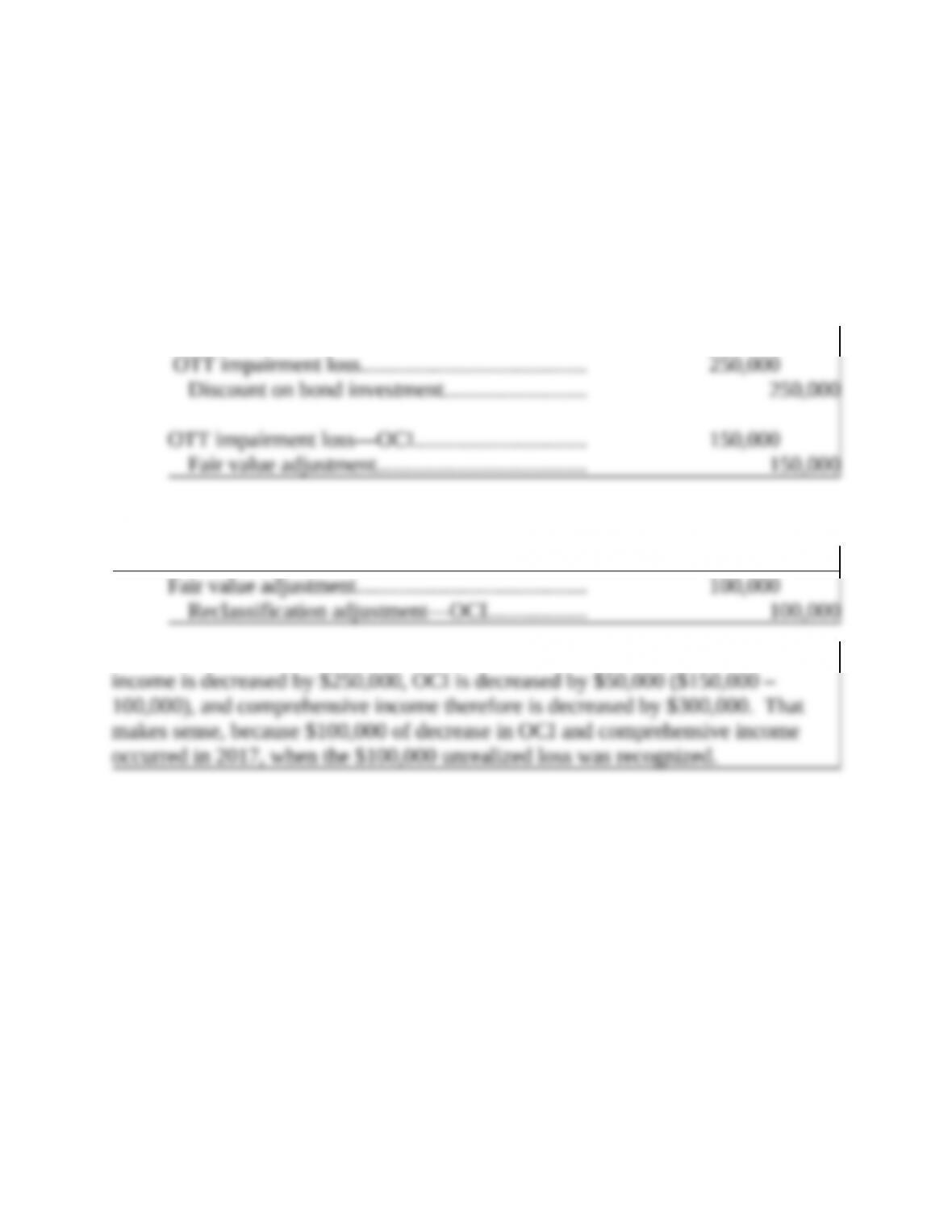
Assuming a previously recorded $100,000 unrealized loss, Bloom must also
reclassify that loss out of OCI and the fair value adjustment. In 2017 Bloom would
have made the following entry:
So to reclassify that unrealized loss, Bloom would reverse that entry.
In the income statement, the entire $400,000 will be shown as an OTT impairment
Exercise 12–31 (concluded)
Scenario 2: Bloom does not plan to sell the investment, and does not believe it is
more likely than not that it will have to sell the investment before fair value
recovers, so the portion of the impairment that consists of credit and noncredit
losses is relevant. Bloom must recognize the $250,000 of credit losses as an OTT
impairment in earnings, and the other $150,000 as a reduction of OCI. Bloom
makes the following entry:
Assuming a previously recorded $100,000 unrealized loss, Bloom must also
reclassify that loss out of OCI and the fair value adjustment:
Note that, when combined with the other journal entries, the net effect is that net
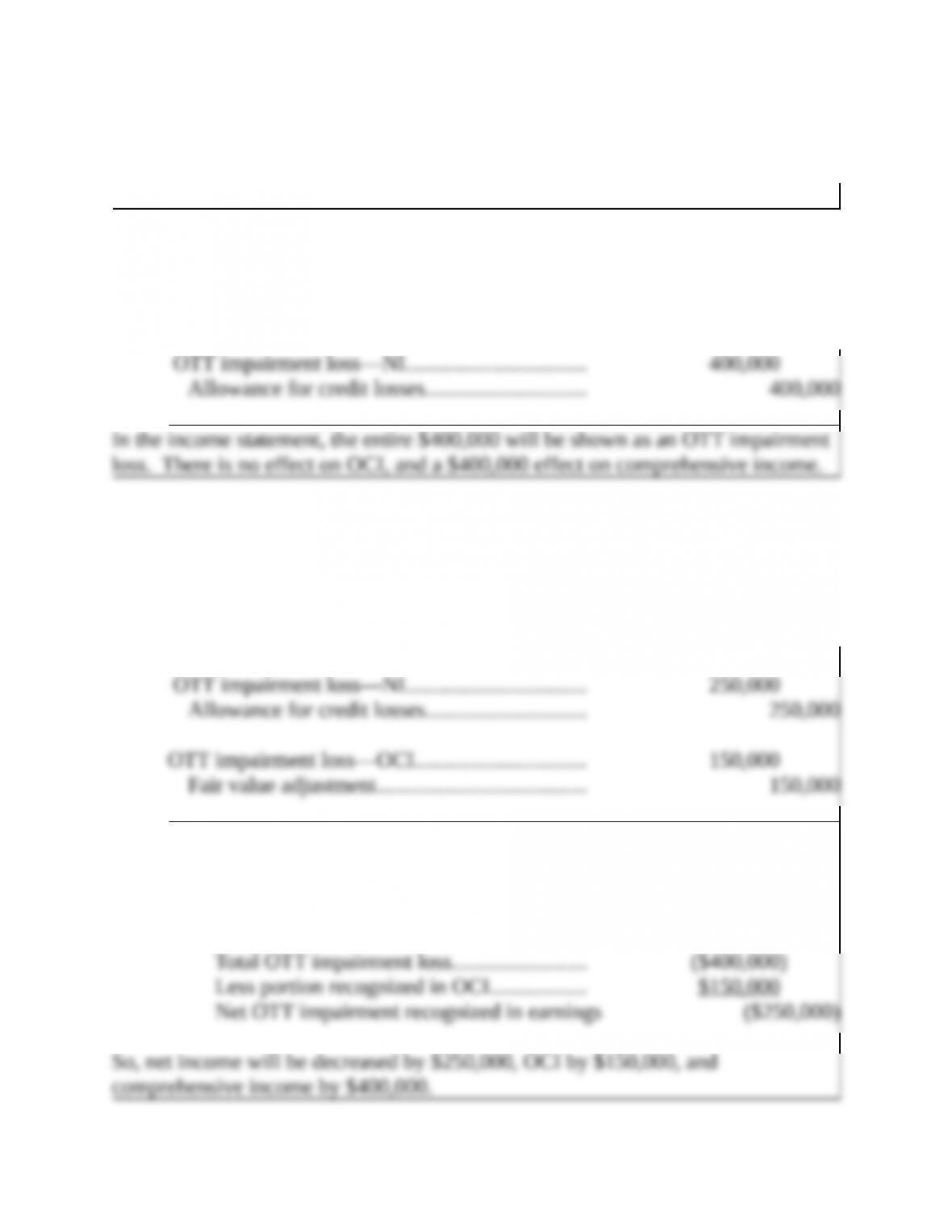
Exercise 12–32
Requirement 1: Assuming Bloom has not previously recorded a $100,000 loss
Scenario 1: Bloom believes it is more likely than not it will have to sell the
investment before fair value recovers, so the portion of the impairment that
consists of credit and noncredit losses is not relevant. Bloom must recognize the
entire OTT impairment in earnings. Bloom makes the following entry:
Scenario 2: Bloom does not plan to sell the investment, and does not believe it is
more likely than not that it will have to sell the investment before fair value
recovers, so the portion of the impairment that consists of credit and noncredit
losses is relevant. Bloom must recognize the $250,000 of credit losses as an OTT
impairment in earnings, and the other $150,000 as a reduction of OCI. Bloom
makes the following entry:
In the income statement, the entire $400,000 will be shown as an OTT impairment
loss, then the amount of noncredit loss is subtracted to leave only the credit loss
reducing earnings:
OTT impairment on AFS investments

Exercise 12–32 (continued)
Requirement 2: Assuming Bloom has previously recorded a $100,000 loss
Scenario 1: Bloom believes it is more likely than not it will have to sell the
investment before fair value recovers, so the portion of the impairment that
consists of credit and noncredit losses is not relevant. Bloom must recognize the
entire OTT impairment in earnings. Bloom makes the following entry:
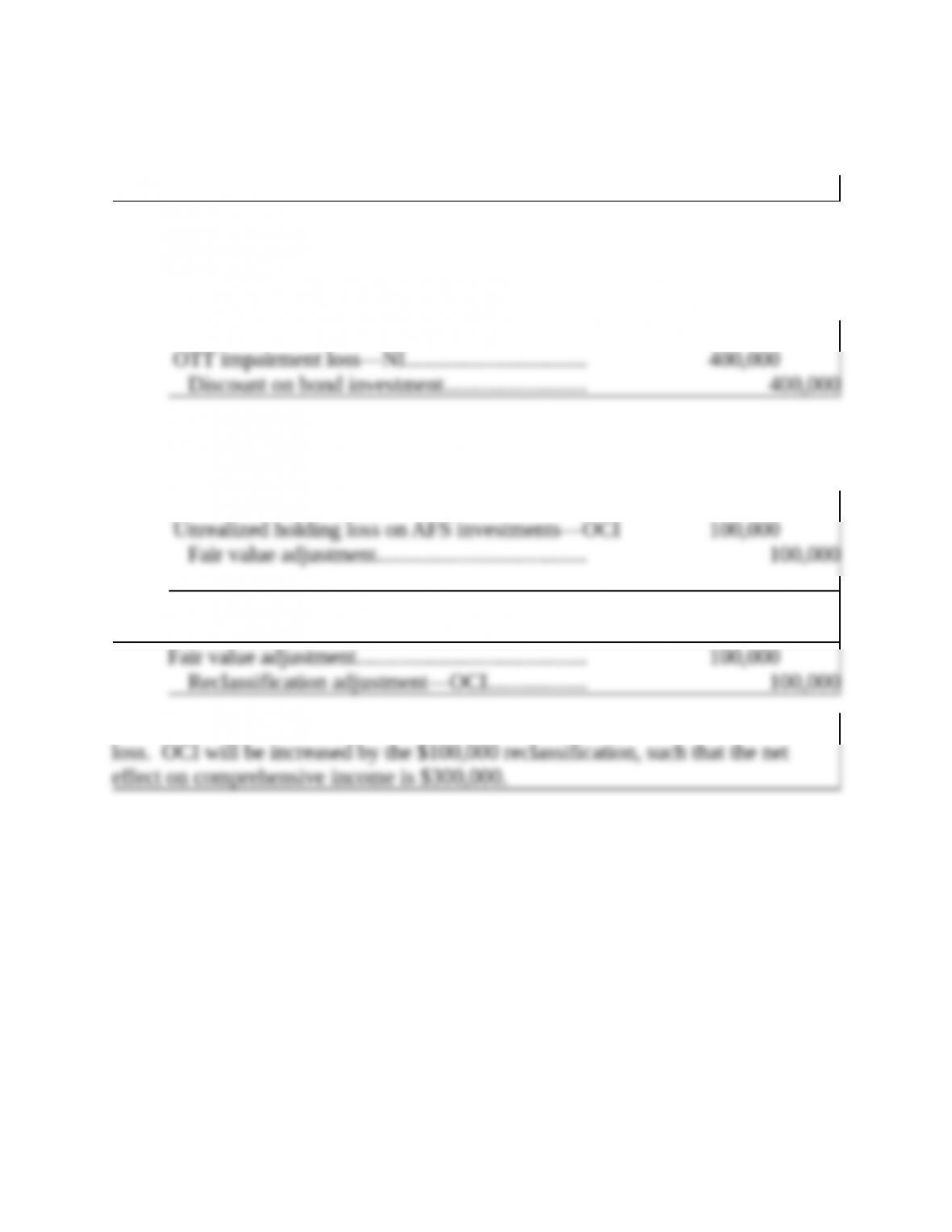
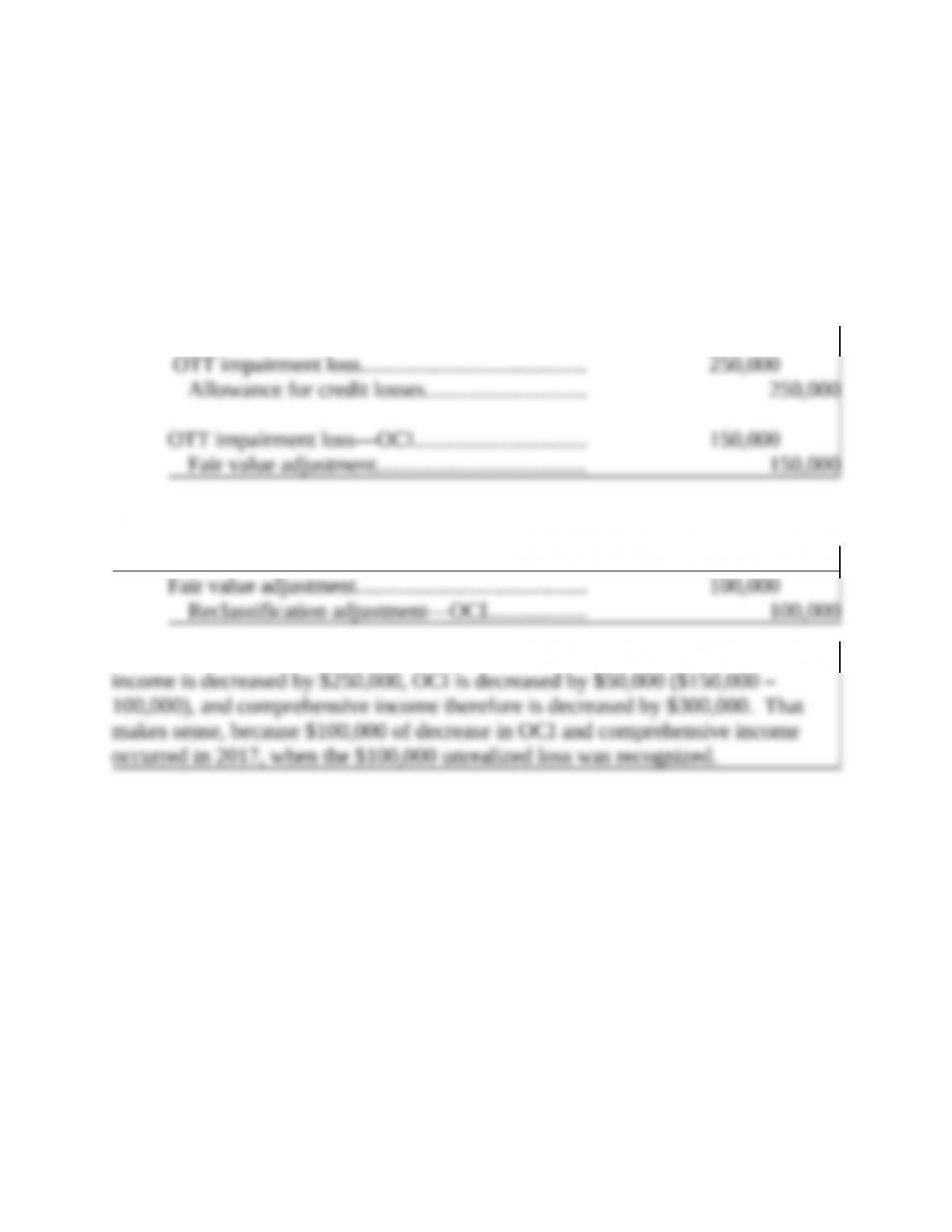
Assuming a previously recorded $100,000 unrealized loss, Bloom must also
reclassify that loss out of OCI and the fair value adjustment. In 2017 Bloom would
have made the following entry:
Unrealized holding loss on AFS investments—OCI 100,000
So to reclassify that unrealized loss, Bloom would reverse that entry.
In the income statement, the entire $400,000 will be shown as an OTT impairment
loss. OCI will be increased by the $100,000 reclassification, such that the net
effect on comprehensive income is $300,000.
Exercise 12–32 (concluded)
Scenario 2: Bloom does not plan to sell the investment, and does not believe it is
more likely than not that it will have to sell the investment before fair value
recovers, so the portion of the impairment that consists of credit and noncredit
losses is relevant. Bloom must recognize the $250,000 of credit losses as an OTT
impairment in earnings, and the other $150,000 as a reduction of OCI. Bloom
makes the following entry:
Assuming a previously recorded $100,000 unrealized loss, Bloom must also
reclassify that loss out of OCI and the fair value adjustment:

Exercise 12–33
Requirement 1
Under IFRS No. 9, if there has not been a significant increase in credit risk,
only 12-month credit losses are recognized as impairments:
Requirement 2
Under IFRS No. 9, if there has been a significant increase in credit risk, lifetime
credit losses are recognized as impairments:
Requirement 3
Under IFRS No. 9, credit losses are eligible for reversal if they recover. In this
case, because no significant increase in credit risk has occurred, only 12-month
credit losses have been recognized as impairments, totaling €750,000. Now
12-month credit losses total €650,000, so the allowance should be reduced by
€100,000:
Problem 12–1
Requirement 1 ($ in millions)
PROBLEMS
Requirement 2
Requirement 3
Requirement 4
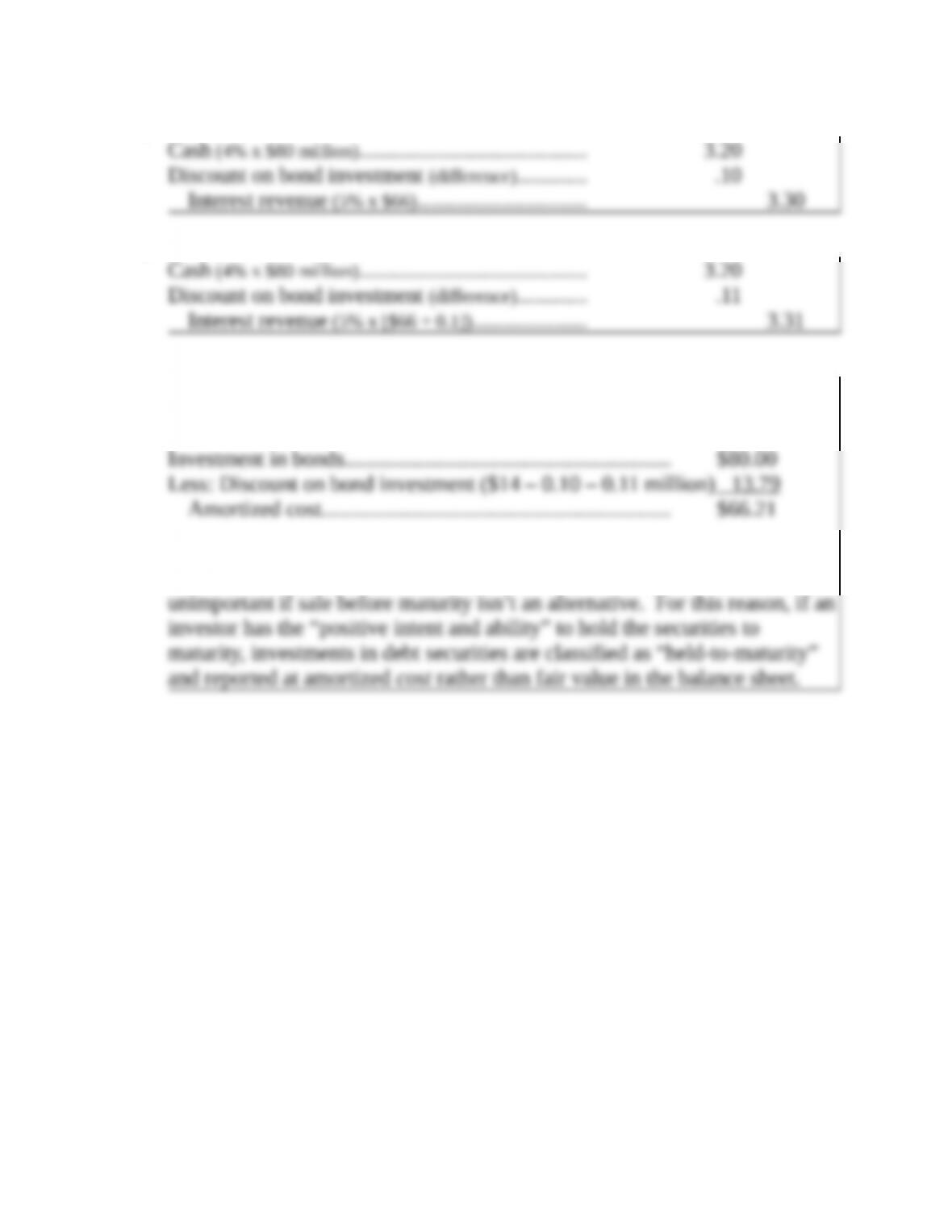
Fuzzy Monkey reports its investment in the December 31, 2018, balance
sheet at its amortized cost; that is, its book value:
Increases and decreases in the fair value between the time a debt security is
acquired and the day it matures to a prearranged maturity value are relatively
Problem 12–1 (concluded)
Requirement 5
Fuzzy Monkey’s 2018 statement of cash flows would be affected as
follows:
Operating activities cash flows: Cash inflow from interest of
Investing activities cash flows: Cash outflow from purchasing
investments of $66.