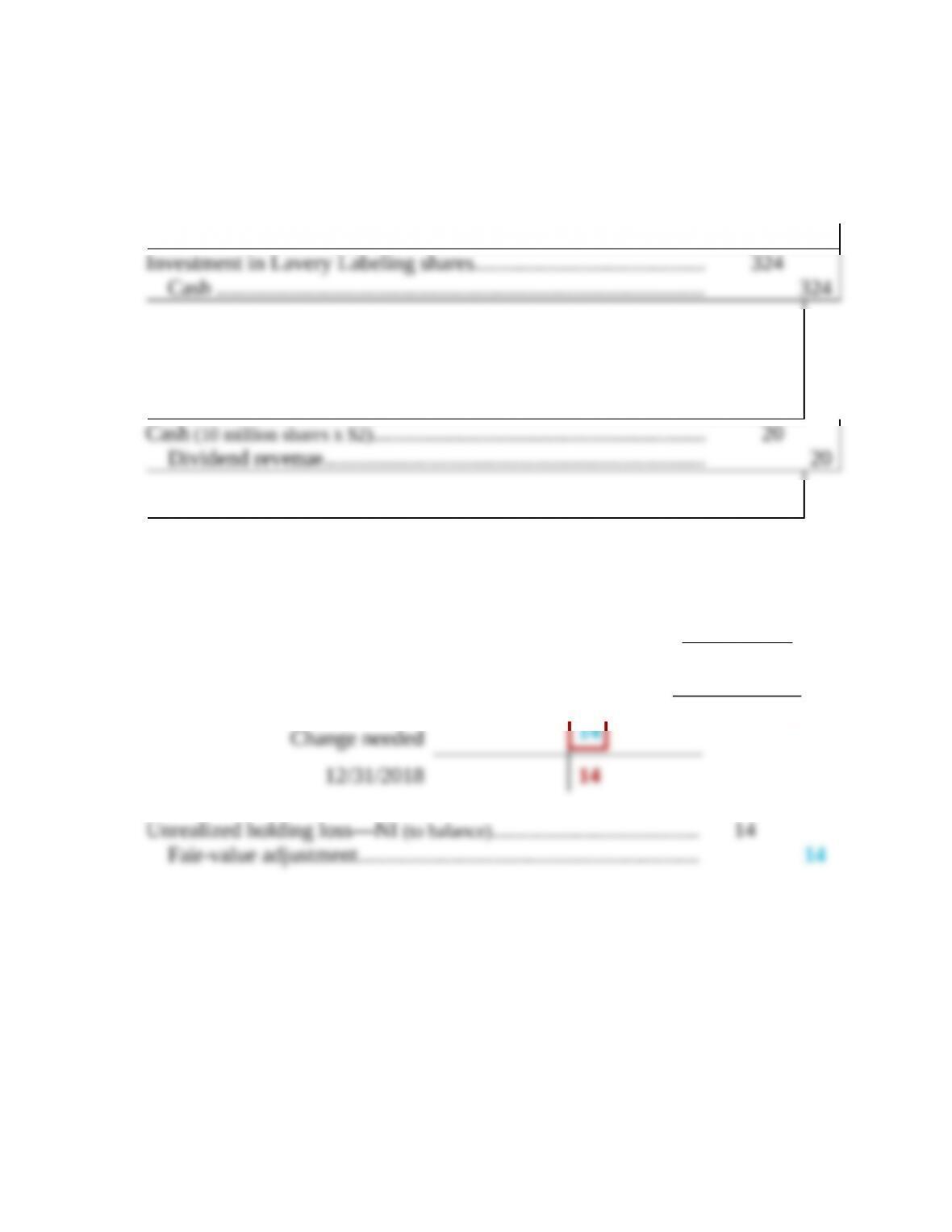
Problem 12–11
Note: the answer to P12-11 is the same as the answer to Requirement 2 of P12-10.
Purchase ($ in millions)
Net income
No entry
Dividends
Adjusting entry
Need to move from a fair-value adjustment from $0 to ($14 million):
Fair-Value
Adjustment
1/4/18 0
Fair Value
Adjustment
Balance on 1/4/2018 $ 0
± Adjustment needed to update fair value ?
Balance needed on 12/31/2018 ([10 × $31] – 324 )($14)
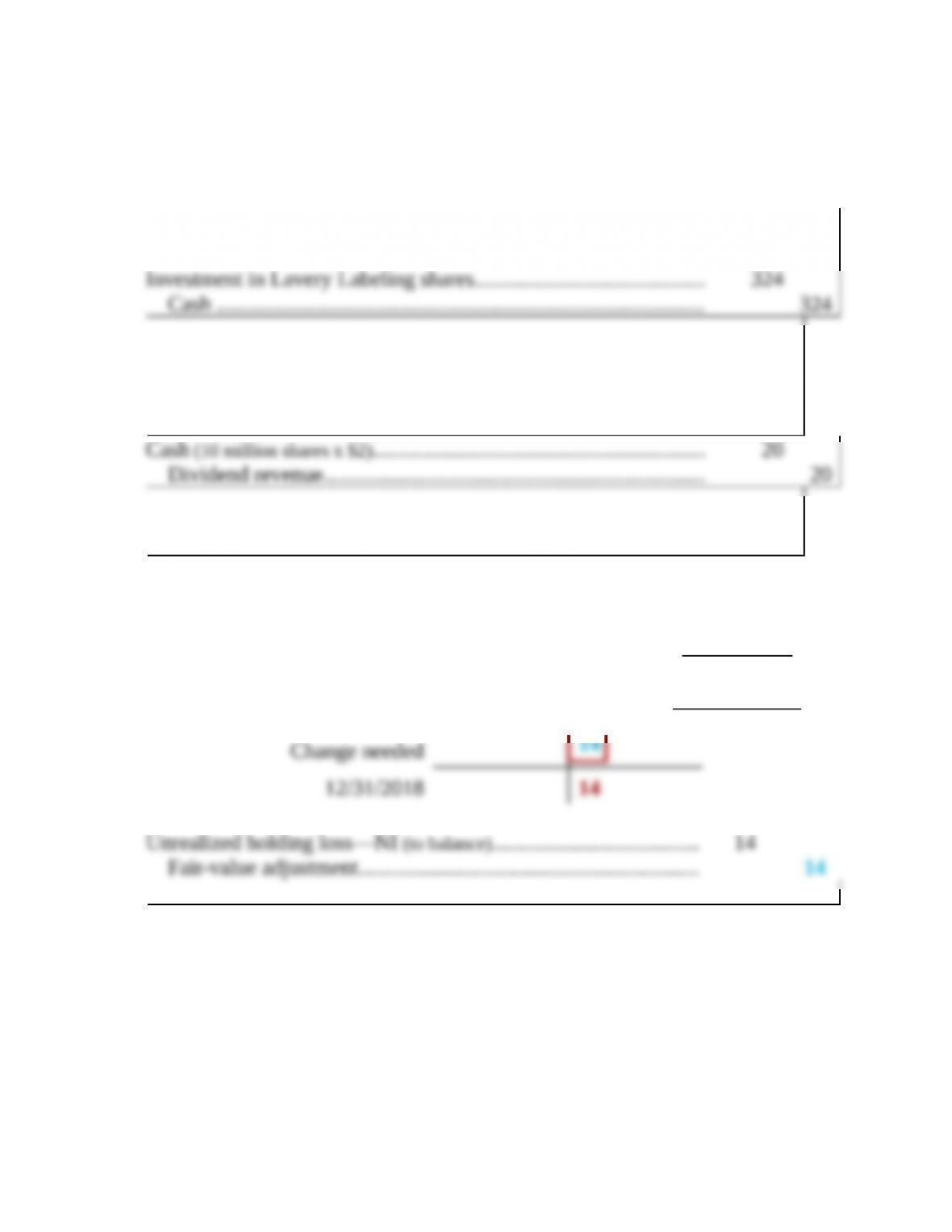
Problem 12–12
Requirement 1 (note: requirement 1 has the same answer as does P 12–10)
Purchase ($ in millions)
Net income
No entry
Dividends
Adjusting entry
Need to move from a fair-value adjustment from $0 to ($14 million):
Fair-Value
Adjustment
1/4/2018 0
Fair Value
Adjustment
Balance on 1/4/2018 $ 0
± Adjustment needed to update fair value ?
Balance needed on 12/31/2018 ([10 × $31] – 324 )($14)
Problem 12–12 (continued)
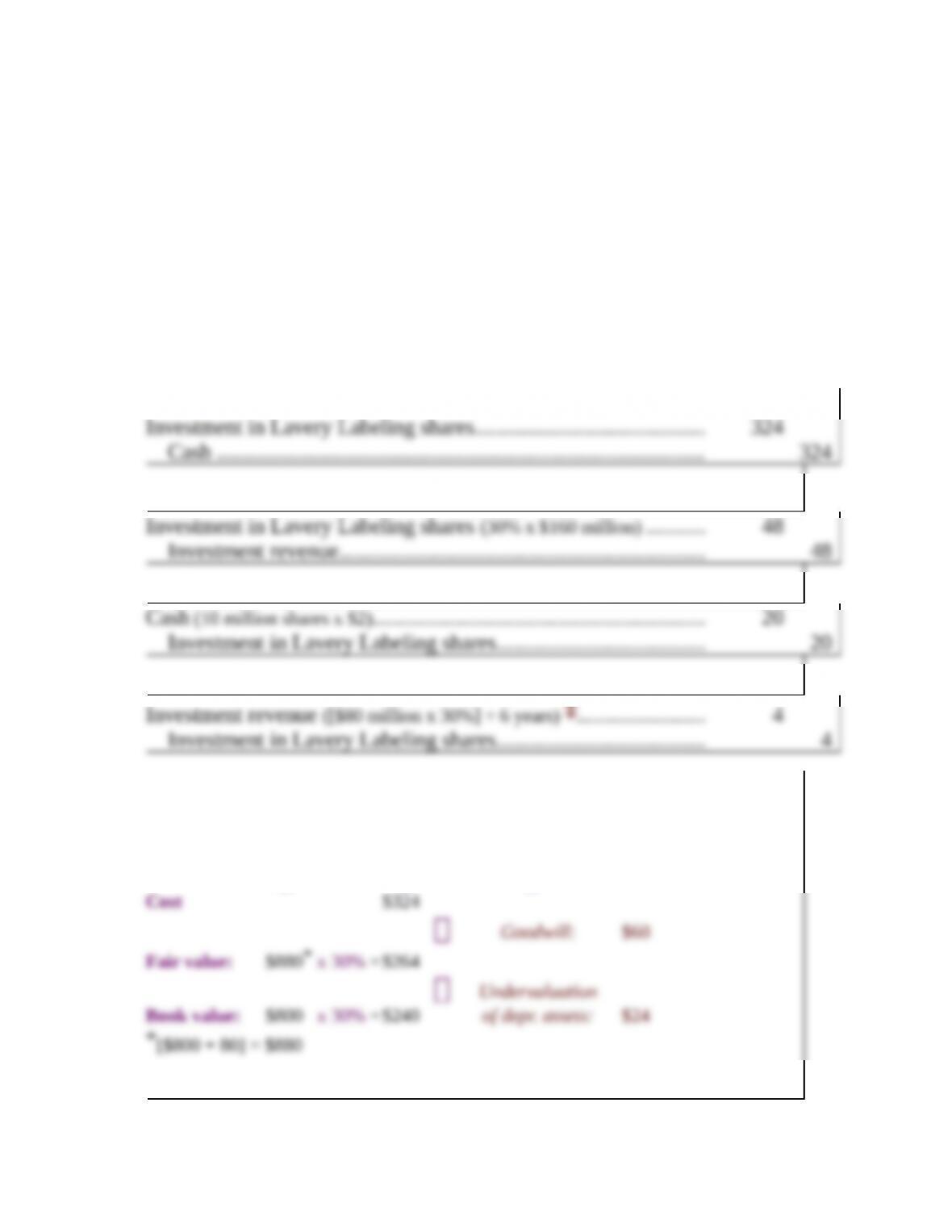
Because Runyan is accounting for the Lavery investment under the fair value
option, the unrealized holding loss would be included in 2018 net income.
Therefore, total effect on net income would be $20 of dividend – $14 of
unrealized holding loss, or $6. The investment would be shown in the
balance sheet at its fair value of $310.
Requirement 2
Purchase ($ in millions)
Net income
Dividends
Depreciation adjustment
‡Calculations:
Investee Net Assets Difference
Net Assets Purchased Attributed to:
Problem 12–12 (concluded)
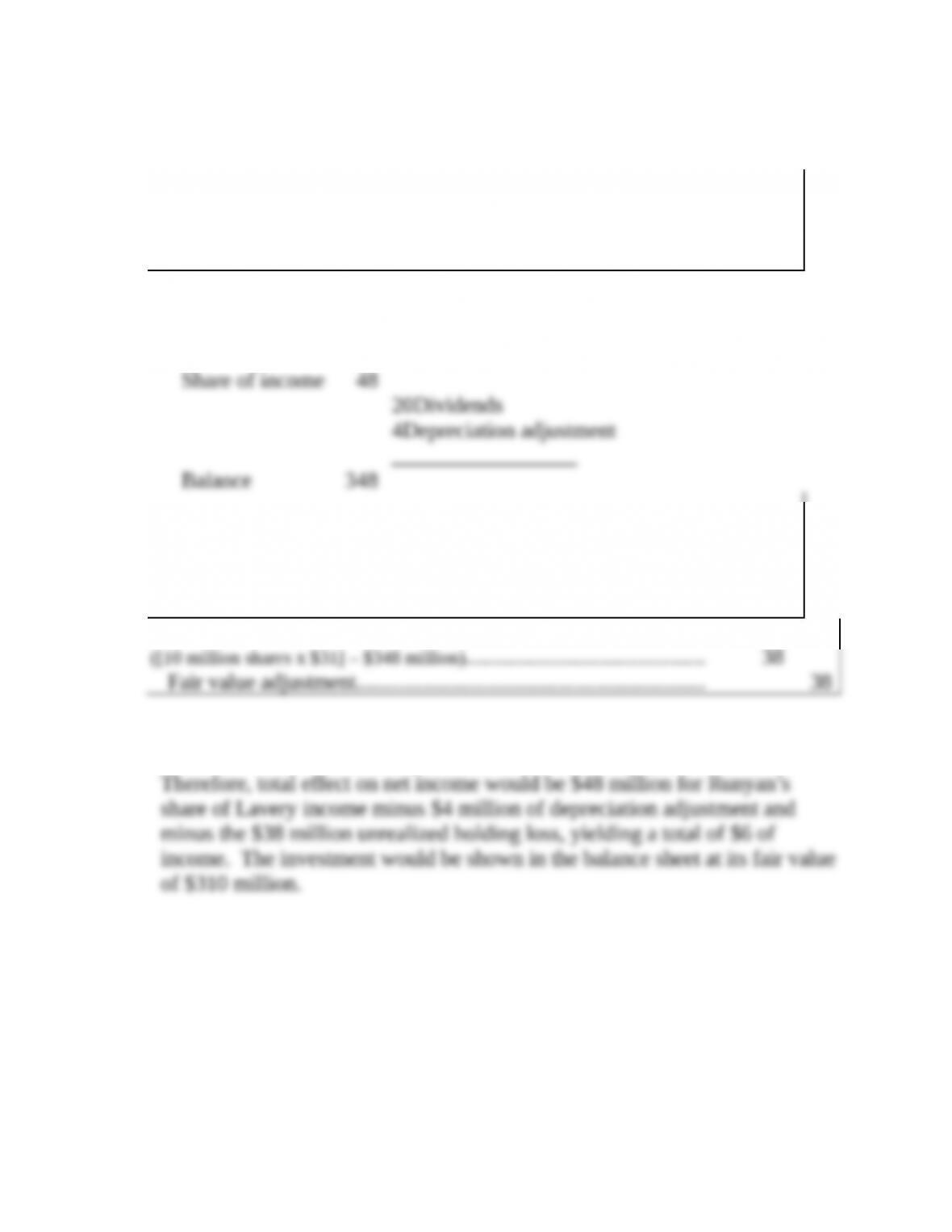
Note: After the preceding journal entries are recorded, the balance in the
Lavery Labeling investment account would be:
Investment in Lavery Labeling shares
__________________________________________
($ in millions)
Cost 324
At December 31, 2018, the fair value of that investment is $310 (= 10
million shares x $31/share), implying need for the following adjusting
entry to adjust the carrying value of the investment to fair value:
Unrealized holding loss—NI
Because Runyan is accounting for the Lavery investment under the fair value
option, the unrealized holding loss would be included in 2018 net income.
Note that the income effect and the carrying value in the balance sheet are the
same in requirements 1 and 2.
Problem 12–13
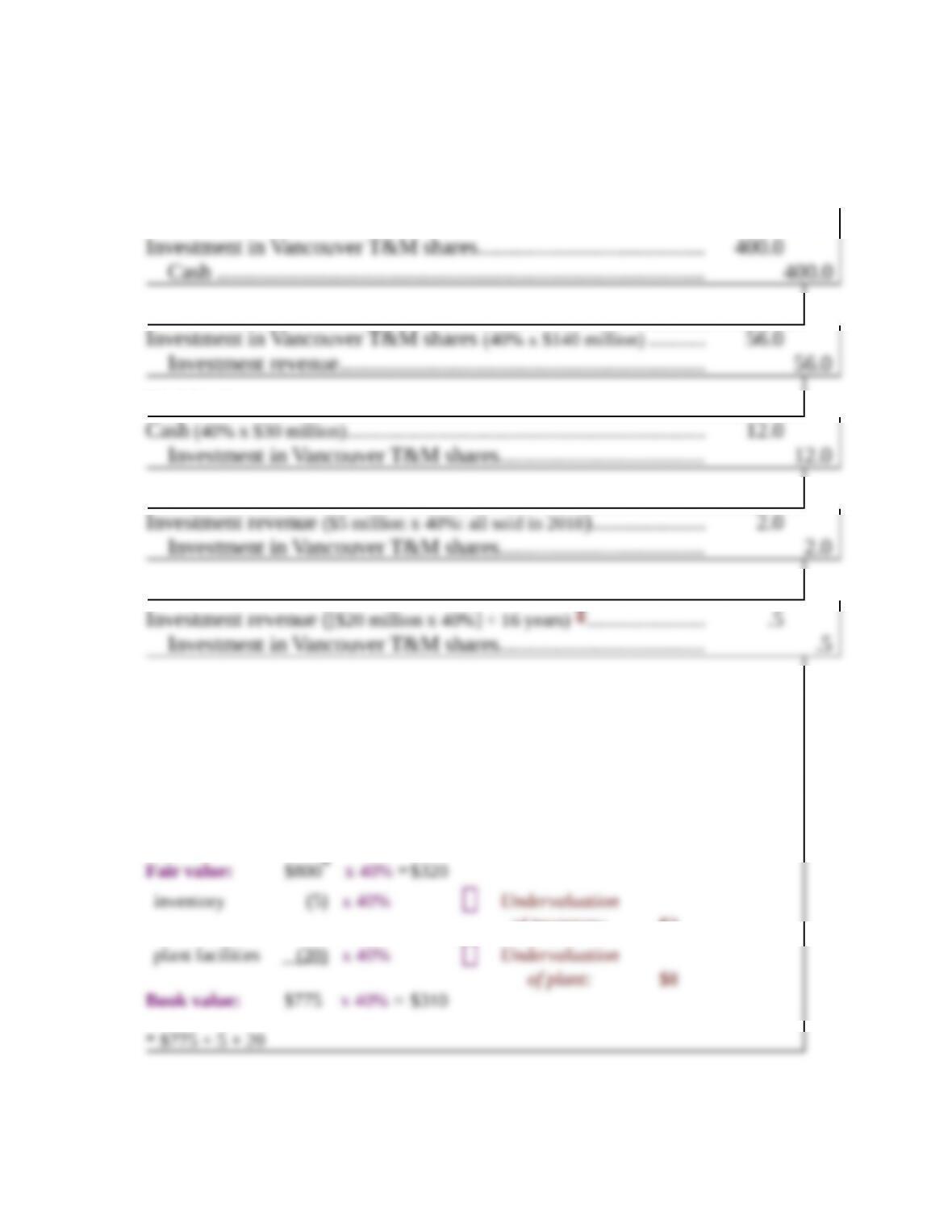
Requirement 1
Purchase ($ in millions)
Net income
Inventory adjustment
Depreciation adjustment
‡Calculations:
Investee Net Assets Difference
Net Assets Purchased Attributed to:
Cost $400
Goodwill: $80 [plug]
of inventory: $2
Problem 12–13 (concluded)
Requirement 2
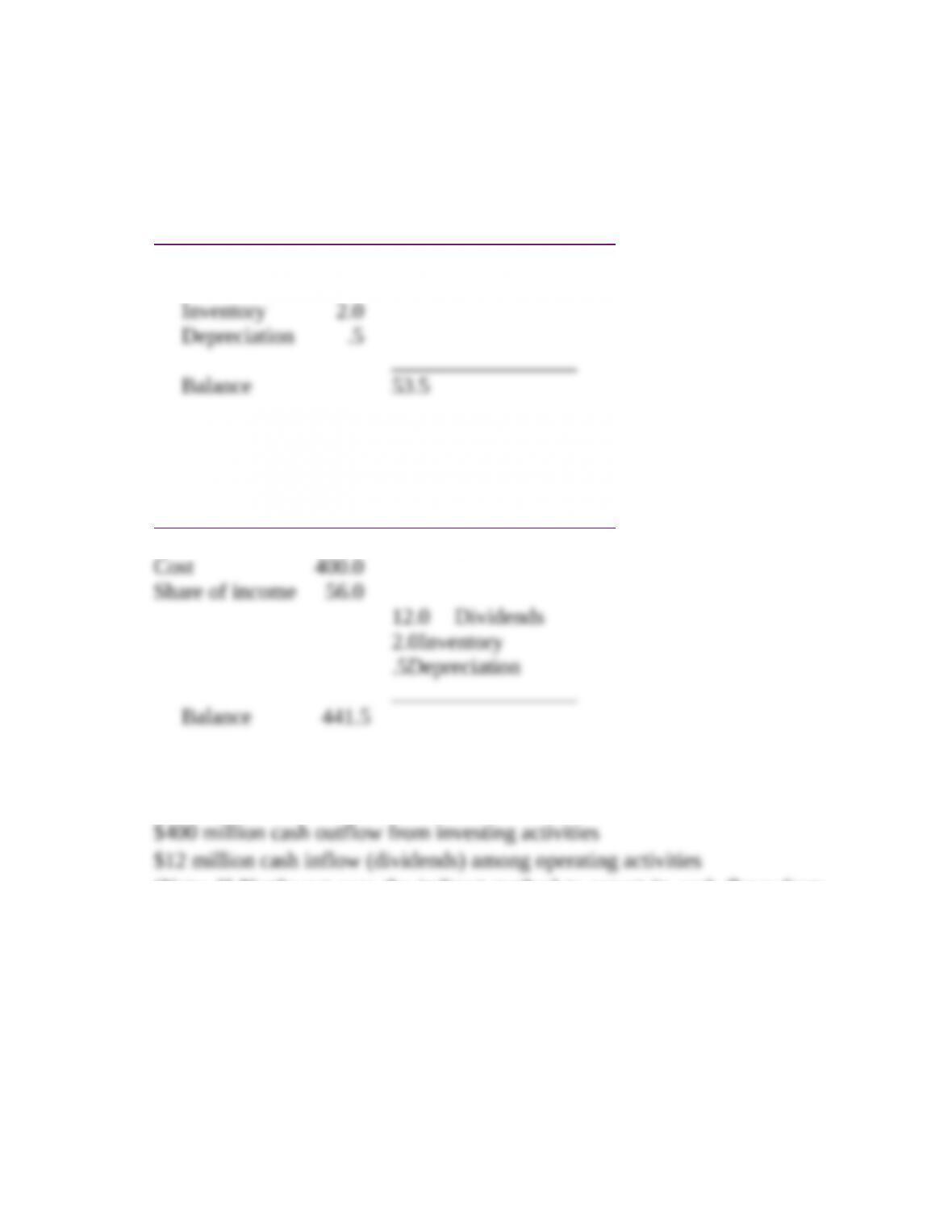
Investment Revenue
($ in millions)
56.0 Share of income
Requirement 3
Investment in Vancouver T&M shares
($ in millions)
Requirement 4
(Note: If Northwest uses the indirect method to report its cash flows from
operating activities, it would need an adjustment of ($41.5) to get from the
$53.5 included as investment revenue in net income to the $12 of cash
actually received in dividends and needing to be shown in cash flow from
operating activities.)
Problem 12–14
Requirement 1
Miller’s management should decide whether it has the ability to exercise
significant influence over operating and financial policies of the Marlon Company.
Requirement 2
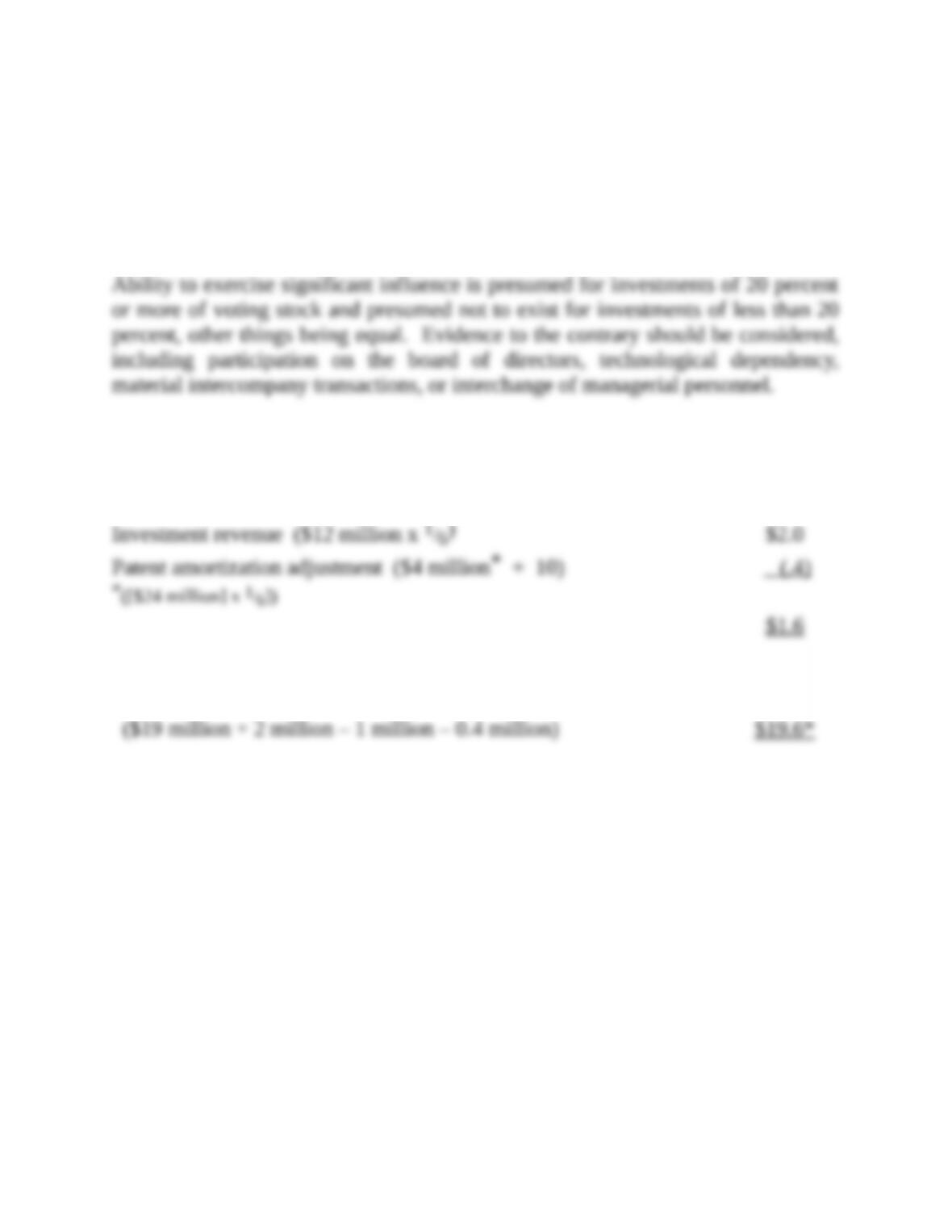
a. Income statement: ($ in millions)
b. Balance sheet:
Investment in Marlon Company
Problem 12–14 (concluded)
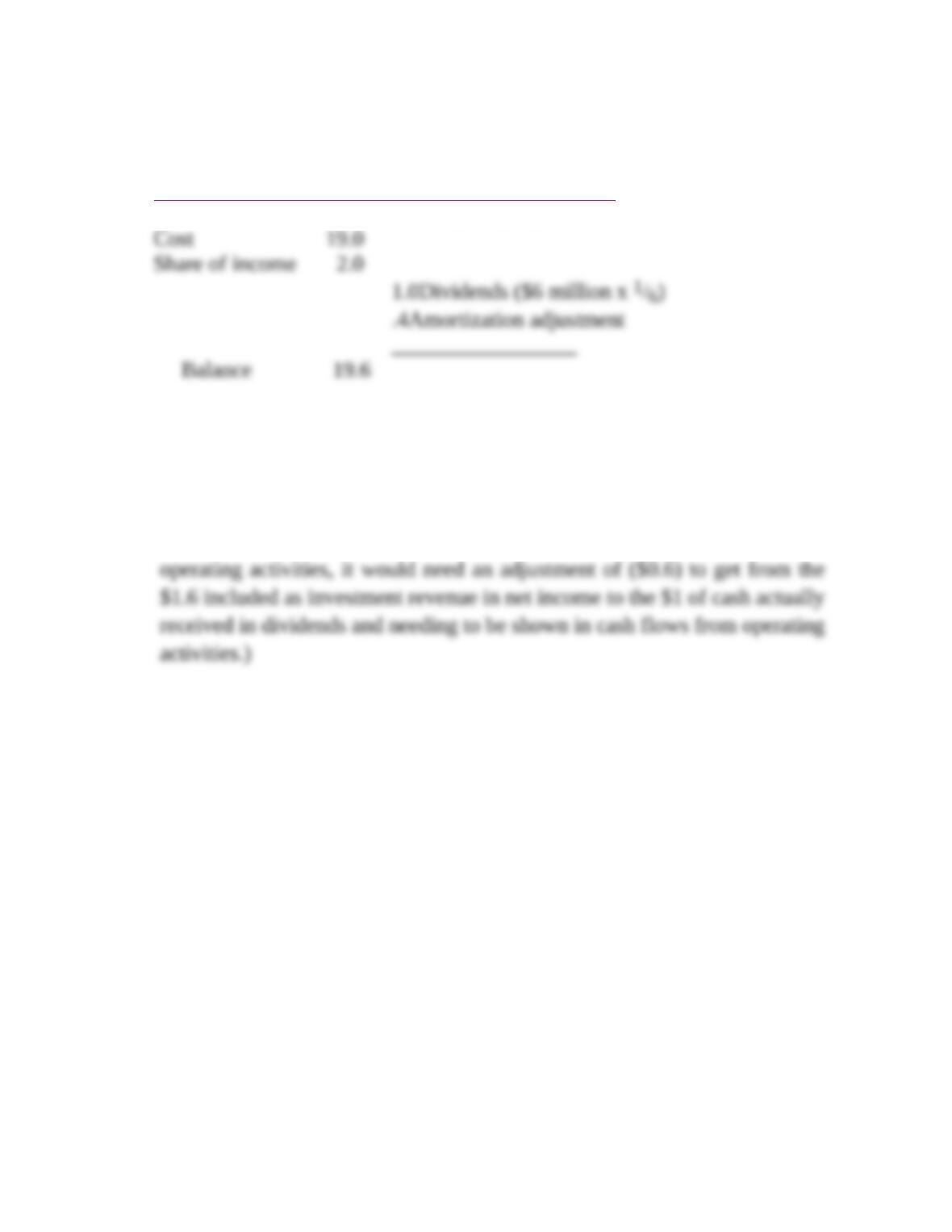
*Investment in Marlon Company
($ in millions)
c. Statement of cash flows:
$19 million cash outflow from investing activities
$1 million cash inflow (dividends) among operating activities
(Note: If Marlon uses the indirect method to report its cash flows from
Problem 12–15
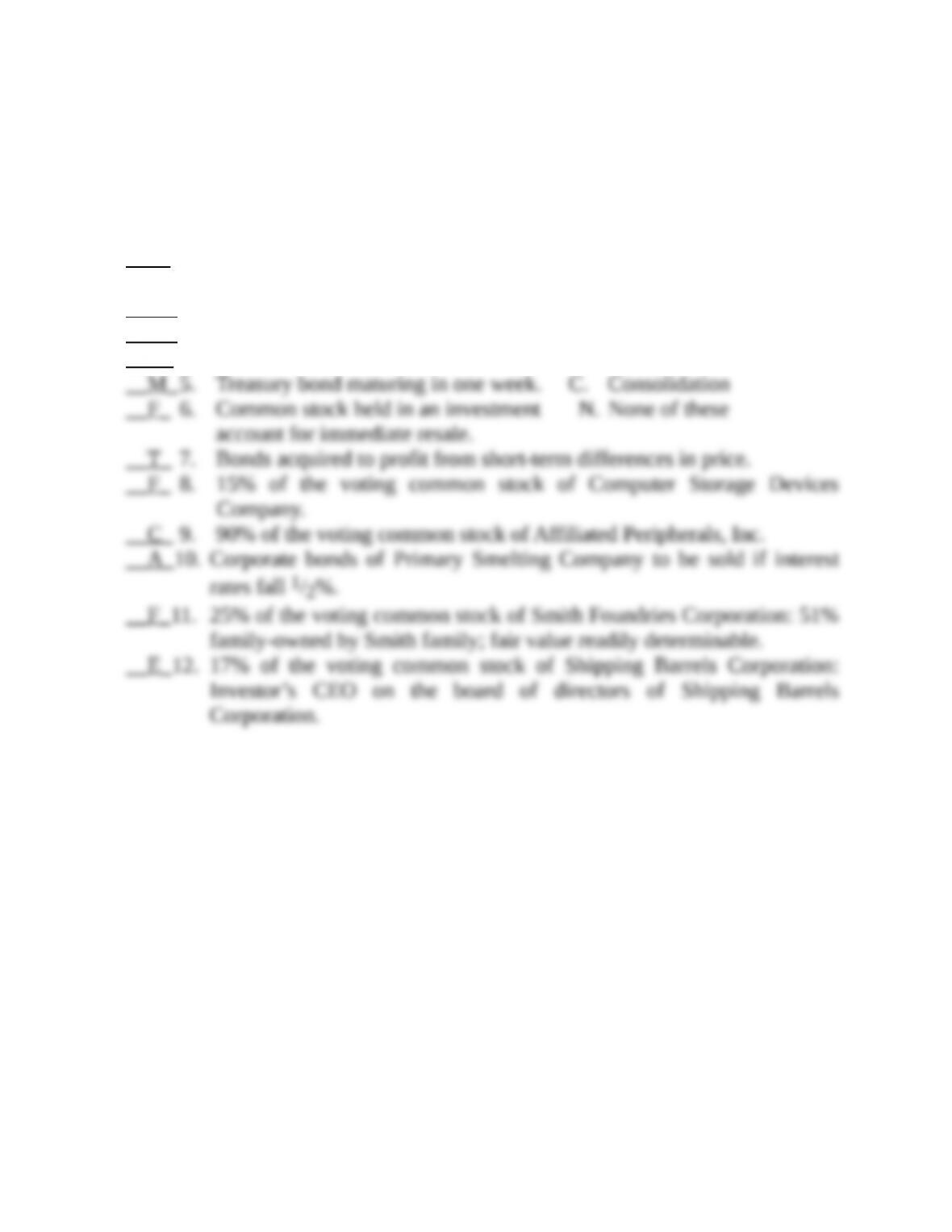
Item Reporting Category
__F_ 1. 35% of the nonvoting preferred stock T. Trading securities
of American Aircraft Company. M. Held-to-maturity
__M_2. Treasury bills to be held-to-maturity. A. Available-for-sale
__M_3. Two-year note receivable from affiliate.F. FV through NI
__N_ 4. Accounts receivable. E. Equity method
Problem 12–16
Requirement 1
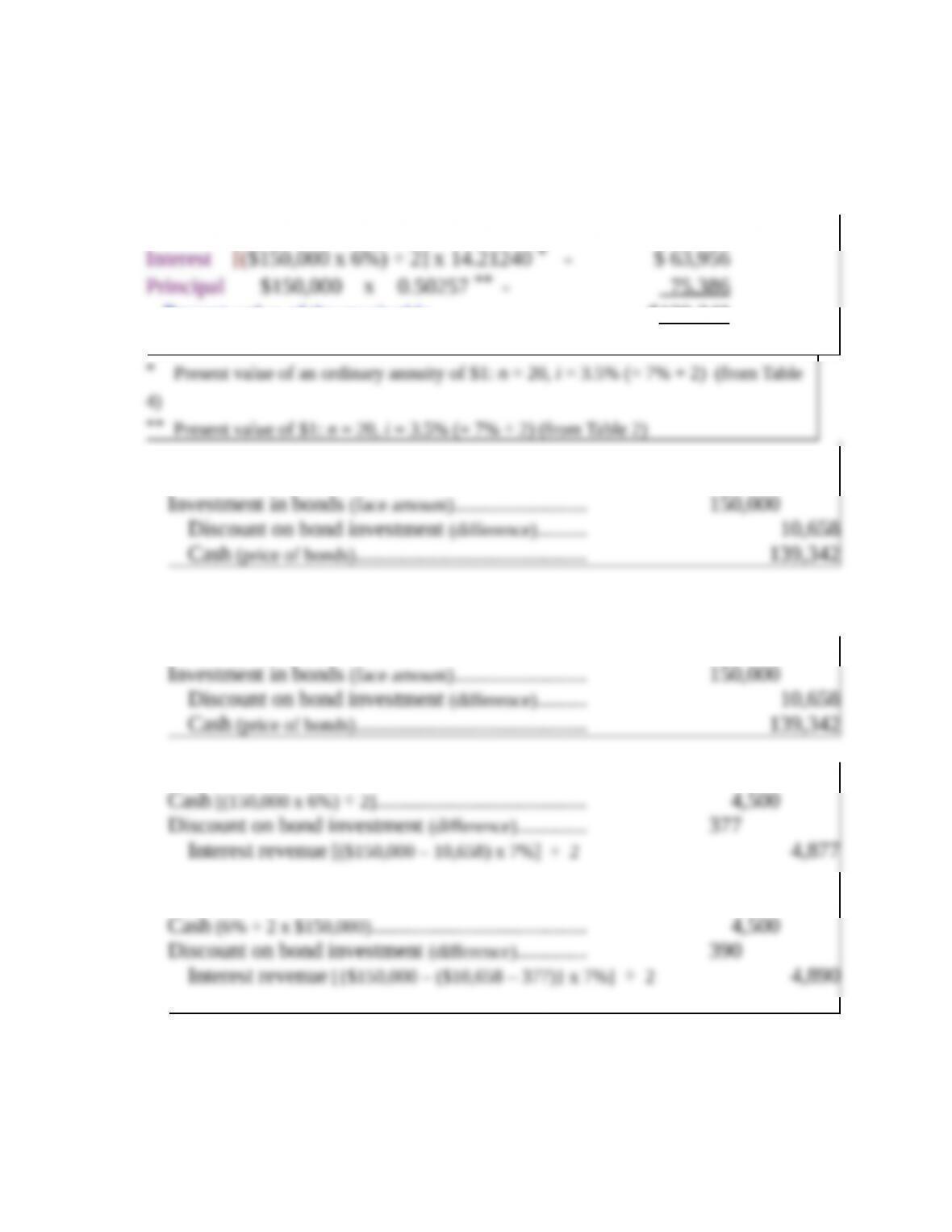
Bond Fair Value at 1/1/2018:
Present value of the receivable $139 ,342
January 1, 2018
Requirement 2
January 1, 2018
June 30, 2018
December 31, 2018
Note: For held-to-maturity investments, there are no adjustments to fair
value.
Problem 12–16 (continued)
Requirement 3
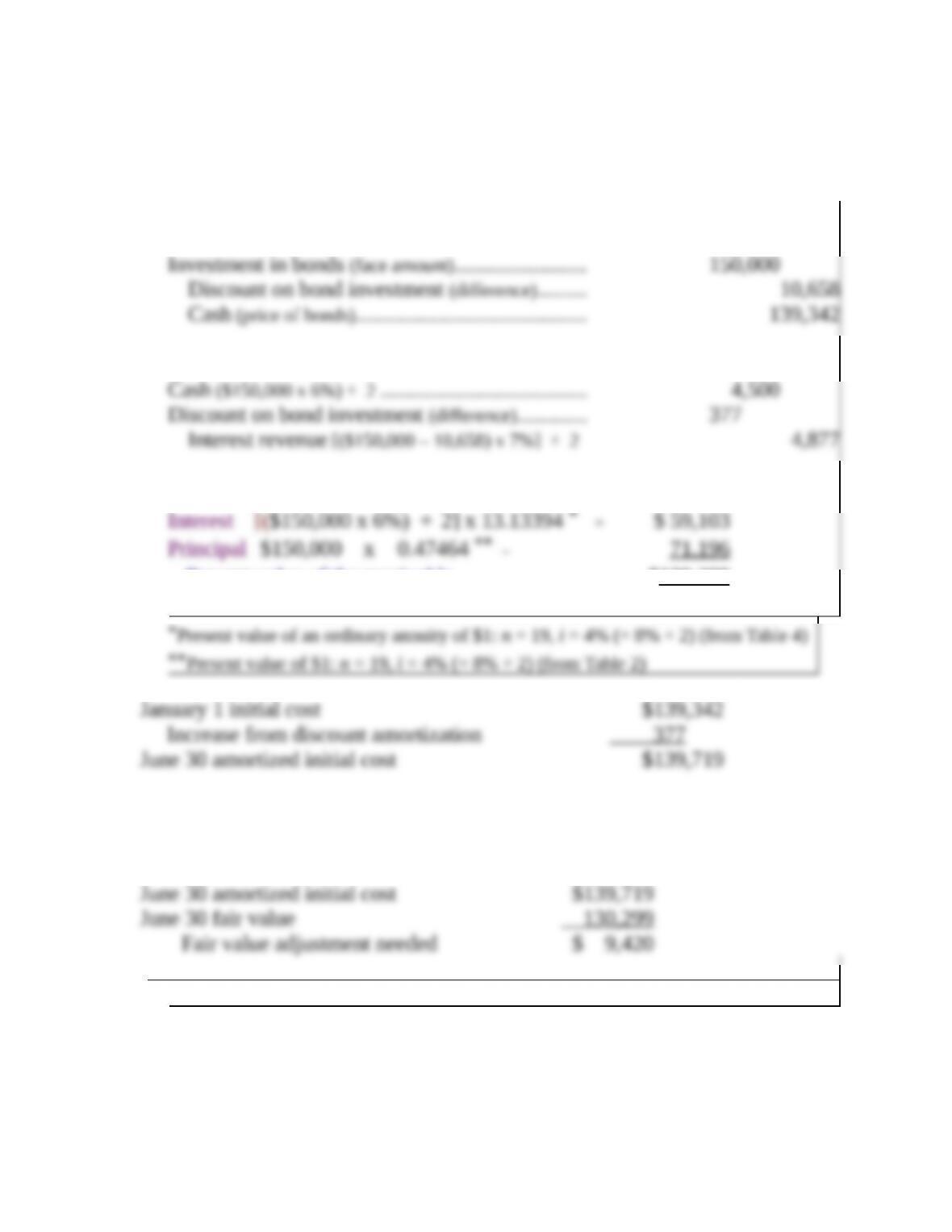
January 1, 2018
June 30, 2018
Bond Fair Value at June 30, 2018:
Present value of the receivable $130 ,299
Comparing the amortized initial cost with the fair value of the bonds on that
date provides the amount needed to adjust the investment to its fair value.