Exercise 11–20
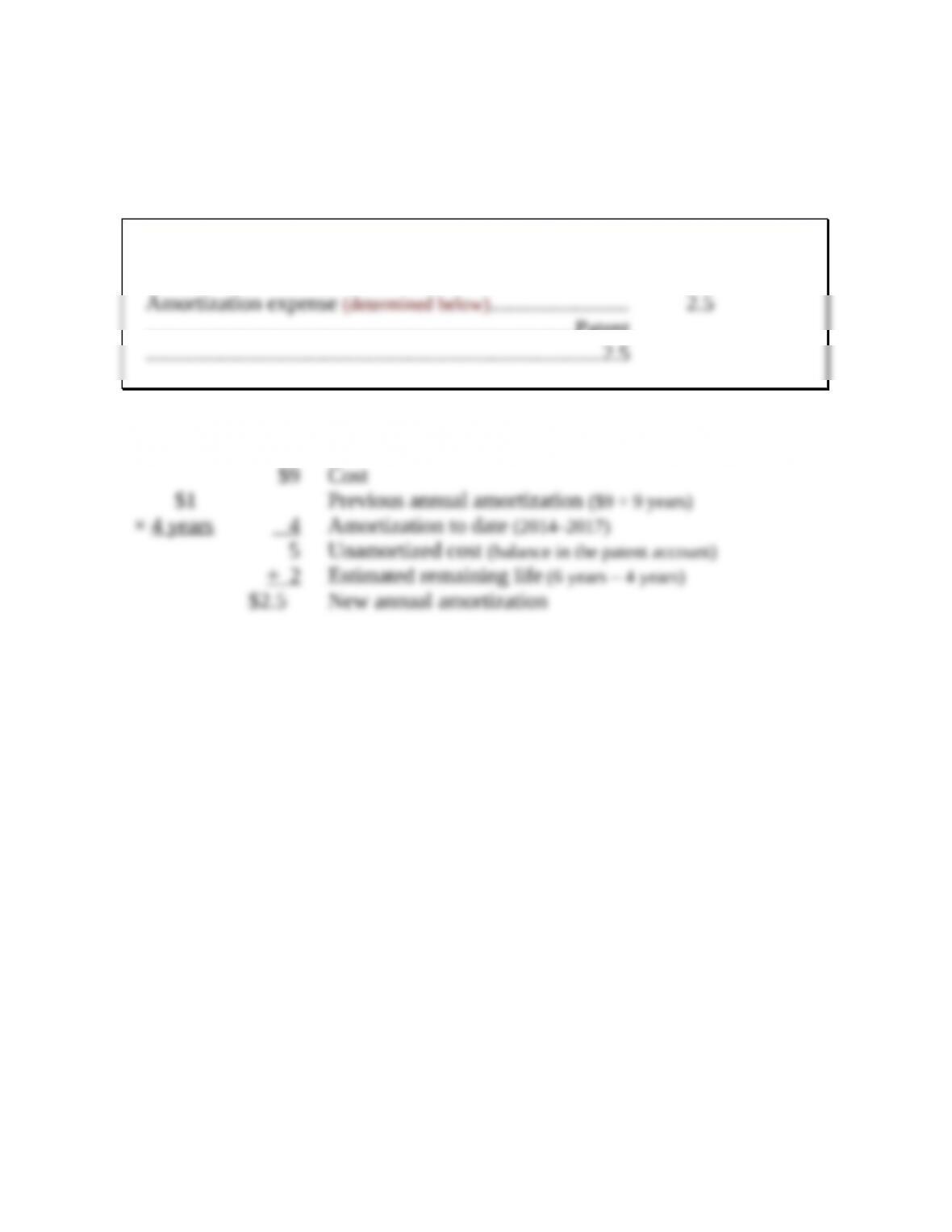
Adjustment of amortization expense to reflect change in useful life.
($ in millions)
……………………………………………………………………Patent
Calculation of annual amortization after the estimate change:
$ in millions)
Exercise 11–21
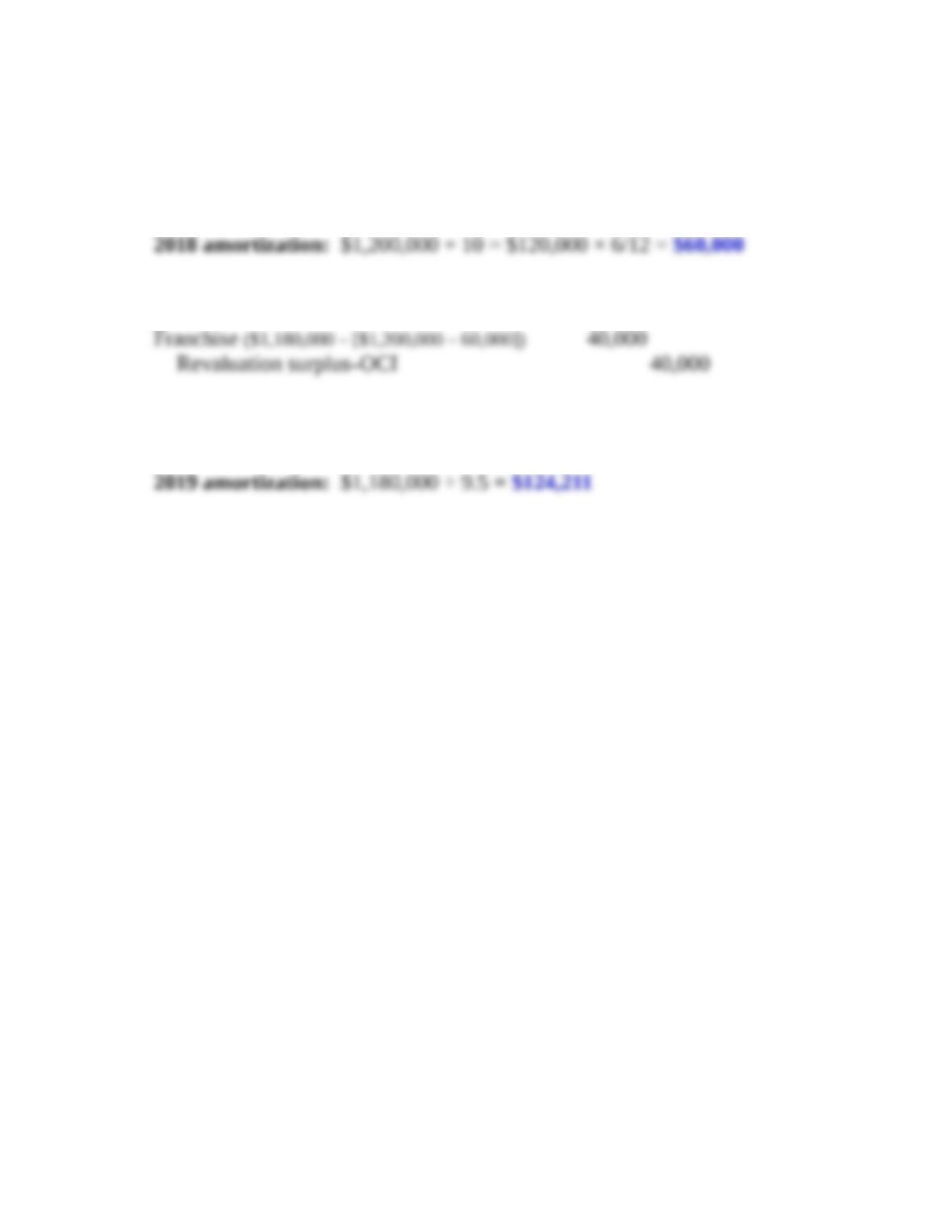
Requirement 1
Requirement 2
Requirement 3
Exercise 11–22
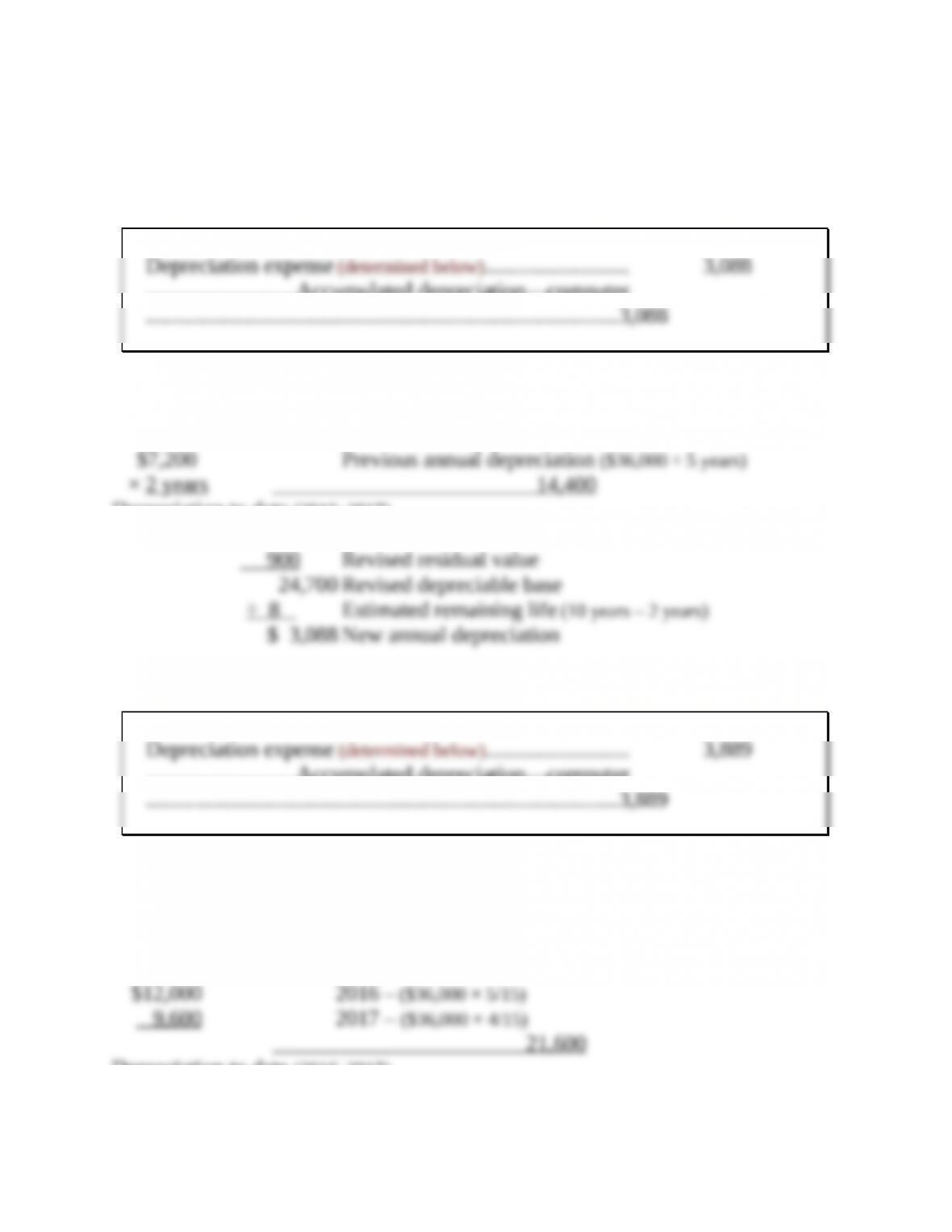
Requirement 1
………………………Accumulated depreciation—computer
Calculation of annual depreciation after the estimate change:
$40,000 Cost
Depreciation to date (2016–2017)
25,600 Undepreciated cost
Requirement 2
………………………Accumulated depreciation—computer
Calculation of annual depreciation after the estimate change:
$40,000
Cost
Previous depreciation:
Depreciation to date (2016–2017)
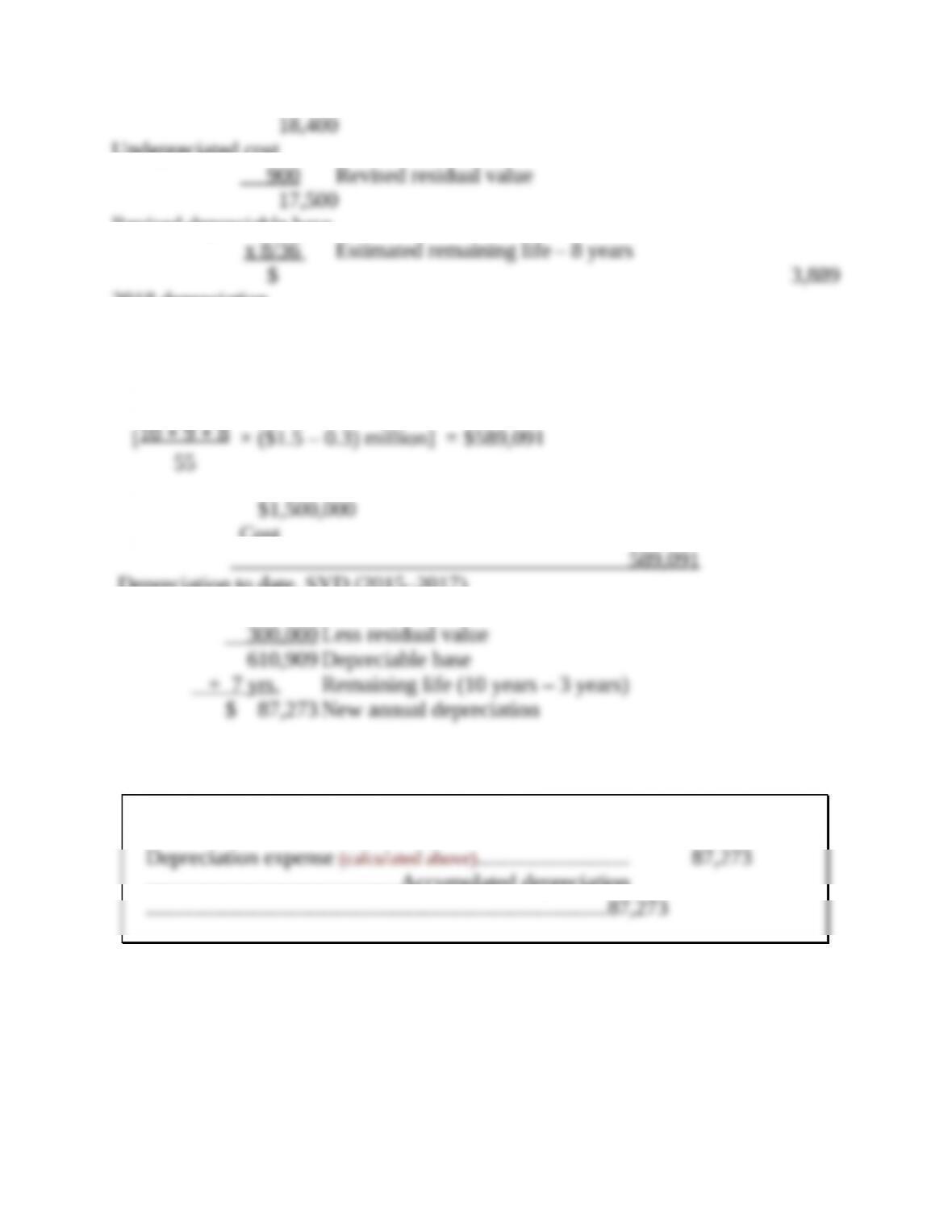
Undepreciated cost
Revised depreciable base
2018 depreciation
Exercise 11–23
SYD depreciation
Cost
Depreciation to date, SYD (2015–2017)
910,909 Undepreciated cost as of 1/1/16
Adjusting entry (2018 depreciation):
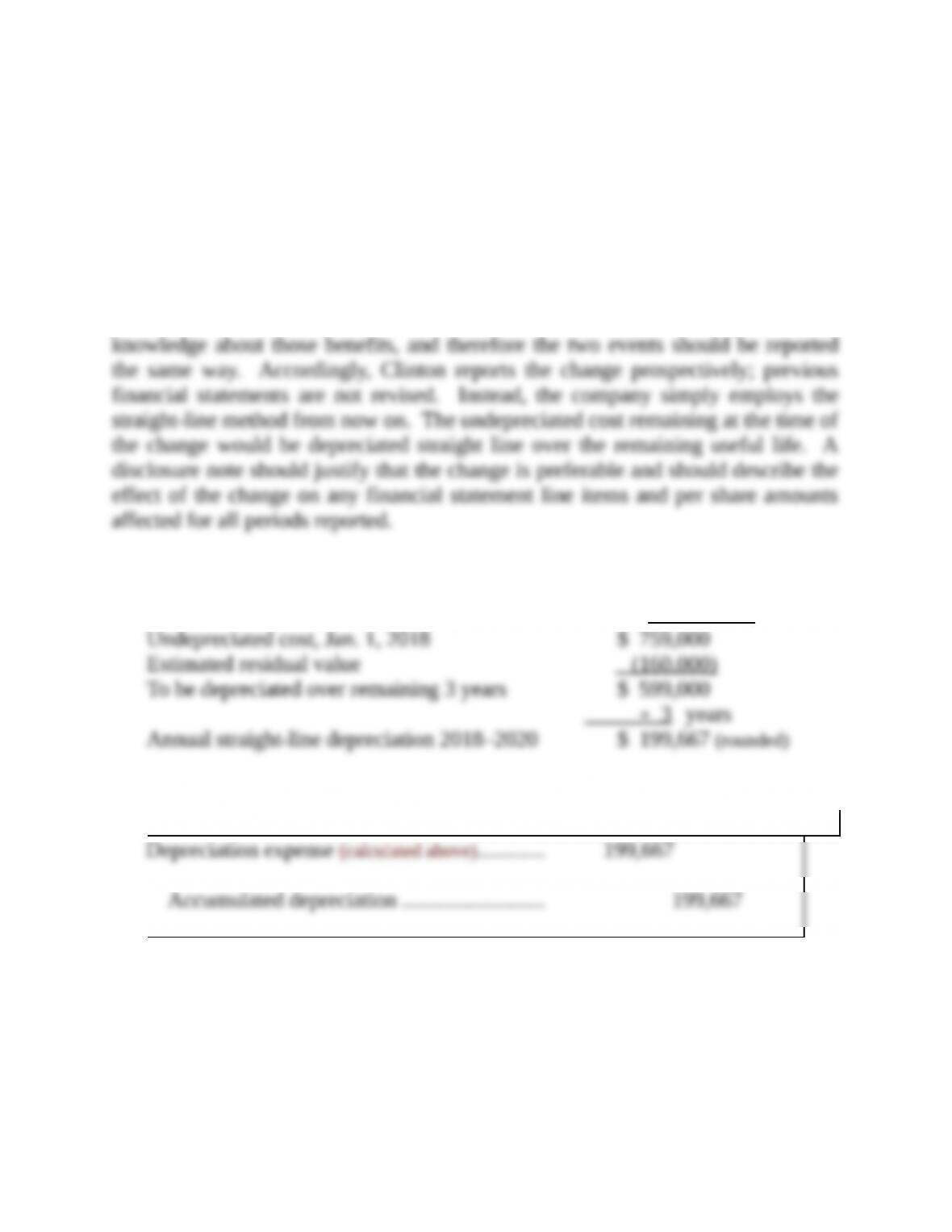
……………………………………….Accumulated depreciation
Exercise 11–24
Requirement 1
In general, we report voluntary changes in accounting principles retrospectively.
However, a change in depreciation method is considered a change in accounting
estimate resulting from a change in accounting principle. In other words, a change
in the depreciation method reflects a change in the (a) estimated future benefits
from the asset, (b) the pattern of receiving those benefits, or (c) the company’s
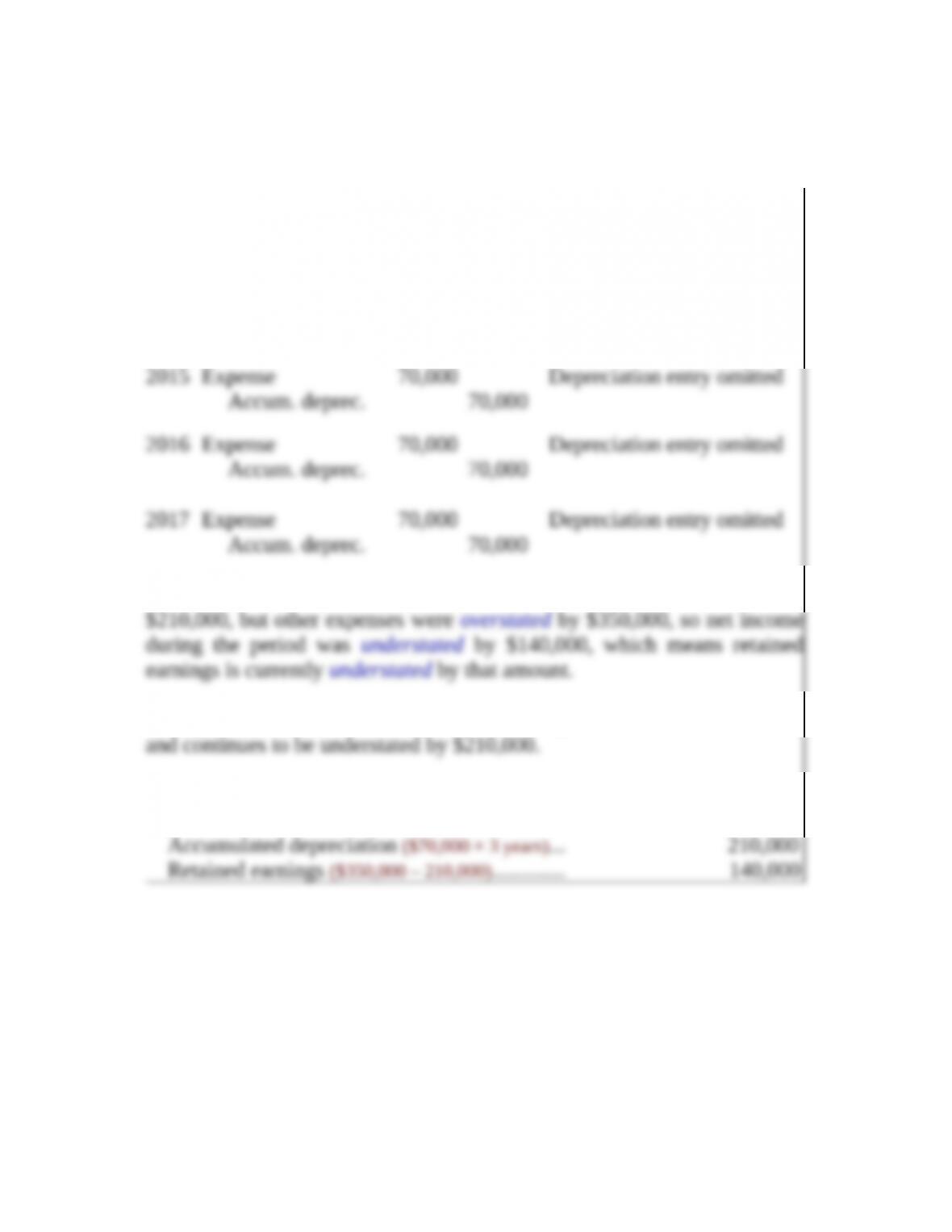
Requirement 2
Asset’s cost $2,560,000
Accumulated depreciation to date (given) (1 ,801,000)
Journal entry:
Exercise 11–25
Requirement 1
Analysis:
Correct Incorrect
(Should Have Been Recorded) (As Recorded)
2015 Equipment 350,000 Expense 350,000
Cash 350,000 Cash 350,000
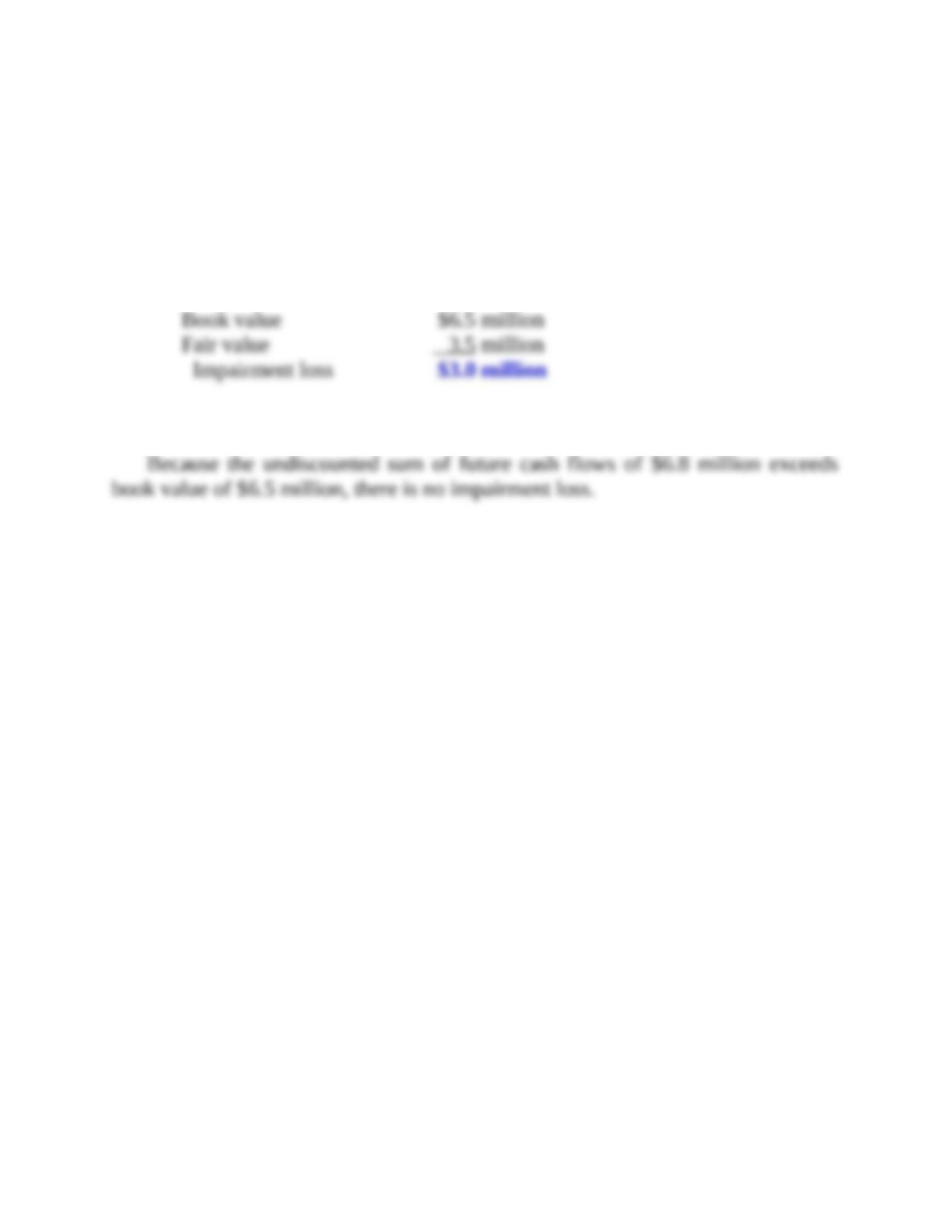
During the three-year period, depreciation expense was understated by
During the three-year period, accumulated depreciation was understated,
To correct incorrect accounts
Equipment …………………………………………………. 350,000
Requirement 2
Correcting entry:
Assuming that the equipment had been disposed of, no correcting entry
would be required because, after five years, the accounts would show
appropriate balances.
Exercise 11–26
Requirement 1
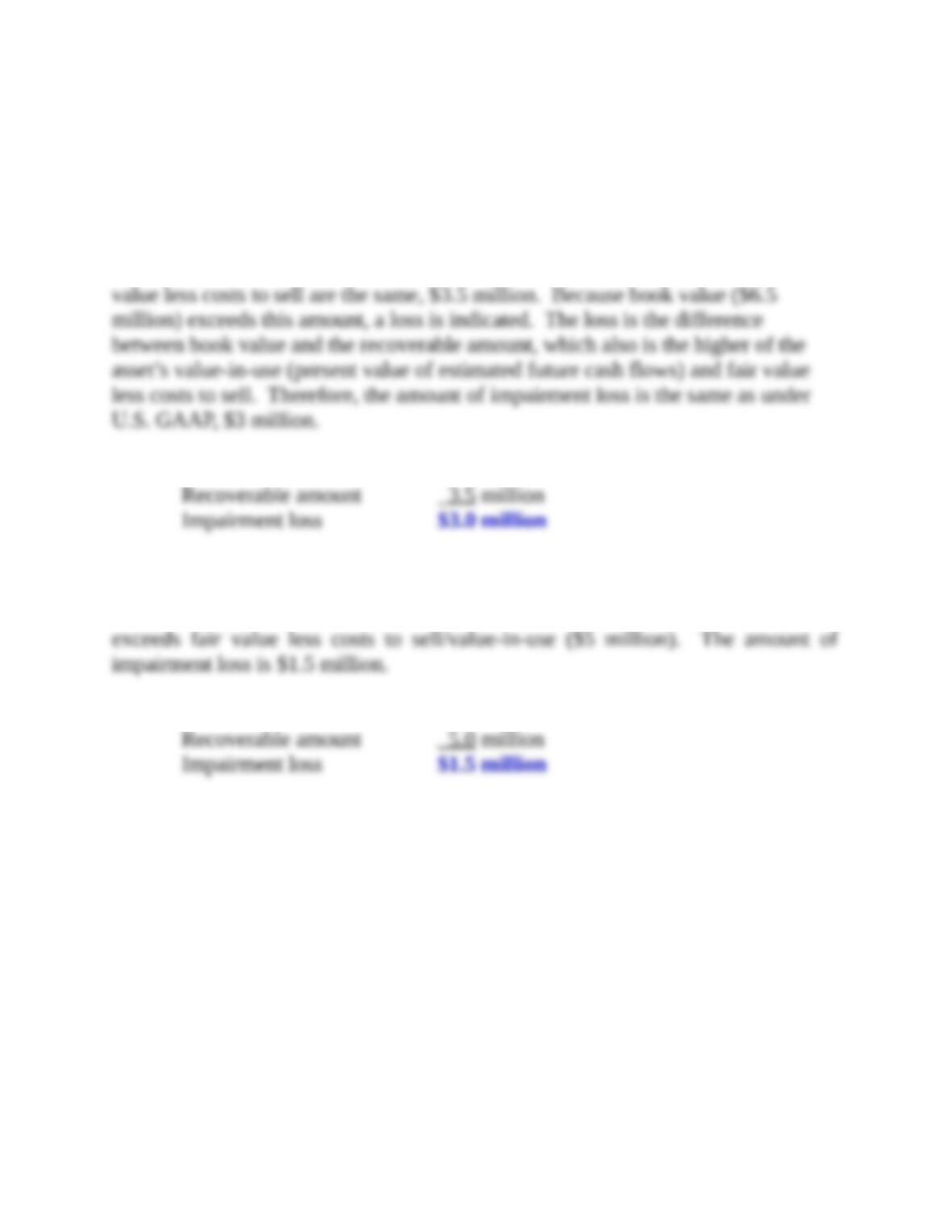
Recoverability test: Because the undiscounted sum of future cash flows of
$4.0 million is less than book value of $6.5 million, there is an impairment loss.
Measurement: The impairment loss is calculated as follows:
Requirement 2
Exercise 11–27
Requirement 1
IFRS requires an impairment loss to be recognized when an asset’s book value
exceeds the higher of the asset’s value-in-use (present value of estimated future
cash flows) and fair value less costs to sell. In this case, value-in-use and fair
Book value $6.5 million
Requirement 2
An impairment loss also is indicated because book value ($6.5 million)
Book value $6.5 million
Under U.S. GAAP, because the undiscounted sum of future cash flows of $6.8
million exceeds book value of $6.5 million, there is no impairment loss.
Exercise 11–28
Requirement 1
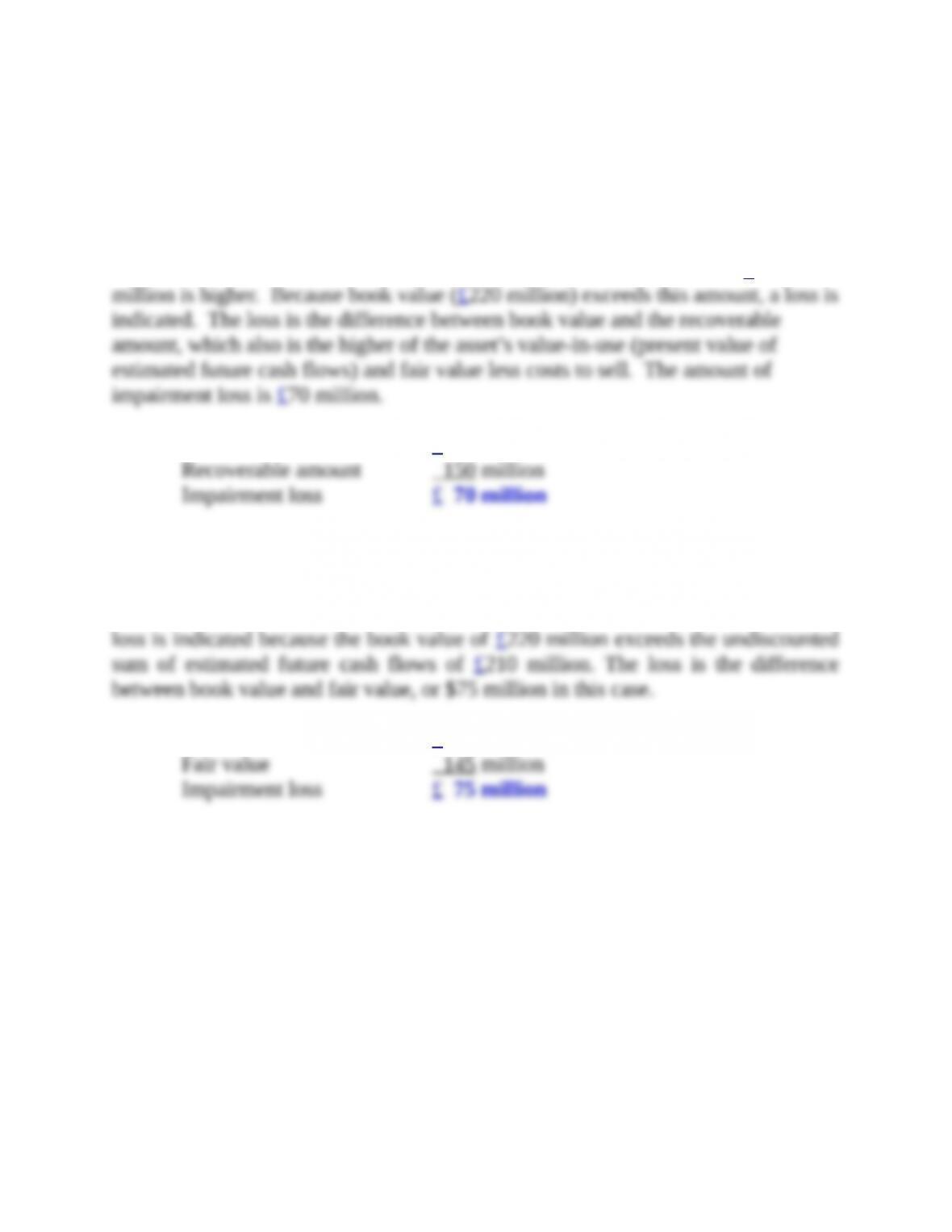
IFRS requires an impairment loss to be recognized when an asset’s book value
exceeds the higher of the asset’s value-in-use (present value of estimated future
cash flows) and fair value less costs to sell. In this case, value-in-use of £150
Book value £220 million
Requirement 2
U.S. GAAP requires an impairment loss to be recognized when an asset’s book
value exceeds the undiscounted sum of estimated future cash flows. In this case, a
Book value £220 million
Exercise 11–29
Requirement 1
Recoverability test:
An impairment loss is indicated because the estimated undiscounted sum of
Measurement:
The amount of the loss to be reported is calculated using the estimated fair
Requirement 2
The loss would appear in the income statement along with other operating
expenses.
Requirement 3
Loss on impairment …………………………………….. 7,300,000
Requirement 4
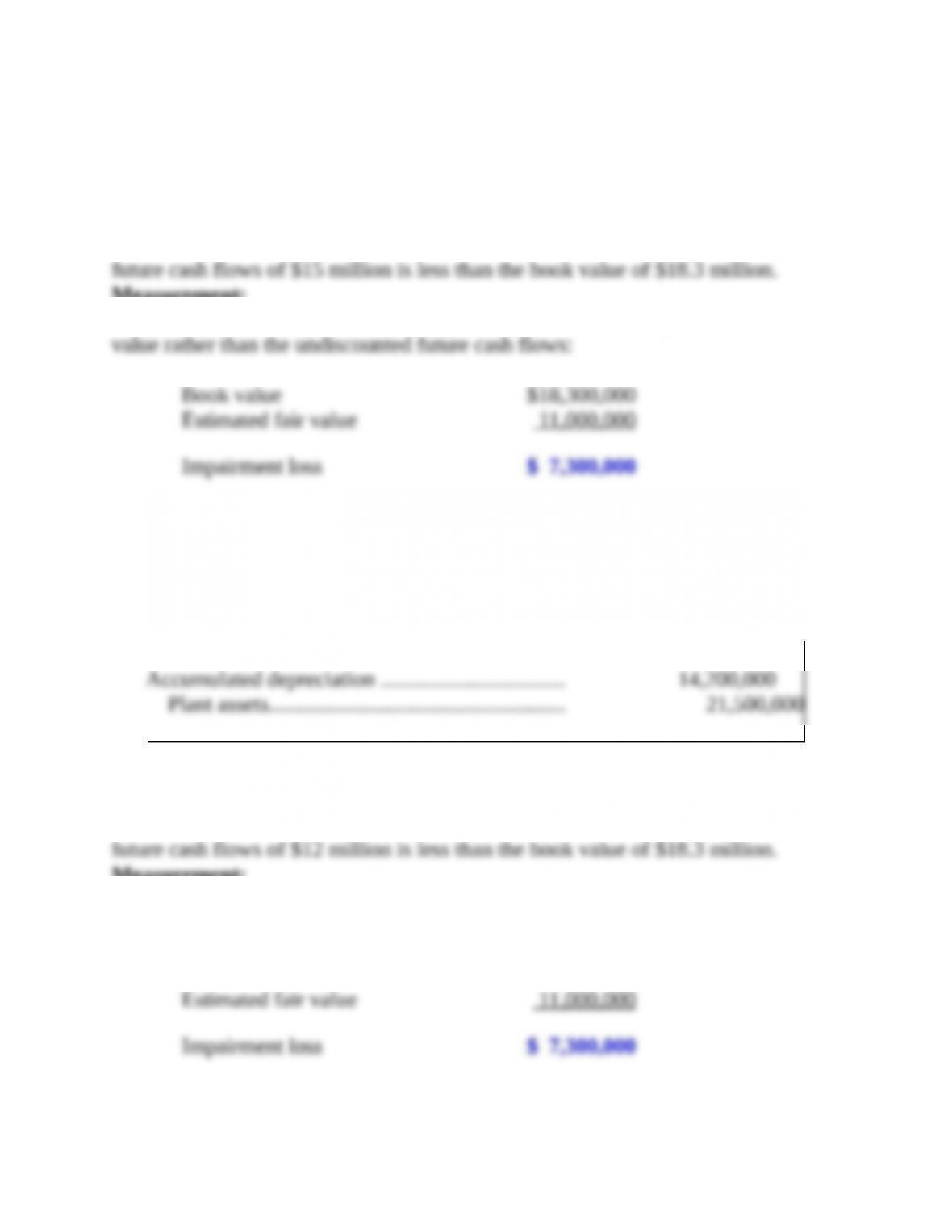
Recoverability test:
An impairment loss is indicated because the estimated undiscounted sum of
Measurement:
The amount of the loss to be reported is calculated using the estimated fair
value rather than the undiscounted future cash flows:
Book value $18,300,000

Requirement 5
Recoverability test: