Brief Exercise 11–3
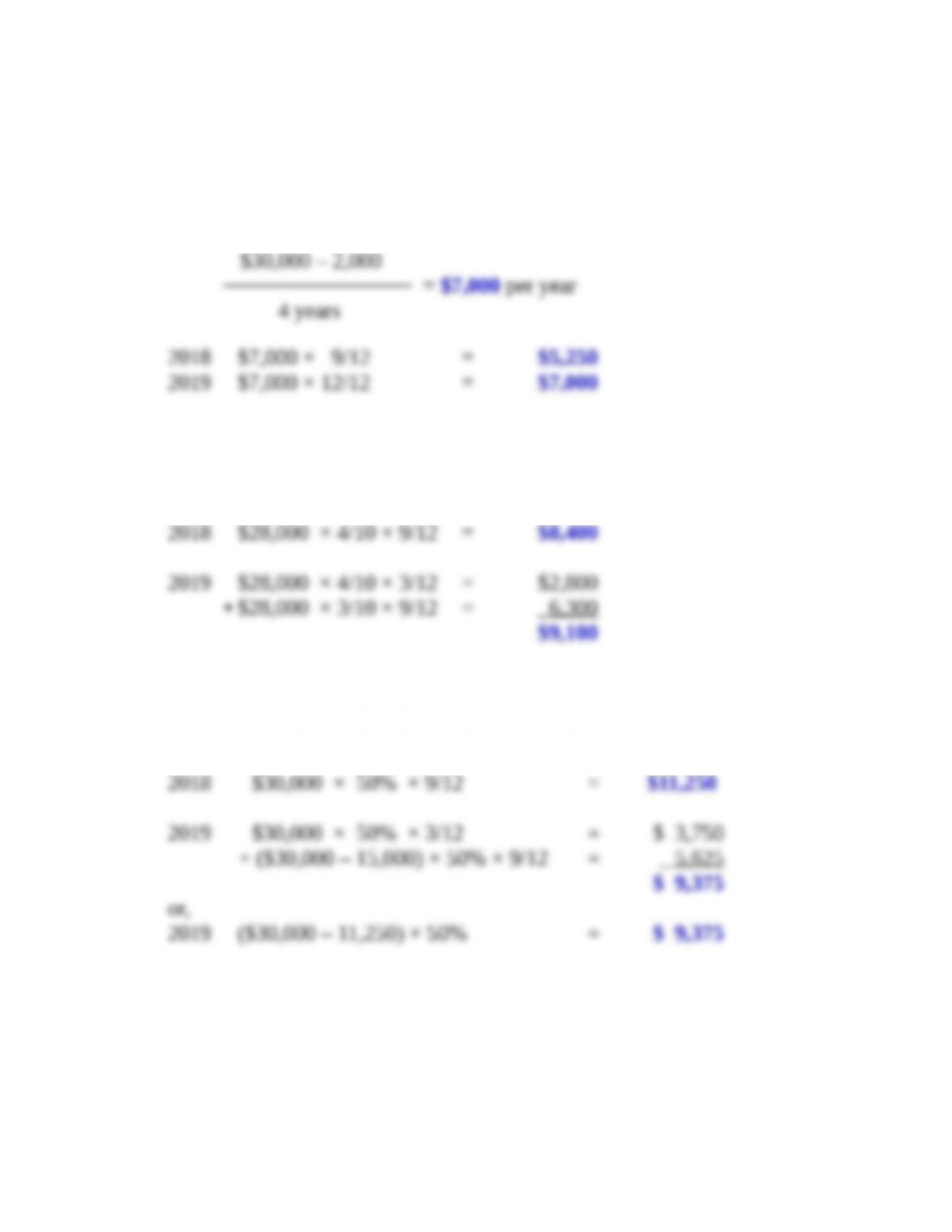
a. Straight-line:
b. Sum-of-the-years’ digits:
Sum-of-the-digits is ([4 (4 + 1)] ÷ 2) = 10
c. Double-declining balance:
Straight-line rate is 25% (1 ÷ 4 years) × 2 = 50% DDB rate
Brief Exercise 11–4
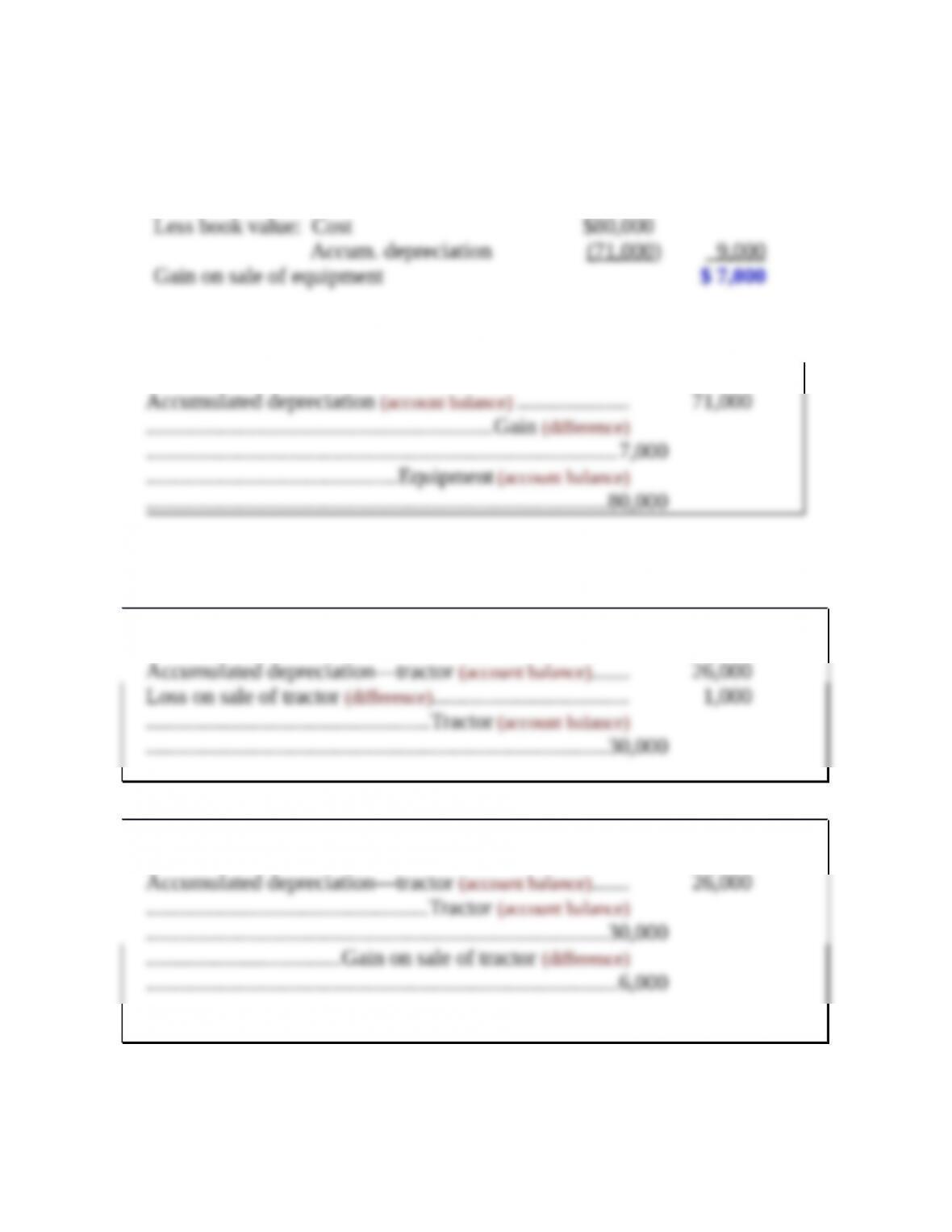
Consideration received $16,000
Journal entry (not required):
Cash…………………………………………………………………….. 16,000
Brief Exercise 11–5
Cash…………………………………………………………………….. 3,000
Cash…………………………………………………………………….. 10,000
Notice that no matter how much the asset is sold for, the same amounts are
recorded as the asset and its accumulated depreciation are removed from the books.
Brief Exercise 11–6
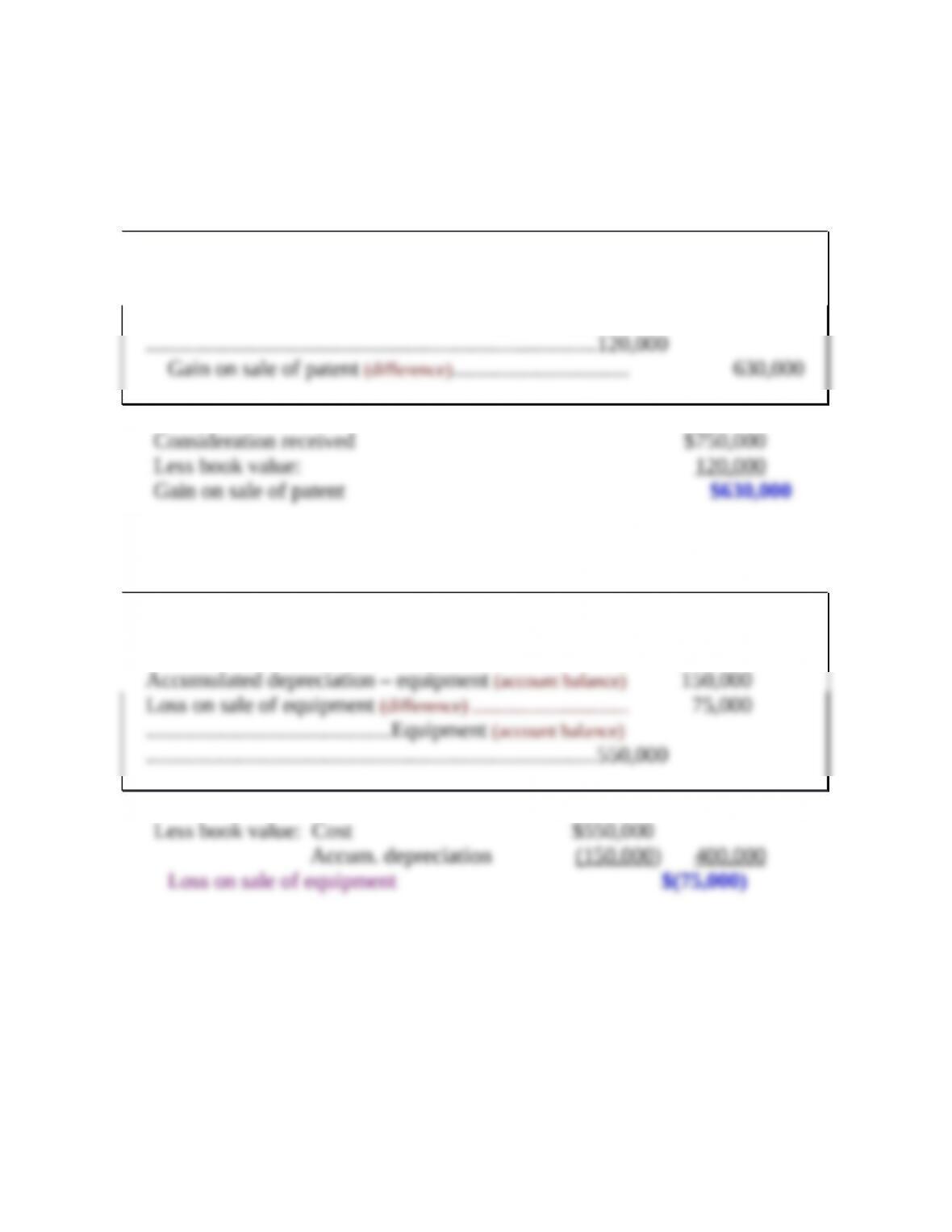
To record the sale of the patent.
July 15, 2018
Cash …………………………………………………………………….. 750,000
……………………………………………..Patent (account balance)
To record the sale of equipment.
July 15, 2018
Cash …………………………………………………………………….. 325,000
Consideration received $325,000
Brief Exercise 11–7
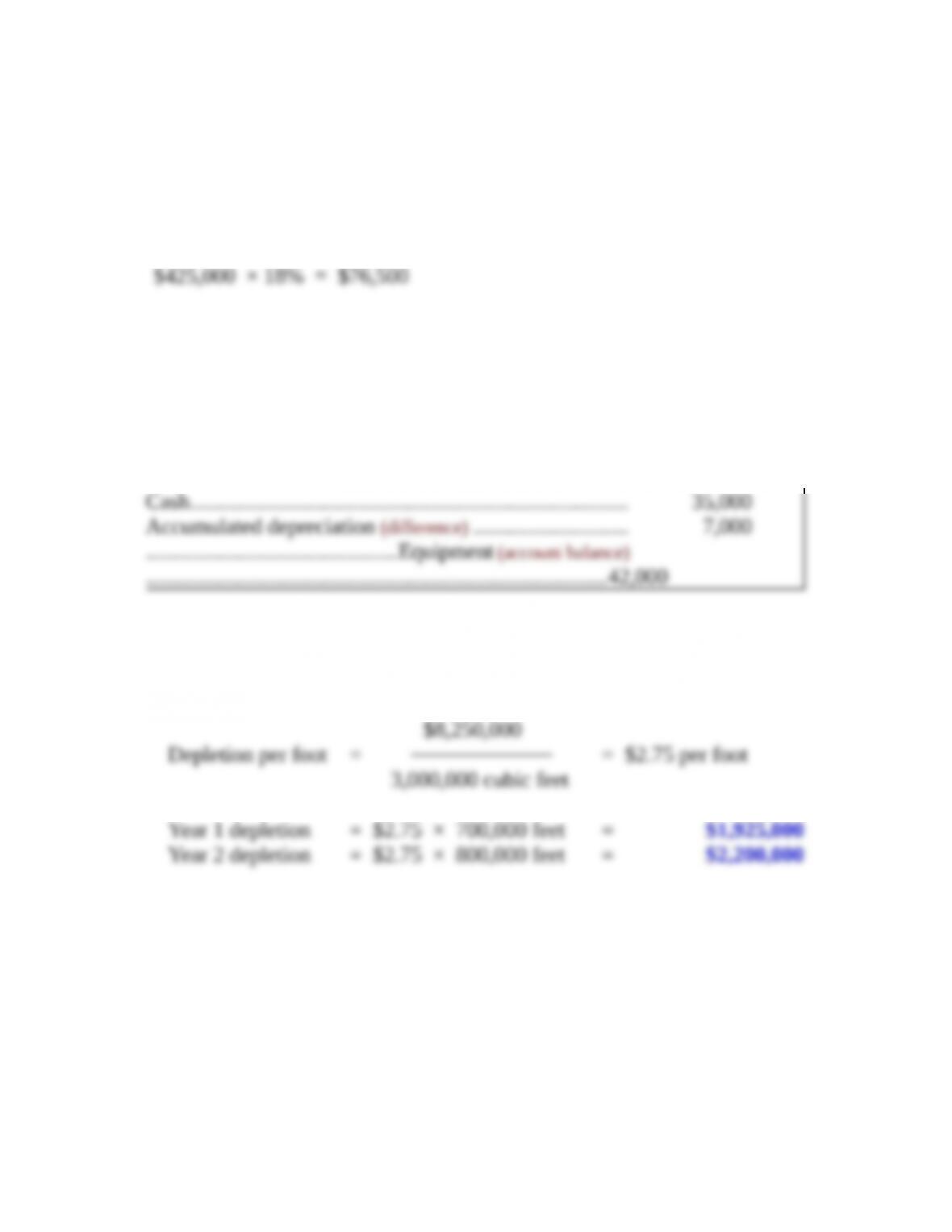
Annual depreciation will equal the group rate multiplied by the original cost
of the group:
Since depreciation records are not kept on an individual asset basis,
dispositions are recorded under the assumption that the book value of the disposed
item exactly equals any proceeds received and no gain or loss is recorded. Any
actual gain or loss is implicitly included in the accumulated depreciation account.
Journal entry (not required):
Brief Exercise 11–8
Brief Exercise 11–9
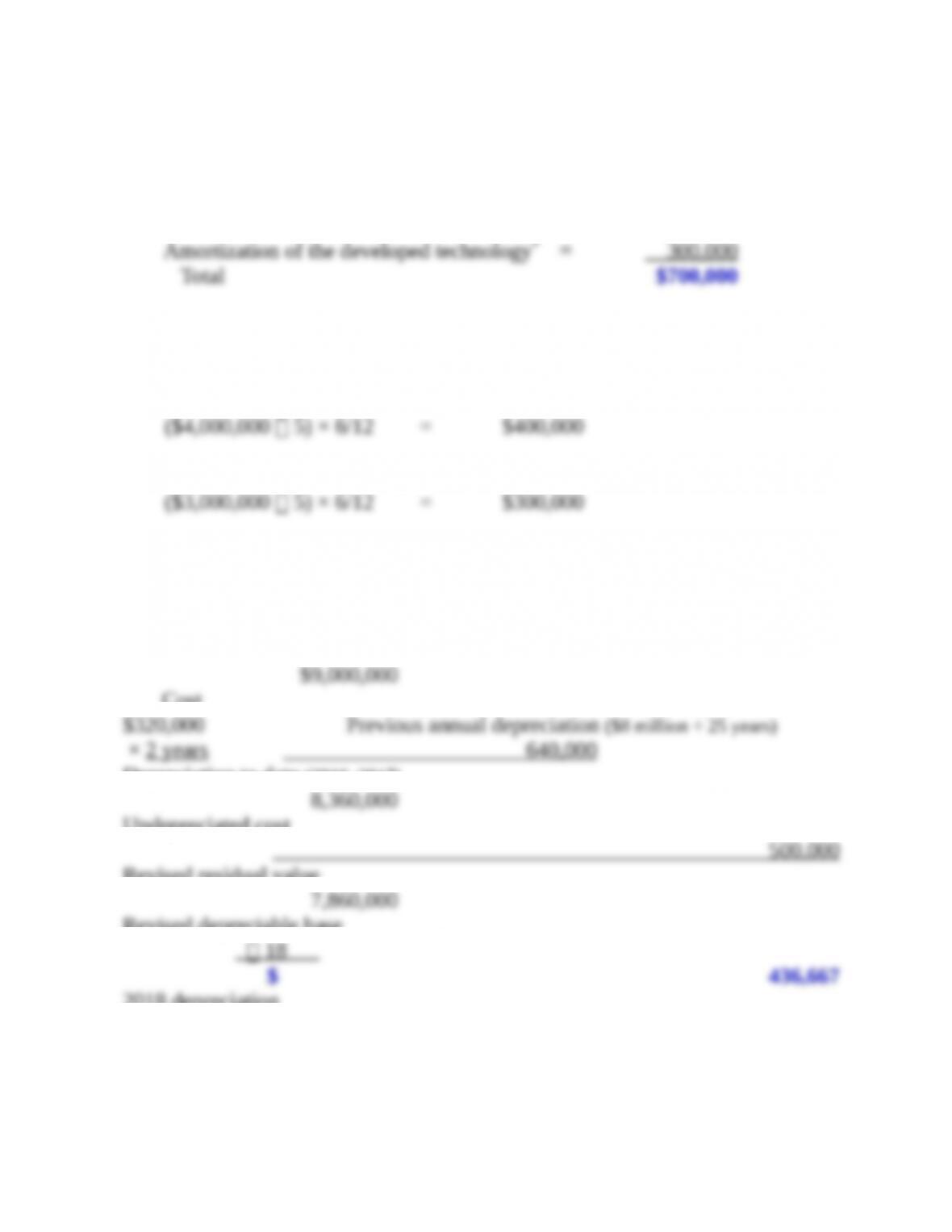
Expenses for the year include:
Amortization of the patent †= $400,000
Goodwill is not amortized. In-process research and development is not
amortized.
†Amortization of the patent:
*Amortization of the developed technology:
Brief Exercise 11–10
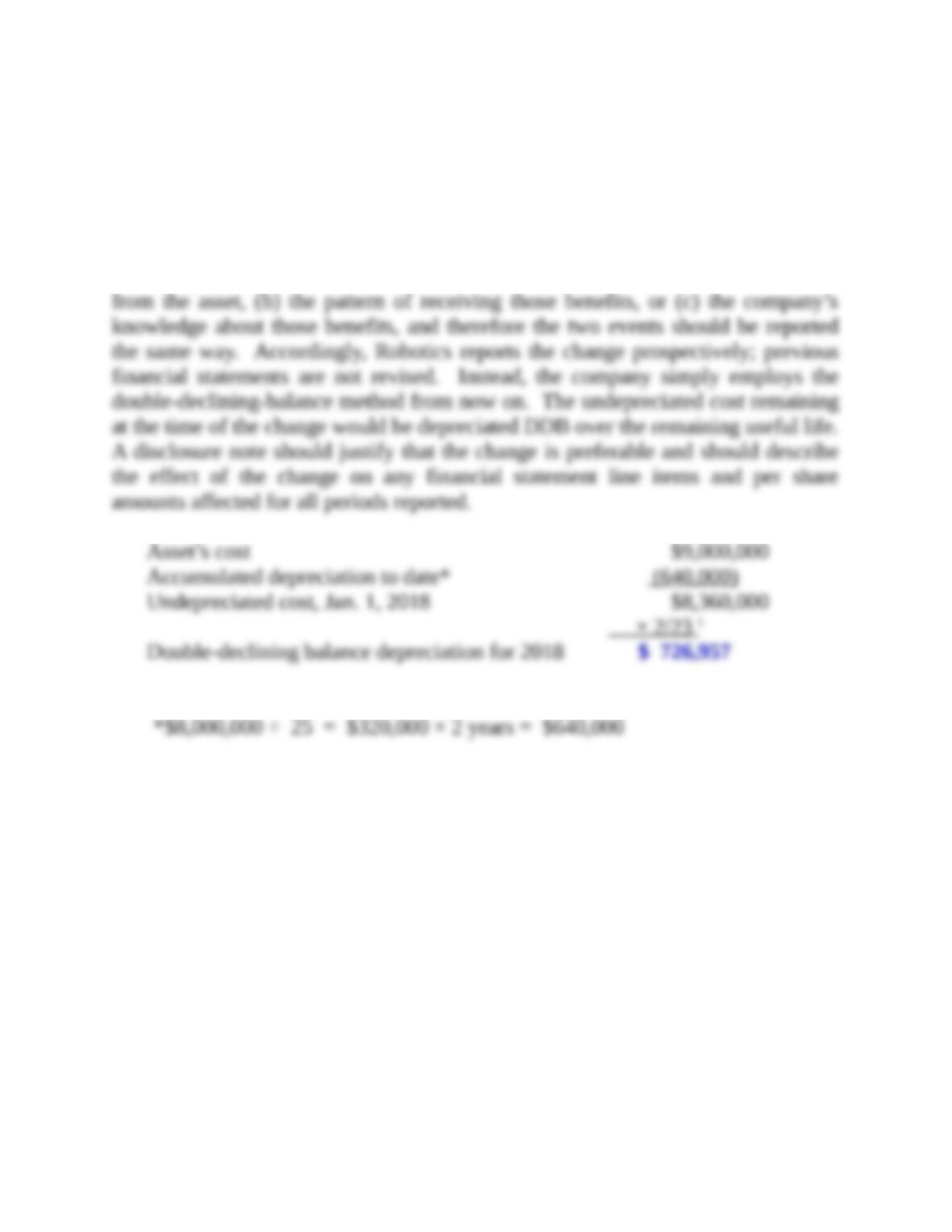
Calculation of annual depreciation after the estimate change:
Cost
Depreciation to date (2016–2017)
Undepreciated cost
Revised residual value
Revised depreciable base
2018 depreciation
Brief Exercise 11–11
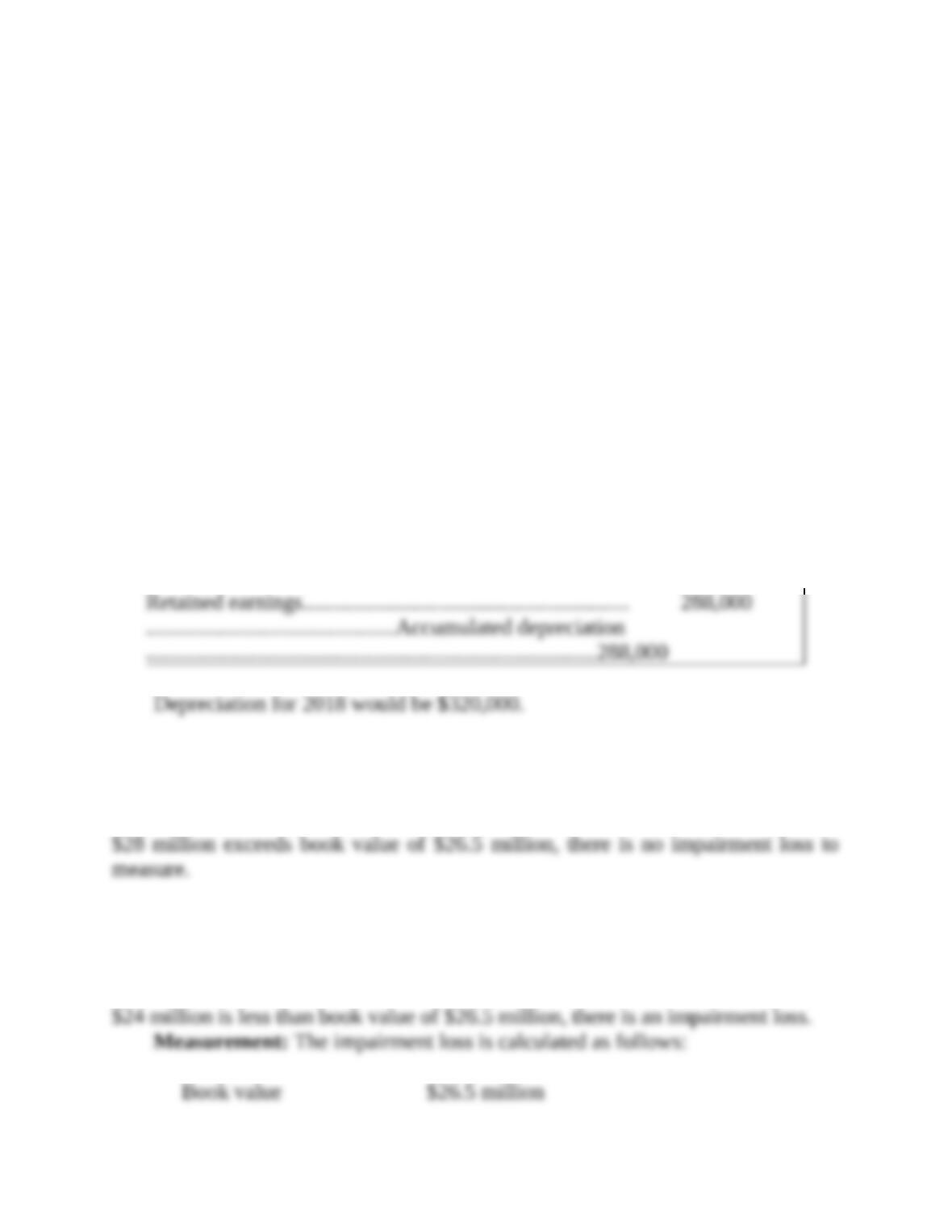
In general, we report voluntary changes in accounting principles retrospectively.
However, a change in depreciation method is considered a change in accounting
estimate resulting from a change in accounting principle. In other words, a change
in the depreciation method reflects a change in the (a) estimated future benefits
† Remaining life is 23 years. Twice the straight-line rate is 2/23.
Brief Exercise 11–12
If a material error is discovered in an accounting period subsequent to the
period in which the error is made, previous years’ financial statements that were
incorrect as a result of the error are retrospectively restated to reflect the
correction. Any account balances that are incorrect as a result of the error are
corrected by journal entry. If retained earnings is one of the incorrect accounts, the
correction is reported as a prior period adjustment to the beginning balance in the
statement of shareholders’ equity. In addition, a disclosure note is needed to
describe the nature of the error and the impact of its correction on net income,
income before extraordinary items, and earnings per share.
In this case, depreciation of $32,000 should have been $320,000 ($8,000,000
25 years). Therefore, 2016 income before tax is overstated by $288,000
($320,000 – 32,000) and accumulated depreciation is understated by the same
amount. The following journal entry is needed in 2018 to record the error
correction (ignoring income tax):
Brief Exercise 11–13
Recoverability test: Because the undiscounted sum of future cash flows of
Brief Exercise 11–14
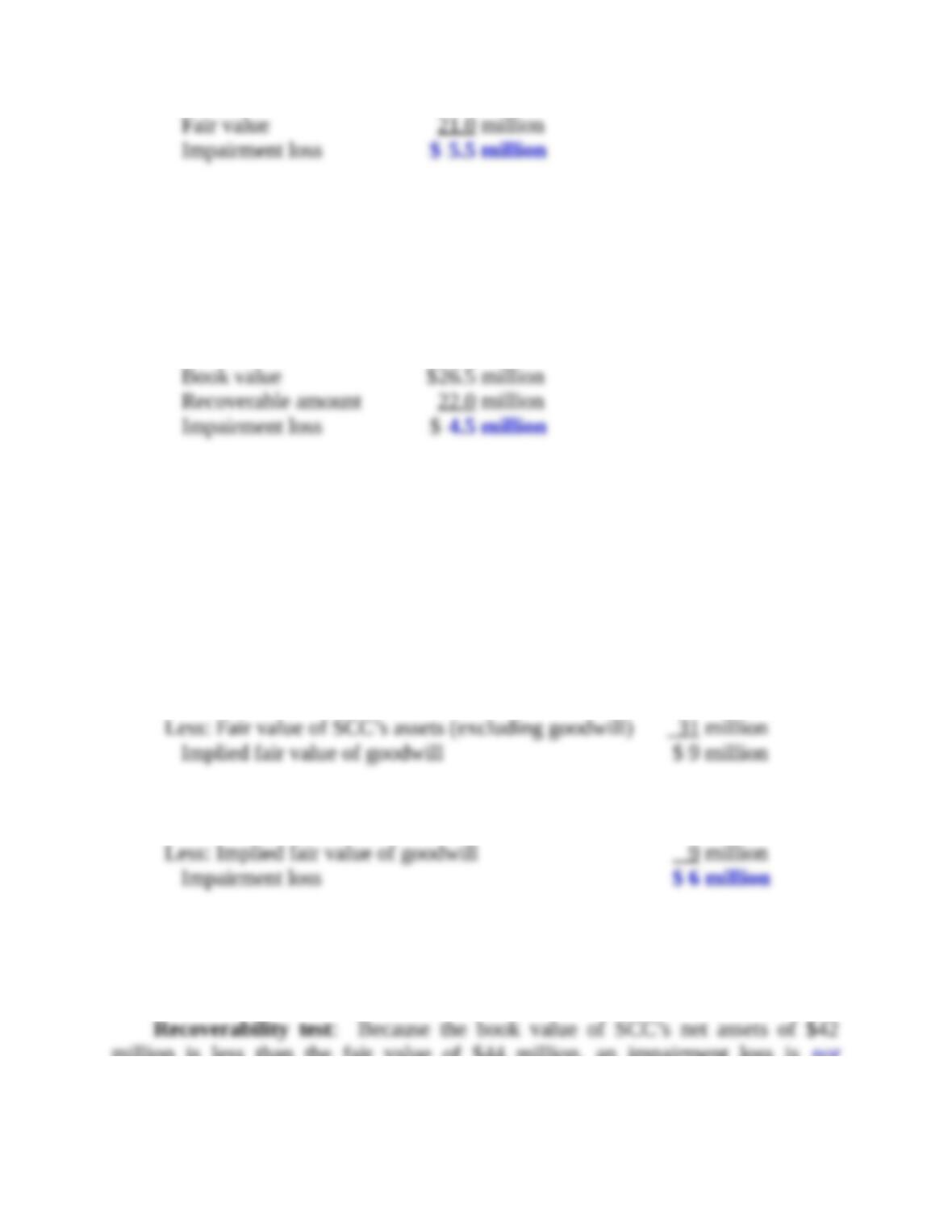
Recoverability test: Because the undiscounted sum of future cash flows of
Brief Exercise 11–15
Under IFRS, the impairment loss is the difference between book value and the
recoverable amount. The recoverable amount is $22 million, the higher of the
value-in-use of $22 million (present value of estimated future cash flows) and the
$21 million fair value less costs to sell.
Brief Exercise 11–16
Recoverability test: Because the book value of SCC’s net assets of $42
million exceeds the fair value of $40 million, an impairment loss is indicated.
Measurement:
Determination of implied fair value of goodwill:
Fair value of SCC $40 million
Measurement of impairment loss:
Book value of goodwill $15 million
Brief Exercise 11–17
million is less than the fair value of $44 million, an impairment loss is not
indicated.
Brief Exercise 11–18
Under IFRS, the impairment loss is the difference between book value and the
recoverable amount of the cash-generating unit. The recoverable amount is $41
million, the higher of the $41 million value-in-use (present value of estimated
future cash flows) and the $40 million fair value less costs to sell.
Book value $42 million
Recoverable amount 41 million
Impairment loss $ 1 million
Brief Exercise 11–19
Annual maintenance on machinery, $5,400—This is an example of normal
Remodeling of offices, $22,000—This is an example of an improvement. The
Rearrangement of the shipping and receiving area, $35,000—This is an
Exercise 11–1
1. Straight-line:
EXERCISES
$33,000 – 3,000
= $6,000 per year
5 years
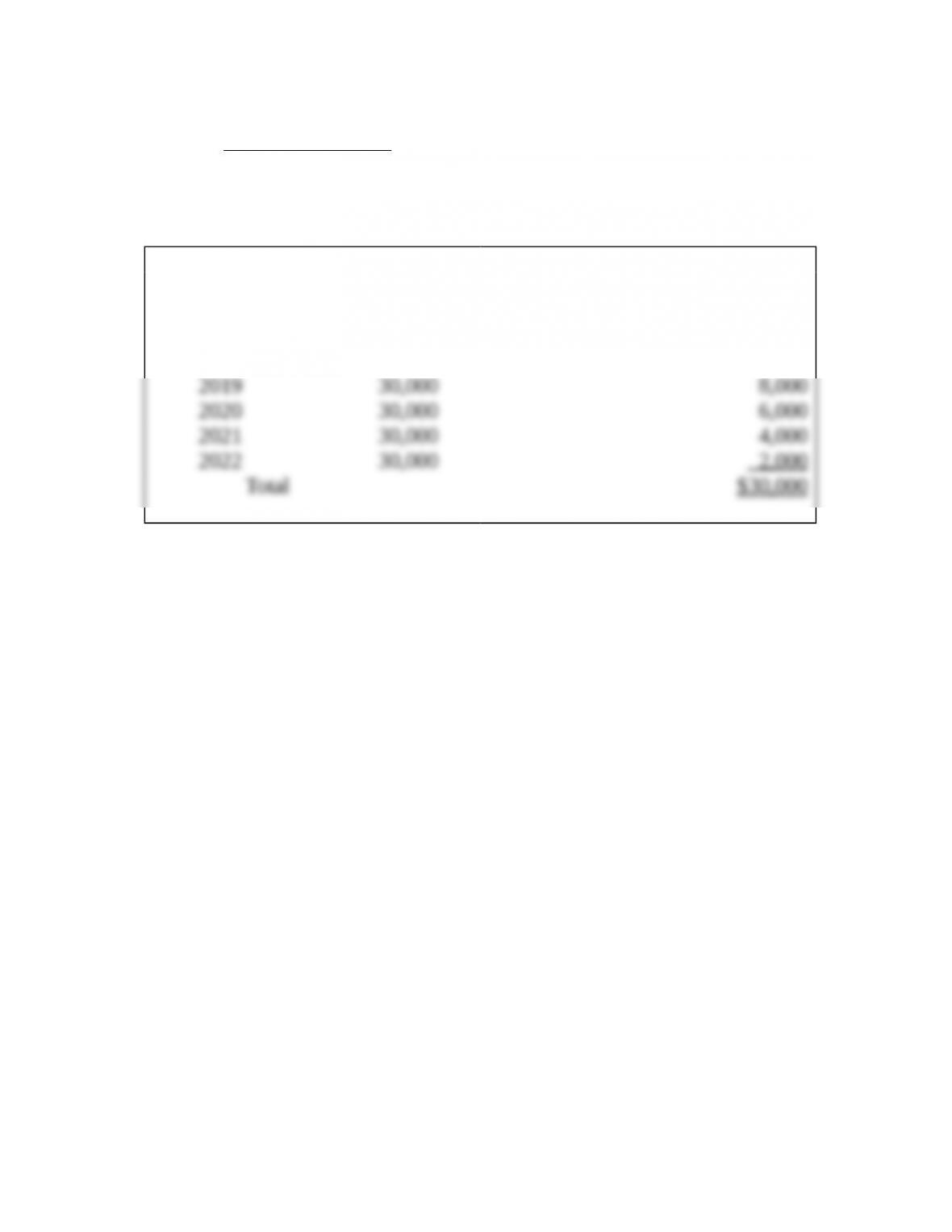
2. Sum-of-the-years’ digits:
Year
Depreciable
Base X
Depreciation
Rate per Year = Depreciation
2018 $30,000 $10,000
Exercise 11–1 (concluded)
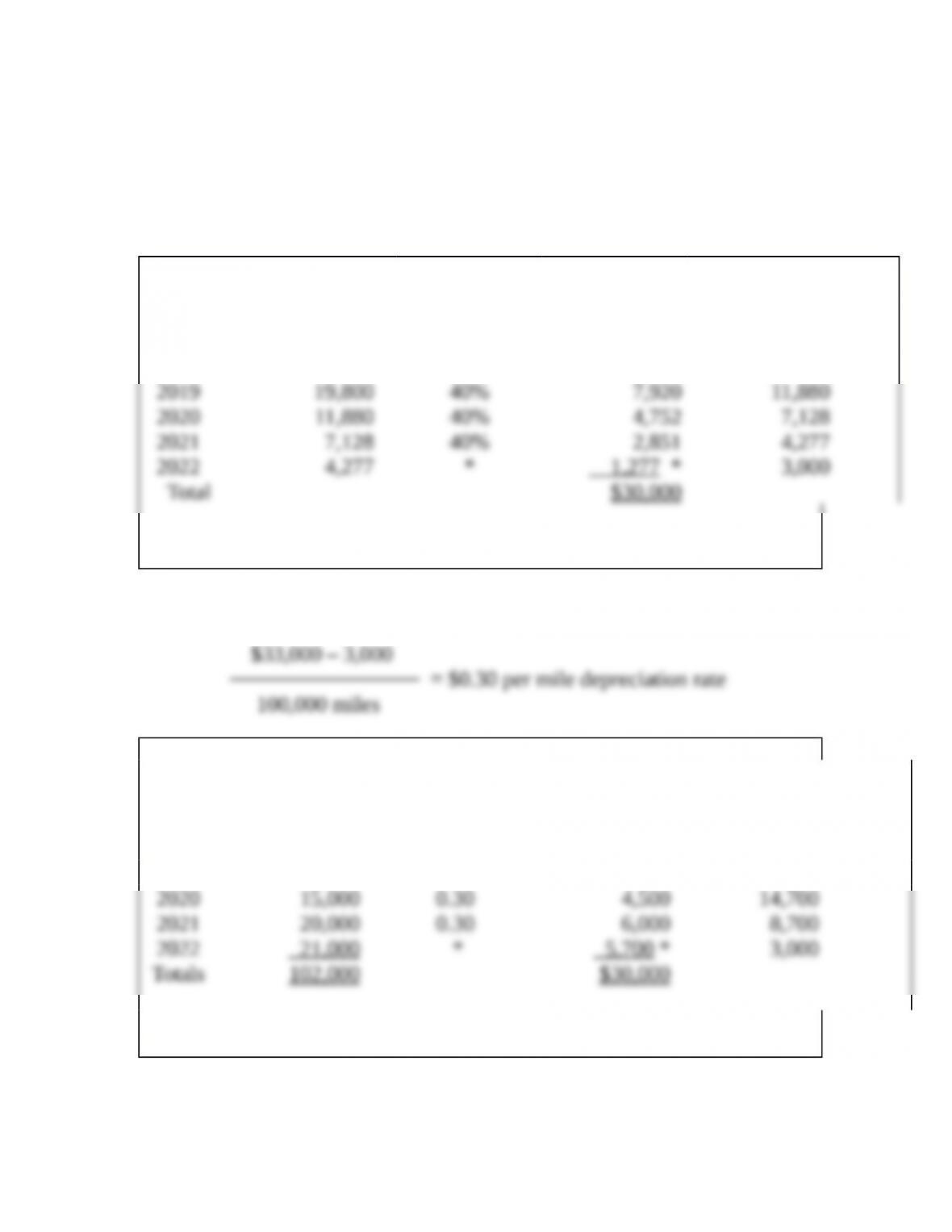
3. Double-declining balance:
Straight-line rate of 20% (1 ÷ 5 years) × 2 = 40% DDB rate.
Year
Book Value
Beginning
of Year X
Depreciation
Rate per
Year = Depreciation
Book Value
End of Year
2018 $33,000 40% $ 13,200 $19,800
* Amount necessary to reduce book value to residual value
4. Units-of-production:
Year
Actual
Miles
Driven X
Depreciation
Rate per
Mile = Depreciation
Book Value
End of
Year
2018 22,000 $0.30 $6,600 $26,400
2019 24,000 0.30 7,200 19,200
* Amount necessary to reduce book value to residual value