Solutions for Chapter 21
Mergers, Acquisitions, and Corporate Control
1. a. horizontal
b. conglomerate
2.
a. Yes. Merging to achieve economies of scale makes economic sense because it
b. No. Merging to reduce risk by diversification does not make economic sense since
c. Yes. Merging to redeploy cash might make economic sense, but note that there are
d. No. Merging to increase earnings per share does not make economic sense as it is
3. The firms can benefit from operational efficiencies. Heating will be busier in the winter,
4.
a. First note that, because there are no real gains from the merger, earnings and market
value are equal to the respective sums of the values for each firm independently:
21-5
Copyright © 2018 McGraw-Hill Education. All rights reserved. No reproduction or distribution without the prior written consent of
McGraw-Hill Education.
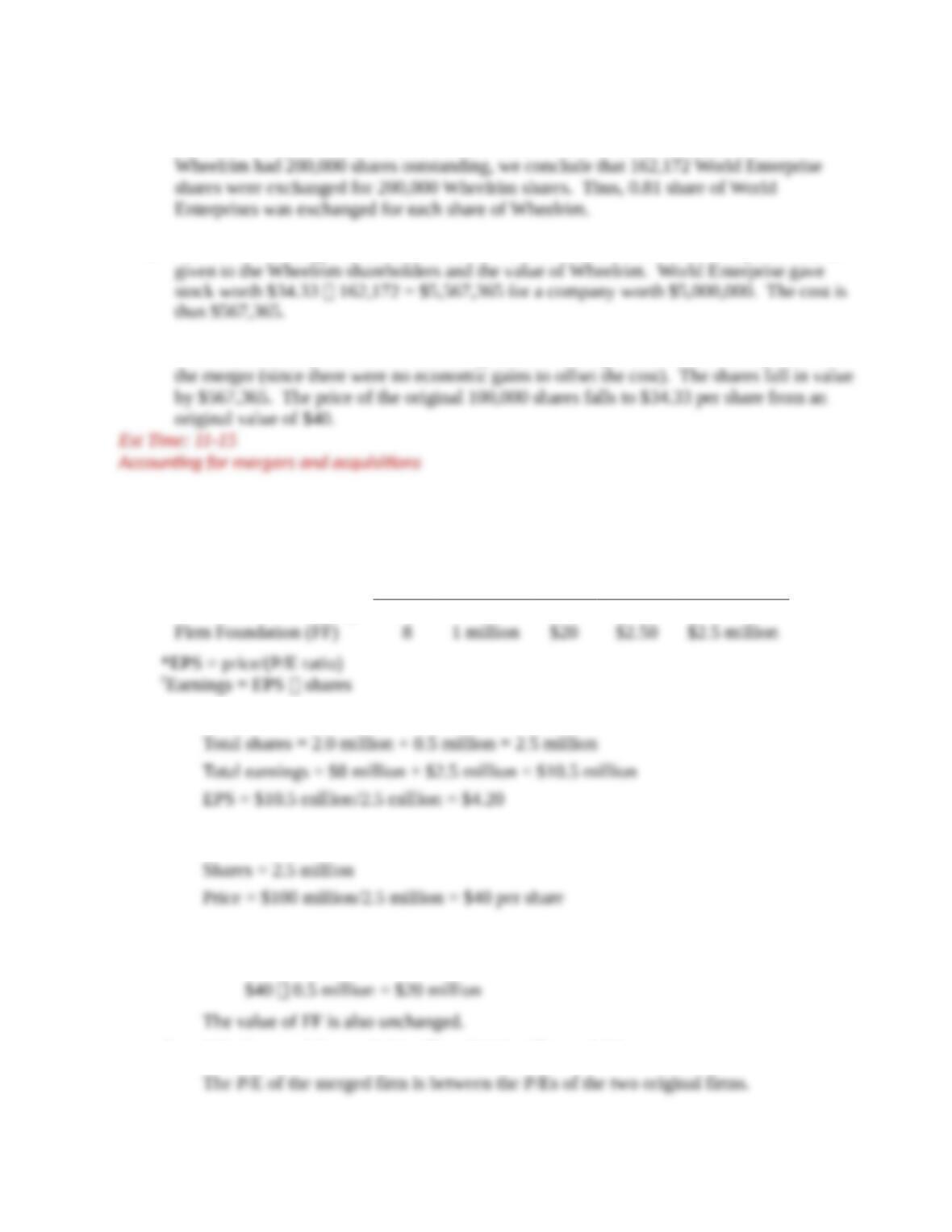
b. World Enterprises originally had 100,000 shares outstanding. It must have issued
262,172 – 100,000 = 162,172 new shares to take over Wheelrim and Axle. Because
c. The cost of the merger is the difference between the value of the World Enterprises shares
d. The World Enterprise shares outstanding before the merger decline in value by the cost of
5.
P/E Shares Price EPS* Earnings†
Castles in the Sand (CS)
10
2 million
$40
$4.00
$8.0 million
a. New shares issued = 0.5 million
b. Value = (2 million $40) + (1 million $20) = $100 million
c. Thus CS shareholders’ wealth is unchanged. FF shareholders have stock worth:
d. P/E of merged firm = $100 million/$10.5 million = 9.52
21-5
Copyright © 2018 McGraw-Hill Education. All rights reserved. No reproduction or distribution without the prior written consent of
McGraw-Hill Education.
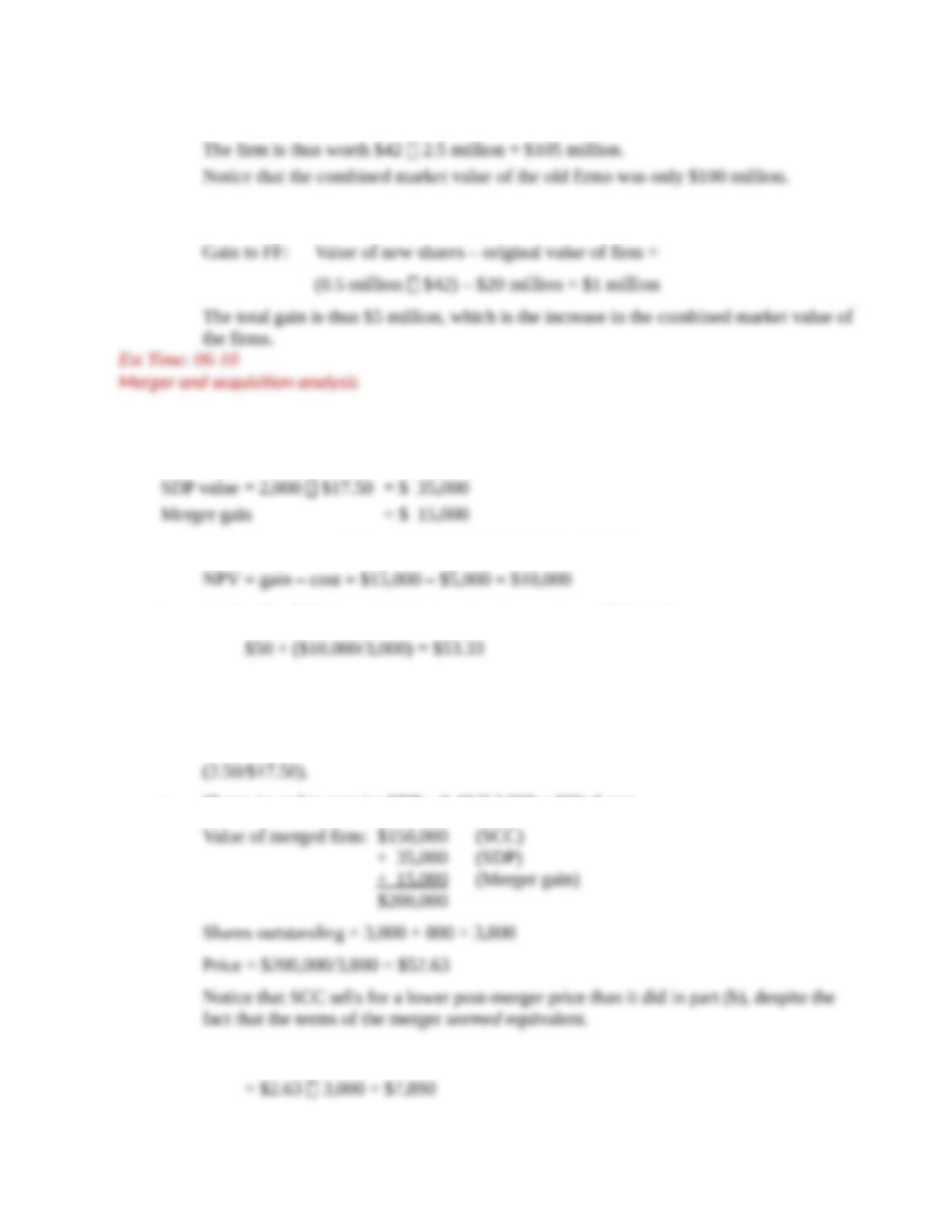
e. If the P/E of CS remains at 10, the merged firm will sell for $4.20 10 = $42.
f. Gain to CS: $2/share 2 million shares = $4 million
6. SCC value = 3,000 $50.00 = $150,000
a. Cost of merger to SCC = ($20 – $17.50) 2,000 = $5,000
b. SCC will sell for its original price plus the per-share NPV of the merger:
c. The price of SDP will increase from $17.50 to the tender price of $20
d. SCC shareholders gain 6.66% ($3.33/$50). The gain for SDP shareholders is 14.29%
e. Shares issued to acquire SDP = 0.40 2,000 = 800 shares
f. NPV = price gain per share original shares outstanding
21-5
Copyright © 2018 McGraw-Hill Education. All rights reserved. No reproduction or distribution without the prior written consent of
McGraw-Hill Education.
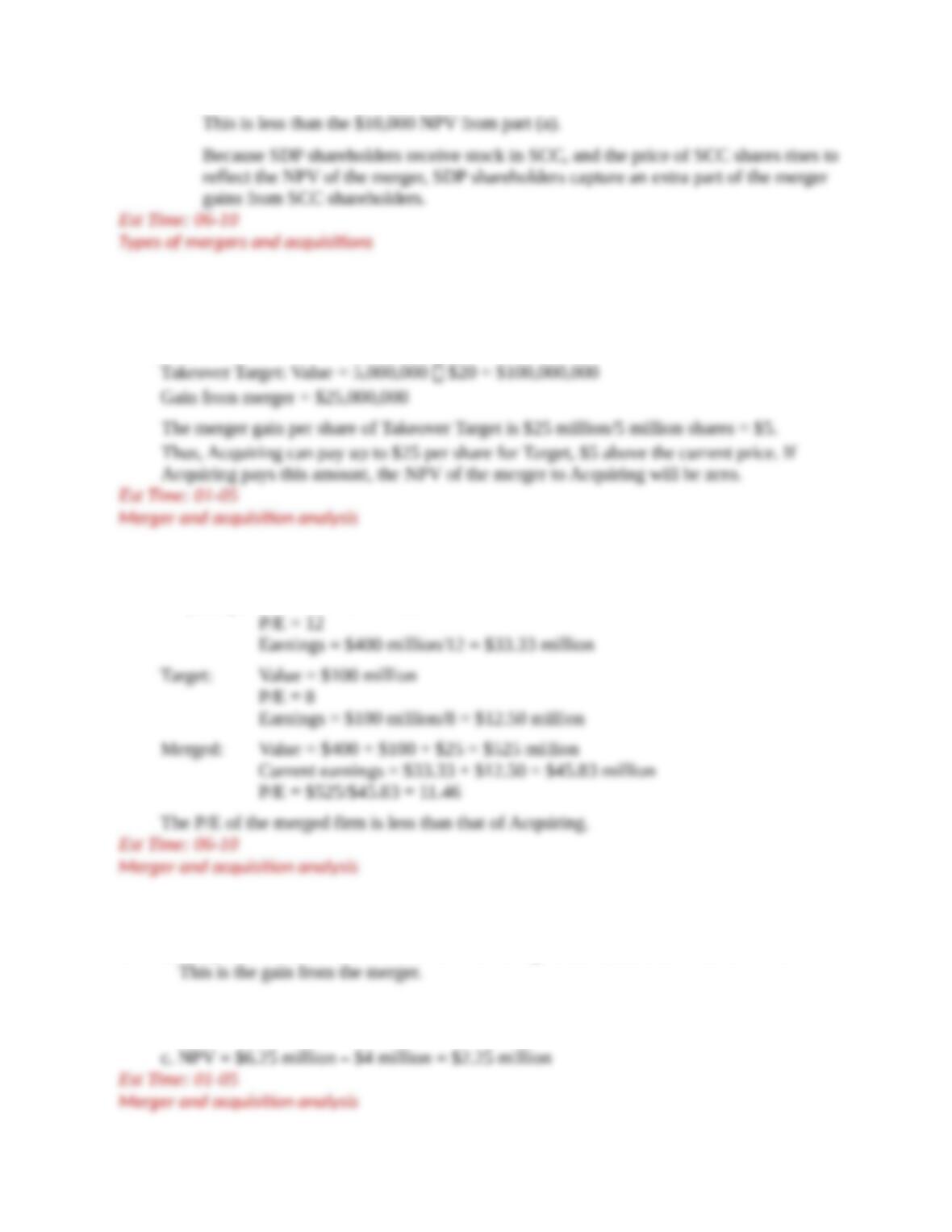
7. Premerger data:
Acquiring: Value = 10,000,000 $40 = $400,000,000
8. Acquiring: Value = $400 million
9. a. The present value of the $500,000 annual savings is $500,000/0.08 = $6.25 million.
b. The cost of the offer is $14 million – $10 million = $4 million.
21-5
Copyright © 2018 McGraw-Hill Education. All rights reserved. No reproduction or distribution without the prior written consent of
McGraw-Hill Education.
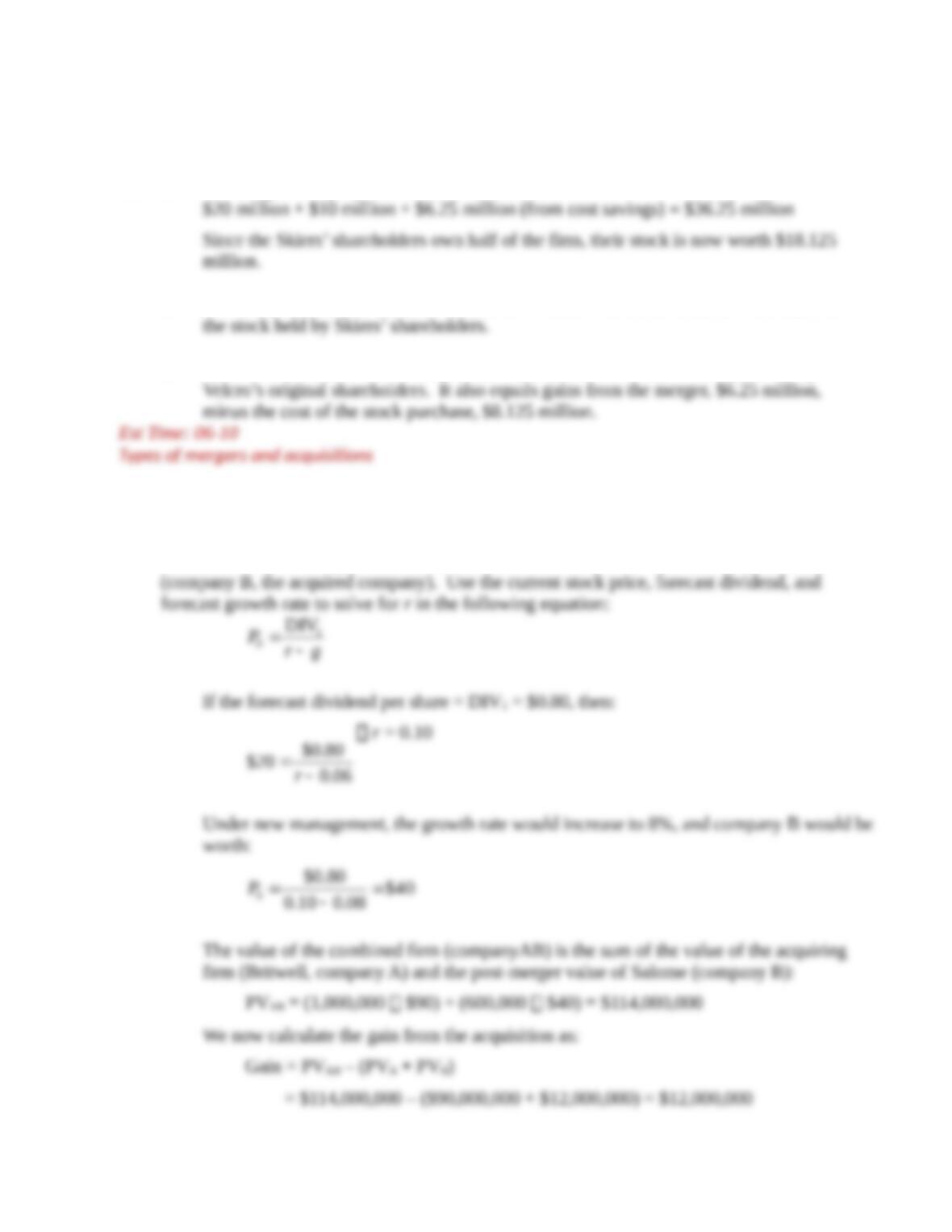
10. a. The merged company will have a total value of:
b. The cost of the stock alternative is $8.125 million. This is the increase in the value of
c. NPV = –$1.875 million. This equals the decrease in the value of the stock held by
11. a. We can use the stock valuation formula from Chapter 6 to value the stream of
dividends. The first step is to determine the discount rate for the common stock of Salome
21-5
Copyright © 2018 McGraw-Hill Education. All rights reserved. No reproduction or distribution without the prior written consent of
McGraw-Hill Education.
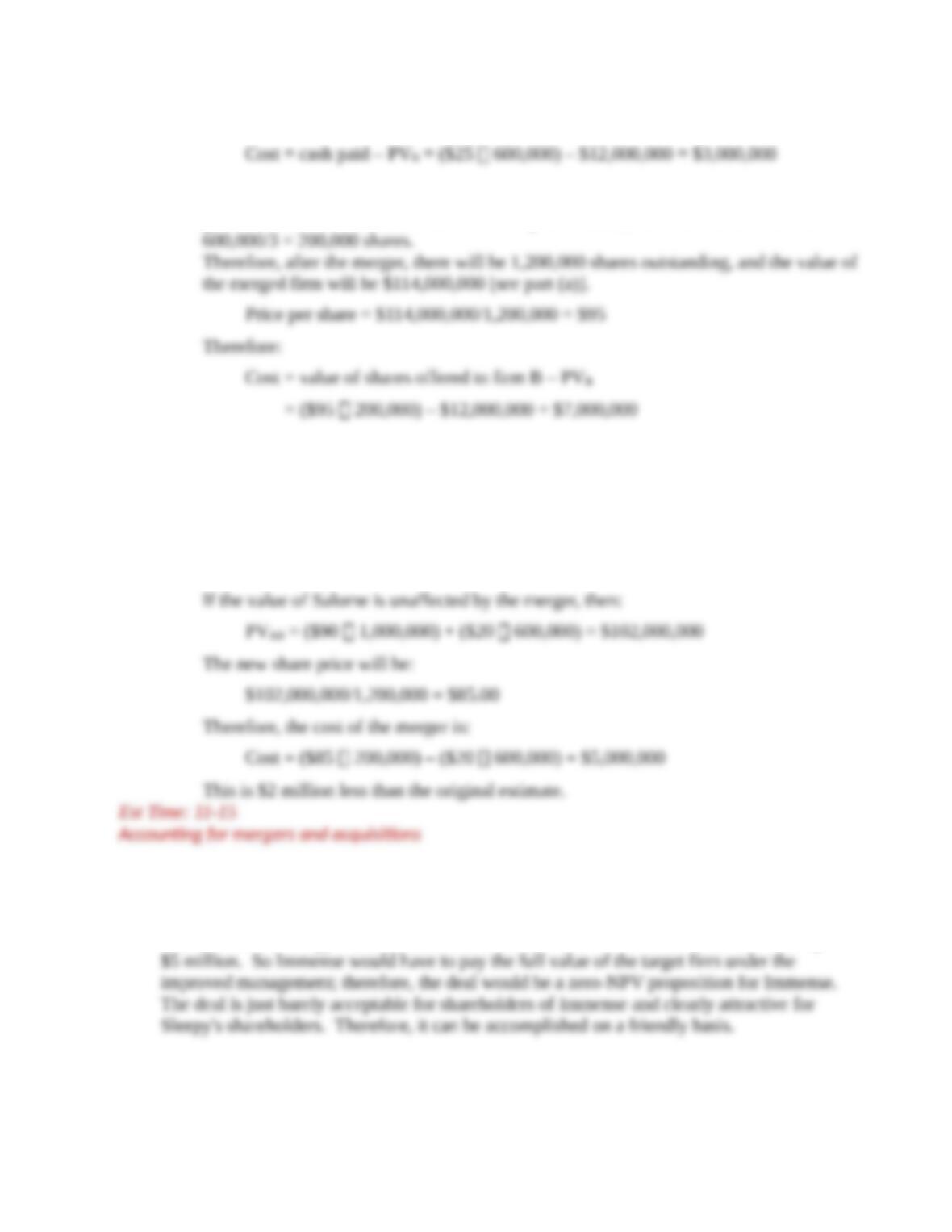
b. Because this is a cash acquisition:
c. Because this merger is financed with stock, the cost depends on the value of the stock
given to the shareholders of Salome. To acquire Salome, Britwell will have to offer
d. If the acquisition is for cash, the cost of the merger is unaffected by the change in the
forecast growth rate. The price paid for Salome is still $15,000,000, and its current
value is still $12,000,000. The cost remains at $3,000,000.
If the acquisition is for stock, however, the value of the stock given to the shareholders
of Salome will be lower than that under the original growth forecast. Therefore, the cost
to Britwell will be lower.
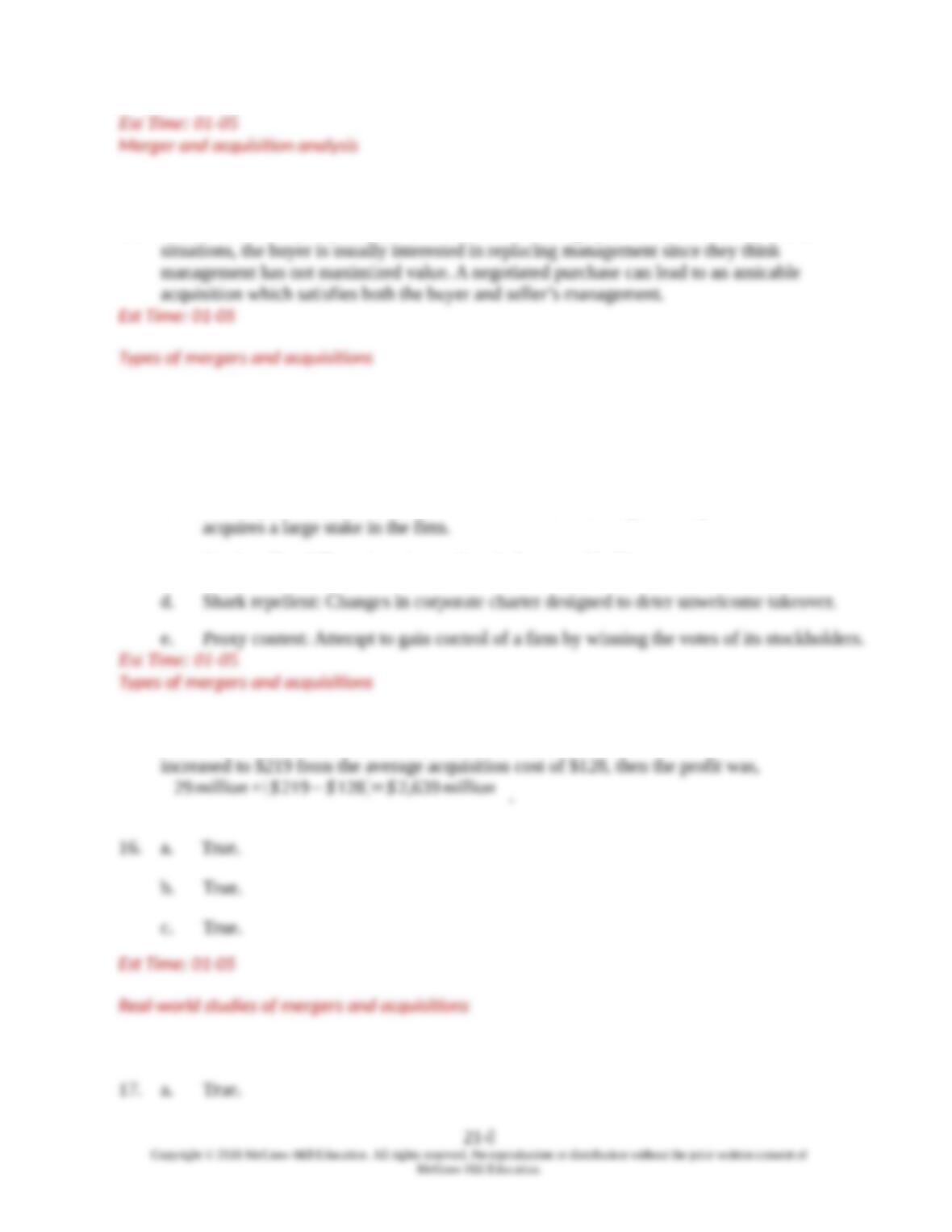
12. a.At a price of $25 per share, Immense will have to pay $25 million to Sleepy. The
current value of Sleepy is $20 million, and Immense believes it can increase the value by
b. If Sleepy tries to get $28 a share, the deal will have negative NPV to Immense
shareholders. There could not be a friendly takeover on this basis.
21-5
Copyright © 2018 McGraw-Hill Education. All rights reserved. No reproduction or distribution without the prior written consent of
McGraw-Hill Education.
13. Tender offers and proxy contests often fall into the category of hostile takeover. In such
14.
a. LBO: Company or business bought out by private investors, largely debt-financed.
b. Poison pill: Measures in which shareholders are issued rights to buy shares if the bidder
c. Tender offer: Offer to buy shares directly from stockholders.
15. A 9.7% stake in 299 million shares is 29 million shares. If each share in this stake
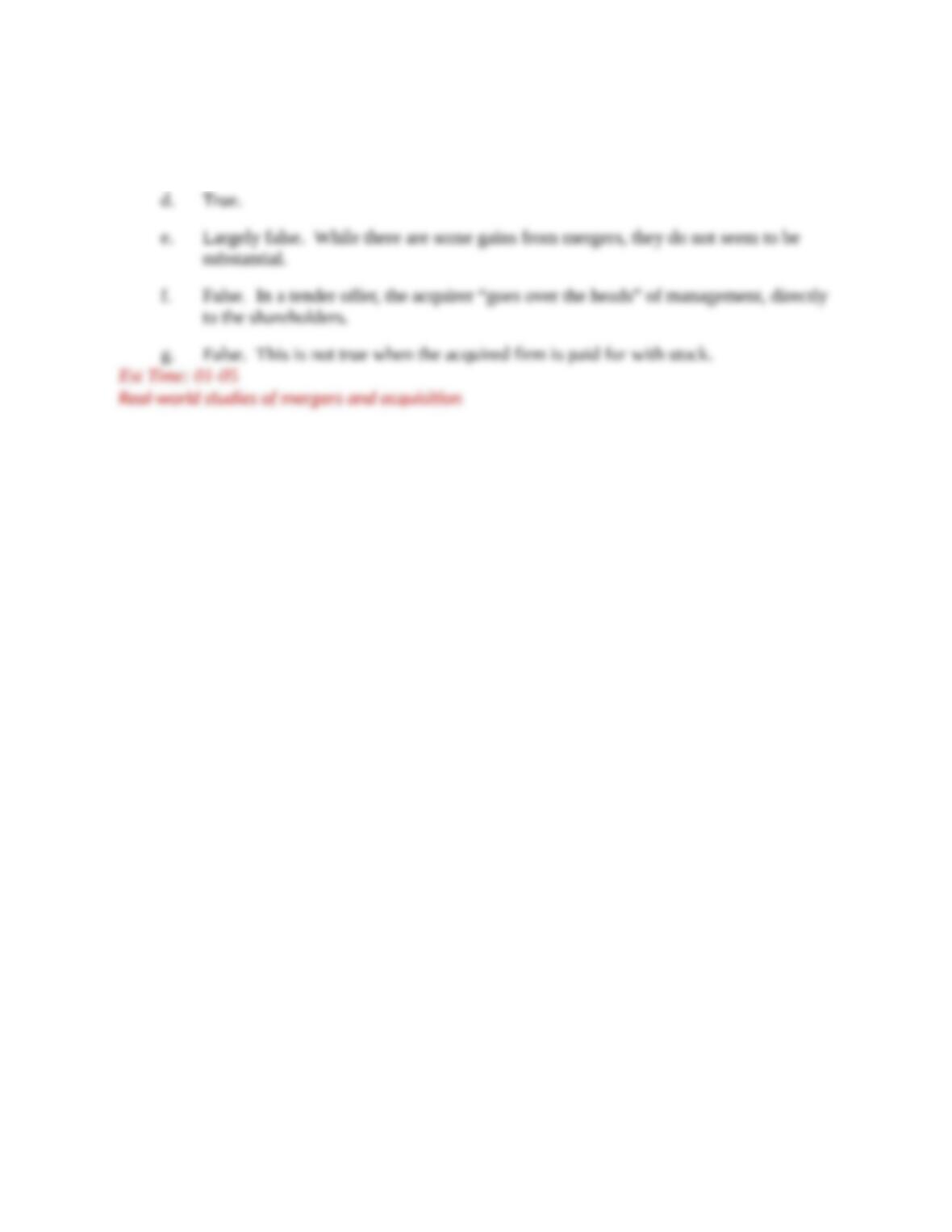
b. False.
c. True.
21-5
Copyright © 2018 McGraw-Hill Education. All rights reserved. No reproduction or distribution without the prior written consent of
McGraw-Hill Education.