Chapter 8
INTEREST RATES AND BOND VALUATION
SLIDES
CHAPTER WEB SITES
8.1 Key Concepts and Skills
8.2 Chapter Outline
8.3 Bonds and Bond Valuation
8.4 Bond Valuation
8.5 The Bond-Pricing Equation
8.6 Bond Example
8.7 Bond Example
8.8 Bond Example: Calculator
8.9 Bond Example
8.10 YTM and Bond Value
8.11 Bond Concepts
8.12 Interest Rate Risk
8.13 Maturity and Bond Price Volatility
8.14 Coupon Rates and Bond Prices
8.15 Computing Yield to Maturity
8.16 YTM with Annual Coupons
8.17 YTM with Semiannual Coupons
8.18 Current Yield vs. Yield to Maturity
8.19 Bond Pricing Theorems
8.20 Zero Coupon Bonds
8.21 Pure Discount Bonds
8.22 Pure Discount Bonds: Example
8.23 Bond Pricing with a Spreadsheet
8.24 Government Bonds
8.25 After-tax Yields
8.26 Corporate Bonds
8.27 Bond Ratings – Investment Quality
8.28 Bond Ratings – Speculative
8.29 Bond Markets
8.30 Treasury Quotations
8.31 Clean versus Dirty Prices
8.32 Inflation and Interest Rates
8.33 Real versus Nominal Rates
8.34 Inflation-Linked Bonds
8.35 The Fisher Effect: Example
8.36 Determinants of Bond Yields
8.37 Factors Affecting Required Return
8.38 Quick Quiz
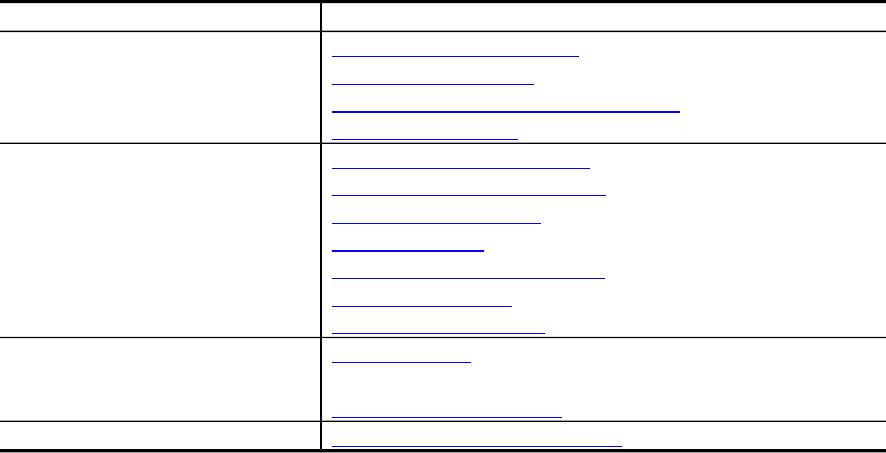
Section Web Address
8.1 finance.yahoo.com/bonds
personal.fidelity.com
money.cnn.com/markets/bondcenter
www.bankrate.com
8.2 www.putblicdebt.treas.gov
www.brillig.com/debt_clock
www.newyorkfed.org
money.cnn.com
www.standardandpoors.com
www.moodys.com
www.fitchratings.com
8.3 www.finra.org
research.stlouisfed.org/fred2
www.treasurydirect.gov
8.5 www.bloomberg.com/markets
CHAPTER ORGANIZATION
8.1 Bonds and Bond Valuation
Bond Features and Prices
Bond Values and Yields
Interest Rate Risk
Finding the Yield to Maturity: More Trial and Error
Zero Coupon Bonds
8.2 Government and Corporate Bonds
Government Bonds
Corporate Bonds
Bond Ratings
8.3 Bond Markets
How Bonds Are Bought and Sold
Bond Price Reporting
A Note on Bond Price Quotes
8.4 Inflation and Interest Rates
Real versus Nominal Rates
Inflation Risk and Inflation-Linked Bonds
The Fisher Effect
8.5 Determinants of Bond Yields
The Term Structure of Interest Rates

Bond Yields and the Yield Curve: Putting It All Together
Conclusion
ANNOTATED CHAPTER OUTLINE
Slide 8.0 Chapter 8 Title Slide
Slide 8.1 Key Concepts and Skills
Slide 8.2 Chapter Outline
1. Bonds and Bond Valuation
A. Bond Features and Prices
Slide 8.3 Bonds and Bond Valuation
Bonds – long-term IOU’s, usually interest-only loans (interest is paid by
the borrower every period with the principal repaid at the end of the loan).
Coupons – the regular interest payments (if fixed amount – level coupon).
Face or par value – principal, amount repaid at the end of the loan
Coupon rate – coupon quoted as a percent of face value
Maturity – time until face value is paid, usually given in years, although
most bonds pay coupons semiannually.
Yield to maturity (YTM) – the required market rate or rate that makes the
discounted cash flows from a bond equal to the bond’s market price.
B. Bond Values and Yields
Slide 8.4 Bond Valuation
Slide 8.5 The Bond-Pricing Equation
The cash flows from a bond are the coupons and the face value. The value
of a bond (market price) is the present value of the expected cash flows
discounted at the market rate of interest.
Slide 8.6 –
Slide 8.7 Bond Example
Example: Suppose Wilhite, Co. issues $1,000 par bonds with 20 years to
maturity. The annual coupon is $110. Similar bonds have a yield to
maturity of 11%.
Bond value = PV of coupons + PV of face value
Bond value = $110[1 – 1/(1.11)20] / .11 + $1,000 / (1.11)20
Bond value = $875.97 + $124.03 = $1,000
Slide 8.8 Bond Example: Calculator
or N = 20; I/Y = 11; PMT = 110; FV = 1,000; CPT PV = -$1,000
Since the coupon rate and the yield are the same, the price should equal
face value.
Slide 8.9 Bond Example
Discount bond – a bond that sells for less than its par value. This is the
case when the YTM is greater than the coupon rate.
Example: Suppose the YTM on bonds similar to that of Wilhite Co. is
13% instead of 11%. What is the bond’s price?
Bond price = $110[1 – 1/(1.13)20] / .13 + $1,000/(1.13)20
Bond price = $772.72 + $86.78 = $859.50
or N = 20; I/Y = 13; PMT = 110; FV = 1,000; CPT PV = -$859.50
The difference between this price, $859.50, and the par value of $1,000 is
$140.50. This is equal to the present value of the difference between bonds
with coupon rates of 13% ($130) and Wilhite’s coupon: PMT = 20; N =
20; I/Y = 13; CPT PV = -$140.50.
Lecture Tip: Not all bond interest is paid in cash. Isle of Arran Distillers
Ltd., a UK firm, offered investors the chance to purchase bonds for
approximately $675; the bonds gave investors the right to receive ten
cases of the firm’s products: malt whiskeys. The reason? According to
Harold Currie, the company’s chairman, “The idea of the bond is to
create a customer base from the beginning. The whiskey will not be
available in shops and will be exclusive to the bondholders.”
Lecture Tip: It is unfortunate that many students fail to grasp the fact that
the yield-to-maturity concept links three things: a purely mathematical
artifact (the computed YTM), an economic concept (the relationship
between value and return in market equilibrium), and a real-world
observation (the fact that bond values move up and down in response to
financial events). Without the underlying economics, neither the YTM nor
observed bond price changes mean much.
Lecture Tip: You should stress the issue that the coupon rate and the face
value are fixed by the bond indenture when the bond is issued (except for
floating-rate bonds). Therefore, the expected cash flows don’t change
during the life of the bond. However, the bond price will change as
interest rates change and as the bond approaches maturity.
Lecture Tip: You may wish to further explore the loss in value of $115 in
the example in the book. You should remind the class that when the 8%
bond was issued, bonds of similar risk and
maturity were yielding 8%. The coupon rate was set so that the bond
would sell at par value; therefore, the coupons were set at $80 per year.
One year later, the ten-year bond has nine years remaining to maturity.
However, bonds of similar risk and nine years to maturity are being issued
to yield 10%, so they have coupons of $100 per year. The bond we are
looking at only pays $80 per year. Consequently, the old bond will sell for
less than $1,000. The mathematical reason for that is discussed in the text.
However, many students can intuitively grasp that you wouldn’t be willing
to pay as much for a bond that only pays $80 per year for 9 years as you
would for a bond that pays $100 per year for 9 years.
Premium bond – a bond that sells for more than its par value. This is the
case when the YTM is less than the coupon rate.
Example: Consider the Wilhite bond in the previous examples. Suppose
that the yield on bonds of similar risk and maturity is 9% instead of 11%.
What will the bonds sell for?
Bond value = $110[1 – 1/(1.09)20] / .09 + $1,000/(1.09)20
Bond value = $1,004.14 + $178.43 = $1,182.57
Slide 8.10 YTM and Bond Value
Slide 8.11 Bond Concepts
General Expression for the value of a bond:
Bond value = present value of coupons + present value of par
Bond value = C[1 – 1/(1+r)T] / r + FV / (1+r)T
Semiannual coupons – coupons are paid twice a year. Everything is quoted
on an annual basis, so you divide the annual coupon and the yield by two
and multiply the number of years by 2.
Example: A $1,000 bond with an 8% coupon rate, with coupons paid
semiannually, is maturing in 10 years. If the quoted YTM is 10%, what is
the bond price?
Bond value = 40[1 – 1/(1.05)20] / .05 + 1,000 / (1.05)20
Bond value = 498.49 + 376.89 = $875.38
C. Interest Rate Risk
Slide 8.12 Interest Rate Risk
Interest rate risk – changes in bond prices due to fluctuating interest rates.
Slide 8.13 Maturity and Bond Price Volatility
All else equal, the longer the time to maturity, the greater the interest rate
risk.
Slide 8.14 Coupon Rates and Bond Prices
All else equal, the lower the coupon rate, the greater the interest rate risk.
Lecture Tip: You might want to take this opportunity to introduce the
concept of bond duration. In simple terms, duration measures the
offsetting effects of interest rate risk and reinvestment rate risk. A bond’s
computed duration is the point in time in the bond’s remaining term to
maturity at which these two risks exactly offset each other. Consider a
$1,000 par bond with a 10% coupon and three years to maturity. The
market’s required return is also 10%, so the market price is equal to
$1,000.
The bond’s term to maturity is three years; however, because the
bondholder receives coupon cash flows prior to the maturity date, the
bond’s duration (or weighted-average time to receipt) is less than three
years.
D = [1(100)/(1.1)1 + 2(100)/(1.1)2 + 3(1,100)/(1.1)3] / 1,000 Duration =
2.736 years
Lecture Tip: Upon learning the concept of interest rate risk, students
sometimes conclude that bonds with low interest-rate risk (i.e., high
coupon bonds) are necessarily “safer” than otherwise identical bonds
with lower coupons. In reality, the contrary is true: increasing interest
rate volatility over the last two decades has greatly increased the
importance of interest rate risk in bond valuation. The days when bonds
represented a “widows and orphans” investment are long gone.
You may wish to point out that one potentially undesirable feature of
high-coupon bonds is the required reinvestment of coupons at the
computed yield-to-maturity if one is to actually earn that yield. Those who
purchased bonds in the early 1980s (when even high-grade corporate
bonds had coupons over 11%) found, to their dismay, that interest
payments could not be reinvested at similar rates a few years later without
taking greater risk. A good example of the trade-off between interest rate
risk and reinvestment risk is the purchase of a zero-coupon bond – one
eliminates reinvestment risk but maximizes interest-rate risk.
D. Finding the Yield to Maturity: More Trial and Error
It is a trial and error process to find the YTM via the general formula
above. Knowing if a bond sells at a discount (YTM > coupon rate) or
premium (YTM < coupon rate) is a help, but using a financial calculator is
by far the quickest, easiest, and most accurate method.
Slide 8.15 Computing Yield to Maturity
Slide 8.16 YTM with Annual Coupons
Lecture Tip: Students should understand that finding the yield to maturity
is a tedious process of trial and error. It may help to pose a hypothetical
situation in which a 10-year, 10% coupon bond sells for $1,100. Ask
whether paying a higher price than $1,000 would yield an investor more
or less than 10%. Hopefully, the students will recognize that if they pay
$1,000 for the right to receive $100 per year, the bond would yield 10%.
Thus a starting point in determining the YTM would be 9%. And if the
same bond is selling for $1,200, one might want to try 8% as a starting
point, since we would be paying a higher price for a lower yield.
Slide 8.17 YTM with Semiannual Coupons
Slide 8.18 Current Yield vs. Yield to Maturity
Slide 8.19 Bond Pricing Theorems
Lecture Tip: You may wish to discuss the components of required returns
for bonds in a fashion analogous to the stock return discussion in the next
chapter. As with common stocks, the required return on a bond can be
decomposed into current income and capital gains components. The yield-
to-maturity (YTM) equals the current yield plus the capital gains yield.
Consider the premium bond described in Example 8.2. The bond has
$1,000 face value, $30 semiannual coupons, and 5 years to maturity.
When the required return on bonds of similar risk is 4.2%, the market
value of the bond is $1,080.42. But what if one purchases this bond and
sells it a year later at the going price? Assume no change in market rates.
The current income portion of the bondholder’s return equals the interest
received divided by the initial outlay; current yield = 60 / 1,080.42 = .
0555 = 5.55%.
The capital gains yield equals the change in bond price divided by the
initial outlay. Given no change in market rates, the “one-year–later” price
must be $1,065.65. Therefore, the capital gains yield is (1,065.65 –
1,080.42) / 1,080.42 = -.0137 = -1.37%.
Summing, the YTM = 5.55% – 1.37% = 4.18% (slight difference due to
rounding). In other words, buying a premium bond and holding it to
maturity ensures capital losses over the life of the bond; however, the
higher-than-market coupon will exactly offset the losses. The opposite is
true for discount bonds.
E. Zero Coupon Bonds
Slide 8.20 Zero Coupon Bonds
Slide 8.21 Pure Discount Bonds