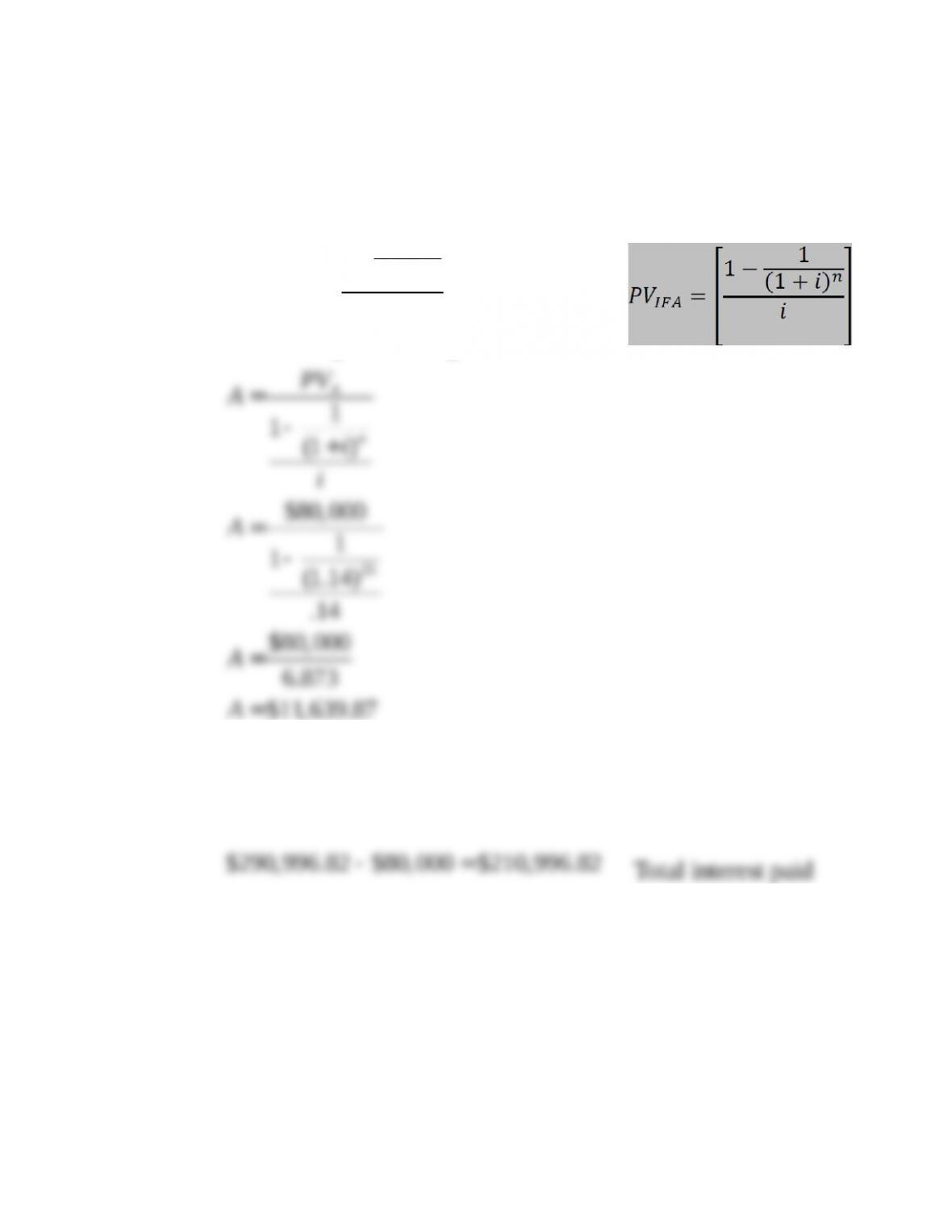
9-44. Solution:
a.
25
1
1(1 )
1
1(1 )
$80,000
1
1(1.14)
.14
$80,000
6.873
$11,639.87
n
A
A
n
i
PV A
i
PV
A
i
i
A
A
A
æ ö
–
ç ÷
+
= ´ ç ÷
ç ÷
ç ÷
è ø
=
–+
=
–
=
=
b.
$11,639.87 25 $290,996.82´ =
Total payments
$290,996.82 $80,000 $210,996.82– =
Total interest paid
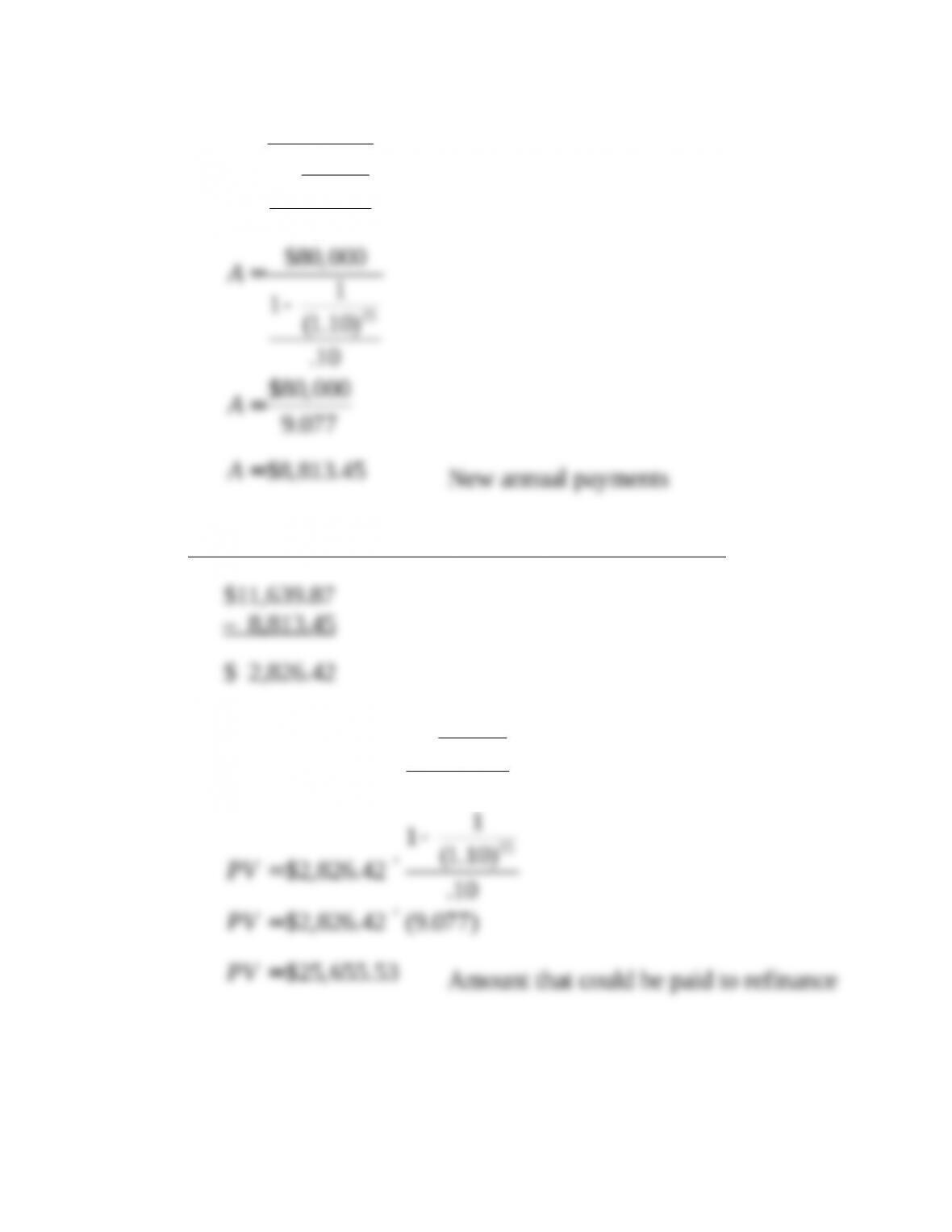
25
1
1(1 )
$80,000
1
1(1.10)
.10
$80,000
9.077
A
n
PV
A
i
i
A
A
=
–+
=
–
=
$8,813.45A=
New annual payments
Difference between 14 percent and 10 percent interest
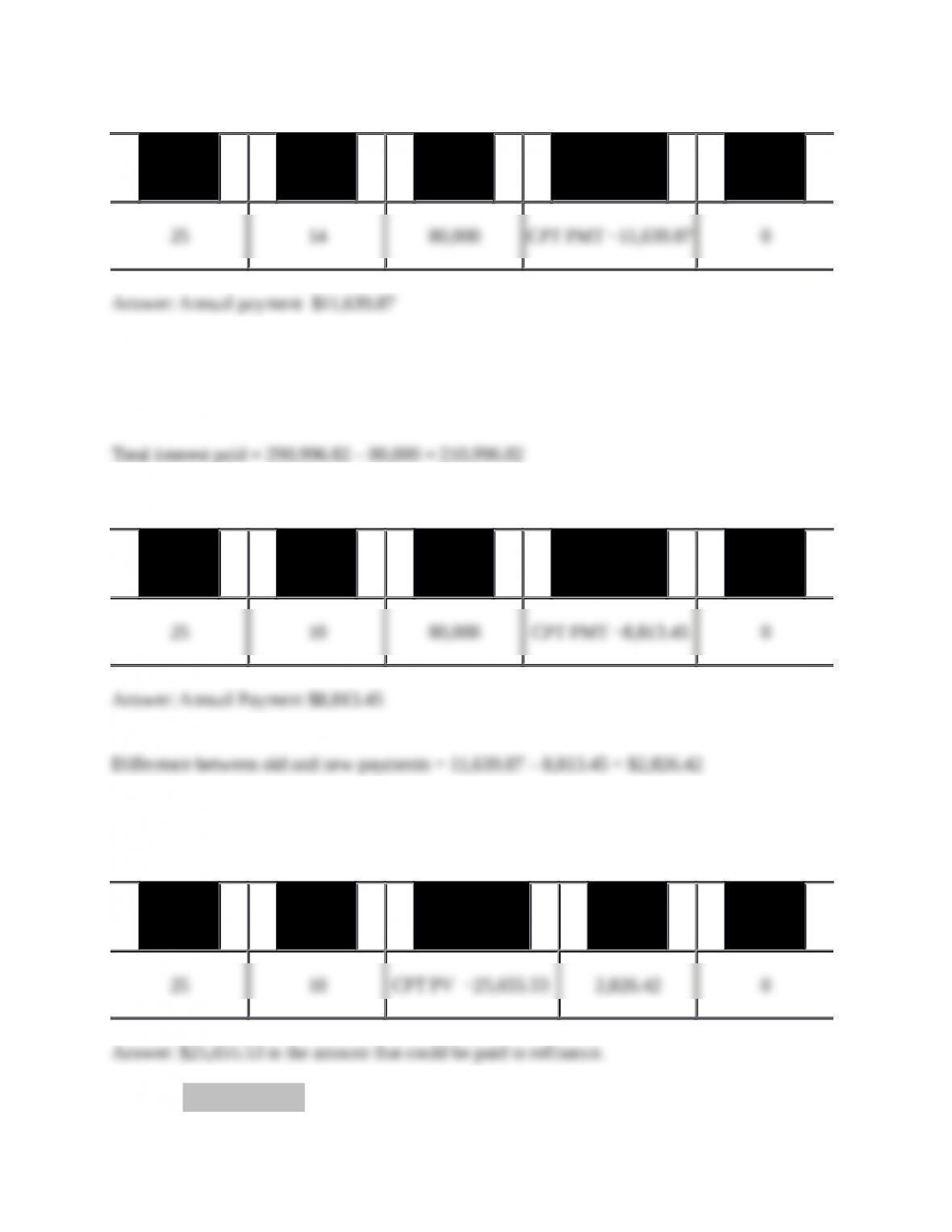
(a)
N I/Y PV PMT FV
(b)
Total payments = 11,639.87 × 25 = $290,996.82
(c)
N I/Y PV PMT FV
P.V. of difference at 10 percent:
N I/Y PV PMT FV
Appendix D
A IFA
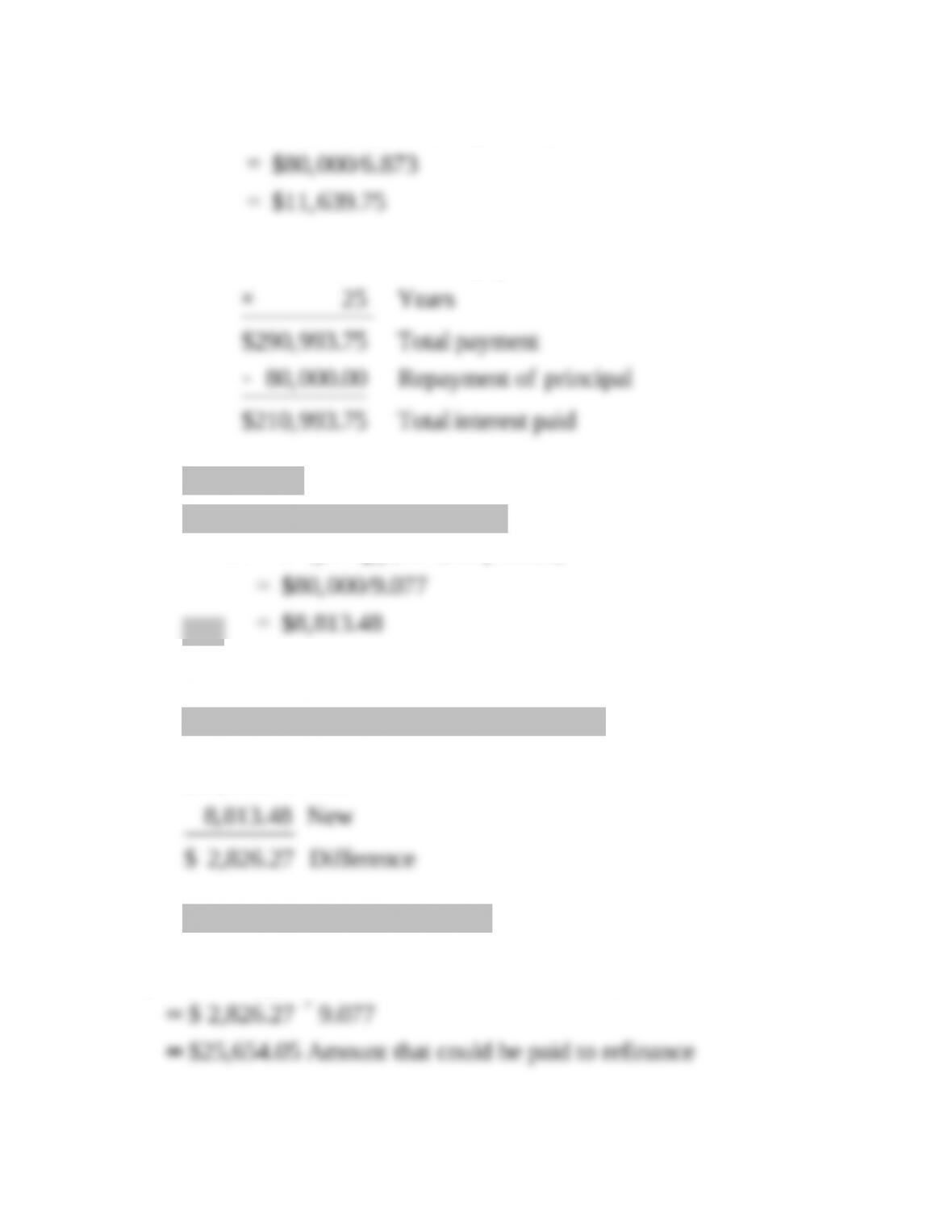
a. A = PV /PV (14%, 25periods)
= $80,000/6.873
= $11,639.75
b. $11,639.75 Annual payments
× 25 Years
$290,993.75 Total payment
80,000.00 Repayment of principal
$210,993.75 Total interest paid
–
Appendix D
c. New payments at 10 percent
A IFA
A = PV /PV (10%, 25periods)
= $80,000/9.077
= $8,813.48
9-44. (Continued)
Difference between old and new payments
$11,639.75 Old
8,813.48 New
$ 2,826.27 Difference
PV of difference – Appendix D
A IFA
PV A PV (assumes 10% discount rate, 25 periods)
$ 2,826.27 9.077
$25,654.05 Amount that could be paid to refinance
= ´
= ´
=
45. Annuity with changing interest rates (LO9-4) You are chairperson of the investment
fund for the Continental Soccer League. You are asked to set up a fund of semiannual
payments to be compounded semiannually to accumulate a sum of $250,000 after nine
years at a 10 percent annual rate (18 payments). The first payment into the fund is to take
place six months from today, and the last payment is to take place at the end of the ninth
year.
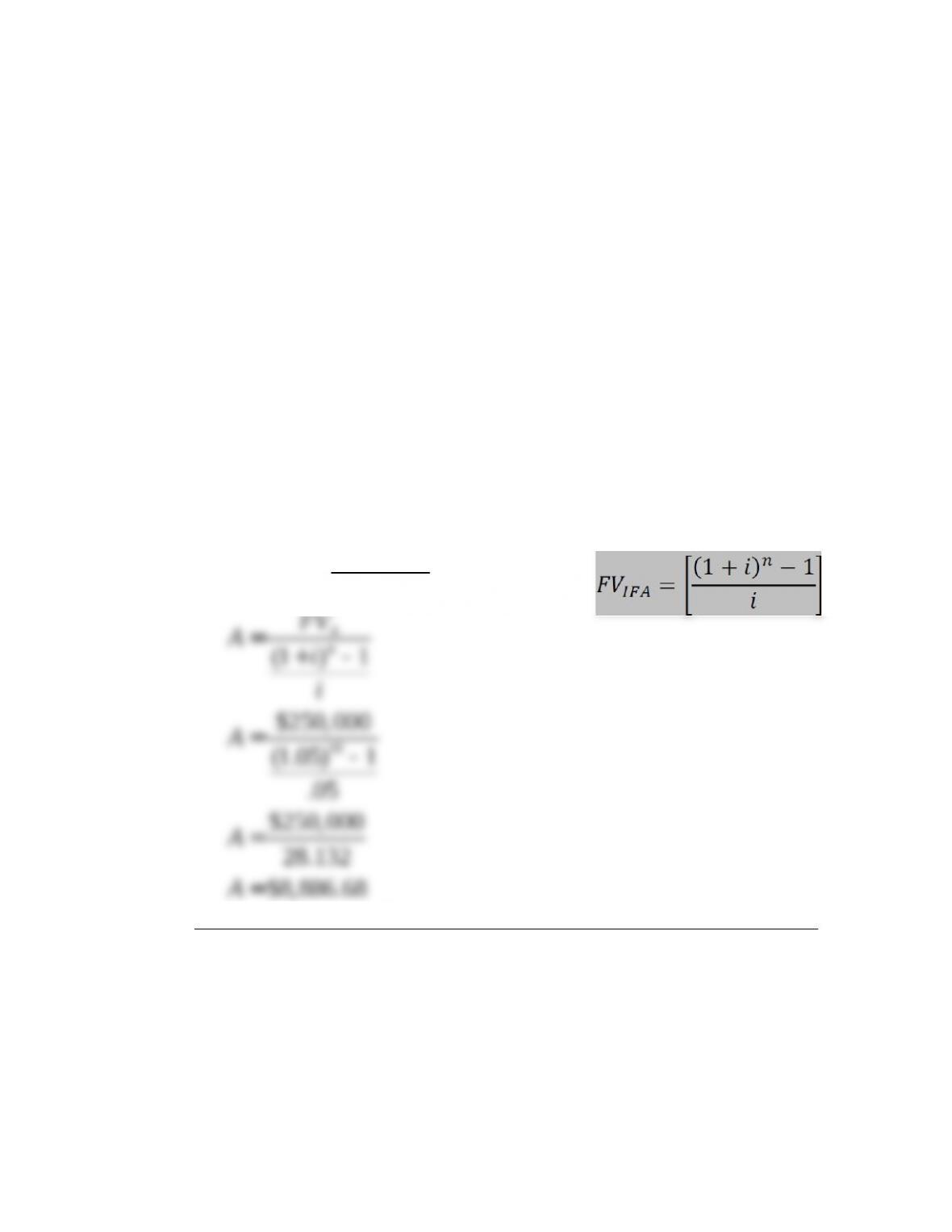
a. Determine how much the semiannual payment should be. (Round to whole numbers.)
On the day after the sixth payment is made (the beginning of the fourth year), the interest
rate goes up to a 12 percent annual rate, and you can earn a 12 percent annual rate on funds
that have been accumulated as well as all future payments into the fund. Interest is to be
compounded semiannually on all funds.
b. Determine how much the revised semiannual payments should be after this rate
change (there are 12 payments and compounding dates). The next payment will be in
the middle of the fourth year. (Round all values to whole numbers.)
9-45. Solution:
a.
18
(1 ) 1
(1 ) 1
$250,000
(1.05) 1
.05
$250,000
28.132
$8,886.68
n
A
A
n
i
FV A
i
FV
A
i
i
A
A
A
+ –
= ´
=+ –
=–
=
=
b. Part 1: Value of first six payments at the beginning of year 4
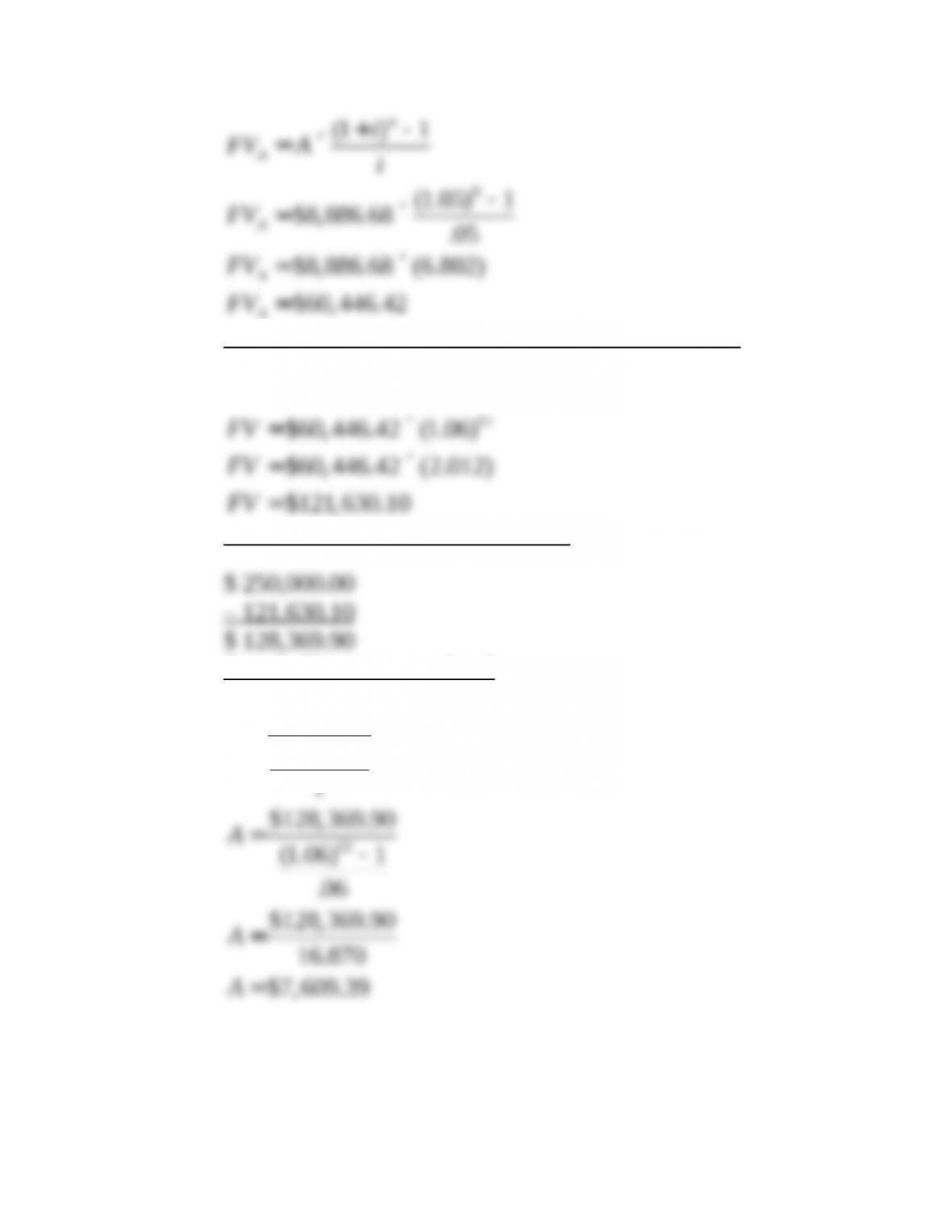
6
(1 ) 1
(1.05) 1
$8,886.68 .05
$8,886.68 (6.802)
$60,446.42
n
A
A
A
A
i
FV A
i
FV
FV
FV
+ –
= ´
–
= ´
= ´
=
Part 2 : FV of first six payments at the end of year 9
12
(1 )
$60,446.42 (1.06)
$60,446.42 (2.012)
$121,630.10
n
FV PV i
FV
FV
FV
= ´ +
= ´
= ´
=
Part 3: Additional amount required
Part 4 : New payment level
12
(1 ) 1
$128,369.90
(1.06) 1
.06
$128,369.90
16.870
$7,609.39
A
n
FV
A
i
i
A
A
A
=+ –
=–
=
=
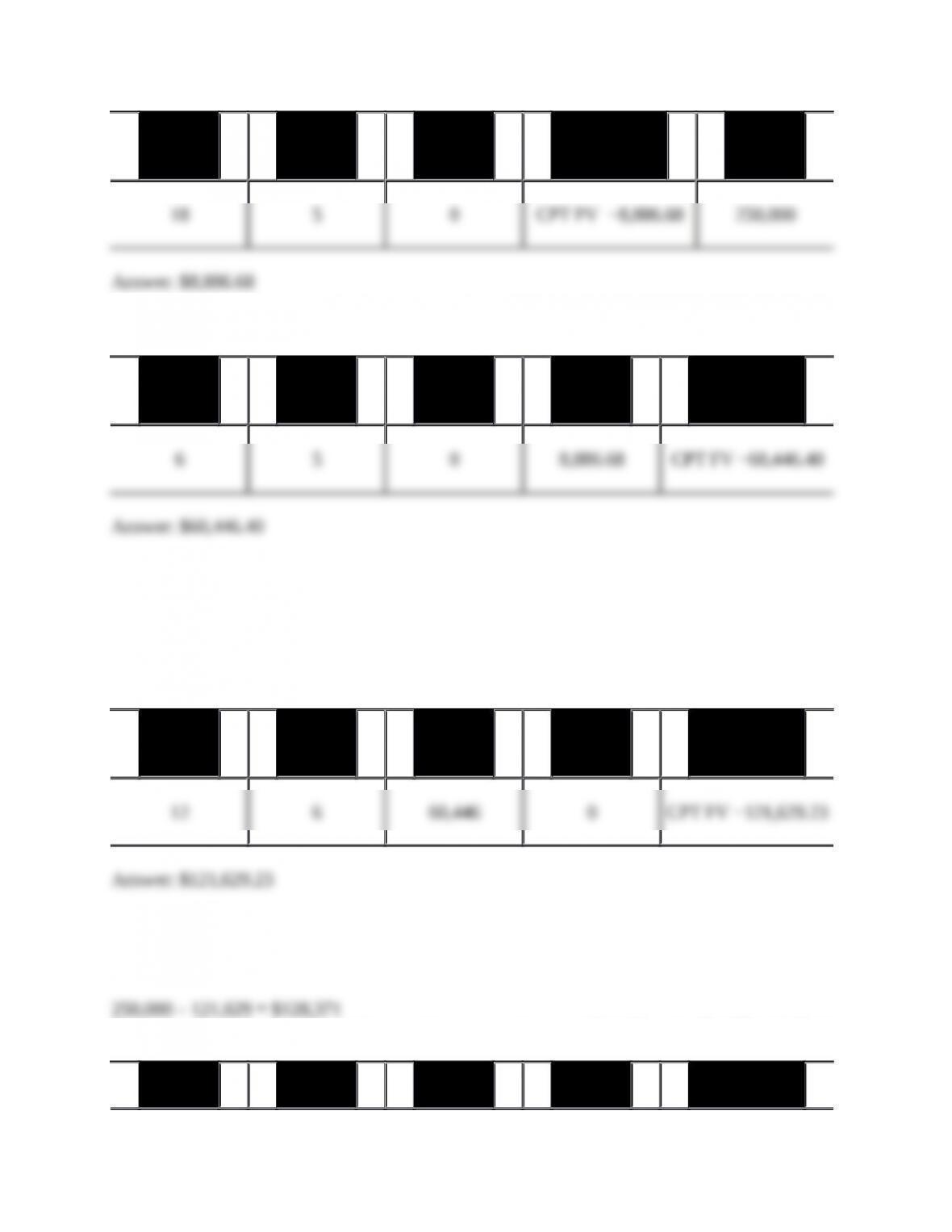
N I/Y PV PMT FV
(b)
First determine how much the old payments are equal to after 6 periods at 5%.
N I/Y PV PMT FV
Then, determine how much this value will grow to after 12 periods at 6 percent (semiannual
rate).
Then, determine how much this value will grow to after 12 periods at 6 percent.
N I/Y PV PMT FV
Subtract this value ($121,629.00) from $250,000 to determine how much you need to
accumulate on the next 12 payments.
Determine the revised semiannual payment necessary to accumulate this sum after 12 periods at
6 percent.
N I/Y PV PMT FV
Appendix C
A IFA
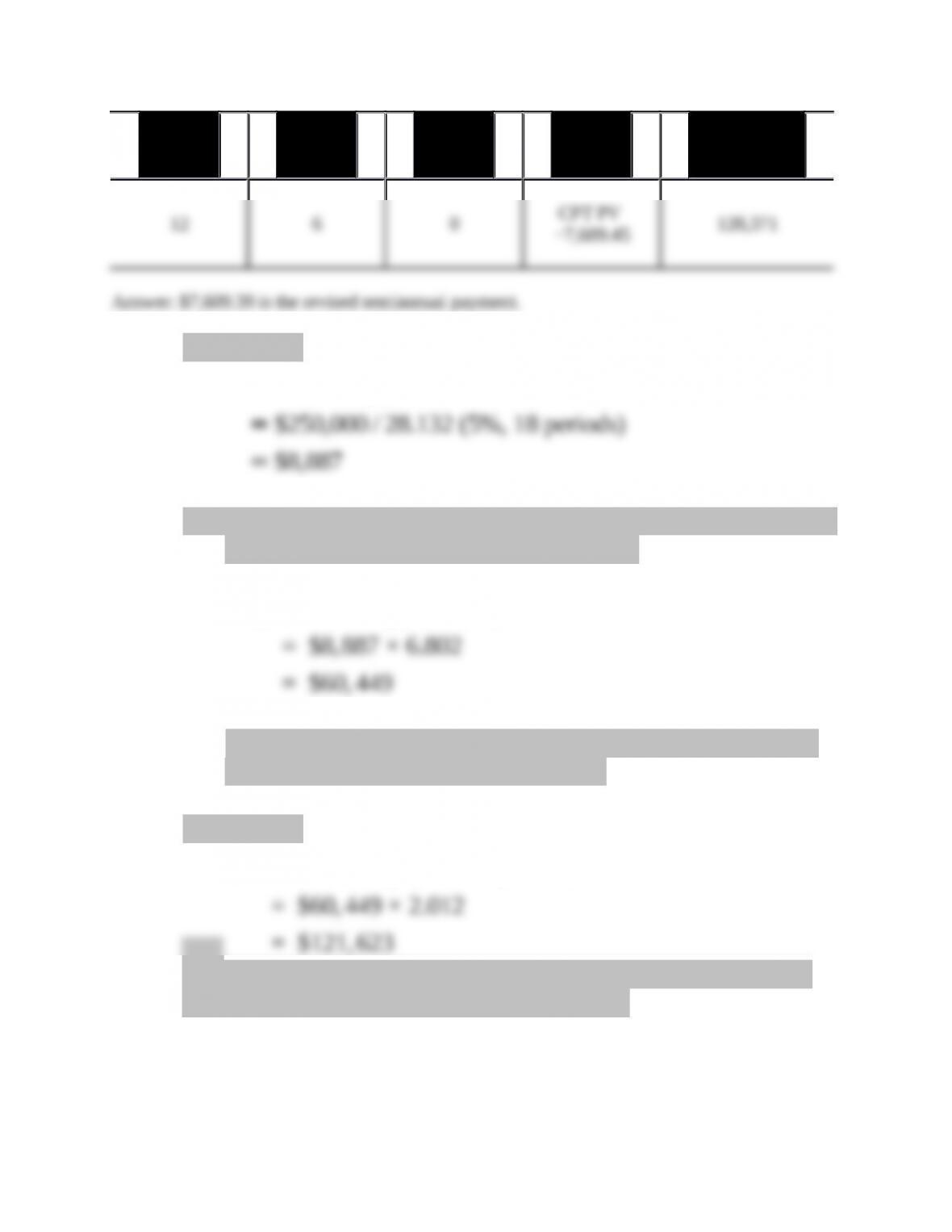
a. A FV / FV
$250,000 / 28.132 (5%, 18 periods)
$8,887
=
=
=
b. First determine how much the old payments are equal to after
six periods at 5 percent. Use Appendix C.
A IFA
FV = A × FV (5%, 6 periods)
= $8,887 × 6.802
= $60, 449
Then, determine how much this value will grow to after 12
periods at 6 percent (semiannual rate).
Appendix A
IF
FV = PV × FV (6%, 12 periods)
= $60, 449 × 2.012
= $121,623
Subtract this value from $250,000 to determine how much you
need to accumulate on the next 12 payments.
$250,000
121,623
$128,377
–
Determine the revised semiannual payment necessary to
accumulate this sum after 12 periods at 6 percent.
Appendix C
46. Your younger sister, Linda, will start college in five years. She has just informed your
parents that she wants to go to Hampton University, which will cost $17,000 per year for four
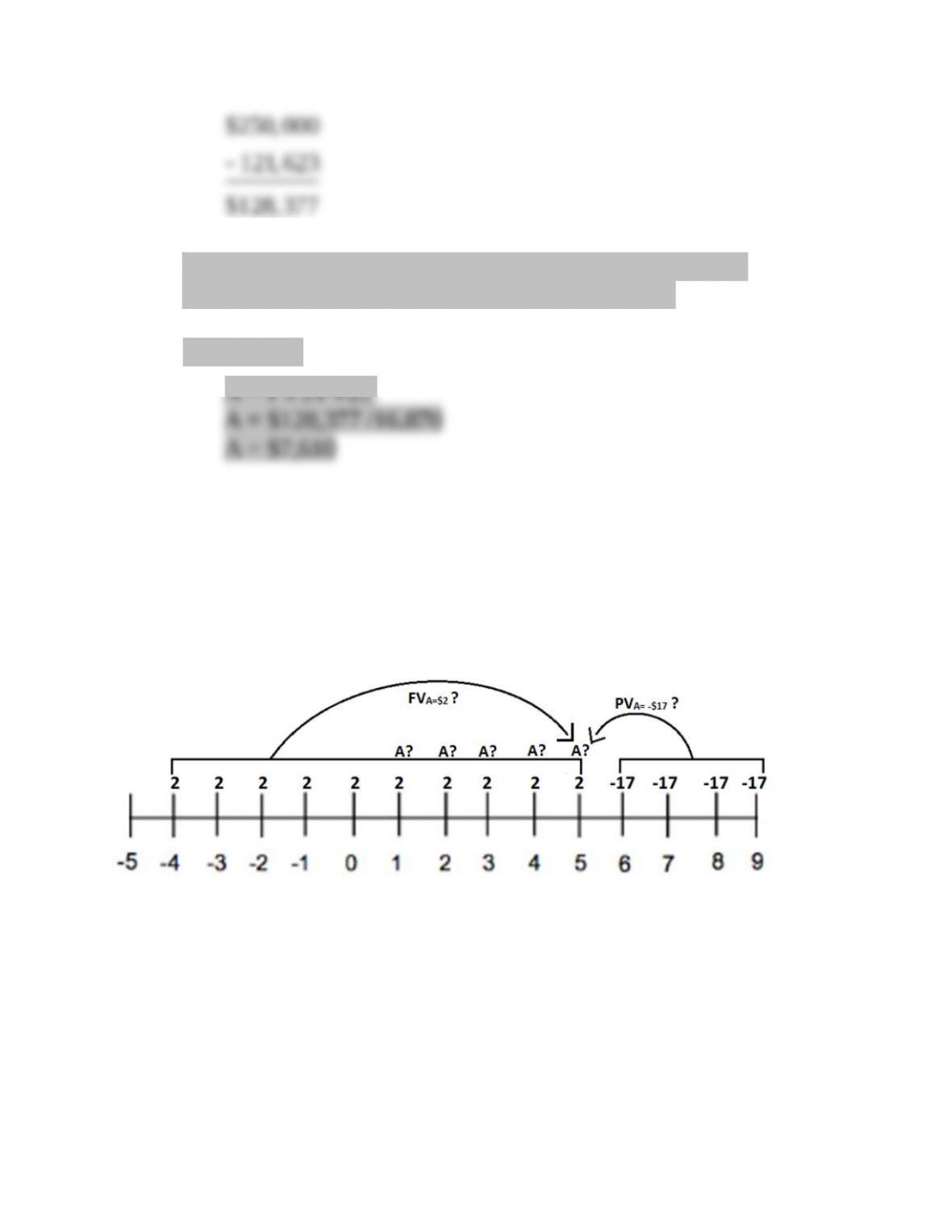
years (cost assumed to come at the end of each year). Anticipating Linda’s ambitions, your
parents started investing $2,000 per year five years ago and will continue to do so for five more
years. How much more will your parents have to invest each year (A?) for the next five years to
have the necessary funds for Linda’s education? Use 10 percent as the appropriate interest rate
throughout this problem (for discounting or compounding). This timeline depicts the cash flows
described (in thousands of dollars.)