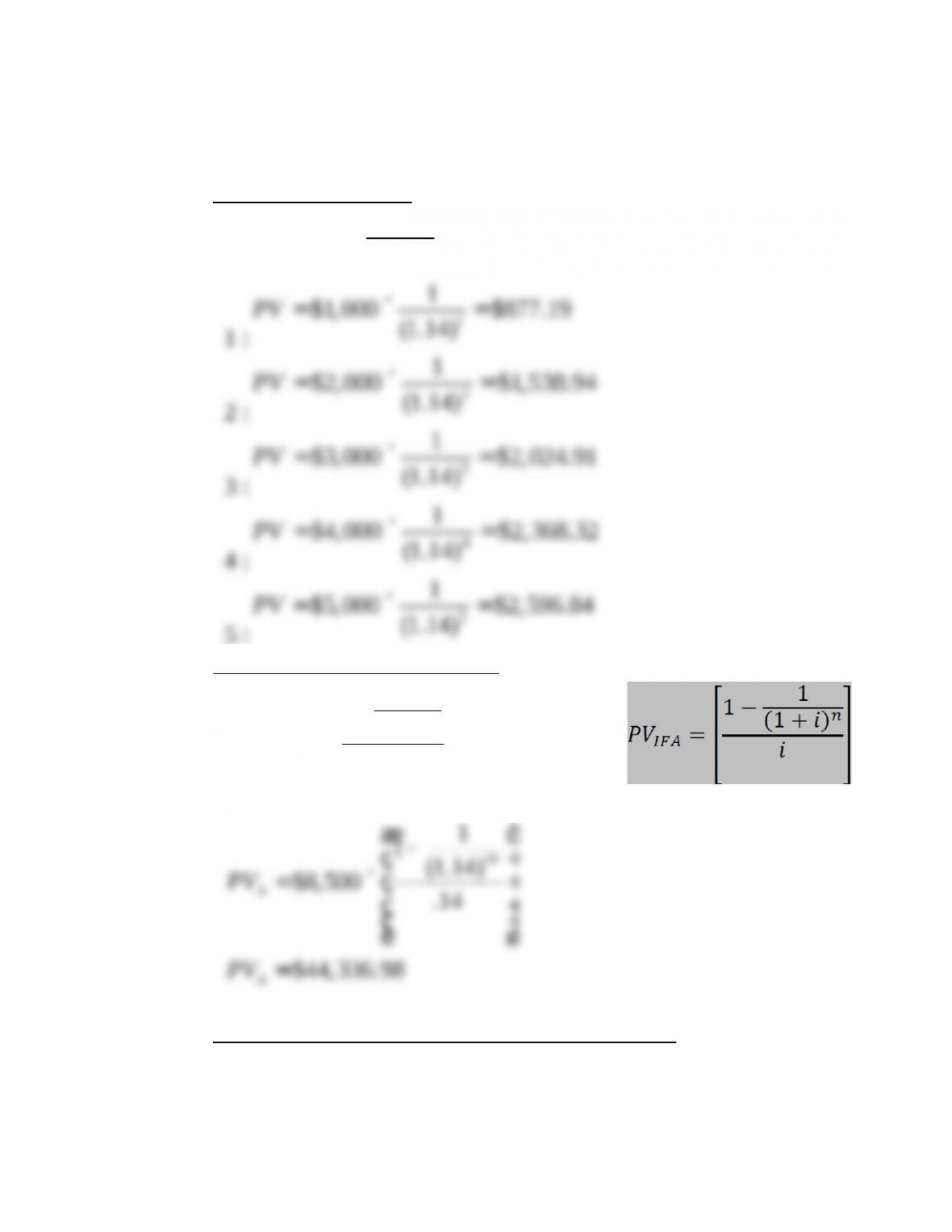
9-39. Solution:
First Five Payments
1
1
(1 )
1
$1,000 $877.19
(1.14)
n
PV FV
i
PV
= ´ +
= ´ =
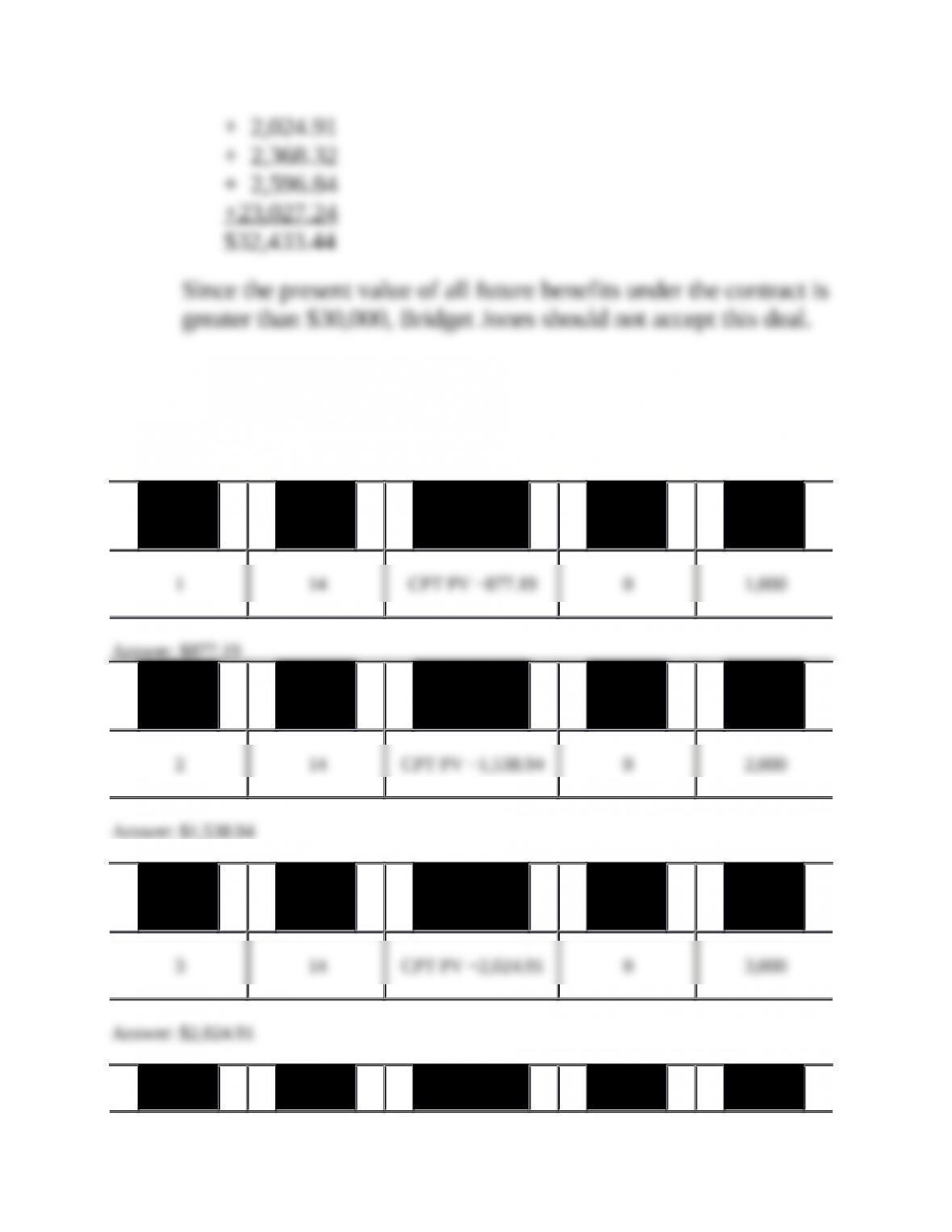
Calculator Solution:
First find the present value of the first five payments.
N I/Y PV PMT FV
N I/Y PV PMT FV
N I/Y PV PMT FV
N I/Y PV PMT FV
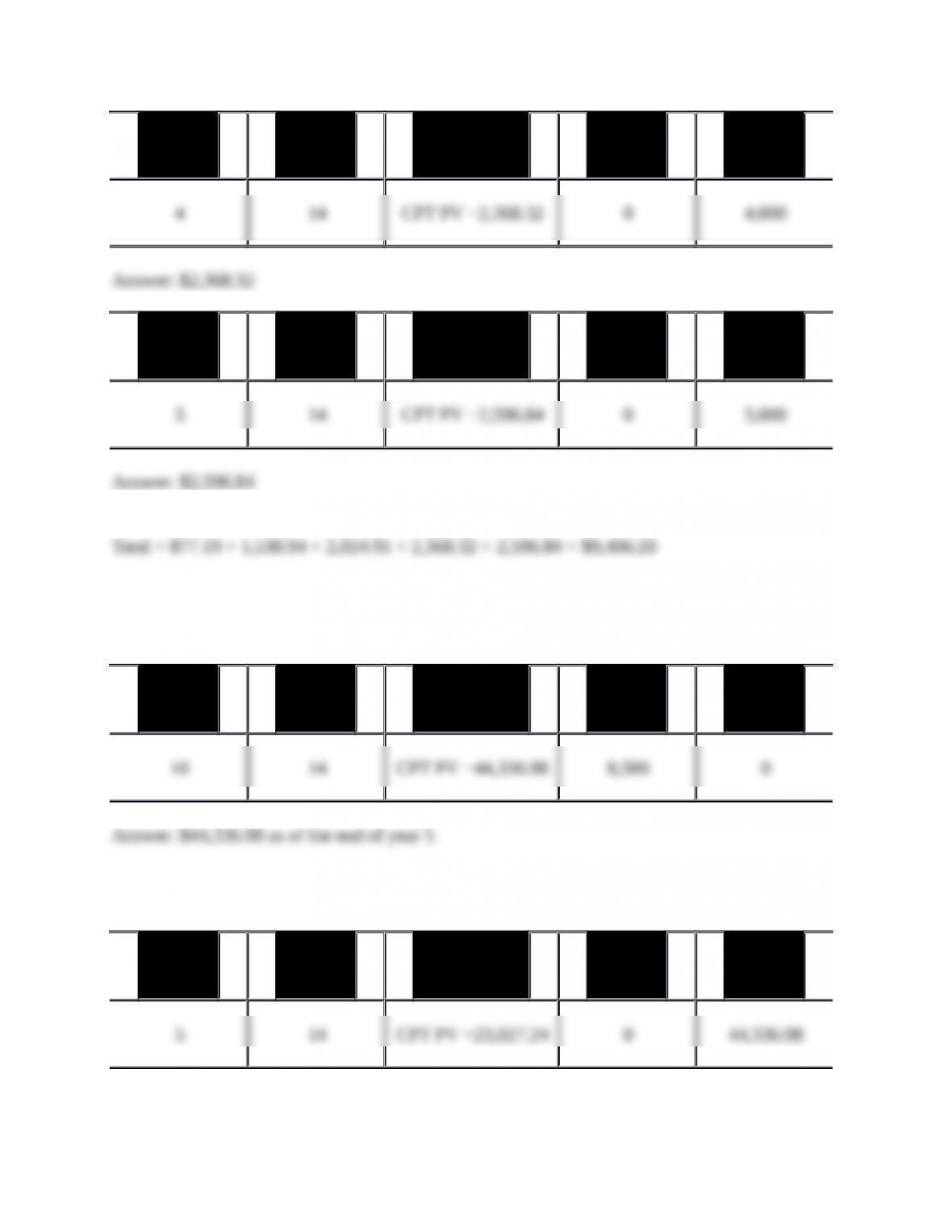
N I/Y PV PMT FV
Then find the present value of the deferred annuity.
N I/Y PV PMT FV
Then find it PV as of now:
N I/Y PV PMT FV
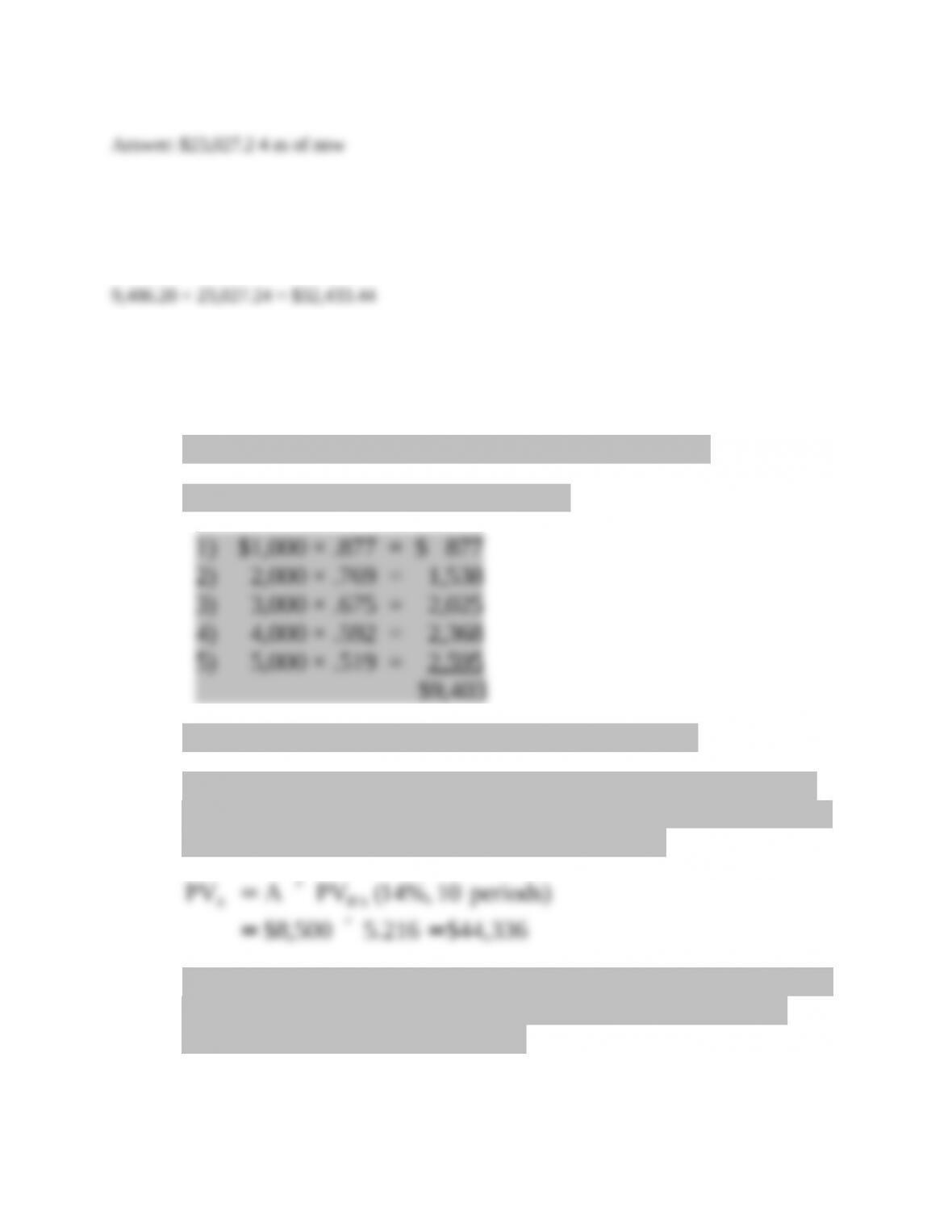
Finally, find the total present value of all future payments.
Since the present value of all future benefits under the contract is greater than $30,000, Bridget
Jones should not accept this amount to cancel the contract.
First find the present value of the first five payments.
PV = FV × PVIF (Appendix B) i = 14%
Then, find the present value of the deferred annuity.
Appendix D will give a factor for a 10-period annuity (6th year
through the 15th year) at a discount rate of 14 percent. The value
of the annuity at the beginning of the 6th year is:
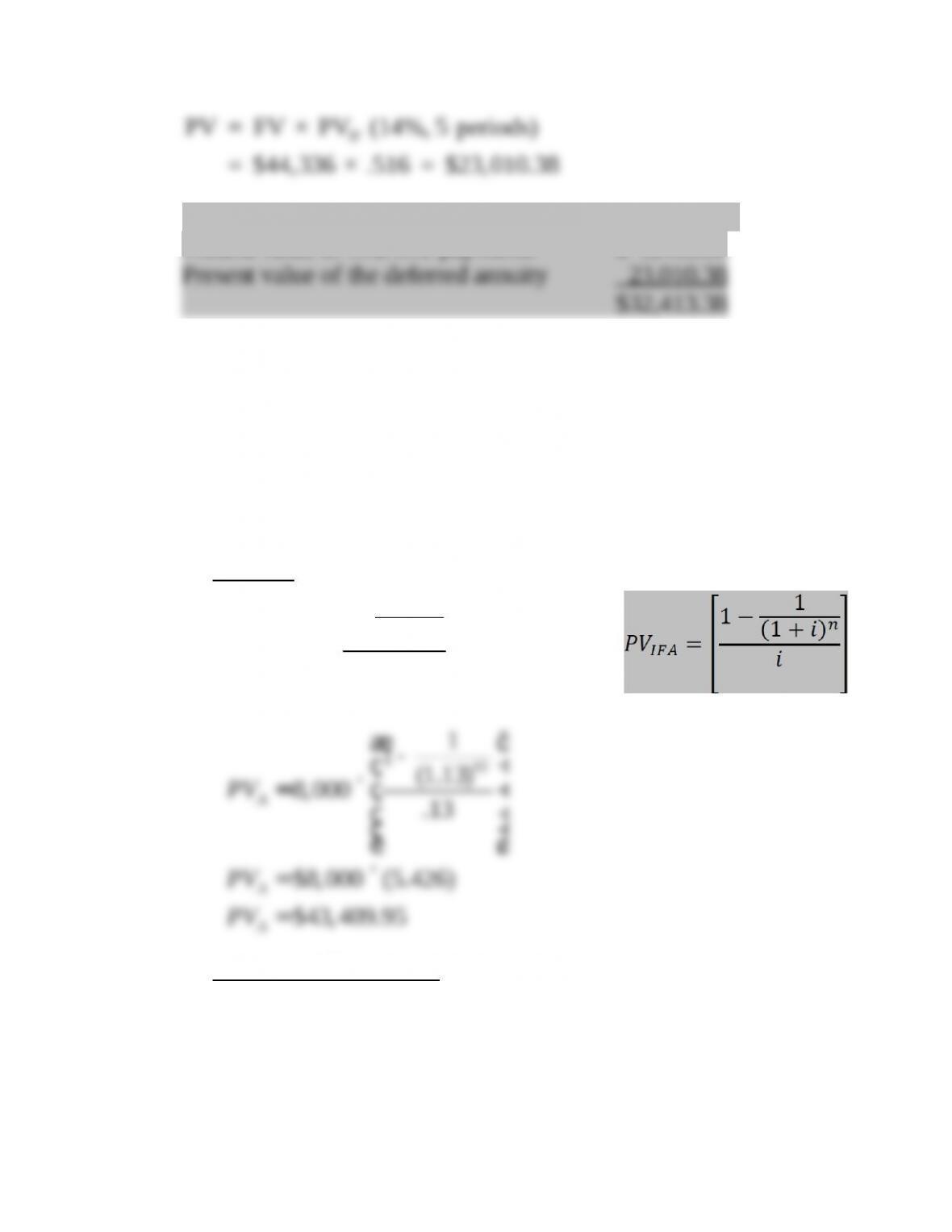
A IFA
PV A PV (14%, 10 periods)
$8,500 5.216 $44,336
= ´
= ´ =
This value at the beginning of year 6 (end of year 5) must now be
discounted back for five years to get the present value of the
deferred annuity. Use Appendix B.
IF
PV = FV × PV (14%, 5 periods)
= $44,336 × .516 = $23,010.38
Next, find the total present value of all future payments.
Present value of first five payments $ 9,403.00
40. Mark Ventura has just purchased an annuity to begin payment two years from today. The
annuity is for $8,000 per year and is designed to last 10 years. If the interest rate for this
problem calculation is 13 percent, what is the most he should have paid for the annuity?
9-40. Solution:
Annuity
10
1
1(1 )
1
1(1.13)
8,000 .13
$8,000 (5.426)
$43,409.95
n
A
A
A
A
i
PV A
i
PV
PV
PV
æ ö
–
ç ÷
+
= ´ ç ÷
ç ÷
ç ÷
è ø
æ ö
–
ç ÷
= ´ ç ÷
ç ÷
ç ÷
è ø
= ´
=
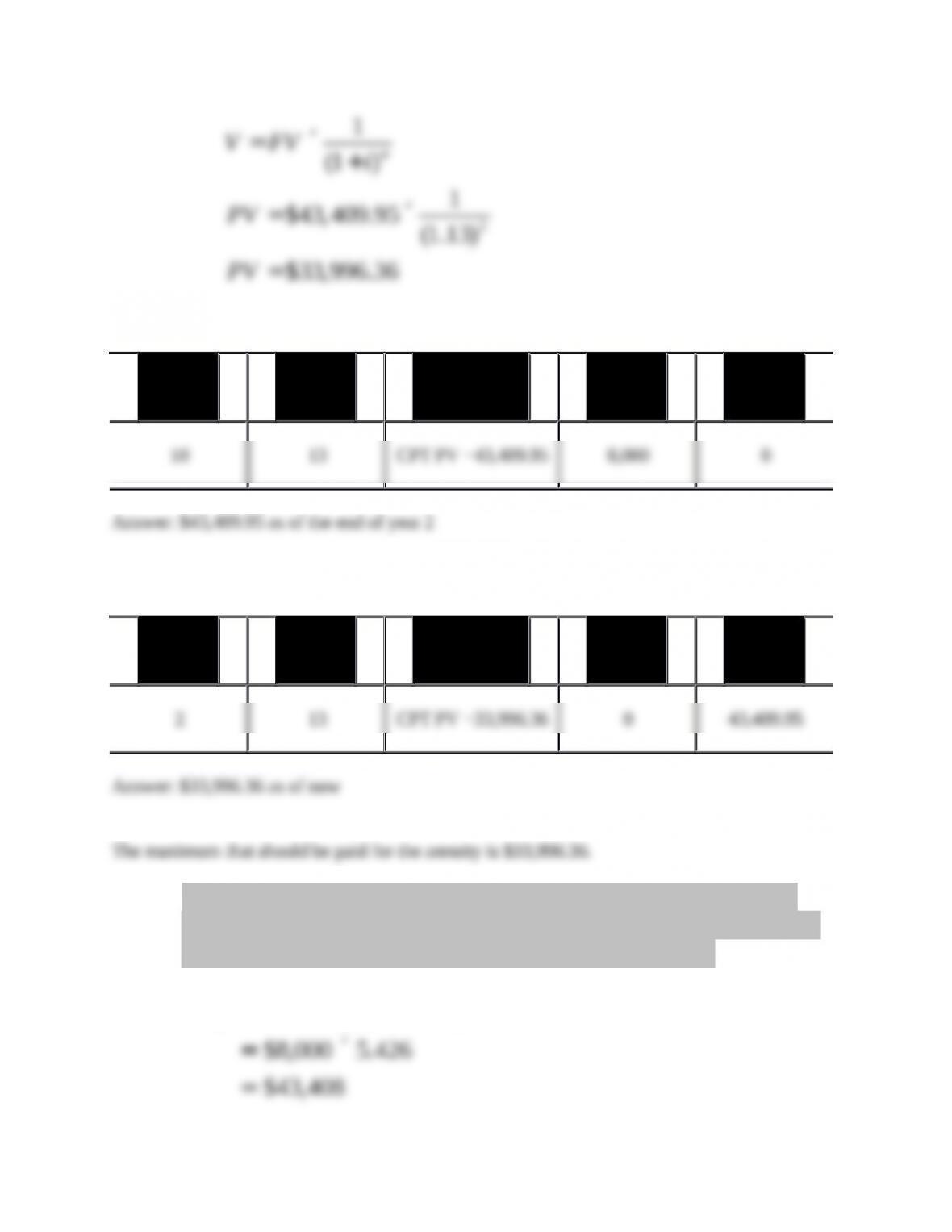
Discount off two years
2
1
(1 )
1
$43,409.95 (1.13)
$33,996.36
n
V FV
i
PV
PV
= ´ +
= ´
=
Calculator Solution:
N I/Y PV PMT FV
Then, find its PV as of now:
N I/Y PV PMT FV
Appendix D will give a factor for a 10-year annuity when the
appropriate discount rate is 13 percent (5.426). The value of the
annuity at the beginning of the year it starts (2011) is:
A IFA
PV A PV (13%, 10periods)
$8,000 5.426
$43,408
= ´
= ´
=
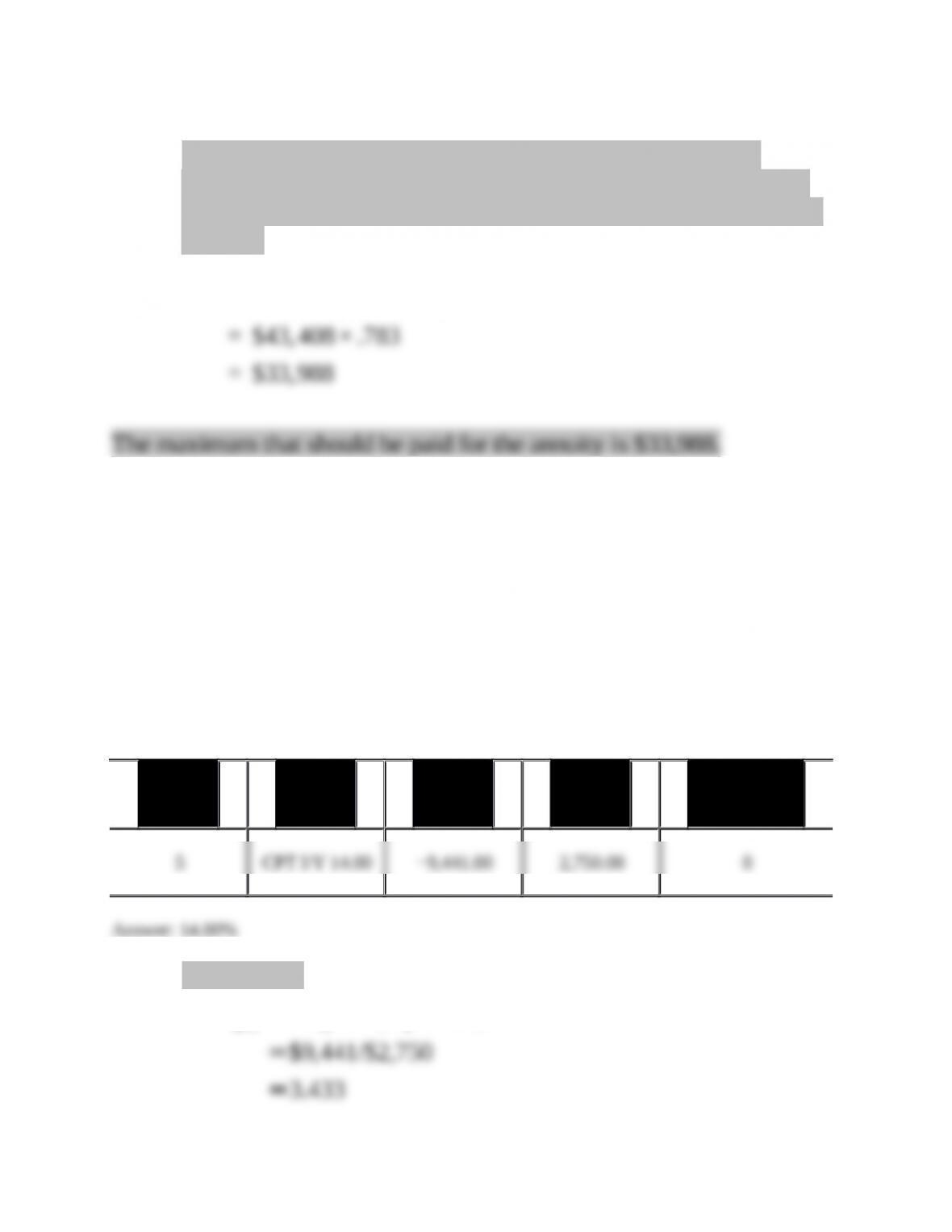
The present value at the beginning of 2014 is found using
Appendix B (two years at 13 percent). The factor is .783. Note
we are discounting from the beginning of 2016 to the beginning
of 2014.
IF
PV = FV × PV (13%, 2periods)
= $43,408 × .783
= $33,988
The maximum that should be paid for the annuity is $33,988.
41. Yield (LO9-4) If you borrow $9,441 and are required to pay back the loan in five equal
annual installments of $2,750, what is the interest rate associated with the loan?
9-41. Solution:
Calculator Solution:
N I/Y PV PMT FV
Appendix D
IFA A
PV PV / A (5 periods)
$9,441/$2,750
3.433
=
=
=
42. Cal Lury owes $10,000 now. A lender will carry the debt for five more years at 10 percent
interest. That is, in this particular case, the amount owed will go up by 10 percent per year
for five years. The lender then will require that Cal pay off the loan over the next 12 years
at 11 percent interest. What will his annual payment be?
9-42. Solution:
Part 1
5
(1 )
$10,000 (1.10)
$16,105.10
n
FV PV i
FV
FV
= ´ +
= ´
=
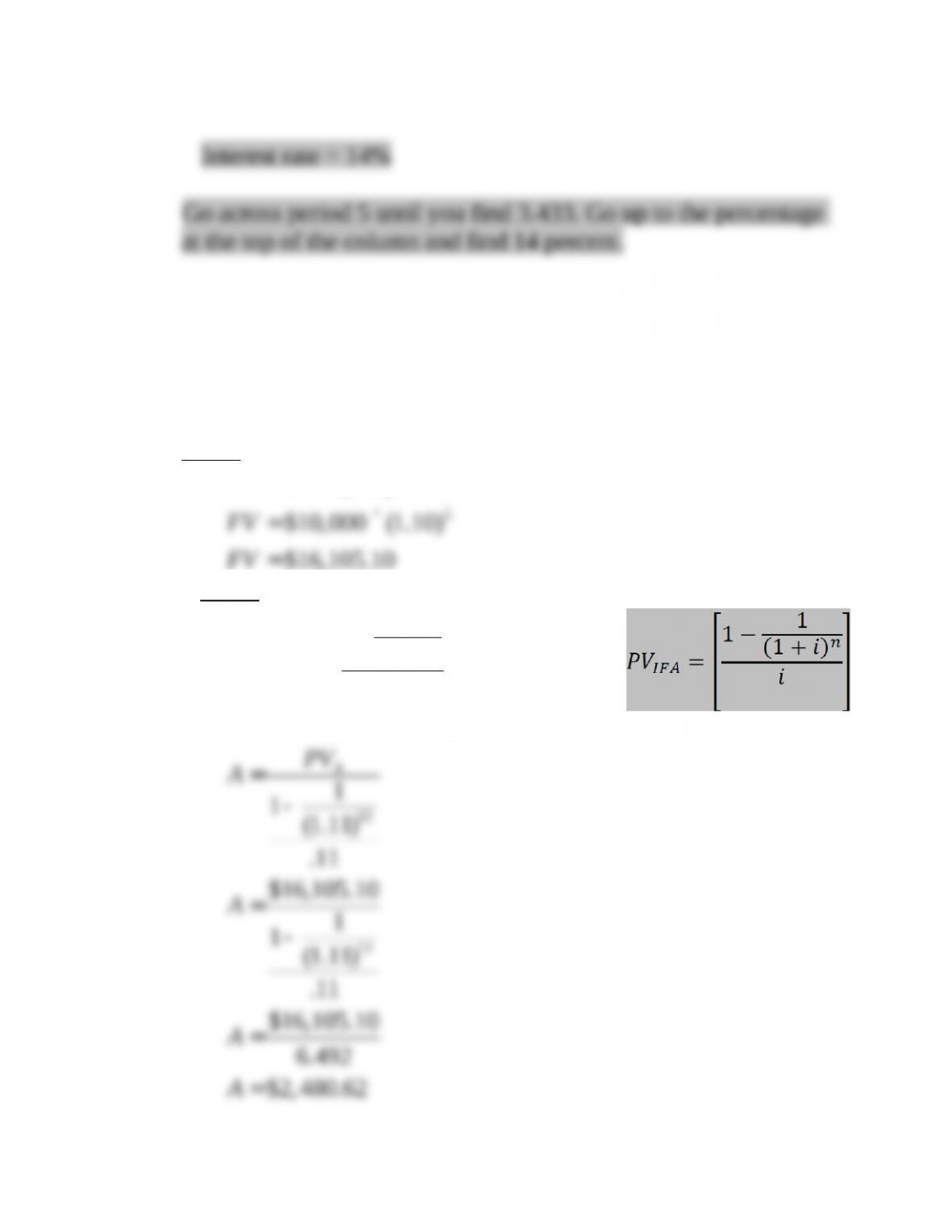
Part 2
12
1
1(1 )
1
1(1.11)
.11
n
A
A
i
PV A
i
PV
A
æ ö
–
ç ÷
+
= ´ ç ÷
ç ÷
ç ÷
è ø
=
–
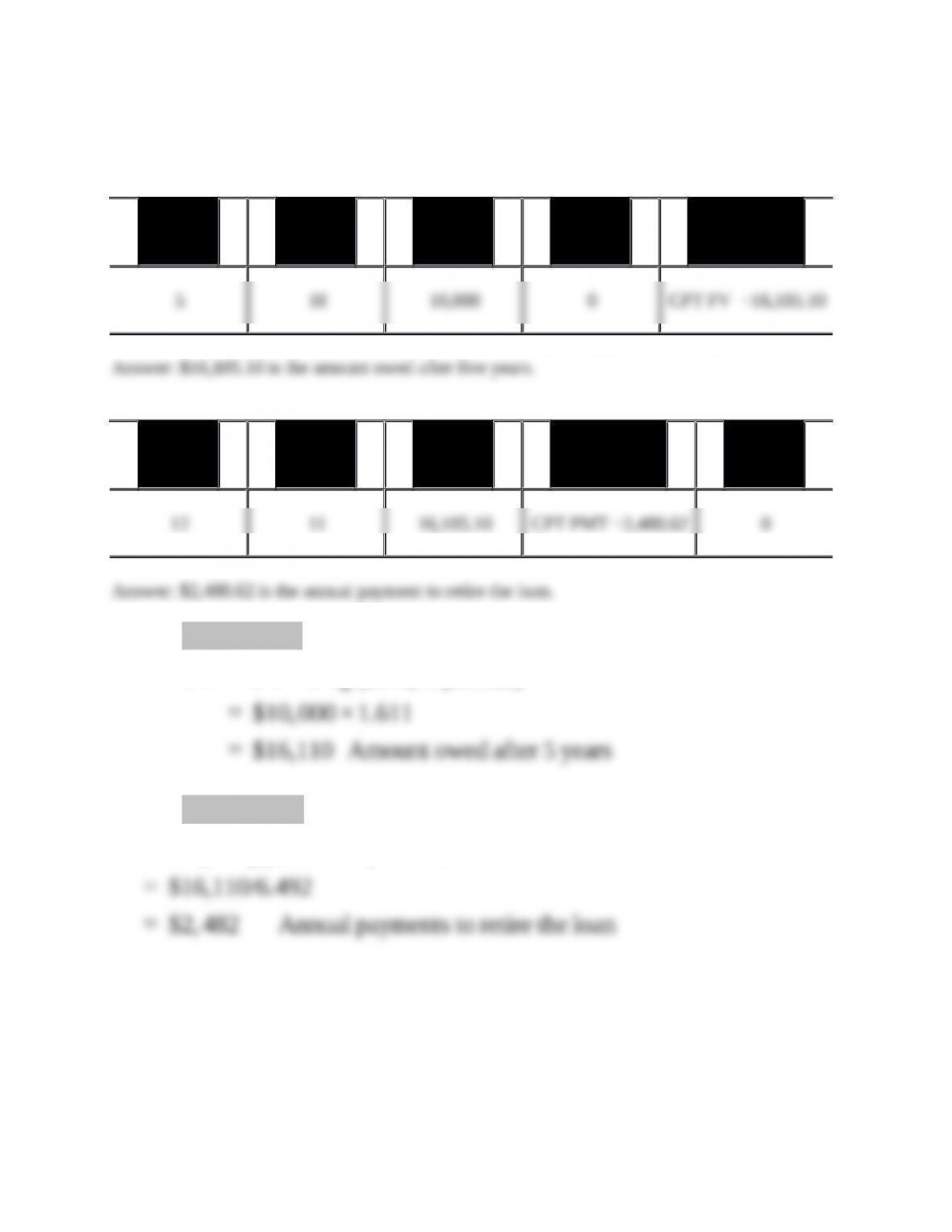
Calculator Solution:
Step one:
N I/Y PV PMT FV
Step two:
N I/Y PV PMT FV
Appendix A
IF
FV = PV × FV (10%, 5 periods)
= $10,000 × 1.611
= $16,110 Amount owed after 5 years
Appendix D
A IFA
A = PV /PV (11%, 12periods)
= $16,110/6.492
= $2,482 Annual payments to retire the loan
43. If your uncle borrows $60,000 from the bank at 10 percent interest over the seven-year life
of the loan, what equal annual payments must be made to discharge the loan, plus pay the
bank its required rate of interest (round to the nearest dollar)? How much of his first
payment will be applied to interest? To principal? How much of his second payment will be
applied to each?
9-43. Solution:
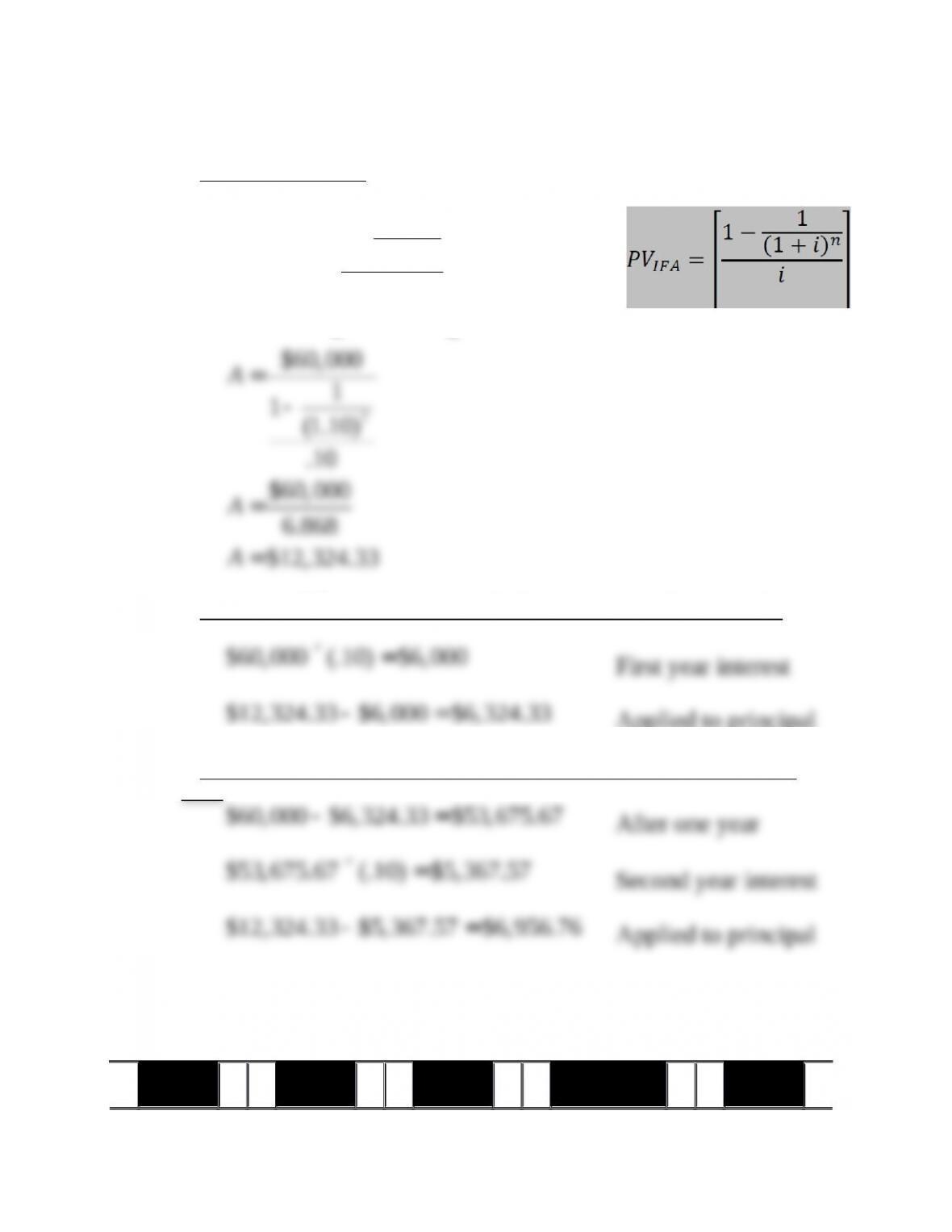
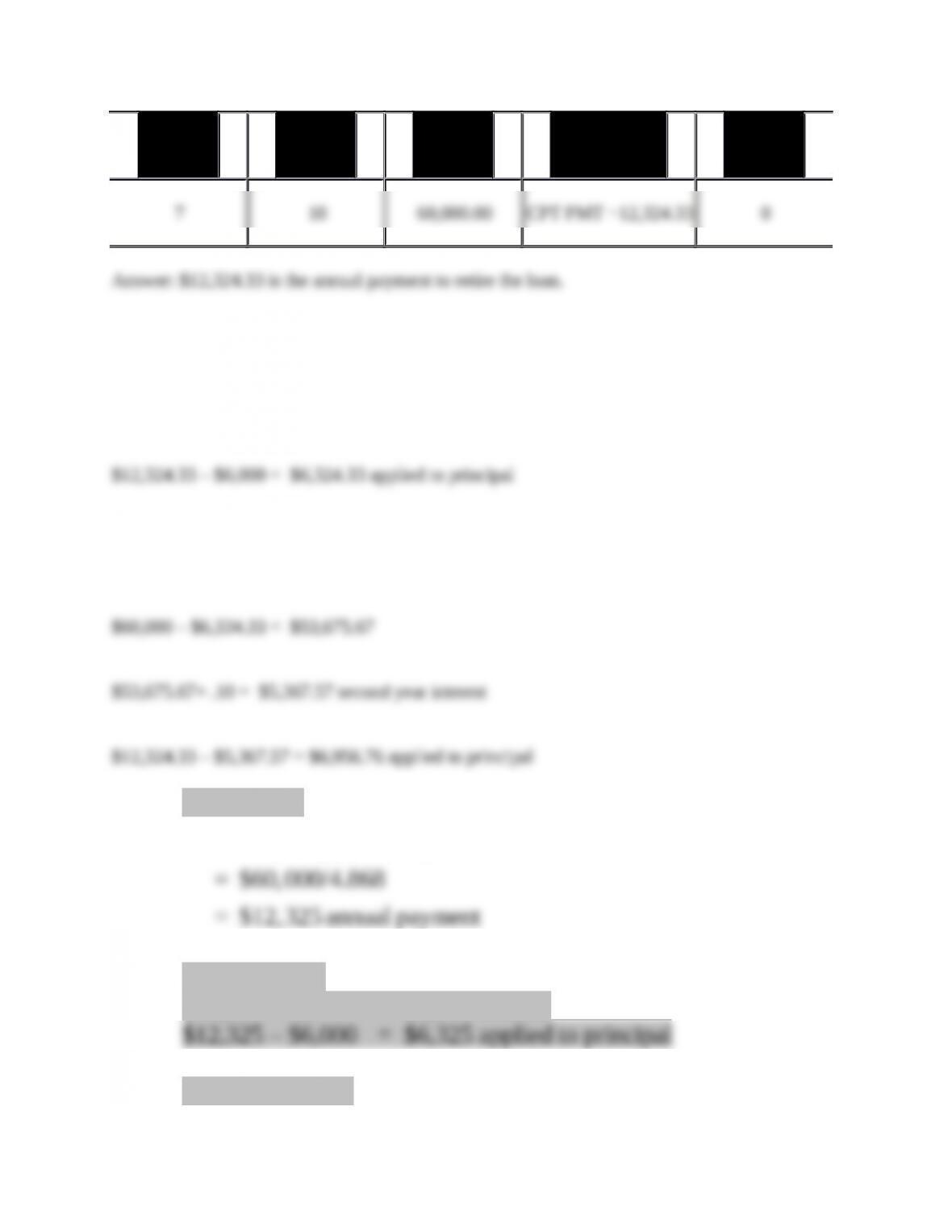
Annual Payment
7
1
1(1 )
$60,000
1
1(1.10)
.10
$60,000
6.868
$12,324.33
n
A
i
PV A
i
A
A
A
æ ö
–
ç ÷
+
= ´ ç ÷
ç ÷
ç ÷
è ø
=
–
=
=
Amount of first payment applied to interest and principal
$60,000 (.10) $6,000´ =
First year interest
$12,324.33 $6,000 $6,324.33– =
Applied to principal
Amount of second payment applied to interest and principal
$60,000 $6,324.33 $53,675.67– =
After one year
$53,675.67 (.10) $5,367.57´ =
Second year interest
$12,324.33 $5,367.57 $6,956.76– =
Applied to principal
First payment:
$60,000 × .10 = $6,000 first year interest
Second payment: First determine remaining principal
Appendix D
A IFA
A = PV /PV (10%,7 periods)
= $60,000/4.868
= $12,325 annual payment
First payment:
$60,000 × .10 = $6,000 interest
Second payment:
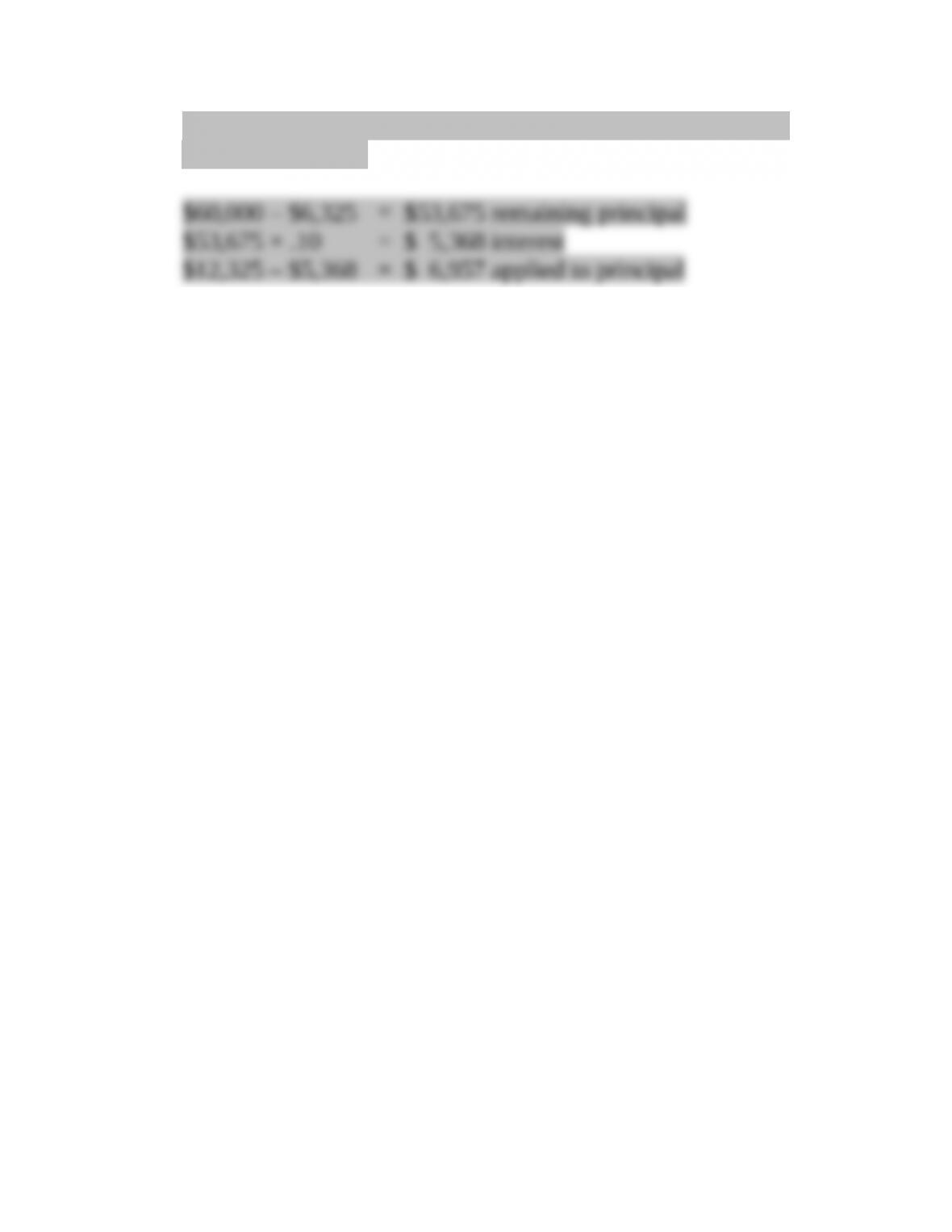
First determine remaining principal and then the interest and
principal payment.
44. Larry Davis borrows $80,000 at 14 percent interest toward the purchase of a home. His
mortgage is for 25 years.
a. How much will his annual payments be? (Although home payments are usually on a
monthly basis, we shall do our analysis on an annual basis for ease of computation.
We will get a reasonably accurate answer.)
b. How much interest will he pay over the life of the loan?
c. How much should he be willing to pay to get out of a 14 percent mortgage and into a
10 percent mortgage with 25 years remaining on the mortgage? Assume current
interest rates are 10 percent. Carefully consider the time value of money. Disregard
taxes.