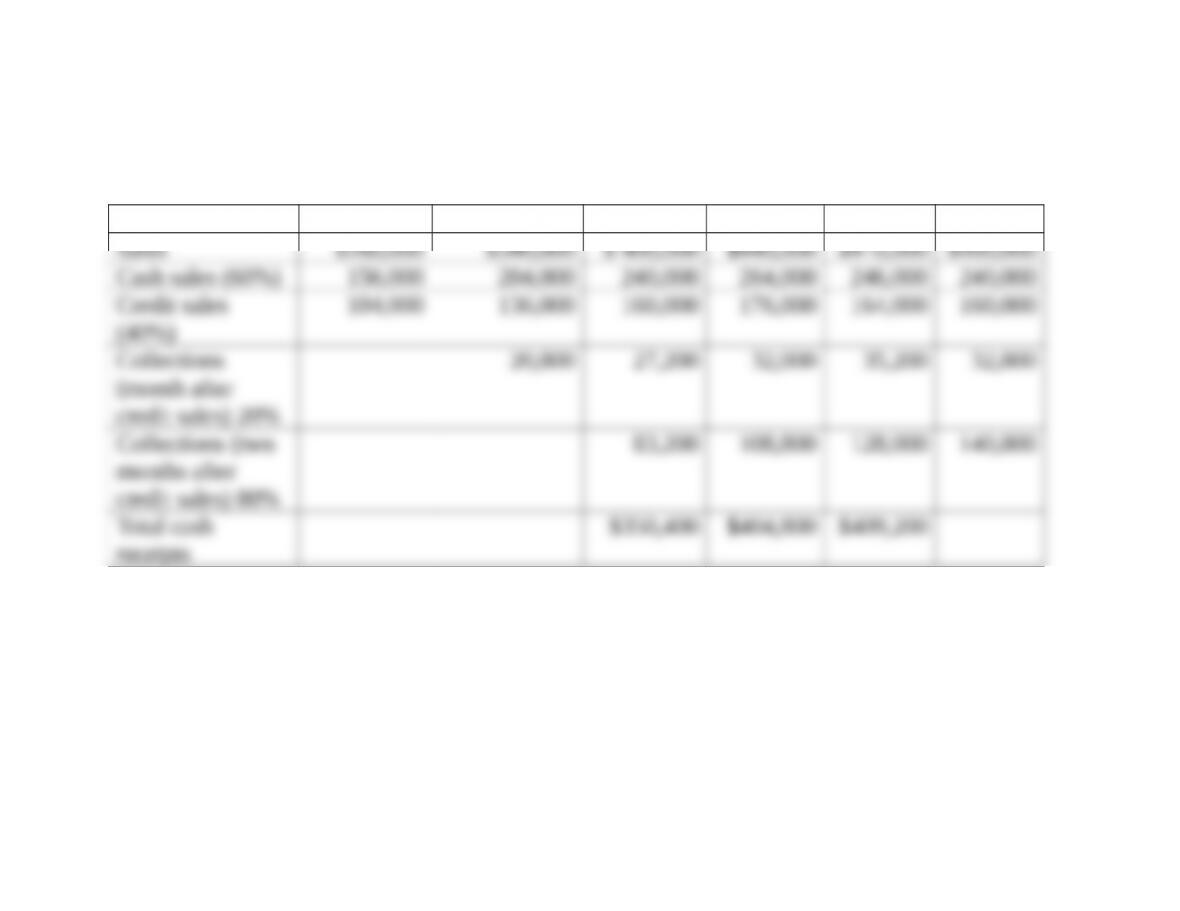
4-25. Solution:
Harry’s Carry-Out Stores
Cash Receipts Schedule
November December January February March April
receipts
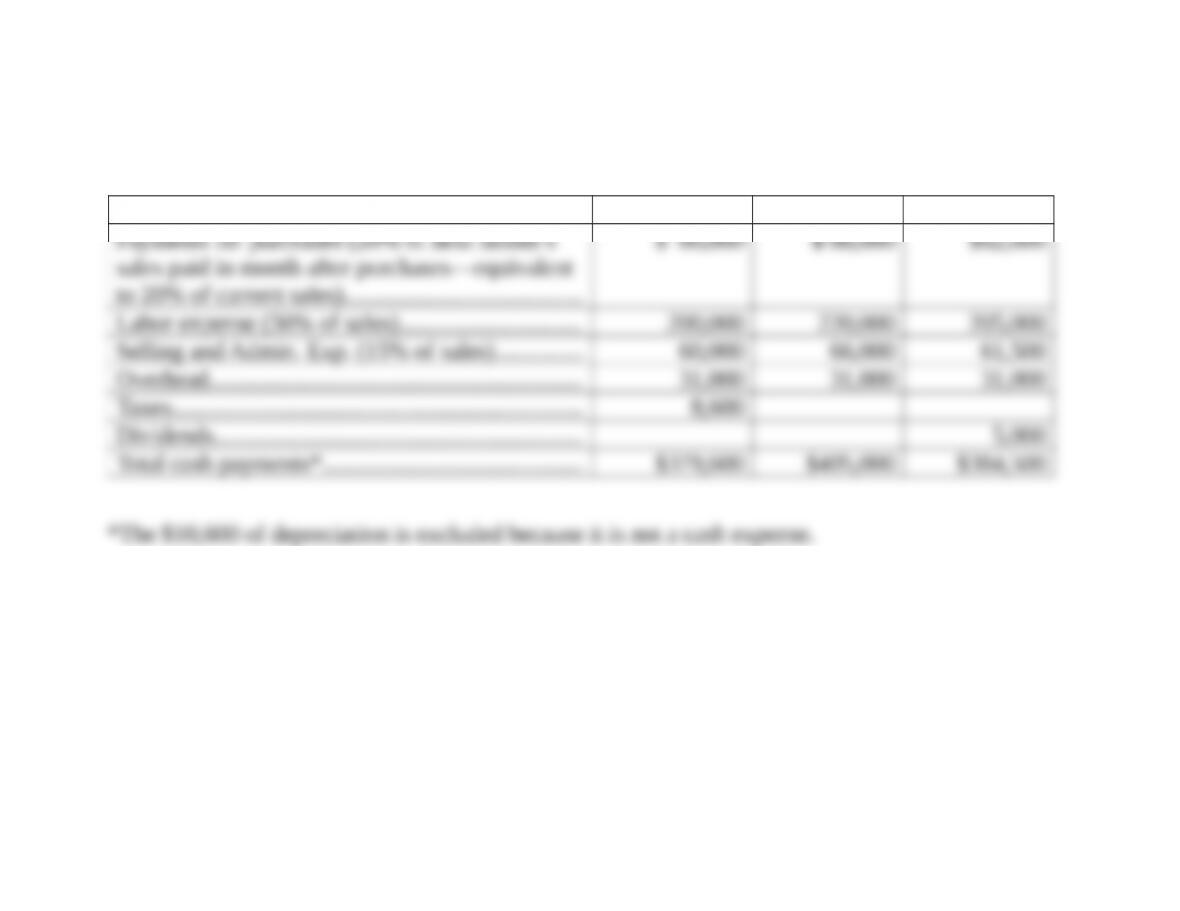
4-25. (Continued)
Harry’s Carry-Out Stores
Cash Payments Schedule
January February March
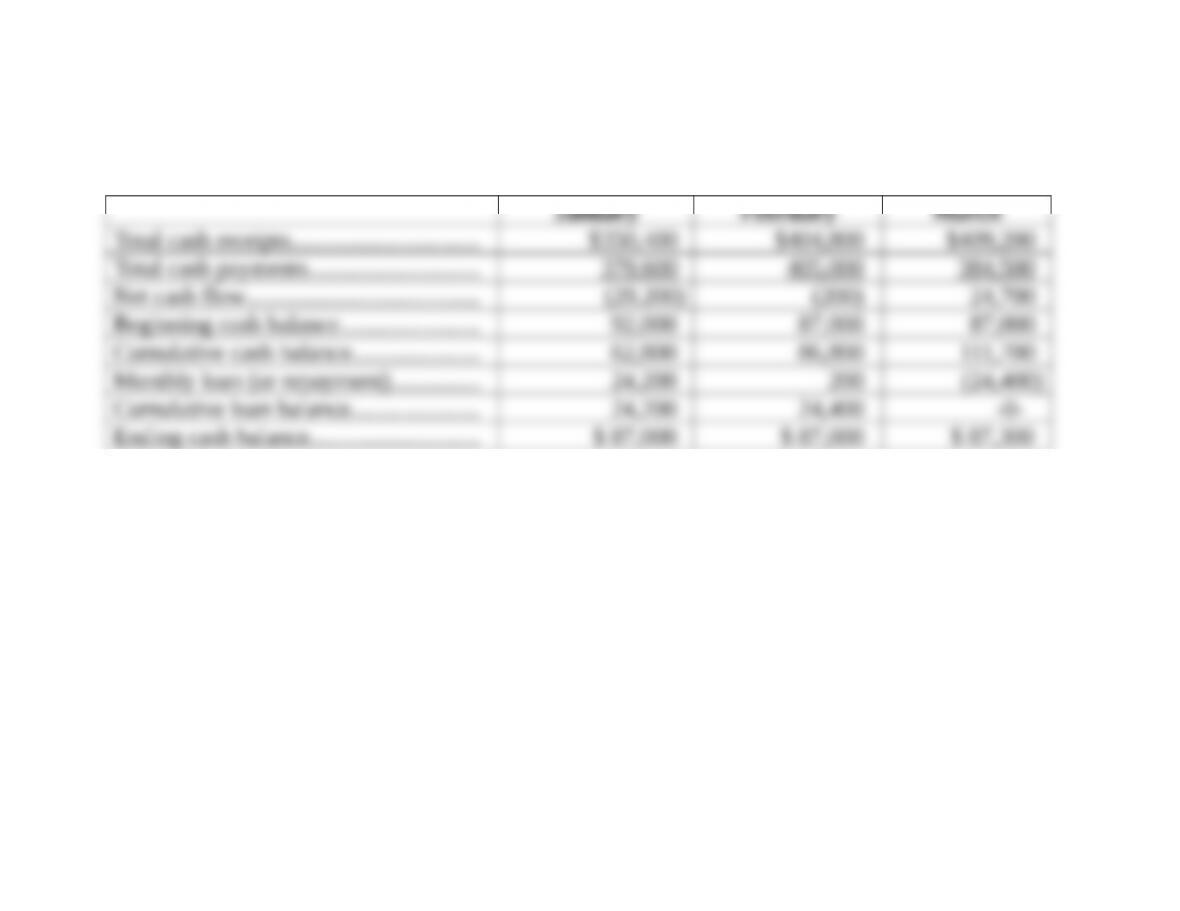
4-25. (Continued)
Harry’s Carry-Out Stores
Cash Budget

26. Complete cash budget (LO2) Archer Electronics Company’s actual sales and purchases
for April and May are shown here, along with forecast sales and purchases for June through
September.
Sales Purchases
April (actual)……..….…….……….……. $370,000 $155,000
May (actual)……………………………….. 350,000 145,000
June (forecast)…………………………….. 325,000 145,000
July (forecast)……………………….……. 325,000 205,000
August (forecast)……….….…….……… 340,000 225,000
September (forecast)………………..….. 380,000 220,000
The company makes 20 percent of its sales for cash and 80 percent on credit. Of the
credit sales, 50 percent are collected in the month after the sale, and 50 percent are
collected two months later. Archer pays for 20 percent of its purchases in the month after
purchase and 80 percent two months after.
Labor expense equals 15 percent of the current month’s sales. Overhead expense equals
$12,500 per month. Interest payments of $32,500 are due in June and September. A cash
dividend of $52,500 is scheduled to be paid in June. Tax payments of $25,500 are due in
June and September. There is a scheduled capital outlay of $350,000 in September.
Archer Electronics’ ending cash balance in May is $22,500. The minimum desired cash
balance is $10,500. Prepare a schedule of monthly cash receipts, monthly cash payments,
and a complete monthly cash budget with borrowing and repayments for June through
September. The maximum desired cash balance is $50,500. Excess cash (above $50,500) is
used to buy marketable securities. Marketable securities are sold before borrowing funds in
case of a cash shortfall (less than $10,500).
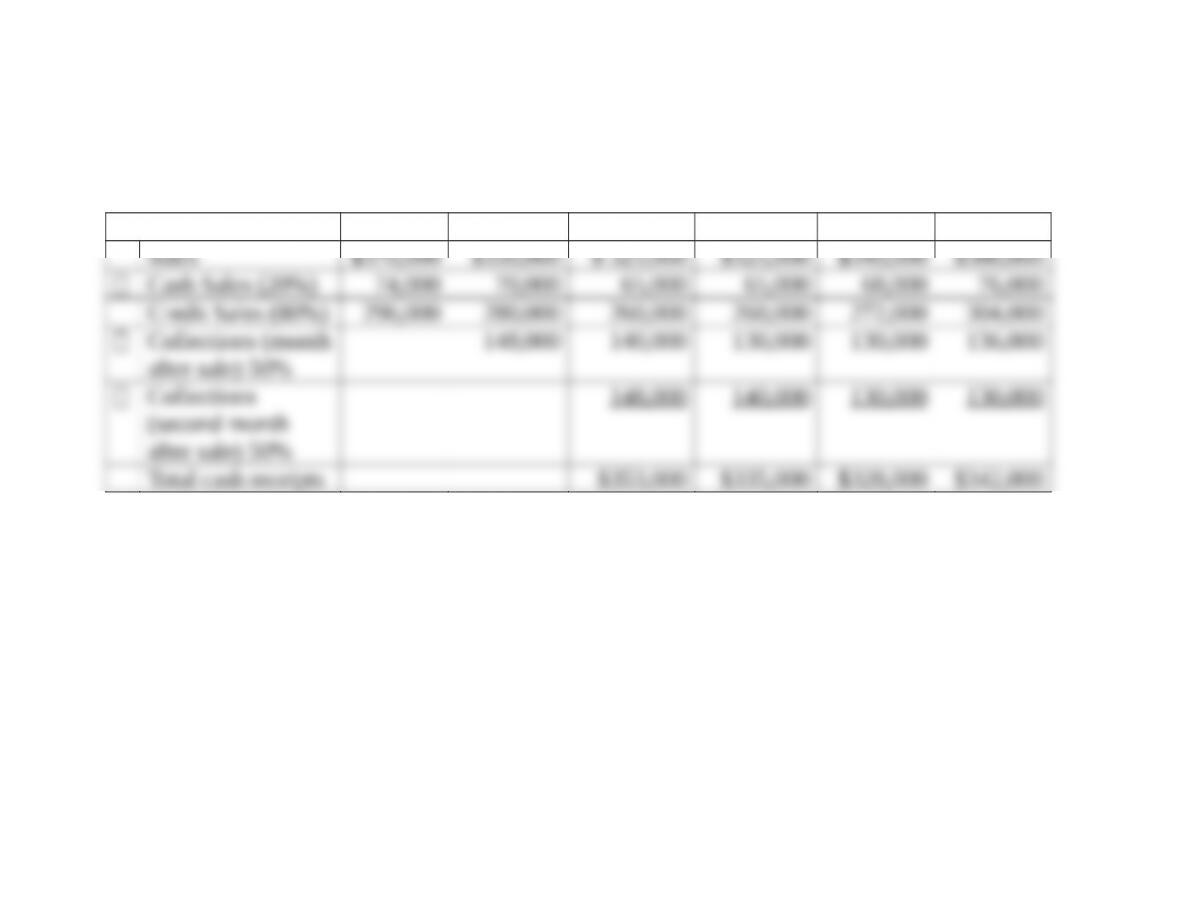
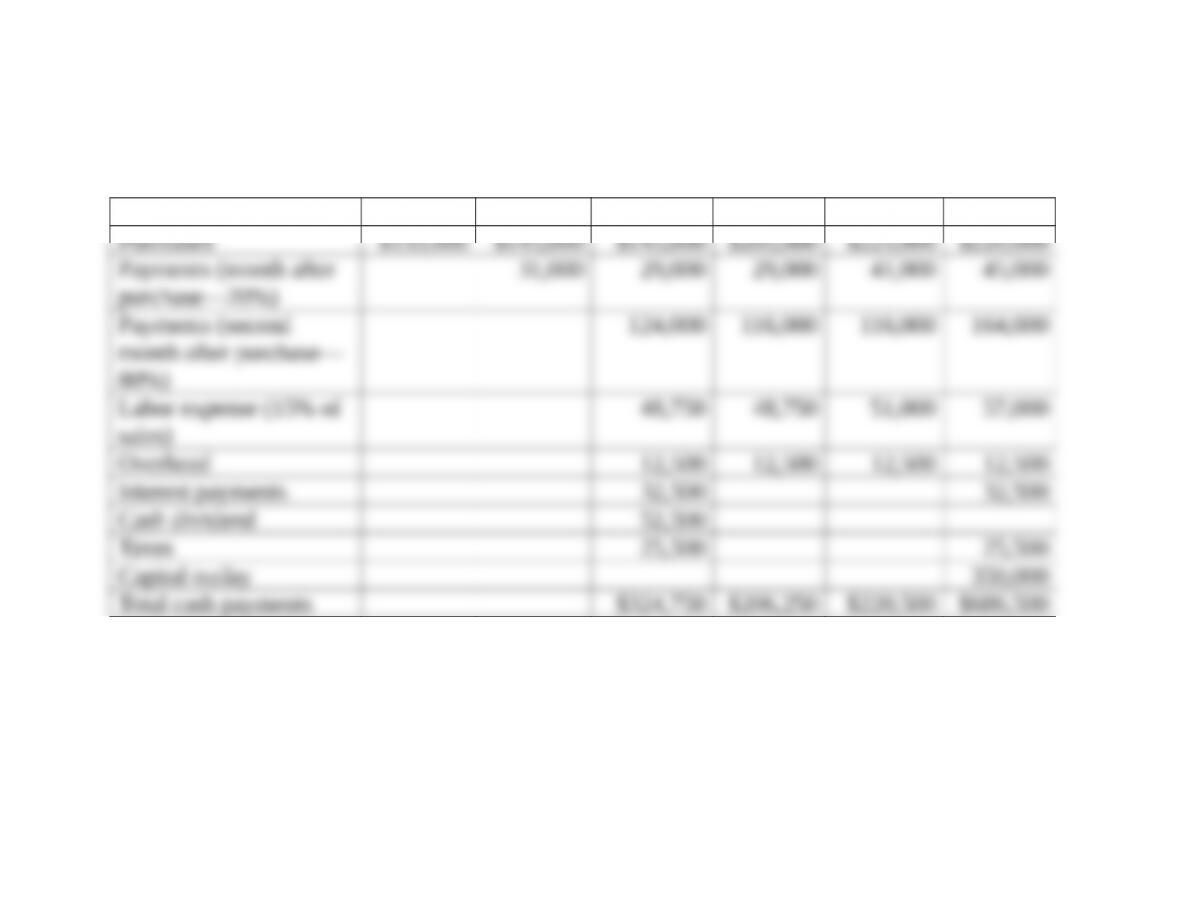
4-26. Solution:
Archer Electronics
Cash Receipts Schedule
April May June July Aug. Sept.
4-26. (Continued)
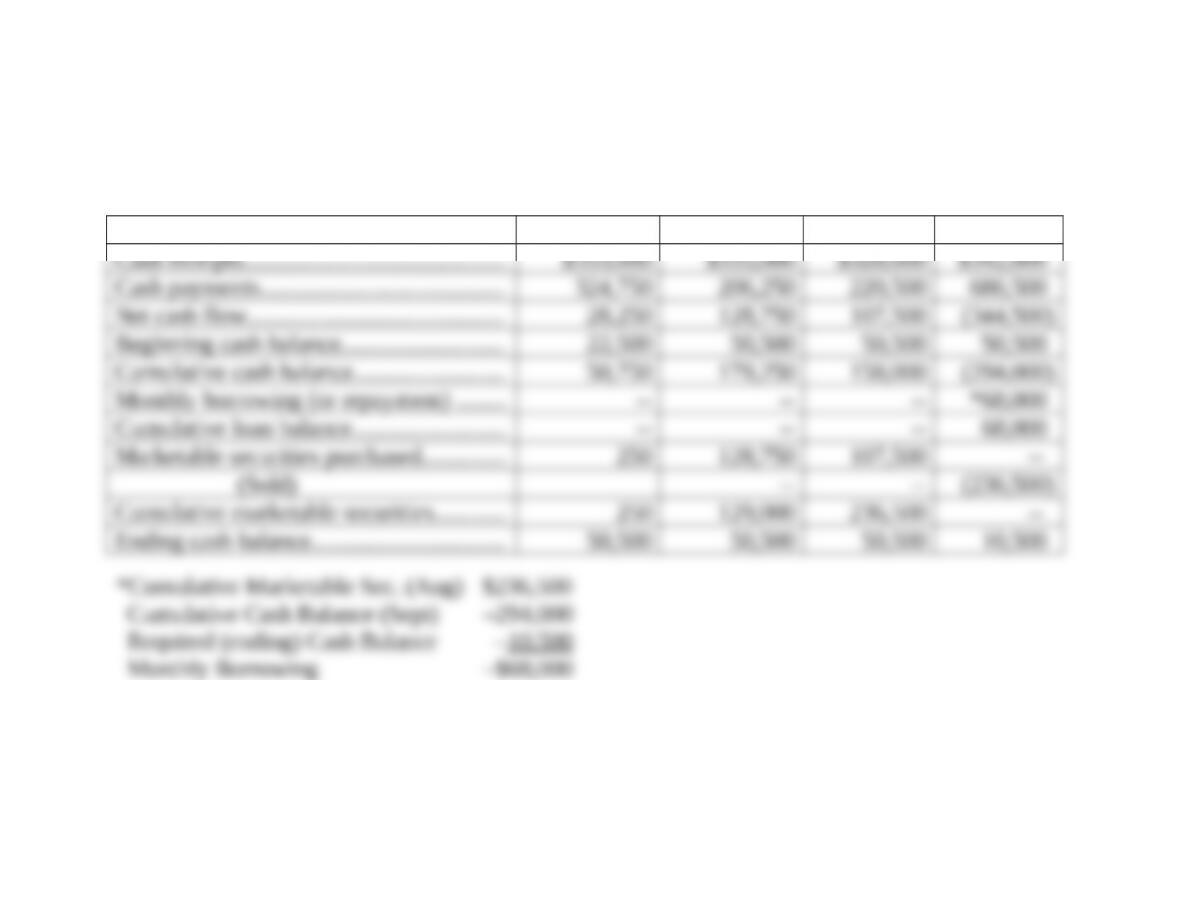
Archer Electronics
Cash Payments Schedule
April May June July Aug. Sept.
4-26. (Continued)
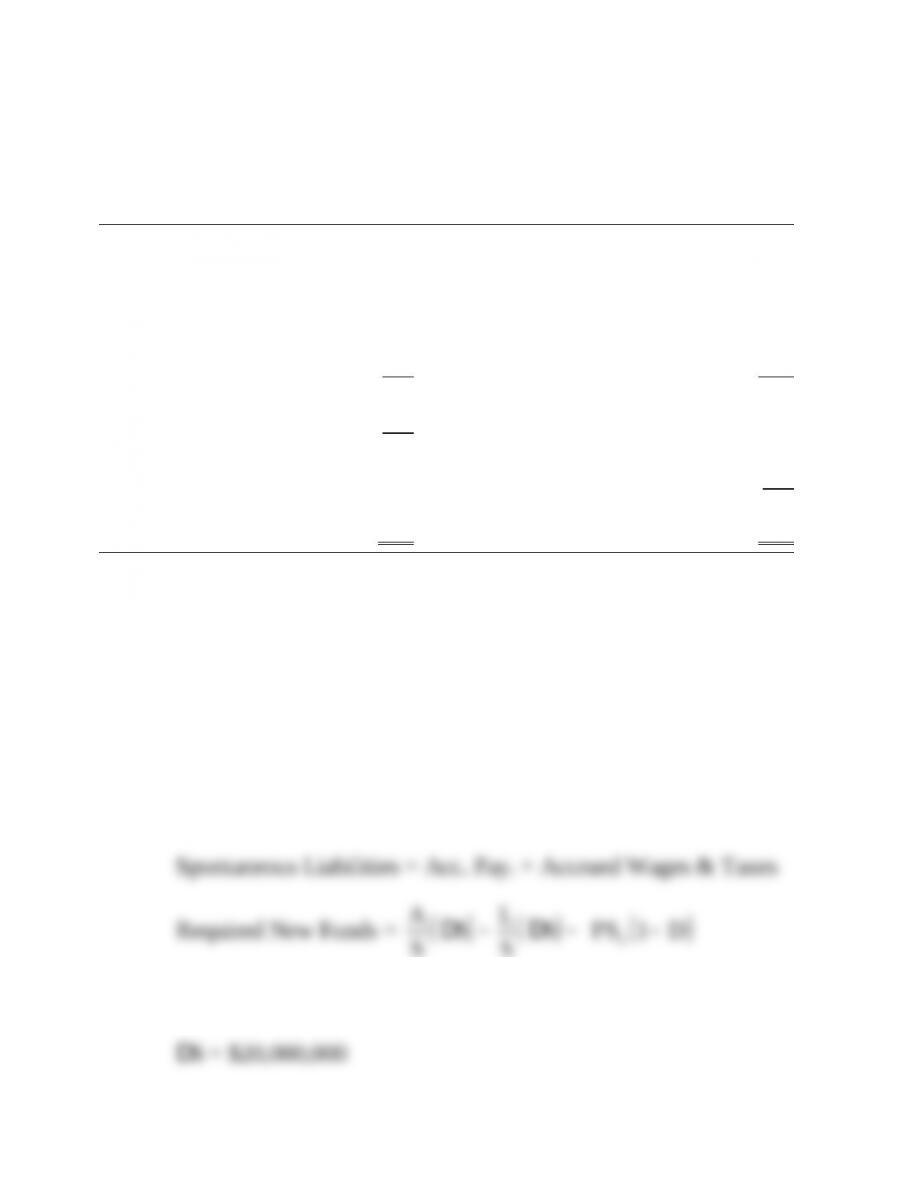
Archer Electronics
Cash Budget
June July August September
27. Percent-of-sales method (LO3) Owen’s Electronics has nine operating plants in seven
Southwestern states. Sales for last year were $100 million, and the balance sheet at year-
end is similar in percentage of sales to that of previous years (and this will continue in the
future). All assets (including fixed assets) and current liabilities will vary directly with
sales. The firm is working at full capacity.
Balance Sheet
(in $ millions)
Assets Liabilities and Stockholders’ Equity
Cash…………………………..….…….. $ 7 Accounts payable.….………......... $20
Accounts receivable….…............ 25 Accrued wages…….……….…….... 7
Inventory.….…………………………. 28 Accrued taxes.….…………………… 13
Current assets…….……….…….... $60 Current liabilities………..….……. $40
Fixed assets…………………………… 45 Notes payable…………….…….…… 15
Common stock…………………….... 20
Retained earnings………………….. 30
Total assets……………………………. $105
Total liabilities and
stockholders’ equity……………… $105
Owen’s has an after-tax profit margin of 10 percent and a dividend payout ratio of 45
percent.
If sales grow by 20 percent next year, determine how many dollars of new funds are needed
to finance the growth.
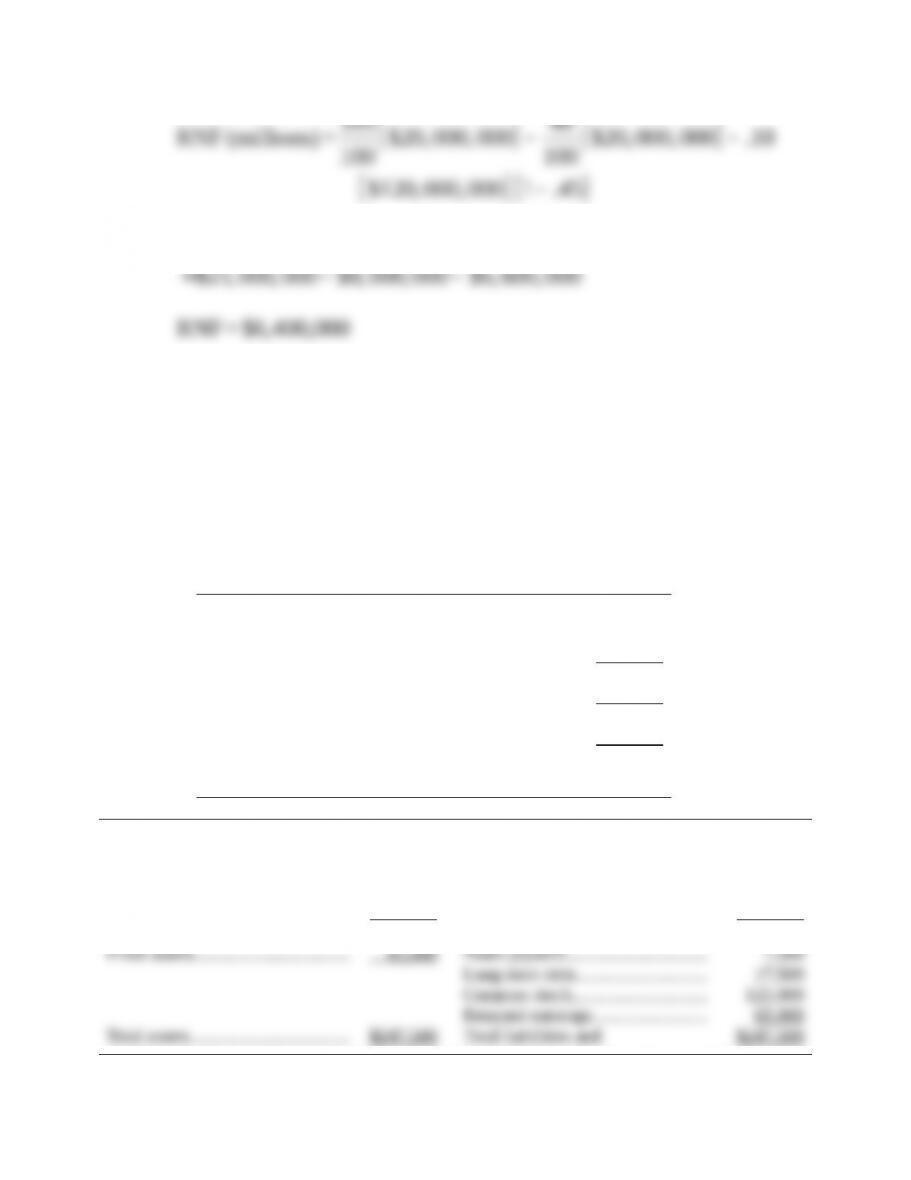
4-27. Solution:
Owen’s Electronics
At Full Capacity
Spontaneous Assets = Current Assets Fixed Assets+
Spontaneous Liabilities = Acc. Pay. + Accrued Wages & Taxes
( ) ( ) ( )
2
A L
Required New Funds = S S PS 1 D
S S
D – D – –
( ) ( )
S = 20% $100 mil.D
S = $20,000,000D
( ) ( )
( ) ( )
105 40
RNF (millions) = $20,000,000 $20,000,000 .10
100 100
$120,000,000 1 .45
– –
–
( ) ( ) ( ) ( )
1.05 $20,000,000 .40 $20,000,000 .10 $120,000,000 .55= – –
$21,000,000 $8, 000,000 $6,600,000= – –
RNF= $6,400,000
28. Percent-of-sales method (LO3) The Manning Company has financial statements as
shown next, which are representative of the company’s historical average.
The firm is expecting a 35 percent increase in sales next year, and management is
concerned about the company’s need for external funds. The increase in sales is expected to
be carried out without any expansion of fixed assets, but rather through more efficient asset
utilization in the existing store. Among liabilities, only current liabilities vary directly with
sales.
Using the percent-of-sales method, determine whether the company has external
financing needs, or a surplus of funds. (Hint: A profit margin and payout ratio must be
found from the income statement.)
Income Statement
Sales………………………………..……….…….…… $250,000
Expenses………………………………………………. 192,000
Earnings before interest and taxes………….… $ 58,000
Interest…………………………………………..…….. 7,500
Earnings before taxes……………..….……….…. $ 50,500
Taxes……………………………………………………. 15,500
Earnings after taxes………………….….…….….. $ 35,000
Dividends………………………………….…….…… $ 7,000
Balance Sheet
Assets Liabilities and Stockholders’ Equity
Cash……………………..….…….……… $ 8,500 Accounts payable…………………….. $ 26,400
Accounts receivable…………………. 63,000 Accrued wages……………………..…. 2,350
Inventory………………………………… 91,000 Accrued taxes..…….……….………... 3,750
Current assets……………………..…. $162,500 Current liabilities………….……….. $ 32,500
stockholders’ equity…….…….……
4-28. Solution:
Manning Company
Earnings after taxes $35,000
Profit margin = 14%
Sales $250, 000
Dividends $7,000
Payout ratio = 20%
Earnings 35,000
= =
= =
Change in Sales 35% $250,000 $87,500= ´ =
SpontaneousAssets Cash Acc. Rec. Inventory= + +
Spontaneous Liabilities Acc. Payable Accrued Wages & Taxes= +
( ) ( ) ( )
( ) ( ) ( ) ( )
( ) ( ) ( ) ( )
A L
RNF=ΔS ΔS PS 1 D
2
S S
$162,500 $32,500
= $87,500 $87,500 .14 $337,500 1 .20
$250,000 $250,000
=.65 $87,500 .13 $87,500 .14 $337,500 .80
= $56,875 $11,375 $37,800
RNF = $7,700
– – –
– – –
– –
– –
The firm needs $7,700 in external funds.
29. Percent-of-sales method (LO3) Conn Man’s Shops, a national clothing chain, had sales
of $350 million last year. The business has a steady net profit margin of 9 percent and a dividend
payout ratio of 25 percent. The balance sheet for the end of last year is shown next.
Balance Sheet

Plant and equipment…………………... 133 Common stock………………..…….… 50
Retained earnings….……….…........ 90
Total assets…………………………….…. $280
Total liabilities and
stockholders’ equity……………… $280
The firm’s marketing staff has told the president that in the coming year there will be a
large increase in the demand for overcoats and wool slacks. A sales increase of 20 percent
is forecast for the company.
All balance sheet items are expected to maintain the same percent-of-sales relationships
as last year, except for common stock and retained earnings. No change is scheduled in the
number of common stock shares outstanding, and retained earnings will change as dictated
by the profits and dividend policy of the firm. (Remember the net profit margin is 9
percent.)
a. Will external financing be required for the company during the coming year?
b. What would be the need for external financing if the net profit margin went up to 10.5
percent and the dividend payout ratio was increased to 60 percent? Explain.
This included fixed assets since the firm is at full capacity.