3-31. (Continued)
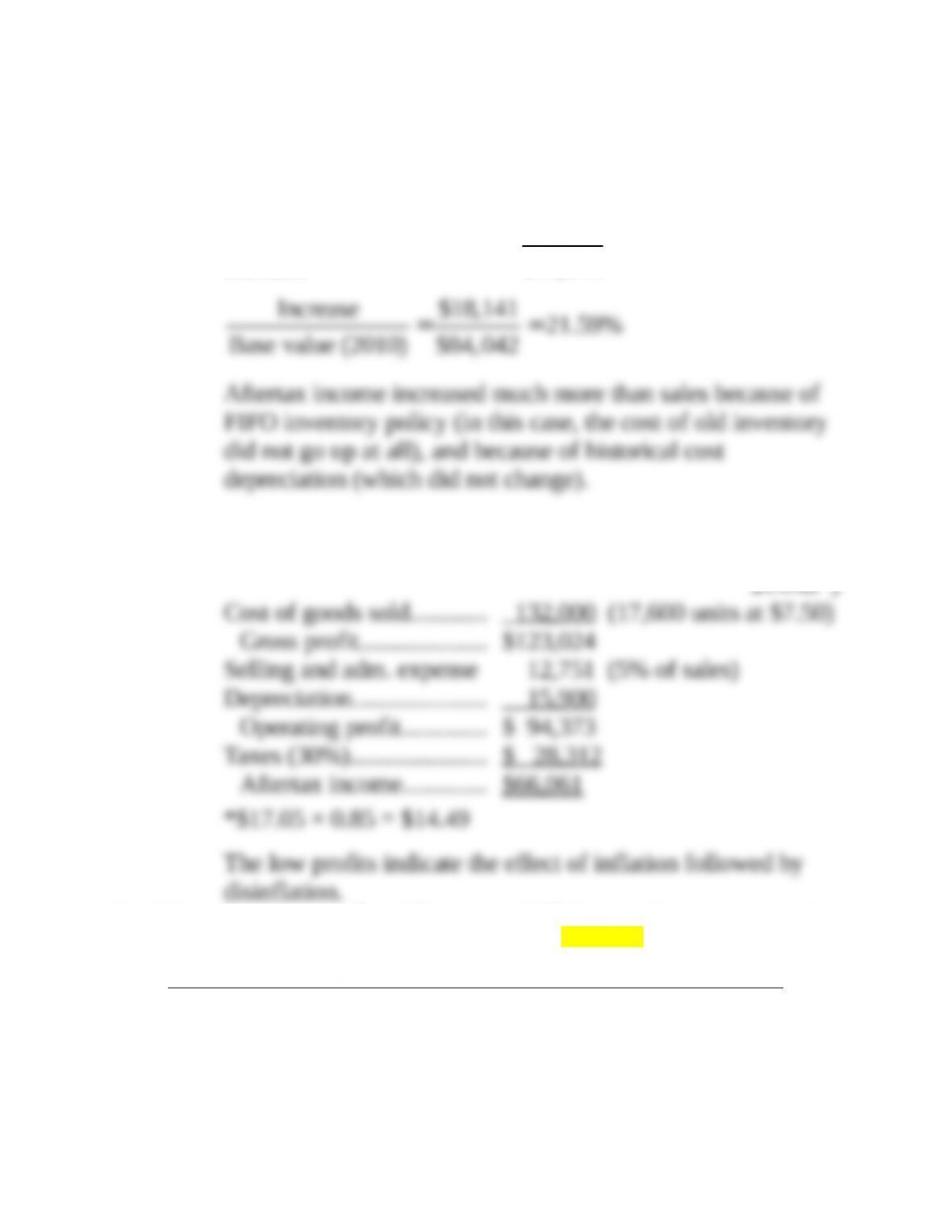
b. Gain in aftertax income
20X2 $102,183
20X1 84,042
Increase $18,141
Increase $18,141 21.59%
Base value (2010) $84,042
= =
Aftertax income increased much more than sales because of
FIFO inventory policy (in this case, the cost of old inventory
did not go up at all), and because of historical cost
depreciation (which did not change).
c. 20X3
Sales….….…..….…..…........ $255,024 (17,600 units at
32. Using ratios to construct financial statements (LO2) Construct the current assets section
of the balance sheet from the following data. (Use cash as a plug figure after computing the other
values.)
Yearly sales (credit)…………………………………….….….….….…..….. $420,000
Inventory turnover………………………………………..….…..….….….… 7 times
Current liabilities……………………………………………..….….….….…. $80,000
Current ratio………………………………………………………………..….… 2
Average collection period………………………………….….….….…..… 36 days
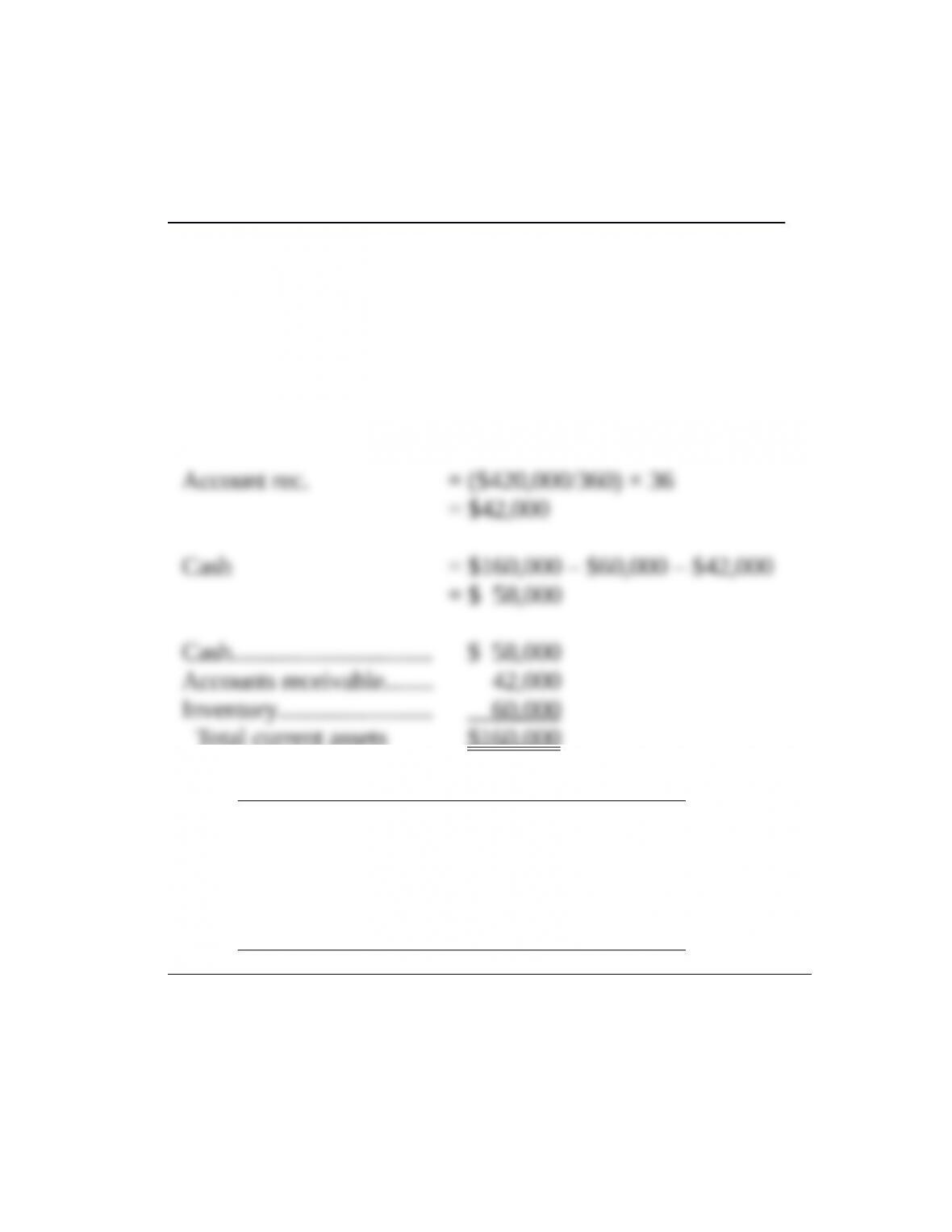
Current assets: $
Cash………………………………………………………………. ______
Accounts receivable……………………………….….….… ______
Inventory………………………………………………….….… ______
Total current assets……………..….….….….…..….… ______
3-32. Solution:
Inventory = $420,000/7
= $60,000
Current assets = 2 × $80,000
= $160,000
Total current assets $160,000
33. Using ratios to construct financial statements (LO2) The Griggs Corporation has credit
sales of $1,200,000. Given these ratios, fill in the following balance sheet.
Total assets turnover………….….…..….….….. 2.4 times
Cash to total assets………………………….….… 2.0%
Accounts receivable turnover….….….…...... 8.0 times
Inventory turnover……………..….…..….….…. 10.0 times
Current ratio…………………………………..….... 2.0 times
Debt to total assets………………………..….….. 61.0%
GRIGGS CORPORATION
Balance Sheet
Assets Liabilities and Stockholders’ Equity
Cash ………………………… _____ Current debt…………………….…..….….….… _____
Accounts receivable...... _____ Long-term debt………………………………….. _____
Inventory…………….….… _____ Total debt…………………………………….. _____
Total current assets . _____ Equity…………………………………………….… _____
Fixed assets ….…..….….. _____ Total debt and stockholders’ equity _____
Total assets ..…........ _____
3-33. Solution:
Griggs Corporation
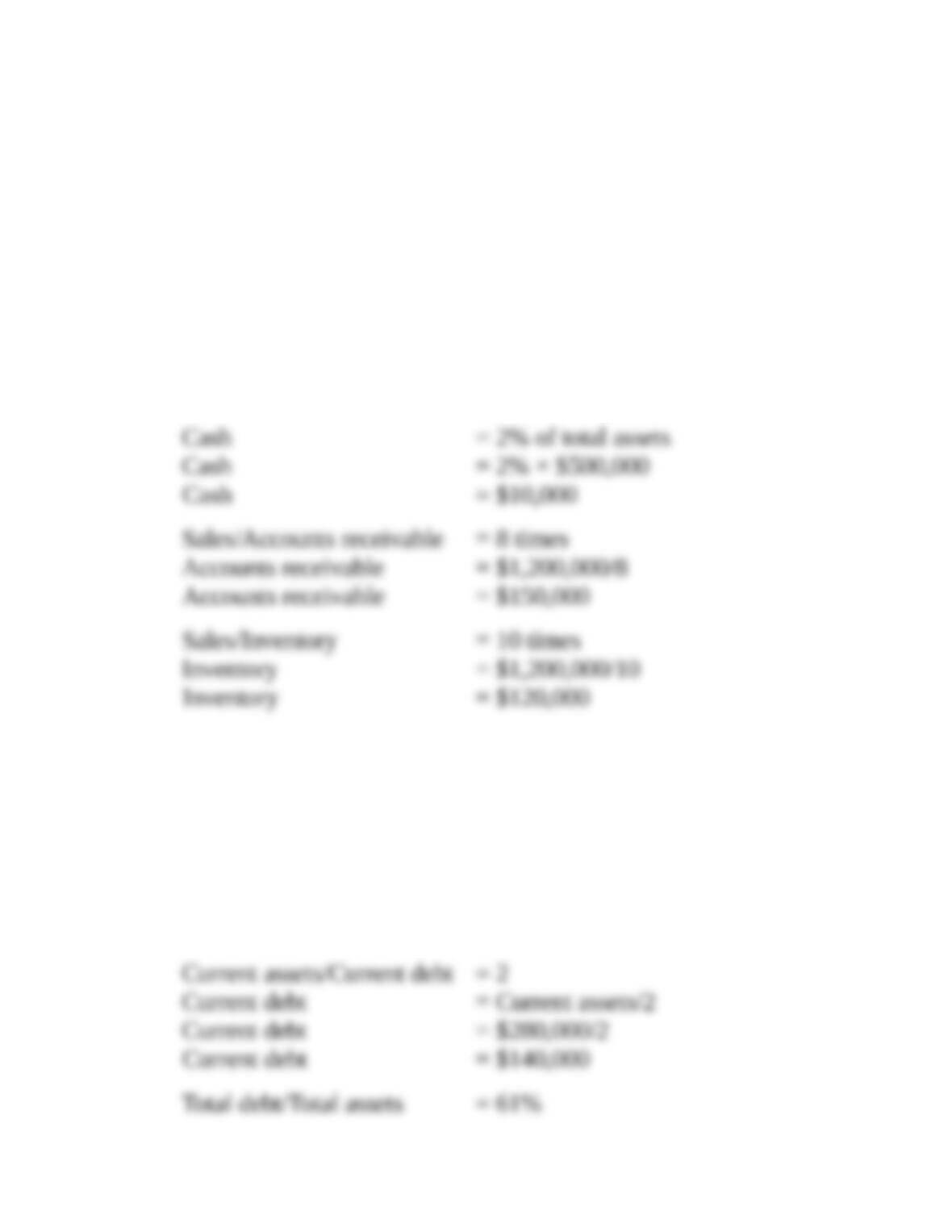
Sales/Total assets = 2.4 times
Total assets = $1,200,000/2.4
Total assets = $500,000
3-33. (Continued)
Fixed assets = Total assets – Current assets
Current asset = $10,000 + $150,000 +
$120,000 = $280,000
Fixed assets = $500,000 – $280,000
= $220,000
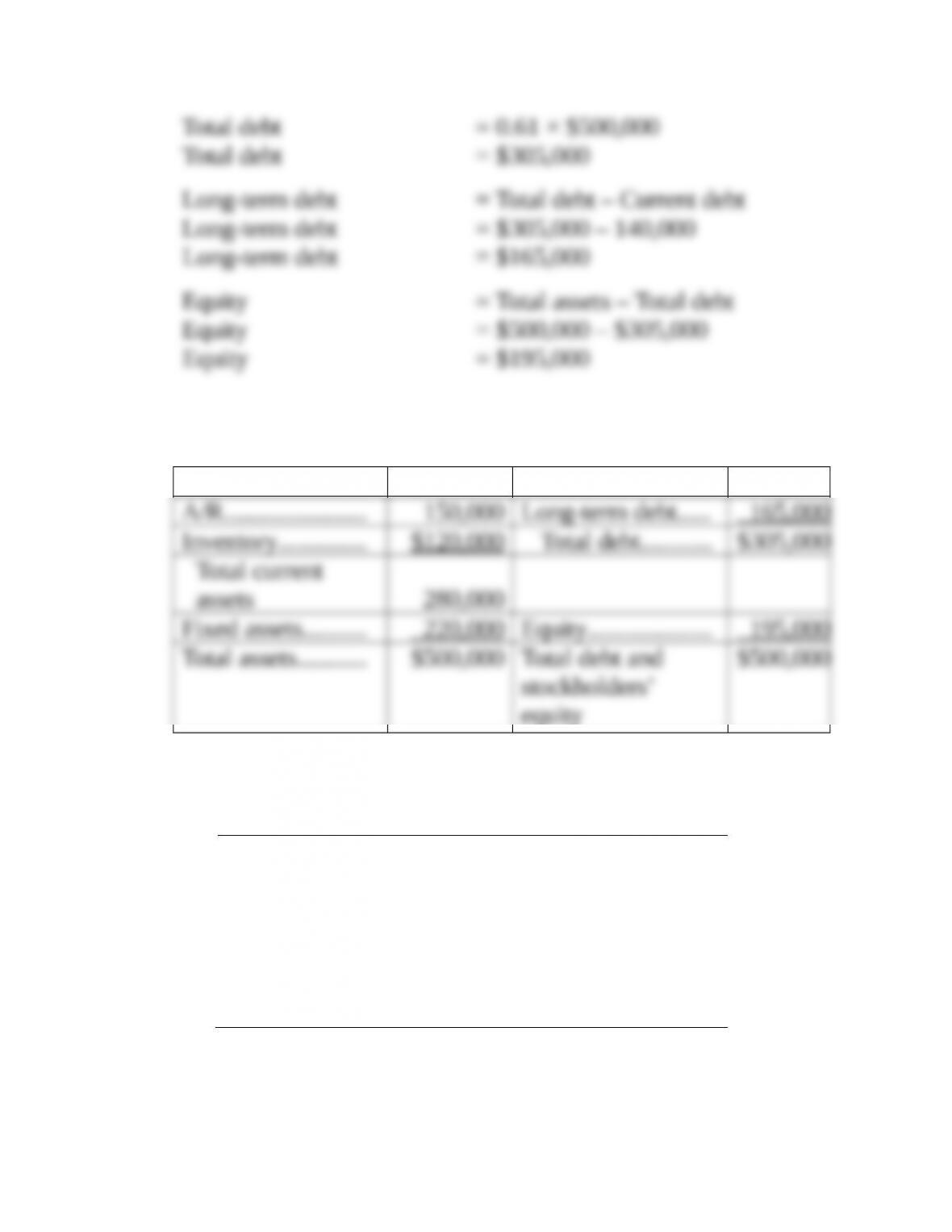
Griggs Corporation
Balance Sheet
Cash….….............. $ 10,000 Current debt…....... $140,000
stockholders’
equity
34. Using ratios to determine account balances (LO2) We are given the following
information for the Pettit Corporation.
Sales (credit)……………………………………………………. $3,549,000
Cash……………………………………………………………..… 179,000
Inventory……………………………………….….….…..….… 911,000
Current liabilities……………………………………………... 788,000
Asset turnover………………………………..….….….….…. 1.40 times
Current ratio………………………………….…..….….….…. 2.95 times
Debt-to-assets ratio…………………………………………... 40%
Receivables turnover………………………………….….…. 7 times
Current assets are composed of cash, marketable securities, accounts receivable, and
inventory. Calculate the following balance sheet items.
a. Accounts receivable.
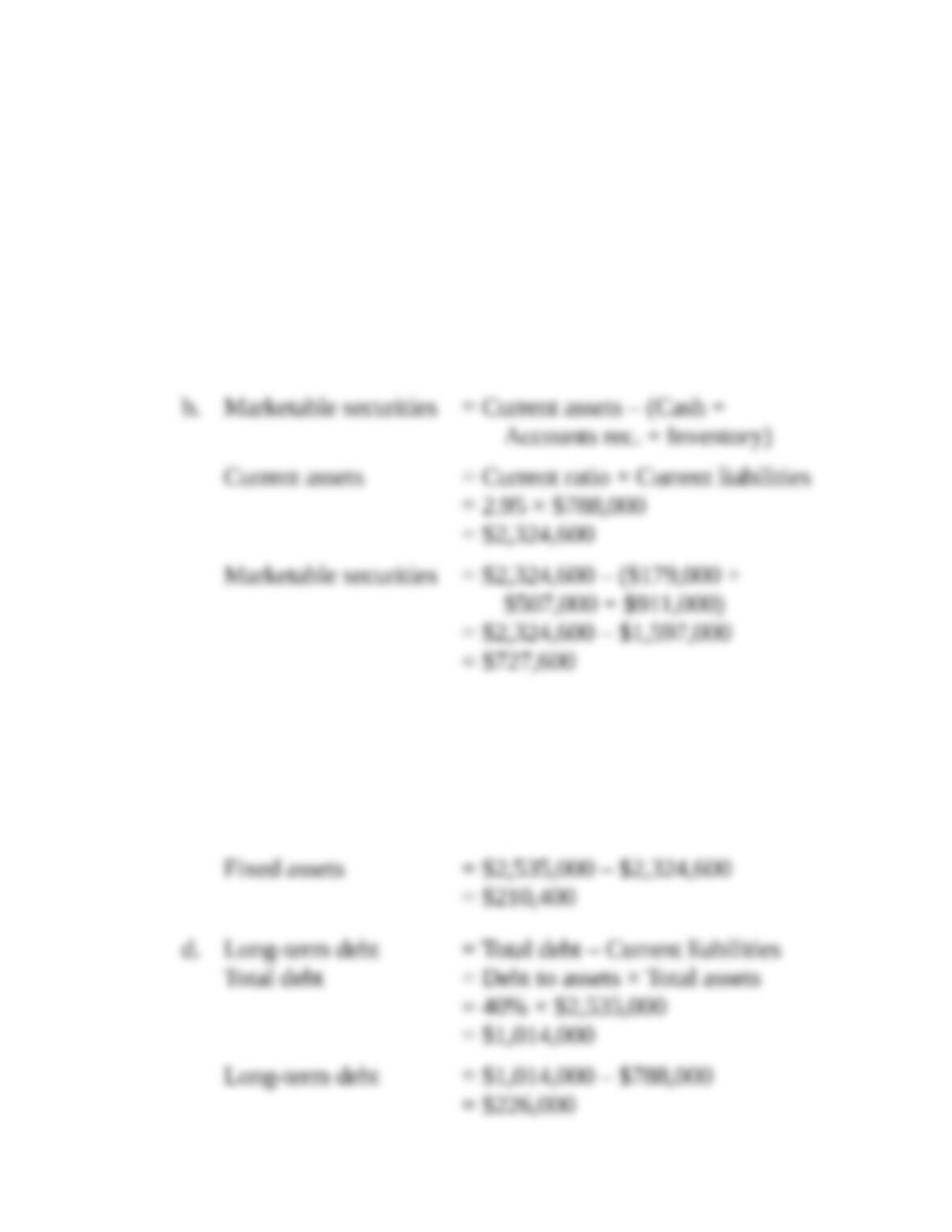
b. Marketable securities.
c. Fixed assets.
d. Long-term debt.
3-34. Solution:
Pettit Corporation
a. Accounts receivable = Sales/Receivable turnover
= $3,549,000/7x
= $507,000
3-34. (Continued)
c. Fixed assets = Total assets – Current assets
Total assets = Sales/Asset turnover
= $3,549,000/1.40x
= $2,535,000
35. Using ratios to construct financial statements (LO2) The following information is from
Harrelson Inc.’s, financial statements. Sales (all credit) were $28.50 million for last year.
Sales to total assets………………………………….. 1.90 times
Total debt to total assets…………………..….…... 35%
Current ratio……………………………………..….… 2.50 times
Inventory turnover……………..….…..….….….… 10.00 times
Average collection period……….….….….…..… 20 days
Fixed asset turnover……………………….….….… 5.00 times
Fill in the balance sheet:
Cash………………………………. ______ Current debt……………..…..….….….….…. ______
Accounts receivable….…..... ______ Long-term debt……………………………….. ______
Inventory………………….….… ______ Total debt……………………………………… ______
Total current assets….…..… ______ Equity………………………………………….… ______
Fixed assets………..…..….….. ______ Total debt and equity…………………..…. ______
Total assets…………….…..… ______
3-35. Solution:
Harrelson Inc.
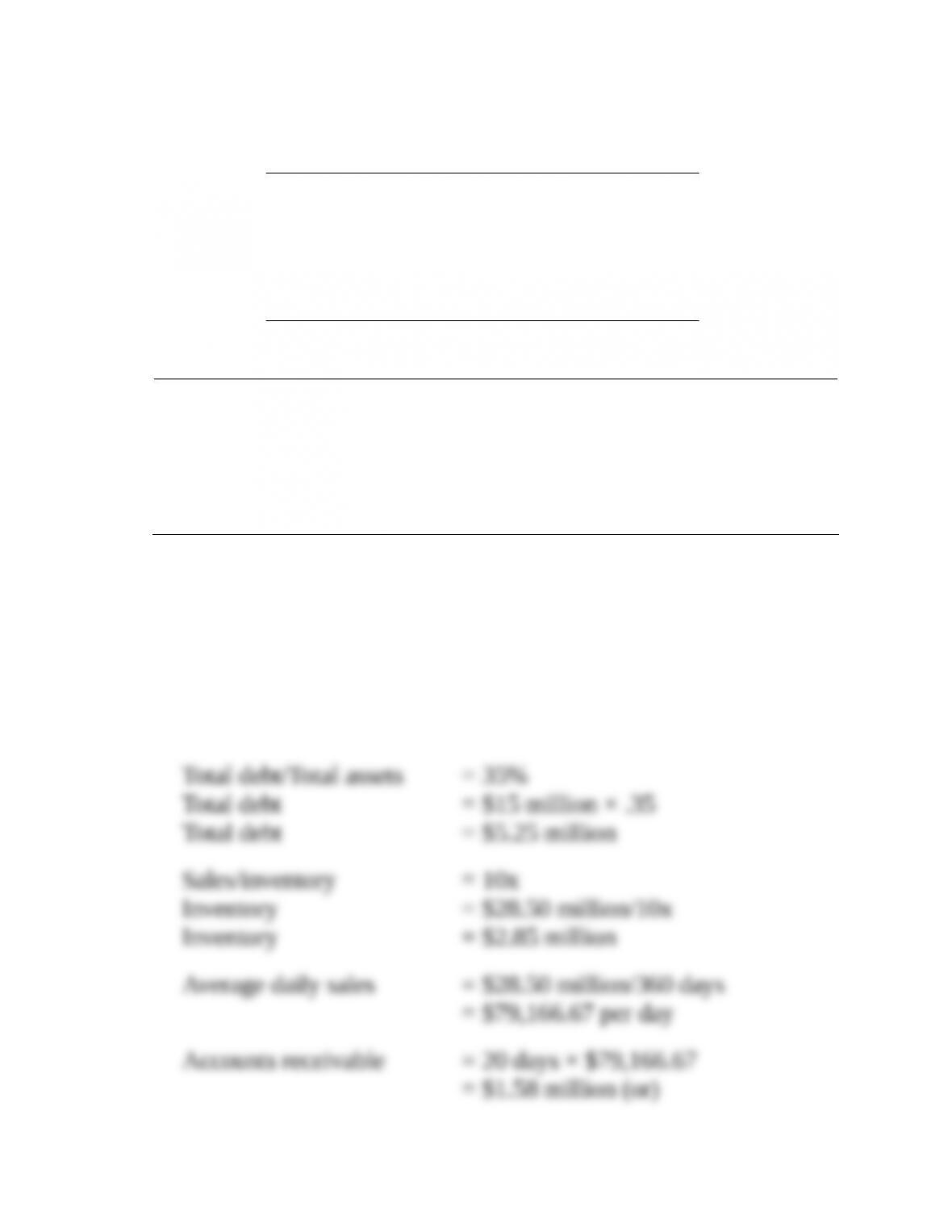
Sales/Total assets = 1.90
Total assets = $28.50 million/1.90
Total assets = $15 million
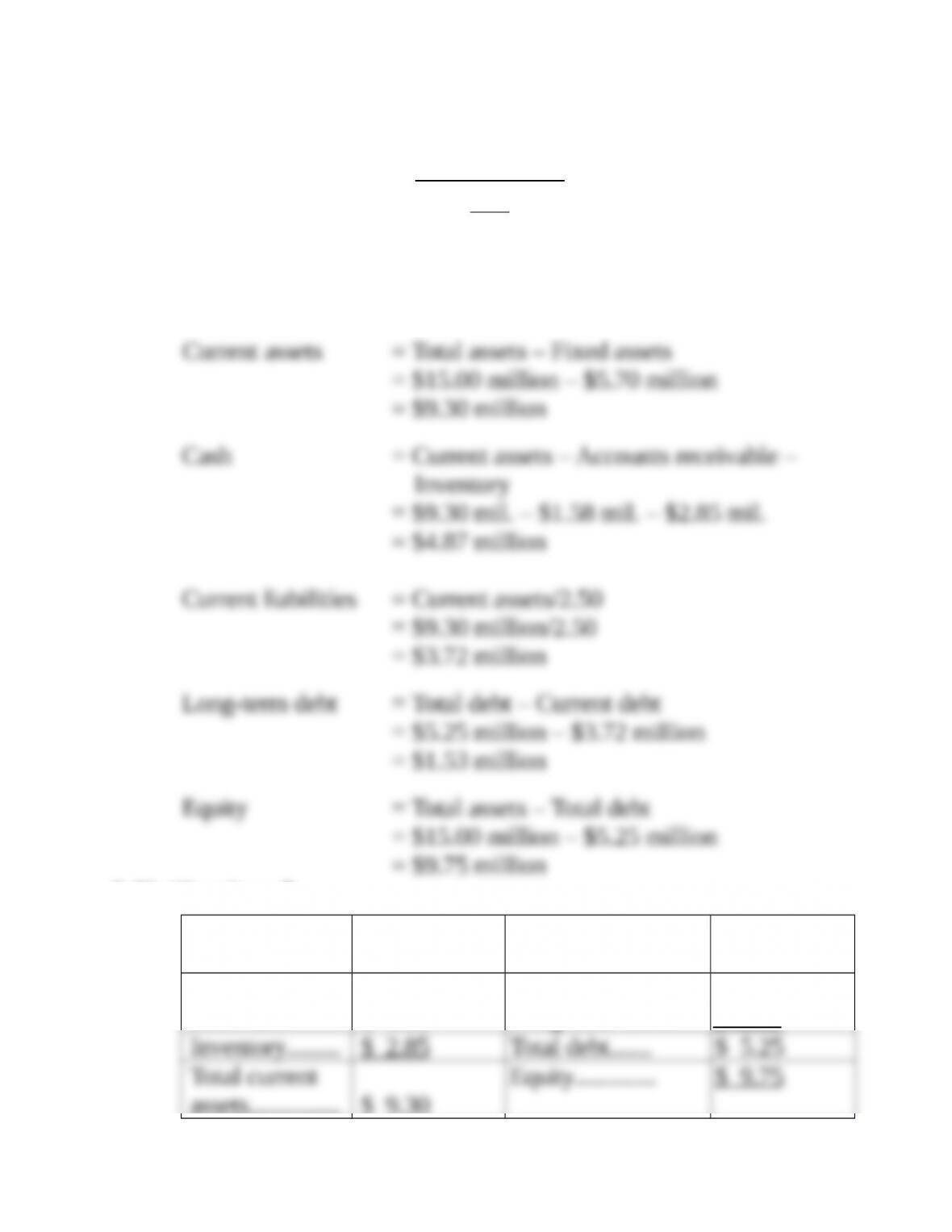
3-35. (Continued)
$28.50 million
Accounts receivable = $1,583,333
360
20
=
Fixed assets = $28.50 million/5x
= $5.70 million
3-35. (Continued)
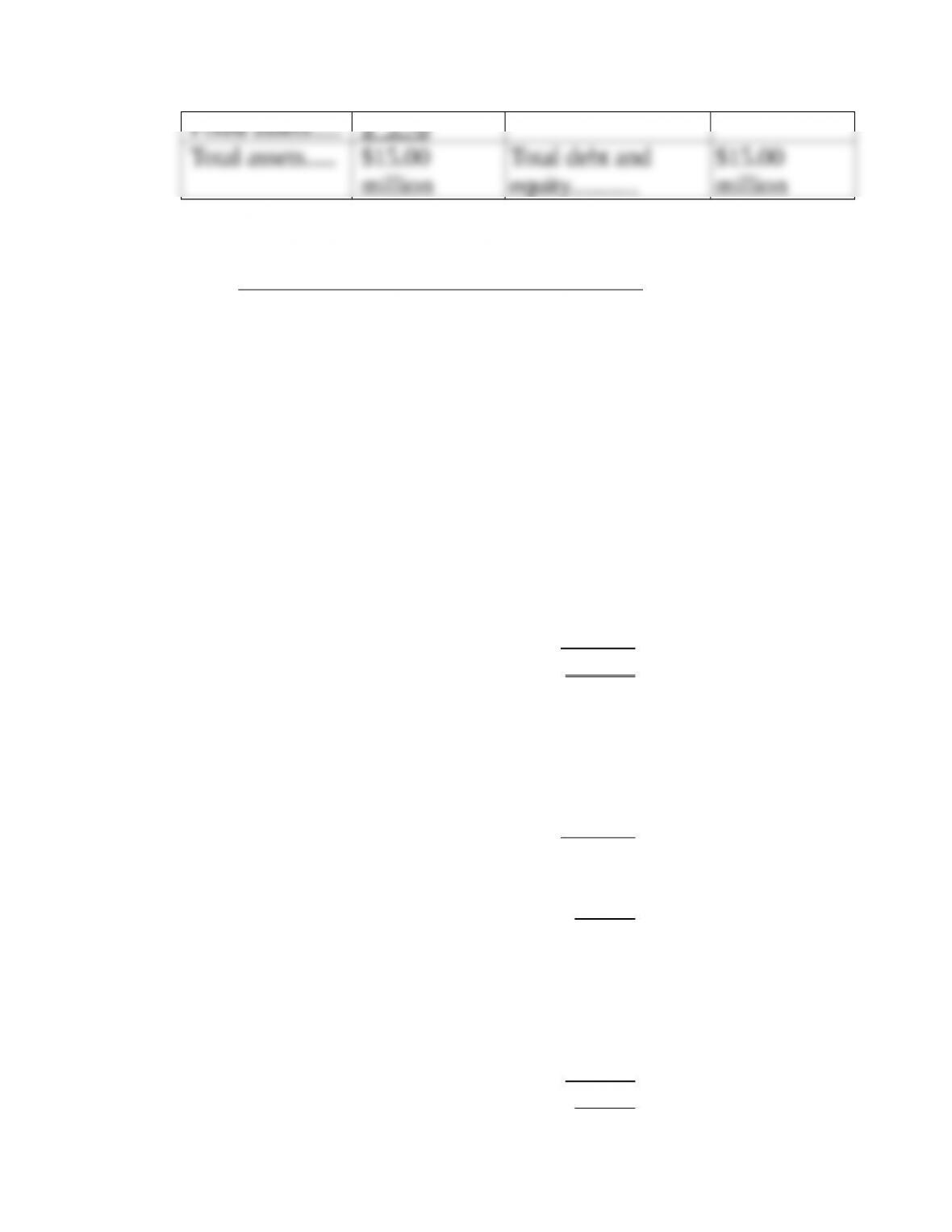
Cash……………. $ 4.87
million
Current debt……….. $ 3.72
million
Accounts
receivable…….. $ 1.58 Long–term debt.…... $ 1.53
assets…………… $ 9.30
36. Comparing all the ratios (LO2) Using the financial statements for the Snider Corporation,
calculate the 13 basic ratios found in the chapter.
SNIDER CORPORATION
Balance Sheet
December 31, 20X1
Assets
Current assets:
Cash………………………….…..….….….…... $ 52,200
Marketable securities…………..….….…... 24,400
Accounts receivable (net)…….….….…... 222,000
Inventory…………………………………..…... 238,000
Total current assets……………………….. $536,000
Investments……………………………….….….. 65,900
Plant and equipment………….…..….….…... 615,000
Less: Accumulated depreciation…........ (271,000)
Net plant and equipment……………..…... 344,000
Total assets…………………………………….…. $946,500
Liabilities and Stockholders’ Equity
Current liabilities
Accounts payable………………………….… $93,400
Notes payable…………………………………. 70,600
Accrued taxes…………………………………. 17,000
Total current liabilities……….….….….. 181,000
Long-term liabilities:
Bonds payable………………………………… $153,200
Total liabilities……………….…..….….…... $334,200
Stockholders’ equity
Preferred stock, $50 per value…........... 100,000
Common stock, $1 par value….…......... 80,000
Capital paid in excess of par……….….… 190,000
Retained earnings……………………………. 242,300
Total stockholders’ equity…….….….… 612,300
Total liabilities and stockholders’ equity. $946,500
SNIDER CORPORATION
Income statement
For the Year Ending December 31, 20X1
Sales (on credit)……………………………………………………………………… $2,064,000
Less: Cost of goods sold
………………………………………………………………………………..….... 1,313,000
Gross profit………………………………………………………………………….... 751,000
Less: Selling and administrative expenses
………………………………………………………………………………..….... 496,000*
Operating profit (EBIT)…………………………………..…..….….….…..….. 255,000
Less: Interest expense
………………………………………………………………………………..….... 26,900
Earnings before taxes (EBT)………………………………………..…..….….. 228,100
Less: Taxes
………………………………………………………………………………..….... 83,300
Earnings after taxes (EAT)………………………………………….….….….... $ 144,800
*Includes $36,100 in lease payments.