40
CHAPTER 8
Triads in First Inversion
Combinations of root position and first inversion triads should result in a much higher degree of musicality in
composition exercises. The introduction to soprano/bass counterpoint that is the final portion of the chapter is
intended to carry over into the composition exercises throughout the remainder of the text. In general, a more
musical result will be achieved if the student first composes a good soprano/bass framework before providing the
inner parts. Students should also be strongly encouraged to do all theory exercises at a piano—especially those
exercises that call for some degree of creativity and judgment.
We point out three reasons (aside from bass arpeggiation) for using a triad in first inversion, although these are not
mutually exclusive: to improve the contour of the bass line, to provide a greater variety of pitches, and to lessen the
weight of non–cadential tonic and dominant chords. A special case is the series of first inversion triads in parallel
motion. Our doubling rules are less strict than those that are based upon the Bach chorale style and are more
generally applicable. Essentially, the only proscribed doubling is that of the leading tone. Any other doubling can be
appropriate, depending upon the circumstances.
This is the first chapter to include Workbook composition exercises that are drawn from music literature (8–1B. and
8-1F). Similar activities done as a cooperative classroom exercise or in team competition are invariably successful,
and the student solutions may on occasion rival the model.
Answers to Selected Exercises
Exercise 8-1
Chapter 8
41
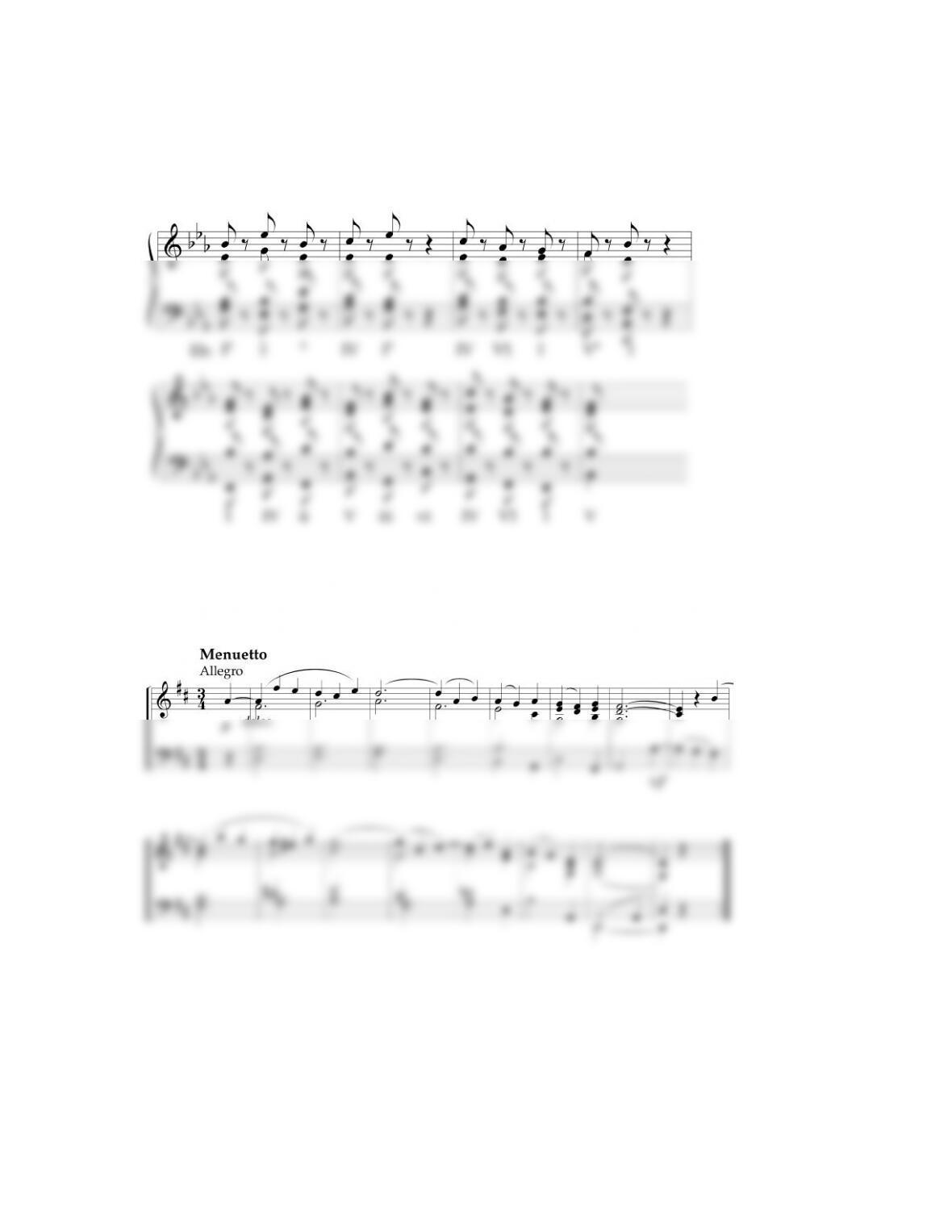
B. The second phrase (included below) may be used for an in–class exercise. It includes a good example of a
sequence that demonstrates how an unusual progression (in this case V to iii) can sound perfectly acceptable in
a sequential passage. Notice also that Mozart doubles the third in three of the four root position IV chords in
these two phrases.
F and G. The original Beethoven excerpt (below) is obviously far beyond the capabilities of the students at this
point, but it can serve as an interesting example for analysis and as an early introduction to the concept of
secondary dominants (or as a “microtonicization” of E minor).
Chapter 8
42
_______________ __________________
(section) (name)
Chapter 8 Quiz
A. Fill in each blank with the appropriate term.
1. “Parallel chords“ is a term used for a passage that contains a series of first inversion triads in
parallel motion.
2. Name three reasons for using first inversion triads:
(1) _________________________________________________________________
(2) _________________________________________________________________
(3) _________________________________________________________________
3. In part writing first inversion triads, it is acceptable to double any part of the triad unless it is the
___________________________
4. A good definition of “counterpoint” is
_________________________________________________________________________________________
_________________________________________________
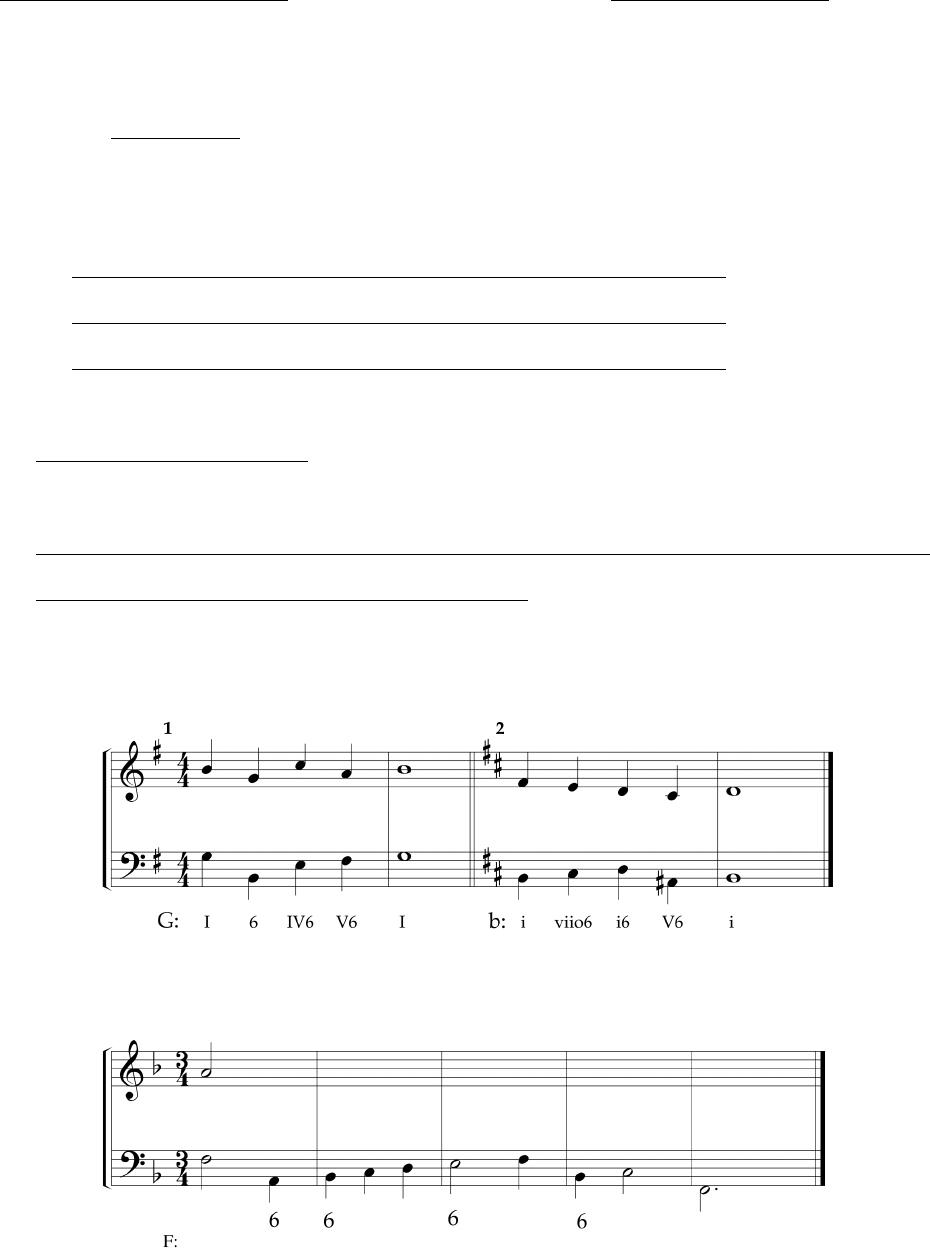
B. Supply alto and tenor lines for the following passages.
C. Analyze with roman numerals the harmonies specified by this figured bass. Then compose a simple soprano
line, and fill in alto and tenor parts.
Chapter 8
43
Key for Chapter 8 Quiz
A. Fill in each blank with the appropriate term.
parallel motion.
2. Name three reasons for using first inversion triads:
To improve the contour of the bass line
4. A good definition of “counterpoint” is
__the combining of relatively independent musical lines______________________________
_____________________________________________________________________
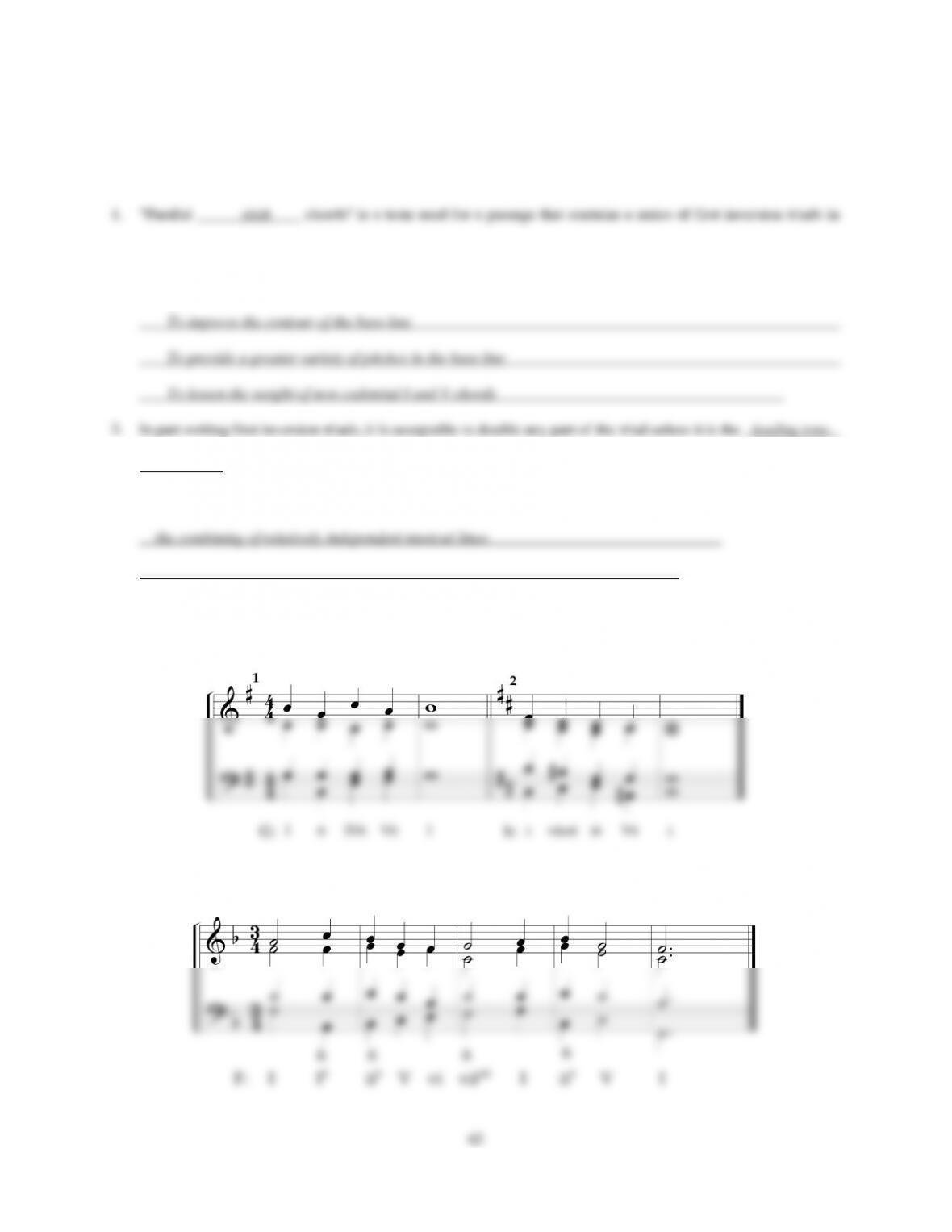
B. Supply alto and tenor lines for the following passages.
C. Analyze with roman numerals the harmonies specified by this figured bass. Then compose a simple soprano
line, and fill in alto and tenor parts.