32
CHAPTER 6
Root Position Partwriting
This chapter deals with partwriting root position triads in four– and three–part textures, presented in that order. Many
instructors prefer to restrict their students to four–part textures only, and this may certainly be done using this text.
However, others find that the three–part textures offer the student variety and encourage a more creative approach to
theory exercises.
The pedagogical approach taken is to classify all root movements into one of three categories, and conventional
voice leading strategies, a total of five in all, are explained for each root movement.
If board space is available, it is very useful to have some students work out short exercises at the board while others
work the same problems at their seats. After everyone is seated again, the class can critique the board work, not for
the purpose of embarrassing their classmates, obviously, but for the very positive learning experience that can result.
Another worthwhile classroom activity divides the class into teams of two to four students each for the purpose of
solving a partwriting problem.
To emphasize the musical side of their exercises, one or more instrumental trios or quartets can be formed by class
members, with exercises composed for them and parts written out in advance. This is valuable especially for those
who have had no close exposure to strings or to transposing instruments. The last few pages of the chapter introduce
the student to instrumental ranges and transpositions to facilitate such activities. Exercises may be sung as well, of
course—even the most ordinary partwriting exercise can be effective when well played or sung.
Some instructors find that the information on instrumental transpositions and ranges to be more than students can
absorb at this point, and that part of the chapter may certainly be omitted. However, being able to decipher a score
seems to us to be easier to master than composing for transposing instruments. A silly but effective formula is this:
“An instrument called the Honk is in the key of X; when the honkist sees a C, we will hear an X.” This will work for
every instrument except for brasses in bass clef, although it does not tell us whether the pitch will be higher or lower
than a concert C.
Answers to Selected Exercises
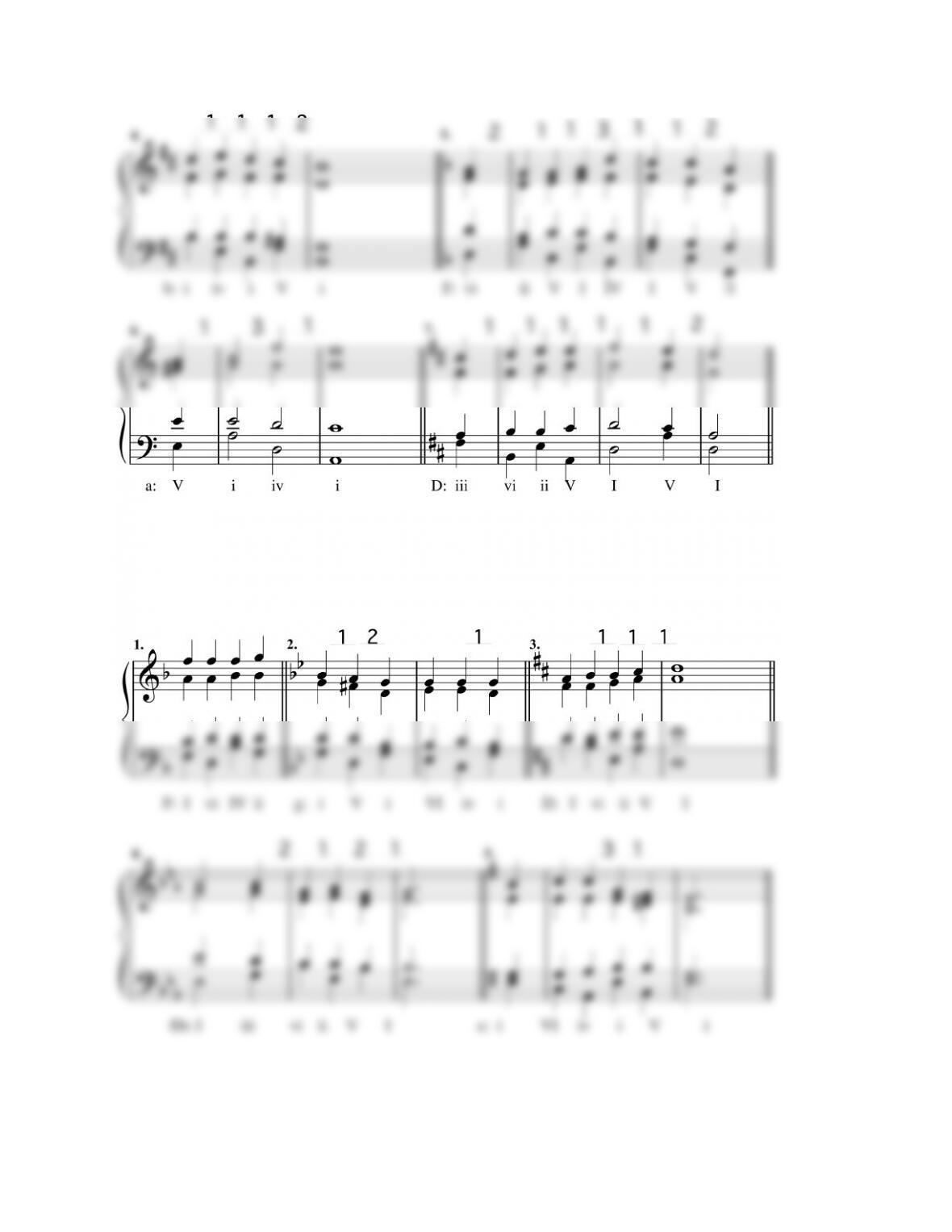
Exercise 6-2
In these and similar exercises, we supply the most likely correct student responses. Other solutions are possible.
A.
Chapter 6
33
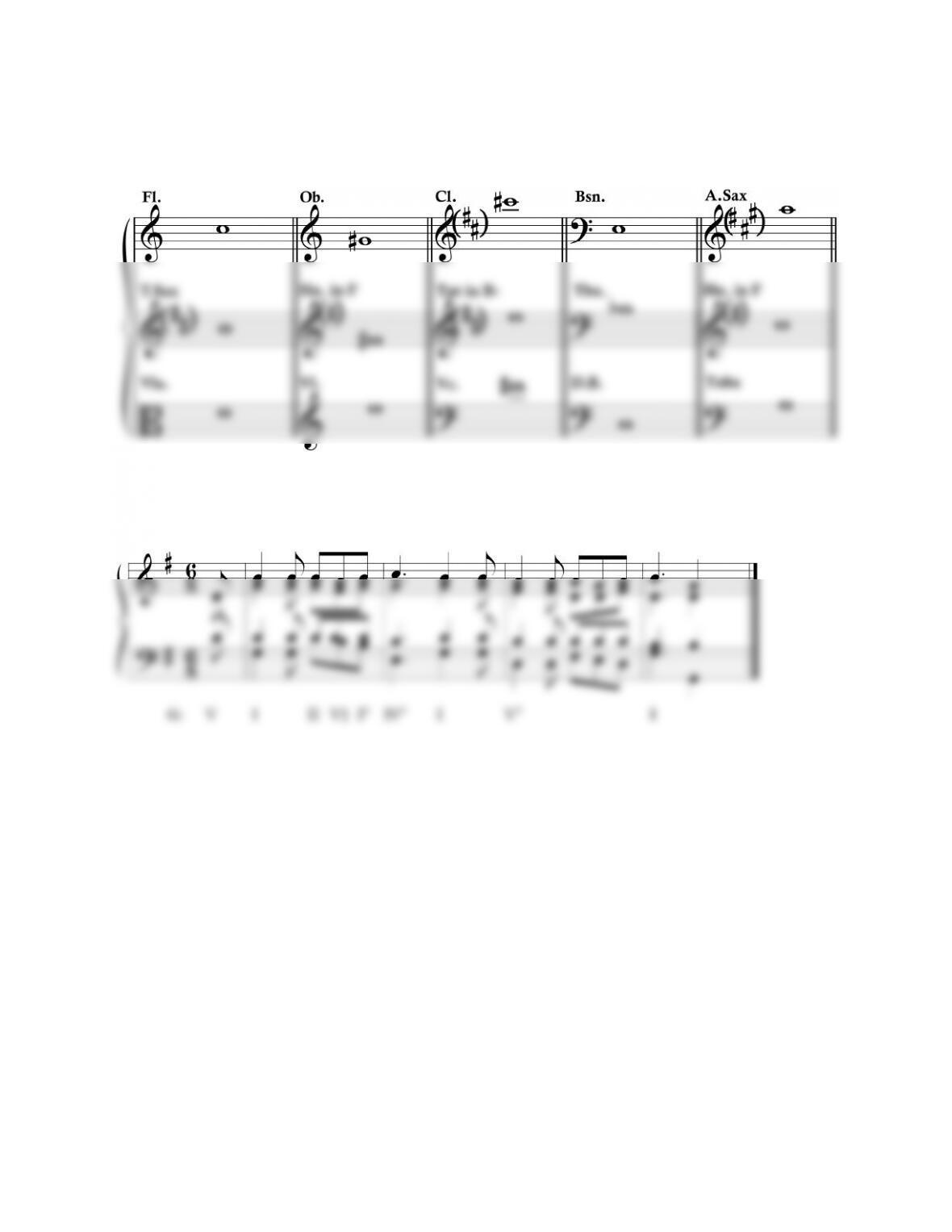
Exercise 6-3
A.
Chapter 6
34
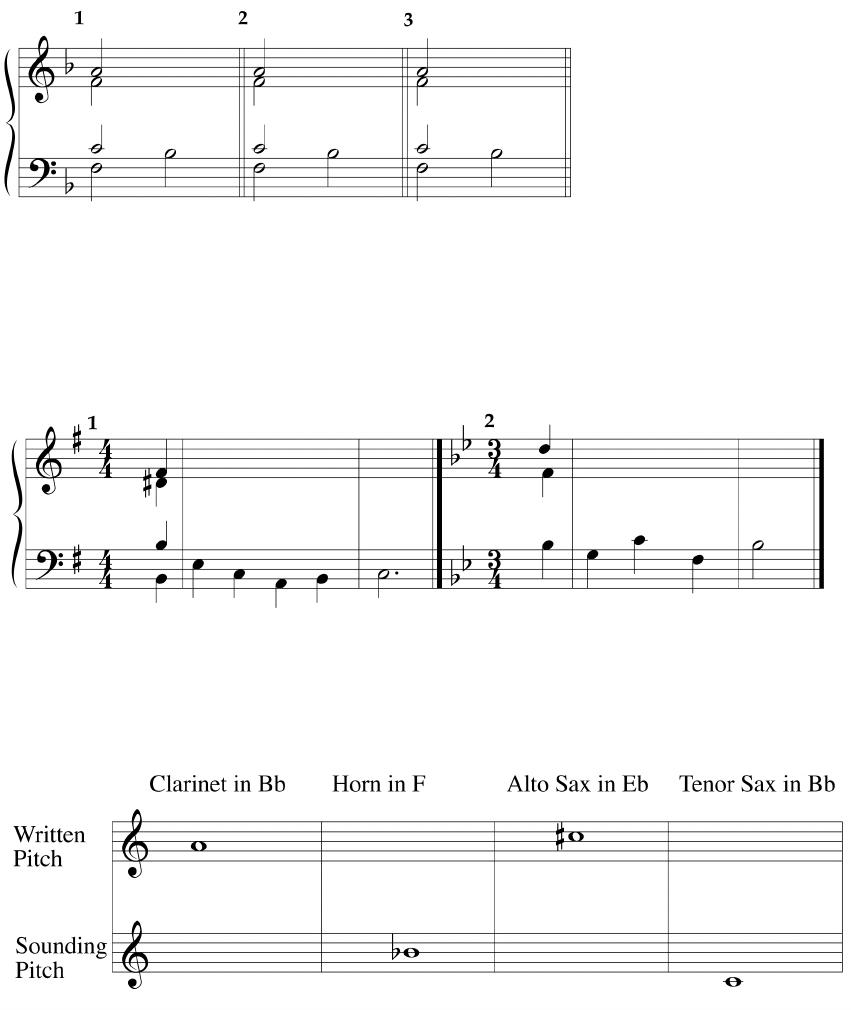
Exercise 6-5
A.
C.
G: % ! !w %y !q $q ! %e !
Chapter 6
35
_________________ _______________________
(section) (name)
Chapter 6 Quiz
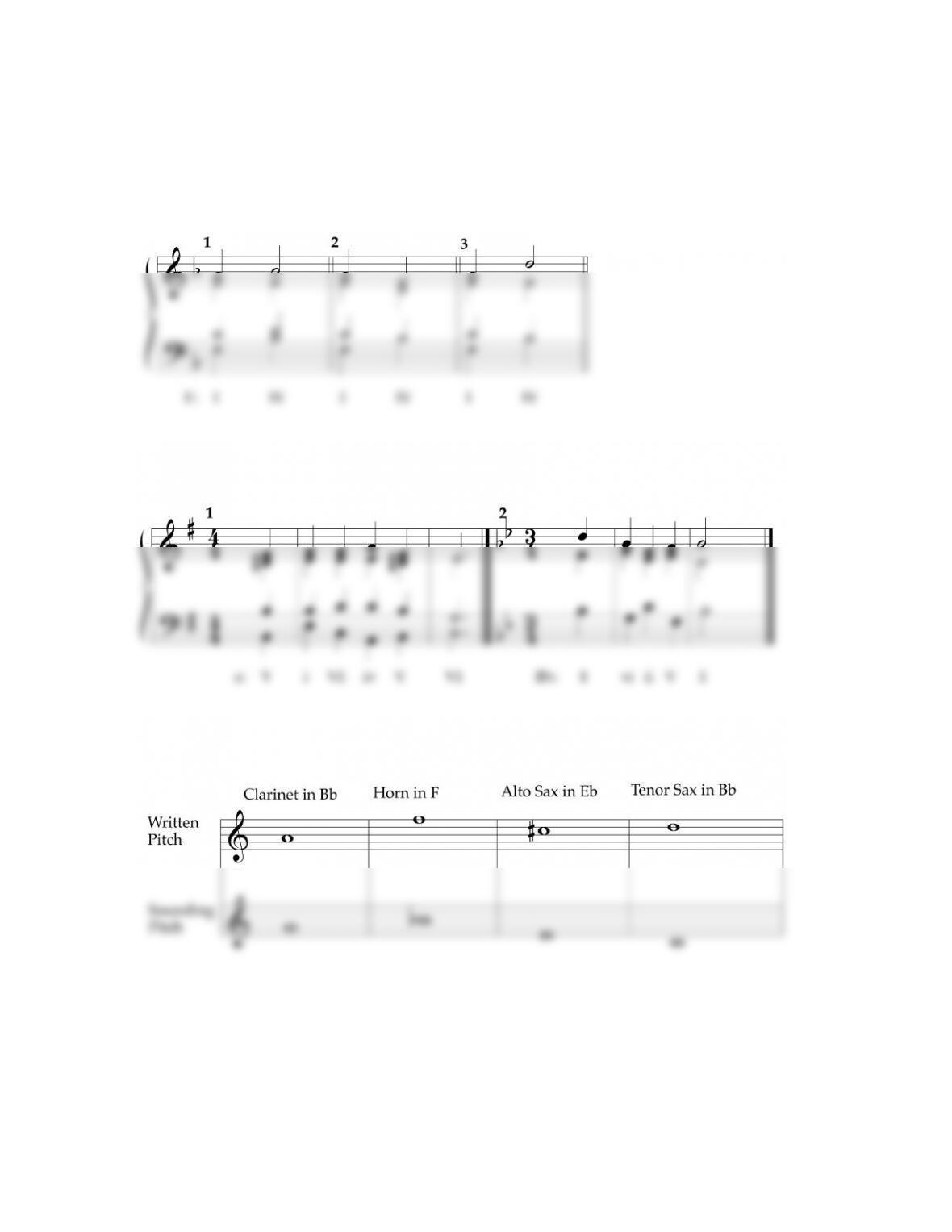
A. Demonstrate three good ways to partwrite this progression. The soprano line should be different in each
solution, and each chord should contain two roots, a third, and a fifth.
F: I IV I IV I IV
B. Complete the examples below, using a 4–part texture in the first one, and a 3–part texture in the second.
e: V i VI iv V VI Bb: I vi ii V I
C. Supply the concert (sounding) pitch or the written pitch, whichever is missing.
Chapter 6
36
Key for Chapter 6 Quiz
A. Demonstrate three good ways to partwrite this progression. The soprano line should be different in each
solution, and each chord should contain two roots, a third, and a fifth.
F: I IV I IV I IV
B. Complete the examples below, using a 4–part texture in the first one, and a 3–part texture in the second.
e: V i VI iv V VI Bb: I vi ii V I
C. Supply the concert (sounding) pitch or the written pitch, whichever is missing.