28
CHAPTER 5
Principles of Voice Leading
This chapter serves as an introduction to the composition (partwriting) exercises that begin in Chapter 6. After some
guidance in the composition of simple melodies in chorale style, the student learns spacing conventions and the
proscriptions regarding parallels.
It is extremely important to emphasize the historical context of what may at first appear to be arbitrary and fussy
“rules.” The students should understand that when we study a style (if tonal music may be broadly termed a “style”),
we learn the stylistic norms — those practices that are appropriate to the style because they conform to stylistic
norms. Parallel fifths are not unstylistic in all musical styles, and they are not bad in and of themselves, but they are
not stylistic in tonal music.
Sometimes this point can be better understood by a comparison to other styles. The style of Dixieland jazz, for
example, is easily recognized, but a Dixieland cornet player certainly would not fit in stylistically with a progressive
jazz group, because the cornet player would have the wrong timbre, employ the wrong rhythms, and stay too close
to the harmonies in improvisation. No doubt the class can think of similar examples in country music or rock.
Answers to Selected Exercises
Exercise 5-1
A. 1. a. There is not a single focal point.
b. The ascending sixth is not approached from above.
Exercise 5-2
A. I iiq V I IV iiq Ve Vy
O C C O C O C C
Chapter 5
29
Exercise 5-3
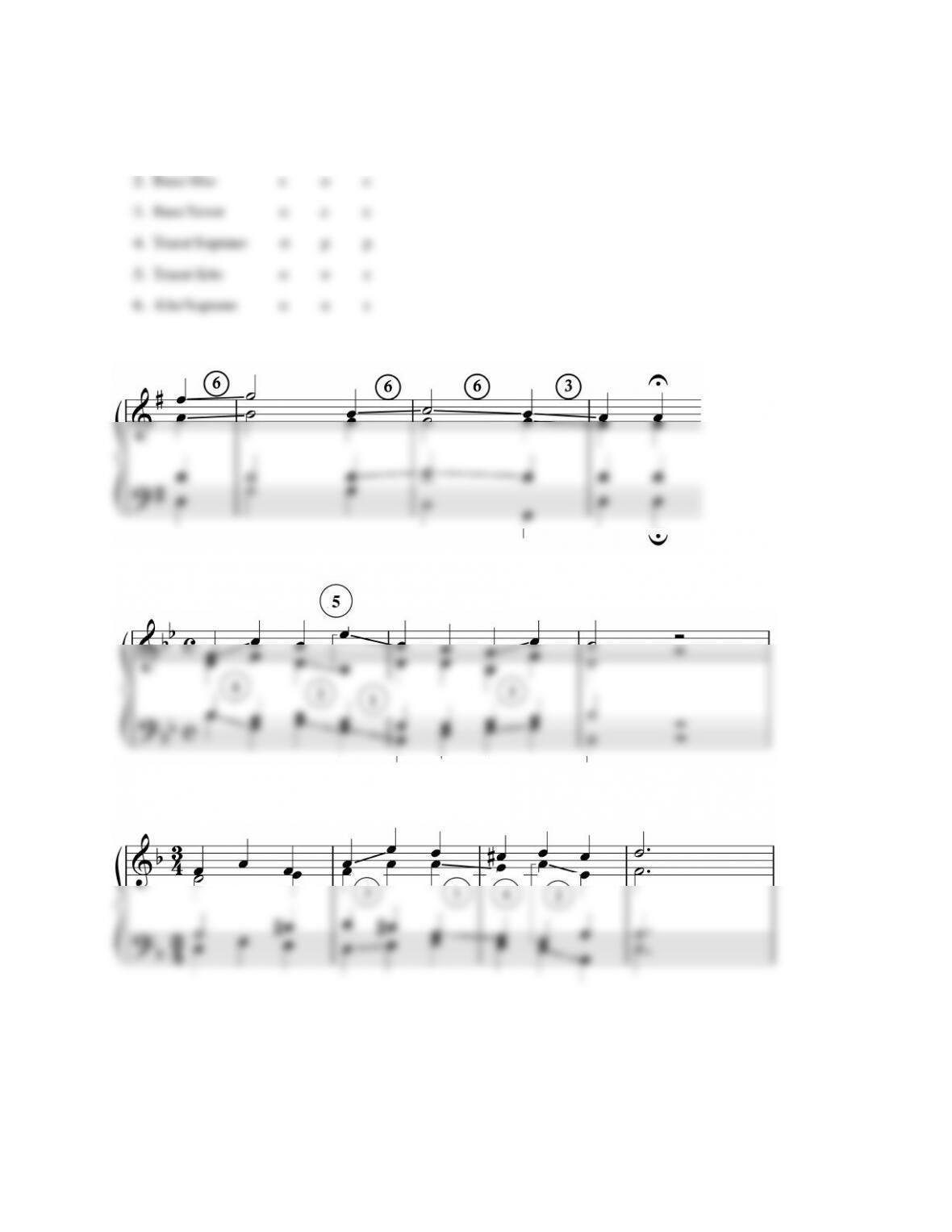
A. 1. Bass/Soprano o c c
2. Bass/Alto c o c
B.
V I IV I V
C.
D.
Chapter 5
30
________________________ ____________________________
(section) (name)
Chapter 5 Quiz
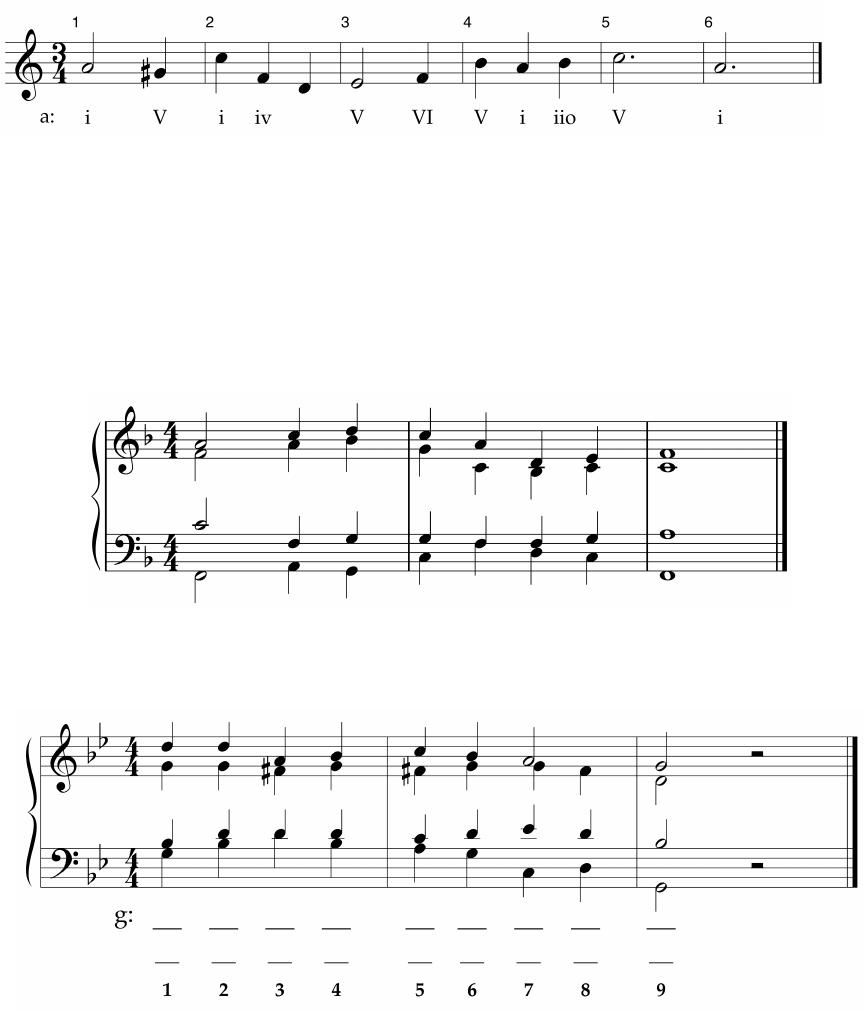
A. Criticize this melody in terms of the rules for simple melodies discussed in this chapter. List your comments
below the example, clearly identifying the portion of the excerpt to which you are referring.
B. Find and label the following errors in this passage:
1. Direct 8ves 2. Parallel 5ths 3. Contrary 5ths
4. Spacing error 5. Parallel 8ves 6. Chord with no third
C. Analyze the chords with roman numerals (and bass position symbols where needed). Below each roman numeral
write a “C” or and “O” to indicate close or open structure.
Chapter 5
31
Key for Chapter 5 Quiz
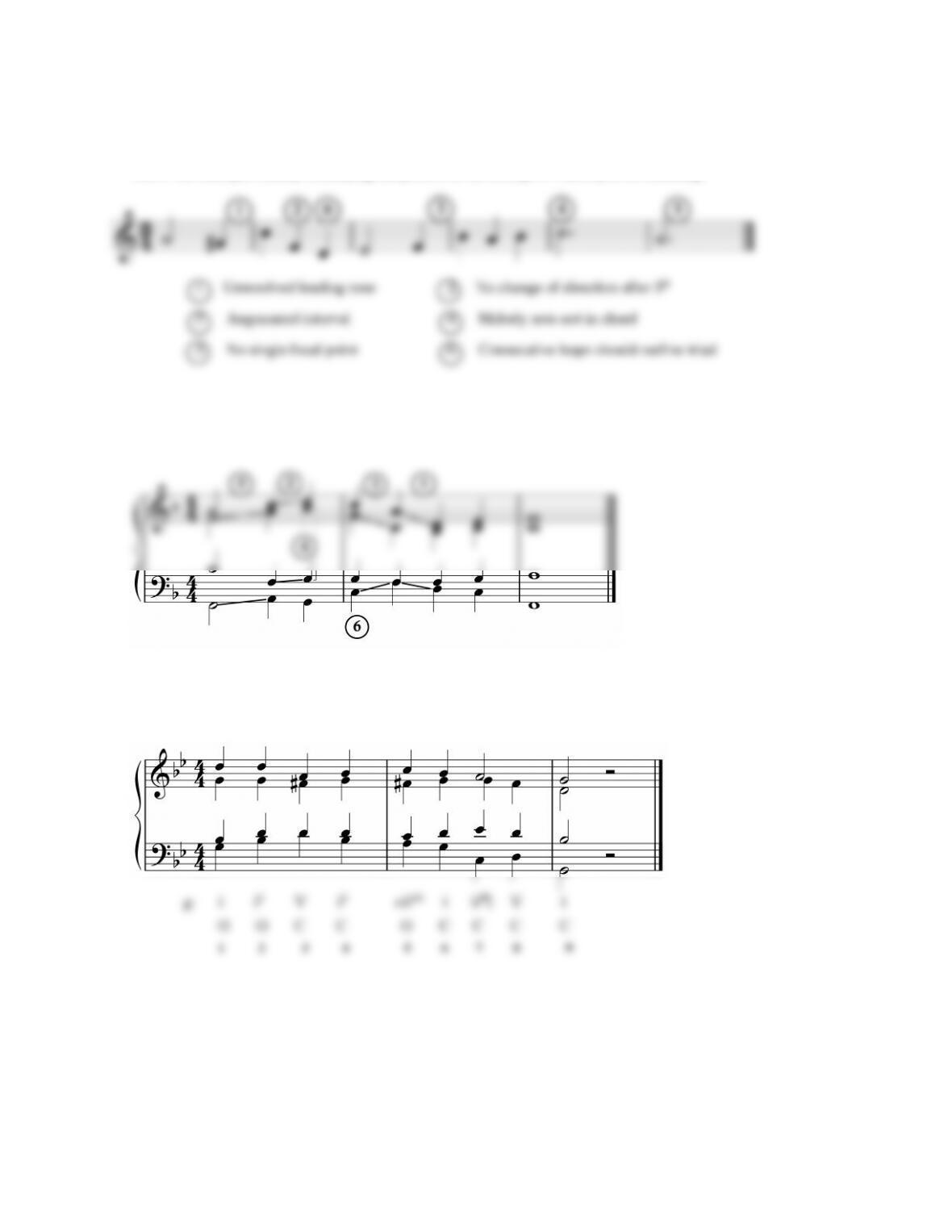
A. Criticize this melody in terms of the rules for simple melodies discussed in this chapter. List your comments
below the example, clearly identifying the portion of the excerpt to which you are referring.
B. Find and label the following errors in this passage:
1. Direct 8ves 2. Parallel 5ths 3. Contrary 5ths
4. Spacing error 5. Parallel 8ves 6. Chord with no third
C. Analyze the chords with roman numerals (and bass position symbols where needed). Below each roman numeral
write a “C” or and “O” to indicate close or open structure.
Bach: “Jesu, der du meine Seele” (simplified)
g: 1 1q % 1q 70q 1 2–r % 1