17
CHAPTER 3
Introduction to Triads and Seventh Chords
In this chapter the student learns to spell and recognize the four triad types and the five common seventh chord
types. These are treated as individual sonorities, isolated for now from the context of major and minor keys. This
allows the development of some fluency in spelling and recognizing chords before adding in the complications of
tonal contexts.
Useful in–class activities include board drills (“Make each note on the board the third of a dominant seventh chord,”
and so on) and “quick thinking quizzes” (read aloud with a pause of 10–15 seconds between questions). Recognizing
chords in various textures can be practiced by means of transparencies or an anthology. This chapter also introduces
two related concepts: figured bass and lead sheet symbols. Live performances of works using figured bass and lead
sheet symbols will be sure to impress upon the class the close relationship between theory and practice.
Answers to Selected Exercises
Exercise 3-1
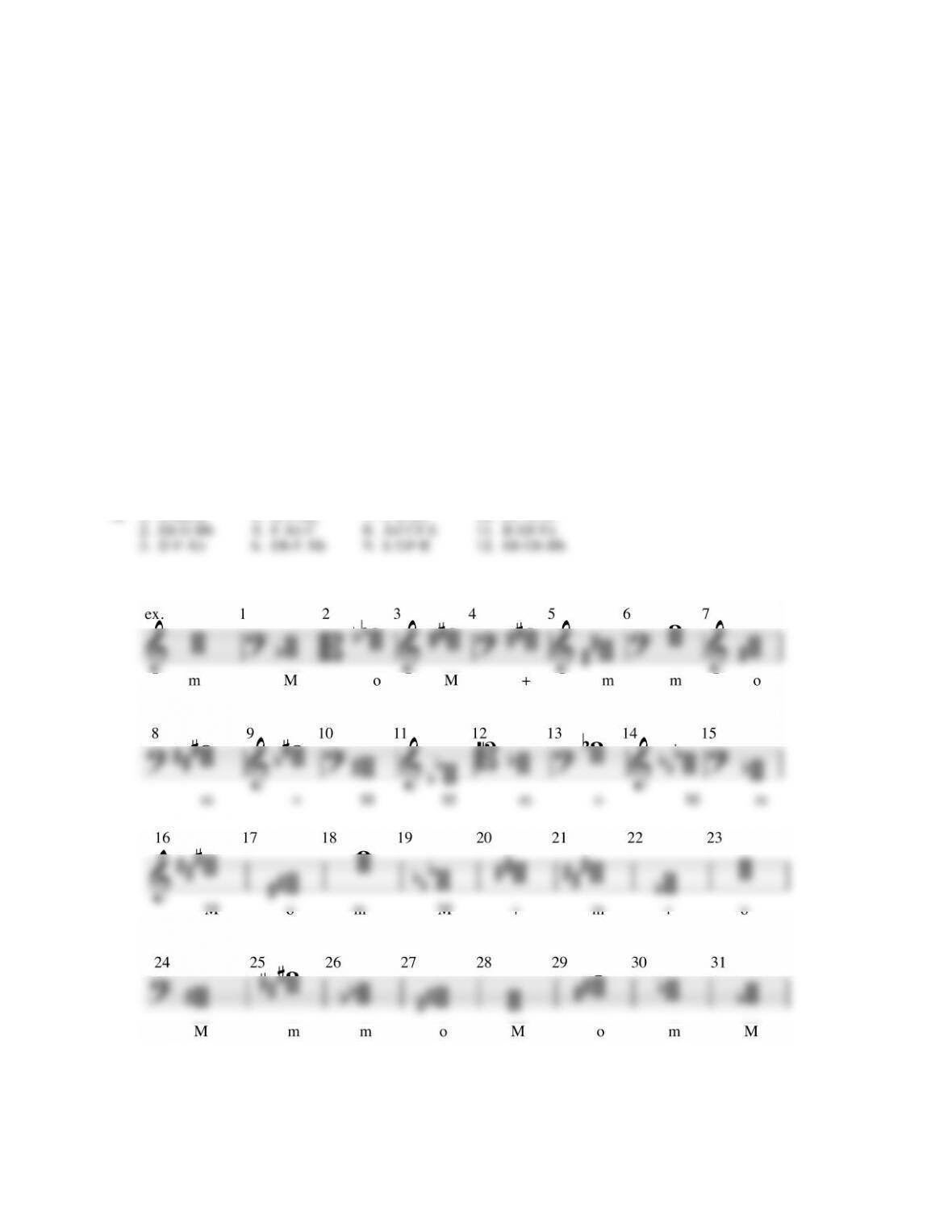
A. 1. G Bb D 4. A C Eb 7. C E G# 10. F# A C#
2. Eb G Bb 5. F Ab C 8. A# C# E 11. B D# Fx
B.
Chapter 3
18
C. 1 2 3 4 5 6 7 8 9 10
A# Eb Gb D# Bb D C
D.
Exercise 3-2
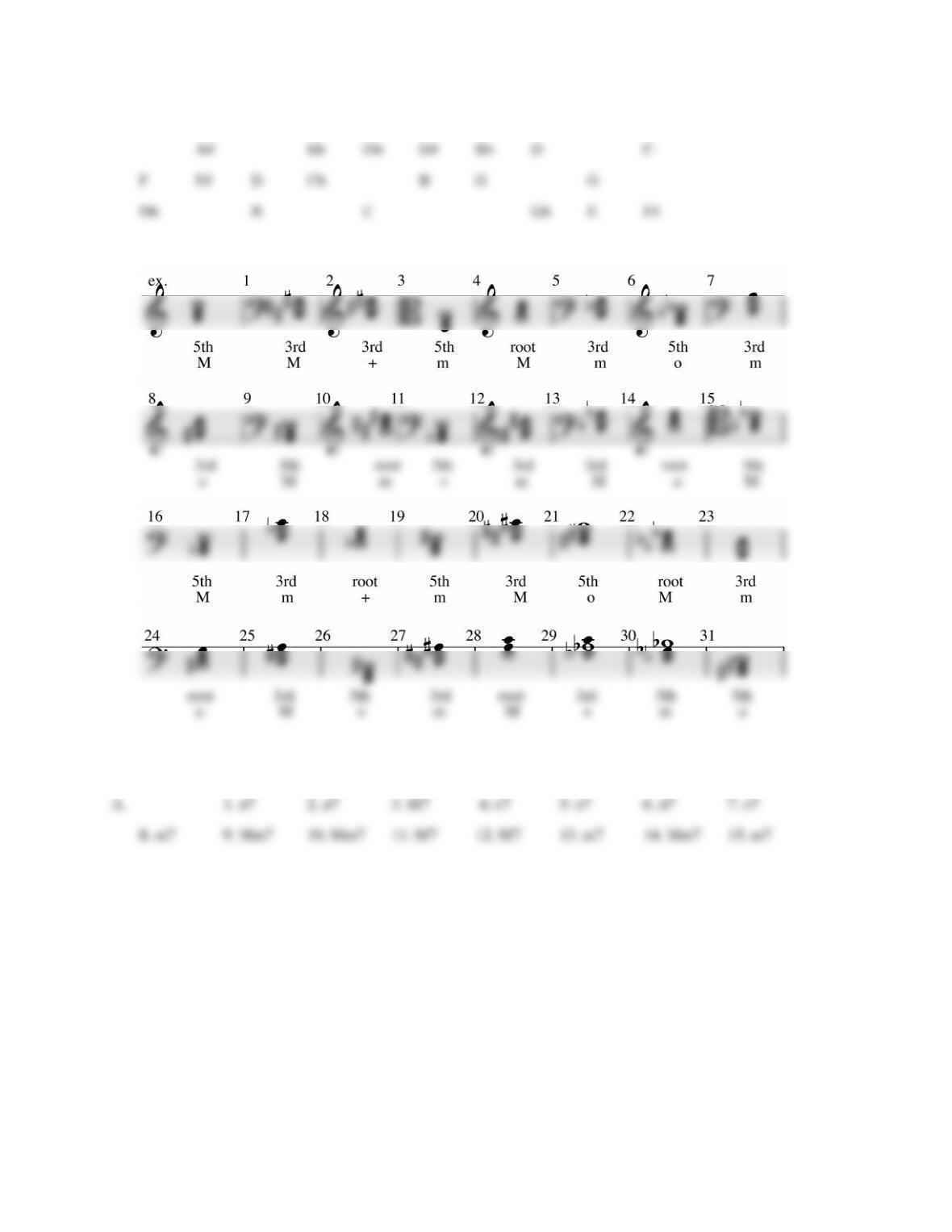
A. 1. ø7 2. ø7 3. M7 4. o7 5. o7 6. ø7 7. o7
Chapter 3
19
B.
C.
Exercise 3-3
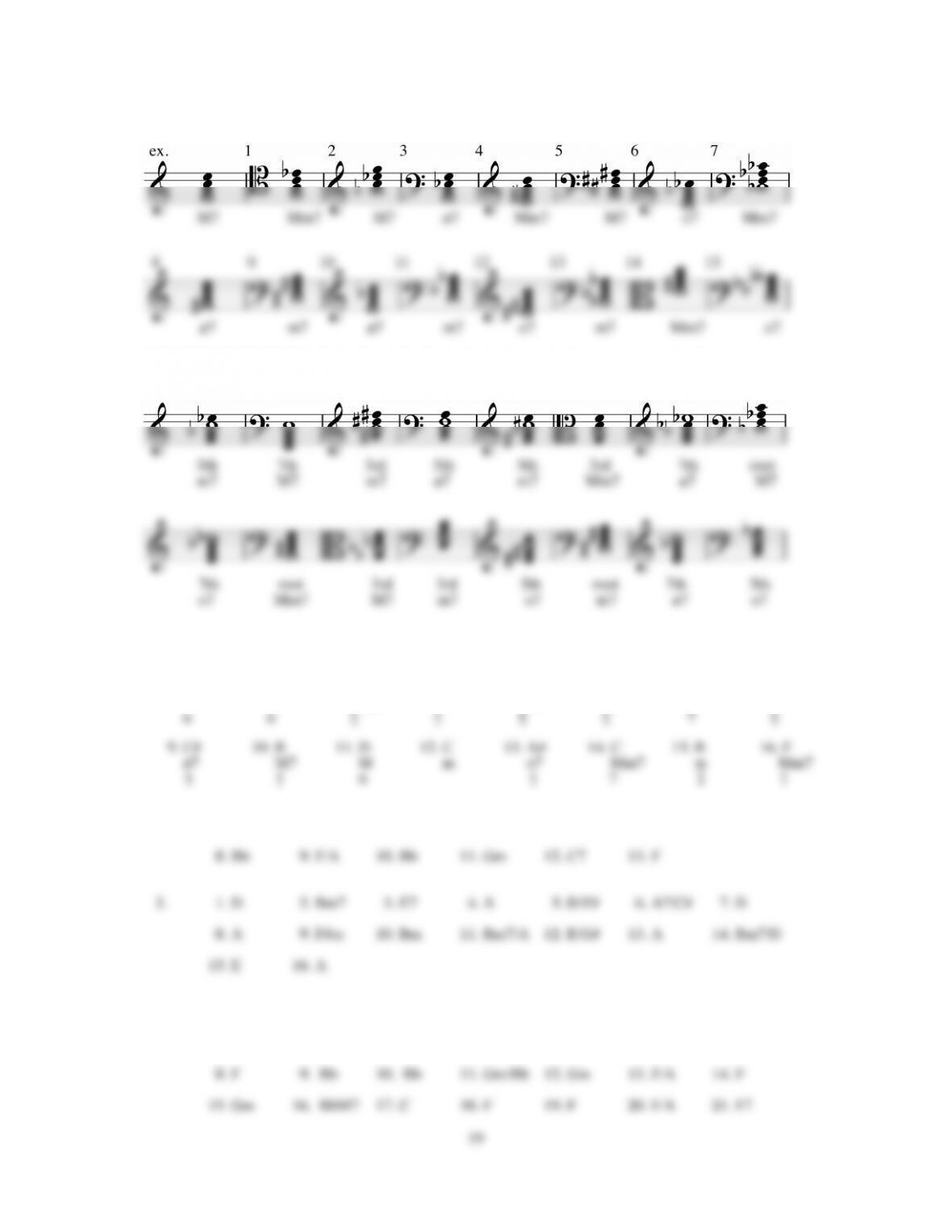
A. 1. F# 2. A 3. G 4. A 5. D 6. F 7. E 8. F#
o m Mm7 ø7 m7 M o7 m7
6 6 y r t w 7 t
B. 1. 1. F 2. Bo/D 3. C 4. C7/Bb 5. F/A 6. Gm 7. F/A
3. 1. Bb 2. F/A 3. Gm 4. Bb/D 5. Eb 6. Ao/Eb 7. Bb
8. F 9. Bb 10. Bb 11. Gm/Bb 12. Gm 13. F/A 14. F
Chapter 3
20
Exercise 3-4
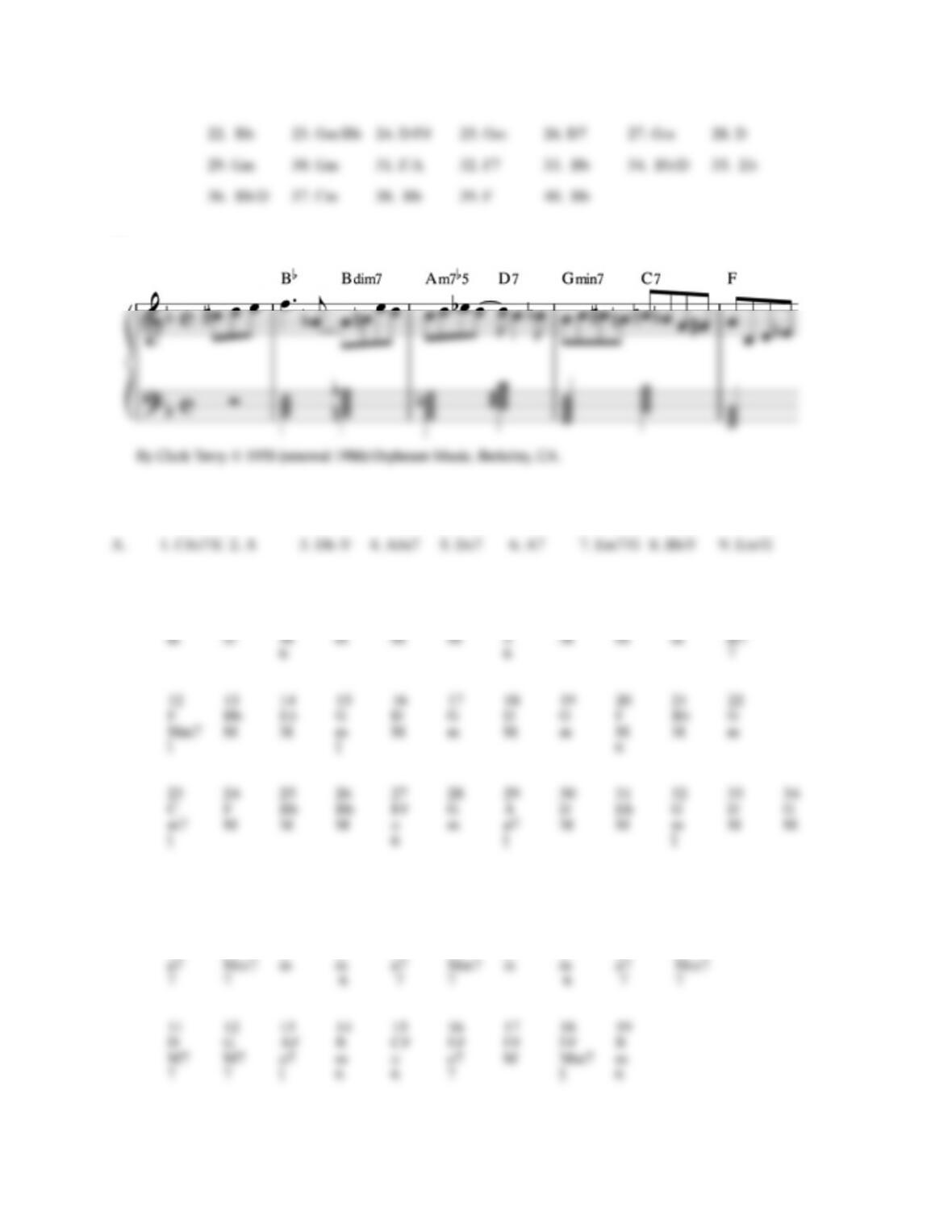
A. 1. C#o7/E 2. A 3. Db /F 4. A#ø7 5. Do7 6. A7 7. Em7/G 8. Bb/F 9. Em/G
B. 1. 1 2 3 4 5 6 7 8 9 10 11
G G D G D Eb A D D D G
m m M m M M o M M m m7
2. 1 2 3 4 5 6 7 8 9 10
C# F# B B C# F# B B E A
ø7 Mm7 m m ø7 Mm7 m m ø7 Mm7
Chapter 3
21
3. 1 2 3 4 5 6 7 8 9
Eb F Bb Eb F Eb Ab A Gb
Chapter 3
22
_____________________ ___________________
(section) (name)
Chapter 3 Quiz
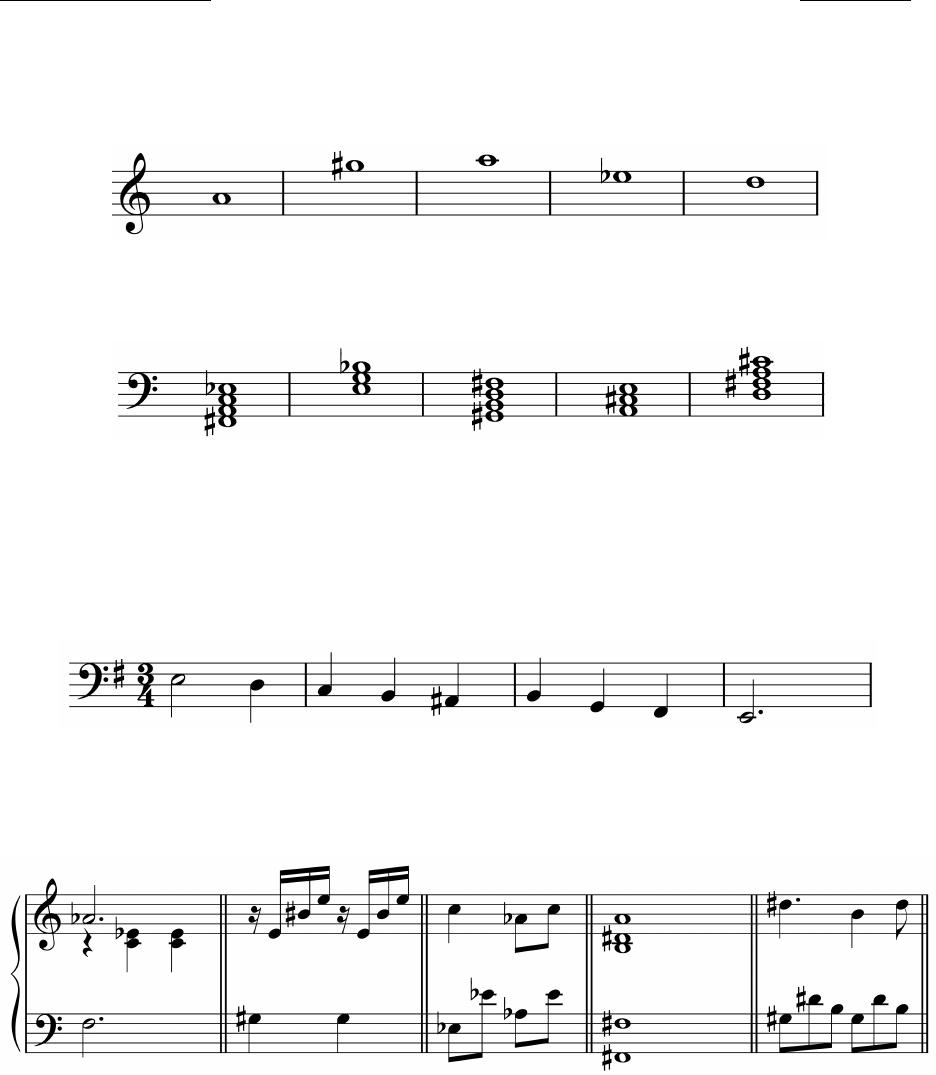
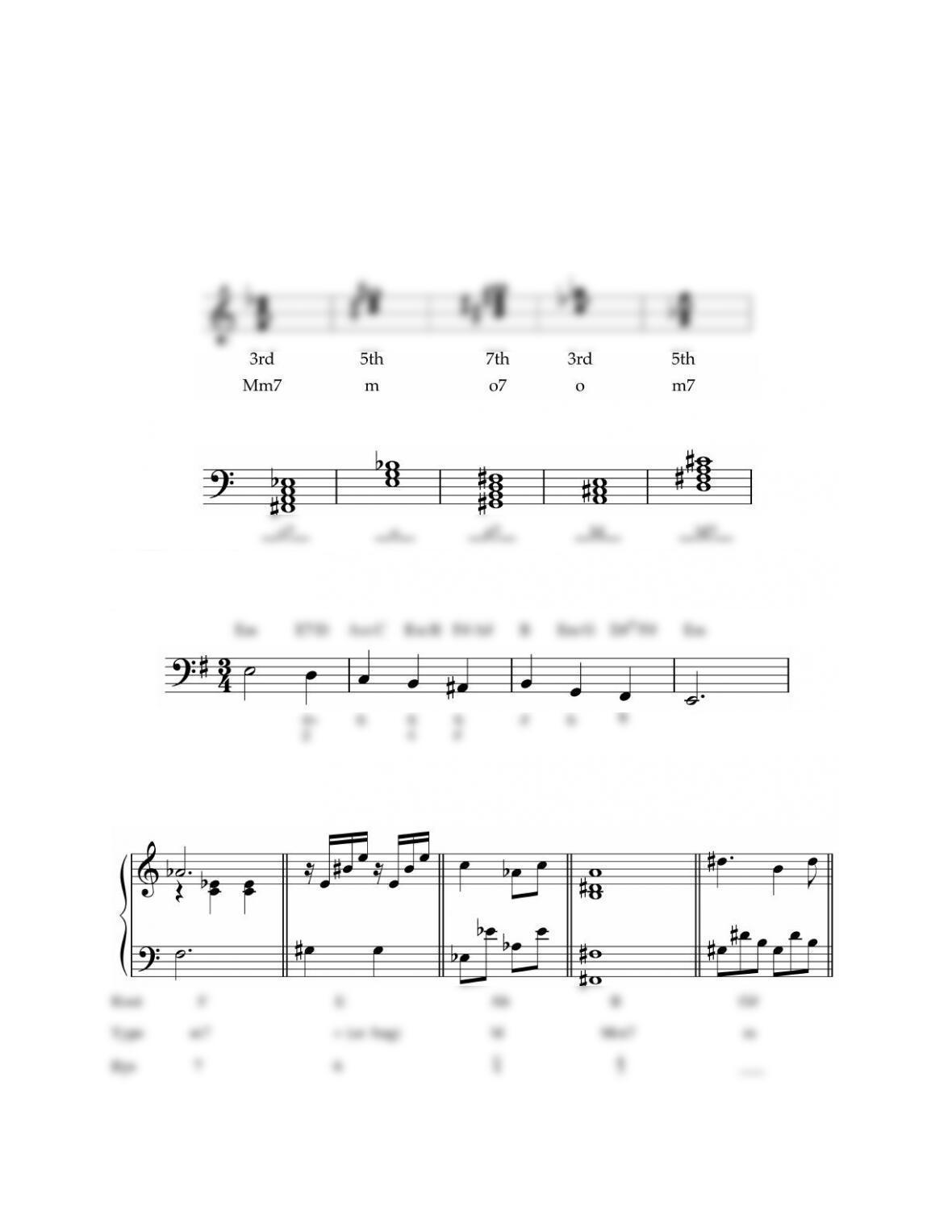
A. Given the triad or seventh–chord quality and one member of the chord, notate the rest of the chord.
3rd 5th 7th 3rd 5th
Mm7 m o7 o m7
B. Identify the type of triad or seventh chord, using the abbreviations introduced in this chapter.
_____ _____ _____ _____ _____
C. Fill in the blanks above this example with lead sheet symbols that correspond to the figured bass. Use slash
chord notation, as in C/E, for inverted chords.
___ ___ ___ ___ ___ ___ ___ ___ ___
4+ 6 6 6 # 6 Q
2 4 #
D. Identify the root and type of each chord, and show the correct bass position symbol (bps). All the notes in each
example belong to the same chord. The lowest note in each example is the bass note for the purpose of analysis.
Root ___ ___ ___ ___ ___
Type ___ ___ ___ ___ ___
Bps ___ ___ ___ ___ ___
Chapter 3
23
Key for Chapter 3 Quiz
A. Given the triad or seventh–chord quality and one member of the chord, notate the rest of the chord.
B. Identify the type of triad or seventh chord, using the abbreviations introduced in this chapter.
__o7__ __o__ __ø7__ __M__ __M7__
C. Fill in the blanks above this example with lead sheet symbols that correspond to the figured bass. Use slash
chord notation, as in C/E, for inverted chords.
p
4+ 6 6 6 # 6 Q
D. Identify the root and type of each chord, and show the correct bass position symbol (bps). All the notes in each
example belong to the same chord. The lowest note in each example is the bass note for the purpose of analysis.
Root F E Ab B G#