166
CHAPTER 27
Post-Tonal Theory
In this chapter the student is introduced to the elements of post–tonal theory, from pitch–class sets to integral
serialism. While some students will be intrigued by the mathematical logic involved in the manipulation of pitch–
class sets and row forms, others will inevitably be less receptive. It will help if the instructor provides some
historical context for these developments.
The theory of pitch–class sets developed out of the need for some way of classifying the seemingly endless
combinations of pitches that became available to the composer’s palette after the decline of tertian music, while the
development of serialism reflected the desire on the part of composers to find a new organizing principle in the
absence of functional harmony. The first was the result of years of work by both composers and theorists, but
primarily the latter, while serialism was conceived some decades earlier by composers who were only secondarily
music theorists.
Finally, we would encourage both ear training and composition exercises in these areas to the extent that time
allows. Also, there is nothing like a composition assignment to convince a student that composing a twelve–tone
piece is no more mechanical than composing a tonal one.
Answers to Selected Exercises
Exercise 27-1
A. 1. 1 6. 11
2. 3 7. 0
B. These pc sets may be notated in a variety of equivalent ways including:
1. (2,3,4) 6. (10,2,6)
2. (6,9,0) 7. (9,7,5,3)
C. These pc sets may be notated in a variety of equivalent ways including:
Set After PC Inversion Answer
1. (11,10,8) (5,4,2)
2. (5,4,3) (2,1,0)
Chapter 27
167
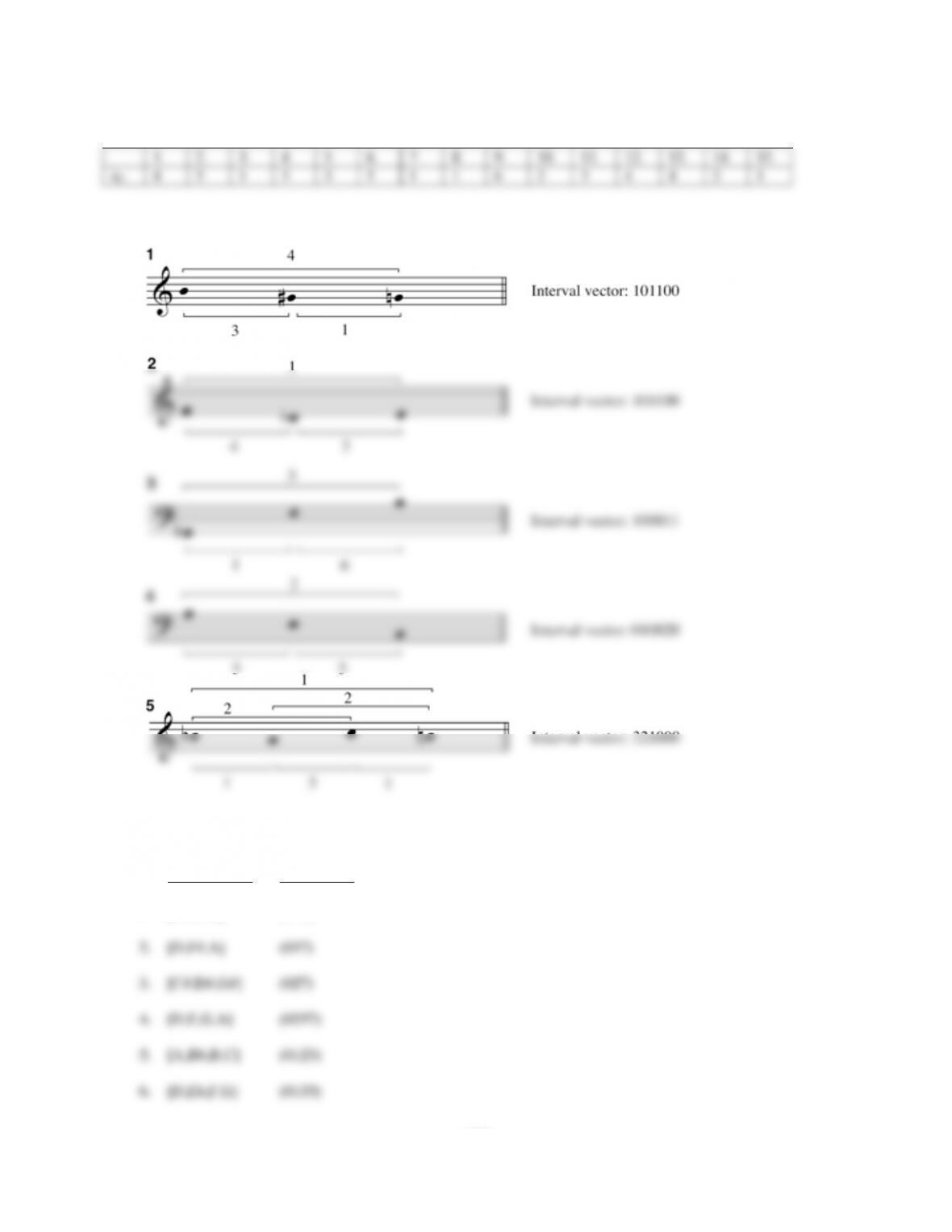
D.
1.
2.
3.
4.
5.
6.
7.
8.
9.
10.
11.
12.
13.
14.
15.
ic:
4
5
1
3
3
5
1
1
6
2
3
4
4
2
1
E.
F. The pc sets may be notated in a variety of octave equivalent and enharmonically equivalent ways.
Normal Form Prime Form
1. [Eb,E,A] (016)
2. [D,F#,A] (037)
Chapter 27
168
G. Normal Form Set Class Interval Vector
(Forte Name/Prime Form)
1. [E,F,G] 3-2 (013) 111000
2. [G,A,B] 3-6 (024) 020100
3. [F#,A,C] 3-10 (036) 002001
H. 1. Normal form: [C,C#,F#,G]
Set class: 4–9 (0167)
8. Set class: 3–2 (013)
R.H., m. 5, (E,G,F#); R.H., m. 6, (B,A#,C#)
Chapter 27
169
Exercise 27-2
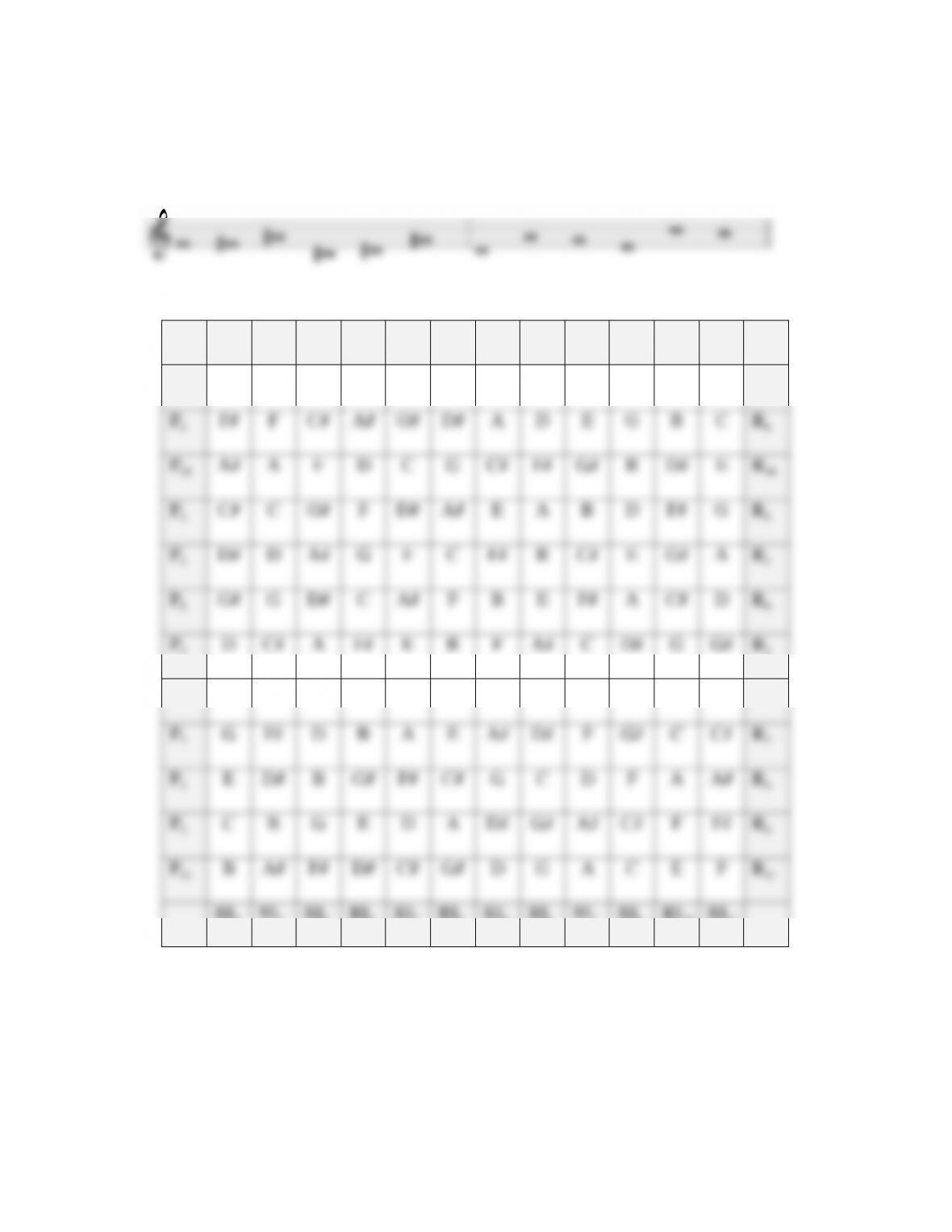
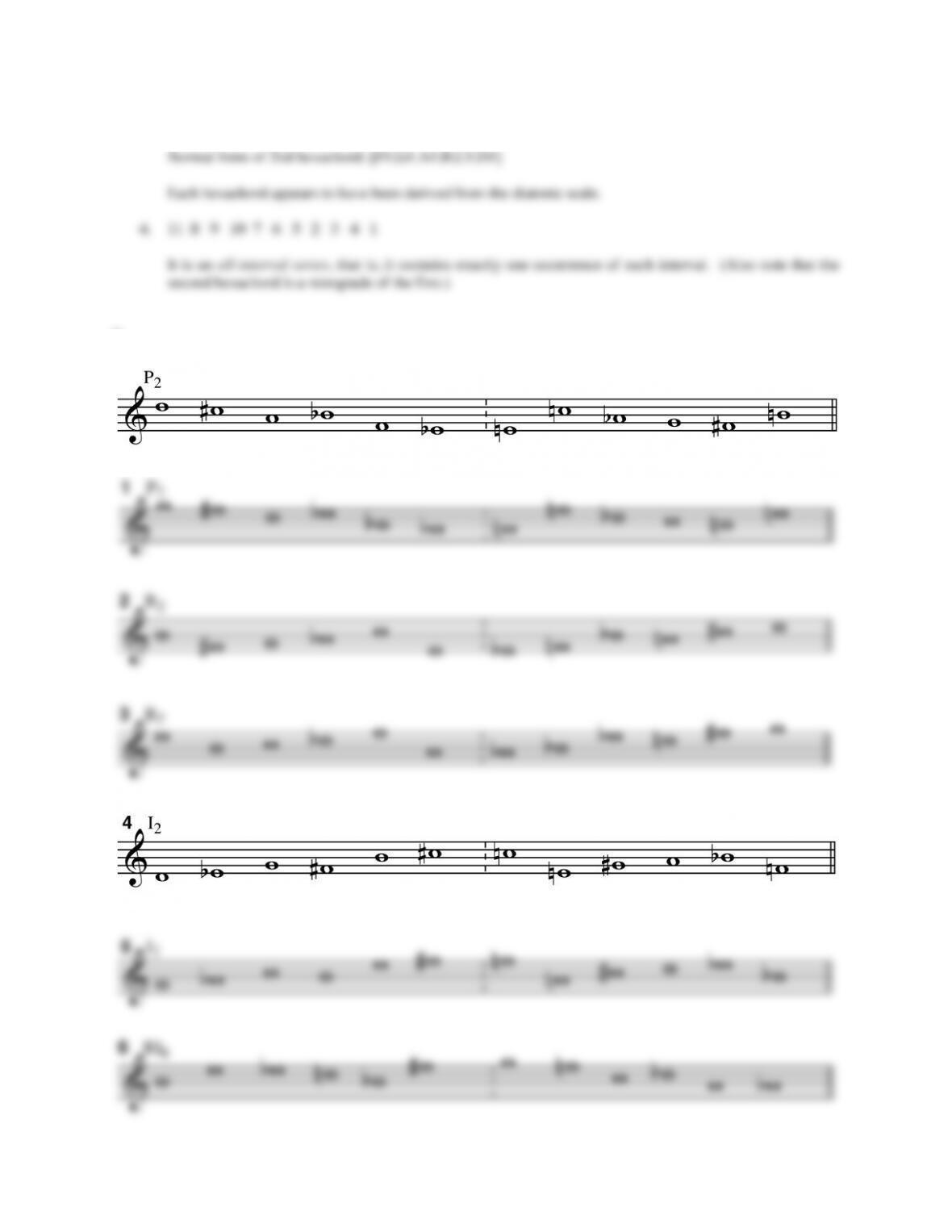
A. These series forms may be notated in a variety of octave equivalent and enharmonically equivalent ways.
I5
I5
I4
I0
I9
I7
I2
I8
I1
I3
I6
I10
I11
P5
F
E
C
A
G
D
G#
C#
D#
F#
A#
B
R5
P6
F#
F
C#
A#
G#
D#
A
D
E
G
B
C
R6
P10
A#
A
F
D
C
G
C#
F#
G#
B
D#
E
R10
P1
C#
C
G#
F
D#
A#
E
A
B
D
F#
G
R1
P3
D#
D
A#
G
F
C
F#
B
C#
E
G#
A
R3
P8
G#
G
D#
C
A#
F
B
E
F#
A
C#
D
R8
P2
D
C#
A
F#
E
B
F
A#
C
D#
G
G#
R2
P9
A
G#
E
C#
B
F#
C
F
G
A#
D
D#
R9
P7
G
F#
D
B
A
E
A#
D#
F
G#
C
C#
R7
P4
E
D#
B
G#
F#
C#
G
C
D
F
A
A#
R4
P0
C
B
G
E
D
A
D#
G#
A#
C#
F
F#
R0
P11
B
A#
F#
D#
C#
G#
D
G
A
C
E
F
R11
RI5
RI4
RI0
RI9
RI7
RI2
RI8
RI1
RI3
RI6
RI10
RI11
B. 1. 3-4 (015) 3-9 (027) 3-9 (027) 3-4 (015)
2. 4-20 (0158) 4-9 (0167) 4-20 (0158)
Chapter 27
170
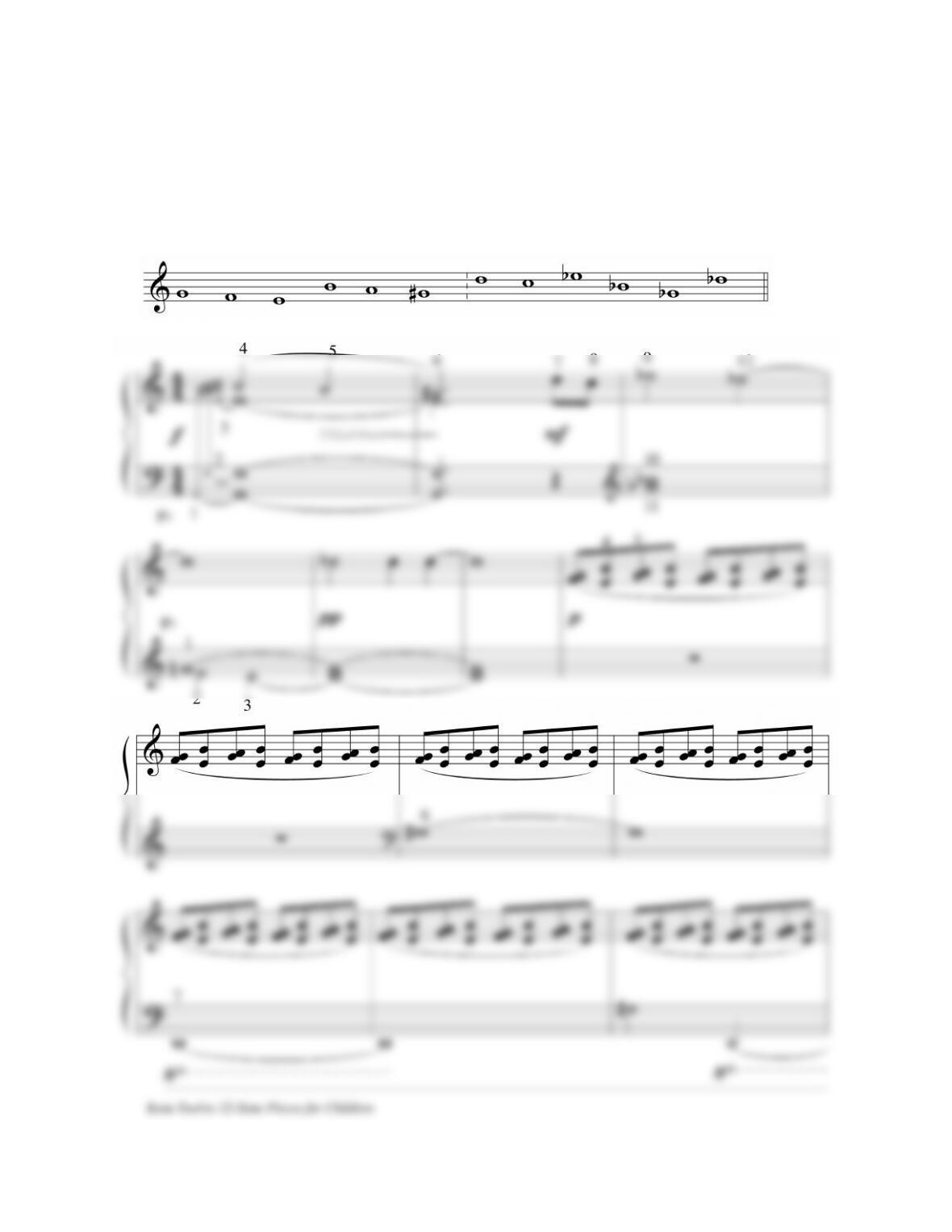
3. Normal form of 1st hexachord: [C,D,E,F,G,A]
Normal form of 2nd hexachord: [F#,G#,A#,B,C#,D#]
Chapter 27
171
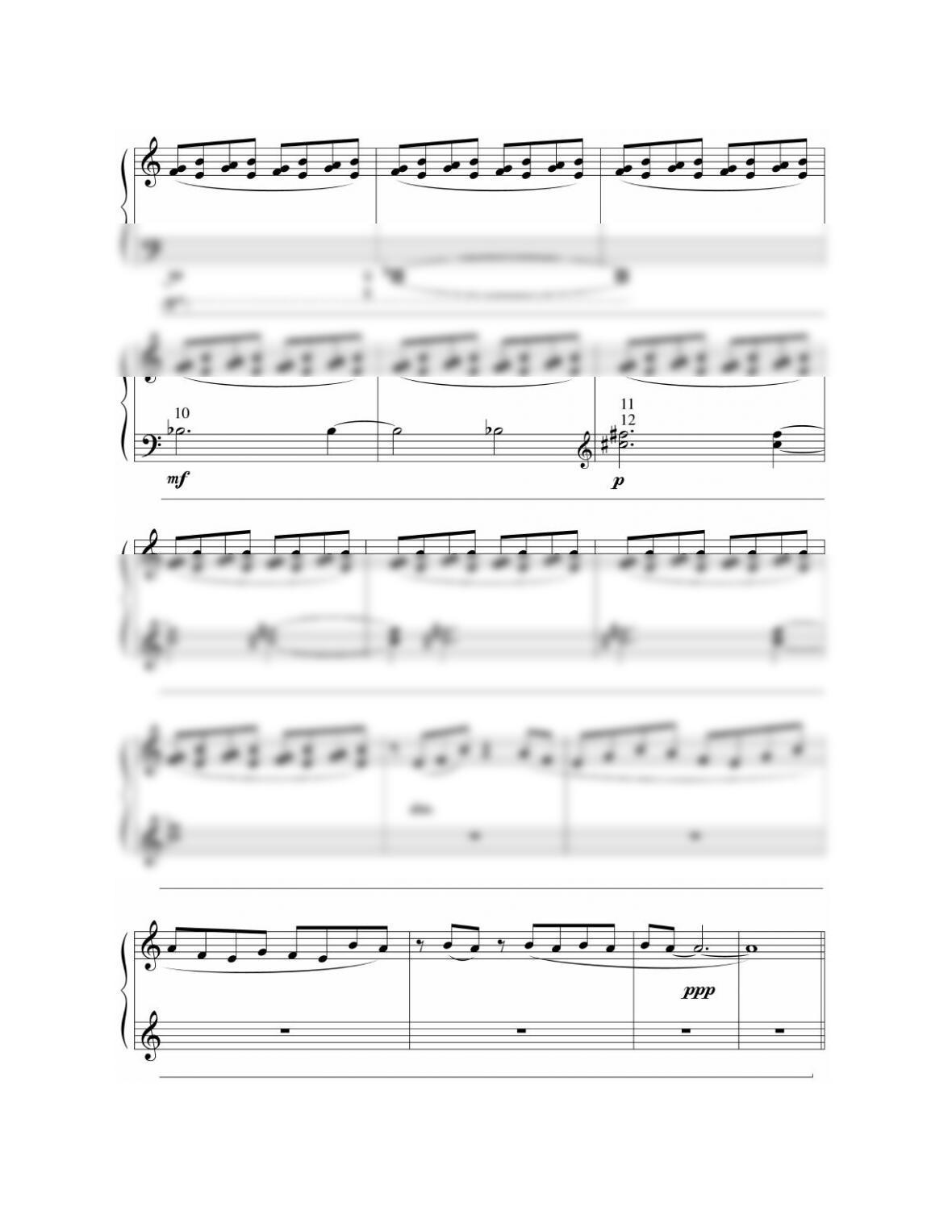
D. 1. The opening two measures suggest a dominant 13th chord; mm. 3–6 outline various traditional triad types
(M, m, d); the five–note ostinato figure that enters in m. 7 creates a somewhat mysterious mood, further
enhanced by the deep bass notes in mm. 13–16, as well as the repeated F#–C# figure in mm. 19–23. The
closing section presents the pitches of the ostinato in melodic form, perhaps even suggesting the E–
Phrygian mode, until the piece finally comes to rest on A.
Chapter 27
172
Chapter 27
173
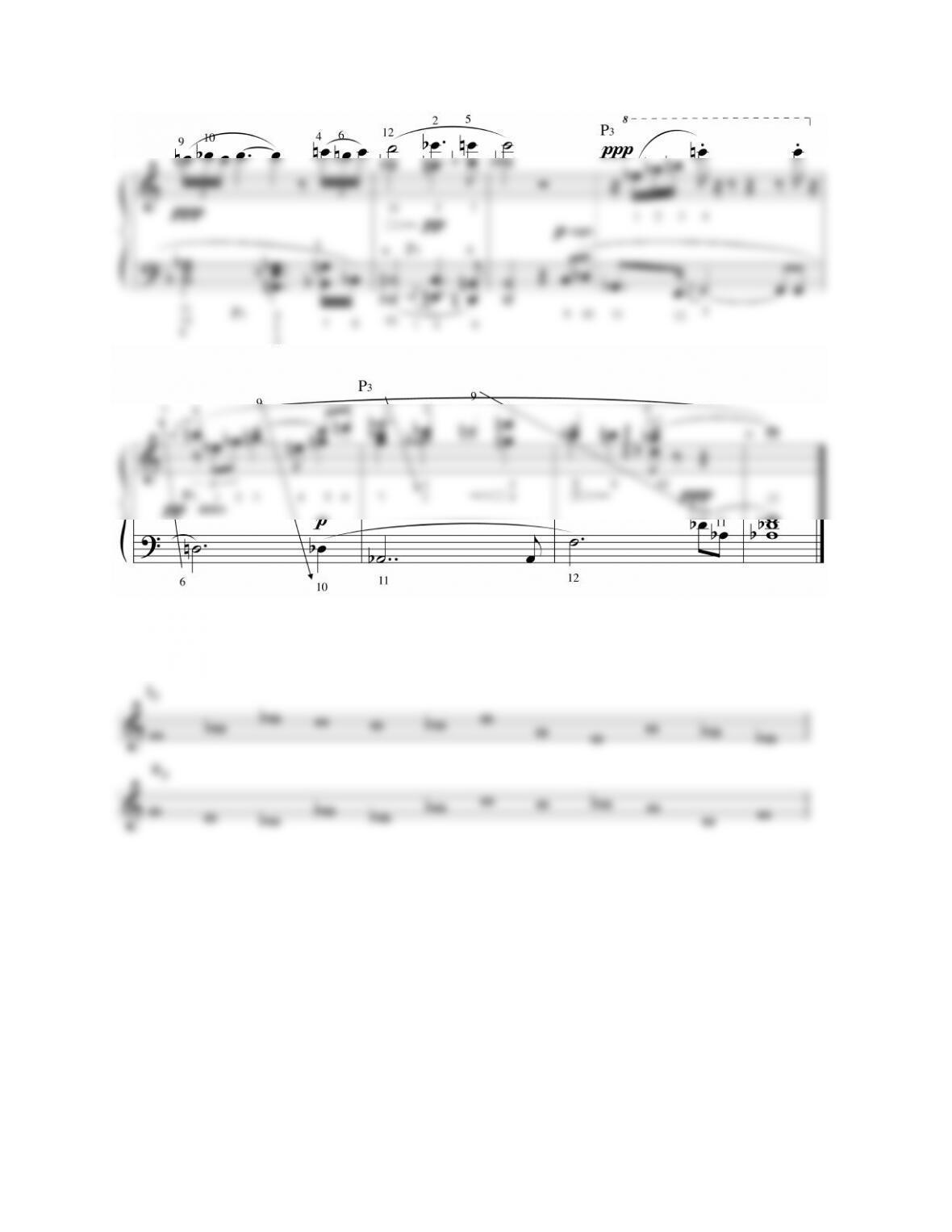
2.
Chapter 27
174
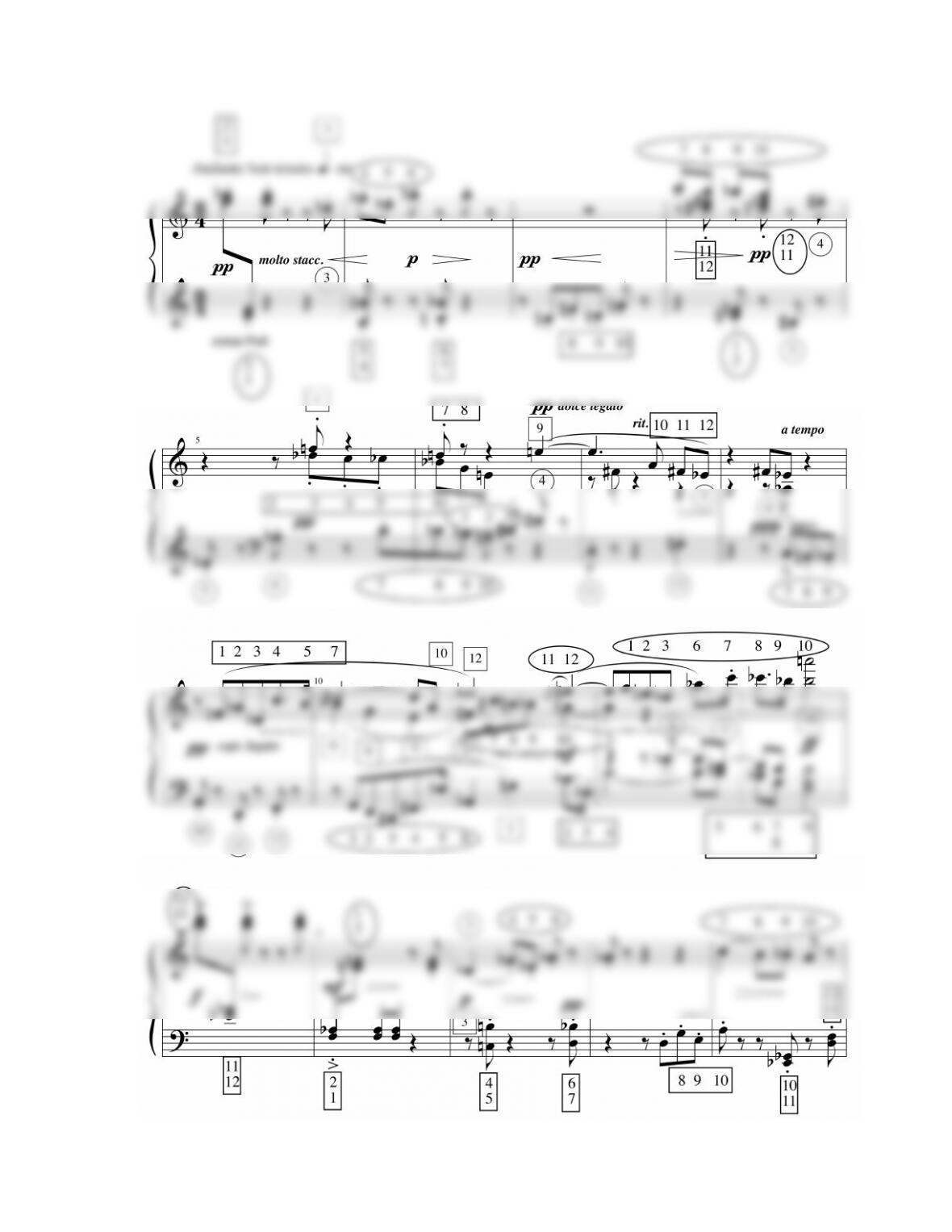
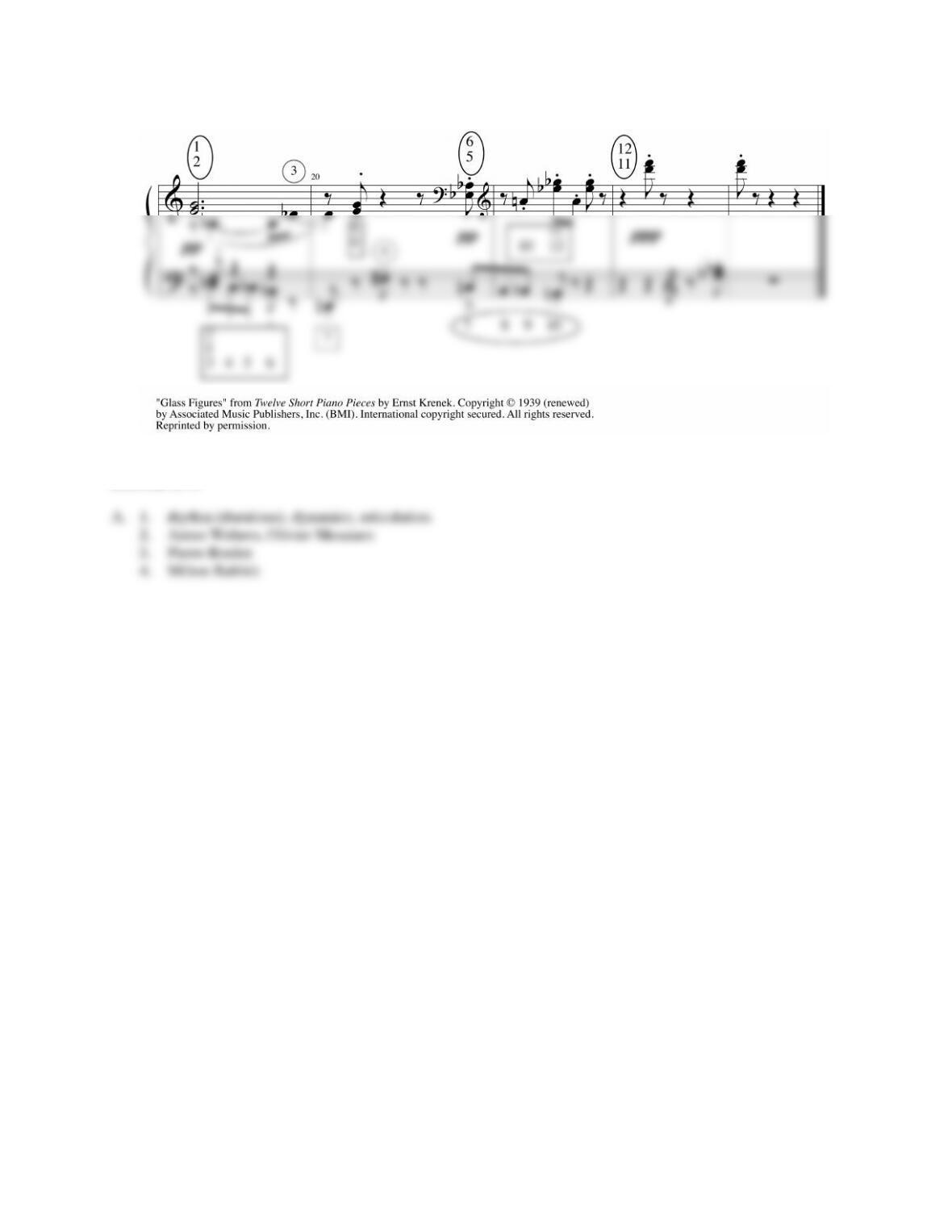
3. In the analysis, rectangles outline members of I5, and oblongs outline members of R5.
I5
Chapter 27
175
Chapter 27
176
Exercise 27-3
Chapter 27
177
_______________________ _______________________________
(section) (name)
Chapter 27 Quiz
A. Mod 12 and Pitch Class. Reduce the following integers to an integer mod 12 (0 to 11 inclusive).
1. 14 _____
2. 17 _____
3. 21 _____
4. 12 _____
5. 8 _____
6. -2 _____
7. -3 _____
8. -9 _____
B. Transposition (Tn). Transpose the following pc sets given in integer notation [C=0].
1. T3 (6,5,2) = _______________
2. T1 (9,11,4) = _______________
3. T11 (0,3,2) = _______________
4. T6 (6,8,10) = _______________
C. Inversion (TnI). Invert the following pc sets given in integer notation [C=0].
1. T5I (3,2,1) = _______________
2. T9I (8,7,5) = _______________
3. T10I (3,7,6) = _______________
4. T7I (4,5,0) = _______________
D. Determine the normal form, prime form and interval vector of the following pc sets given in letter name
notation.
PC Set Normal Form Prime Form Interval Vector
1. (D,C#,F#) [___,___,___] (___ ___ ___) ___ ___ ___ ___ ___ ___
2. (F,Eb,C) [___,___,___] (___ ___ ___) ___ ___ ___ ___ ___ ___
3. (C,C#,G,F#) [___,___,___,___] (___ ___ ___ ___) ___ ___ ___ ___ ___ ___
4. (C,B,Eb,F) [___,___,___,___] (___ ___ ___ ___) ___ ___ ___ ___ ___ ___
Chapter 27
178
Chapter 27
179
Key for Chapter 27 Quiz
A. 1. 2
2. 5
B. These pc sets may be notated in a variety of ways, including:
1. (9,8,5)
C. These pc sets may be notated in a variety of ways, including:
1. (2,3,4)
D. Normal Form Prime Form Interval Vector
1. [C#,D,F#] (015) 100110
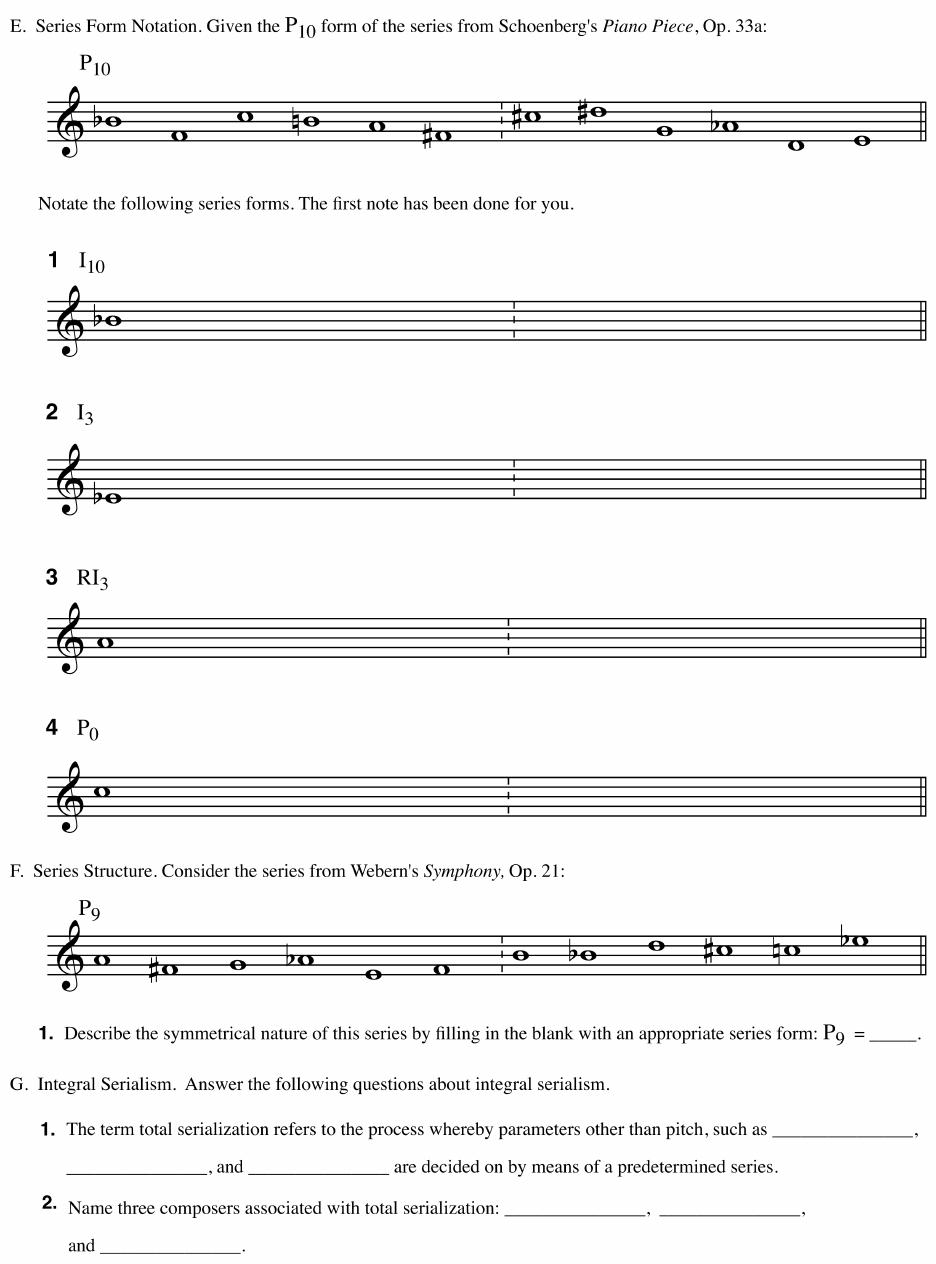
E. The series forms may be notated in a variety of octave equivalent and enharmonically equivalent ways,
including:
1. I10 Bb Eb Ab A B D G F C# C F# E
F. 1. P9 = R3