155
CHAPTER 26
Materials and Techniques
Most twentieth–century composers departed radically from the music of the past. Gone is the great tonal tradition,
the harmonic practice that provided a common ground among composers separated by decades and even centuries,
no matter how individual their styles. In its place we find a bewildering array of compositional materials and
techniques, many of them discarded almost as soon as they were invented in order to satisfy the craving for the new
and original. And these developments seem to take place with increasing rapidity, just as in the sciences and in the
other arts.
To put all of this into a single unit is impossible, of course. But we feel that the next three chapters provide a solid
introduction to the subject, and one that will allow the student to negotiate successfully further readings or more
advanced classes in twentieth–century music.
Answers to Selected Exercises
Exercise 26-1
A.
B.
Chapter 26
156
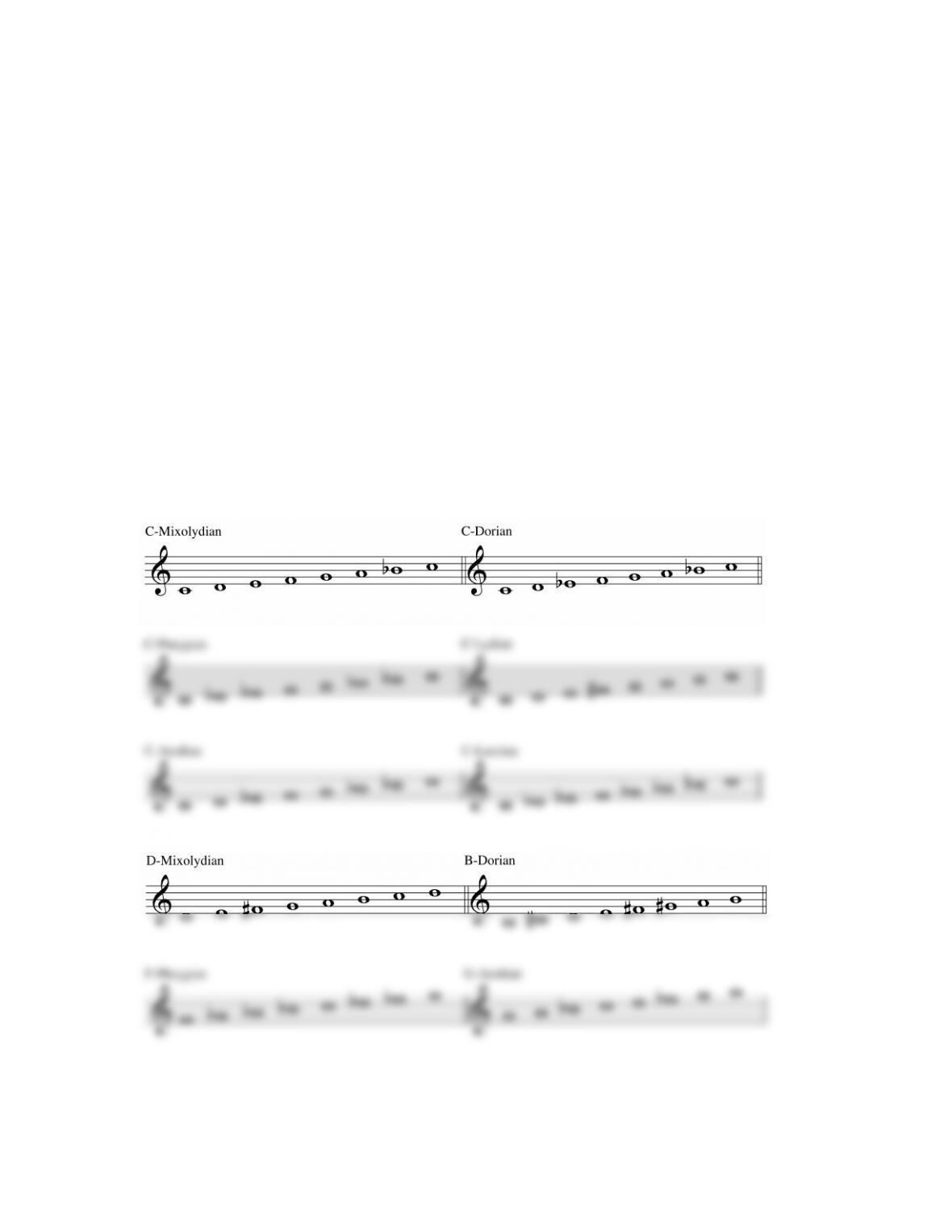
C. 1. Ionian, Lydian, Mixolydian
2. Aeolian, Dorian, Phrygian
3. Locrian
D.
Chapter 26
157
E.
F. Enharmonic spellings in this and similar exercises are acceptable.
G. These scales could also use Bb as a starting pitch.
Chapter 26
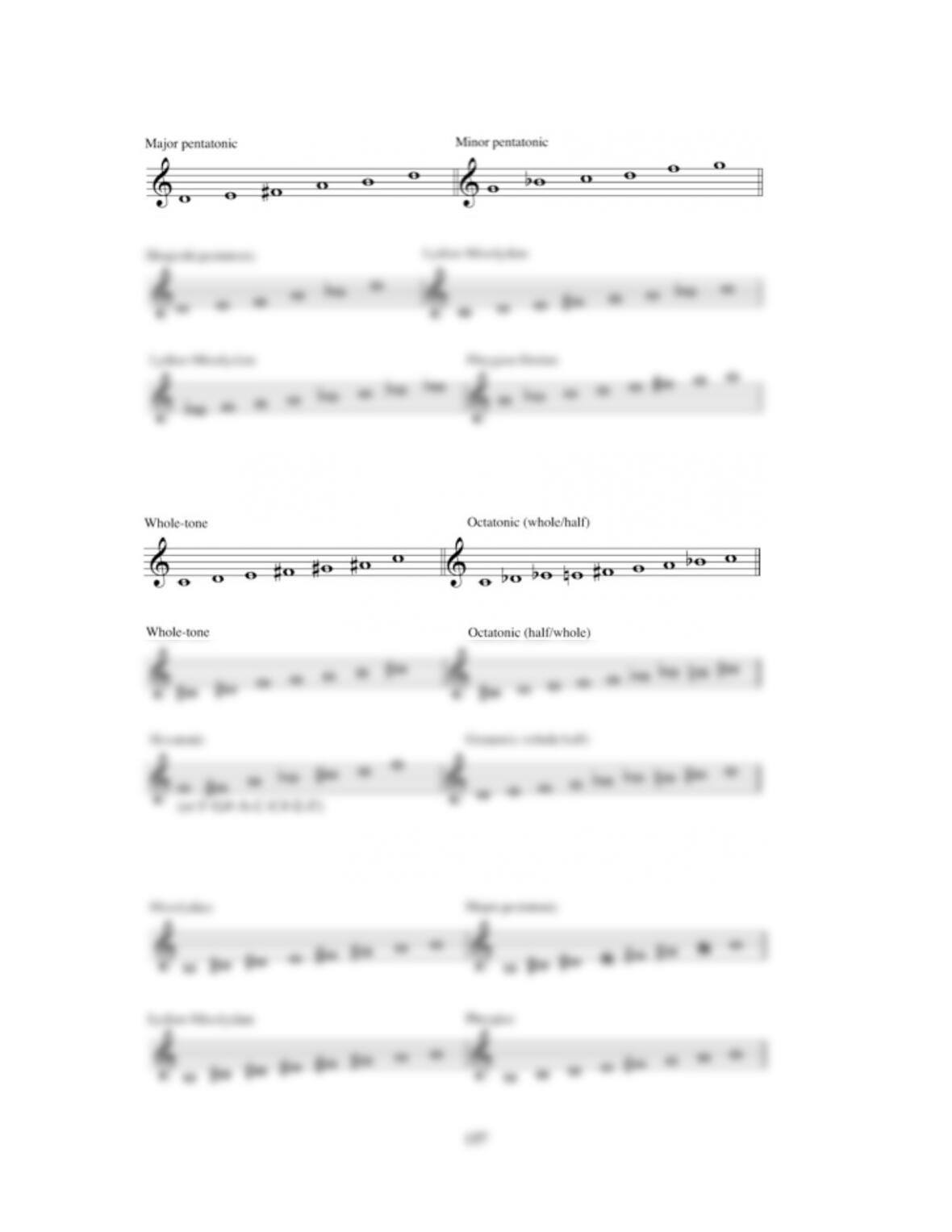
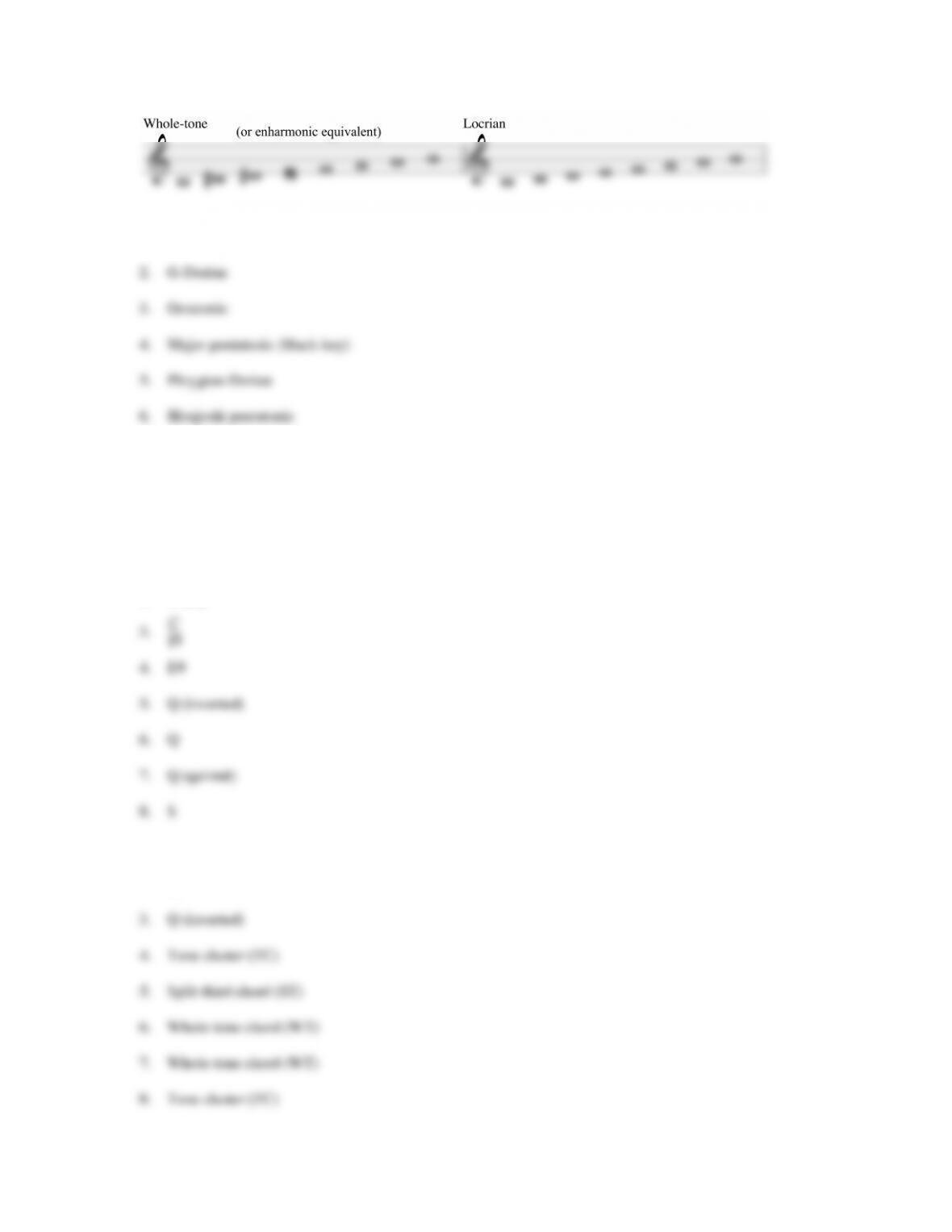
H. 1. Whole–tone
2. G-Dorian
I. Dorian, Whole–tone, Mixolydian
Exercise 26-2
A. 1. Q
2. Ebmaj7
3.
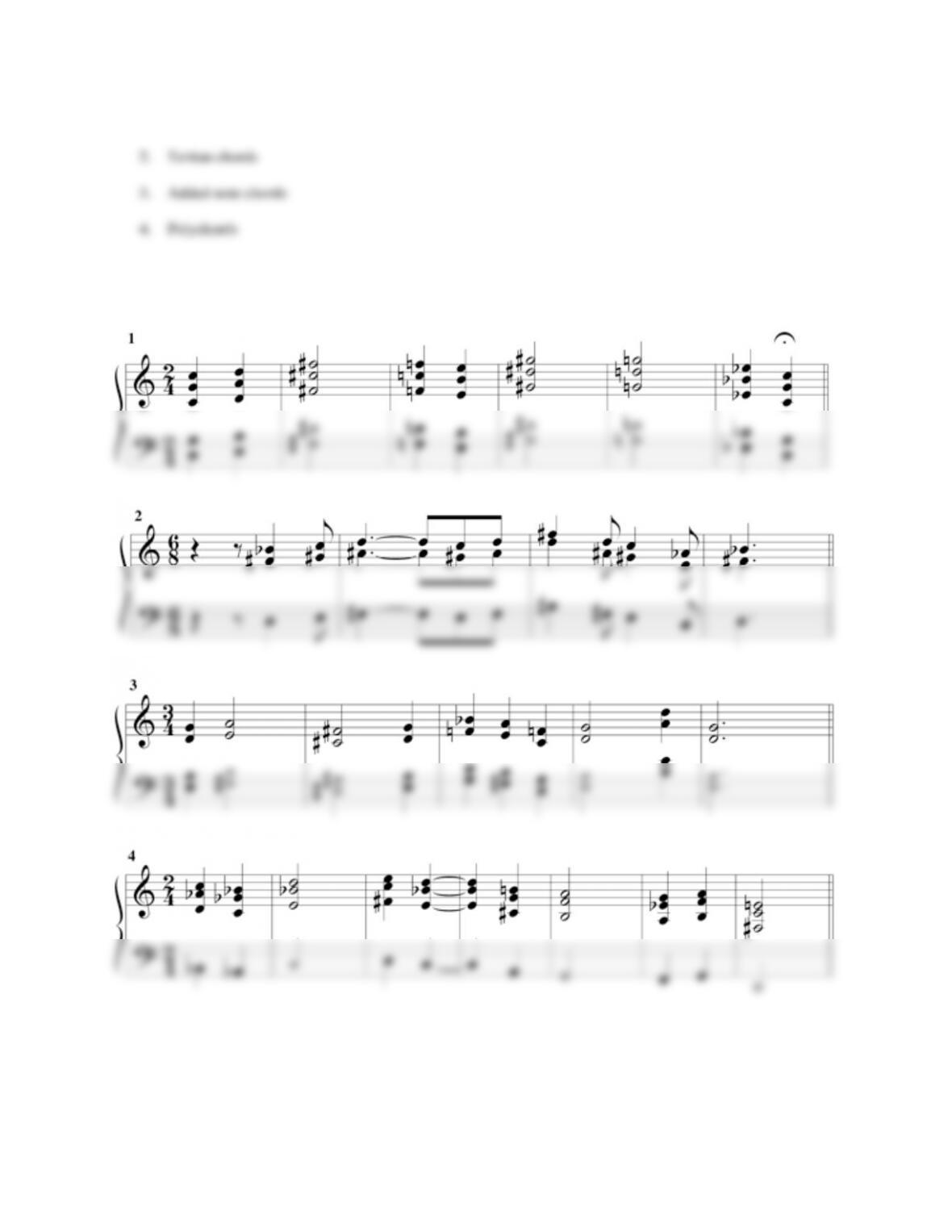
B. 1. Tone cluster (TC)
2. Split–third chord (ST)
C
Fm
Chapter 26
159
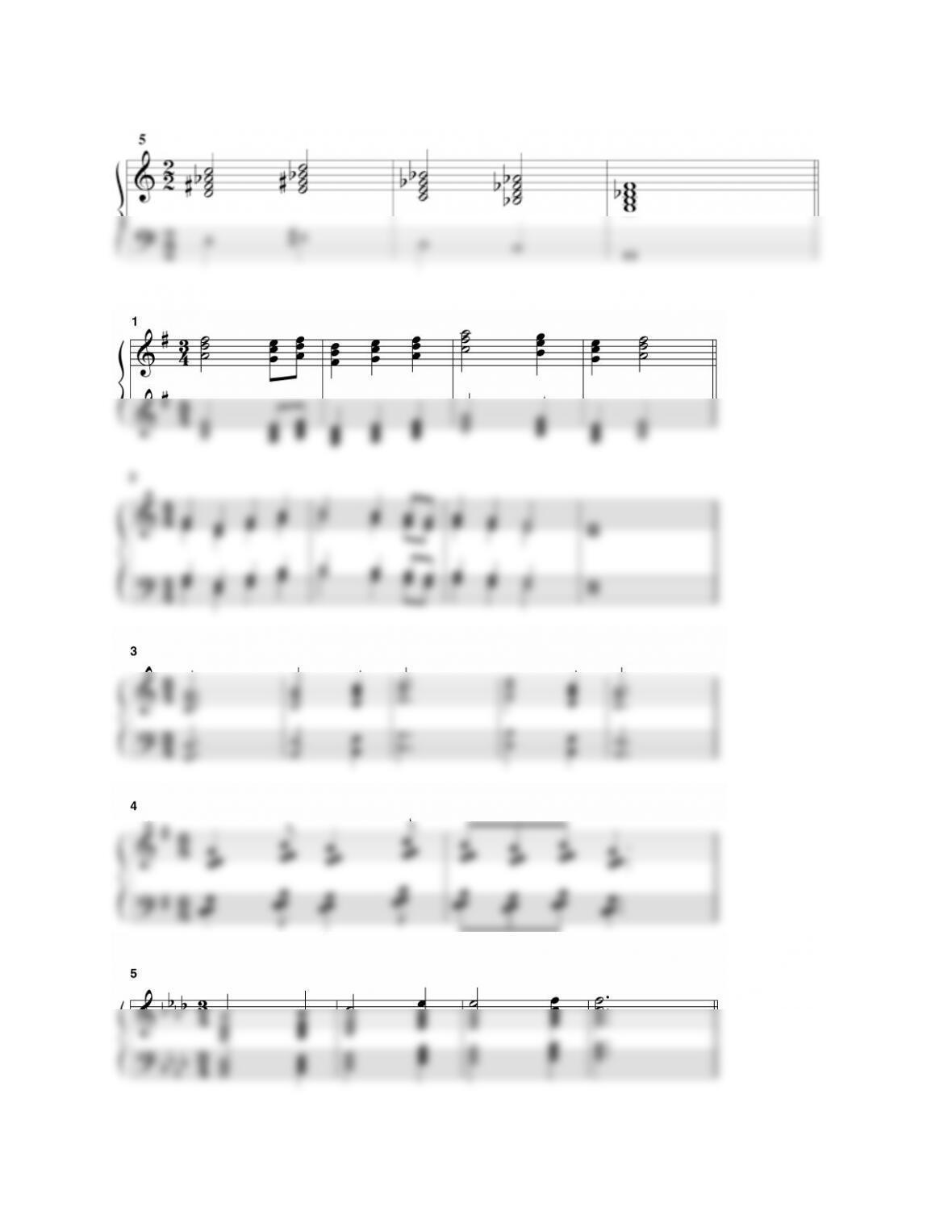
C. 1. Quintal chords
2. Tertian chords
D. Enharmonic spellings in this and similar exercises are acceptable.
Chapter 26
160
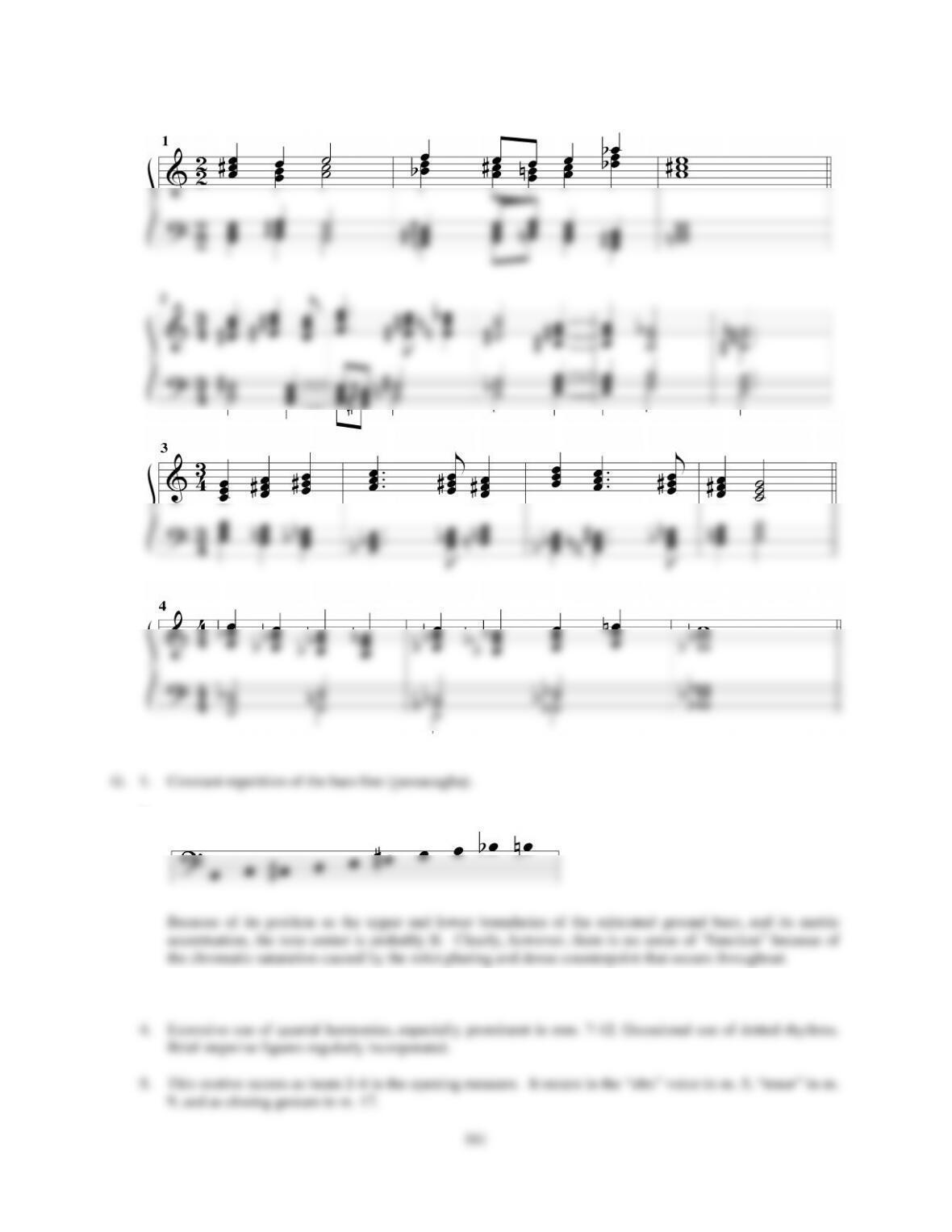
E.
Chapter 26
161
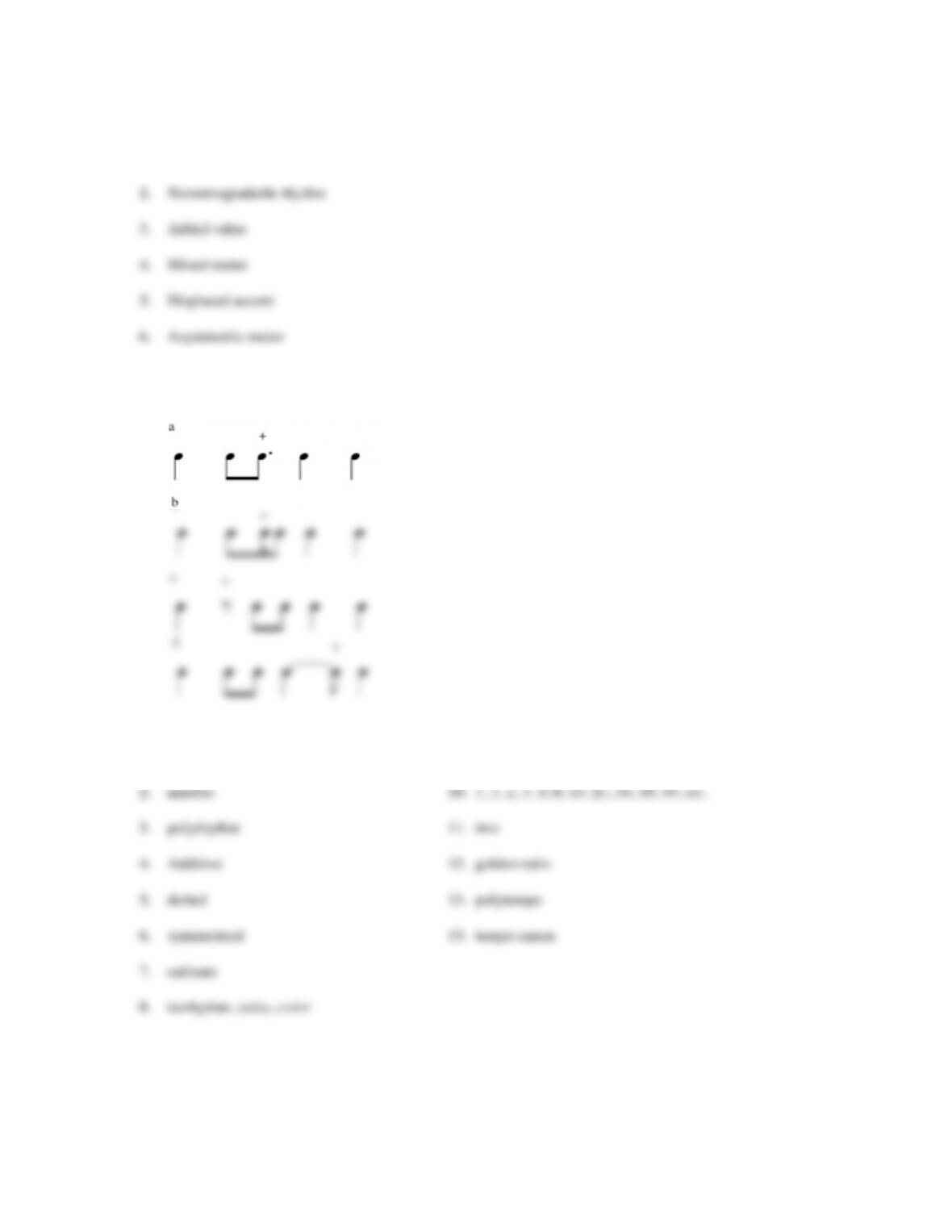
F.
3. Strong emphasis on quartal melodic construction and prominent dotted rhythm leading up to the high point.
Chapter 26
162
Exercise 26-3
A. 1. Metric modulation
2. Nonretrogradable rhythm
B. 1. a, b, and d are nonretrogradable
2.
C. 1. Hemiola 9. metric modulation or tempo modulation
2. ametric 10. 1, 1, 2, 3, 5, 8, 13, 21, 34, 55, 89, etc.
Chapter 26
163
_______________________ _______________________________
(section) (name)
Chapter 26 Quiz
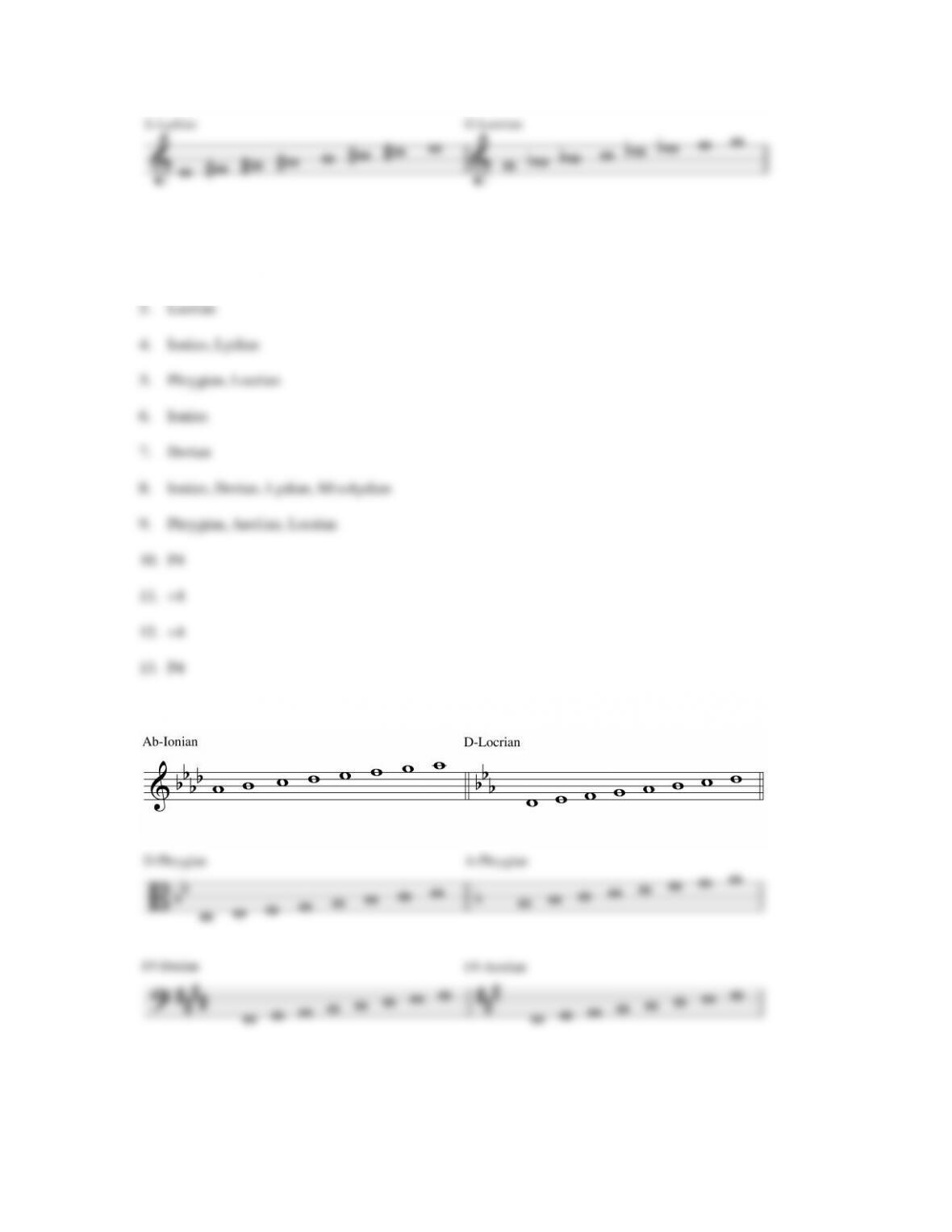
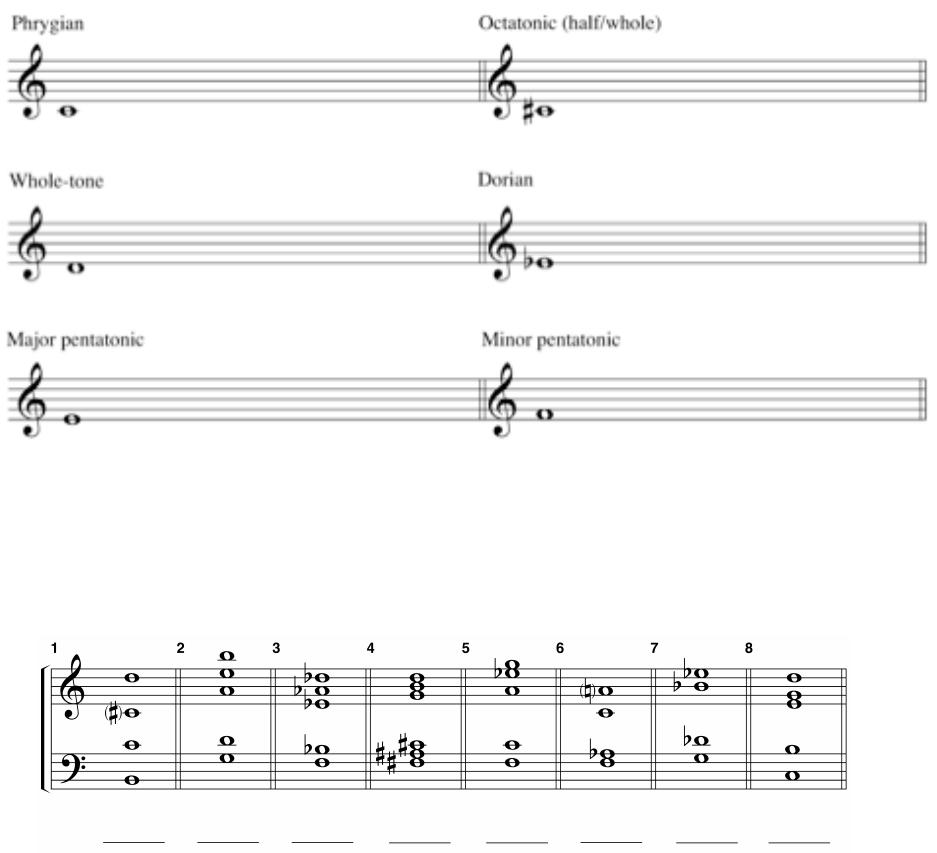
A. Notate the following scales starting on the pitch indicated. Be sure to include the octave–related pitch.
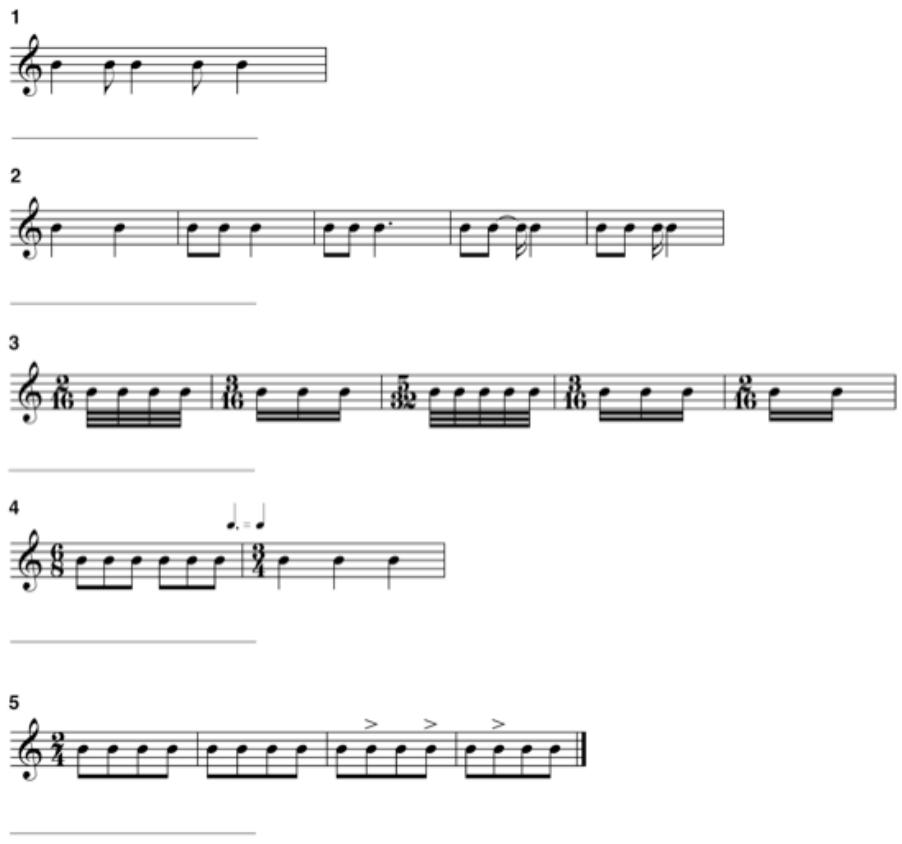
B. Describe the structure of the chords shown below by providing the correct symbol: use the symbol “Q” for
quartal/quintal chords, “S” for secundal chords, “ST” for split–third chords, and lead sheet symbols for tertian
sonorities and polychords.
Chapter 26
164
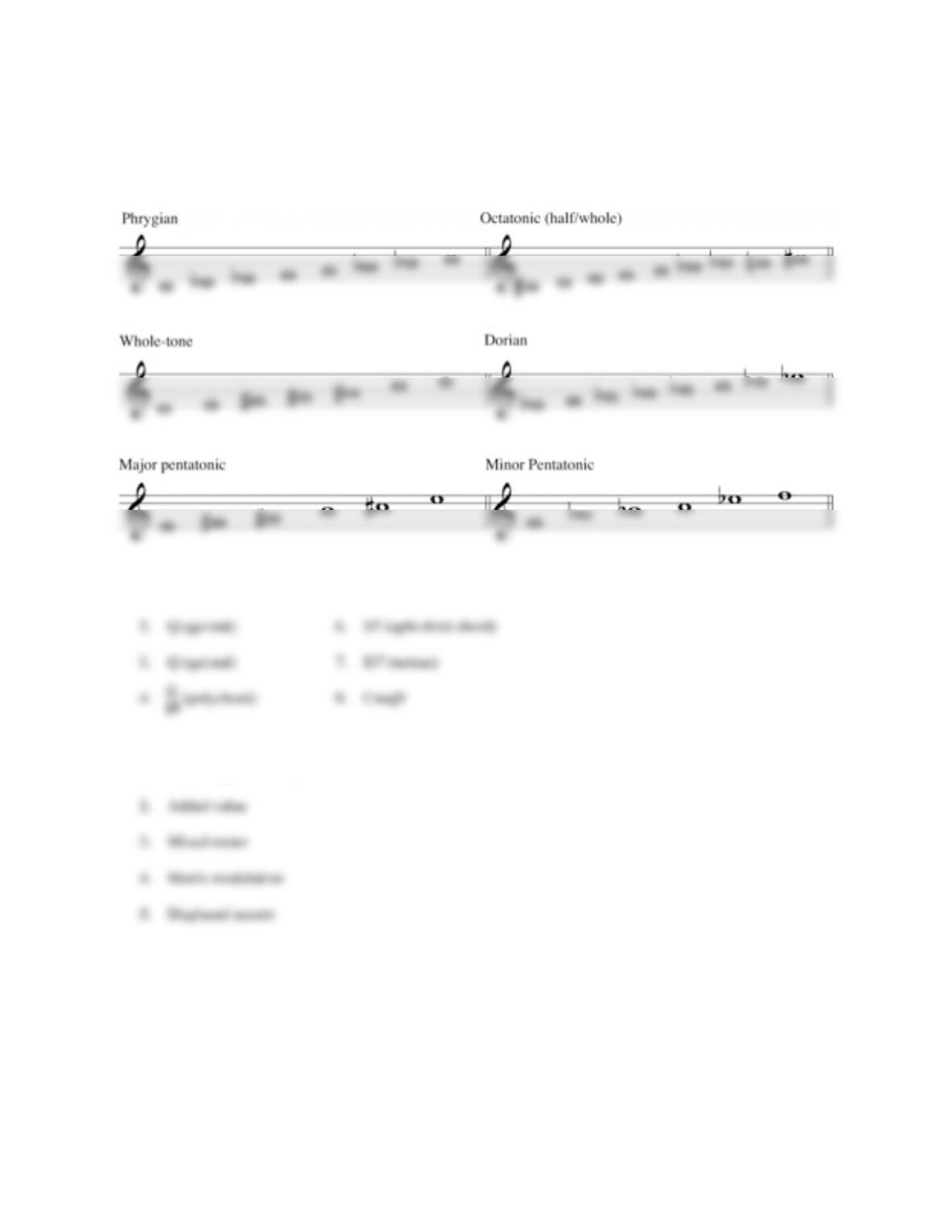
C. Which of the following rhythmic procedures—added value, displaced accent, metric modulation, mixed meter,
or nonretrogradable rhythm—are illustrated by the following examples:
Chapter 26
165
Key for Chapter 26 Quiz
A. Notate the following scales starting on the pitch indicated. Be sure to include the octave–related pitch.
B. 1. S 5. F9 (tertian)
2. Q (quintal) 6. ST (split–third chord)
C. 1. Nonretrogradable rhythm