149
CHAPTER 25
Tonal Harmony in the Late Nineteenth Century
This chapter describes a number of characteristics of tonal music of the late nineteenth and early twentieth centuries.
The analysis of this music is problematic and presents a challenge even to the experienced theorist, but instructors
are encouraged to find a balance between describing features that destabilize the traditional tonal system and
features that create or preserve order. Examples of destabilization include (1) the use of a heavily chromatic
contrapuntal technique, (2) the employment of modulating and chromatic sequences to move rapidly through
contrasting tonal regions, (3) coloristic chord successions, (4) weakening of the principle of concentric tonality, and
(5) alternatives to the predominance of circle–of–fifths motions such as chromatic mediant relationships, mediant
chains, and chromatic progressions. Examples of order–preserving features include (1) the emphasis on conjunct,
linear motion between chords, (2) the continued use of traditional sonorities, combined with a willingness to exploit
the entire collection of chromatic pitches in addition to the functional chromaticism that depends on diatonic
resolution.
Answers to Selected Exercises
Exercise 25-1
A.
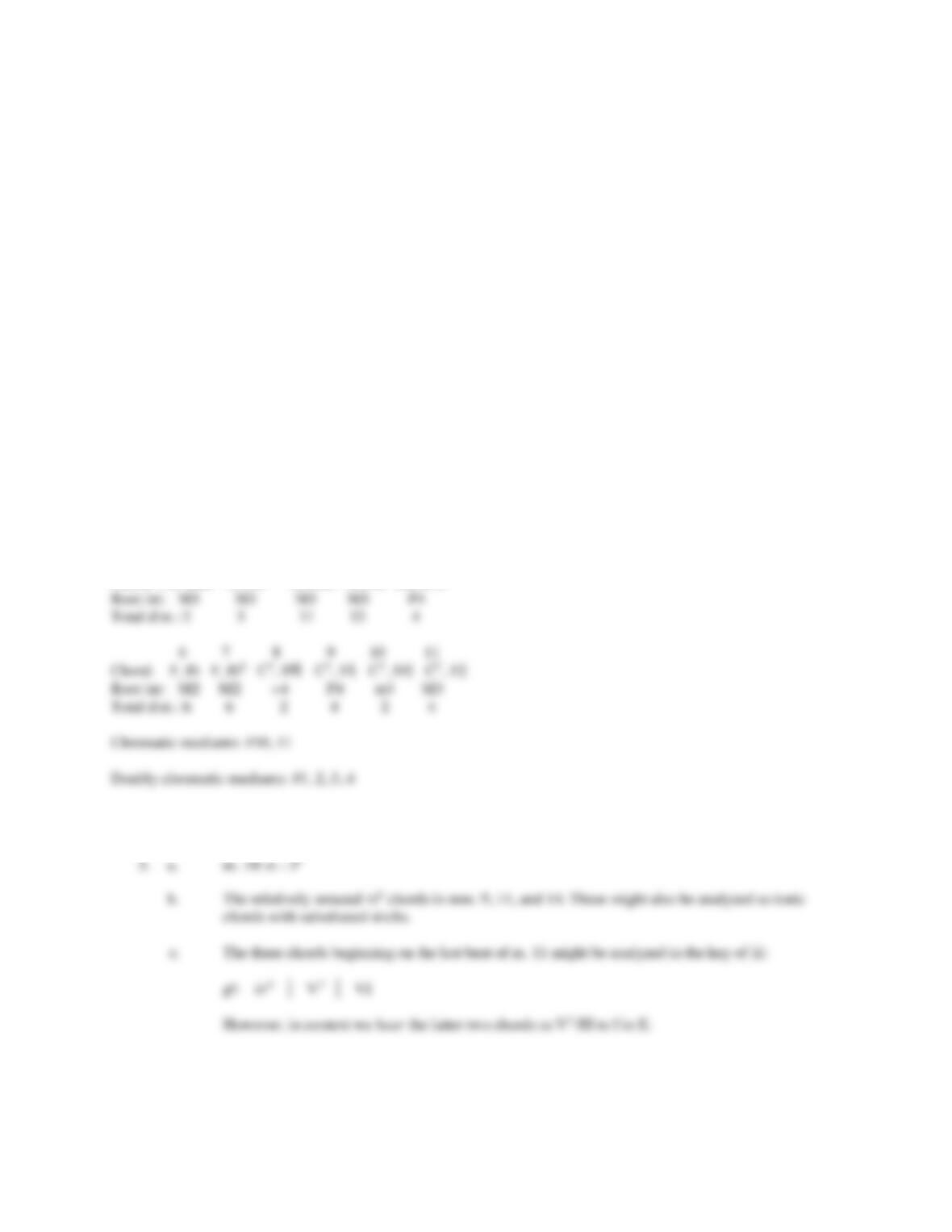
1 2 3 4 5
Chord: Cw, Abm A, Fm6 A, Fmw A, Fm Abw, Ebm
Root int: M3 M3 M3 M3 P4
5
B. 1. E: │ I q │ vi (Iw) IVq Iq │ !q $ !q │ ii │ V/V e │ Vy │ Iq a │ V │
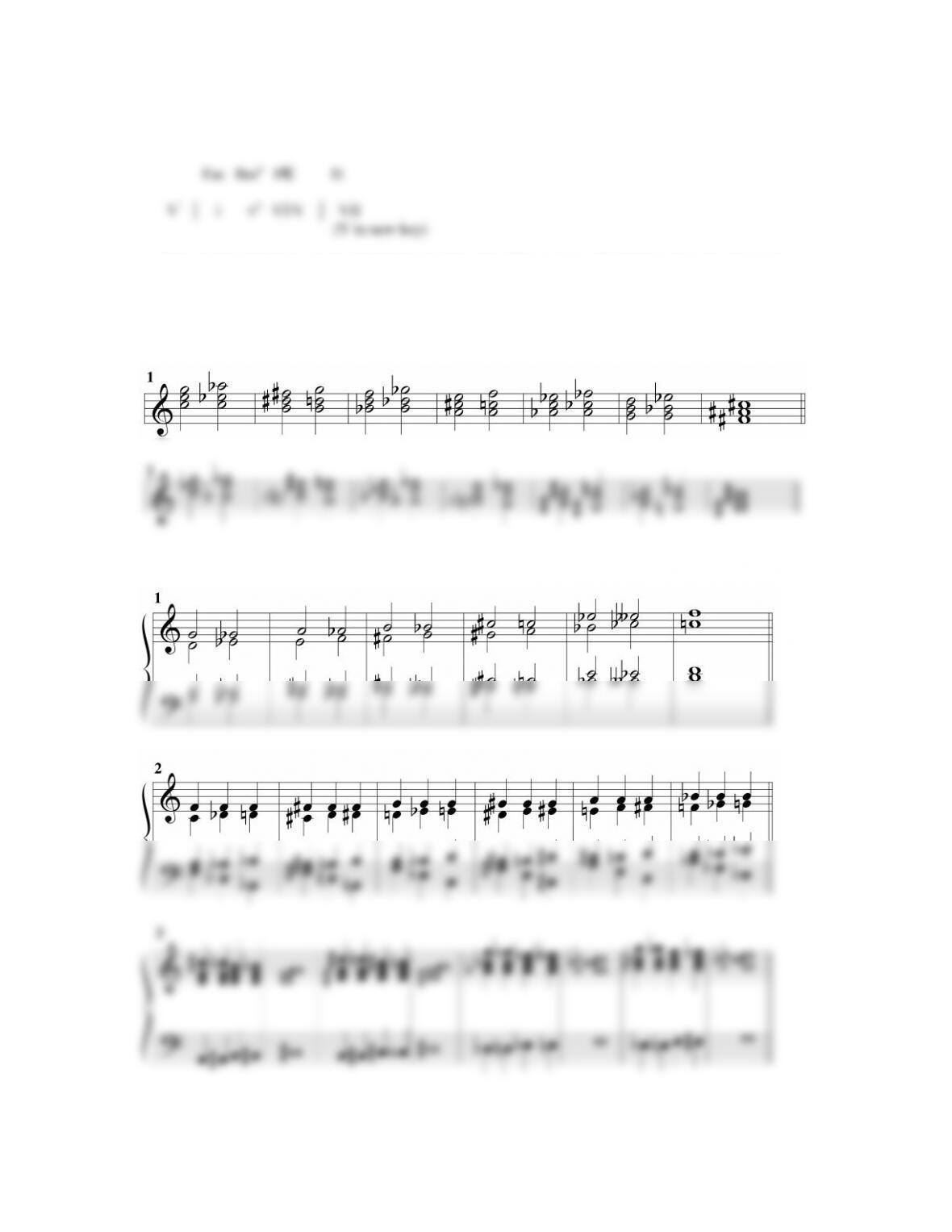
2. a. m. 10: ii – Iq
Chapter 25
150
3. The sequential pattern begins with the pickup to m. 17 and modulates by ascending m3 from Em to Gm to
Bbm. The pattern is:
mediant chain involving roots related by m3.
C.
D.
Chapter 25
151
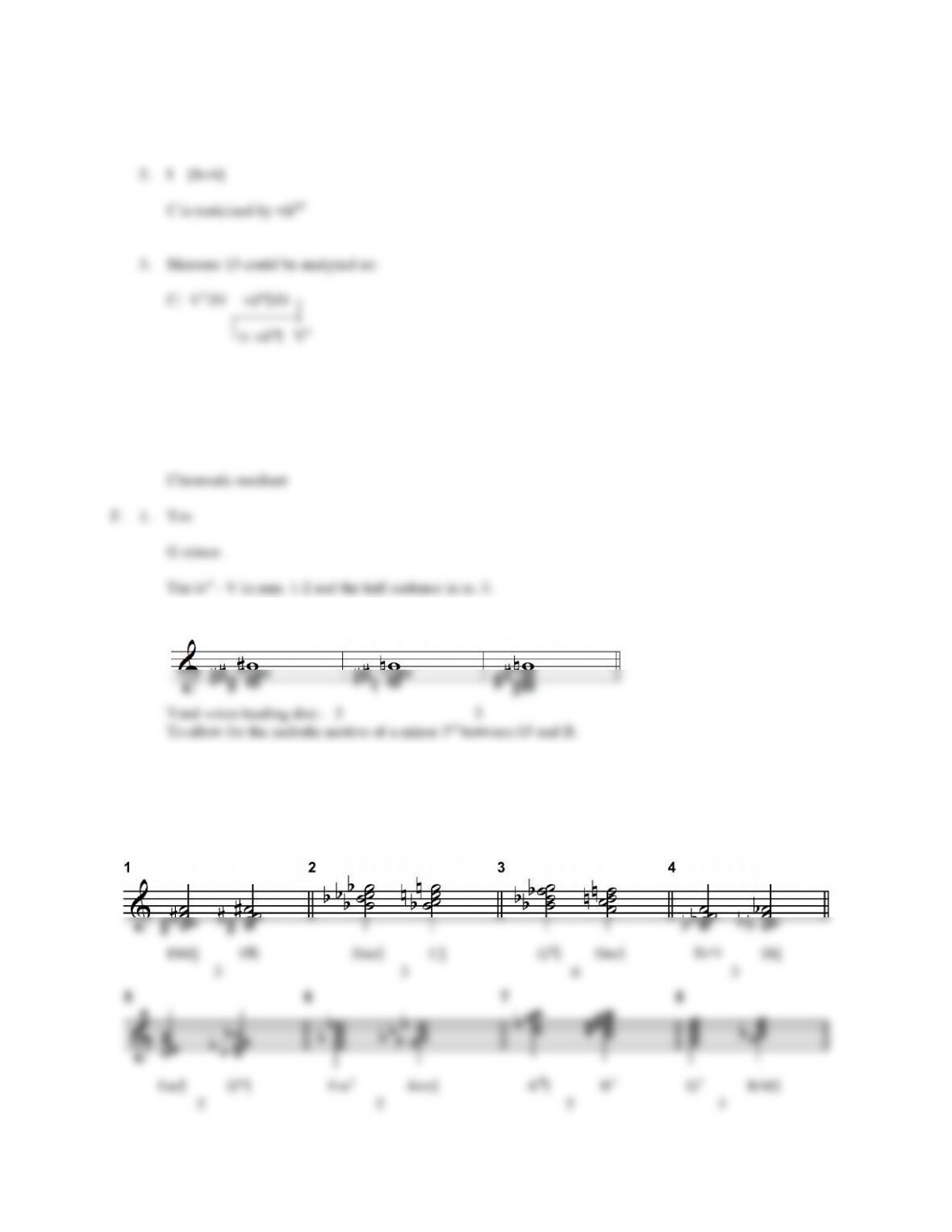
E. 1. It uses m¢n, §n, ¶.
2. I [It+6]
4. B minor
v (minor dominant)
5. Gm and C
Chromatic mediant
2. Gme, gm-e, Cme
3. │ V/vi │ Iq iv9e │ IV9e Ve │ I │
Chromatic mediant (roots related by M3).
G.
Chapter 25
152
H. 1.
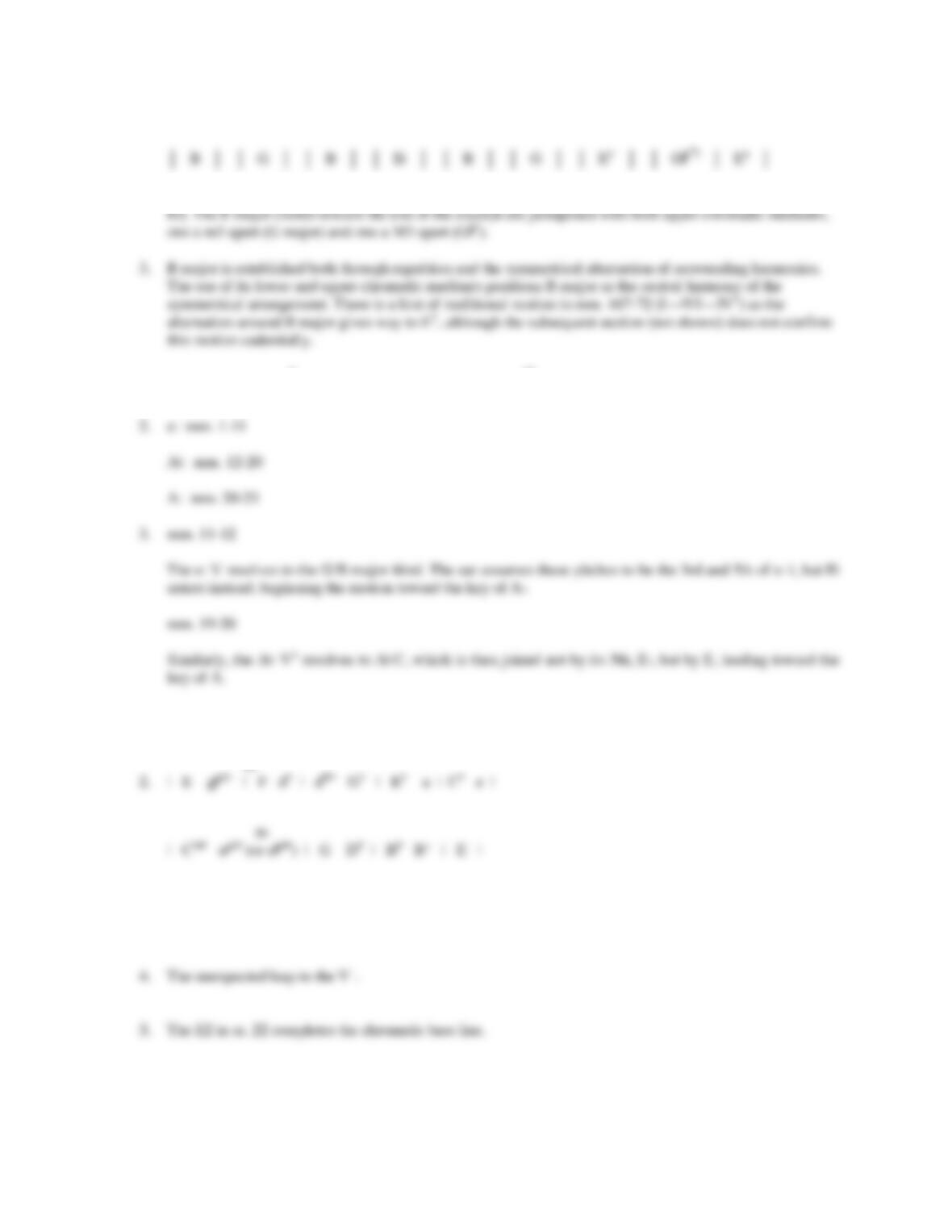
2. B major is juxtaposed with both its upper and lower chromatic mediants with roots related by M3 (G and
Eb). The E major chords toward the end of the excerpt are juxtaposed with both upper chromatic mediants,
I. 1. | e: i | | | | ii-e | iv | Ve/III | III | ive | ii-e | V |
2. e: mm. 1–11
J. 1. The “nonfunctional” ii – iii – IV progression in mm. 11–12, which features parallel voice leading. Also,
neither tonic nor dominant chords appear until the end of m. 13.
15
2. | E gm0e | F de | d-e Ge | Ee a | Ce e |
3. The chromatic bass line in mm.16–21 brings the “omnibus” to mind, with the Ge (m. 16) through the e (m.
18) perhaps being most typical.
Chapter 25
153
________________ _________________________
(section) (name)
Chapter 25 Quiz
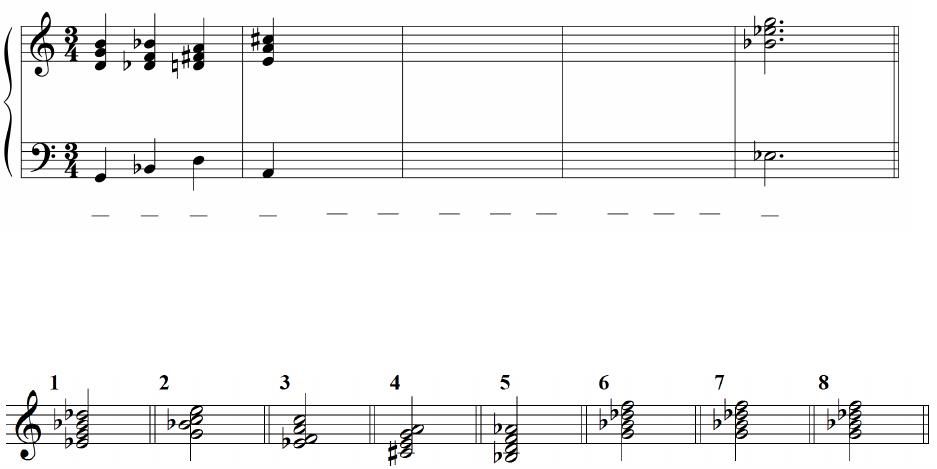
1. You are given the opening measure of a four–measure sequence, as well as the beginning chord of the second
measure. Continue the pattern through measures 2–4, ending the exercise on the E–flat major chord that is
provided. Using lead sheet symbols, analyze each of the root–position chords in the passage. You should also
notice the ascending whole–step pattern represented by the first bass note of each measure.
2. You are given a series of chord pairs. Notate the inversion of the second chord that connects most smoothly
with the first chord as given. Indicate the total voice–leading distance in the space provided. Ignore traditional
resolutions (leading tones, sevenths, etc.). There may be more than one right answer. Show all accidentals.
Ebe Ae Ct Ebe Fy De Ar Cme Bbe Gbe G-e Fme G–e Ce G-e Ae
Total voice leading distance:
___ ___ ___ ___ ___ ___ ___ ___
Chapter 25
154
Key for Chapter 25 Quiz
1. You are given the opening measure of a four–measure sequence, as well as the beginning chord of the second
measure. Continue the pattern through measures 2–4, ending the exercise on the E–flat major chord that is
provided. Using lead sheet symbols, analyze each of the root–position chords in the passage. You should also
notice the ascending whole–step pattern represented by the first bass note of each measure.
2. You are given a series of chord pairs. Notate the inversion of the second chord that connects most smoothly
with the first chord as given. Indicate the total voice–leading distance in the space provided. Ignore traditional
resolutions (leading tones, sevenths, etc.). There may be more than one right answer. Show all accidentals.