138
CHAPTER 23
Enharmonic Spellings and Enharmonic Modulations
The topic of enharmonicism may be dear to the hearts of many instructors, but to some students it is a difficult
hurdle, the one complication too many piled onto the harmonic stack. We try in this chapter to take a systematic and
pedagogically sound approach to the subject.
The first part of the chapter explains enharmonicism for convenience so that the student will not confuse this with
enharmonic modulation, a pitfall that not all harmony texts have been able to avoid. The ear can serve as the final
arbiter: if you cannot hear the enharmonicism, it must be a case of enharmonic spelling for convenience. For
example, the modulation from I to iv is easily accomplished through mode mixture. If the keys involved were Ab
Major and Db Minor, the composer might choose to notate the second key as C# Minor, but the listener would have
no way of knowing about the enharmonicism.
The remainder of the chapter is devoted to enharmonic reinterpretation, which almost always leads to an enharmonic
modulation. The chords traditionally used for this are the Mme/g and the diminished seventh chord, although
the f and the augmented triad could in theory be employed as well.
Enharmonic modulation and enharmonic spelling for convenience may occur simultaneously, of course. An example
is the Chopin excerpt in Workbook Exercise E.1, in which the key scheme fm – E – Gm is notated for convenience as fm
– E – Ab, with enharmonic reinterpretation effecting the second modulation.
Since enharmonic modulations can be heard, there is no reason to exclude them from aural training. The easiest to
recognize is the Ve or secondary Ve becoming a g.
Answers to Selected Exercises
Exercise 23-1
A.
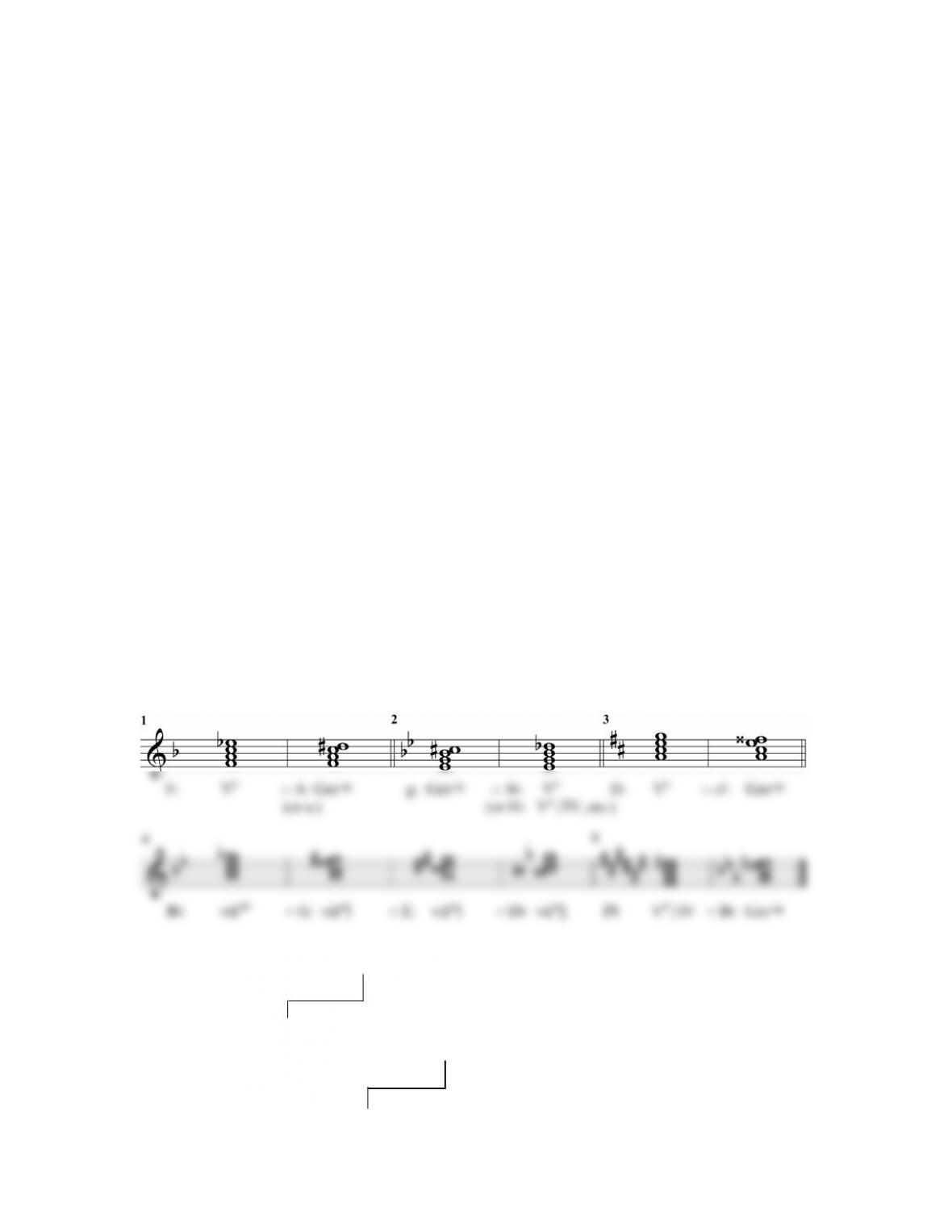
B. 1. | g: i vii0e Vr | i vii0e Vt | iq vii0q | i |
e: vii0r
2. | a: iq V e | VI iq | Nq V e | iw Ve | i |
{
gm: g V
Chapter 23
139
3. | F: Vy | Iq vii0r/ii | ii vii0e/ii | Iq Vt | I |
C. 1.
2.
41 45 50
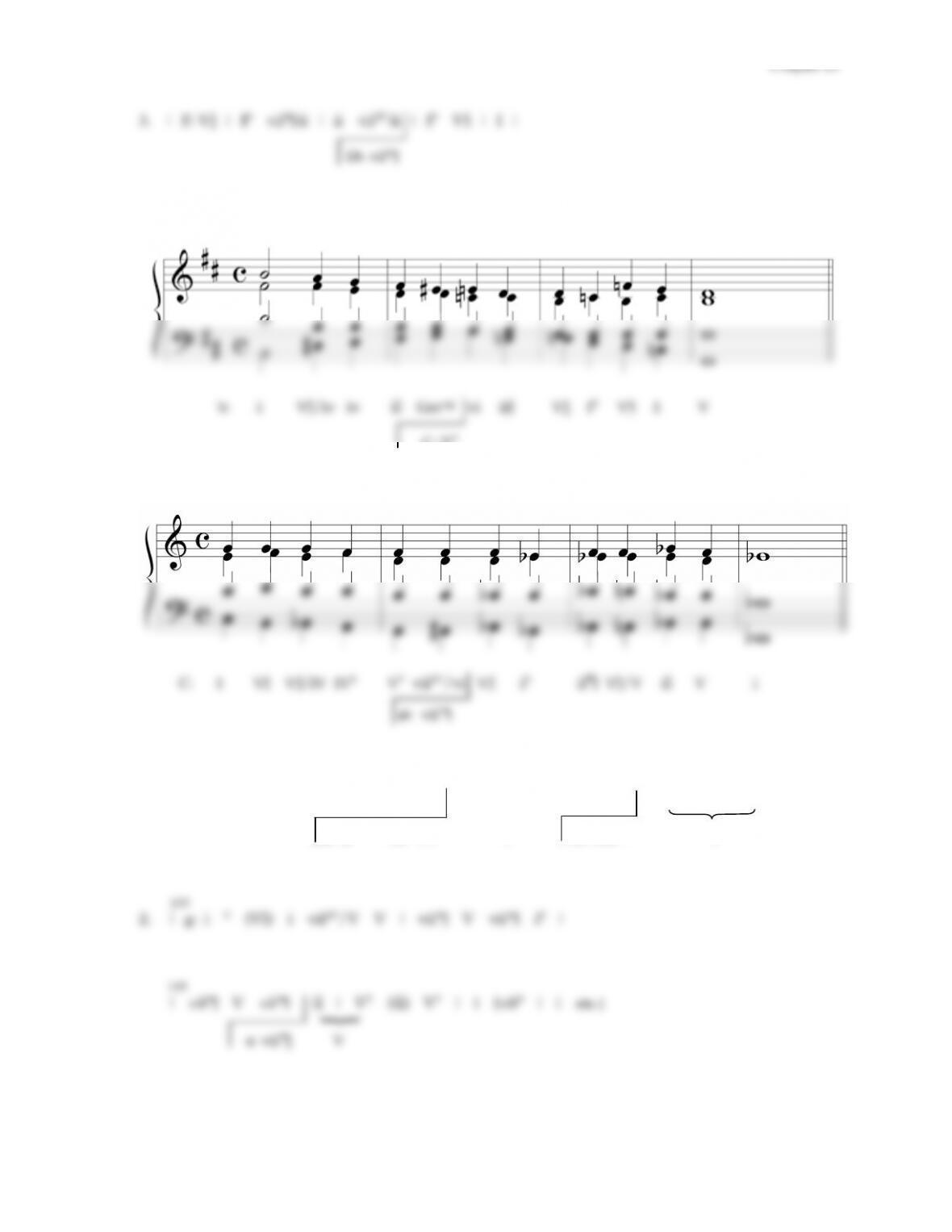
E. 1. | fm: %r | 1 | %t | 1q | 70e/4 | !w | %e | ! %e/$ | !w | | %e | ! |
{
E: 2q 70e/% % Ab: g %
Chapter 23
140
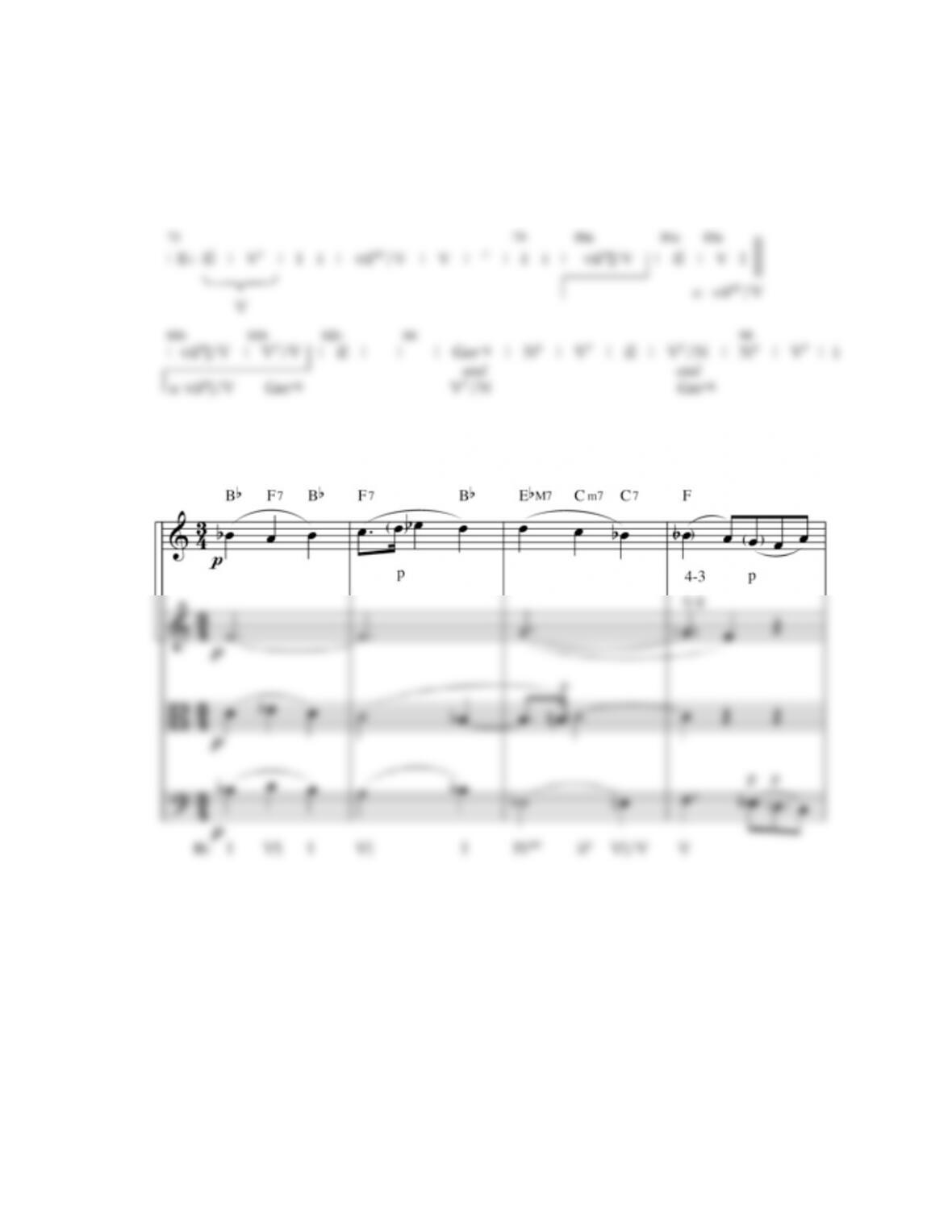
3. The F7 chord is heard three times in nine measures, each time in a somewhat different context. In m. 81b,
where the listener is still hearing Eb as a tonal center, the F7 probably sounds at first like a Ve/V, but it
resolves like a g. We might then expect the F7 chord in m. 85 to resolve again like a g, but here it
instead acts as dominant of Bb, the Neapolitan chord in A Minor. It is anyone’s guess what the listener
expects of the F7 chord in m. 89 after having already been fooled twice.
73 79 80a 81a 82a
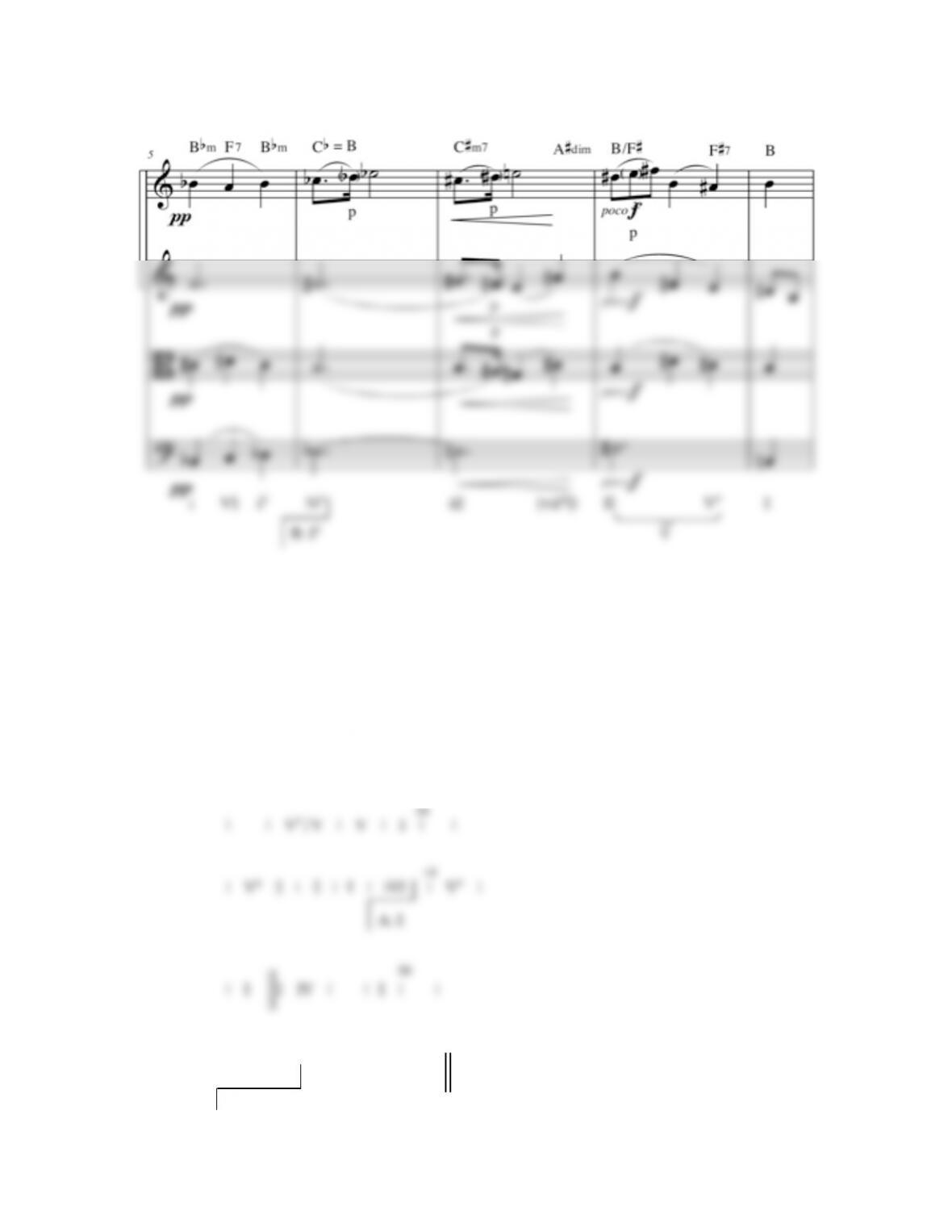
4. Note that this is not an enharmonic modulation, but a modulation to the Neapolitan (Cb), spelled as B for
the convenience of the performers.
Chapter 23
141
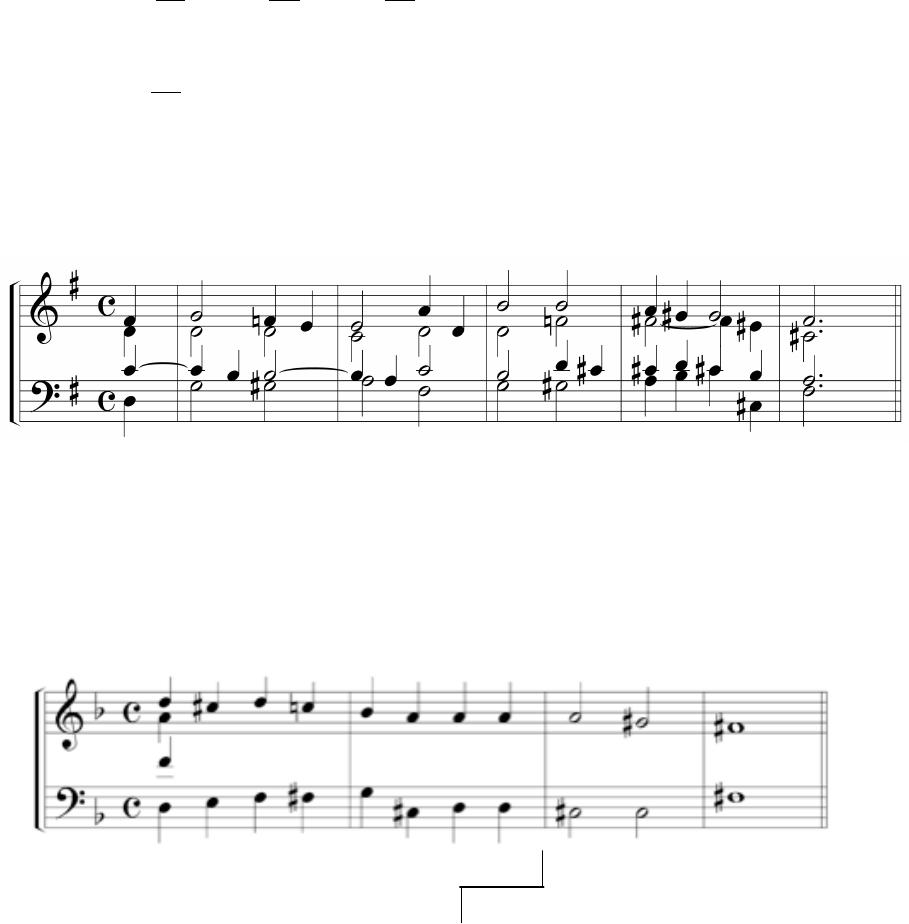
5. The first modulation is really to b^ (Bbb), respelled as A for the convenience of the performer. In the second
modulation, which is a true enharmonic modulation, the %e/$ in b^ is enharmonically reinterpreted as
the g in Db. From the first ending to m. 17 there is a phrase (or direct) modulation back to the key of A.
The form is Schubert’s light–hearted take on two–reprise continuous binary, which is what the form would
be if you repeated mm. 1–8 and omitted 9–16. The second part would then begin with a Db chord instead of
D.
5
| Db: ! | | %q r | a | ! |
10
25
| %e/$ | !w | %e | !
:
Db: g
Chapter 23
142
____________________ _____________________________
(section) (name)
Chapter 23 Quiz
A. Show the possible enharmonic reinterpretations of the given chords by filling in each blank with the name of a
major key.
1. F: 70e = : 70r = : 70t = : 70y
2. Bb: %e = : g
B. Analyze this enharmonic common–chord modulation.
G:
C. Analyze the progression implied by this soprano/bass framework, and fill in two inner voices. Analyze
enharmonic common chords where indicated. Do not use identical chords on beats 3 and 4 of the second
measure.
d:
Chapter 23
143
Key for Chapter 23 Quiz
A. Show the possible enharmonic reinterpretations of the given chords by filling in each blank with the name of a
major key.
B. Analyze this enharmonic common–chord modulation.
enharmonic common chords where indicated. Do not use identical chords on beats 3 and 4 of the second
measure.