131
CHAPTER 22
Augmented Sixth Chords
When introducing augmented sixth chords, we take as our starting point the interval of the augmented sixth from
which the chord gets its name, demonstrating that it is the result of two “leading tones” to the dominant, one from
below and the other from above. The other notes that usually accompany the augmented sixth interval are much less
crucial, and certainly none of them function as a root. In fact, we believe the augmented sixth chord to be sonority
with a most common bass position but with no true acoustical or even theoretical root.
The presentation of the material in this chapter is brief and to the point. However, three complications that are
mentioned in the discussion should be given special attention: (1) the occasional resolution of m¢ to n¢ to provide the
seventh of a Ve chord, (2) the enharmonically spelled German sixth, and (3) the problem of parallel fifths in the
g–% progression. A section on other uses of conventional augmented sixth chords is followed by consideration
of augmented sixth chords with something other than (b)§ in the bass and chords in which the interval of the +6
resolves to a scale degree other than ∞.
Answers to Selected Exercises
Exercise 22-1
A.
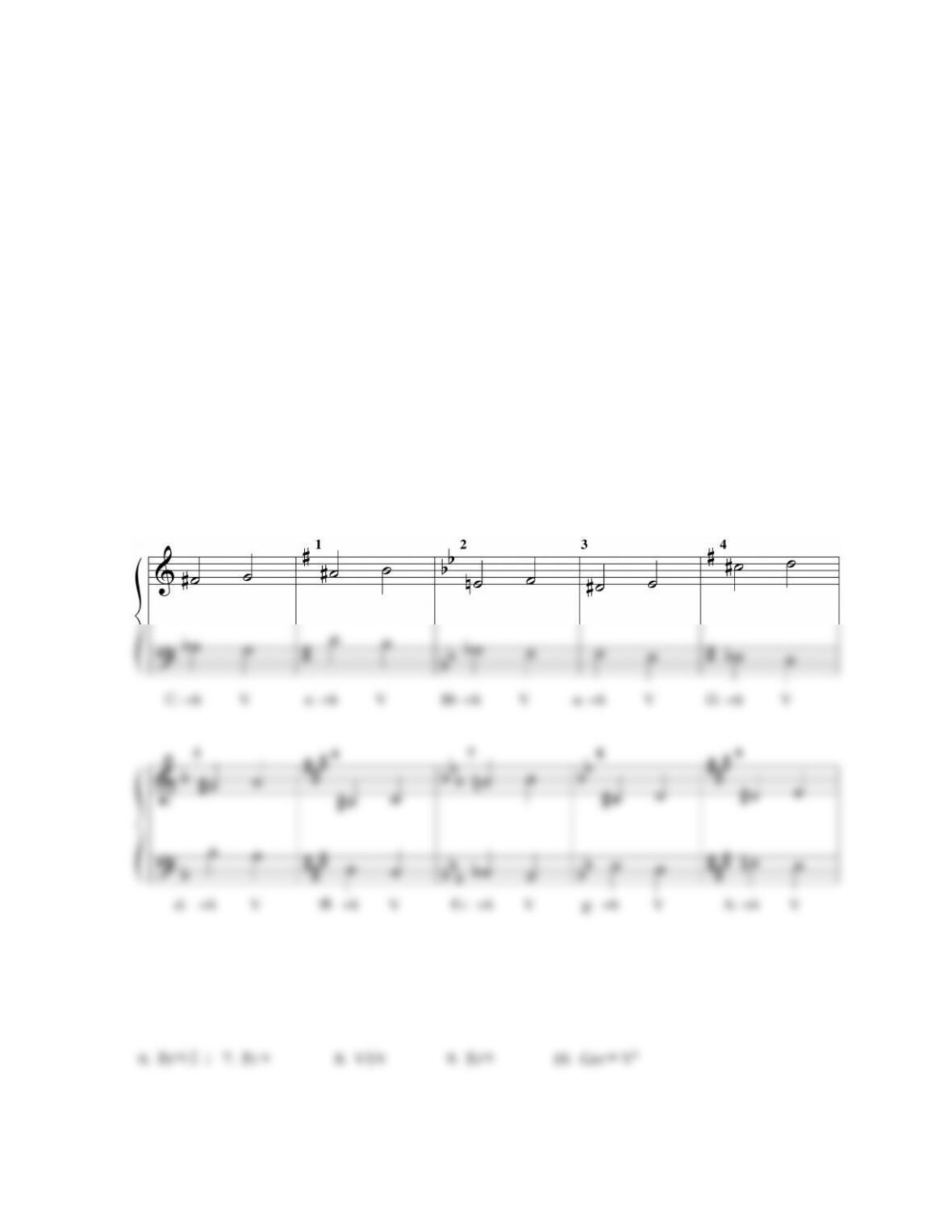
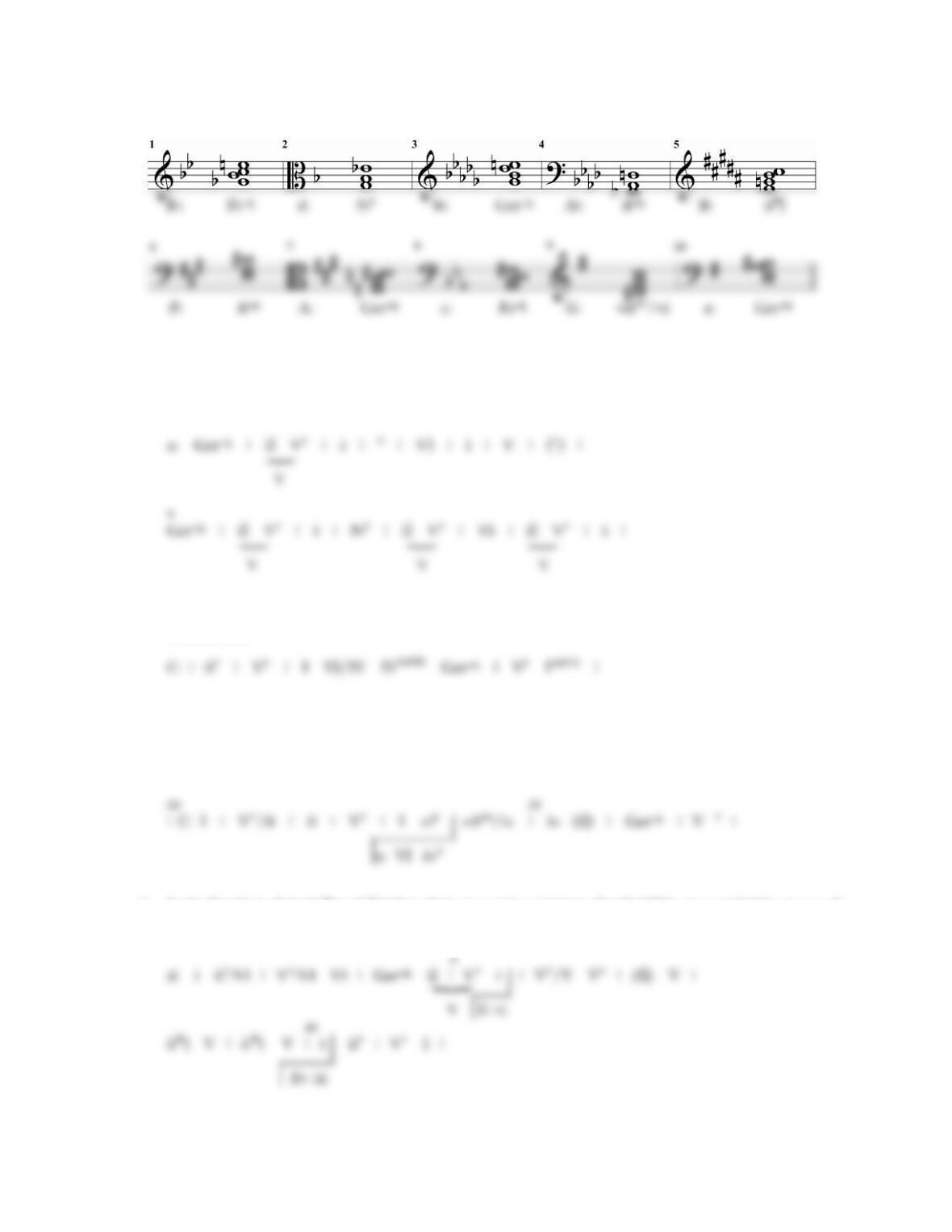
B. 1. h 2. g 3. IVr 4. h 5. g
(Vr/VII)
Chapter 22
132
C.
D. 1. The g that begins the waltz sounds like a Ve in Bb. The most obvious additional reference to that key is
the Nq chord in m. 12. The m¢ and the b§ both follow the expected resolution to ∞. Parallel 5ths are avoided
by moving to a cadential six–four chord before resolving to Ve.
2. The g has m¢ (enharmonically spelled) in the bass. In performance, the parallel 5ths are probably not
avoided at all.
3. There are 9–8 suspensions in mm. 32 and 34. Parallel fifths are avoided in the resolution of the g by
arpeggiating £ to ¡, creating a short–lived h. Both m¢ and b§ follow their expected resolutions to ∞.
30 35
the iw.
5
Chapter 22
133
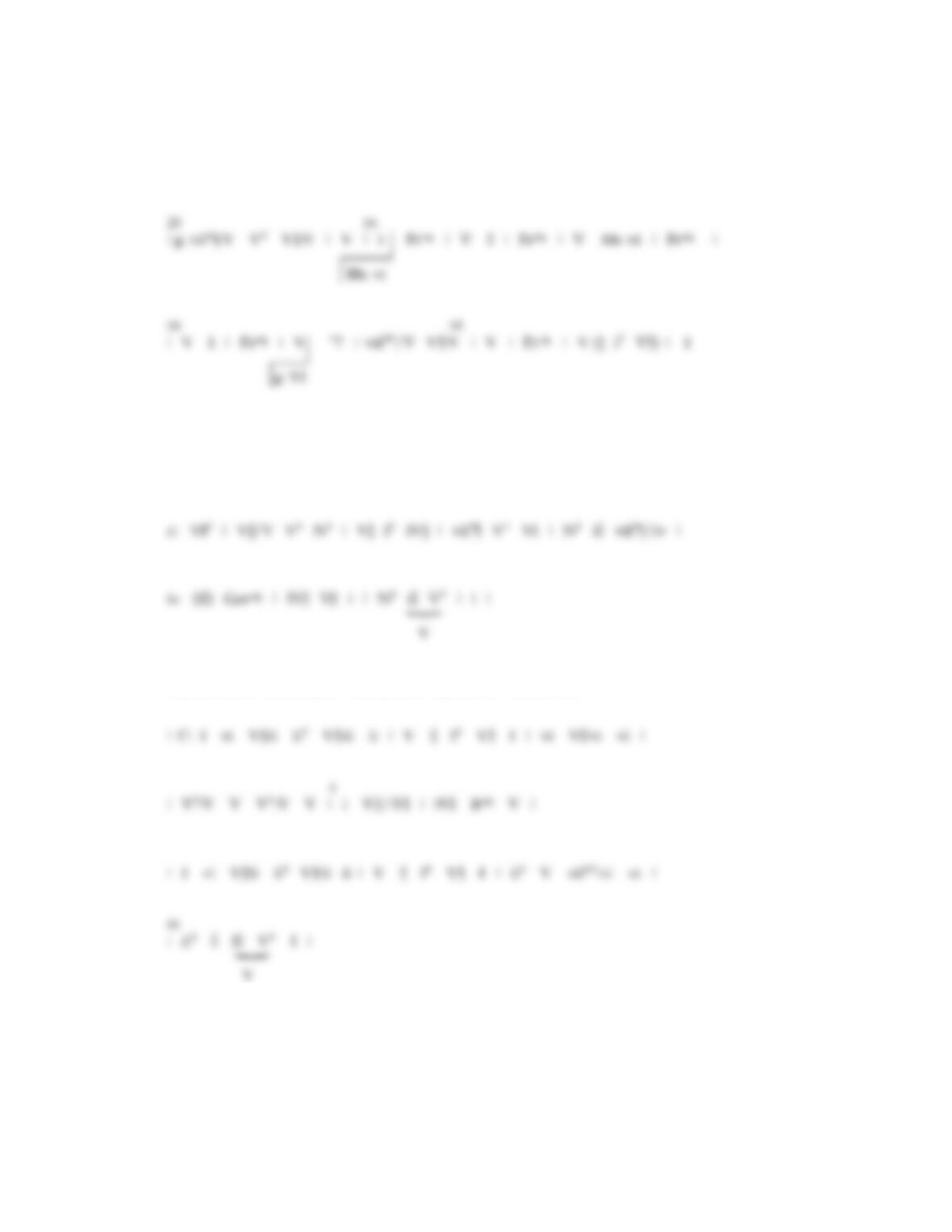
5. The other keys are Bb and Ab, the relative major and Neapolitan of the “parent” tonality of g minor. Notice
that we have analyzed the modulation to Ab as direct, although it would be possible to identify a common
chord. In each of the five f chords the m¢ and b§ resolve to ∞ as expected.
6. One might wonder whether the g chord in the 5th measure is a +6 chord at all. Instead, is it a 008
chord because the Ab functions as a Gm while the Fm functions as a Gb? Students should be discouraged from
labeling the IVy and IVr chords as secondary dominants of VII and should understand that these chords
come about through the use of the melodic minor scale.
7. In the h both m¢ and b§ resolve to ∞ as expected. The pitch class Gm/Ab is used in the following ways:
%r/6 (m. 3), b^ (m. 6), h (m. 6), n (m. 8), and 70e/6 (m. 9).
Chapter 22
134
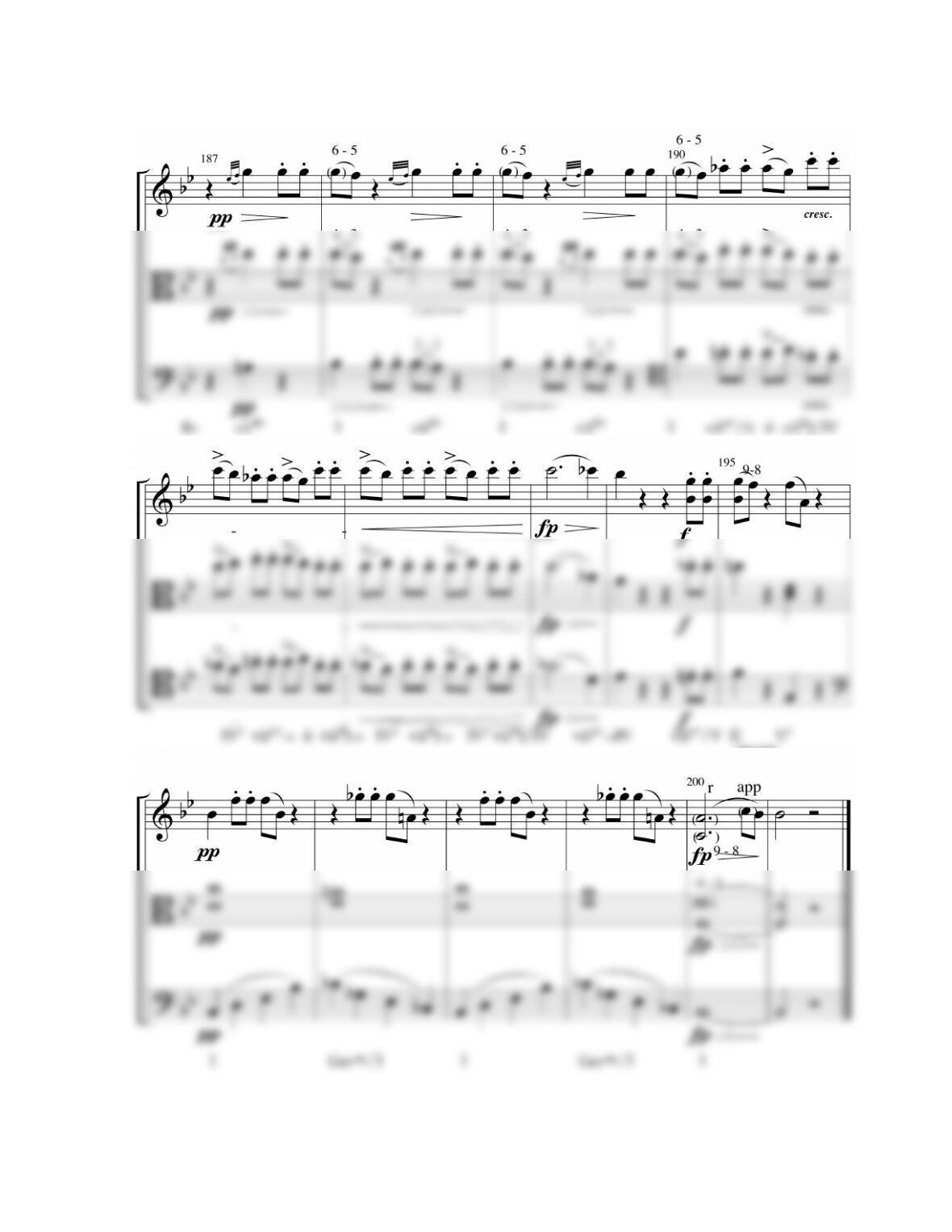
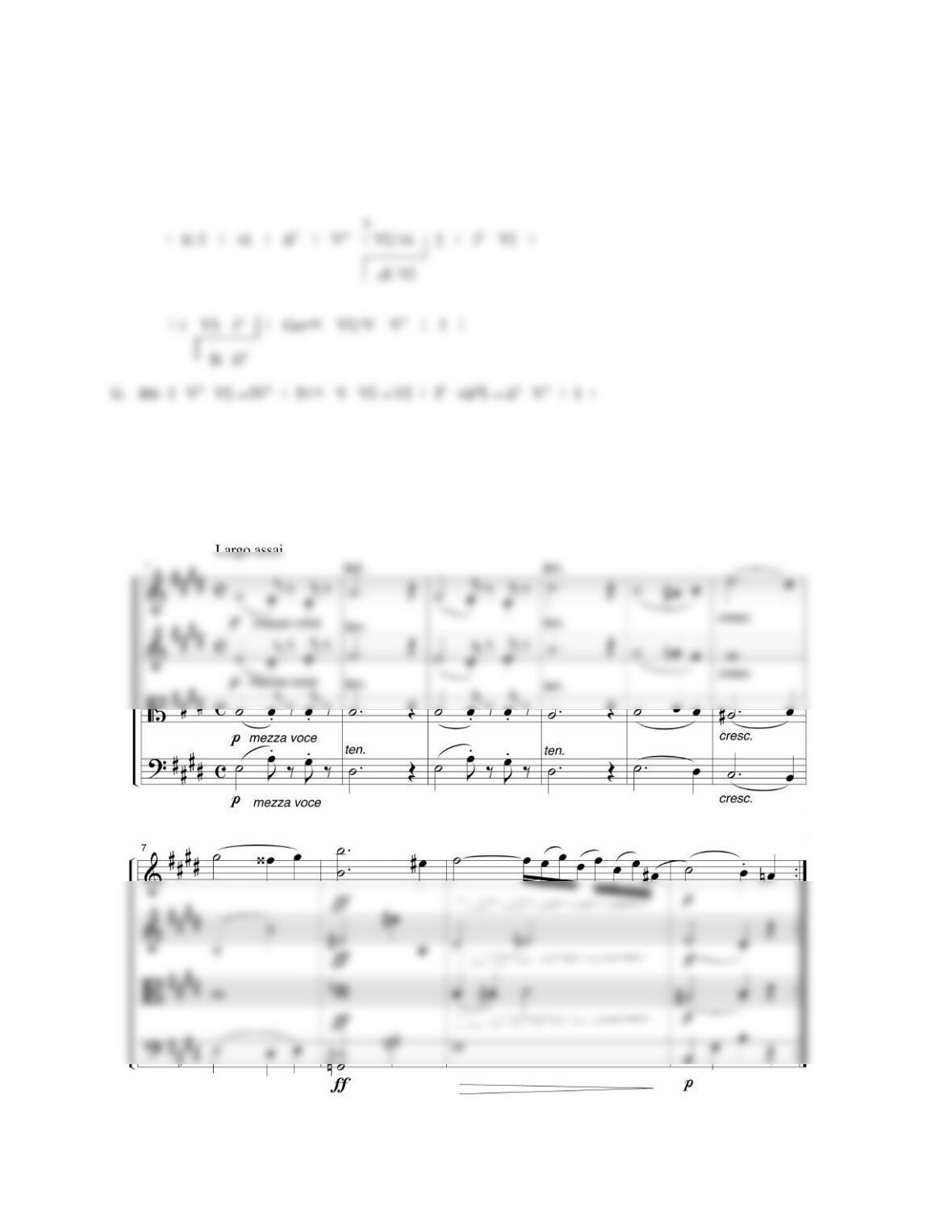
8. The 2–3 suspension in the cello in mm. 188 and 189 assumes the C missing from the vii-e.
V
Chapter 22
135
9. Here we have an excerpt similar to Example 22–15 in that the strong tendency of the g to move to V is
momentarily dissipated by a dominant of the dominant. The m¢ resolves normally to Fm; the enharmonically
spelled b§ resolves to ∞ only after having been diverted to the Gm.
5
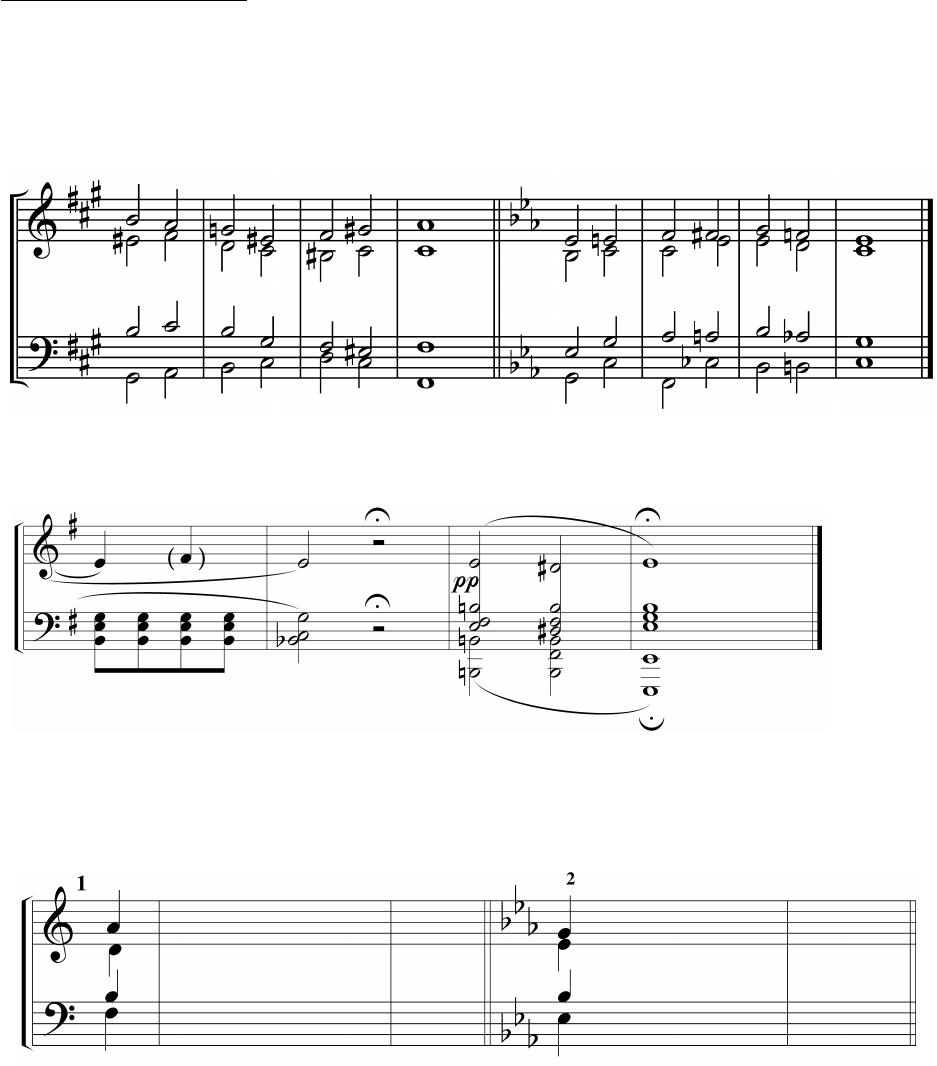
I. Haydn: String Quartet, Op.74, No.3, II. This marvelous excerpt is certainly worth some class time. Analysis
exercise 3 is drawn from the B section of this movement, which is in ternary form.
The ct0e (m. 5) and the V=q (m. 7) are discussed in Chapter 24, but they can easily be explained as NCTs for
now.
Chapter 22
136
________________ ___ ________________________________
(section) (name)
Chapter 22 Quiz
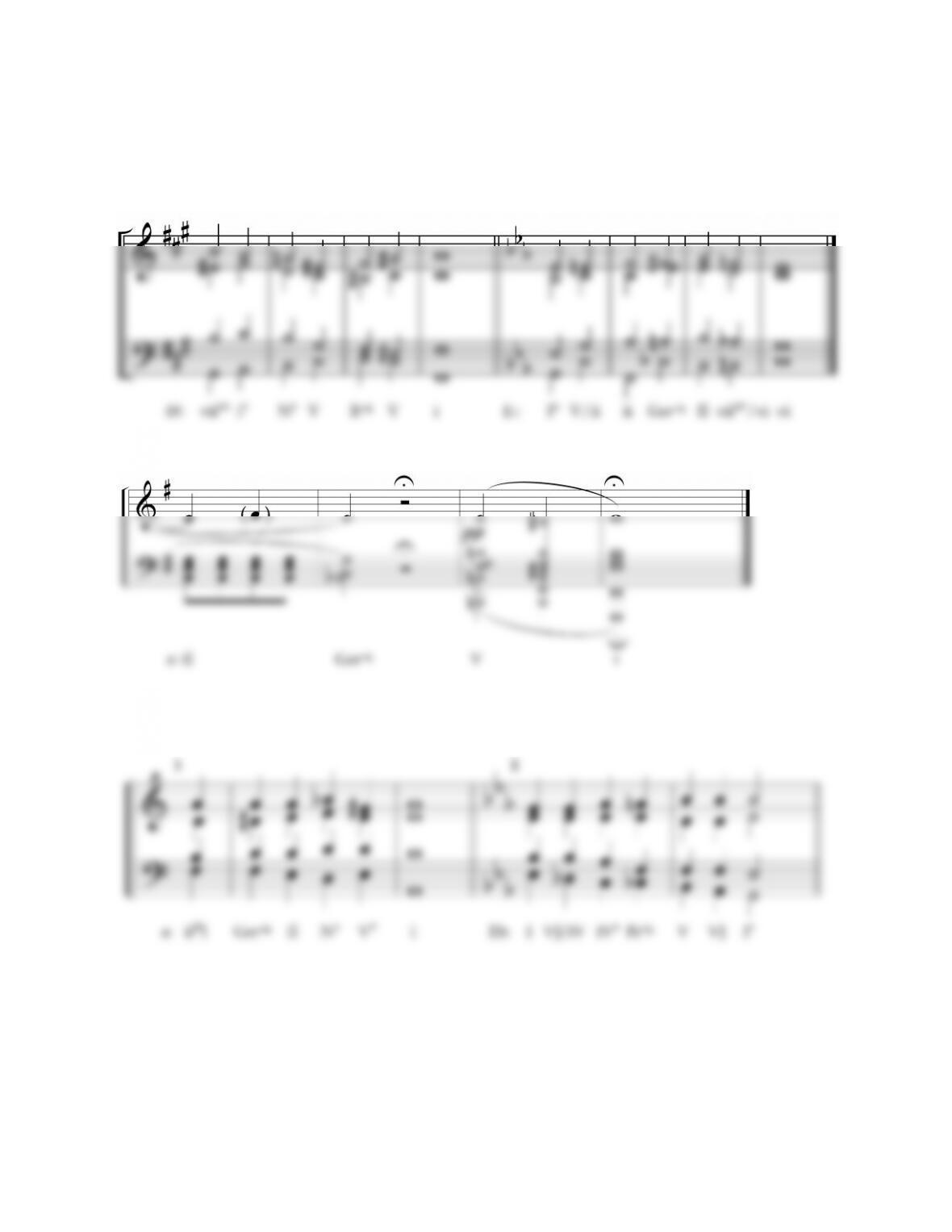
A. Label the chords in the excerpts below.
1. 2.
f#: Eb:
3.
e:
B. Continue these four–part textures.
a: 2-t g 1w Nq %e 1 Eb: ! %y/$ $q f % %y !q
Chapter 22
137
Key for Chapter 22 Quiz
A. Label the chords in the excerpts below.
1. 2.
3. Chopin: Prelude, Op. 28, No. 4
B. Continue these four–part textures.