126
CHAPTER 21
Mode Mixture and the Neapolitan
Because we view § and ¶ in minor as variable scale degrees, we do not categorize IV, v, and VII in minor as
examples of mode mixture. In fact, the major tonic triad is the only sonority that we recognize as a chord borrowed
from the parallel major. Therefore, almost all of Chapter 21 is devoted to mode mixture from minor into major: the
use of b£, b¶, and especially b§.
The concept of mode mixture is not a difficult one to grasp, but this seems to be the category of altered chords that
students find to be the most forgettable. The instructor should plan constant reminders and drills as the class gets
further into chromaticism in order to keep all of the chords studied so far fresh in the students’ minds.
If the concept of mode mixture is simple, its compositional application is not. Students tend to toss in the requested
example of mode mixture unescorted, unresolved, and unexplained, as in:
I bVI iie Ve I
Some good advice would be to approach the altered tones by step (chromatically, if possible) and to continue the
mode mixture at least until a cadential V or Iw is reached.
The Neapolitan triad is also discussed in this chapter. It is considered by some to be a Phrygian II chord, another
example of mode mixture. All of these chords should be included in aural skills drills, and students will usually find
the Neapolitan an especially easy chord to recognize aurally.
The discussion of modulations involving mode mixture and the Neapolitan should not be overlooked, as this device
puts a number of foreign keys within easy striking distance.
Answers to Selected Exercises
Exercise 21-1
A.
A: 2-y F: 70e Db: 1w C: b^ E: 20q
C. 1. The cadence is a plagal cadence.
b
Chapter 21
127
2. 135 140 145
g: i | – | – | – | – | Ve/iv | iv | – | – | N | vii0e/N | N | q | vii0e/V Ve | i |
3. At the most foreground level, the tonal structure is:
E ® e ® C ® c ® C ® e ® E
225
| 1w | 70e/6 | 6 | 70e/% | !w | —– | – | %e | !
e(E): 4 %
7. E: IVq ii–t | (!w) | 2q %r/6 6 | %r/% | %e ! | 1
Chapter 21
128
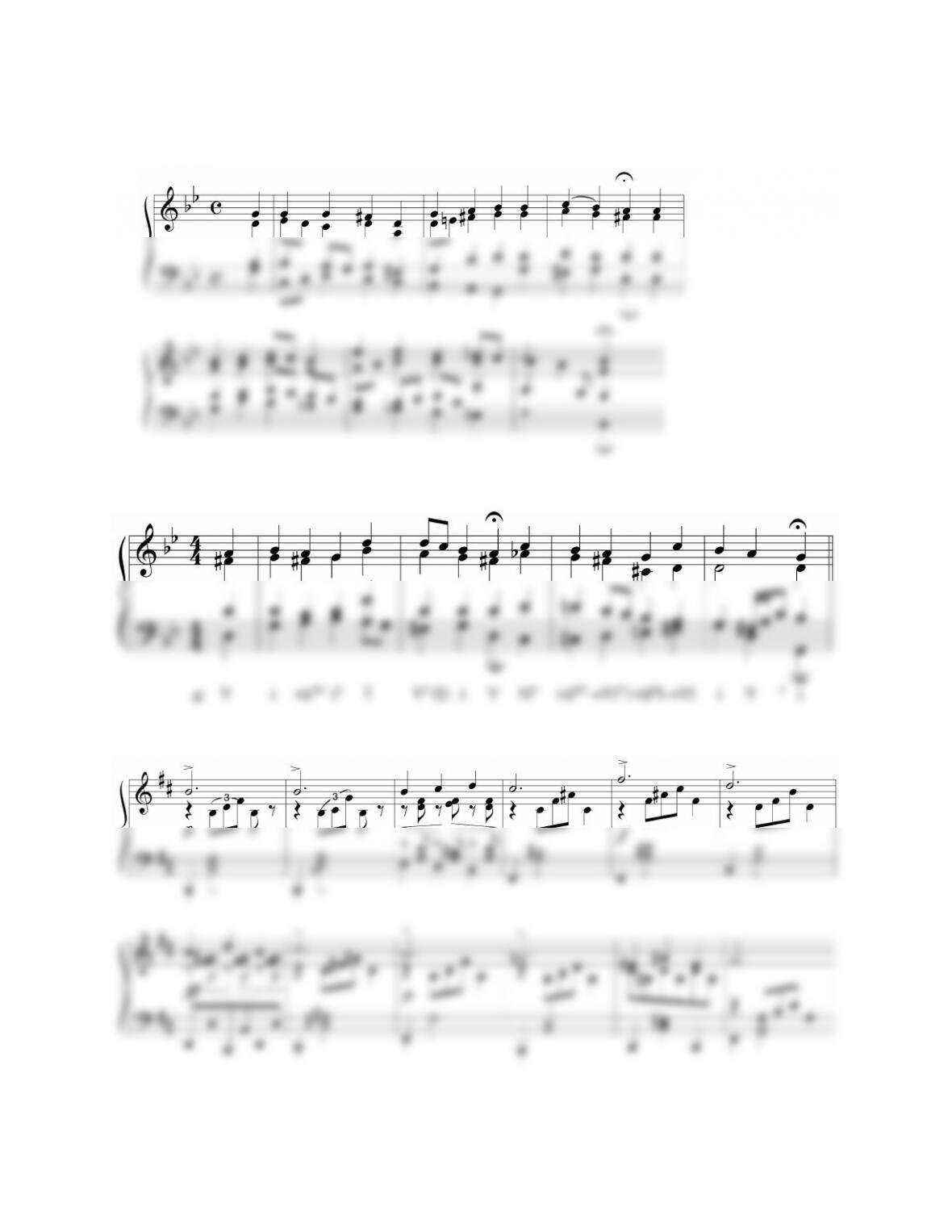
F. Bach: Chorale No.59. This beautiful harmonization should be studied in detail. Bach could have doubled the
bass of the passing Iw in m.5 only at the expense of the good alto and/or tenor lines.
G. Bach, Chorale Harmonization #262. (Bach uses a key signature of one flat in the original.)
Chapter 21
129
___________________ ____________________________
(section) (name)
Chapter 21 Quiz
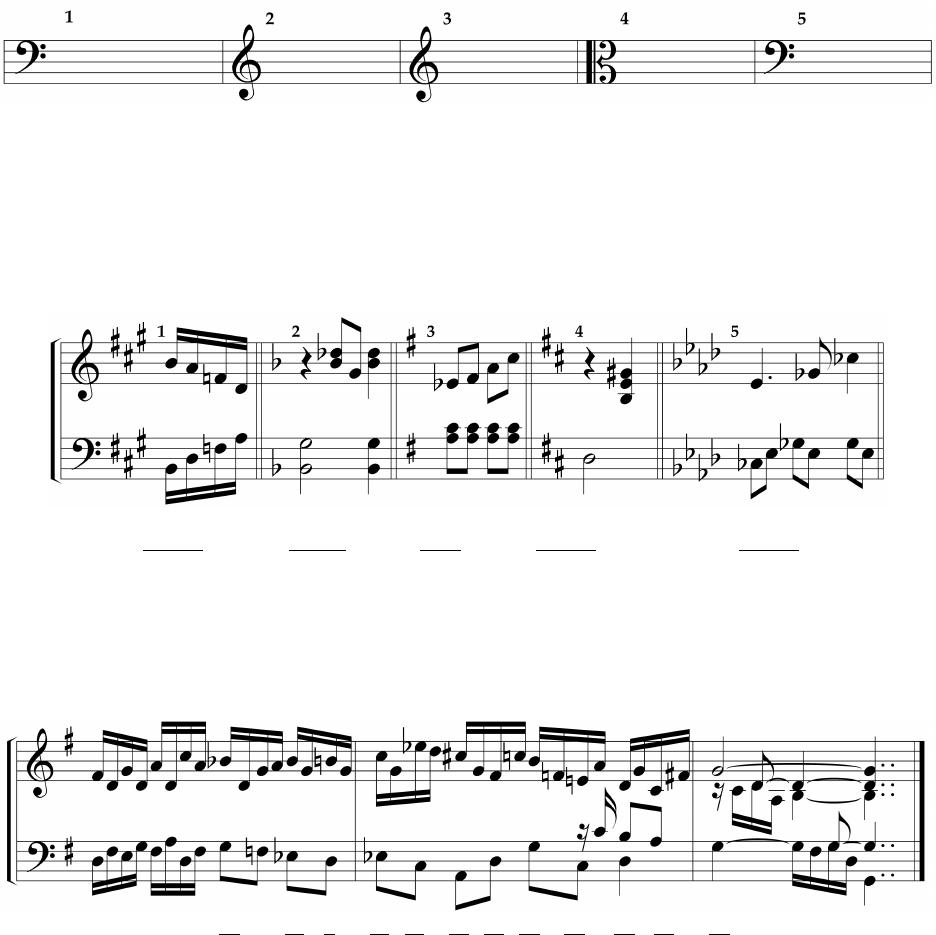
A. Notate these chords in the specified inversions. Include key signatures.
Bb: 2-r A: b^ f: Nq B: 4q Db: 70y
B. Label these chords. Be sure your roman numeral reflects the chord quality and inversion, if any.
A: ______ F: ___ G: ___ D: ______ Ab: ______
C. Analyze the following passage, using the blanks provided.
G: V __ __ __ __ __ __ __ __ __ __ __ __
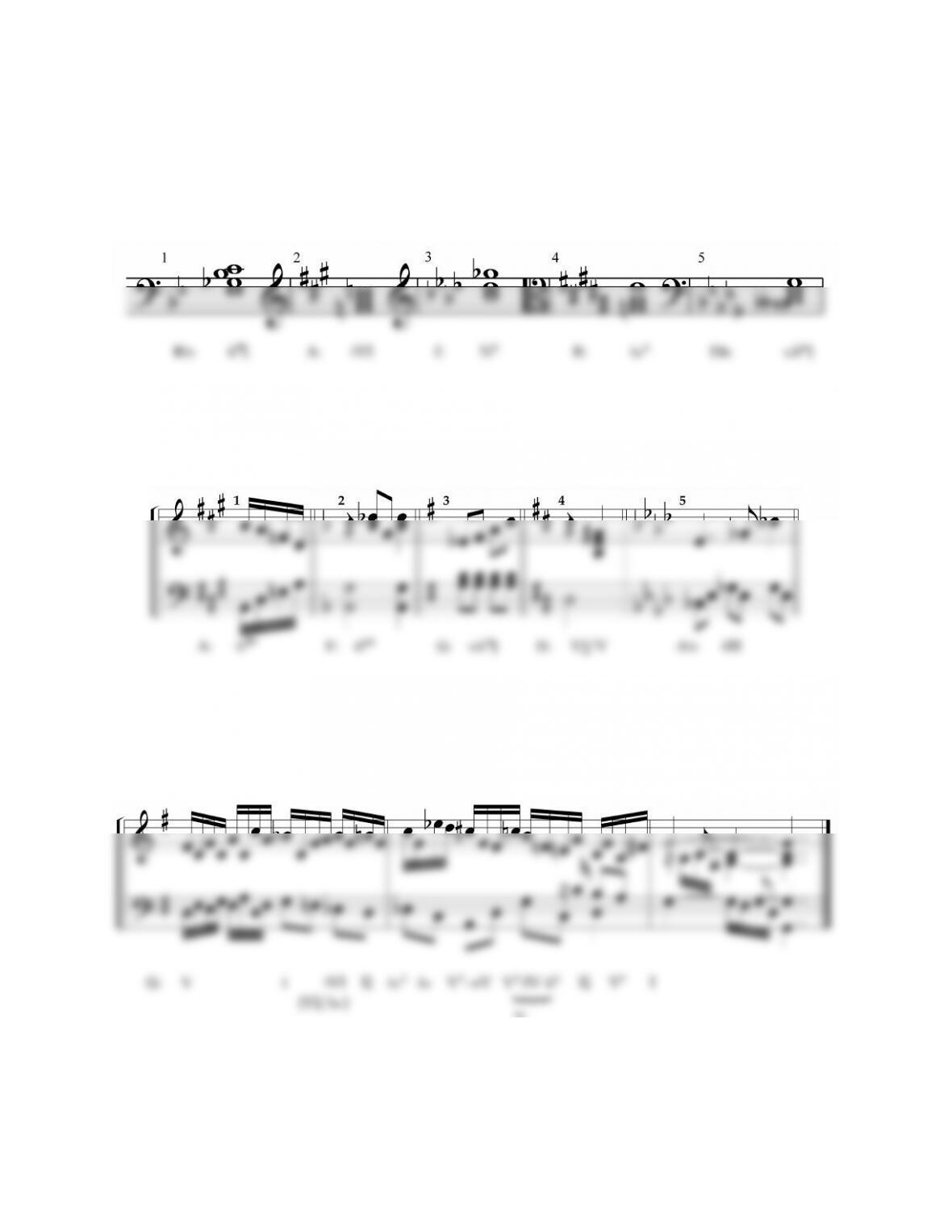
Chapter 21
130
Key for Chapter 21 Quiz
A. Notate these chords in the specified inversions. Include key signatures.
Bb: 2-r A: b^ f: Nq B: 4q Db: 70y
B. Label these chords. Be sure your roman numeral reflects the chord quality and inversion, if any.
A: 2-e F: 20q G: 70r D: %y/% Ab: b#
C. Analyze the following passage, using the blanks provided.
Bach: French Suite #6, Allemande