11
CHAPTER 2
Elements of Rhythm
Most music students have a practical understanding of durational symbols and time signatures, although some
confusion over compound time signatures can be expected. Practice with aural identification of beat and meter types
is helpful, “drop the needle” exercises being very efficient in this regard.
At the same time, the scales and intervals from Chapter 1 must be kept fresh in the students’ minds. Mastery of this
material requires much time and effort, and the students should not be allowed to backslide here.
Answers to Selected Exercises
Exercise 2-1
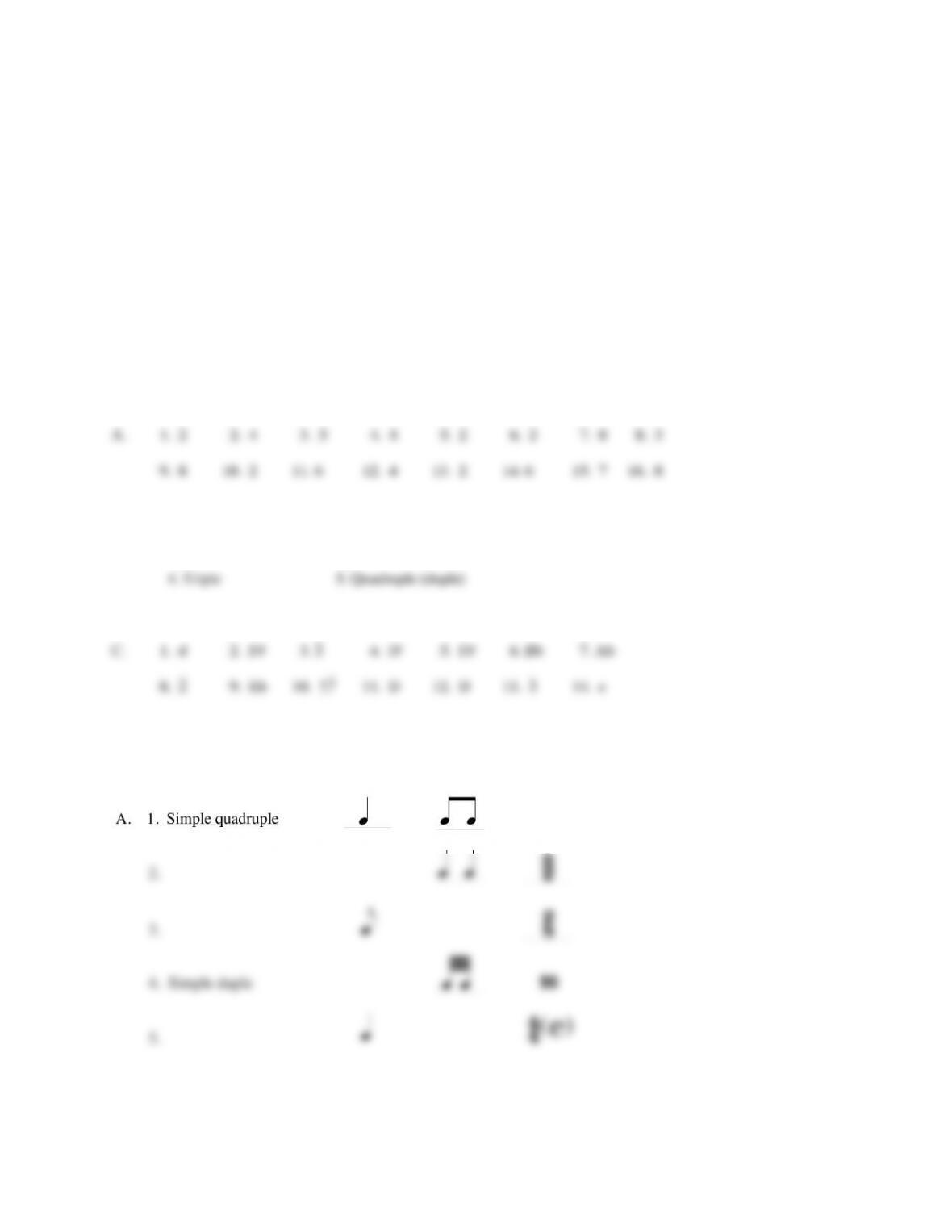
A. 1. 2 2. 4 3. 5 4. 4 5. 2 6. 2 7. 8 8. 3
B. 1. Quadruple (duple) 2. Triple 3. Duple (quadruple)
4. Triple 5. Quadruple (duple)
C. 1. d 2. F# 3. £ 4. f# 5. F# 6. Bb 7. Ab
Exercise 2-2
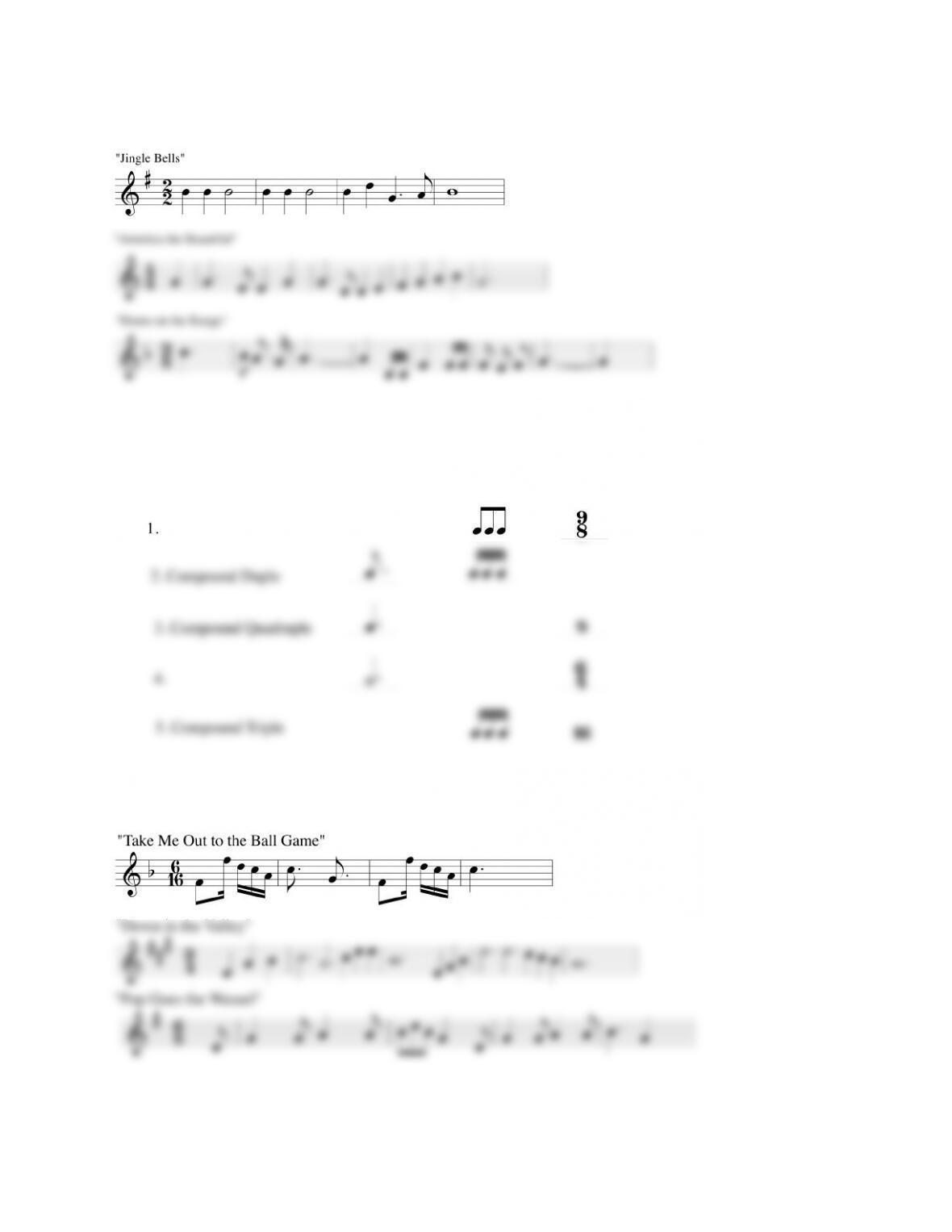
Chapter 2
12
B.
Exercise 2-3
A.
B.
Chapter 2
13
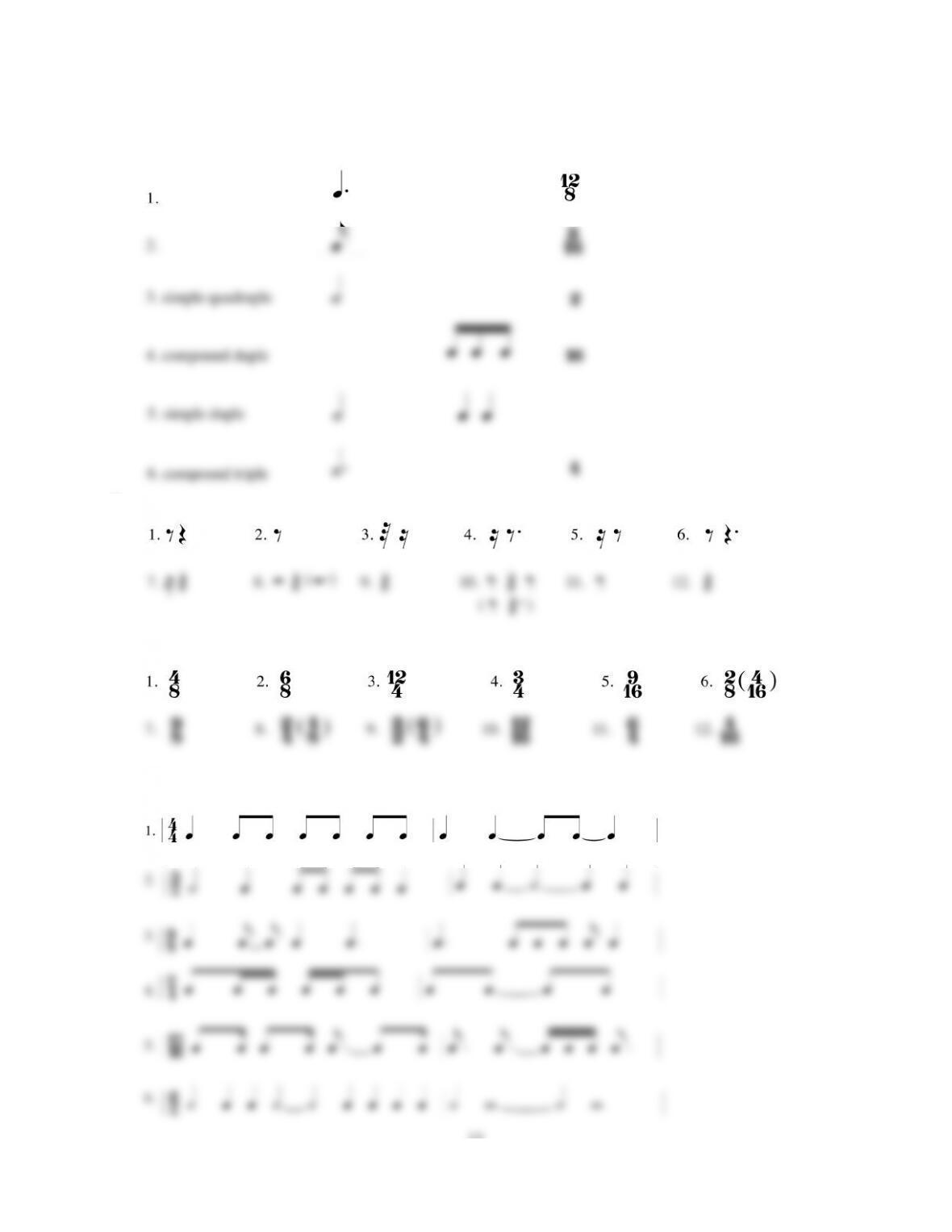
Exercise 2-4
A.
B.
C.
D. The second measure of No. 4 might also be eighth–quarter–eighth.
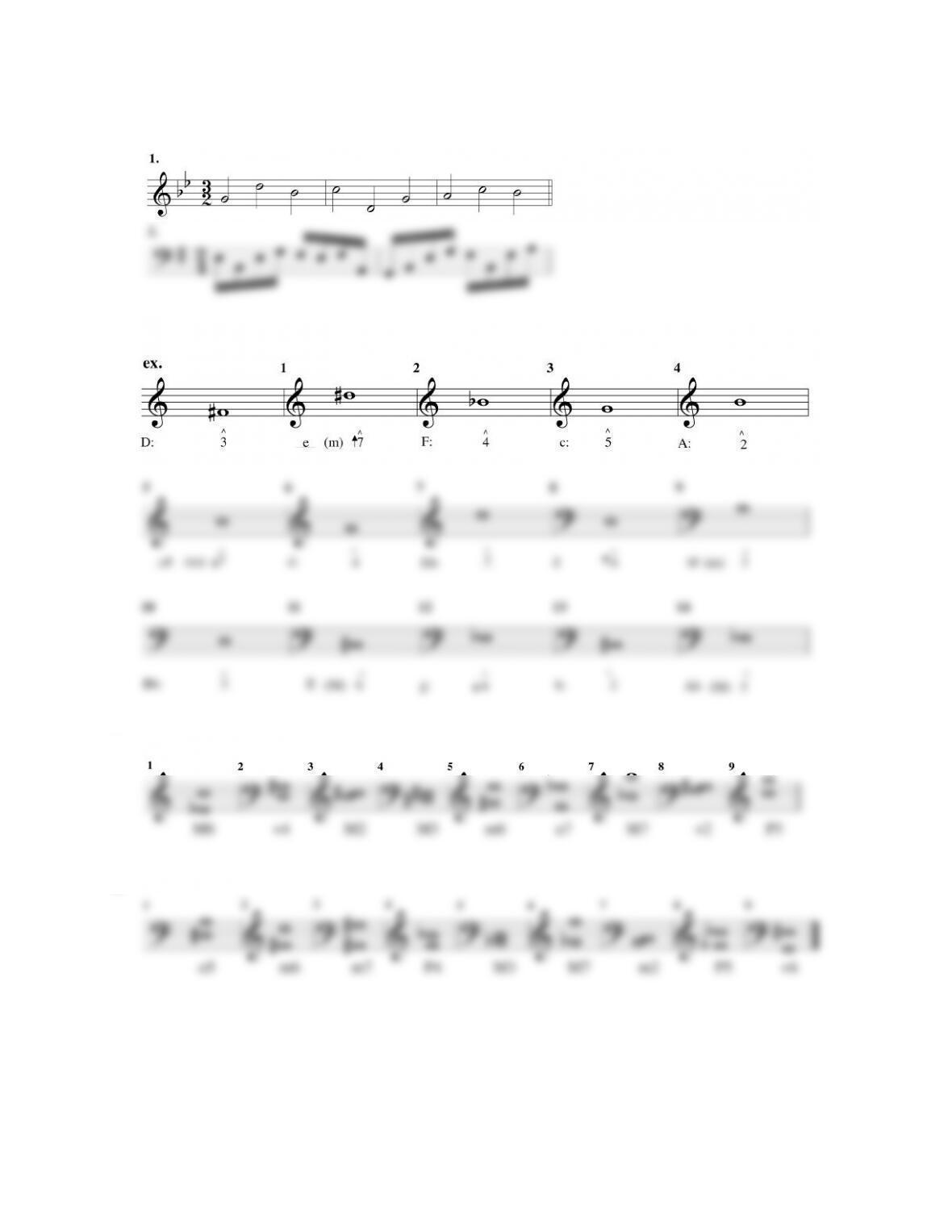
Chapter 2
14
E.
F.
H.
Chapter 2
15
_______________________ _________________________________
(section) (name)
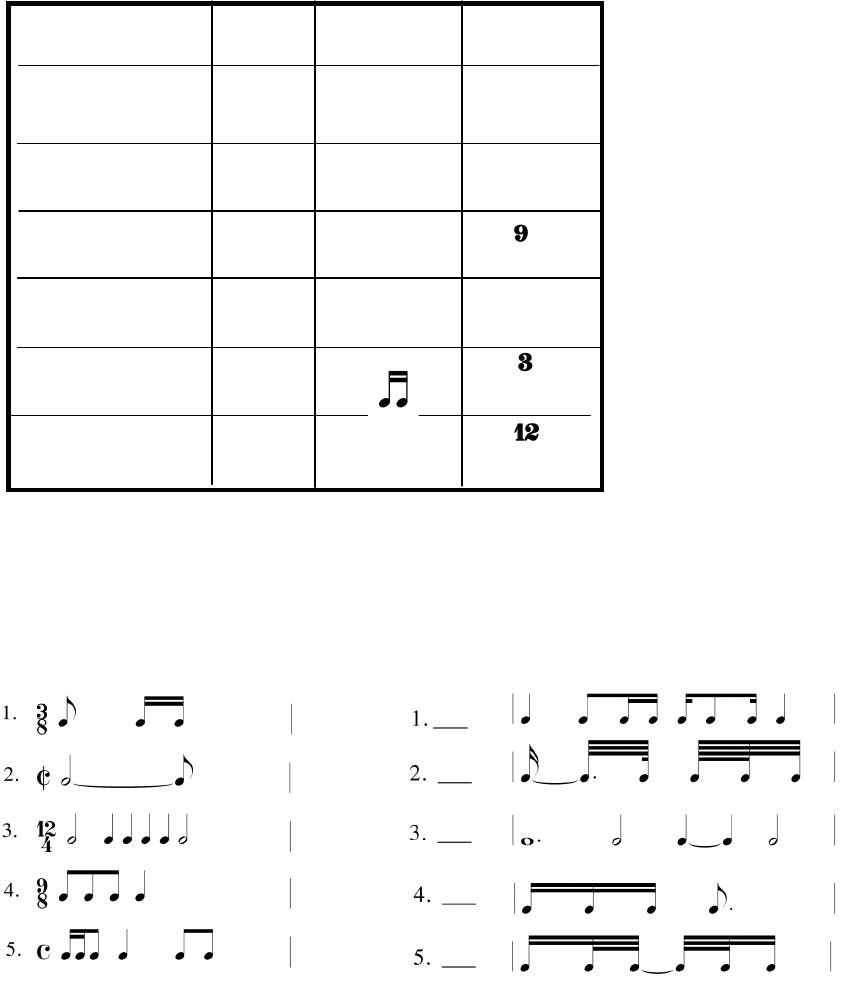
Chapter 2 Quiz
A. Fill in the blanks.
Beat and Beat Division Time
meter type value of the beat signature
1. simple quadruple q q
2. compound duple q k
3. ek
4. simple duple q
5.
6. q q q
B. Each measure below is incomplete. C. Provide an appropriate time signature
Add one or more rests to complete for each measure. In some cases more
the measure. than one correct answer may be possible.
Chapter 2
16
Key for Chapter 2 Quiz
A. Fill in the blanks.
Beat and Beat Division Time
meter type value of the beat signature
1. simple quadruple h q q
2. compound duple q k
B. Each measure below is incomplete. C. Provide an appropriate time signature
Add one or more rests to complete for each measure. In some cases more
the measure. than one correct answer may be possible.