113
CHAPTER 19
Some Other Modulatory Techniques
This chapter continues the discussion of modulatory techniques begun in Chapter 18. While perhaps not exhausting
the possibilities, these two chapters, along with the modulations discussed in Chapters 21 and 23, certainly account
for the vast majority of modulations in tonal music.
The techniques discussed in this chapter include (1) altered chords as common chords, (2) sequential modulation, (3)
modulation by common tone, (4) monophonic modulation, and (5) direct modulation. It should be remembered that
these methods are not mutually exclusive.
In analysis the importance of modulation to the structure of the composition should be emphasized as much as
possible. Chorales and other complete pieces used for analysis should be diagrammed according to their tonal
structures:
Bach: Chorale No. 39
e G e b G e
i III i v III i
There is no reason to exclude modulation from ear training drills. Most students can learn to identify modulations in
short excerpts, especially if the melody is easy to follow. In longer examples (sonata forms and so on), most students
will only be able to tell that a modulation has taken place and to identify the mode of the new key.
Answers to Selected Exercises
Exercise 19-1
A. 1. a. Ab, f, and Db.
Chapter 19
114
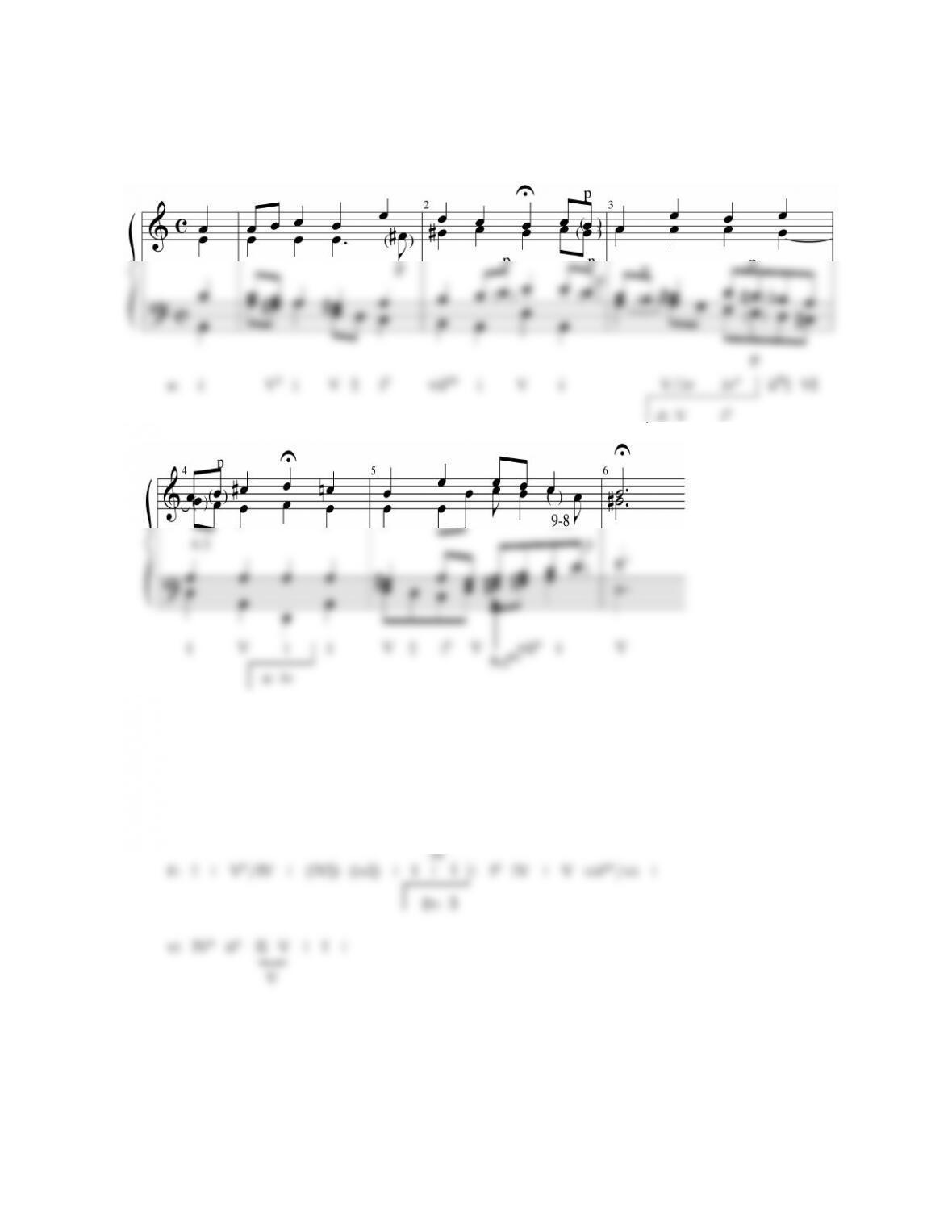
2. The wide space between alto and tenor in m.5 could have been avoided easily, but only at the expense of
the two sets of parallel thirds in contrary motion. These thirds also account for the relatively unusual root
position vii0.
a: 1 %q 1 % y 1q 70q 1 % 1 %/4 4q 2–y %r
1 % 1 1 % y 1q % 70 1 %
3. The two keys are F and Db, distantly related (foreign) keys that are in a chromatic mediant relationship to
one another. This common–tone modulation could also be explained through mode mixture, to be discussed
in Chapter 21 (F: bVIq = Db: Iq).
25
Chapter 19
115
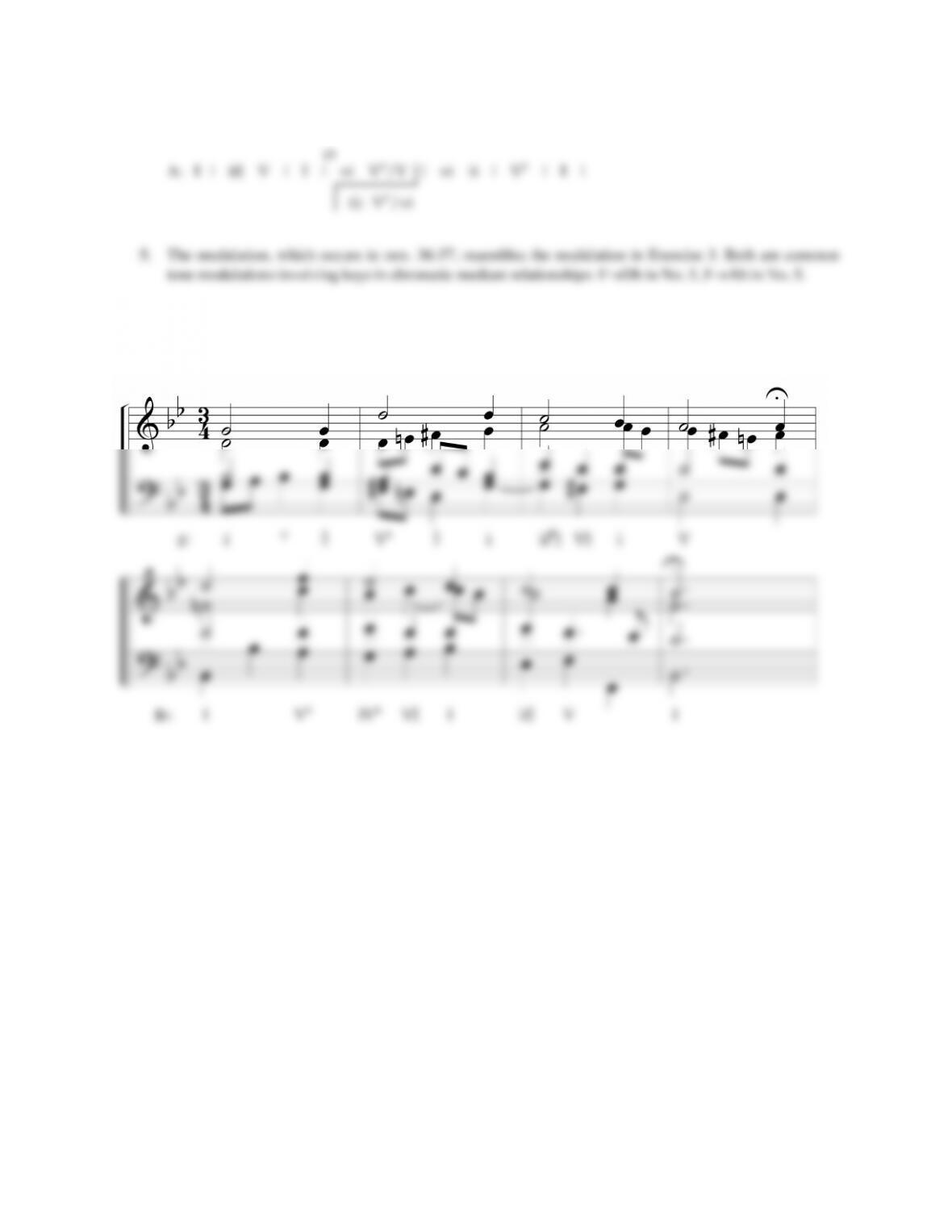
4. The NCTs are: m. 15, p; m. 17, e.
15
C. Bach: Chorale No. 155. A very clear example of a phrase modulation. The original has a key signature of one
flat.
Chapter 19
116
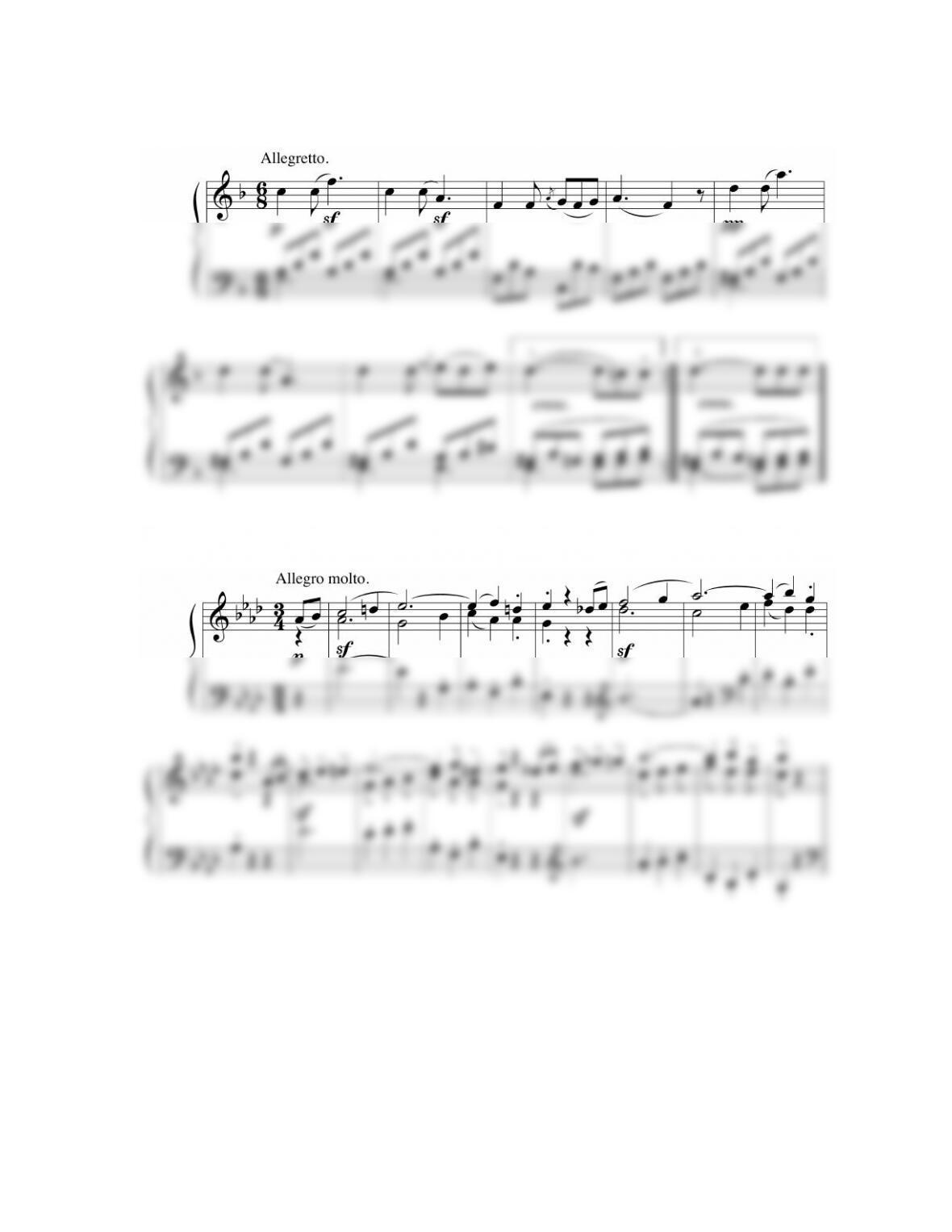
D. Beethoven: Bagatelle, Op. 33, No. 3. Two phrase modulations here.
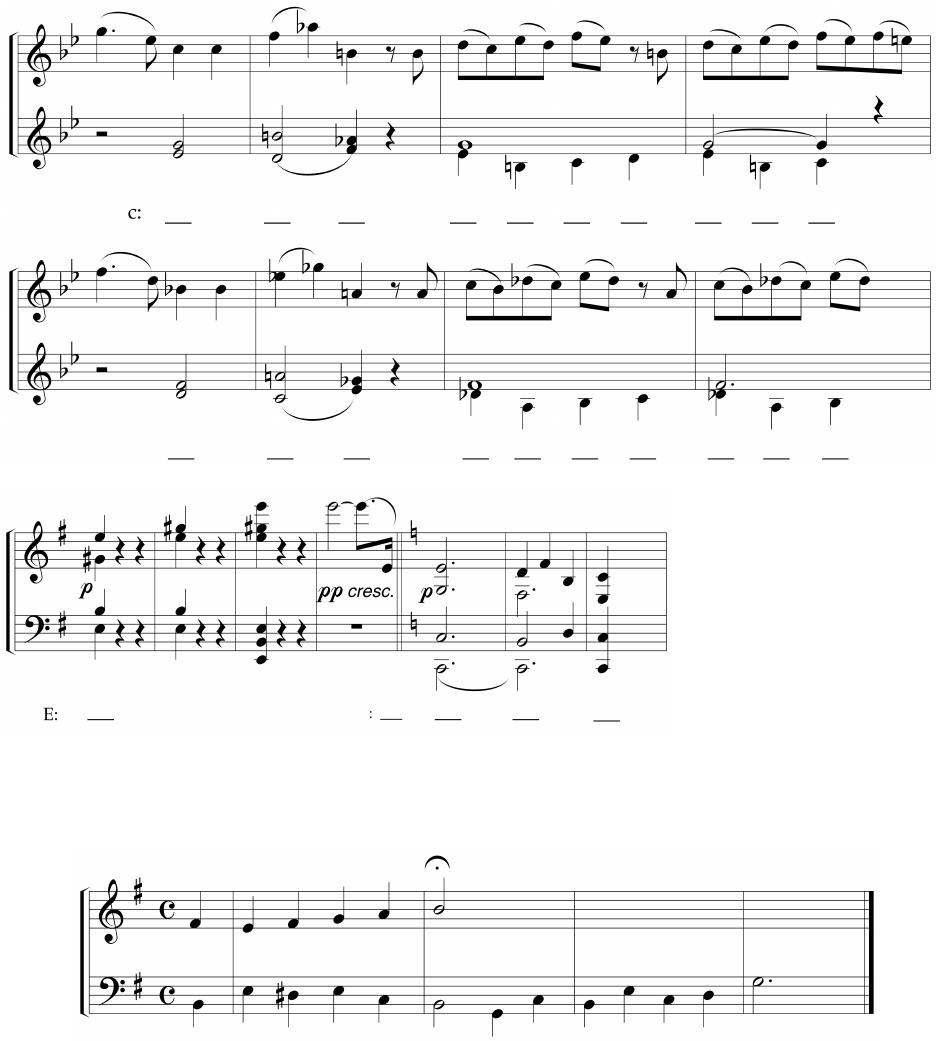
E. Beethoven: Sonata, Op. 26, II.
Chapter 19
117
____________________ __________________________
(section) (name)
Chapter 19 Quiz
A. Analyze the following passages using the blanks provided, and describe each modulation.
1.
2.
B. Continue the soprano line and fill in the inner parts as specified by the figured bass. Analyze the harmonies,
putting your roman numerals beneath the figured bass, and describe the modulation.
m 6 6 m 5n 6 r
Chapter 19
118
Key for Chapter 19 Quiz
A. Analyze the following passages using the blanks provided, and describe each modulation.
1. [Mozart: Piano Sonata, K. 333, III] Sequential modulation.
c: 1q 70r t 1q %q 1 70q 1q %q 1
2. [Beethoven: Piano Sonata, Op. 14 No. 1, II] Common–tone modulation.
E: ! ¡ ! 70 !
m 6 6 m 5n 6 r