104
CHAPTER 18
Modulations Using Diatonic Common Chords
Modulation is an extension to a deeper level of the tonicizing secondary function, although the distinction between
the two frequently cannot be clearly defined. This chapter begins the discussion of modulation by examining
relationships between tonalities, after which the concept of the common–chord modulation is explained.
Our approach to the analysis of diatonic common–chord modulations requires the student to listen carefully to the
passage to find the point at which the harmony begins to function more directly in the new key than in the old key.
The diatonic common chord, if there is one, should immediately precede that point.
Composing modulating phrases is a more difficult task because it involves both melodic and harmonic
considerations. We recommend separating these two issues at first (as in Exercises 18–2 D and E), progressing
gradually to freer compositional exercises.
Answers to Selected Exercises
Exercise 18-1
A. 1. eb 2. fm 3. G 4. Bb 5. am
6. F 7. dm 8. E 9. f 10. Cb
B. 1. D e fm G A
2. Gb ab bb Cb Db
C. 1. closely related 6. foreign
2. relative and closely related 7. enharmonically equivalent
Chapter 18
105
Exercise 18-2
A. 1. Bb F7 D
Bb: ! q | %e %q/6 |
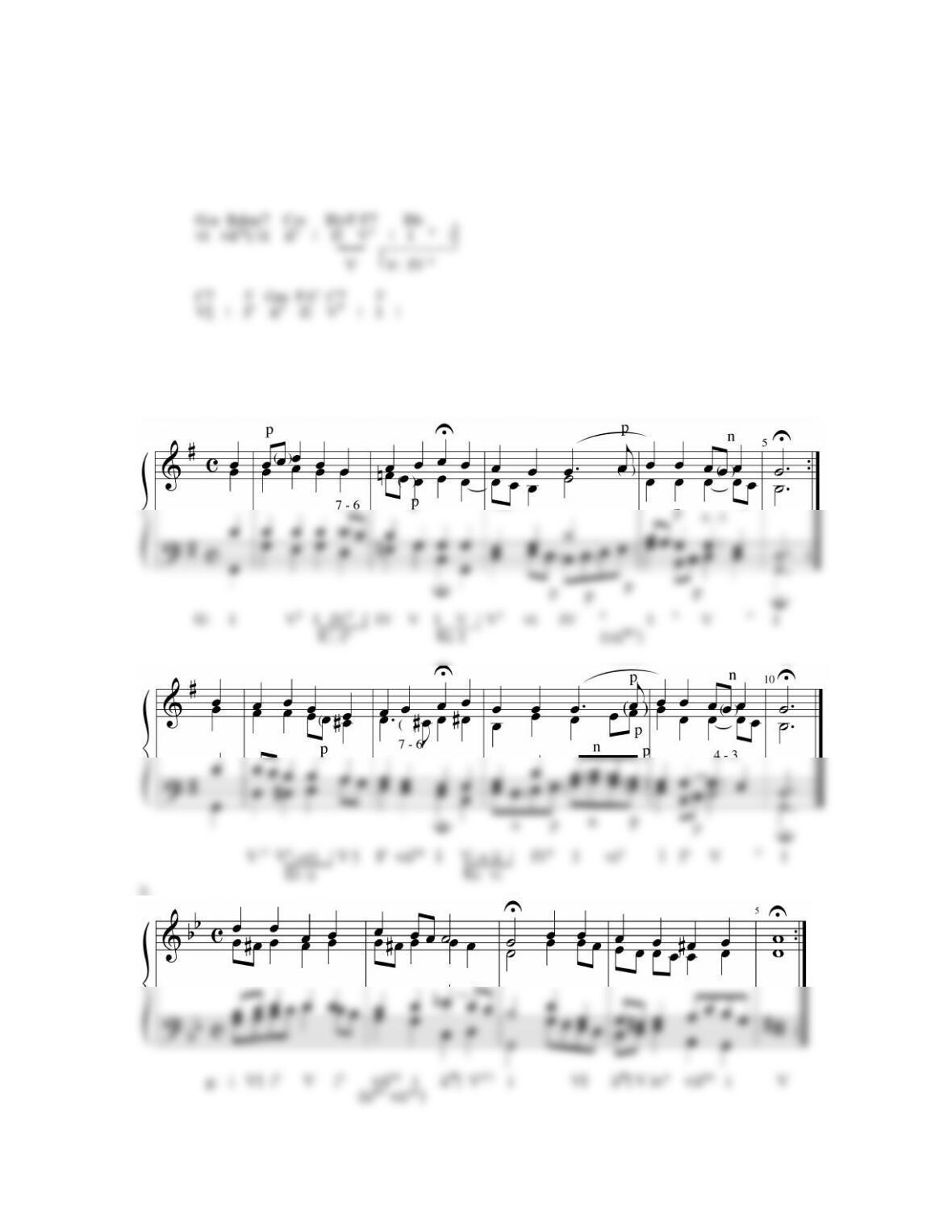
2. Phrases 2 and 4 are very similar melodically. The Em triad (G: vi) is emphasized at the beginning of the
fourth phrase.
G: ! %q ! $q $ % ! % %e 6 $ q ! q % e !
g: 1 %t 1q % 1q 70q 1 2–r %(e) 1 ^ 2–r % 4q 70q 1 %
Chapter 18
106
% 1 %q ! $q 2r % e ! $q ! ! ($q) 6q 2q % e !
4. The Ab and C are the two tones shared by the tonic triads of Ab and f. Notice that they occur in the same
register (Ab4/C4) in both keys.
f: | i vii0e | i | Vq r | i | VIq | Vr | I iiq Iw Ve | I |
{
Ab: vi | IVq V
Chapter 18
107
15
vii0t/ii | iiq Vt/ii iiq | Vr/V Iw V e | I Vr/IV |
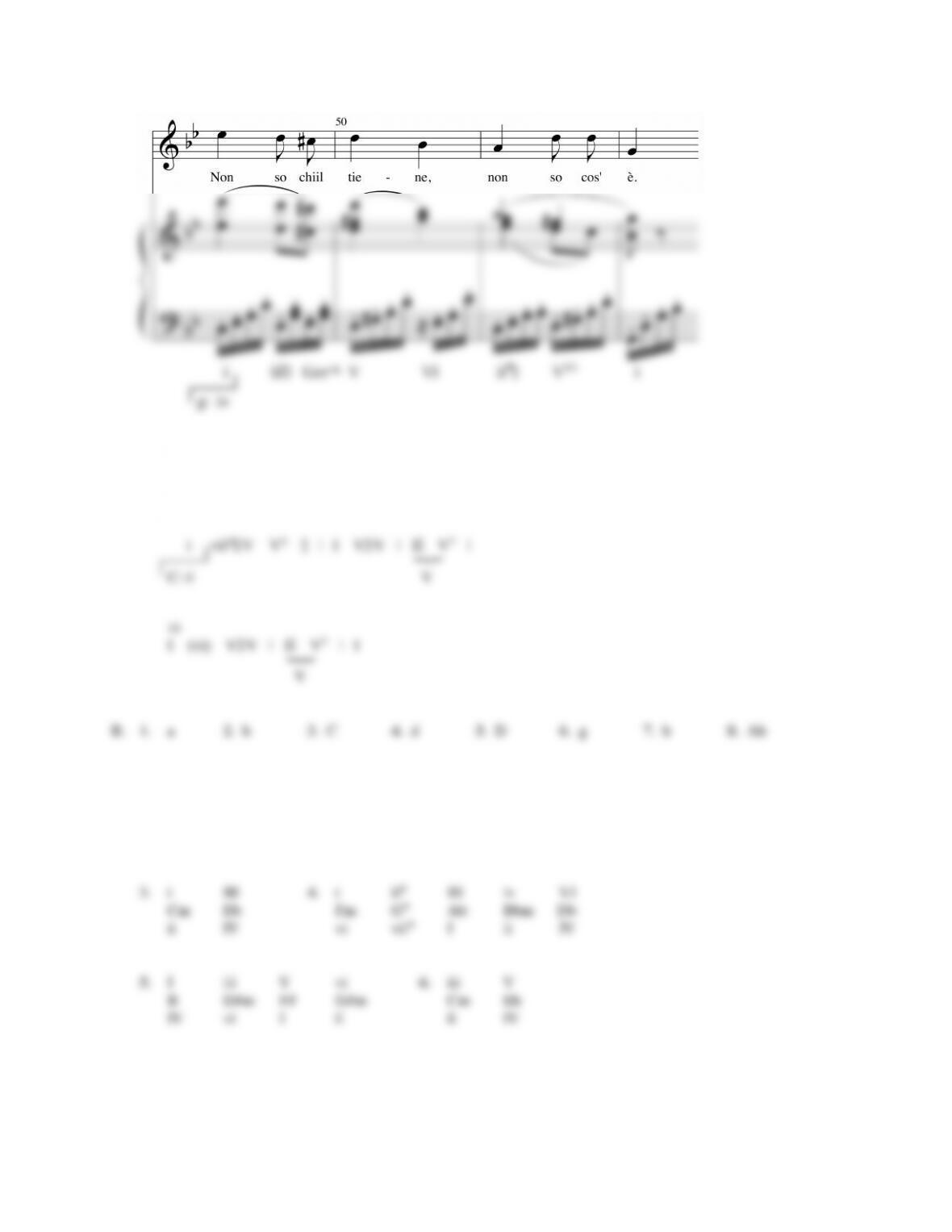
7.
(1w) 70e/% %e (!w %)
Chapter 18
108
1 (1w) g % ^ 2–r %(e) 1
8. 10
d: i Vq (r) | i V e | i Vq r |
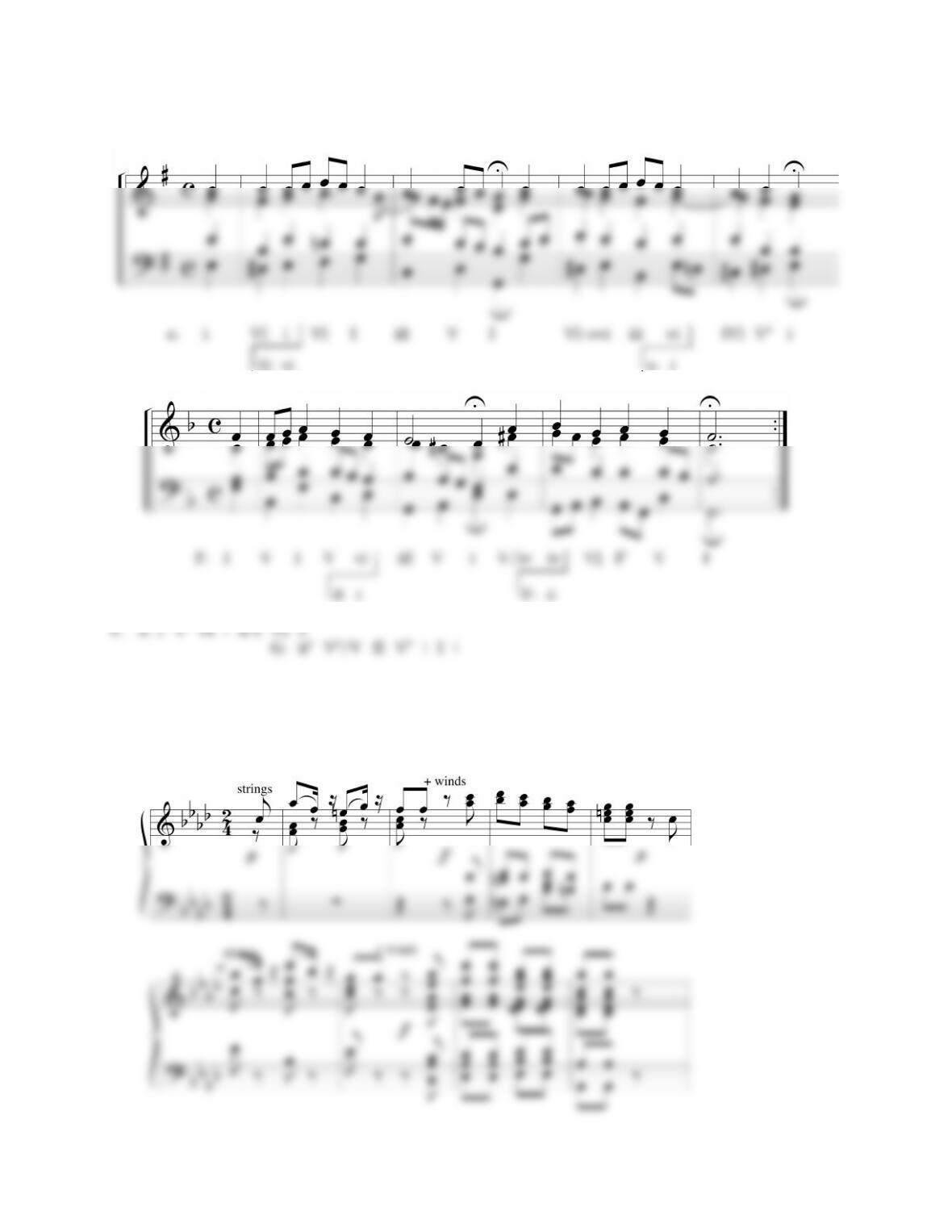
C. 1. ii IV 2. I ii IV vi
F#m A Db Ebm Gb Bbm
i III V vi I iii
Chapter 18
109
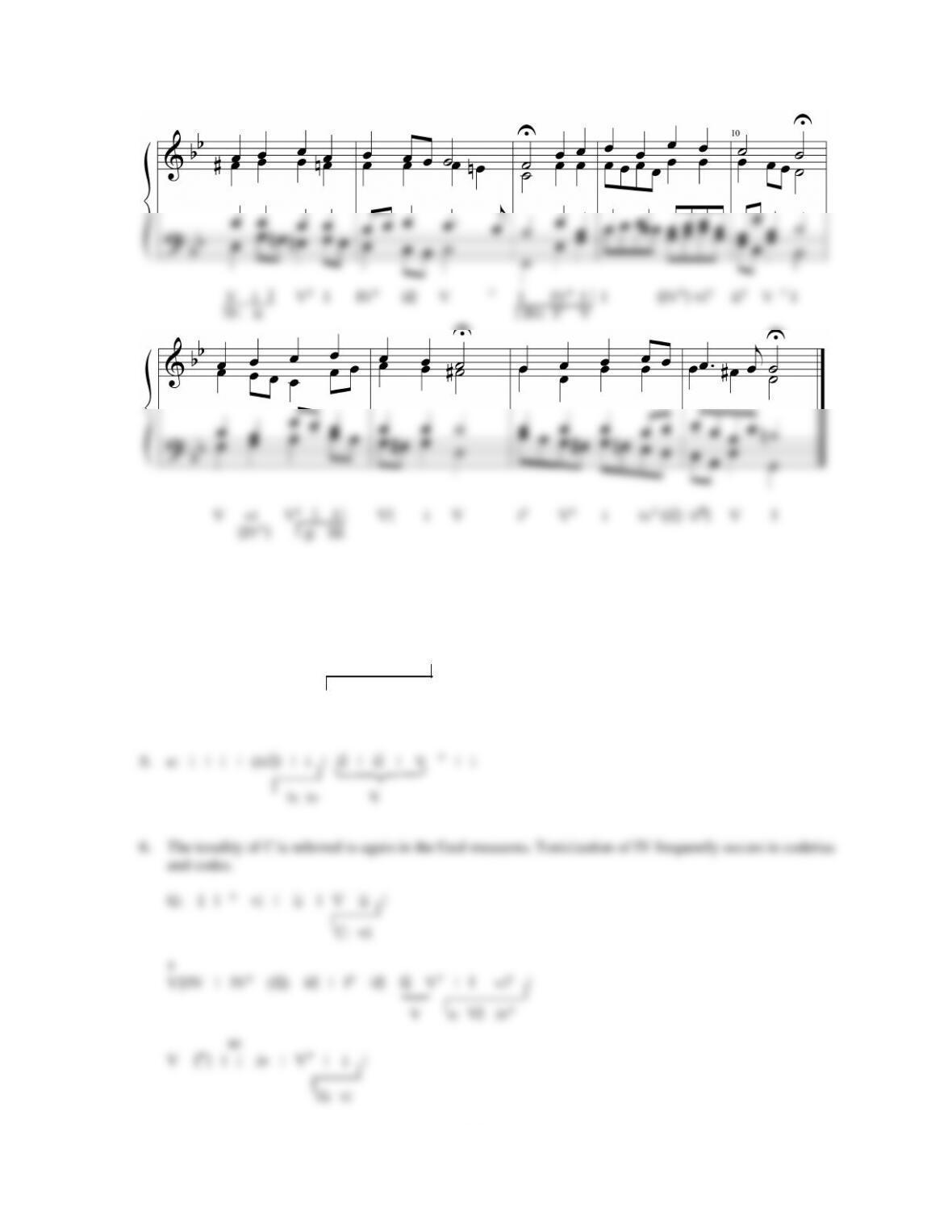
E. 1. Bach: Chorale No. 181. The B–minor triad in m. 3 temporarily contradicts the expected return to e. The
following measure employs the IVe (Mm7) in the minor mode.
F. a: 1 % ^ | 2–r %y 1q
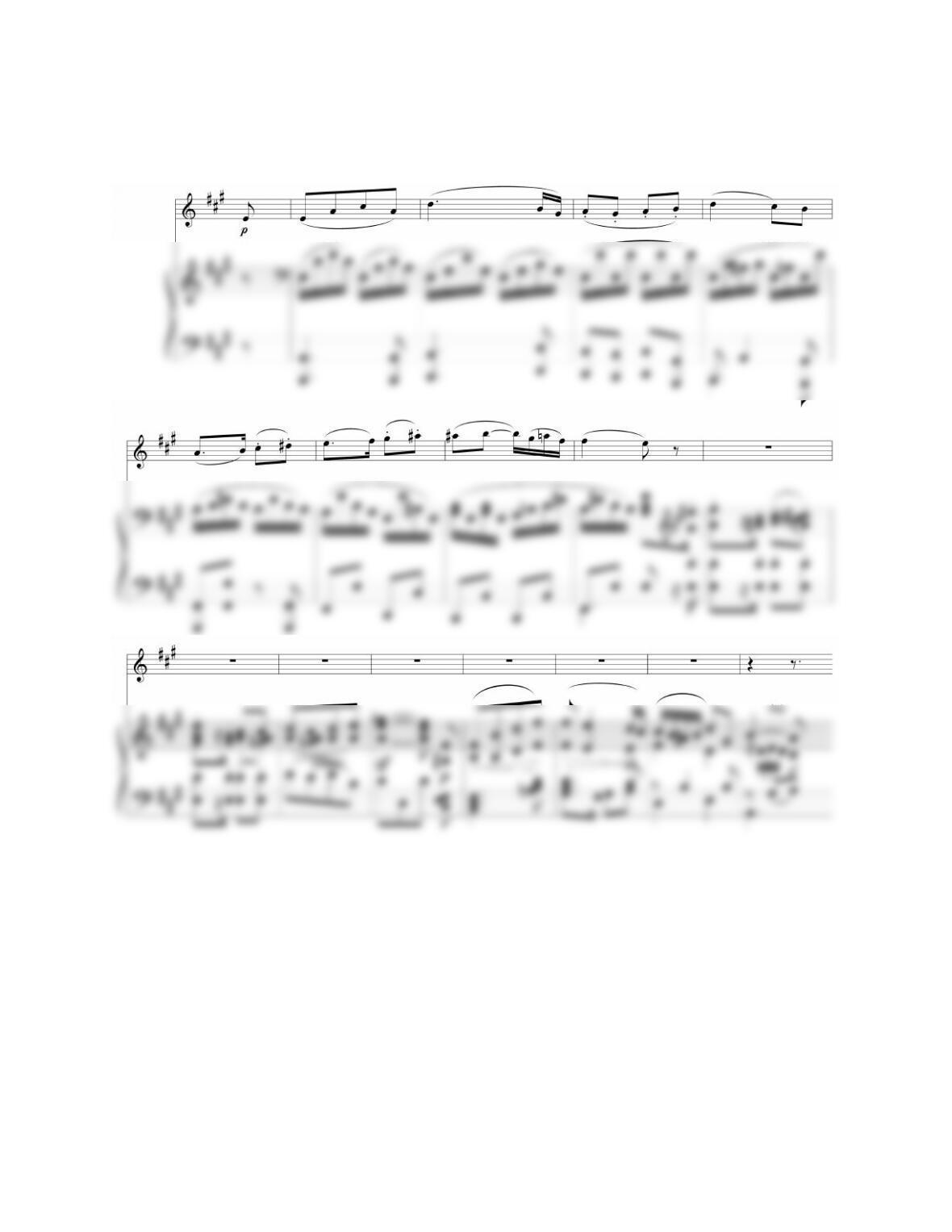
G. Haydn: Symphony No. 82, II (mm. 33–40). The two–staff transcription shown below includes most of the
doublings with the exception of the contrabasses, which double the notated bass line an octave lower in the forte
measures. The details of voice leading are not shown here (the apparent parallel fifths in m. 39, for example, do
not occur in the original).
Chapter 18
110
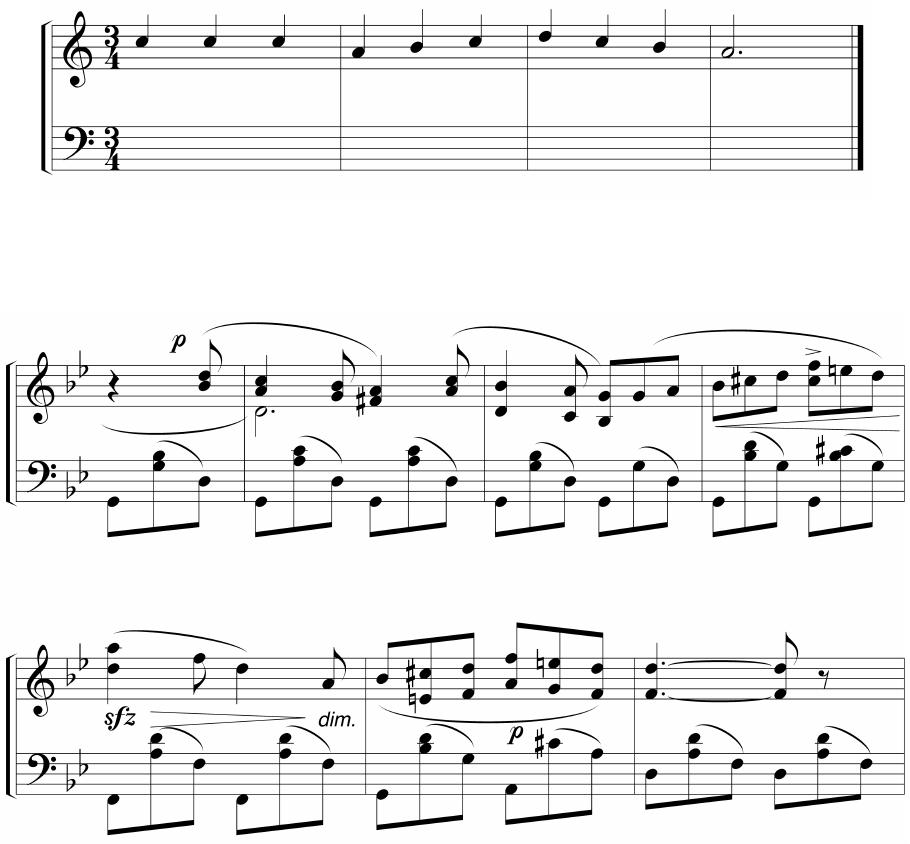
H. Beethoven: Violin Sonata, Op. 12, No. 1, II.
Chapter 18
111
__________________ ______________________________
(section) (name)
Chapter 18 Quiz
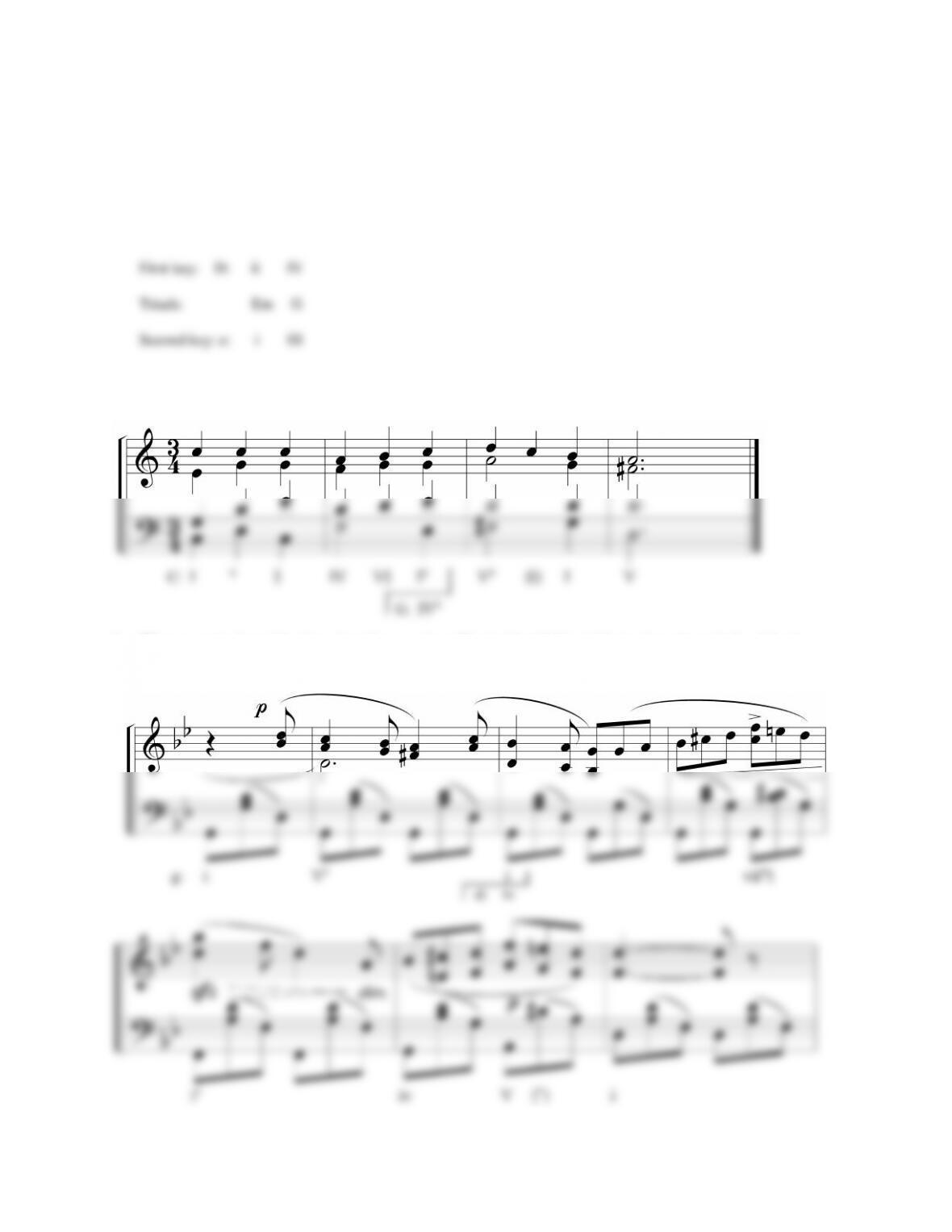
A. List the diatonic triads that could serve as common chords between this pair of keys, showing roman numerals
on the top and bottom lines and lead–sheet symbols in the middle line. In minor, assume the usual chord
qualities: 1, 20, #, 4, %, ^, 70.
First key: D:
Triads:
Second key: e:
B. Harmonize this phrase in 4 voices, modulating from C to G. Include roman numerals.
C. Label the chords in this phrase, which modulates from g minor to d minor.
Chapter 18
112
__________________ ______________________________
(section) (name)
Key for Chapter 18 Quiz
A. List the diatonic triads that could serve as common chords between this pair of keys, showing roman numerals
on the top and bottom lines and lead–sheet symbols in the middle line. In minor, assume the usual chord
qualities: 1, 20, #, 4, %, ^, 70.
B. [The excerpt is from Chorale No. 217.]
C: ! q a $ %y !q %q (r) ! %
third complete measure clearly signals the modulation.]
g: 1 %e 1 70t