79
CHAPTER 15
Other Diatonic Seventh Chords
The unit on diatonic seventh chords concludes with this chapter devoted to all of the diatonic seventh chords other
than the V7. The most commonly encountered of these are the ii7 (iiø7) and the viiø7 (viio7) chords. The remaining
diatonic seventh chords are presented in the order shown on p. 237 of the textbook, beginning with IVM7 (iv7). They
are not found as frequently as are the seventh chords previously discussed, their most natural environment probably
being the circle–of–fifths sequence.
The variability of scale degrees § and ¶ in minor results in a large number of possible diatonic seventh chords, most
of which are encountered rarely, if ever, in tonal music. However, special cases that should not be overlooked in
classroom discussion include the IVe (major–minor seventh) and the #vi-e, both of which occur as passing chords in
the minor mode. These are frequently found in Bach’s chorale harmonizations, somewhat less frequently elsewhere
in the literature.
The chapter concludes with a discussion of voice leading procedures in circle–of–fifths progressions of seventh
chords. Following the usual admonition to alternate complete with incomplete chords in a root position progression
of this type, illustrations are provided of the very commonly encountered sequences that involve inverted seventh
chords.
Answers to Selected Exercises
Exercise 15-1
A.
Chapter 15
80
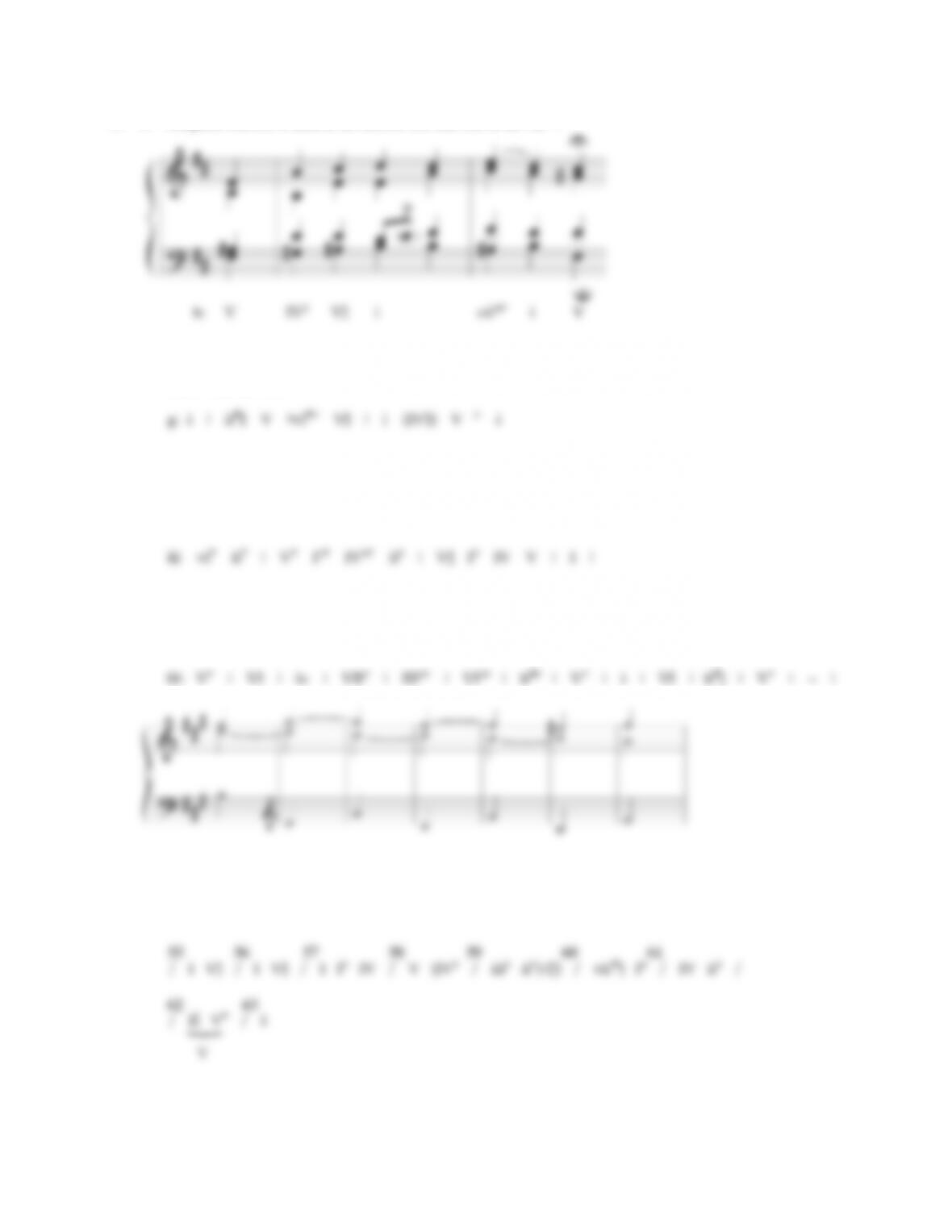
C. 1. Neighbor motion is used in all motion into and out of the 70e.
b: % $q %r 1 70e 1 %
2. Both the ii-r and the #vi-e use the suspension figure. The #vi-e is incomplete, perhaps to avoid unequal
fifths with the bass.
3. This excerpt contains a circle–of–fifths sequence in a four–part texture. All sevenths use the suspension
figure.
4. All of the seventh chords in the excerpt illustrate the suspension figure. Measures 86–92 contain a circle–of–
fifths sequence in a three–part texture.
f#: %e | ^ | 4 | &e | #9e | ^9e | 2–e | %e | 1 | ^ | 2-r | %e | _ |
5. The 7th of the 7-t is approached as a suspension. Notice also the parallel fifths between the Viola and
Violin I as the 7-t resolves, disguised by a 4–3 suspension. An alternate analysis would have a %e for the
first two 8th notes of m. 59, but we prefer the parallel sixth chords.
Chapter 15
81
D.
E.
Chapter 15
82
F. A possible realization:
F: ! $9e 7–e 3e 6e 2e %e ! 2r % ! $ %e ! % !
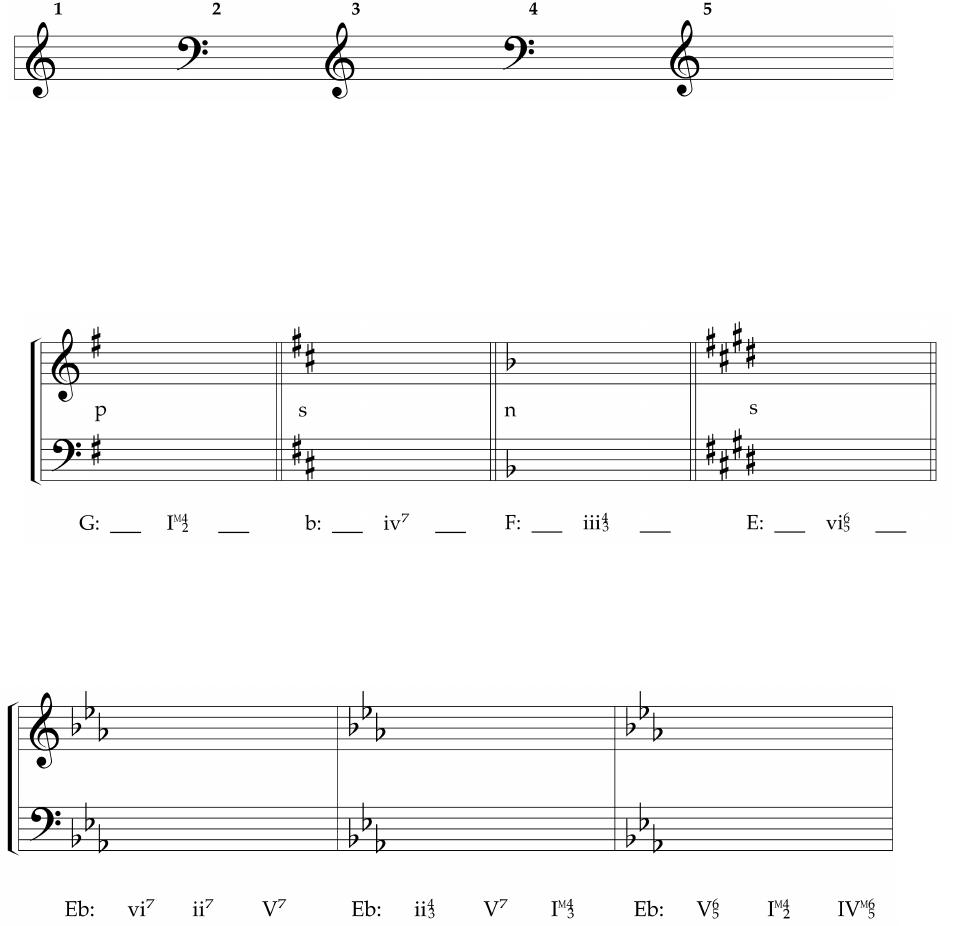
G. A possible realization:
Chapter 15
83
_____________________ __________________________
(section) (name)
Chapter 15 Quiz
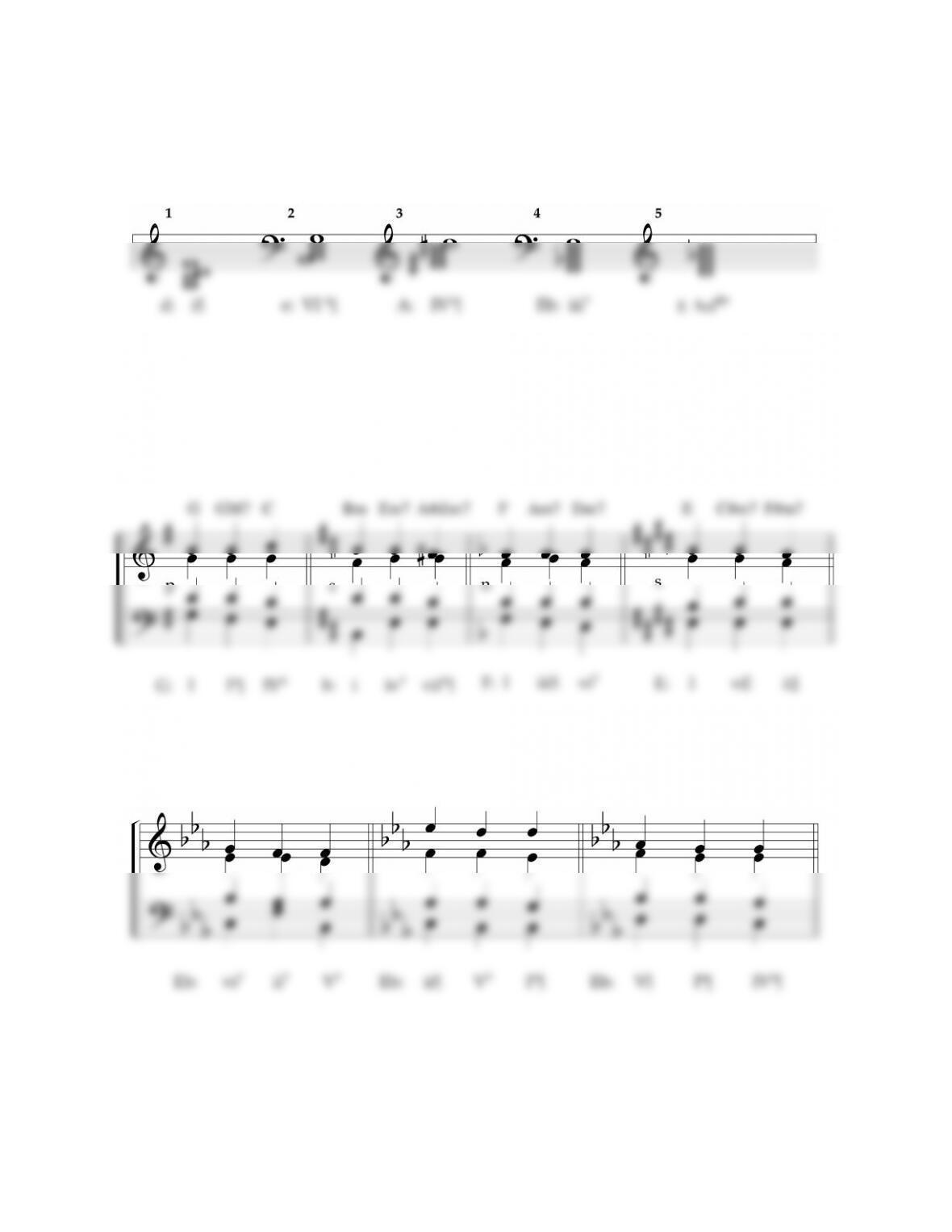
A. Notate the following chords in the specified keys. Use accidentals, not key signatures.
d: 1t e: ^9y A: $9r Eb: 3e f: m6-e
B. Notate, introduce, and resolve the specified chords. The seventh of each chord should be introduced as a
passing tone, suspension, or neighbor, as indicated. Include roman numeral and lead sheet analyses.
C. Complete these circle–of–fifths progressions, using conventional voice leading.
Chapter 15
84
Key for Chapter 15 Quiz
A. Notate the following chords in the specified keys. Use accidentals, not key signatures.
B. Notate, introduce, and resolve the specified chords. The seventh of each chord should be introduced as a
passing tone, suspension, or neighbor, as indicated. Include roman numeral and lead sheet analyses.
(sample solutions)
C. Complete these circle–of–fifths progressions, using conventional voice leading.