54
CHAPTER 11
Two-Part Tonal Counterpoint
The introduction to soprano/bass counterpoint included in Chapter 8 is expanded here to provide more detail and
context for students practicing the composition of musically sensitive outer–voice textures. Our approach combines
elements of traditional first–, second–, and fourth–species counterpoint (the latter two appearing in the next chapter)
with a tonal framework, including several of the cadential progressions introduced in Chapter 10.
In this chapter, which focuses on a one–to–one rhythmic relationship between two voices moving by consonant
harmonic intervals, students are encouraged to balance tonally idiomatic harmonic progressions with optimal bass
contours that combine root position and first inversion triads and that move toward and away from registral focal
points. Creative sensitivity is required when writing a contrapuntal voice above a bass line, so issues of contour,
variety, pitch repetition, range, and the treatment of leaps are presented as basic principles to take into account.
An effective classroom activity is to illustrate the relationship between this simplified one–to–one framework and
more elaborate musical examples. Instructors can work with these elements in both directions, first by isolating the
outer voices of a “real” musical excerpt and reducing out embellishments to reveal the underlying consonant
structure, then by beginning with a one–to–one texture and adding accompaniment patterns, inner voices, and
melodic embellishments to create a short composition or excerpt.
Answers to Selected Exercises
Exercise 11–1 NOTE: Most of the “answers” shown below are only suggested solutions. Other correct solutions
would be possible in most cases.
A. 1.
Chapter 11
55
Exercise 11-2
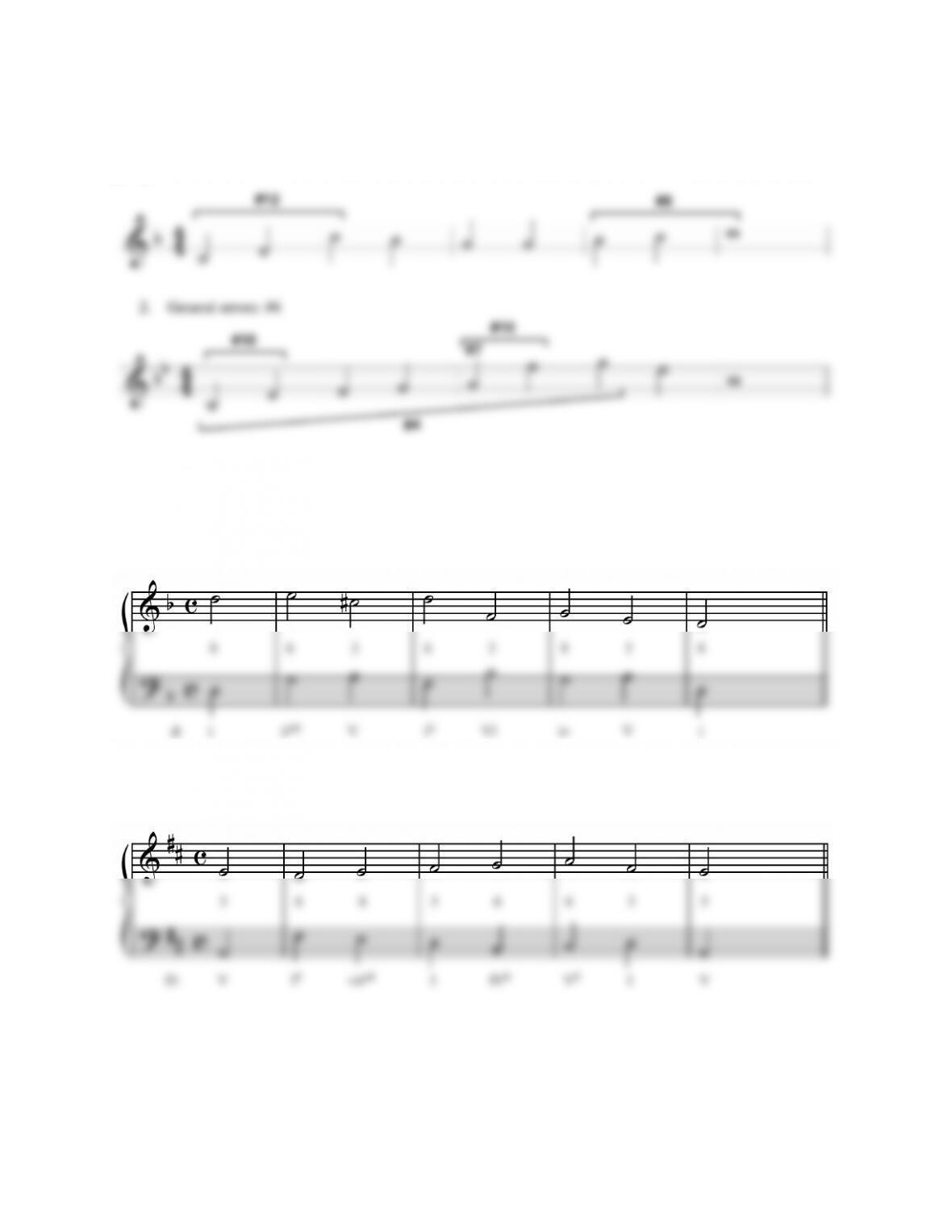
A. 1.
Exercise 11-3
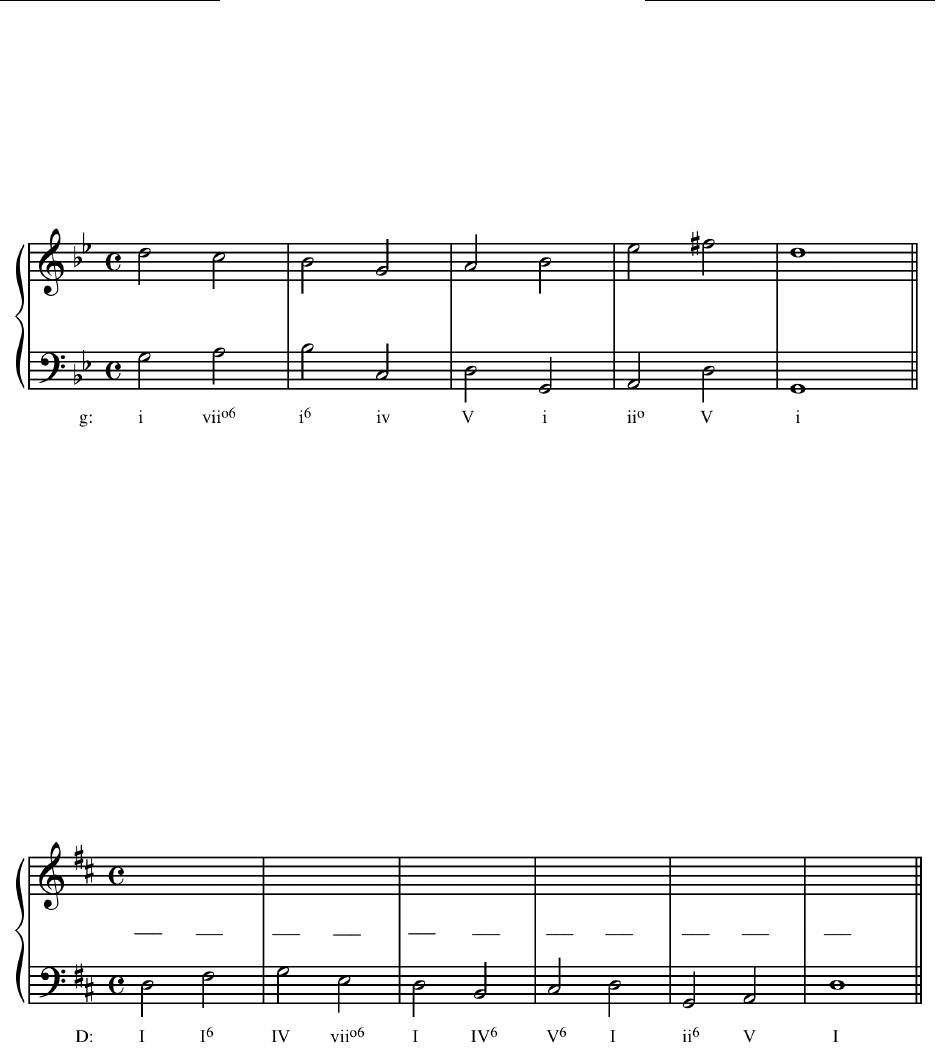
A.
B.
Chapter 11
56
______________________ _____________________________
(section) (name)
Chapter 11 Quiz
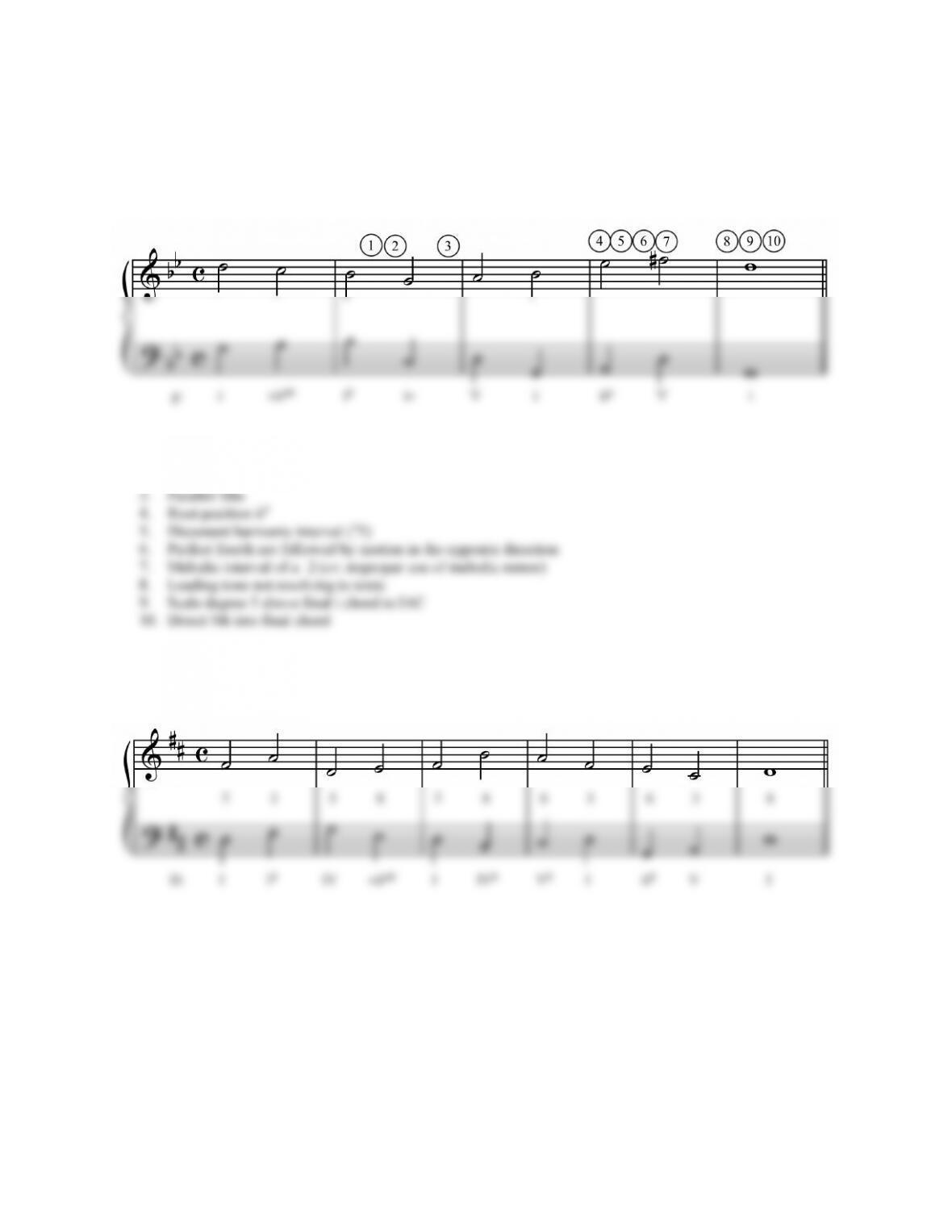
A. There are several counterpoint errors in this example. Find at least five of them. Write a number (1–5) for each
error over the measure in which the error occurs. Explain each error in the corresponding blank below the
example.
1. ____________________________________________________________________________
2. ____________________________________________________________________________
3. ____________________________________________________________________________
4. ____________________________________________________________________________
5. ____________________________________________________________________________
B. Compose a good one–to–one counterpoint to the following bass line. Write a PAC as the final cadence. Indicate
the harmonic intervals formed by the two voices.
Chapter 11
57
Key for Chapter 11 Quiz
A. There are several counterpoint errors in this example. Find at least five of them. Write a number (1–5) for each
error over the measure in which the error occurs. Explain each error in the corresponding blank below the
example.
1. Melodic interval of a m7
2. Direct 5ths
3. Parallel 5ths
B. Compose a good one–to–one counterpoint to the following bass line. Write a PAC as the final cadence. Indicate
the harmonic intervals formed by the two voices.