48
CHAPTER 10
Cadences, Phrases, Periods, and Sentences
This chapter introduces the student to formal analysis. The emphasis here is on the phrase and on small structures
that combine phrases, in contrast to the details of harmony and voice leading that are the concern of most of the
chapters in this text. The Self–Test and Workbook examples should lead to some healthy disagreements over phrase
lengths and labels. Our preference is to accept any analysis that is reasonable and that is applied consistently to the
passage in question.
Some instructors may be unfamiliar with the sentence, a formal unit introduced in this chapter. If a more exhaustive
discussion is desired, please refer to William Caplin’s Classical Form (New York: Oxford University Press, 1998).
It is essential that this material be reinforced aurally. The examples and exercises should be heard, of course, but the
student should also get some practice at diagramming formal structures aurally without seeing the score. Many of
the themes of Classical symphonies and quartets work well as recorded examples for this kind of work.
An invariably successful activity is a performance by class members of the Mozart song (Ex. 10–11), with the left
hand of the piano doubled by a cello or bassoon. If time allows, the students would benefit from further analysis of
any of a number of the examples and exercise excerpts. For instance, Workbook Exercise B.5 (Mozart Sonata,
K.545) can serve as an excellent illustration of how a masterful composer embellishes a simple contrapuntal
framework.
At the same time, short drills on everything from intervals to voice leading should be kept up. A few minutes a day
spent on these areas will help to keep them fresh in the students’ minds.
Answers to Selected Exercises
Exercise 10-1
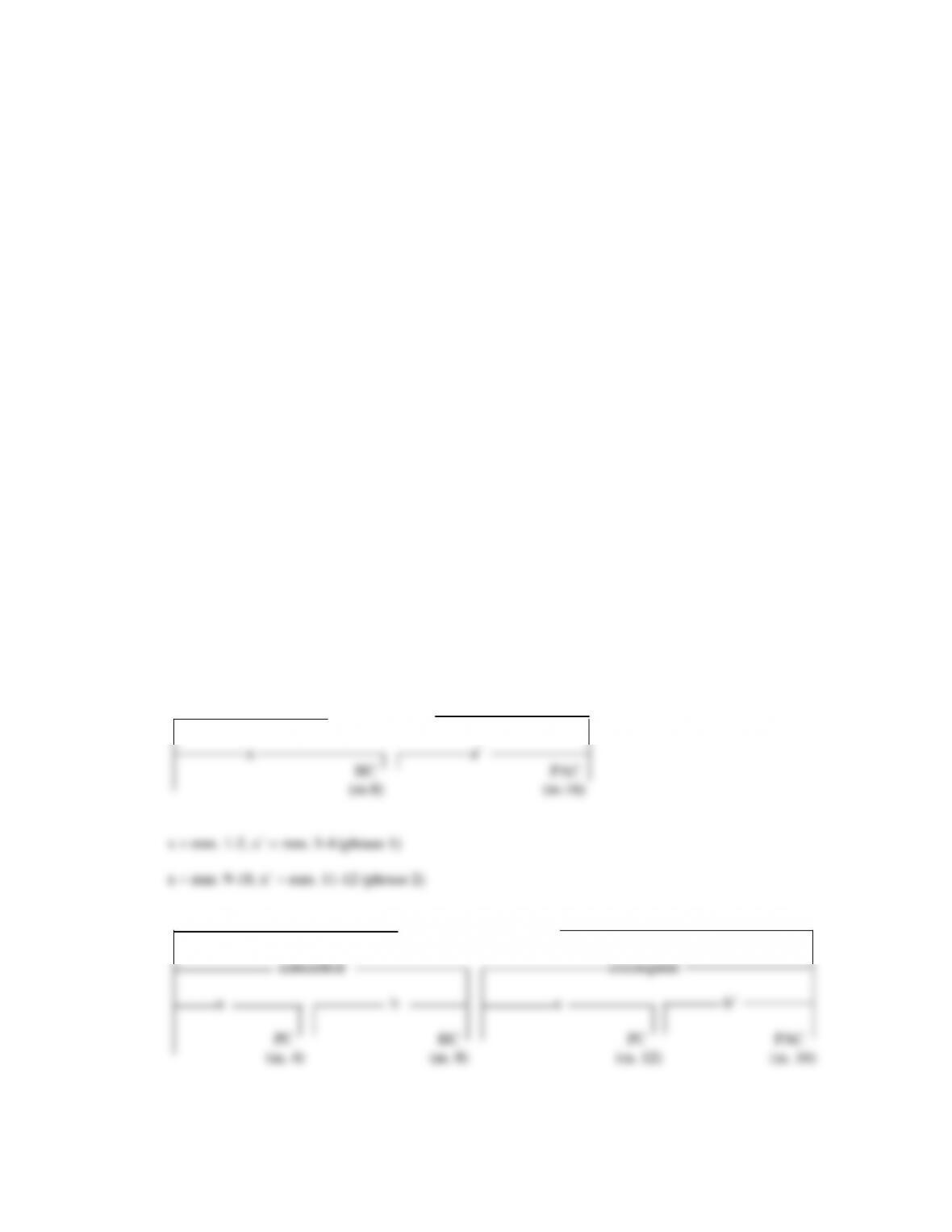
B. 1. parallel period
a a’
2. parallel double period
antecedent consequent
Chapter 10
49
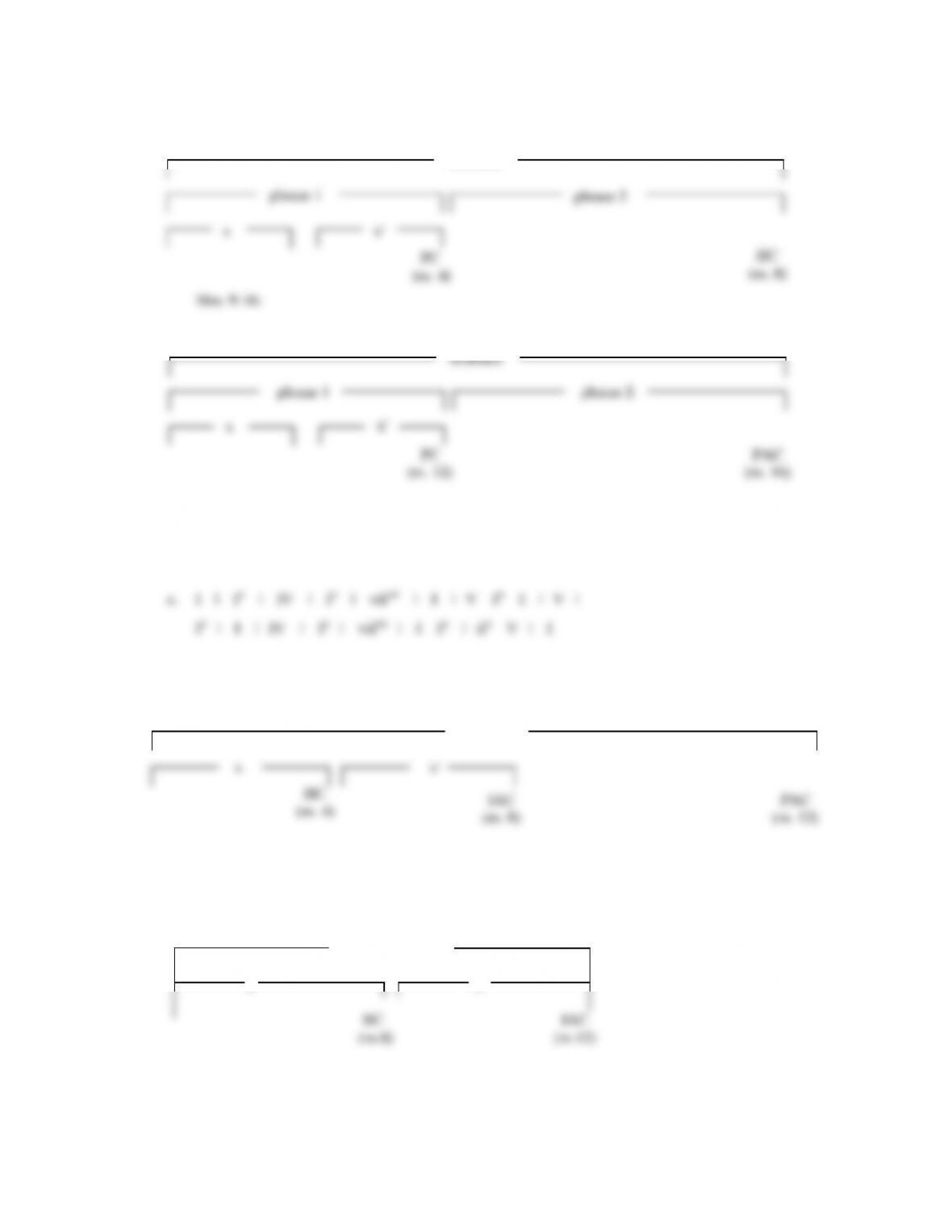
a. Mm. 1–8:
x
x’
b. The clearest example of imitation between the melody and the bass occurs in mm. 12–13. (One could
also hear 8–measure phrases in this excerpt, in which case the form is a parallel period.)
3. The descending chords in mm. 3–4 and 7–8 can be understood as a harmonic sequence of first–inversion
triads. Note that they help to smooth the connection between the cadential chords in each of these phrases.
4. The two phrases are almost identical rhythmically, although their melodic contours are contrasting.
The progression at “x” is a tonicization of (not a modulation to) G, the relative major.
contrasting period
a b
x
phrase 1
phrase 2
sentence
phrase 1
phrase 2
sentence
x
x’
sentence
Chapter 10
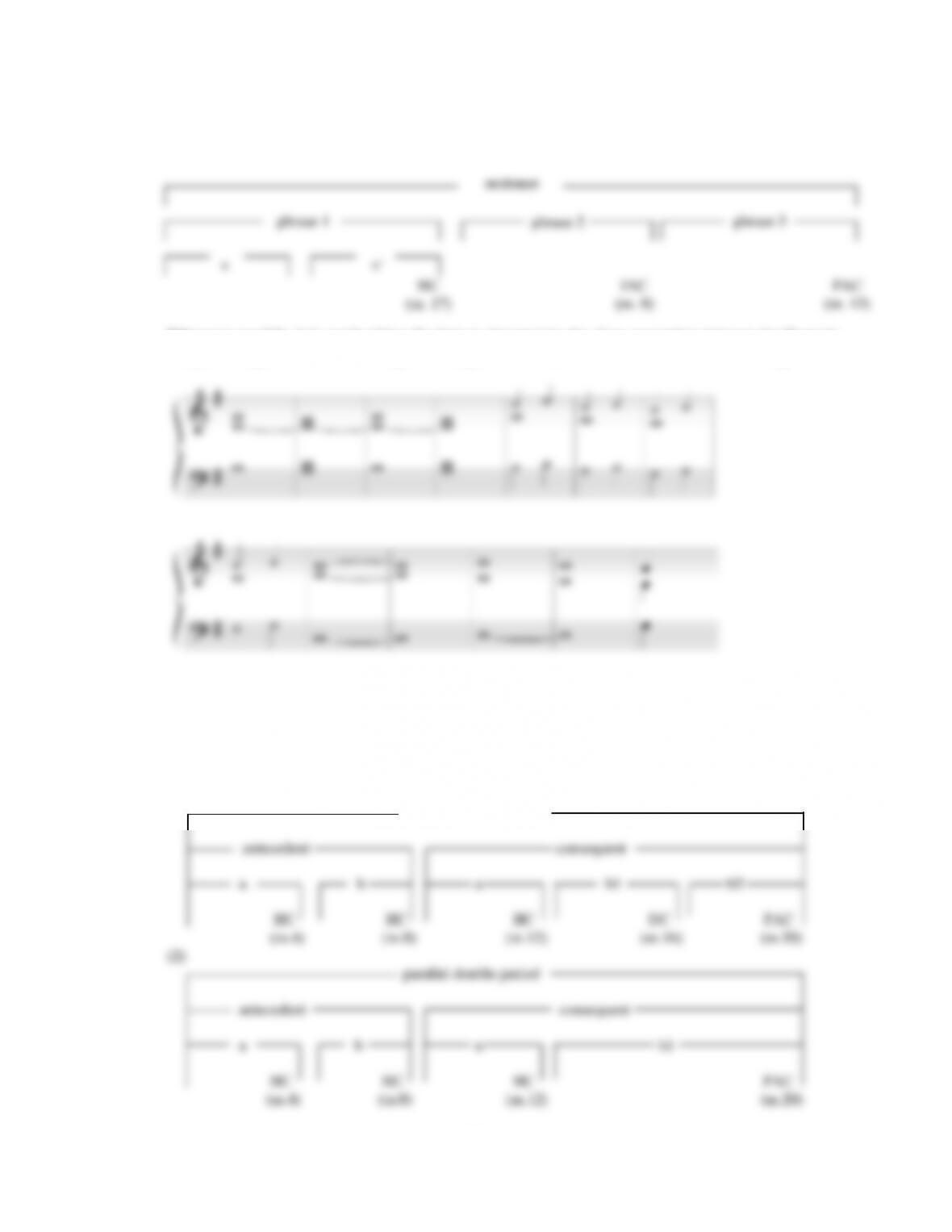
5. This excerpt is a three–phrase sentence, due to the immediate repetition of the initial two–measure idea. The
second phrase features a circle–of–fifths sequence.
and partwriting exercises. This excerpt for example, can be heard as an elaboration of the following:
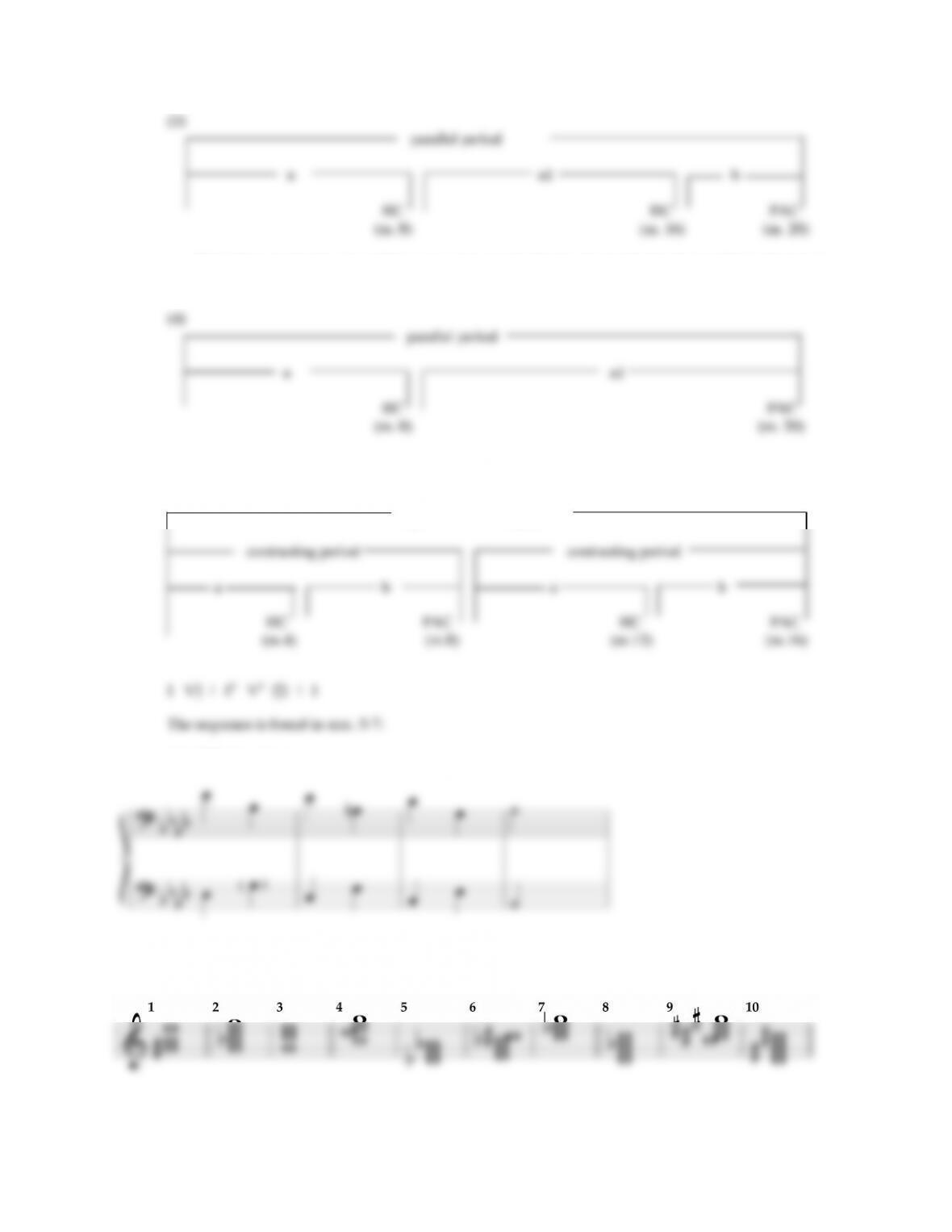
6. There are really only two aspects at issue here. To start with, is the first phrase 4 or 8 measures long? If the
former, then you have to go with (1) or (2). Secondly, is the deceptive progression at m. 16 a cadence or
not? If so, then you have to choose (1) or (3). The second issue is the more interesting one and will
probably be the subject of the most discussion. Our phrase labels (a, b, and so forth) are also open to
debate.
(1)
parallel double period
sentence
Chapter 10
51
(3)
single (very short) consequent to a and a1, resulting in a contrasting period.
(4)
7.
repeated contrasting period
C.
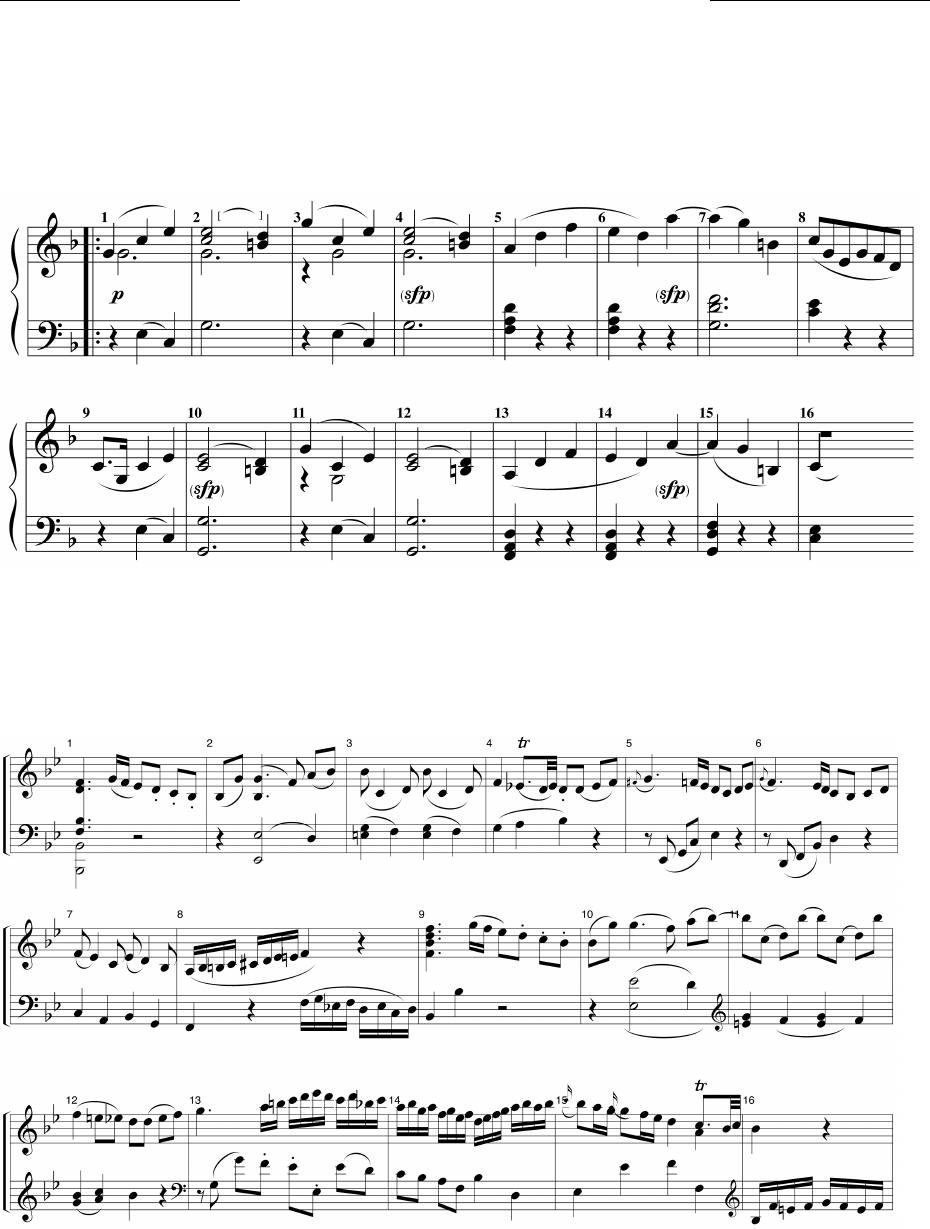
Chapter 10
52
________________________ ______________________
(section) (name)
Chapter 10 Quiz
A. On a separate piece of paper, provide a formal diagram of the following excerpt similar to those that appear in
the text. Be sure to show phrase labels (a, a’, x, x‘, etc.) and cadence types. Each phrase is 4 measures long. In
addition, name the form of mm. 1–8 and the form of mm. 1–16. Notice that the key is C Major.
B. Also provide a formal diagram of the following excerpt similar to those that appear in the text. Be sure to show
phrase labels (a, a’, x, x’, etc.) and cadence types. Each phrase is 4 measures long. In addition, name the form of
mm. 9–16 and the form of mm. 1–16. The key here is Bb Major.
Chapter 10
53
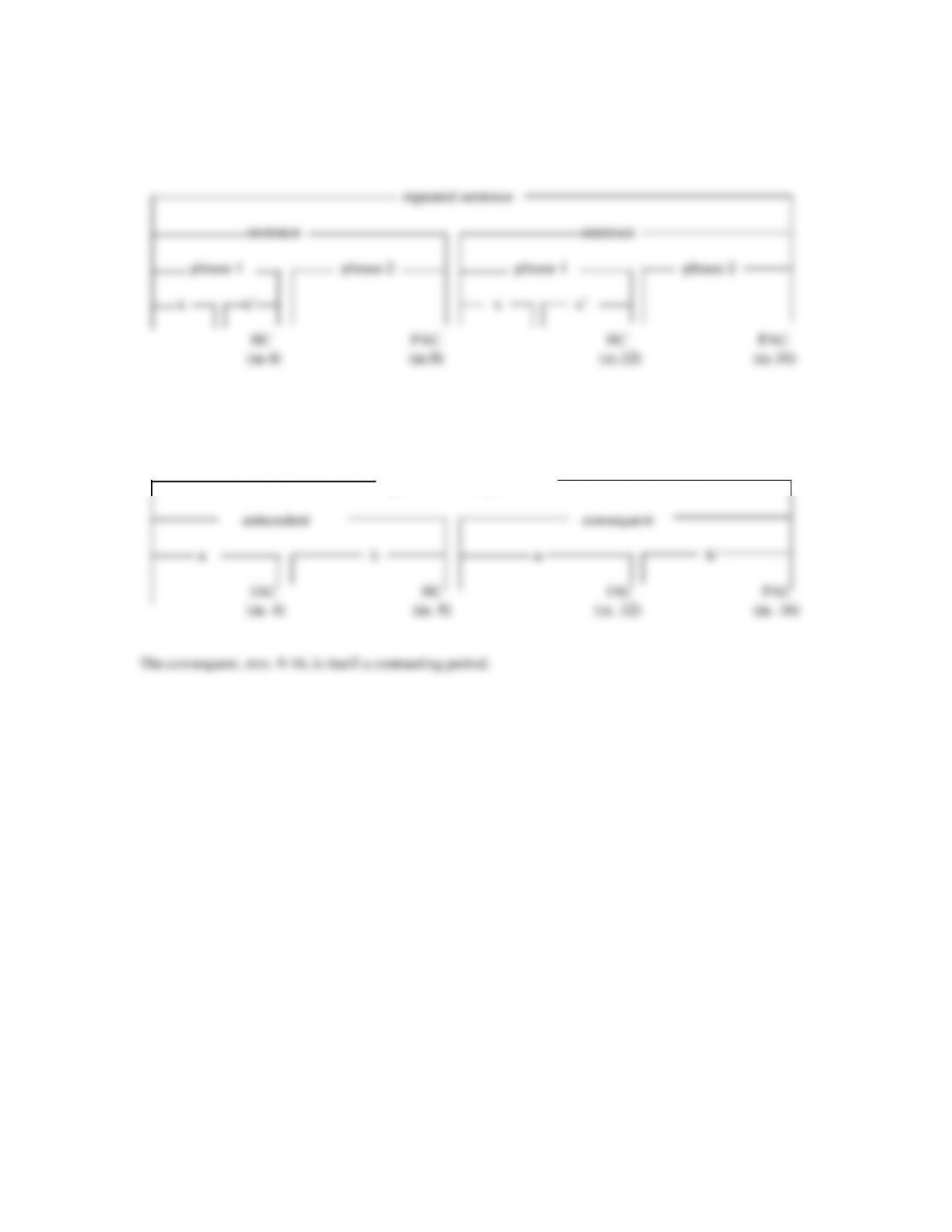
Key for Chapter 10 Quiz
A. This excerpt is from Mozart’s Piano Sonata, K. 332, I, mm. 94–109.
B. And this one is from K. 333, I, mm. 119–134.
parallel double period