1
CHAPTER 1
Elements of Pitch
Most of the material in this chapter will already be familiar to the typical college music major. Nothing should be
taken for granted, however, and scales should get special attention. Students should be strongly encouraged to
practice all of the scales on their instruments and to relate the patterns they have learned through such practice to
problems in the theory class. It is essential that vocalists practice scales on the piano in order to begin internalizing
patterns that many of the instrumentalists will know already. (All scales may be played two–handed, using a
54322345 fingering.) In addition, class scale–singing drills using letter names or chromatic fixed–do solfege can be
very successful.
The last third of the chapter, dealing with scale degree names and intervals, will be less familiar to the students.
They should understand that mastery of this basic material is essential for all further study and that fluency requires
the ability to spell and construct intervals very quickly. Various kinds of speed drills are easy to devise, and the class
time spent on them will be well invested.
Answers to Selected Exercises
Exercise 1-1
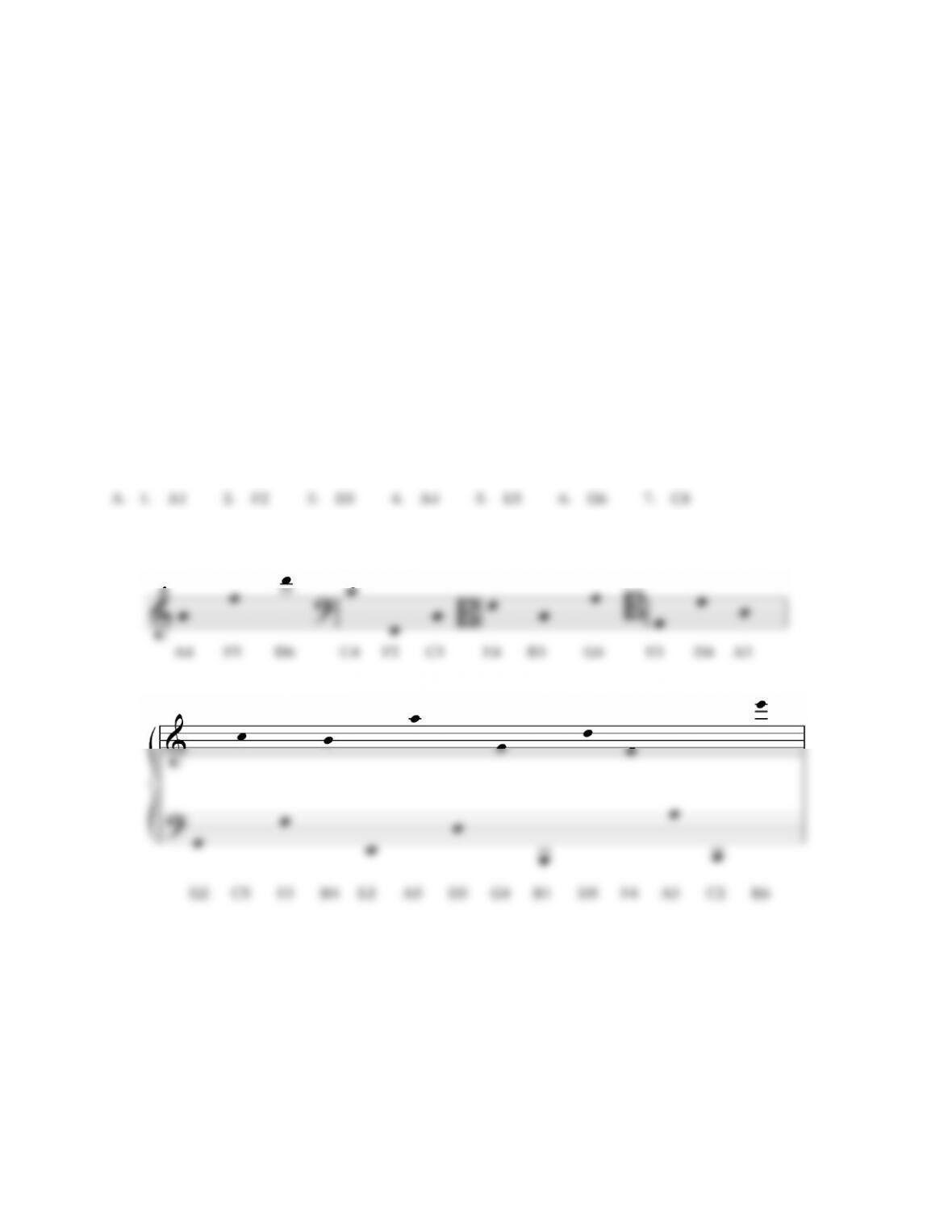
B.
A4 F5 D6 C4 F2 C3 E4 B3 G4 E3 D4 A3
Chapter 1
2
Exercise 1-2
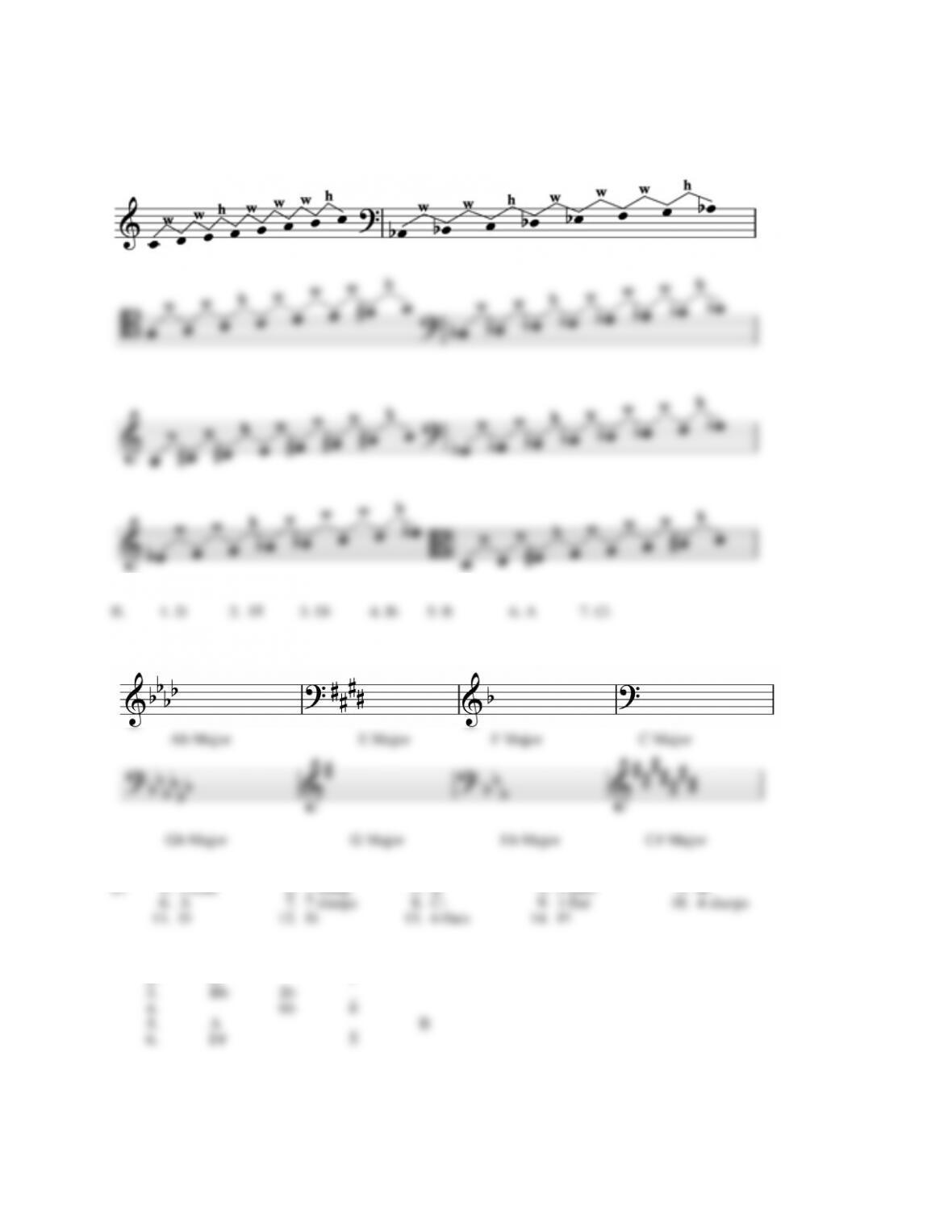
A.
B. 1. D 2. Fm 3. Db 4. Bb 5. B 6. A 7. Cb
C.
Ab Major E Major F Major C Major
D. 1. 5 flats 2. 1 sharp 3. B 4. 3 flats 5. Bb
6. A 7. 7 sharps 8. Cb 9. 1 flat 10. 4 sharps
E. 1. 4# G#
2. D 
3. Bb 2b
Chapter 1
3
Exercise 1-3
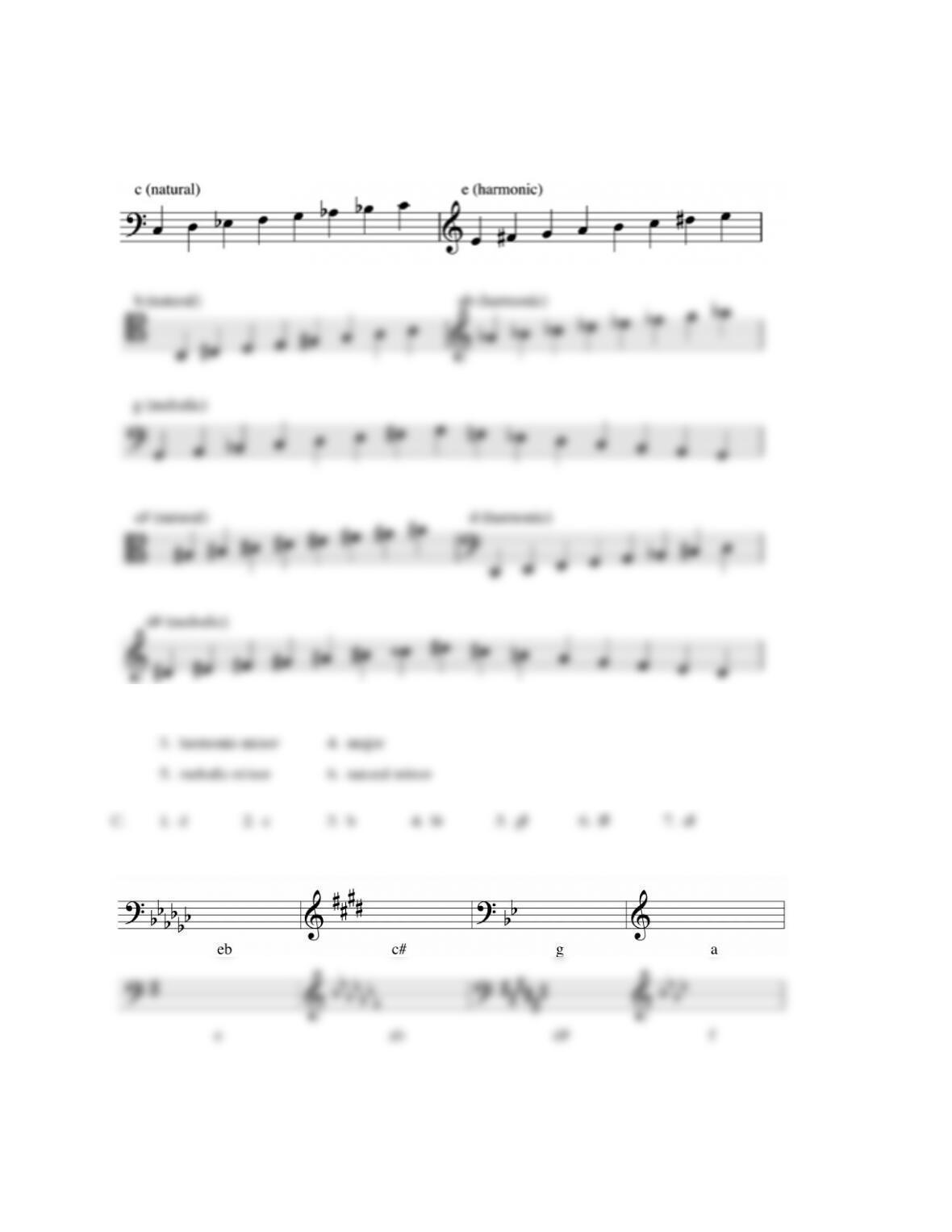
A.
B. 1. melodic minor 2. harmonic minor
3. harmonic minor 4. major
D.
Chapter 1
4
E. 1. fm 2. 6 flats 3. 4 sharps 4. bb 5. (none)
Exercise 1-4
A. 1. 3 2. 5 3. 2 4. 1 5. 6 6. 4 7. 8 8. 7
Exercise 1-5
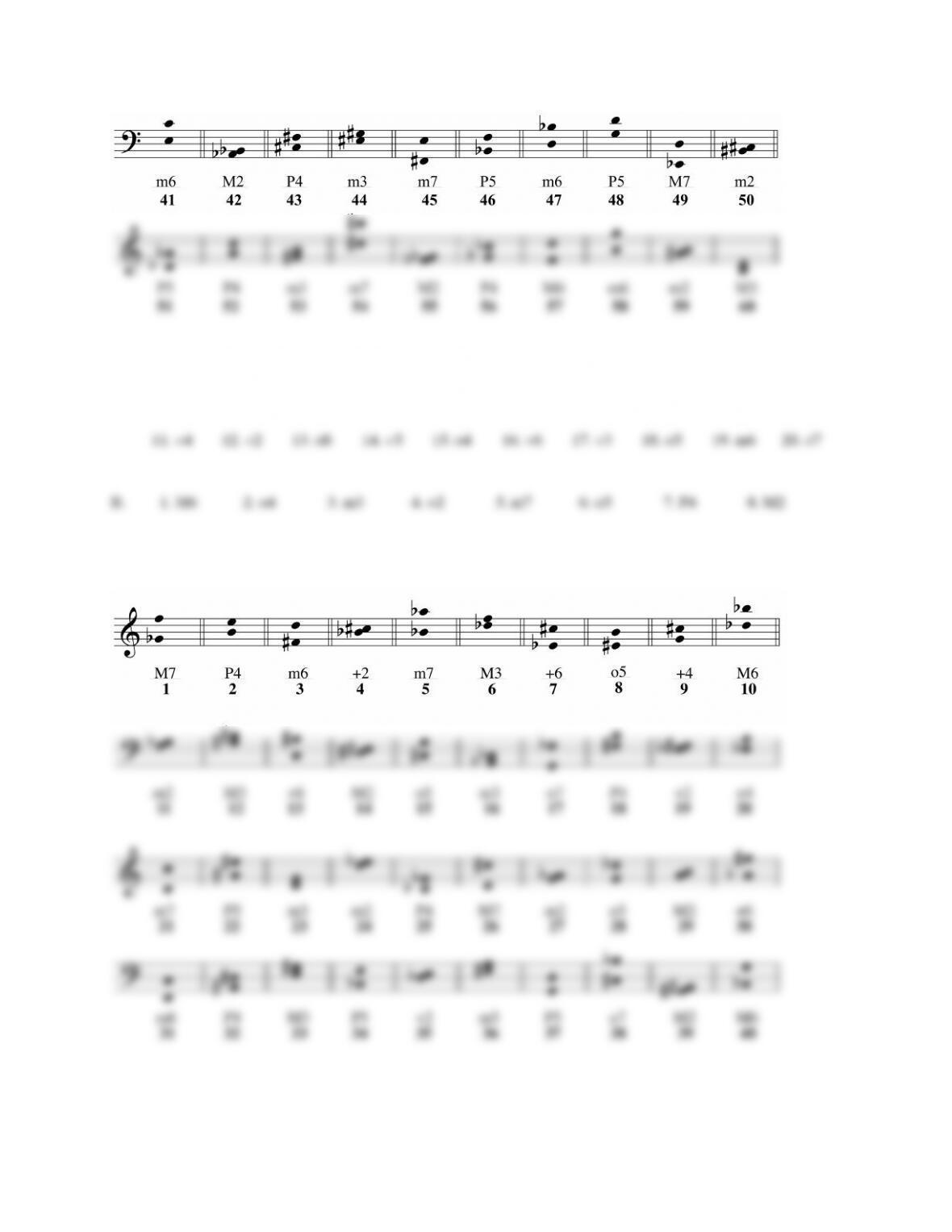
A. 1. P 2. __ 3. P 4. __ 5. P 6. P 7. P 8. P 9. __ 10. __
11. __ 12. P 13. P 14. __ 15. P 16. P 17. P 18. __ 19. __ 20. __
C.
Chapter 1
5
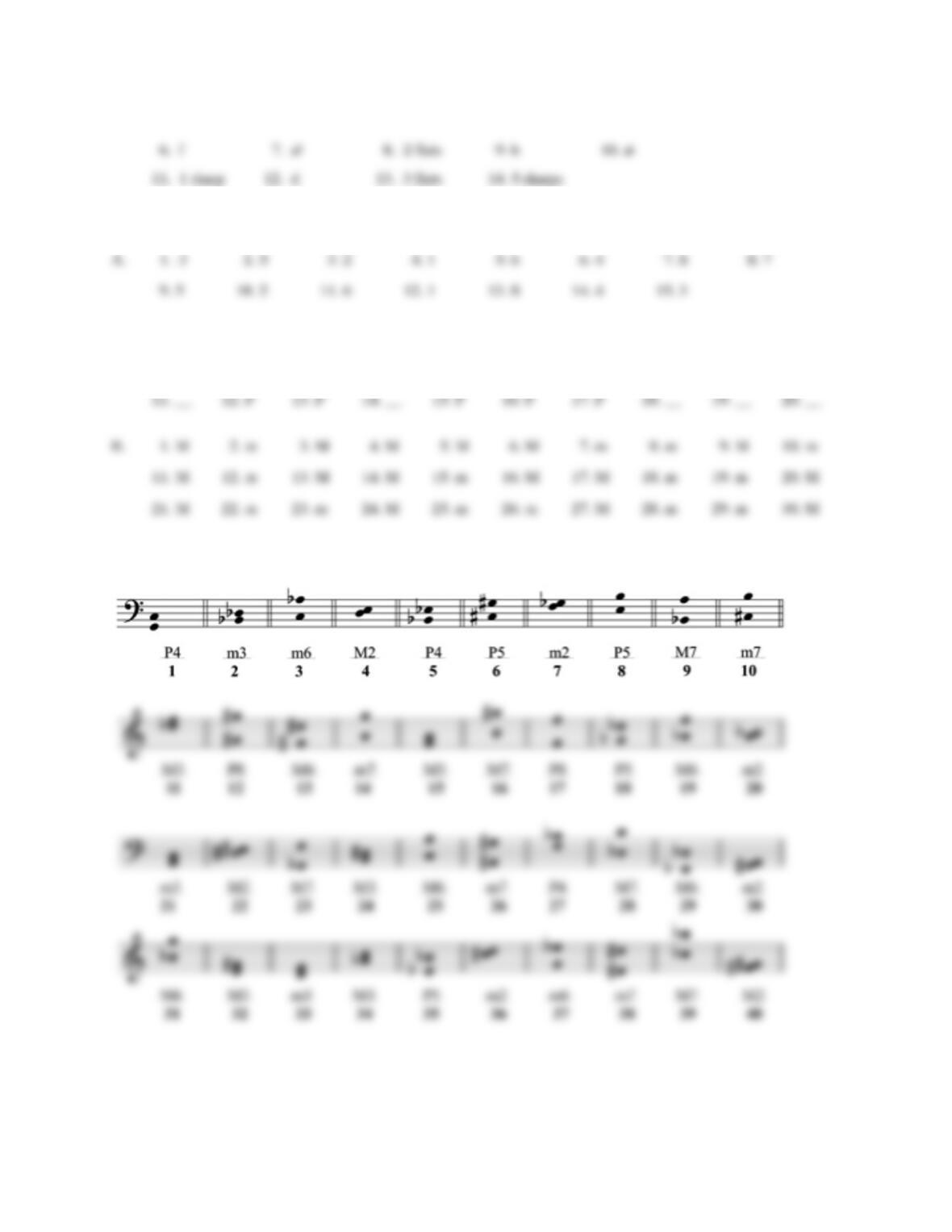
Exercise 1-6
A. 1. o4 2. +6 3. P4 4. +5 5. m6 6. o3 7. +4 8. +2 9. o5 10. o5
C.

Chapter 1
6
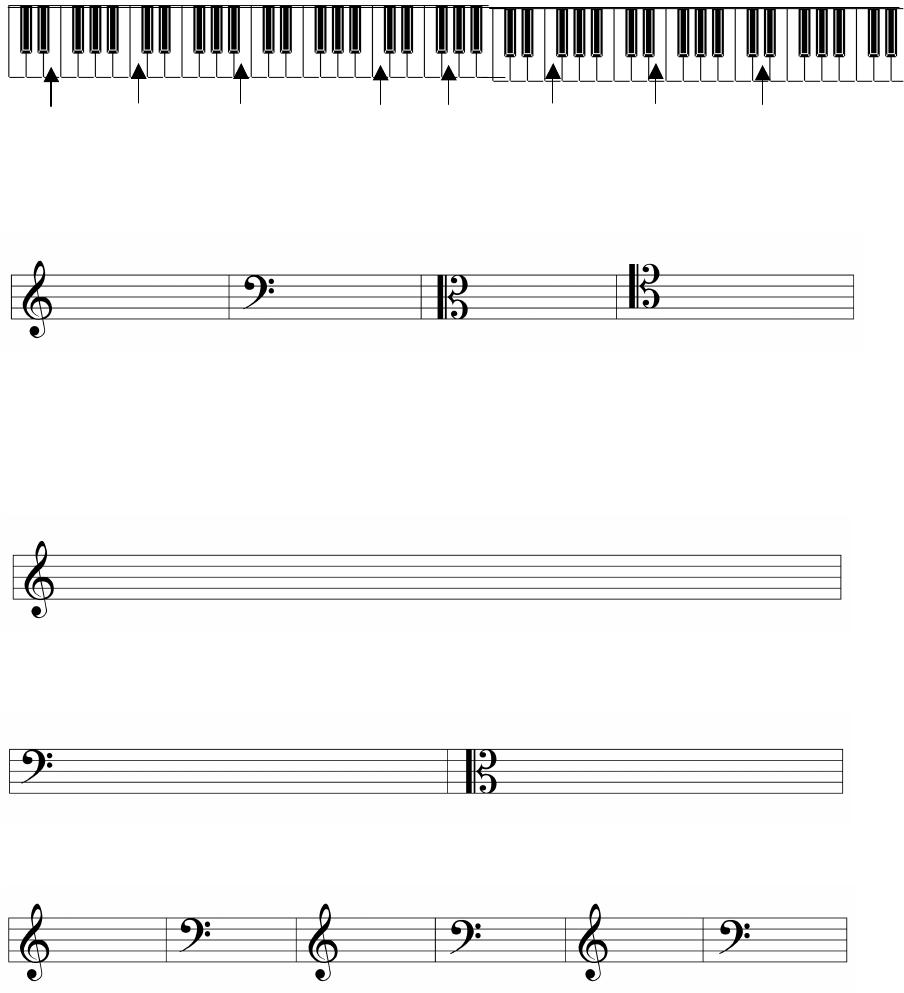
D. 1. m3 2. o5 3. o4 4. m2 5. +4 6. m2 7. M2 8. M2
Chapter 1
7
_______________________ ______________________________
(section) (name)
Chapter 1 Quiz #1
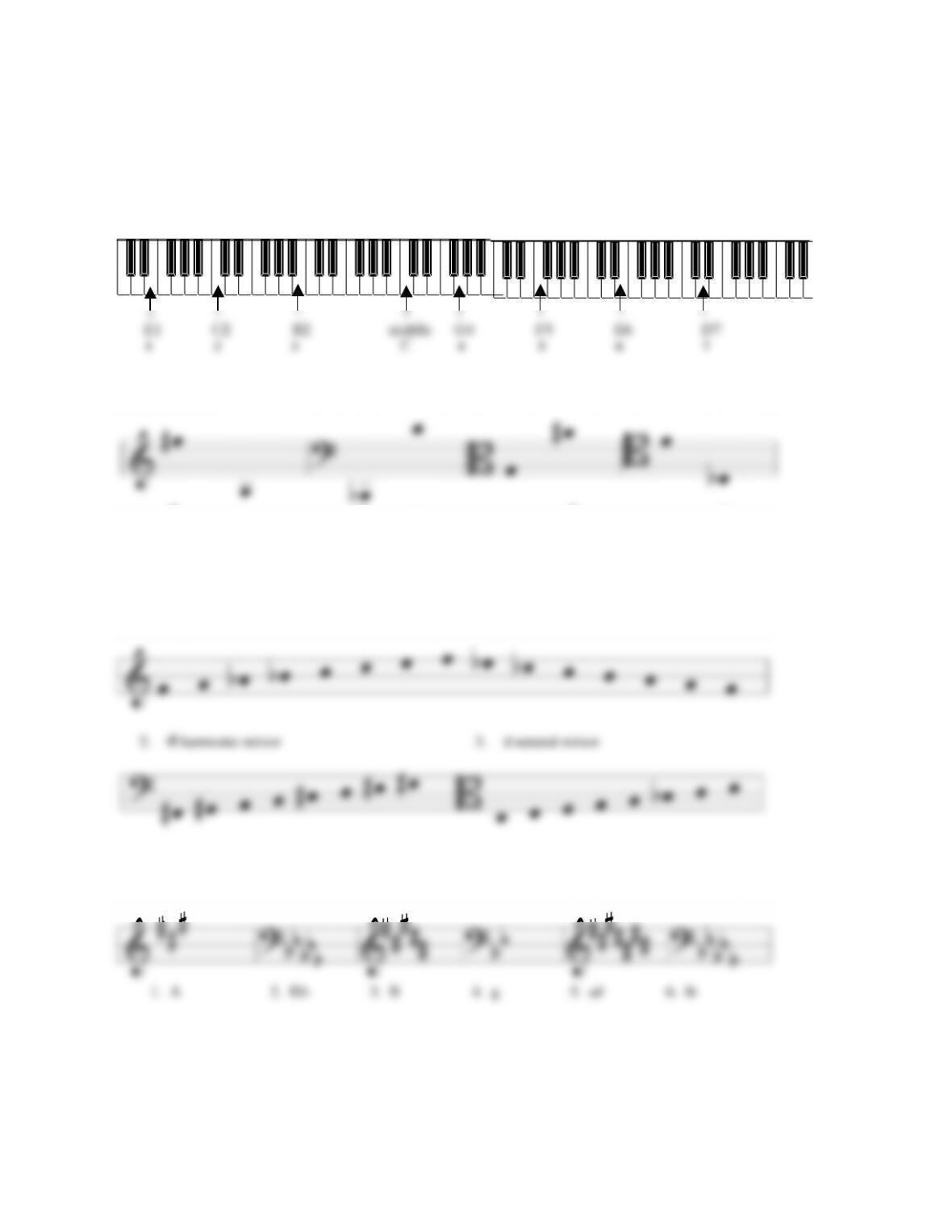
A. Name the pitches in the blanks provided, using the correct octave register designations.
___ ___ ___ middle ___ ___ ___ ___
1 2 3 C 4 5 6 7
B. Notate the indicated pitches on the staff in the correct octave. Include accidentals where appropriate.
Fm5 A3 Bb1 D4 G3 Bm4 E4 Cb3
C. Notate the specified scales using accidentals, not key signatures. The melodic minor scale should be written
both ascending and descending.
1. f melodic minor
2. fm harmonic minor 3. d natural minor
D. Notate the specified key signatures.
1. A 2. Db 3. B 4. g 5. a# 6. bb
Chapter 1
8
________________________ ______________________________
(section) (name)
Key for Chapter 1 Quiz #1
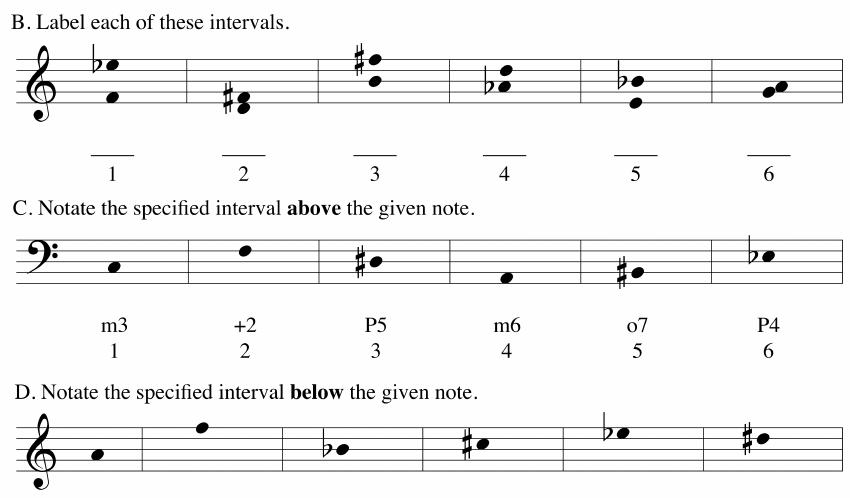
A. Name the pitches in the blanks provided, using the correct octave register designations.
B. Notate the indicated pitches on the staff in the correct octave. Include accidentals where appropriate.
Fm5 A3 Bb1 D4 G3 Bm4 E4 Cb3
C. Notate the specified scales using accidentals, not key signatures. The melodic minor scale should be written
both ascending and descending.
1. f melodic minor
D. Notate the specified key signatures.
1. A 2. Db 3. B 4. g 5. a# 6. bb
Chapter 1
9
___________________ _____________________________
(section) (name)
Chapter 1 Quiz #2
A. Label what each interval becomes when it is inverted.
1. M6 becomes ______ 3. +4 becomes ______ 5. o3 becomes ______
2. P5 becomes ______ 4. m7 becomes ______ 6. P4 becomes ______
M6 m2 P4 +6 M3 M7
1 2 3 4 5 6
E. Fill in the blanks.
Key signature Name of key Key signature Name of key
1. three sharps ___ major 4. six flats ___ minor
2. ________ Db major 5. ______ g# minor
3. two flats ___ minor 6. ______ E major
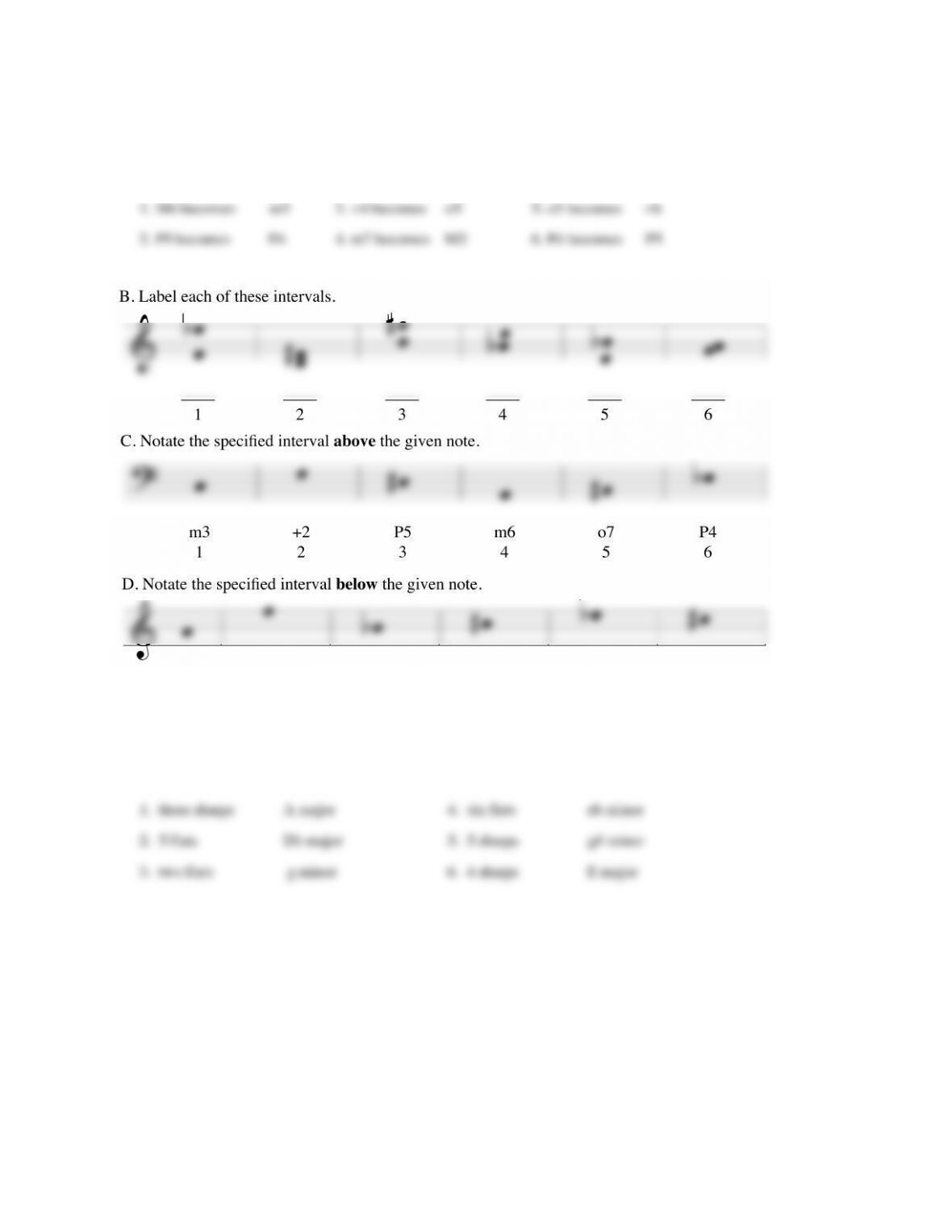
Chapter 1
10
Key for Chapter 1 Quiz #2
A. Label what each interval becomes when it is inverted.
1. M6 becomes m3 3. +4 becomes o5 5. o3 becomes +6
M6 m2 P4 +6 M3 M7
1 2 3 4 5 6
E. Fill in the blanks.
Key signature Name of key Key signature Name of key