Chapter 06 – Variable Interest Entities, Intra-Entity Debt, Consolidated Cash Flows, and Other Issues – Hoyle,
Schaefer, Doupnik, 13e
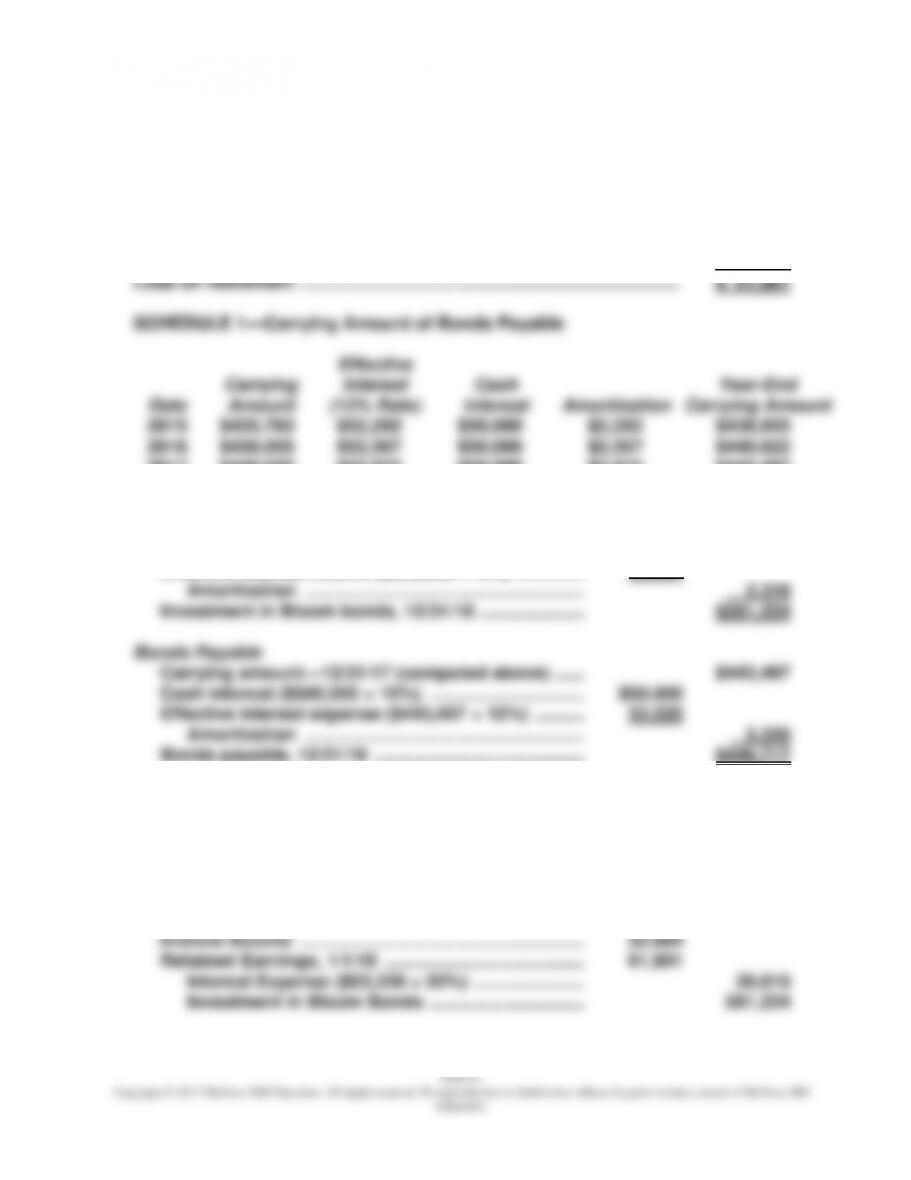
31. (35 Minutes) (Consolidation procedures and balances related to intra-entity
bonds. Both straight-line and effective interest rate methods are used.)
a. Acquisition price of bonds ……………………………………………………… $283,550
Carrying amount of bonds payable (see Schedule 1)
($443,497 × 50%) ……………………………………………………………….. (221,749)
2017 $440,622 $52,875 $50,000 $2,875 $443,497
b. Investment in Bloom Bonds
Purchase price—12/31/17 ………………………………….. $283,550
Cash interest ($250,000 × 10%) …………………………. $25,000
Effective interest income ($283,550 × 8%) ………….. 22,684
Although not required in the problem, the consolidation entry as of 12/31/18 is
as follows. The reduction in retained earnings represents the loss only; no intra-
entity interest was recognized in the previous year because the purchase was
made on December 31.
Entry *B (2018)
Bonds Payable ($446,717 × 50%) ………………………. 223,359
31. (continued)
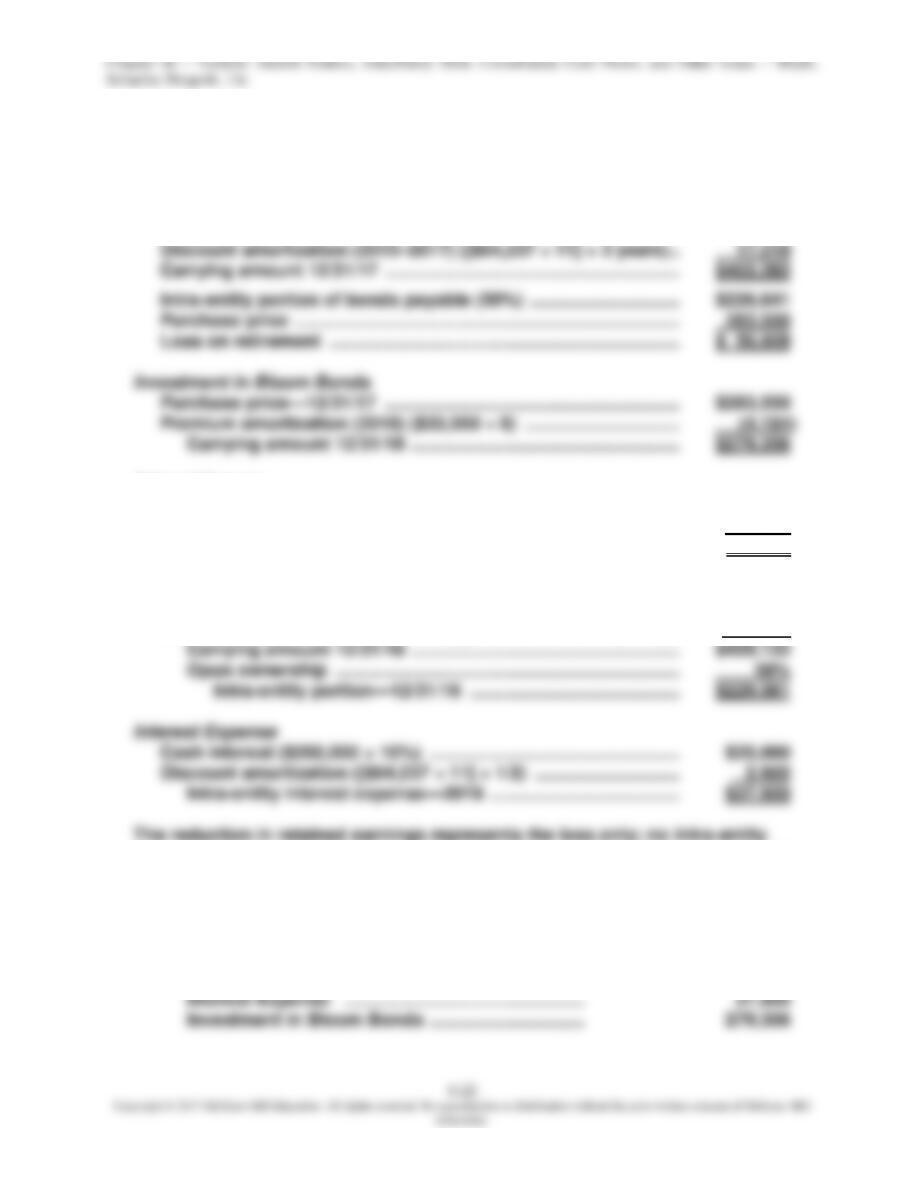
c. Loss on Retirement of Bond
Because Bloom uses the straight-line method of amortization, the loss on
retirement must be computed again.
Original issue price—1/1/15 ………………………………………………… $435,763
Interest Income
Cash interest ($250,000 × 10%) ………………………………………….. $25,000
Premium amortization (above) …………………………..………………. (4,194)
Intra-entity interest income—2018 …………………………………. $20,806
Bonds Payable
Original issue price 1/1/15 ………………………………………………….. $435,763
Discount amortization (2015–2018) [($64,237 ÷ 11) × 4 years] . 23,359
The reduction in retained earnings represents the loss only; no intra-entity
interest was recognized in the previous year because the purchase was made
on December 31.
Entry *B (2018)
Bonds Payable …………………………………………………. 229,561
Interest Income ………………………………………………… 20,806
Retained Earnings, 1/1/18 …………………………..……. 56,909
Chapter 06 – Variable Interest Entities, Intra-Entity Debt, Consolidated Cash Flows, and Other Issues – Hoyle,
Schaefer, Doupnik, 13e
6-6-23
Education.
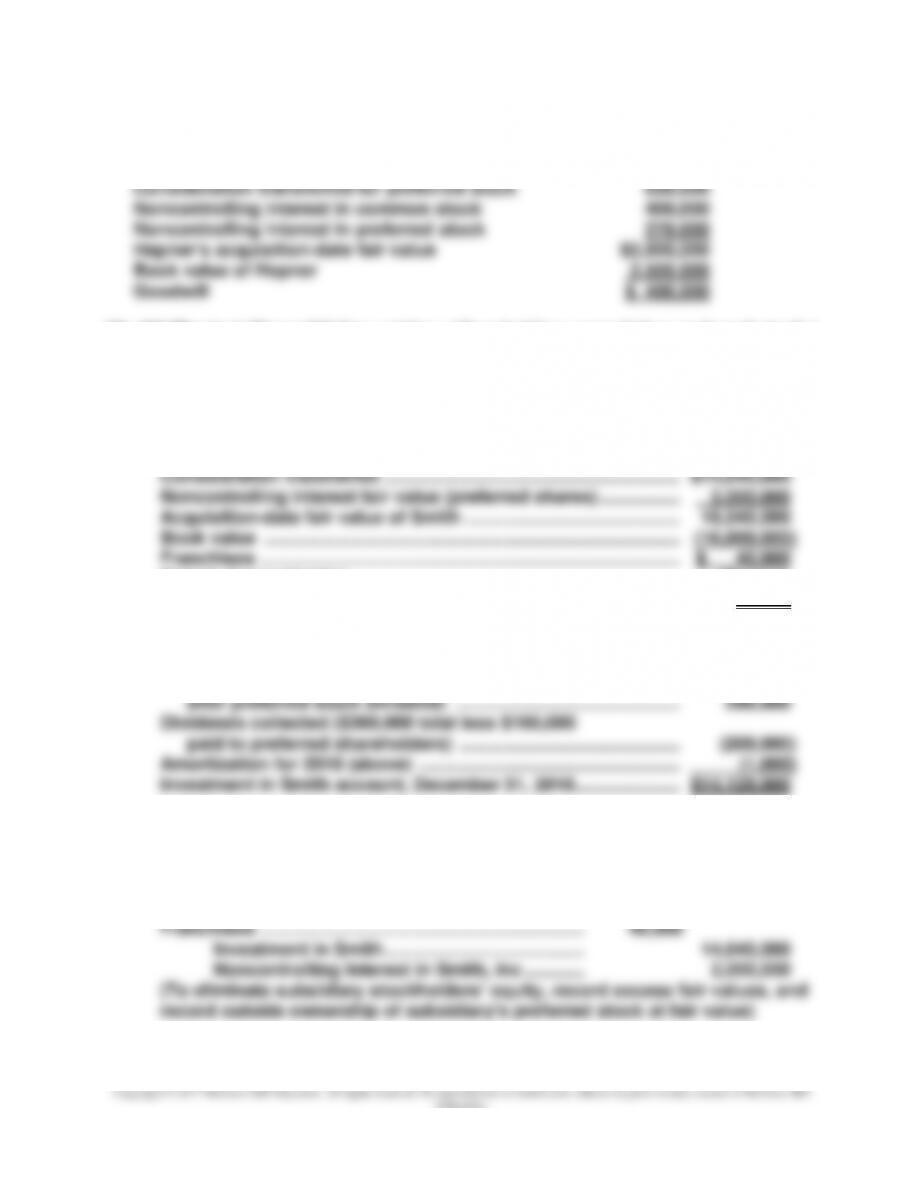
32. (8 Minutes) (Determine goodwill for an acquisition in which subsidiary has both
common stock and preferred stock)
Consideration transferred for common stock $1,600,000
33. (30 Minutes) (Consolidation entries with subsidiary cumulative preferred stock.)
a. The preferred shares are entitled to the specified cumulative dividend. Thus, the
noncontrolling interest’s share of the subsidiary’s income equals $160,000 or 8
percent of the preferred stock’s par value.
b. Acquisition-Date Fair Value Allocation and Amortization
Period of amortization ……………………………………………………….. 40 years
Annual amortization ………………………………………………………….. $1,000
Investment in Smith Account, December 31, 2018
Consideration transferred, January 1, 2018 ………………………… $14,040,000
Equity accrual (income remaining for common stock
c. Consolidation Entries
Entry S and A combined
Preferred Stock (Smith) …………………………………….. 2,000,000
Common Stock (Smith) …………………………………….. 4,000,000
Retained Earnings, 1/1/18 (Smith) ……………………… 10,000,000
Chapter 06 – Variable Interest Entities, Intra-Entity Debt, Consolidated Cash Flows, and Other Issues – Hoyle,
Schaefer, Doupnik, 13e
33. c. (continued)
Entry I Equity Income of Subsidiary ………………………… 289,000
Investment in Smith ………………………………… 289,000
(To eliminate equity accrual made in connection with common stock
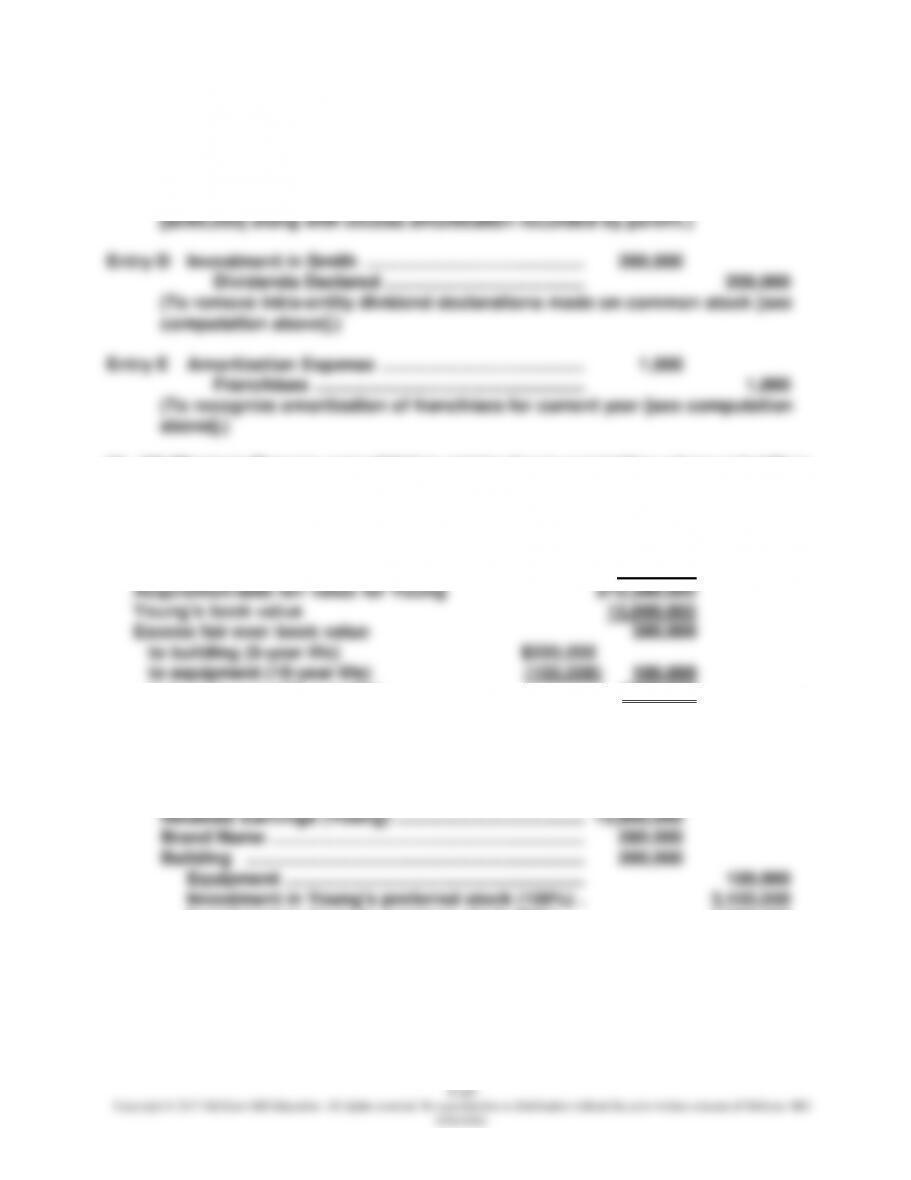
34. (30 Minutes) (Prepare consolidation entries for an acquisition where subsidiary
has outstanding preferred stock)
Consideration transferred for common stock $ 7,368,000
Consideration transferred for preferred stock 3,100,000
Noncontrolling interest in common stock 4,912,000
to brand name (20-year life) $280,000
CONSOLIDATION ENTRIES
Entries S and A combined
Preferred Stock (Young) …………………………………… 1,000,000
Common Stock (Young) ……………………………………. 4,000,000
Investment in Young’s common stock (60%) … 7,368,000
Noncontrolling Interest ………………………………… 4,912,000
(To eliminate subsidiary stockholders’ equity, record excess acquisition–date
fair values, and record outside ownership of subsidiary‘s preferred stock at
acquisition-date fair value)
6-6-25
Education.
34. (continued)
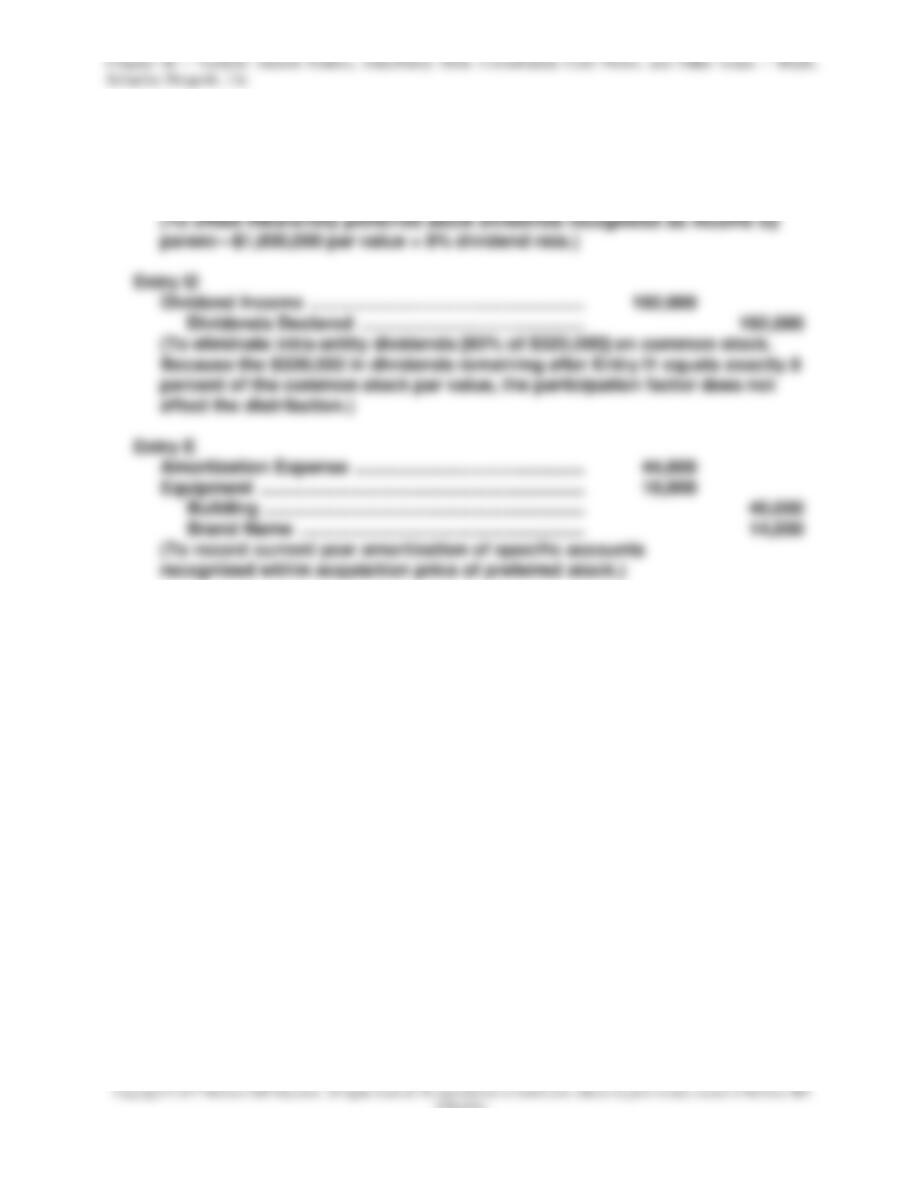
Entry I1
Dividend Income ………………………………………………. 80,000
Dividends Declared ……………………………………… 80,000
Chapter 06 – Variable Interest Entities, Intra-Entity Debt, Consolidated Cash Flows, and Other Issues – Hoyle,
6-6-27
Education.
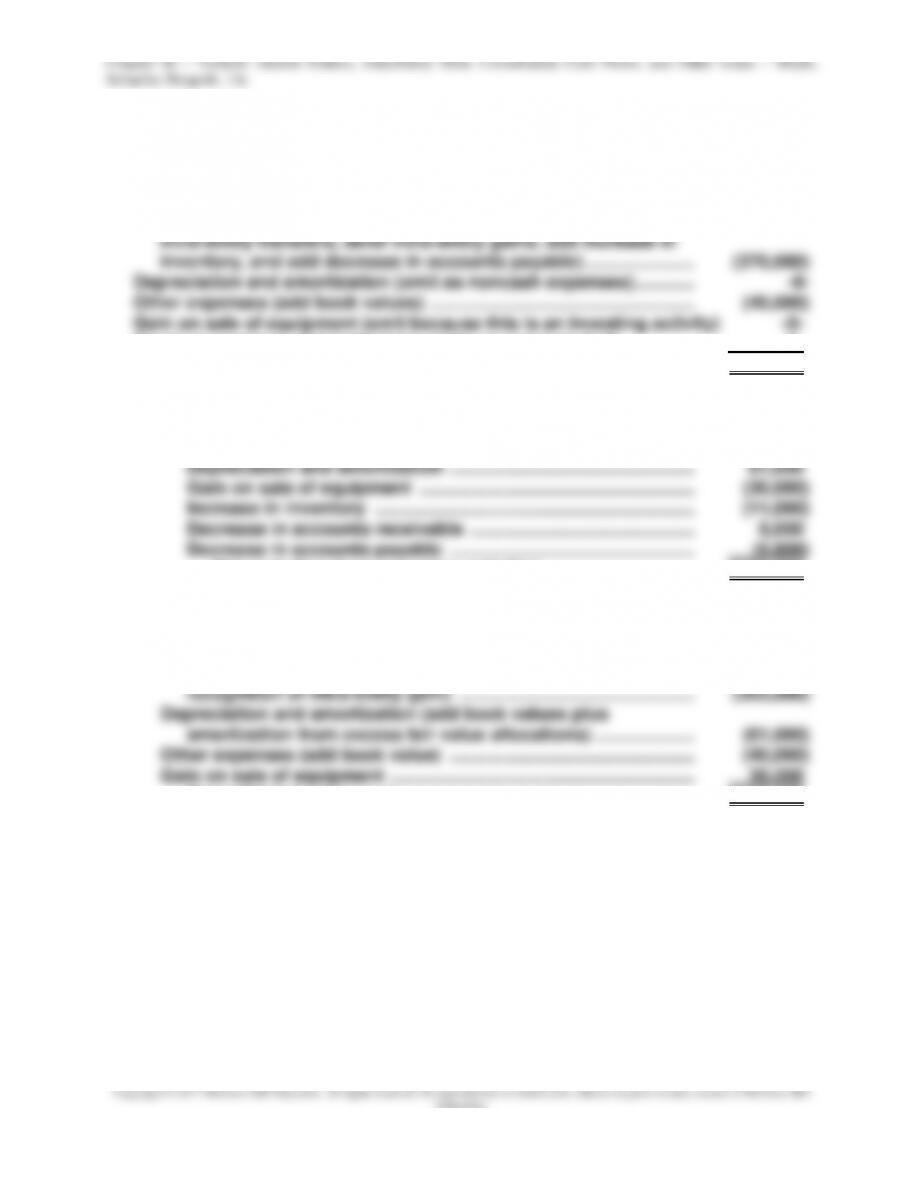
36. (20 Minutes) (Determine cash flows from operations for a consolidated entity.)
DIRECT METHOD
Cash revenues (add book values, eliminate intra-entity transfers,
and add decrease in accounts receivable) …………………………….. $648,000
Cash inventory purchases (add book values, eliminate
Equity in earnings of Knight (intra-entity so not included) ………….. -0-
Net cash flow from operating activities …………………………….. $238,000
INDIRECT METHOD
Consolidated net income (computed below) ………………………………. $216,000
Adjustments:
Net cash flow from operating activities ……………………….. $238,000
Consolidated Net Income = $206,200 + 9,800 = $216,000 or computation below:
Revenues (add book values and subtract intra-entity transfers) $640,000
Cost of goods sold (add book values, less intra-entity
transfers adjusted for deferral and subsequent
Consolidated net income …………………………………………………. $216,000
Chapter 06 – Variable Interest Entities, Intra-Entity Debt, Consolidated Cash Flows, and Other Issues – Hoyle,
Education.
Chapter 06 – Variable Interest Entities, Intra-Entity Debt, Consolidated Cash Flows, and Other Issues – Hoyle,
Schaefer, Doupnik, 13e
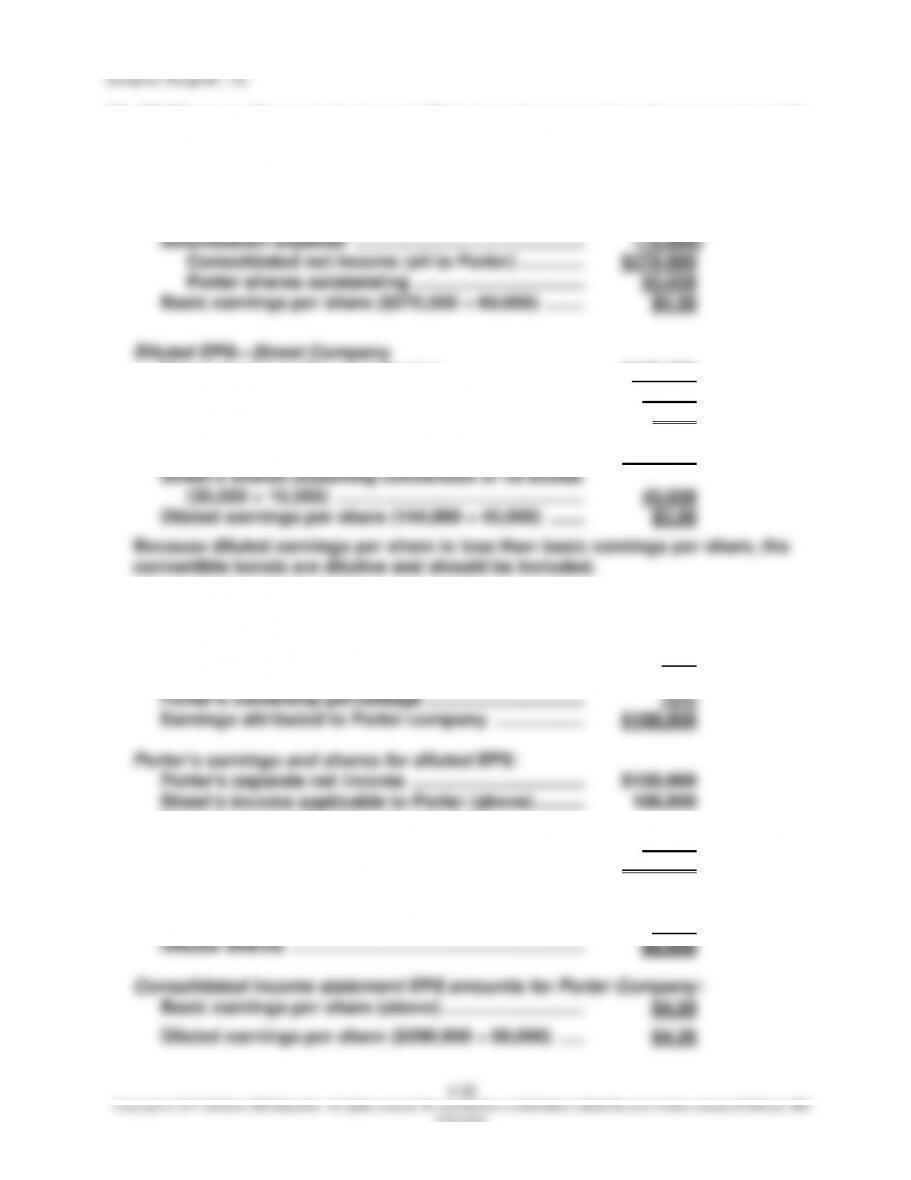
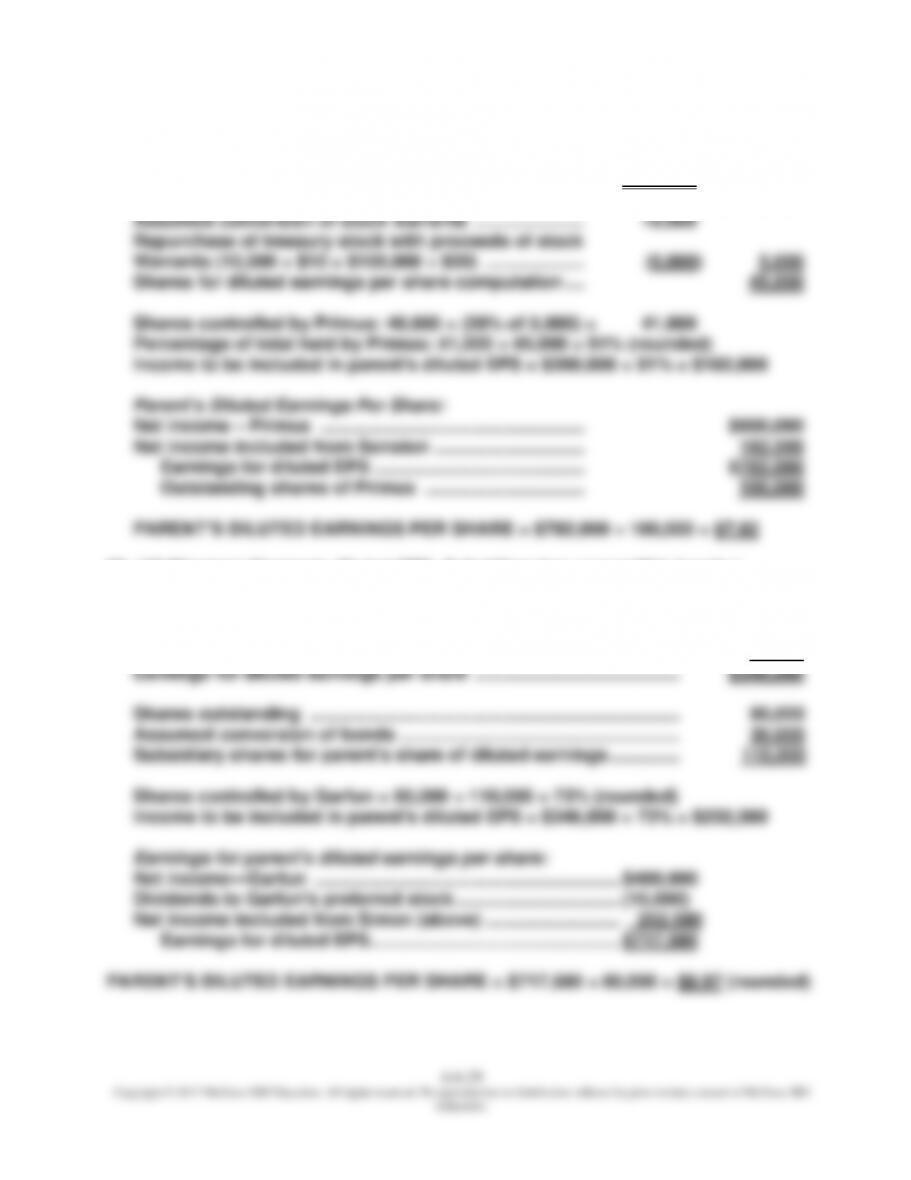
38. (15 Minutes) (Compute diluted EPS. Subsidiary has stock warrants outstanding)
Figures For Sonston’s Diluted EPS
Net Income ………………………………………………………….. $200,000
Shares outstanding ………………………………………………. 40,000
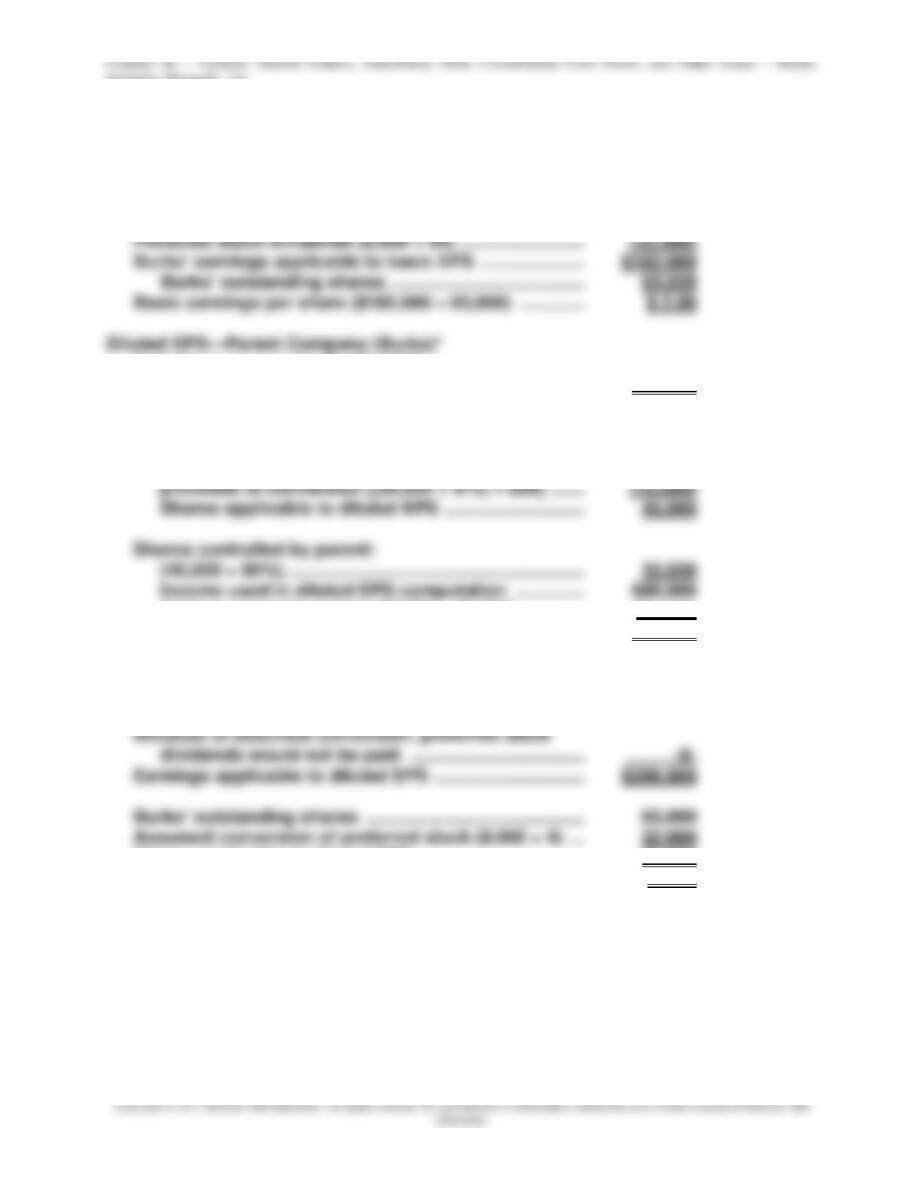
39. (15 Minutes) (Compute diluted EPS. Subsidiary has convertible bonds.)
Figures for Simon’s diluted EPS:
Net income …………………………..………………………………………………. $290,000
Interest (net of tax) saved from assumed conversion ………………. 56,000
Schaefer, Doupnik, 13e
6-30
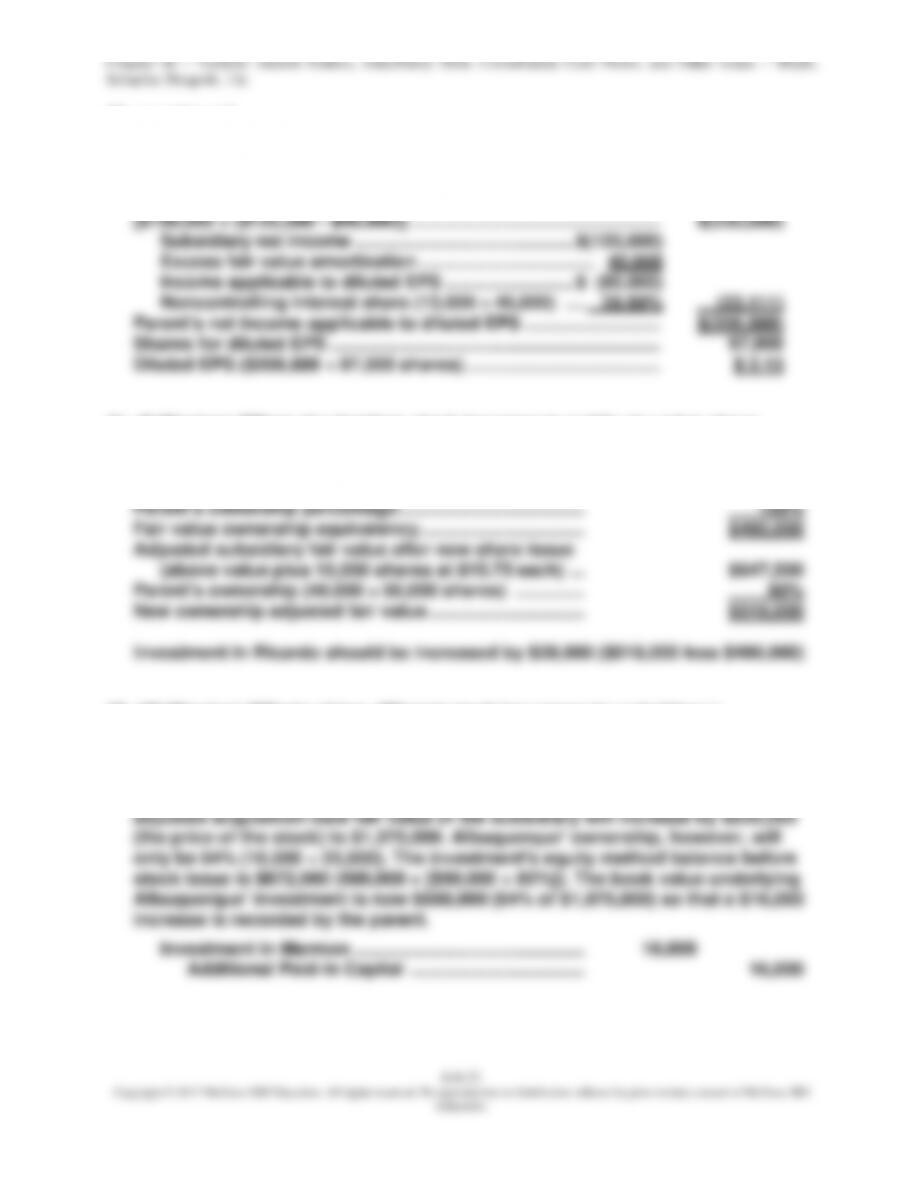
40. (35 Minutes) (Compute basic and diluted earnings per share for parent
company. Subsidiary has stock warrants and convertible bonds.)
Basic EPS—Parent Company (Burks):
Reported net income (separate)—Burks ………………… $150,000
Foreman net income: 80% × ($120,000 – $40,000 amort.) 64,000
Subsidiary income for Burks’ EPS:
Net income after amortization ($120,000 – 40,000) …… $80,000
Shares outstanding ………………………………………………. 40,000
Assumed conversion of warrants ………………………….. 20,000
Assumed acquisition of treasury stock with
Portion owned by parent (32,000 ÷ 45,000) ………… 71.11%
Subsidiary income applicable to parent—diluted EPS $56,889
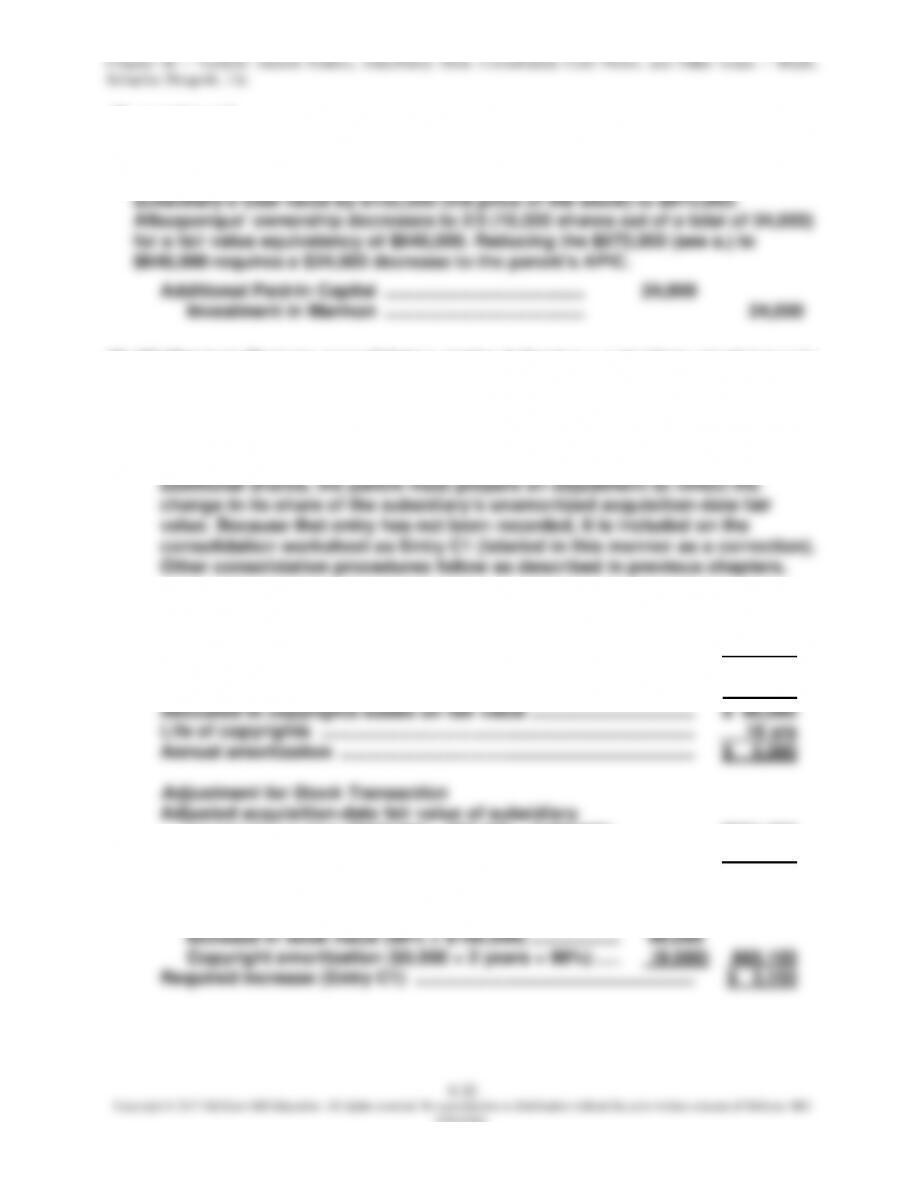
Earnings applicable to Burks’ diluted EPS:
Reported net income (separate)—Burks …………………. $150,000
Burks’ share of Foreman income (above) ……………….. 56,889
Shares applicable to diluted EPS …………………………... 97,000
Diluted earnings per share ($206,889 ÷ 97,000)(rounded) = $ 2.13
*Foreman’s convertible bonds are antidilutive and thus excluded from the diluted
EPS calculations.
Education.
Chapter 06 – Variable Interest Entities, Intra-Entity Debt, Consolidated Cash Flows, and Other Issues – Hoyle,
Schaefer, Doupnik, 13e
6-6-33
Education.
43. (continued)
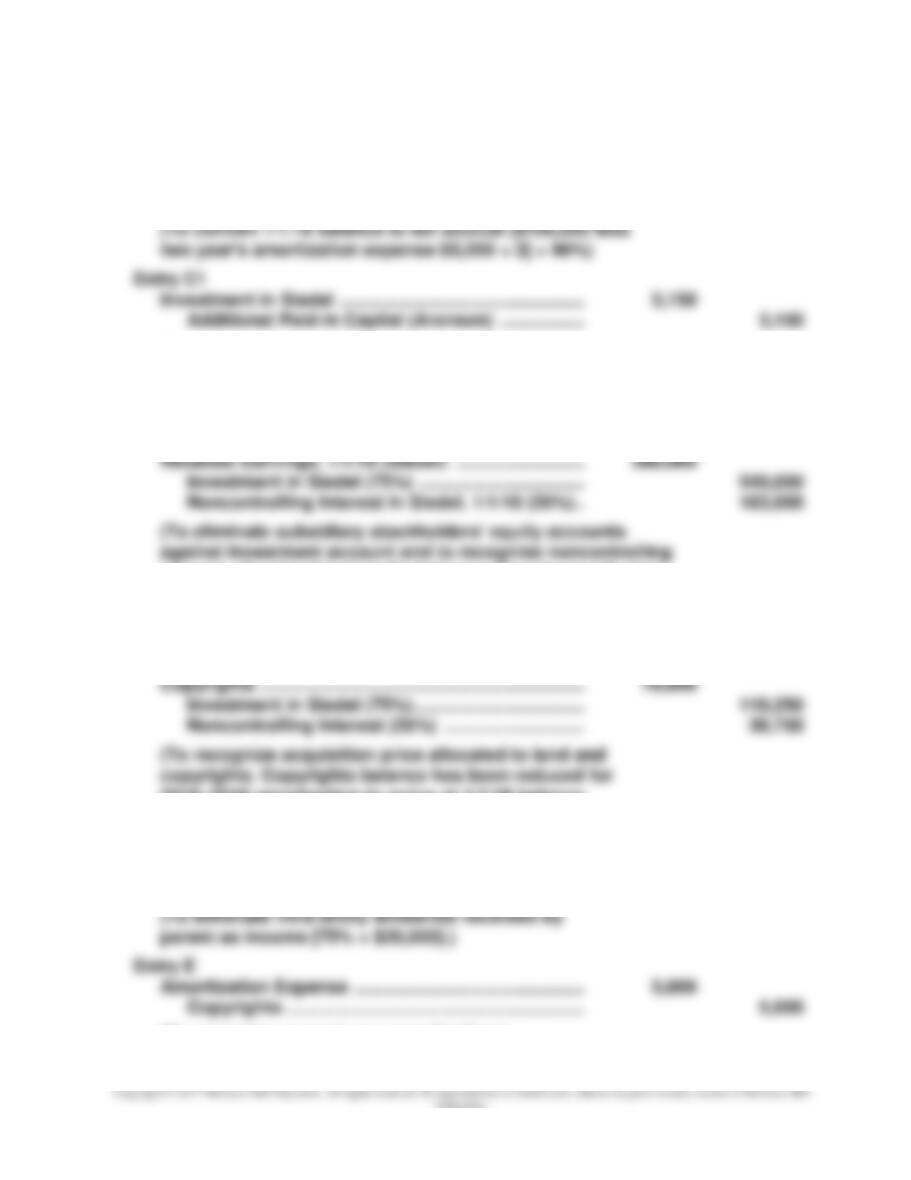
Consolidation worksheet entries:
Entry *C
Investment in Siedel …………………………………………. 81,000
Retained Earnings, 1/1/18 (Aronsen) …………….. 81,000
(To record adjustment for subsidiary stock
transaction; computation shown above.)
Entry S
Common Stock (Siedel) ……………………………………. 240,000
Additional Paid-In Capital (Siedel) …………………….. 112,000
interest. Stockholders’equity balances have been adjusted
for increase in book value during 2016–2018 and the issuance
by the subsidiary of 4,000 shares of stock on 1/1/18.)
Entry A
Land …………………………..…………………………………… 89,000
2016–2018 amortization to arrive at 1/1/18 balance.
NCI now reflects 25% of the unamortized 1/1/18 balance.)
Entry I
Dividend Income ………………………………………………. 15,000
Dividends Declared ……………………………………… 15,000
(To recognize current year amortization.)
Chapter 06 – Variable Interest Entities, Intra-Entity Debt, Consolidated Cash Flows, and Other Issues – Hoyle,
6-6-35
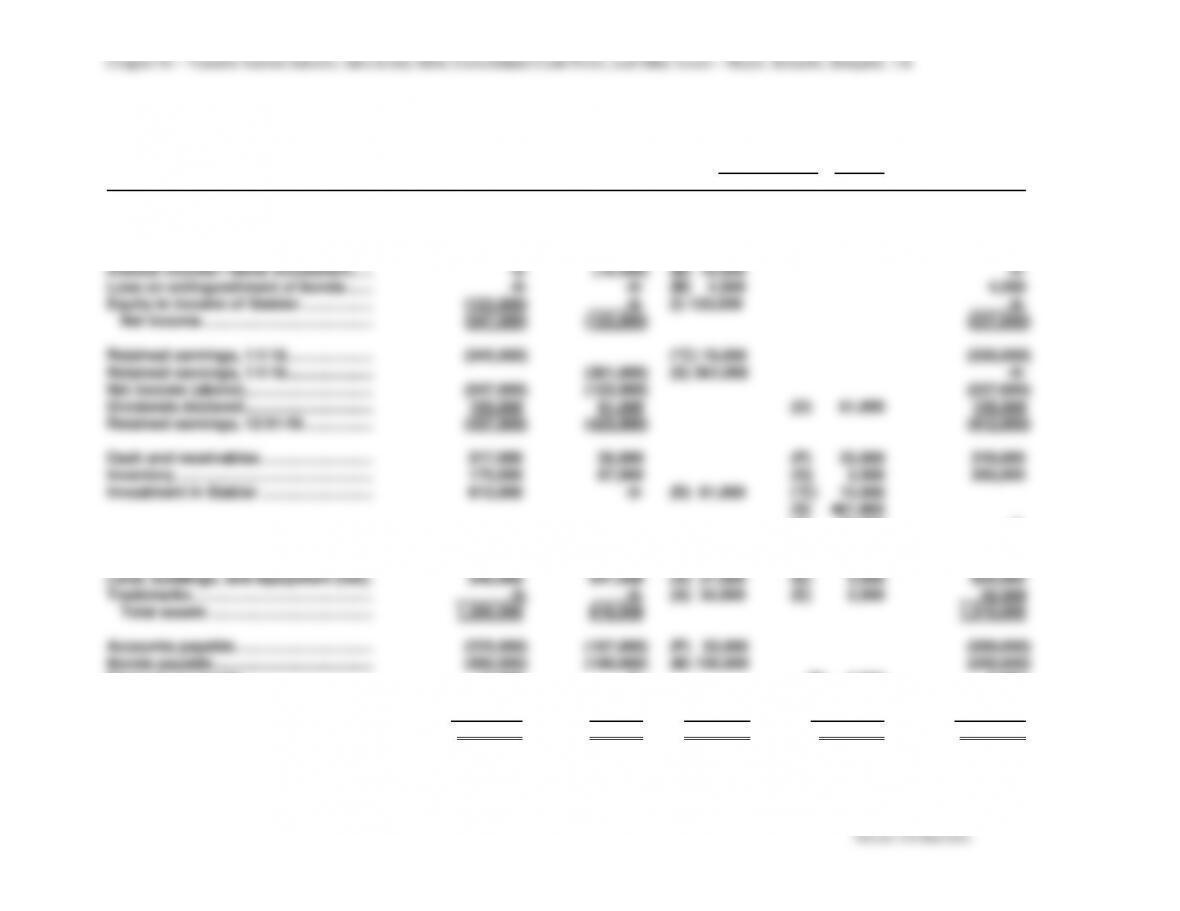
44.(continued) Pavin and Stabler
Consolidation Worksheet
Year Ending December 31, 2018
Consolidation Entries Consolidated
Accounts Pavin Stabler Debit Credit Totals
Revenues ……………………………………… (740,000) (505,000) (TI)100,000 (1,145,000)
Cost of goods sold ………………………… 455,000 240,000 (G) 2,000 (TI) 100,000 597,000
Expenses ……………………………………… 125,000 158,500 (E) 5,000 288,500
Interest expense—bonds ………………. 36,000 -0– (B) 18,000 18,000
(A) 55,000 -0-
(I) 123,000
Investment in Pavin ………………………. -0- 147,000 (B) 147,000 -0-
Discount on bonds ………………………… 12,000 -0- (B) 6,000 6,000
Common stock ……………………………… (300,000) (120,000) (S) 120,000 (300,000)
Retained earnings (above) ……………… (437,000) (423,000) (412,000)
Total liabilities and stockholders’ equity (1,250,000) (810,000) 1,046,000 1,046,000 (1,315,000)
Chapter 06 – Variable Interest Entities, Intra-Entity Debt, Consolidated Cash Flows, and Other Issues – Hoyle,
Schaefer, Doupnik, 13e
Education.
45. a. (continued)
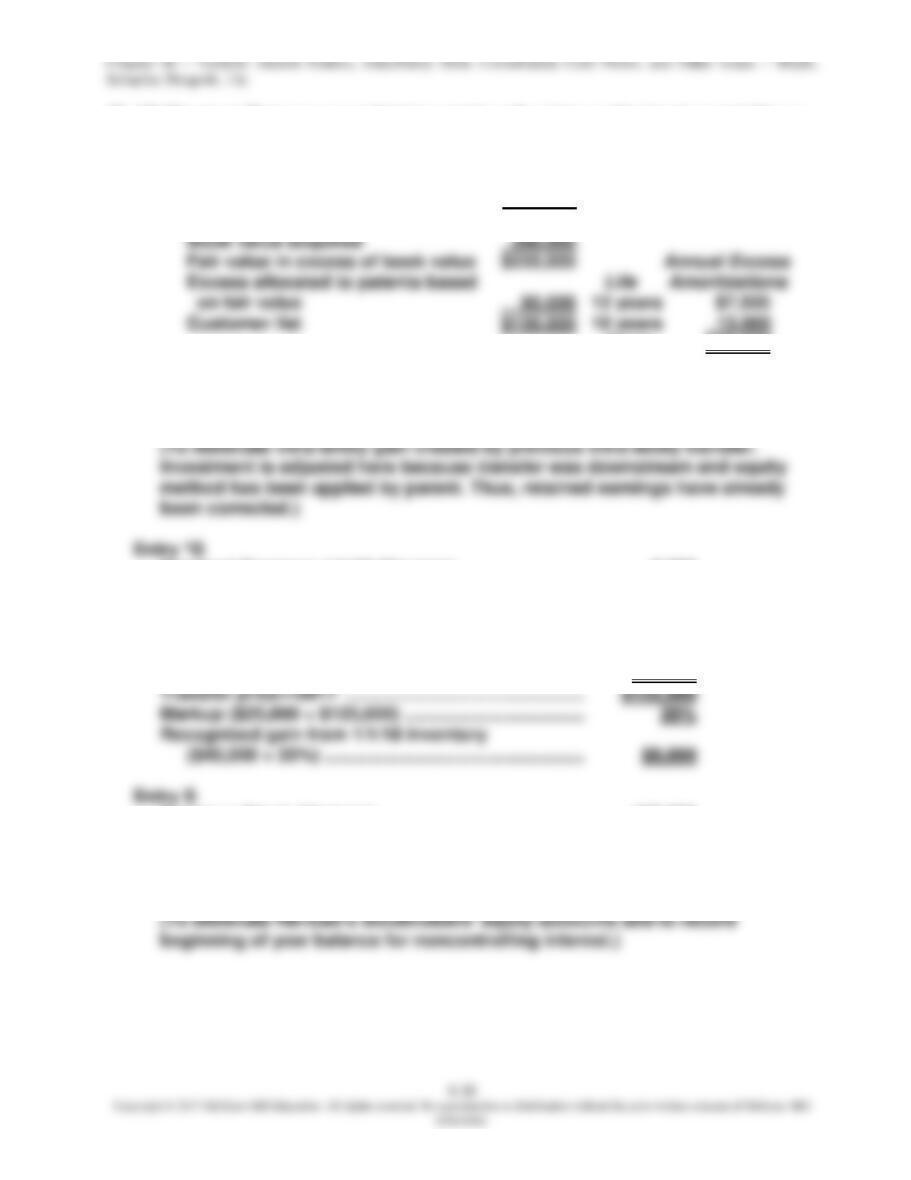
Entry A
Patents ………………………………………………………….. 75,000
Customer List …………………………………………………… 104,000
Investment in Herman ………………………………….. 107,400
Equity income of Herman ………………………………….. 5,064
Investment in Herman …………………………..…. 5,064
(To eliminate intra-entity equity income accrual)
Herman’s income …………………………………………………… $25,000
Excess amortizations……………………………………………… (20,500)
Intra-entity interest income …………………………..………… (1,873)
Intra-entity interest expense …………………………………… 1,283
Gain on effective retirement of parent’s bonds ………… _2,654*
Equity in earnings of Herman …………………………………. $5,064
* $21,386 bond liability – $18,732 repurchase price (amounts given in problem)
Amortization Expense ………………………………………. 20,500
Patents ………………………………………………………… 7,500
Customer List ………………………………………………. 13,000
(To recognize current year amortization expense.)
Entry P