International Business
Geringer, McNett, Minor, Ball
Instructor Guide to Module C
28 Instructor’s Manual – Module C| Geringer, McNett, Minor, Ball © 2016 by McGraw-Hill Education.
of gravity on the internationalization strategies of existing competitors. This is a HEC Montreal
1. Global Debate: The GLOBAL DEBATE? Is Cognizant Technology Solutions Leveraging Low-
Cost Talent or Exploiting It? boxed element described earlier in this module’s Instructor Guide
provides an excellent foundation for debating some of the issues raised in the text, including
issues about offshoring and outsourcing.
Online and Hybrid: Virtual teams can be assigned questions and submit their work as a
group. Alternatively, virtual teams can be assigned to take different roles or perspectives to
argue for (or against) and these assignments can be submitted as a group and then opened up to
discussion and debate on an online class discussion site or blog, or presented and debated in a
face-to–face setting.
Face-to–Face: Students develop responses to the questions in class in teams/groups, or
else assign perspectives and conduct an in-class debate and discussion.
2. IB in Practice: The IB in Practice: Zara: Using Innovative Supply Chain Management to
Transform the International Fashion Industry boxed element described earlier in this module’s
Instructor Guide can be an interesting tool for generating discussion and debate. This discussion
provides a useful overview of many of the concepts discussed in the chapter. We find that
students often have a broad range of perspectives regarding the issue of outsourcing and
offshoring, as well as how to manage supply chains in general. Zara’s multifaceted approach
toward domestic production versus “nearshoring” versus “offshoring” activities, as well as how
they manage the overall operational challenges and logistics of their business, provide a
fascinating example that the students find interesting and stimulating for discussion.

International Business
Geringer, McNett, Minor, Ball
Instructor Guide to Module C
Online and Hybrid: Virtual teams can be assigned to take different perspectives to argue
for or against the issue of sourcing in distant low cost nations versus sourcing with domestic or
nearshore suppliers, and the circumstances in which each might be superior or inferior. This
discussion can be expanded by asking teams to consider whether and to what extent Zara’s
operational approach that works so successfully in Europe can be expanded successfully to the
Americas or Asia. These assignments can be submitted as a group and then opened up to
discussion and debate on an online class discussion site or blog, or presented and debated in a
face-to–face setting.
Face-to–Face: As with the online and hybrid assignment, students can be assigned to
take different perspectives as noted above, and then they can be asked to argue their positions
within an in-class debate and discussion.
3. Current events for sources of content on global operations and supply chain
management controversy
A focus on current events that are relevant to the module’s topics is a good way to bring home
the concepts, review their application and build news-review habits. Five minutes at the

International Business
Geringer, McNett, Minor, Ball
Instructor Guide to Module C
30 Instructor’s Manual – Module C| Geringer, McNett, Minor, Ball © 2016 by McGraw-Hill Education.
TEACHING SUGGESTIONS
1. Supply chain management (SCM) is an area of growing importance to which students may
want to pay attention. Our teaching experience with this chapter suggests that students are
aware of SCM through the general attention outsourcing has received and the consumer
support experiences many of them will have had.
2. Identify problems that a marketing manager might have with establishing and
implementing a newly internationalized supply chain, both backward and forward. How would
the manager negotiate with vendors and suppliers? How would the manager negotiate with
distributors, wholesalers or retailers? An interesting discussion usually follows on the different
needs and interests of each group and how internationalization of the supply chain can impact
their operational costs and profitability.
3. Overby Manufacturing of Boston has begun to build a plant in Bangkok and management
is choosing American personnel who will be sent to fill the top administrative positions. The
Vice President for Procurement wants to send a promising young buyer to head up the
purchasing department of the new operation, but the Personnel Manager in the home office
insists that someone from Bangkok should be hired for the position. What are the arguments
for each position? What would you recommend?
4. Guest Lecturer possibilities: Some people who could contribute to the material in this
module would be:
a. An overseas purchasing agent or someone who has been involved in designing or
implementing electronic purchasing system, ISO application, or a Six Sigma process.
b. Someone with international quality control experience could be an interesting guest
speaker. For example, a person from the Technical Department of the international
operations of a multinational can relate experiences about getting along with locally–
sourced inputs in emerging markets while trying to maintain company quality standards.
c. Someone who has had overseas production experience (many in the technical
department of the local multinational have been factory managers) can discuss with the
class about production problems and difficulties in motivating workers, installing
systems transferred from the U.S. (such as inventory management or Six Sigma), etc.
International Business
Geringer, McNett, Minor, Ball
Instructor Guide to Module C
31 Instructor’s Manual – Module C| Geringer, McNett, Minor, Ball © 2016 by McGraw-Hill Education.
ASSESSEMENT OF LEARNING
Interactive Applications
Assigning Interactives
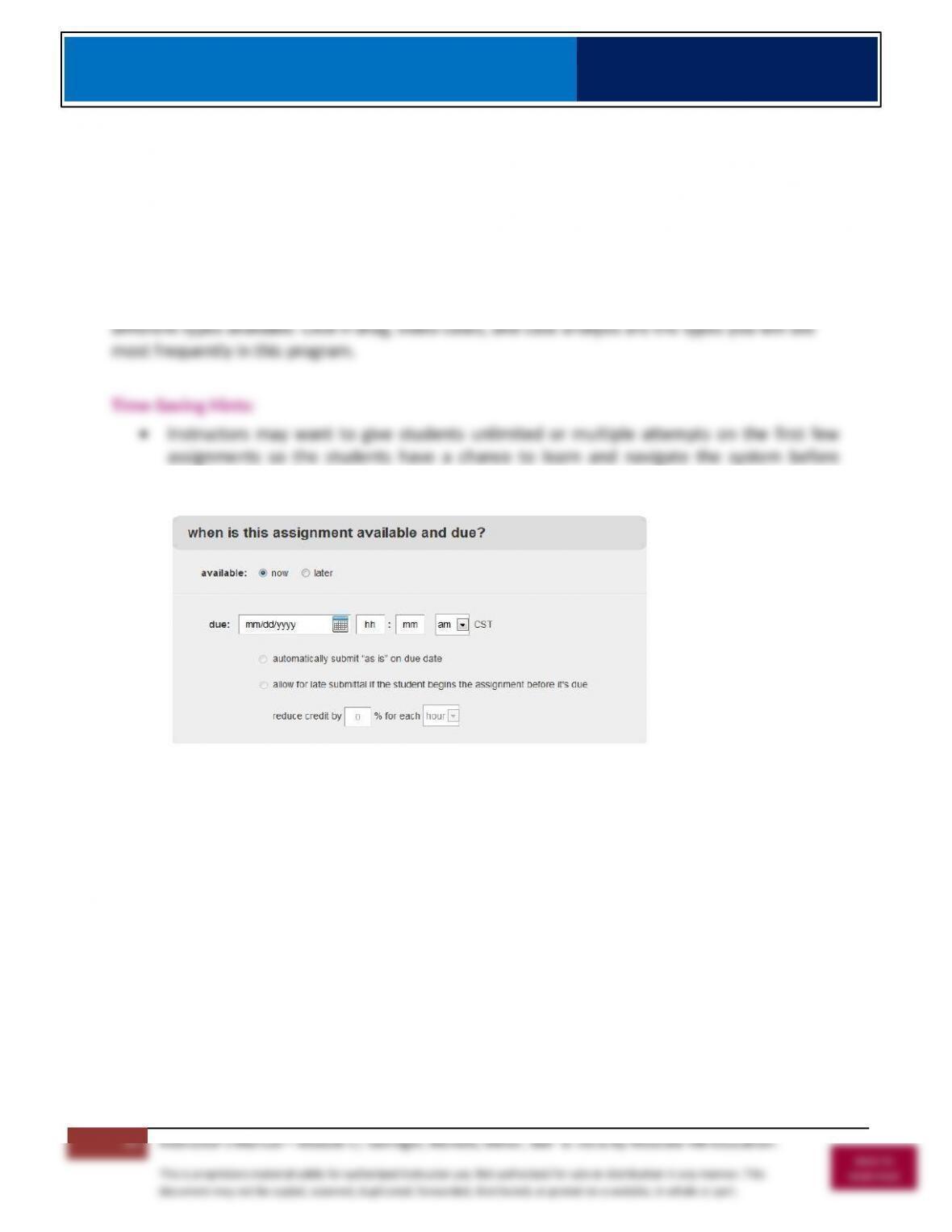
Consider assigning only 2 interactives per chapter. Interactive applications allow students to see
concepts in practice and assess higher order thinking skills. There are numerous exercises of
selecting the option for one attempt only.
• The value of each question should probably be relatively low, since multiple questions
are usually assigned for each chapter. A good rule of thumb would be to make “Quiz
Questions” worth 1 point each and “Interactives” worth 5-10 points each since these
require more time and thought.
International Business
Geringer, McNett, Minor, Ball
Instructor Guide to Module C
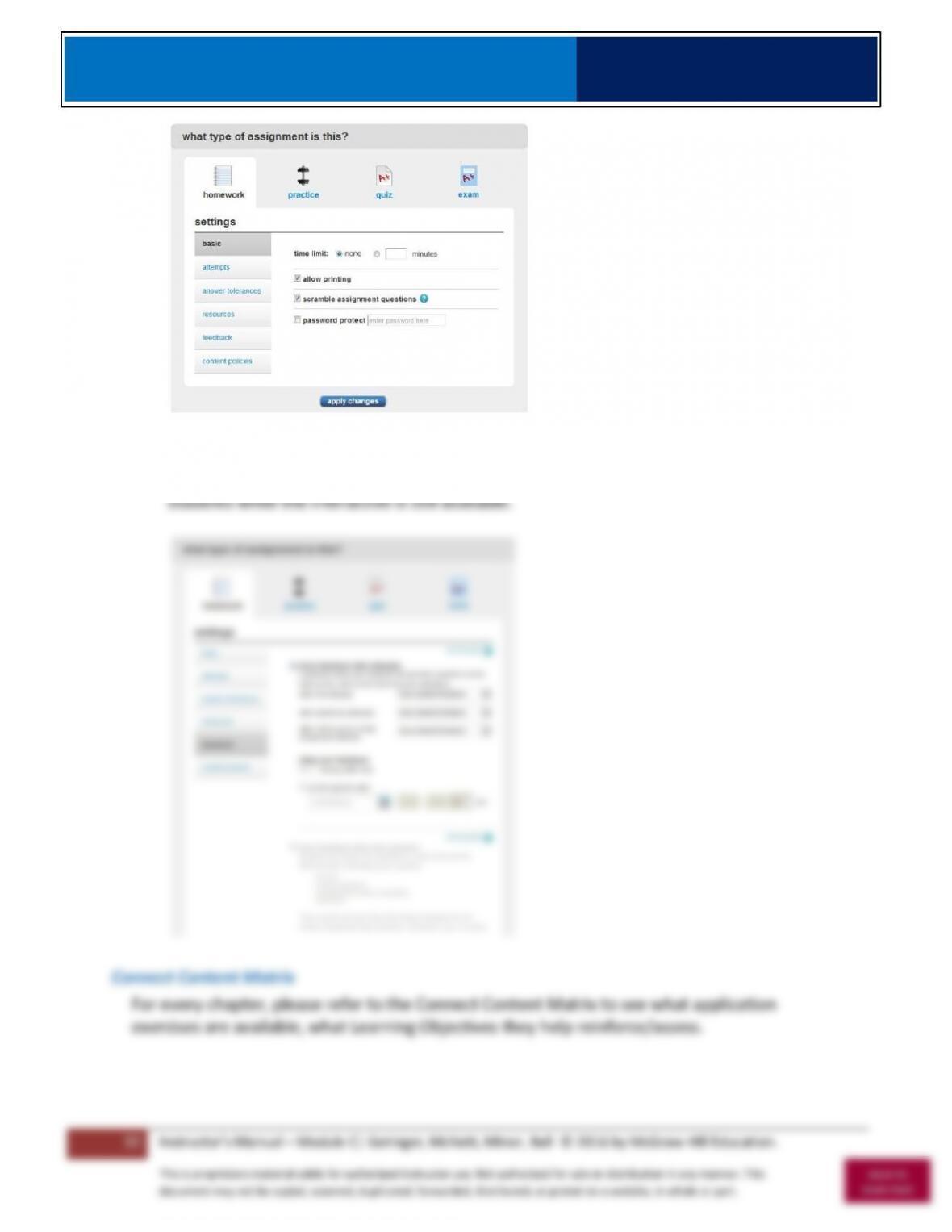
• Feedback given to students is time flexible. Selecting feedback to be displayed after the
assignment due date helps to limit students from giving the correct answers to other
International Business
Geringer, McNett, Minor, Ball
Instructor Guide to Module C
Module
Assignment
Type
Title
Topic(s)
Learning
Objective(s)
AACSB
Accreditation
Tagging
Bloom’s
Taxonomy
C
Drag and Drop
Understanding
Six Sigma
Manufacturing
Systems and
Logistics
C-04
Reflective
thinking
Understand
C
Comprehension
Case
Benefits and
Costs of Global
Sourcing
Sourcing
Globally
C-03
Analytical/
Reflective
thinking
Understand/
Analyze
C
Drag and Drop
Global Sourcing
Arrangements
Managing
Global Supply
Chains
C-01
Analytical/
Reflective
thinking
Understand/
Analyze
C
Drag and Drop
The Challenege
of Global
Standardization
Standardization
and the
Management
of Global
Operations
C-05
Analytical/
Reflective
thinking
Understand/
Analyze
C
Video Case
Problems with
Global Sourcing:
Denim Supplier
to Gap and
Levi’s Not
Environmentally
Responsible
Sourcing
Globally
C-01; C-02;
C-03; C-04
Analytical/
Reflective
thinking
Understand/
Analyze