
International Business
Geringer, McNett, Minor, Ball
Instructor Guide to Module 13
SUPPLEMENTAL ACTIVITIES
CASE STUDIES
Case studies that focus on intercultural issues and their effects in business environments are available
through Ivey Publishing and Harvard Business School. Ivey’s catalog is available for browsing (www.
iveycases.com); the cases are downloadable for review, and pricing is in the U.S. $3.50 range. Harvard
Business Publishing (https://cb.hbsp.harvard.edu/cbmp/pages/home) requires an account and offers
downloadable review copies for educators. The case prices begin in the $6 range.
“Israeli Wines in China: Reaching for New Heights” describes the need for Golan Heights Wines,
which is trying to exploit the vast Chinese wine market, to establish a strong brand identity.
Golan Heights has established its distribution in China but sales are sluggish because Chinese
prefer European wines, particularly French wines. The distributors and vendors did not push
Israeli wines, either. This is an Ivey case.
“Genicon: A Surgical Strike into Emerging Markets” describes a market assessment process for
this laparoscopic surgery equipment manufacturer as the firm tries to decide which new markets
to enter. This is an Ivey case.
CONTROVERSIAL ISSUES
1. Some Multinationals on the Defensive
There is a group of organizations that regularly attack consumer product multinationals because, the
charge is, their advertising and promotion establish consumer desires rather than satisfy consumer
needs. The role of fashion and make-up establish unrealistic notions of attractiveness. Empty calorie
food is promoted as an indulgence the consumer deserves. Specifically, the most frequent complaints
are:
False wants and too much materialism. People are judged by what they own rather than who
they are.
Producing too few social goods. There needs to be more of a balance between social (public)
and private goods.
Cultural pollution. Constant assaults on privacy by advertising and noise clutter.
Too much political power. Companies do promote and protect their own interests.
Ask students to review some of the criticism (Knowthis.com) outside of class. Then discuss their
position on the criticism of advertising and promotions. This can be modified to complete online using
collaboration tools.

International Business
Geringer, McNett, Minor, Ball
Instructor Guide to Module 13
TEACHING SUGGESTIONS
1. This chapter is very important to students’ understanding of the importance of
international marketing. Marketing is a fundamental issue that influences other aspects of
international business, so you will find it woven into the other modules, as well.
2. Focusing on the boxed material and the case study will help students achieve the
objectives of the chapter. Answers for both the boxed material and case studies are provided in
this Instructor’s Manual.
3. The “Check Your Progress” section in the textbook will help in understanding chapter
content, and Connect offers a way to hold them accountable. These topics may be assigned as
an outside class assignment. One of the problems in giving textbook questions as outside
assignments is that students frequently do not do the assignments and wait for the instructor to
give them the answers. Instructors can avoid these problems in several ways: (1) collect
assignments at random and assign a grade; (2) occasionally give some of the same questions as a
quiz, thus rewarding students who have done their assignments; (3) have students hand in
assignments and give credit for work submitted (or penalties for work not submitted); and (4)
call on students at random to present on specific questions (giving a small number of points for
correct answers or counting this as part of participation, while being unable to deliver earns a 0
for the day).
4. Guest lecturers on culture are a way to underscore the importance of the information in the culture
chapter. Possible guests include
• a marketing executive can share insights on how the firm plans and controls its
international advertising campaigns.
• a headquarters marketing staff member of an international firm can discuss the company
policy on international standardization of the marketing mix. He or she will have some good
“war stories” about campaigns that made it and those that failed because of environmental
differences.
• faculty colleagues from other countries can share observations on critical differences in
markets and how they influence the total product and its promotion.
5. A good way to start his chapter is to have students who have studied abroad and foreign students
relate their own experiences with marketing differences such as branding, product use, total product,
etc. Setting this contribution up ahead with a foreign student will give the student time to compose a
thoughtful response.
6. Robert F. Hartley’s Marketing Mistakes and Successes provides some interesting examples of
marketing errors.
International Business
Geringer, McNett, Minor, Ball
Instructor Guide to Module 13
19 Instructor’s Manual – Module 13 | Geringer, McNett, Minor, Ball © 2016 by McGraw-Hill Education.
CONNECT TOOLS FOR ASSESSEMENT OF LEARNING
Interactive Applications
Assigning Interactives
Consider assigning only 2 interactives per chapter. Interactive applications allow students to see
concepts in practice and assess higher order thinking skills. There are numerous exercises of
different types available. Click’n’drag, video cases, and case analysis are the types you will see
most frequently in this program.
Time-Saving Hints:
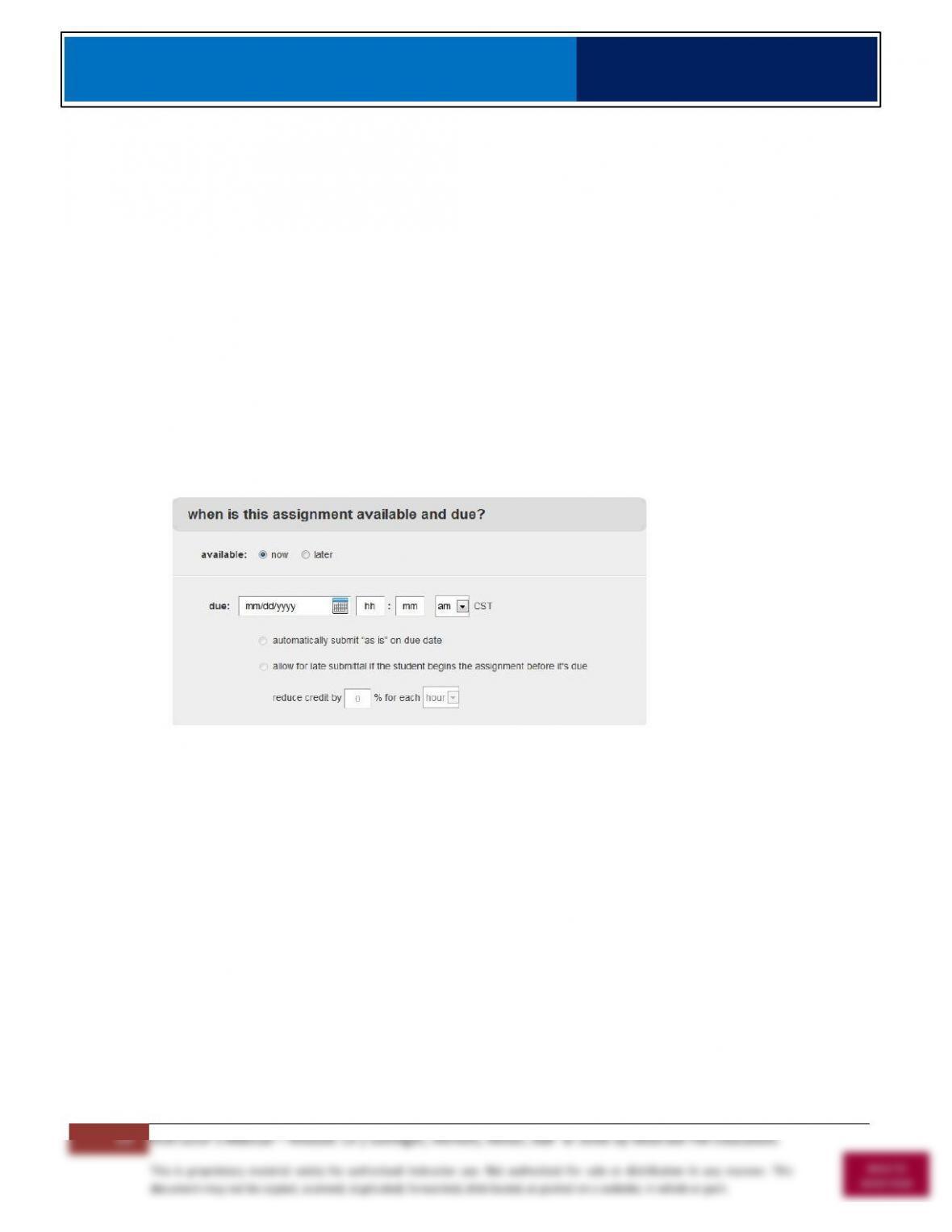
• Instructors may want to give students unlimited or multiple attempts on the first few
assignments so the students have a chance to learn and navigate the system before
selecting the option for one attempt only.
• The value of each question should probably be relatively low, since multiple questions
are usually assigned for each chapter. A good rule of thumb would be to make “Quiz
Questions” worth 1 point each and “Interactives” worth 5-10 points each since these
require more time and thought.
International Business
Geringer, McNett, Minor, Ball
Instructor Guide to Module 13
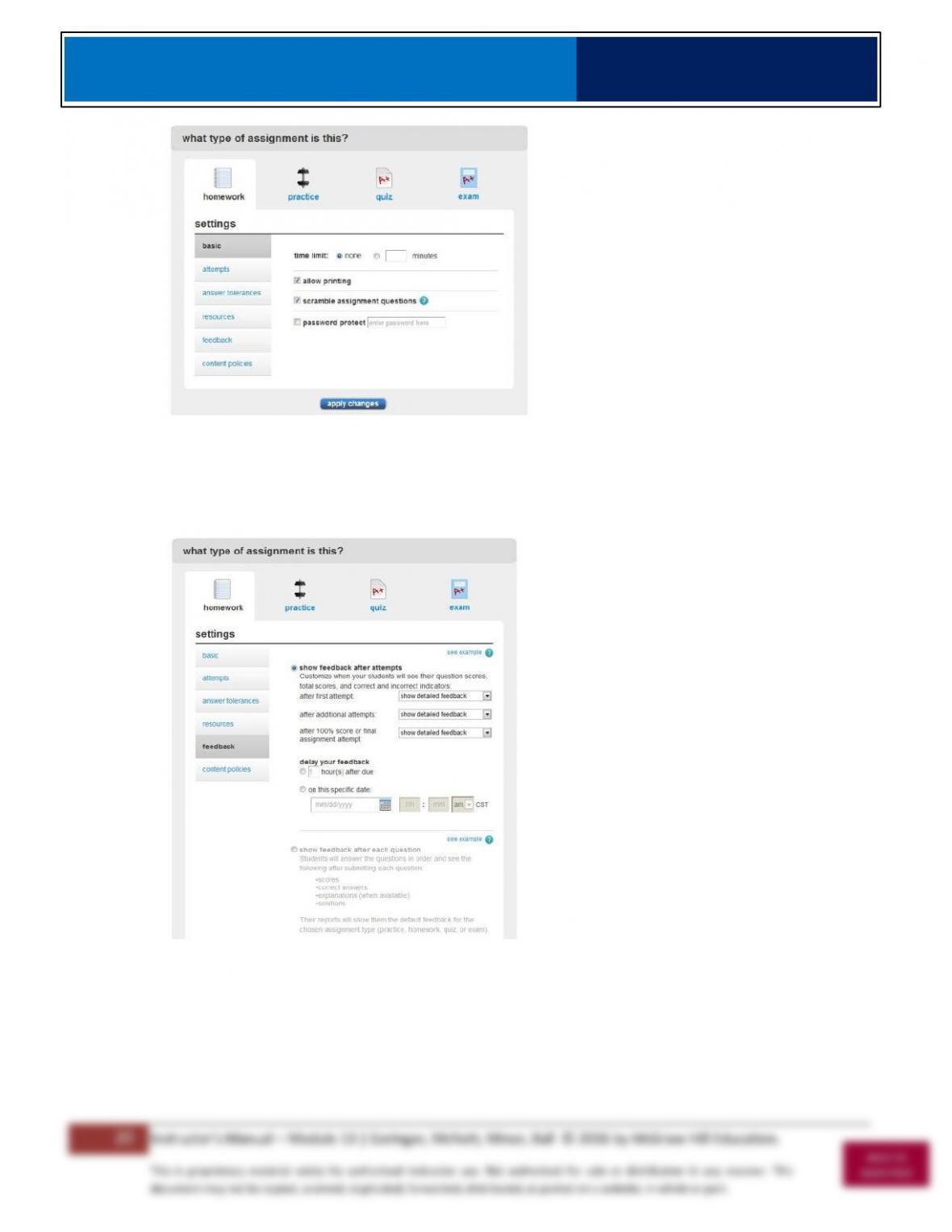
• Feedback given to students is time flexible. Selecting feedback to be displayed after the
assignment due date helps to limit students from giving the correct answers to other
students while the interactive is still available.
Connect Content Matrix
For every chapter, please refer to the Connect Content Matrix to see what application
exercises are available, what Learning Objectives they help reinforce/assess.

International Business
Geringer, McNett, Minor, Ball
Instructor Guide to Module 13
Module
Assignment
Type
Title
Topic(s)
Learning
Objective(s)
AACSB
Accreditation
Tagging
Bloom’s
Taxonomy
13
Case Analysis
Overcoming
Cultural
Barriers to
Selling
Tampons
Differences
Between
Domestic and
International
Trade
13-01; 13-
04
Analytical/
Reflective
thinking
Understand/
Analyze
13
Drag and Drop
Modifying
Products for
ForeignMarkets
Product
Strategies/Media
Availability and
Internet
Advertising
13-02; 13-
05
Analytical/
Reflective
thinking
Understand/
Analyze
13
Drag and Drop
International
Adaptation of
Products
Promotional
Strategies
13-03; 13-
04; 13-06
Analytical
Understand
13
Video Case
Chinese Flavors
for American
Snacks
Neither Purely
Global or Purely
Local
13-03; 13-
06; 13-07
Analytical/
Reflective
thinking
Understand/
Analyze
13
Drag and Drop
International
Pricing
Strategies
Pricing Strategies
13–07
Analytical/
Reflective
thinking
Understand/
Analyze