Chapter 02 – Money and the Payments System
Chapter 2
Money and the Payments System
Chapter Overview
As indicated by the title, this chapter covers money and the payments system, which
includes checks and electronic payments. The implications of new technologies for
money are discussed as well as the measurement of the money supply.
Learning Objectives: Establish an Understanding of
Money and its functions
Payments system today and tomorrow
Money links inflation and economic growth
Important Points of the Chapter
To understand the impact of money on the economy—why it’s so important to the smooth
functioning of the economy and how it improves everyone’s well being—we need to
understand exactly what money is, and to quantify its impact on the economy we need to
be able to measure it. The goals of this chapter are to understand what money is, how we
use it, and how we measure it.
Application of Core Principles
Principle #3: Information. Money as a means of payment solves an information
problem; money finalizes payments so that buyers and sellers have no further claim on
each other. So long as a buyer has money, there is nothing more the seller needs to know.
Principle #1: Time. Money as a store of value saves time; holding money means not
having to convert other assets into spendable form every time we wish to make a
purchase.
Principle #1: Time. The introduction of new money market accounts in the 1980s made
M2 accounts more liquid. M1 and M2 no longer moved together and analysts stopped
looking at M1 and began to look at M2.
Teaching Tips/Student Stumbling Blocks
Most of the material in this chapter is fairly straightforward, but students will be
puzzled by the idea that credit cards are not money. The key, as pointed out in the
text, is that a credit card represents access to someone else’s money. Another way
to explain this is to note that when one uses a credit card the transaction is not
over; a bill will come and will need to be paid.
2-1
Copyright © 2015 McGraw-Hill Education. All rights reserved. No reproduction or distribution without the prior written consent of
McGraw-Hill Education.
Chapter 02 – Money and the Payments System
Here’s an idea for an interesting class discussion: are impulse purchases more
likely when a credit card is available than when someone only has cash? If you
assigned a spending journal in conjunction with the coverage of Chapter 1, use it
to illustrate differences in spending patterns.
Features in this Chapter
Your Financial World: Debit Cards vs. Credit Cards
Which card should a consumer use? A debit card takes the funds from your account
immediately, while a credit card creates a deferred payment. However, if you don’t pay
your credit card debt on time there is a late fee, and if you don’t pay it all you incur
interest charges on the balance. If you can pay off your credit cards in full and on time,
it’s to your advantage to use them. Credit cards also help you build a credit history,
which you will need when you want to borrow money to buy a car or house.
Your Financial World: Paper Checks Become Digital Images
On October 28, 2004, “Check 21—the Check Clearing for the 21st Century Act” went into
effect. This meant that banks would no longer have the expensive headache of
transporting paper checks back and forth. Instead, banks can transmit digital images of
every check written. These “substitute checks” have the same legal standing as proof of
payment as the original checks, and the change is estimated to save banks $2 billion a
year. It also means eliminating the risks involved in physically transporting checks. The
bad news for consumers is that they can no longer write a check figuring they’ll have a
few days to deposit funds to cover it; speeding up paper check processing does have a
downside.
Lessons from the Crisis: Market Liquidity, Funding Liquidity, and Making Markets
A “market maker” in stocks, bonds, or other securities is usually a financial institution
that buys and sells securities on behalf of clients. If demand is greater than supply, the
market maker must be able to act as a seller to clear the market. Market liquidity and
funding liquidity are both needed to make financial markets work. A sudden loss of
liquidity was central to the financial crisis of 2007-2009. Both funding and market
liquidity dried up. Market liquidity dried up because investors began to doubt the value
of a wide class of securities. Funding liquidity followed as their lenders worried about
their potential losses.
In the News: Airtime is Money
Mobile money in Africa comes in many different forms. One old form of mobile money
is using pre-paid mobile airtime minutes as a de facto currency that can be transferred
between phones, exchanged for cash, or used in bartering. These minutes being used as a
currency don’t rely on the stability of the government for the value.
2-2
Copyright © 2015 McGraw-Hill Education. All rights reserved. No reproduction or distribution without the prior written consent of
McGraw-Hill Education.

Chapter 02 – Money and the Payments System
Lessons of the Article: Almost anything can be a currency, but people
prefer currencies that provide a reasonable store of value. And they prefer
payments mechanisms that are efficient, anonymous, and allow for big and
small transfers. If there is a better currency or payments technology,
people can switch. In the story, mobile minutes are attractive for both
reasons, beating currencies with uncertain storage value and replacing both
cash and coin.
Applying the Concept: Where are all those $100 Bills?
If we take all the currency in circulation in the United States and divide it by the
population, each person should be holding about $2800 in cash! And moreover, there
must be eighteen $100 bills for each U.S. resident. Since this is not really true, where are
all those $100 bills? The answer is that they are outside the country, in countries where
people don’t trust the value of their own currencies. Everyone seems to have faith in the
U.S. dollar! The U.S. Treasury estimates that between two-thirds and three-quarters of
U.S. currency is held outside the United States; that’s more than $600 billion, and most of
it is in hundreds!
Tools of the Trade: The Consumer Price Index
The CPI is designed to answer the question “How much more would it cost for people to
purchase today the same basket of goods and services that they actually bought at some
fixed time in the past?” To answer this question, every few years statisticians at the
Bureau of Labor Statistics (BLS) conduct surveys to find out what people bought. Then
the BLS collects information on the prices of thousands of goods and services.
Combining the two allows the BLS to compute the current cost of the basket. This
current cost is then compared to a benchmark to yield an index. The percentage change
in this index is a measure of inflation. Experts suggest that the CPI overstates inflation
because it does not take into account the fact that people make substitutions in the goods
and services they buy when prices change. To address this problem (called “substitution
bias”) the BLS now changes the weights used in the calculations every two years.
Additional Teaching Tools
An article on Bloomberg Businessweek
(http://www.businessweek.com/articles/2013-03-28/bitcoin-may-be-the-global-economys
-last-safe-haven) describes recent increased use of Bitcoin, a virtual cash used to buy
goods an d services online. Bitcoin was created in 2009 and has nearly 11 million
Bitcoins in circulation. Many people will tell you that the emergence of a virtual global
money supply beyond the reach and control of any government is very real and should be
taken seriously.
2-3
Copyright © 2015 McGraw-Hill Education. All rights reserved. No reproduction or distribution without the prior written consent of
McGraw-Hill Education.
Chapter 02 – Money and the Payments System
The article “Shoppers’ Black Friday Weekend Spending Falls 3%” (The Wall Street
Journal, December 1, 2013) describes retail sales after the 2013 Thanksgiving weekend
sales.
The April, 2012, article on Bloomberg Businessweek, “Rise of the Barter Economy”
(http://www.businessweek.com/articles/2012-04-26/rise-of-the-barter-economy)
describes the rise of the use of barter business models. The article shows that these
models have limited use for small businesses, as money is still needed for some
purchases.
To learn more about “Check 21” visit the “frequently asked questions” page on the web
site of the Federal Reserve System at
http://www.federalreserve.gov/pubs/check21/consumer_guide.htm.
Virtual Tools
Go on a virtual field trip and the life cycle of cash at the Federal Reserve Bank of San
Francisco by visiting its web site at: http://www.frbsf.org/cash/cash-lifecycle
Students can also visit the United States Mint at:
http://www.usmint.gov/index.cfm?flash=yes
Here’s a site with lots of info about e-money and good links to other resources on the
topic:
http://www.ex.ac.uk/~RDavies/arian/emoney.html
The U.S. Secret Service Counterfeiting Division has interesting information on its site
including more about how to spot fake bills; visit them at:
http://www.secretservice.gov/know_your_money.shtml.
For More Discussion
Will there ever be a cashless society? What are the pros and cons of replacing cash with
some of the electronic payments mechanisms mentioned in this chapter? Students are
likely to point out that less cash may mean less robbery, both by “outsiders” and
“insiders” and they may also have a sense that having to count and deposit cash can be
more time-consuming and so less efficient than having transactions that are immediately
recorded. But on the negative side, students may also raise issues of privacy, and note
that high-tech crime may just replace “old-fashioned” stick-ups.
Chapter Outline
I. Money and How We Use It
As used in conversation, the word “money” can mean many things. However, we
will use the word in a narrower, more specialized sense to mean anything that can
readily be used to make economic transactions. Formally defined, money is an asset
that is generally accepted as payment for goods and services or repayment of debt.
2-4
Copyright © 2015 McGraw-Hill Education. All rights reserved. No reproduction or distribution without the prior written consent of
McGraw-Hill Education.
Chapter 02 – Money and the Payments System
Money has three characteristics: it is a means of payment, a unit of account, and a
store of value.
A. Means of Payment
1. The primary use of money is as a means of payment.
2. Barter is an alternative to using money and doesn’t work very
well.
3. Barter requires a “double coincidence of wants,” meaning that in
order for trade to take place both parties must want what the
other has.
4. Money finalizes payments so that buyers and sellers have no
further claim on each other.
5. As economies have become more complex and physically
dispersed the need for money has grown.
B. Unit of Account
1. We measure value using dollars and cents.
2. Money is the unit of account that we use to quote prices and
record debts.
3. Money can be referred to as a standard of value.
4. Using money makes comparisons of value easy.
C. Store of Value
1. For money to function as a means of payment it has to be a store
of value too because it must retain its worth from day to day.
2. The means of payment has to be durable and capable of
transferring purchasing power from one day to the next.
3. Money is not the only store of value; wealth can be held in a
number of other forms.
4. Other stores of value can be preferable to money because they
pay interest or deliver other services.
5. However, we hold money because it is liquid, meaning that we
can use it to make purchases.
6. Liquidity is a measure of the ease with which an asset can be
turned into a means of payment (namely money).
a. The more costly an asset is to turn into money, the less
liquid it is.
b. Constantly transforming assets into money every time we
wish to make a purchase would be extremely costly; hence
we hold money.
2-5
Copyright © 2015 McGraw-Hill Education. All rights reserved. No reproduction or distribution without the prior written consent of
McGraw-Hill Education.
Chapter 02 – Money and the Payments System
c. Financial institutions often use market liquidity to refer to
their ability to sell assets for money. Funding liquidity
refers to their ability to buy security or to make loans.
Financial institutions need both to operate day-to-day.
II. The Payments System
The payments system is the web of arrangements that allow for the exchange of
goods and services, as well as assets, among different people. The efficient
operation of our economy depends on the payment system and so it is a critical
policy concern that it function well. Money is at the heart of the payments
system.
A. Commodity and Fiat Monies
1. The first means of payment were things with intrinsic value like silk or
salt.
2. Successful commodity monies had the following characteristics:
a. They were usable in some form by most people;
b. They could be made into standardized quantities;
c. They were durable;
d. They had high value relative to their weight and size so that
they were easily transportable; and
e. They were divisible into small units so that they were easy to
trade.
3. For most of human history, gold has been the most common
commodity money.
4. In 1656, a Swede named Johan Palmstruck founded the Stockholm
Banco and five years later issued Europe’s first paper money.
5. The money was welcomed at first because it was easy to handle, but
the King persuaded Palmstruck to print more of them (to finance some
wars the King was fighting) and the currency lost value. Ultimately
Palmstruck’s bank failed.
6. Other people tried issuing money in the early 1700s and eventually
governments got into the act.
7. In 1775, the newly formed Continental Congress of the United States
of America issued “continentals” to finance the revolutionary war, and
twenty years later revolutionary France issued the “assignat.” Both
currencies were issued in huge quantities and both eventually became
worthless.
8. As a result, people became suspicious of government-issued paper
money.
2-6
Copyright © 2015 McGraw-Hill Education. All rights reserved. No reproduction or distribution without the prior written consent of
McGraw-Hill Education.
Chapter 02 – Money and the Payments System
9. Following the end of the Civil War the U.S. government changed from
the paper money it had issued during the War back to using gold. In
the United States, gold coins and notes backed by gold circulated well
into the 20th century.
10. In the U.S., gold coins and notes backed by gold circulated well into
the 20th century.
11. Today we use paper money that is fiat money, meaning that its value
comes from government decree (or fiat).
12. A note (whether it’s a $1 or a $100 bill) costs about 6 cents to produce.
13. These notes are accepted as payment for goods or in settlement of
debts for two reasons
a. We take them because we believe we can use them in the
future.
b. The law says we must accept them; that is what the words
“legal tender” printed on the bill means.
14. Some critics of money advocate the return to the gold standard.
However, as long as the government stands behind its paper money,
and doesn’t issue too much of it, we will use it. In the end, money is
about trust.
B. Checks
1. Checks are another way of paying for things, but they aren’t legal
tender and they aren’t even money.
2. A check is an instruction to the bank to take funds from your account
and transfer them to the person or firm you designate (by writing the
name on the check).
3. When you give someone a check in exchange for a good or service, it
is not a final payment; a series of transactions must still take place that
lead to the final payment.
4. Here are the steps in the process:
a. You hand the check over to the merchant who then takes it to
the bank.
b. The bank credits the merchant’s account with the amount of
the check (either immediately or with a short lag).
c. At the end of the day, the bank sends the check (or an
electronic image of it) through the check-clearing system to
be processed (either at the check-processing center run by the
Federal Reserve or to a private check clearinghouse).
2-7
Copyright © 2015 McGraw-Hill Education. All rights reserved. No reproduction or distribution without the prior written consent of
McGraw-Hill Education.
Chapter 02 – Money and the Payments System
d. The center sends the check to the bank on which it was
written (your bank).
e. The account of the bank receiving the check is credited and
the account of the bank on which the check was written is
debited.
f. On receipt of the check your bank debits your account and
most likely makes scanned images of the cleared checks
available to you, either in your paper end-of-month statement
or online. Years ago all checks were returned to their writers.
G. Though check volumes have fallen, paper checks are still
with us because a cancelled check is legal proof of payment
and, in many states laws require banks to return checks to
customers. Also, new electronic mechanisms have made
processing cheaper and easier.
H. Force of habit means that many people, when given a choice,
still opt to receive their cancelled checks with their
statements.
C. Electronic Payments
A. The third and final method of payment is electronic.
B. There are credit cards, debit cards, and electronic funds transfer.
C. A debit card works like a check and there is usually a fee for the
transaction.
D. A credit card is a promise by a bank to lend the cardholder money with
which to make purchases. When the card is used to buy merchandise
the seller receives payment immediately.
E. However, the money that is used for payment does not belong to the
buyer; rather, the bank makes the payment, creating a loan that the
buyer must repay.
F. For this reason, credit cards do not represent money; rather, they
represent access to someone else’s money.
G. Electronic funds transfers move funds directly from one account to
another. While such payments are less well known than credit card or
debit card payments, these transfers account for the bulk of the $30
trillion worth of non-cash retail payments made electronically each
year in the United States.
H. Banks use these transfers to handle transactions among themselves.
I. Individuals may be familiar with such transfers through direct deposit
of their paychecks, etc.
2-8
Copyright © 2015 McGraw-Hill Education. All rights reserved. No reproduction or distribution without the prior written consent of
McGraw-Hill Education.
Chapter 02 – Money and the Payments System
J. Retail businesses are experimenting with new forms of electronic
payment, including the stored-value card (examples are long-distance
telephone cards).
K. E-money is another new method of payment that can be used for
purchases on the Internet. It is really a form of private money. M-Pesa
is an example of e-money.
III. The Future of Money
A. The time is rapidly approaching when safe and secure systems for
payment will use virtually no money at all.
B. We will also likely see fewer “varieties” of currency, a sort of
standardization of money and a dramatic reduction in the number of units
of account.
C. Finally, money as a store of value is clearly on the way out as many
financial instruments have become highly liquid.
IV. Measuring Money
A. Changes in the amount of money in the economy are related to changes in
interest rates, economic growth, and most important, inflation.
B. Inflation is a sustained rise in the general price level.
C. With inflation you need more money to buy the same basket of goods
because it costs more.
D. Inflation makes money less valuable.
E. The primary cause of inflation is the issuance of too much money.
F. Because money growth is related to inflation we need to be able to
measure how much money is circulating.
G. We compute measures of money called the monetary aggregates: M1 and
M2.
1 M1 is the narrowest definition of money and includes only
currency and various deposit accounts on which people can write
checks. Specifically, it is currency in the hands of the public,
traveler’s checks, demand deposits and other checkable deposits.
2 M2 includes everything that is in M1 plus assets that cannot be
used directly as a means of payment and are difficult to turn into
currency quickly, like small-denomination time deposits, money
market deposit accounts, and money market mutual fund shares.
M2 is the most commonly quoted monetary aggregate.
H. Up until the 1980s M1 was the most closely watched monetary aggregate,
but is no longer a useful measure of money.
2-9
Copyright © 2015 McGraw-Hill Education. All rights reserved. No reproduction or distribution without the prior written consent of
McGraw-Hill Education.
Chapter 02 – Money and the Payments System
I. As new substitutes for checking accounts became more prevalent M1
became less useful than M2.
J. M2 no longer predicts inflation. It may be that still another new measure
of money is needed.
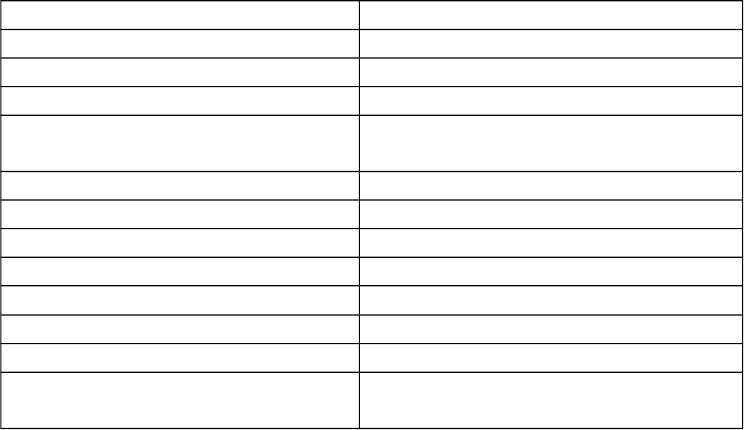
Using FRED: Codes for Data in This Chapter
Data Series FRED Data Code
Price of gold GOLDAMGBD228NLBM
M1 M1SL
M2 M2SL
Currency in the hands of the
public
CURRSL
Traveler’s checks TVCKSSL
Consumer price index CPIAUCSL
Demand deposits DEMDEPSL
Other checkable deposits OCDSL
Small‐denomination time deposits STDCBSL
Savings deposits and MMDAs SAVINGSL
Retail MMMFs RMFSL
Nominal gross domestic
product
GDP
Terms Introduced in Chapter 2
automated clearinghouse transaction (ACH)
checks
credit card
currency
debit card
demand deposits
electronic funds transfer
e-money
fiat money
funding liquidity
gross domestic product (GDP)
inflation
inflation rate
liquidity
M1
M2
market liquidity
means of payment
money
monetary aggregates
payments system
2-10
Copyright © 2015 McGraw-Hill Education. All rights reserved. No reproduction or distribution without the prior written consent of
McGraw-Hill Education.
Chapter 02 – Money and the Payments System
store of value
stored-value card
time deposits
unit of account
wealth
Lessons of Chapter 2
1. Money is an asset that is generally accepted in payment for goods and services or
repayment of debts.
a. Money has three basic uses:
i. Means of payment
ii. Unit of account
iii. Store of value
b. Money is liquid. Liquidity is the ease with which an asset can be turned
into a means of payment.
c. For financial institutions, market liquidity is the ease with which they can
sell a security or loan for money. Funding liquidity is the ease with which
they can borrow to acquire a security or loan.
2. Money makes the payments system work. The payments system is the web of
arrangements that allows people to exchange goods and services. There are three
broad categories of payments, all of which use money at some stage:
a. Cash
b. Checks
c. Electronic payments
3. In the future money will be used less and less as a means of payment.
4. To understand the links between money, inflation, and economic growth, we need
to measure the quantity of money in the economy. There are three basic measures
of money;
a. M1, the narrowest measures, includes only the most liquid assets.
b. M2, a broader measure, includes assets not usable as means of payment.
c. M3, the broadest commonly used measure of money, includes much less
liquid assets than M2.
d. Countries with high money growth have high inflation.
e. In countries with low inflation, money growth is a poor forecaster of
inflation.
2-11
Copyright © 2015 McGraw-Hill Education. All rights reserved. No reproduction or distribution without the prior written consent of
McGraw-Hill Education.