Chapter 06: Working Capital and the Financing Decision
6-21. Solution:
Bombs Away Video Games Corporation
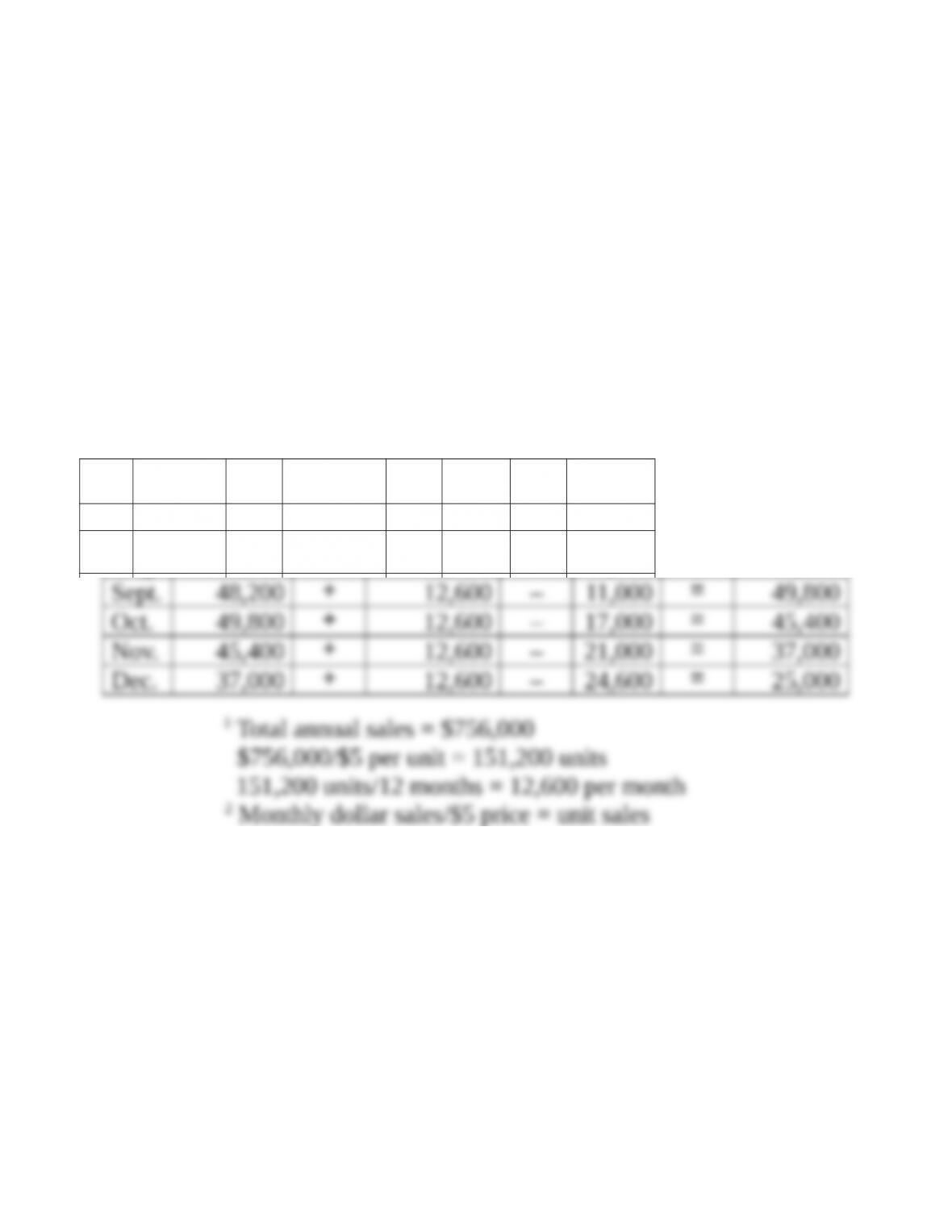
a. Production and inventory schedule in units
Beginning
Inventory + Production1– Sales2=
Ending
Inventory
Jan. 25,000 +12,600 – 20,000 =17,600
Feb. 17,600 +12,600 – 18,600 =11,600
1 Total annual sales = $756,000
Copyright © 2017 McGraw-Hill Education. All rights reserved. No reproduction or distribution without the prior written consent
of McGraw-Hill Education.
Chapter 06: Working Capital and the Financing Decision
6-21. (Continued)
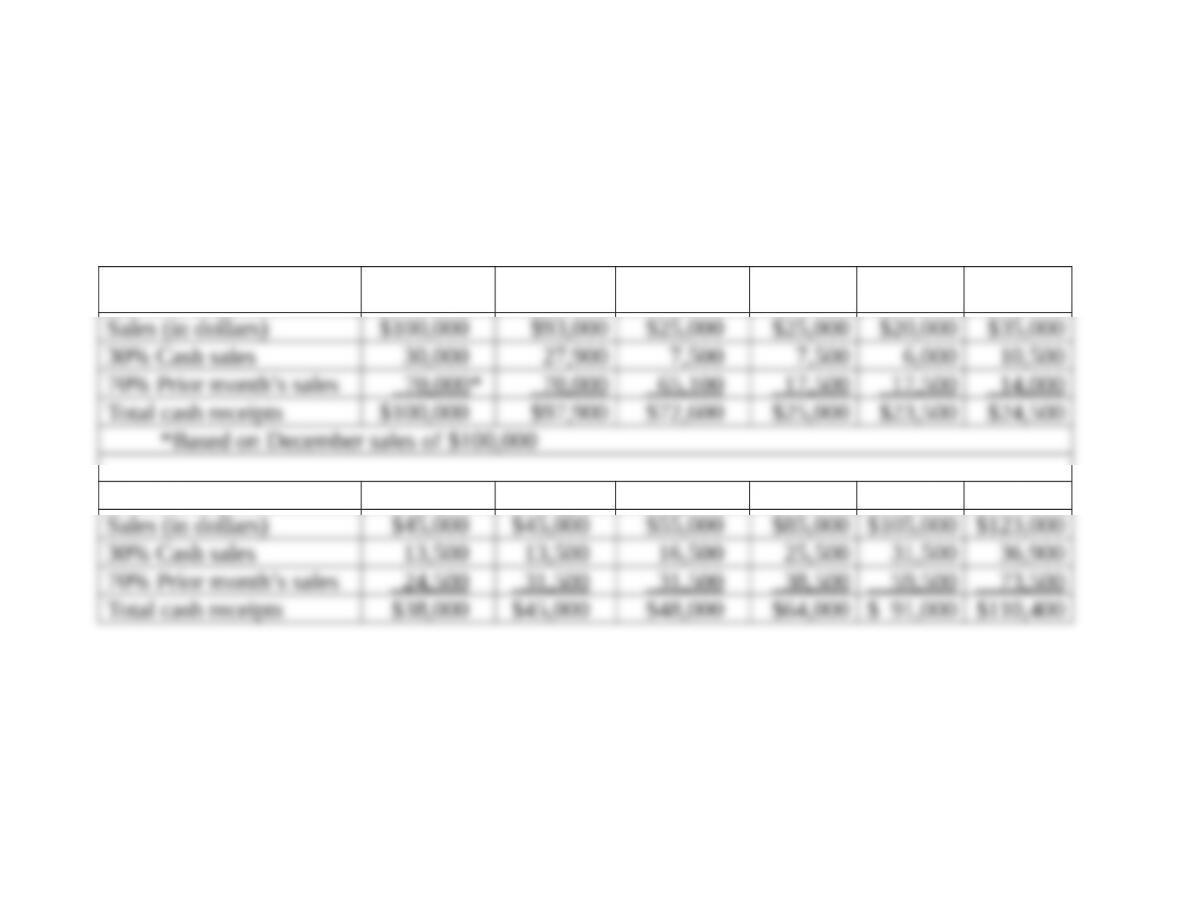
b.
Bombs Away Video Games Corporation
Cash Receipts Schedule
Jan.Feb.Mar.Apr.May June
July Aug.Sept.Oct.Nov.Dec.
6-21. (Continued)
c.
Bombs Away Video Games Corporation
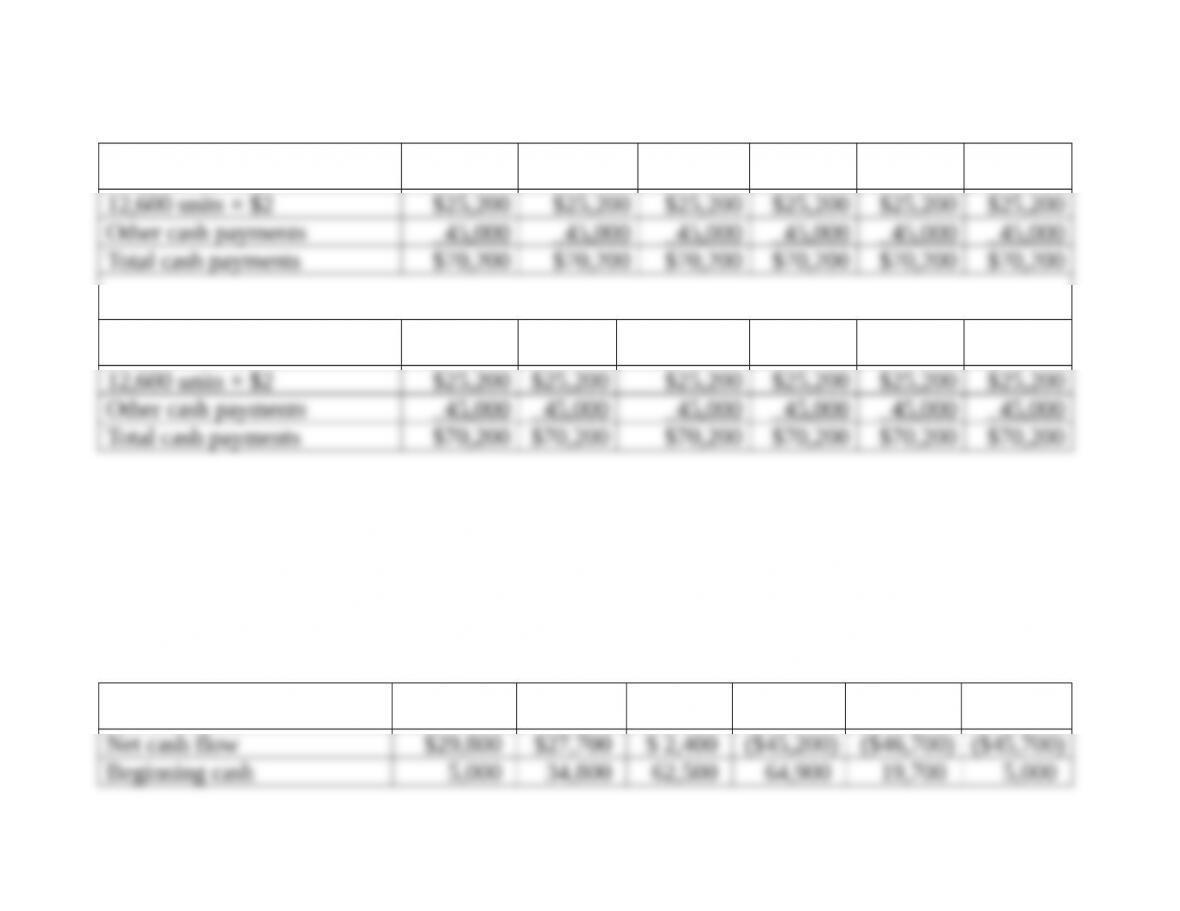
Cash Payments Schedule
Copyright © 2017 McGraw-Hill Education. All rights reserved. No reproduction or distribution without the prior written consent of McGraw-Hill Education.
Chapter 06: Working Capital and the Financing Decision
Constant Production
Jan. Feb. Mar. Apr. May June
July Aug. Sept. Oct. Nov. Dec.
6-21. (Continued)
d.
Bombs Away Video Games Corporation
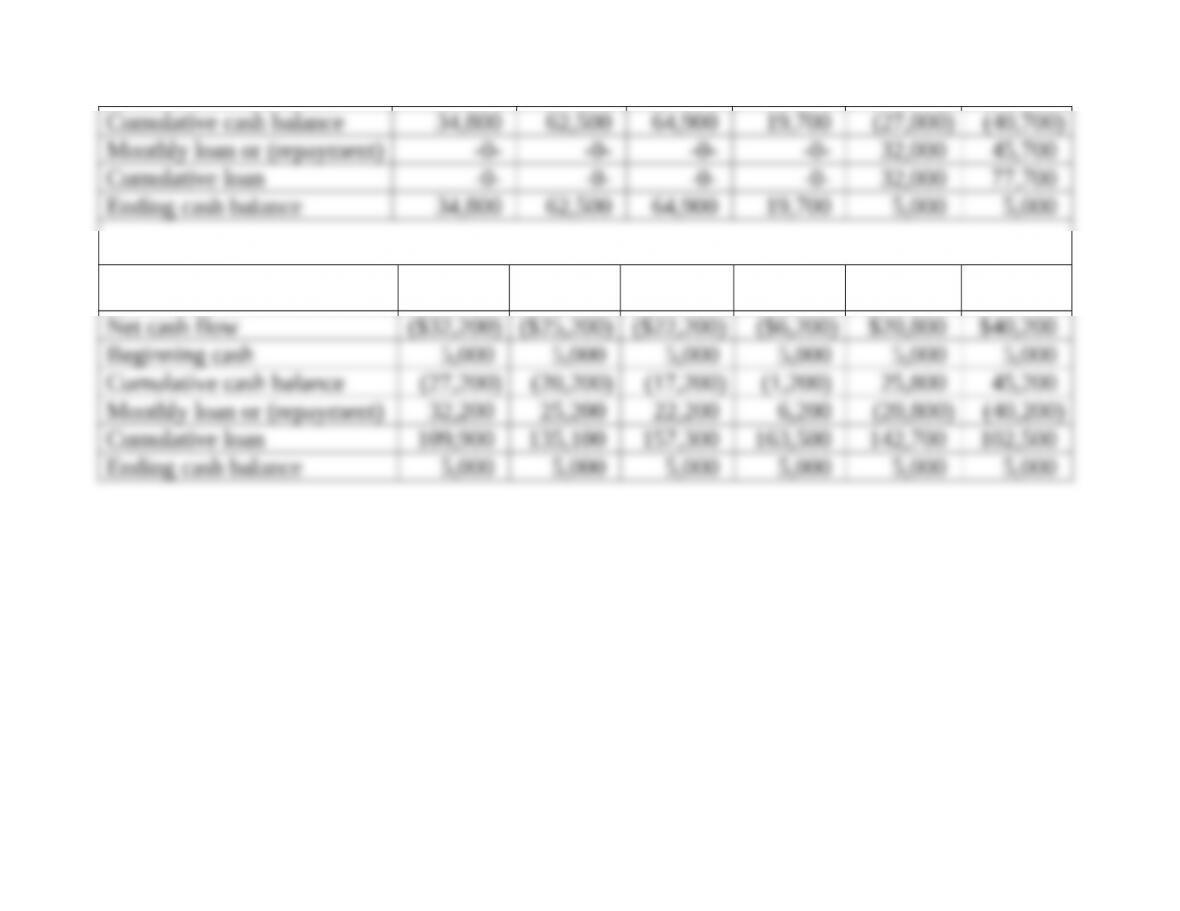
Cash Budget
Jan. Feb. Mar. Apr. May June
Copyright © 2017 McGraw-Hill Education. All rights reserved. No reproduction or distribution without the prior written consent of McGraw-Hill Education.
Chapter 06: Working Capital and the Financing Decision
July Aug. Sept. Oct. Nov. Dec.
Copyright © 2017 McGraw-Hill Education. All rights reserved. No reproduction or distribution without the prior written consent of McGraw-Hill Education.

Chapter 06: Working Capital and the Financing Decision
22. Level production and related financing effects (LO3) Esquire Products Inc. expects the following monthly sales:
January………….. $28,000 May…………. $8,000 September……… $29,000
February………… 19,000 June…………. 6,000 October………….. 34,000
March……………. 12,000 July………….. 22,000 November………. 42,000
April……………… 14,000 August……… 26,000 December………. 24,000
Total sales = $264,000
Cash sales are 40 percent in a given month, with the remainder going into accounts receivable. All receivables are collected in
the month following the sale. Esquire sells all of its goods for $2 each and produces them for $1 each. Esquire uses level
production, and average monthly production is equal to annual production divided by 12.
a. Generate a monthly production and inventory schedule in units. Beginning inventory in January is 12,000 units. (Note: To do
part a, you should work in terms of units of production and units of sales.)
b. Determine a cash receipts schedule for January through December. Assume that dollar sales in the prior December were
$20,000. Work part b using dollars.
c. Determine a cash payments schedule for January through December. The production costs ($1 per unit produced) are paid for
in the month in which they occur. Other cash payments (besides those for production costs) are $7,400 per month.
d. Construct a cash budget for January through December using the cash receipts schedule from part b and the cash payments
schedule from part c. The beginning cash balance is $3,000, which is also the minimum desired.
e. Determine total current assets for each month. Include cash, accounts receivable, and inventory. Accounts receivable equal
sales minus 40 percent of sales for a given month. Inventory is equal to ending inventory (part a) times the cost of $1 per
unit.
6-22. Solution:
Esquire Products Inc.
Copyright © 2017 McGraw-Hill Education. All rights reserved. No reproduction or distribution without the prior written consent of McGraw-Hill Education.
Chapter 06: Working Capital and the Financing Decision
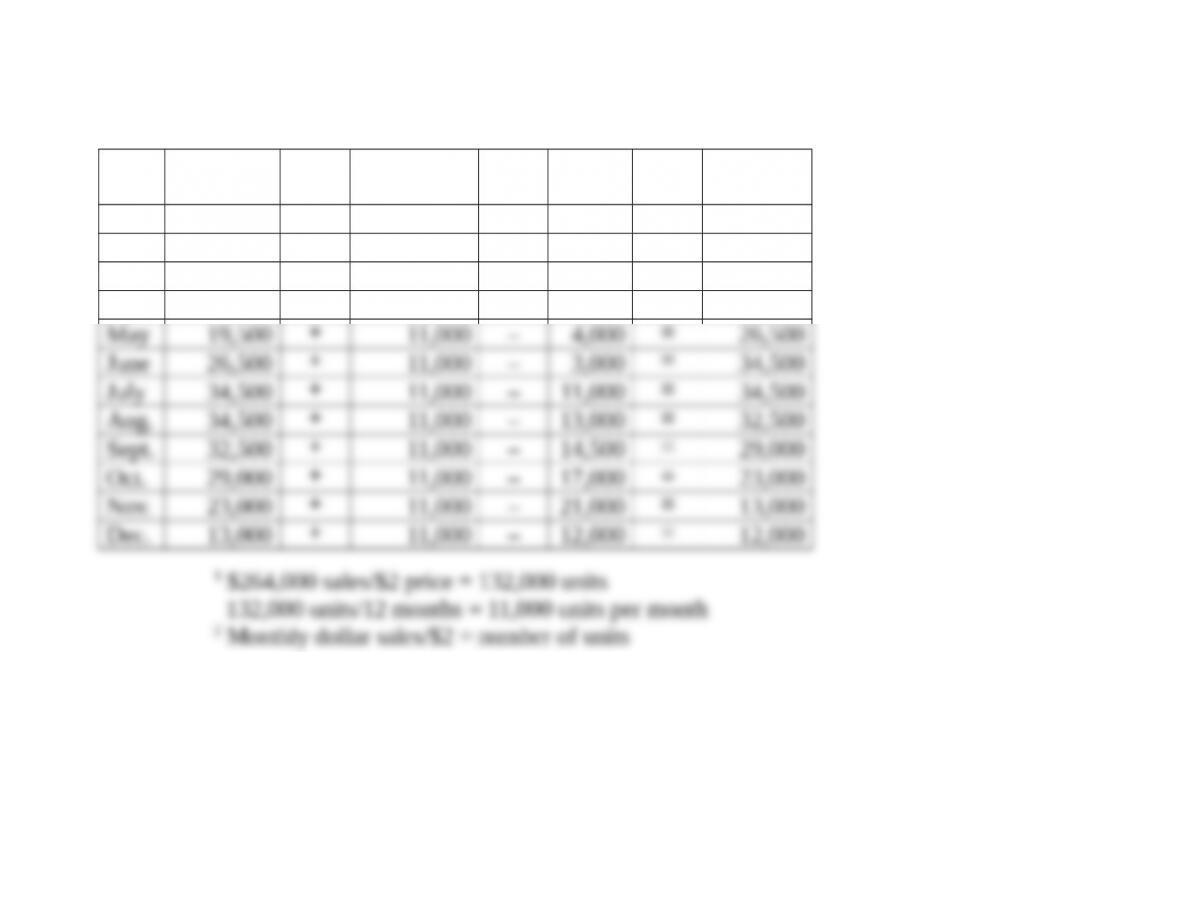
a. Production and inventory schedule in units
Beginning
Inventory + Production1– Sales2=
Ending
Inventory
Jan. 12,000 +11,000 – 14,000 =9,000
Feb. 9,000 +11,000 – 9,500 =10,500
Mar. 10,500 +11,000 – 6,000 =15,500
Apr. 15,500 +11,000 – 7,000 =19,500
6-22. (Continued)
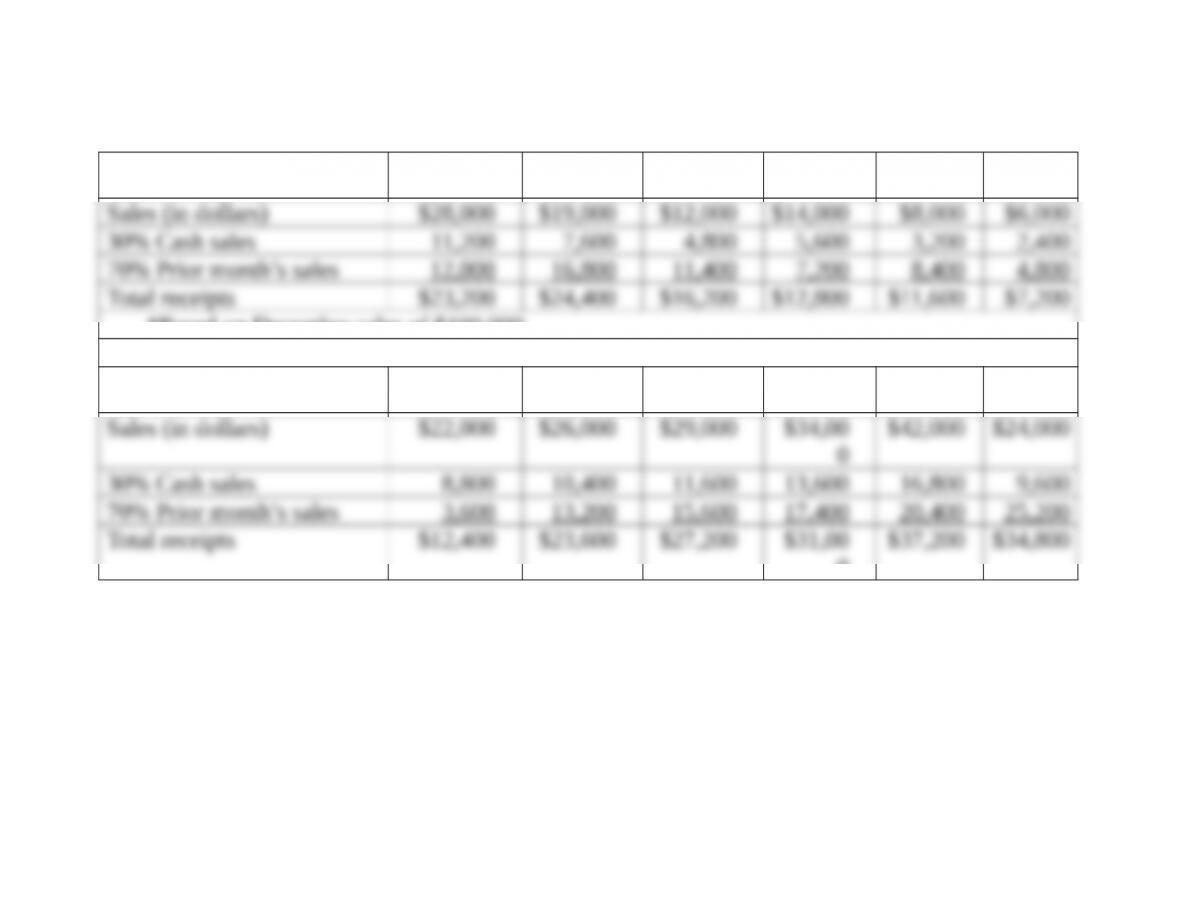
b.
Esquire Products Inc.
Copyright © 2017 McGraw-Hill Education. All rights reserved. No reproduction or distribution without the prior written consent of McGraw-Hill Education.
Chapter 06: Working Capital and the Financing Decision
Cash Receipts Schedule (take dollar values from problem statement)
Jan. Feb. Mar. Apr. May June
*Based on December sales of $100,000
July Aug. Sept. Oct. Nov. Dec.
0
6-22. (Continued)
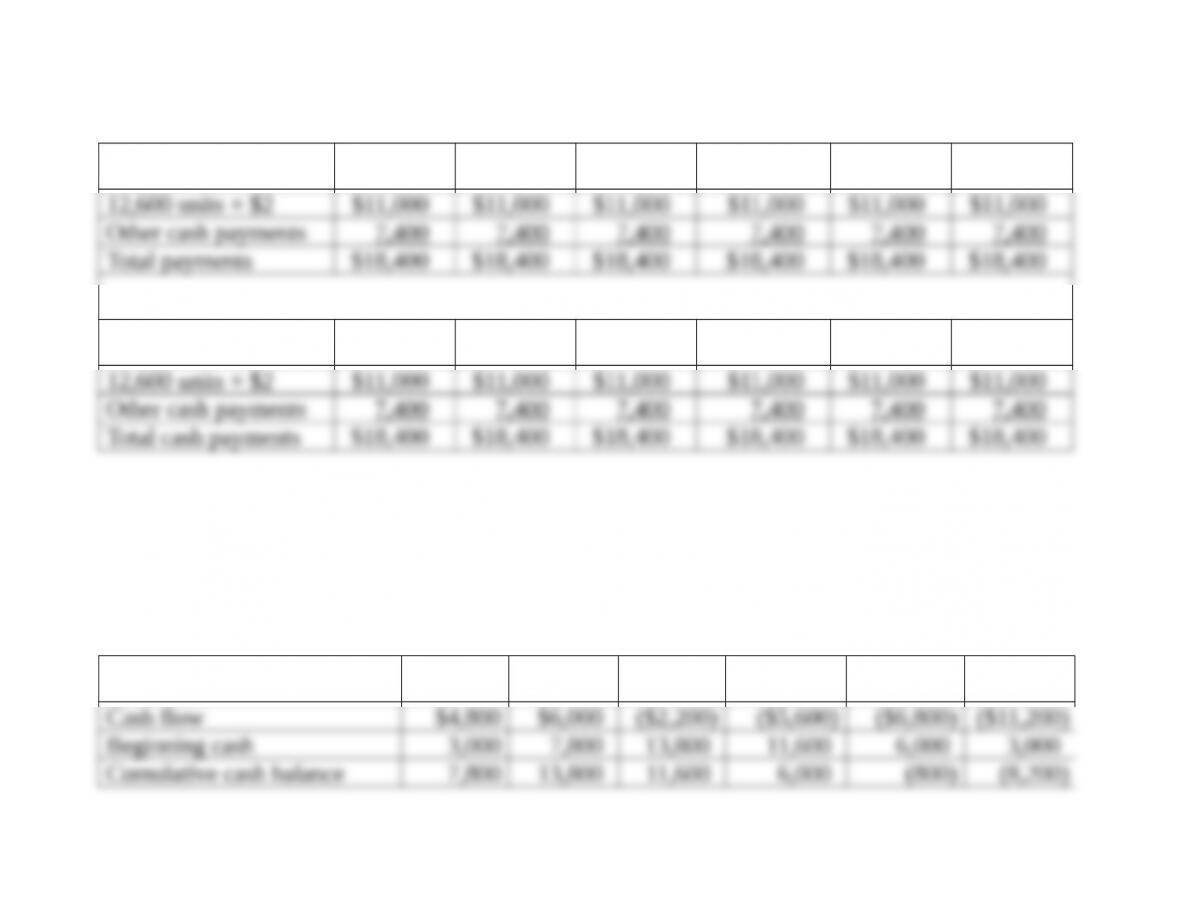
c.
Esquire Products Inc.
Cash Payments Schedule
Copyright © 2017 McGraw-Hill Education. All rights reserved. No reproduction or distribution without the prior written consent of McGraw-Hill Education.
Chapter 06: Working Capital and the Financing Decision
Constant Production
Jan. Feb. Mar. Apr. May June
July Aug. Sept. Oct. Nov. Dec.
6-22. (Continued)
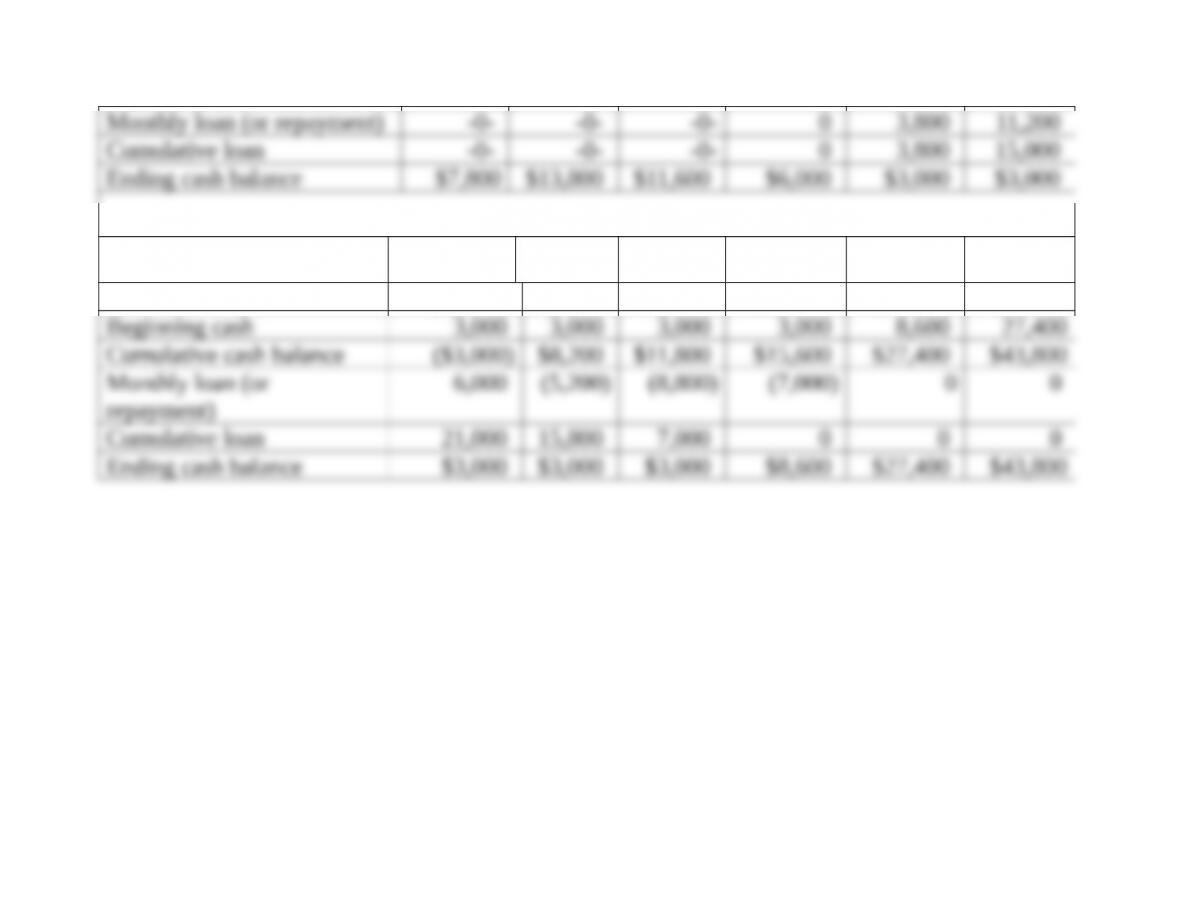
d.
Esquire Products Inc.
Cash Budget
Jan. Feb. Mar. Apr. May June
Copyright © 2017 McGraw-Hill Education. All rights reserved. No reproduction or distribution without the prior written consent of McGraw-Hill Education.
Chapter 06: Working Capital and the Financing Decision
July Aug. Sept. Oct. Nov. Dec.
Cash flow ($6,000) $5,200 $8,800 $12,600 $18,800 $16,400
Copyright © 2017 McGraw-Hill Education. All rights reserved. No reproduction or distribution without the prior written consent of McGraw-Hill Education.
Chapter 06: Working Capital and the Financing Decision
6-22. (Continued)
e.
Esquire Products Inc.
Assets
Cash
Accounts
Receivable Inventory
Total
Current
Jan. $7,800 $16,800 $9,000 $33,600
Feb. 13,800 11,400 10,500 35,700
Mar. 11,600 7,200 15,500 34,300
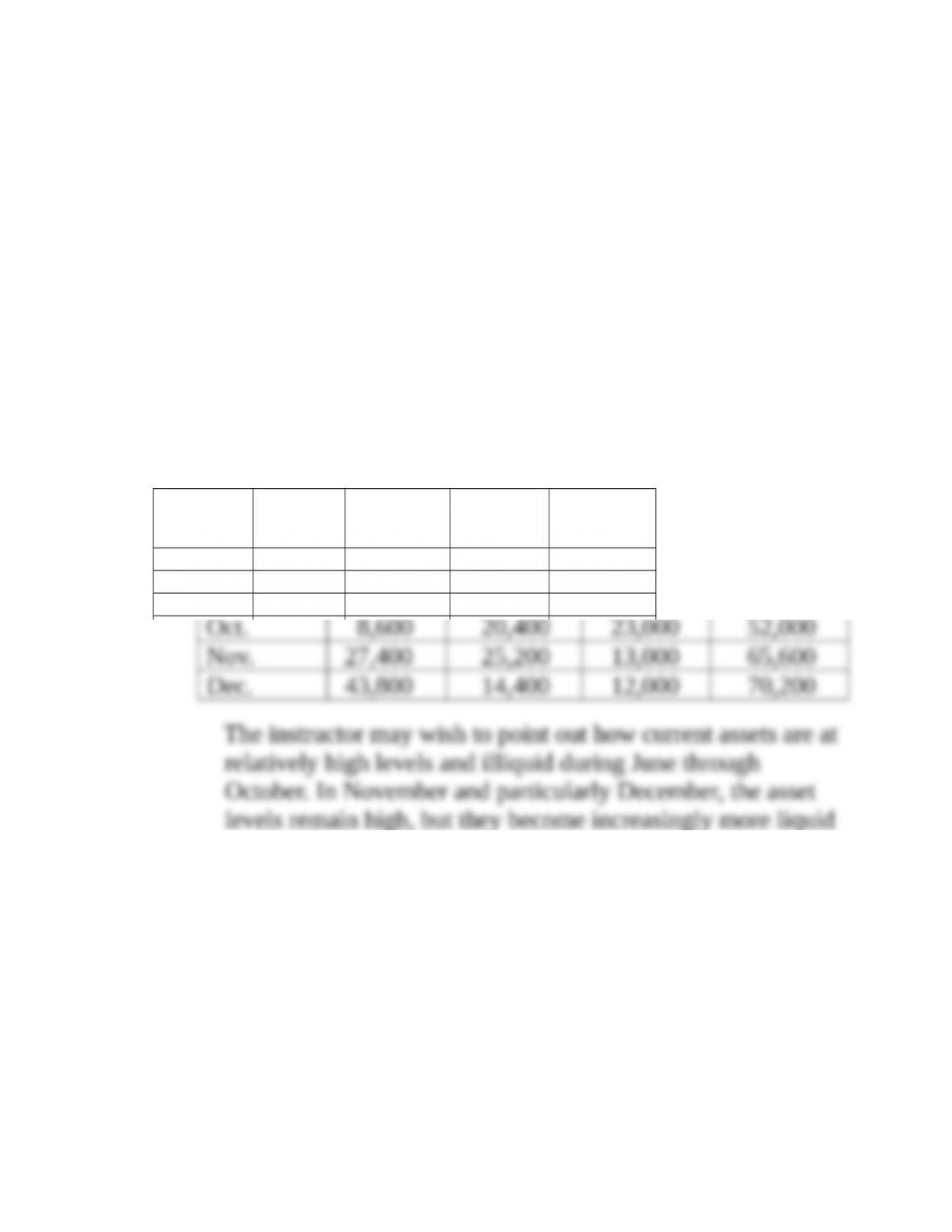
The instructor may wish to point out how current assets are at
relatively high levels and illiquid during June through
Copyright © 2017 McGraw-Hill Education. All rights reserved. No reproduction or distribution without the prior written consent
of McGraw-Hill Education.