●
Cases
C1. Conceptual Understanding: Role of Credit Sales
Mitsubishi established the generous credit terms of 14 months without interest and pay-
ments because management felt that such terms would increase sales dramatically. Cus-
Sell or discount the notes to the bank or to another source.
C3. Conceptual Understanding: Receivables Financing
Since Gerard sells its appliances to large, established customers, the accounts and notes
The financing alternatives available to Gerard for raising the needed cash are as
follows:
9-28
© 2014 Cengage Learning. All Rights Reserved. May not be scanned, copied, duplicated, or posted to a publicly accessible website, in whole or in part.
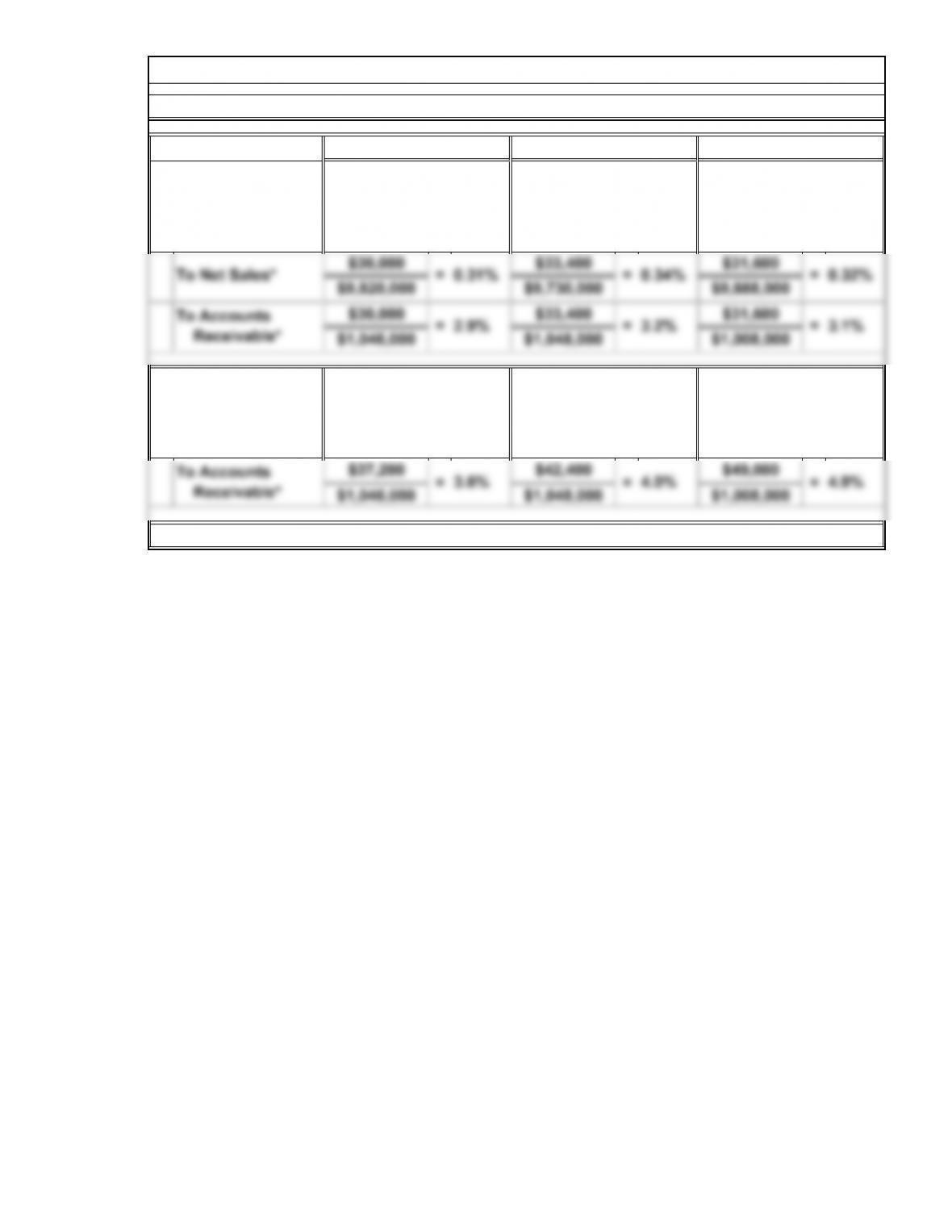
$1,046,000 $1,048,000 $1,008,000
$37,200 $42,400 $49,000
*Rounded
C4. Interpreting Financial Reports: Accounting for Accounts Receivable
1. Key ratios computed (dollar amounts in thousands)
Ratio of
Uncollectible
Accounts
Expense
Receivable*
2014 2013 2012
Ratio of
Allowance for
Uncollectible
Accounts
To Accounts
9-29
© 2014 Cengage Learning. All Rights Reserved. May not be scanned, copied, duplicated, or posted to a publicly accessible website, in whole or in part.
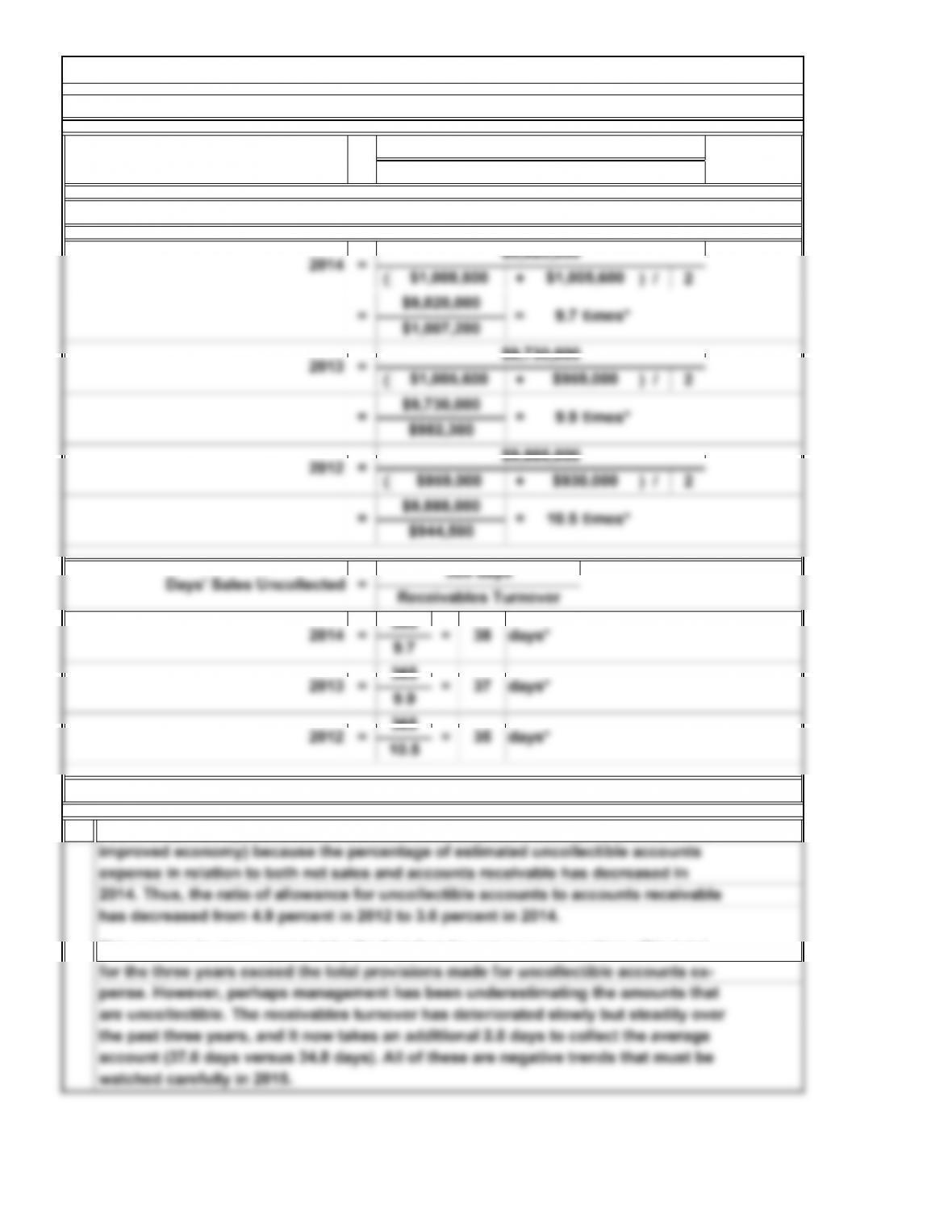
3. Apparently, management thinks collections will improve in 2014 (due perhaps to an
2. Receivables turnover and days’ sales uncollected calculated (in thousands)
=
C4. Interpreting Financial Reports: Accounting for Accounts Receivable (Concluded)
=
times*
Net Sales
Average Accounts Receivable
Receivables Turnover
Note: The net accounts receivable need to be calculated for 2014, 2013, and 2012.
2014
=$9,820,000
Receivables Turnover
10.5
*Rounded
9-30
© 2014 Cengage Learning. All Rights Reserved. May not be scanned, copied, duplicated, or posted to a publicly accessible website, in whole or in part.
1.
2.
and in the first half of the year. More cash for operations will be needed in the last
quarter.
16, it may be observed that the sales are lowest in the first two quarters (January to
June) of the year. The third quarter (July to September) and the fourth quarter (Octo-
ber to December) have the most sales. Thus, the company is likely to have excess
cash from operations after the fourth quarter (which is also the balance sheet date)
CVS’s net accounts receivable totaled $6,047 million at the end of 2011. This amount
As a drug and pharmacy company, CVS’s seasonal needs for cash are likely to be
C5. Annual Report Case: Cash and Receivables
pay their bills and pay quickly. Nevertheless, at the end of 2011, the balance in CVS’s
allowance for doubtful trade accounts receivable was $189 million.
=
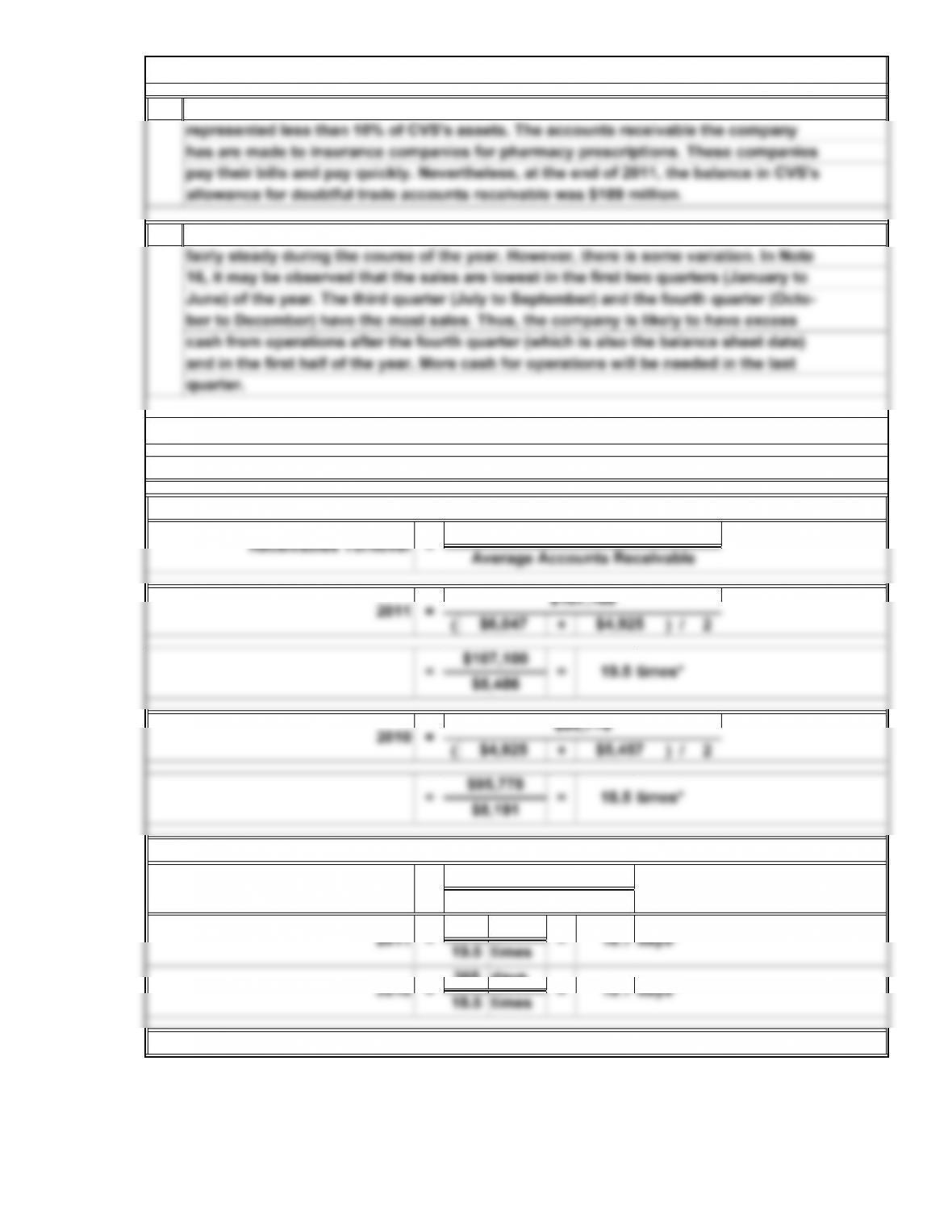
Receivables Turnover = Net Sales
C6. Comparison Analysis: Accounts Receivable Analysis
CVS’s Receivables Turnover
times*
$107,100 = 19.5
Days’ Sales Uncollected = Receivable Turnover
365 days
CVS’s Days’ Sales Uncollected
days*
1. Receivables turnover and days’ sales uncollected (in millions)
*Rounded
2011 = 365 days =
9-31
© 2014 Cengage Learning. All Rights Reserved. May not be scanned, copied, duplicated, or posted to a publicly accessible website, in whole or in part.
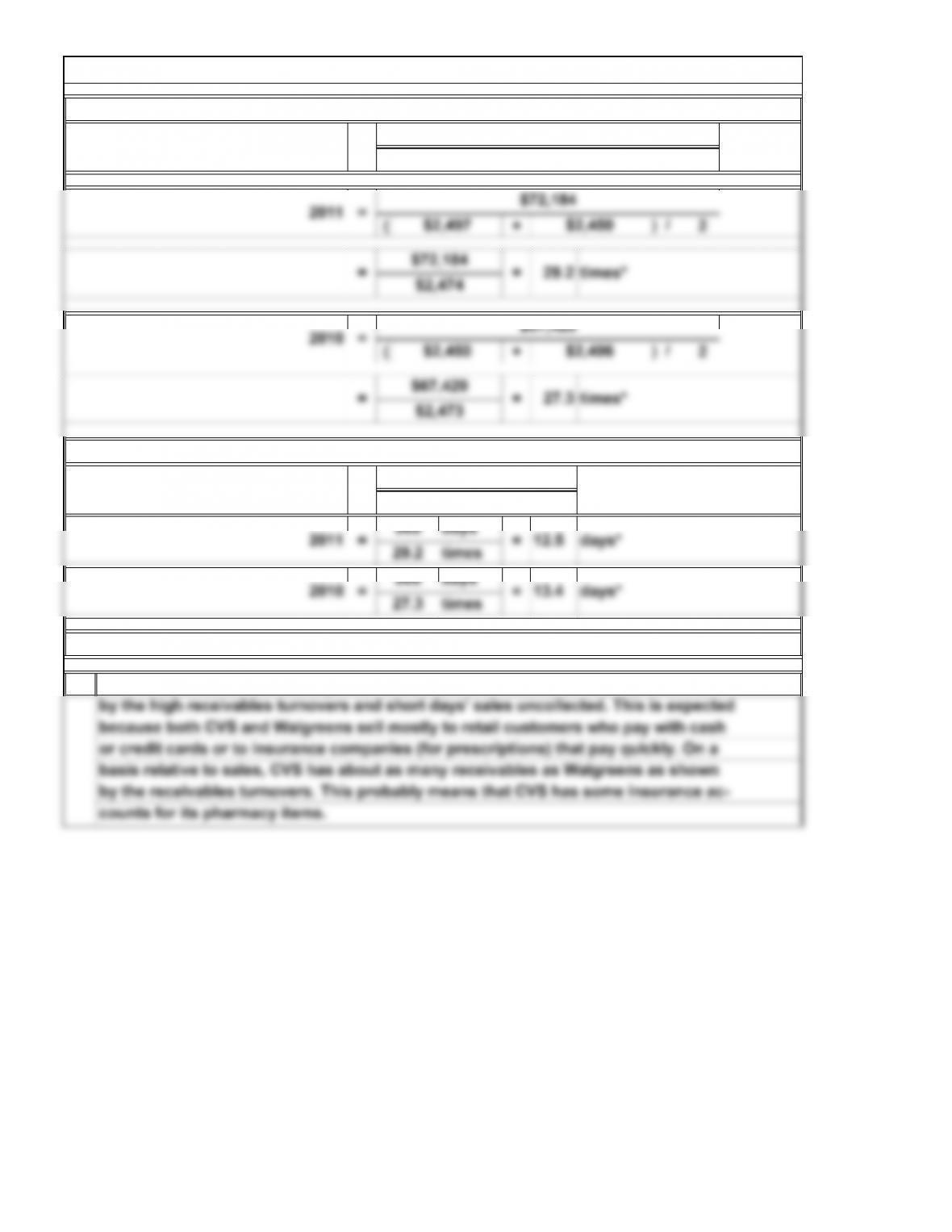
2011 =
Receivables Turnover = Average Accounts Receivable
C6. Comparison Analysis: Accounts Receivable Analysis (Concluded)
Walgreens’ Receivables Turnover
Net Sales
Days’ Sales Uncollected = 365 days
Receivables Turnover
Walgreens’ Days’ Sales Uncollected
29.2
times
9-32
© 2014 Cengage Learning. All Rights Reserved. May not be scanned, copied, duplicated, or posted to a publicly accessible website, in whole or in part.
C7. Ethical Dilemma: Uncollectible Accounts
To submit unrealistic bank financial statements, Veronica Mullin, in effect, is lying, which
C8. Continuing Case: Annual Report Project
Note to Instructor: Answers will vary depending on the company selected by the students.
9-33
© 2014 Cengage Learning. All Rights Reserved. May not be scanned, copied, duplicated, or posted to a publicly accessible website, in whole or in part.