1.
*
**
××3/
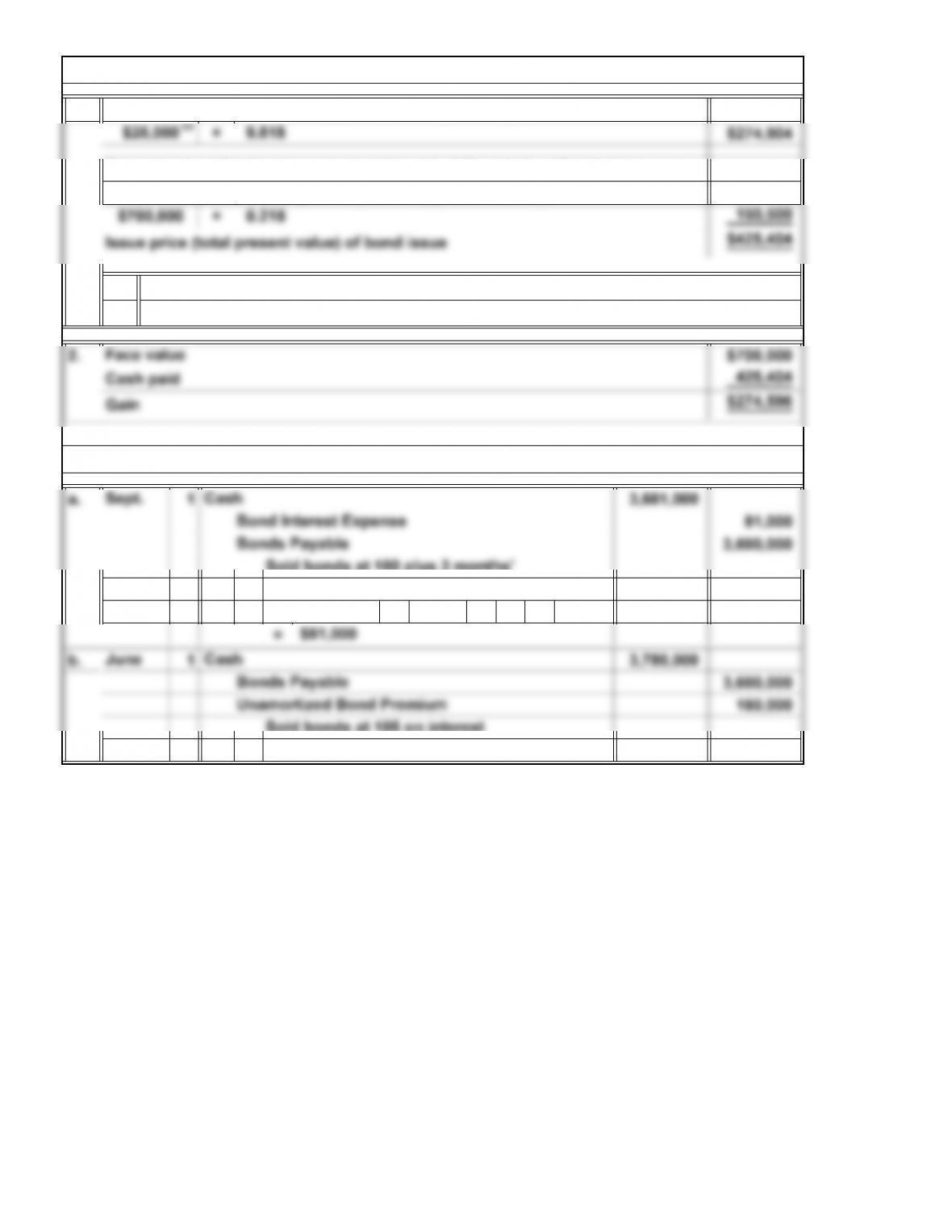
Present value of 20 periodic payments at 8% (16% / 2) (from Table 2*):
$3,600,000 0.09
accrued interest
12
Sold bonds at 100 plus 3 months’
Sold bonds at 105 on interest
payment date
E13A. Time Value of Money and Early Extinguishment of Debt
From Appendix B
$700,000 × 8% × 6/12 = $28,000
14-16
© 2014 Cengage Learning. All Rights Reserved. May not be scanned, copied, duplicated, or posted to a publicly accessible website, in whole or in part.
1.
××4/
××6/
2.
×=
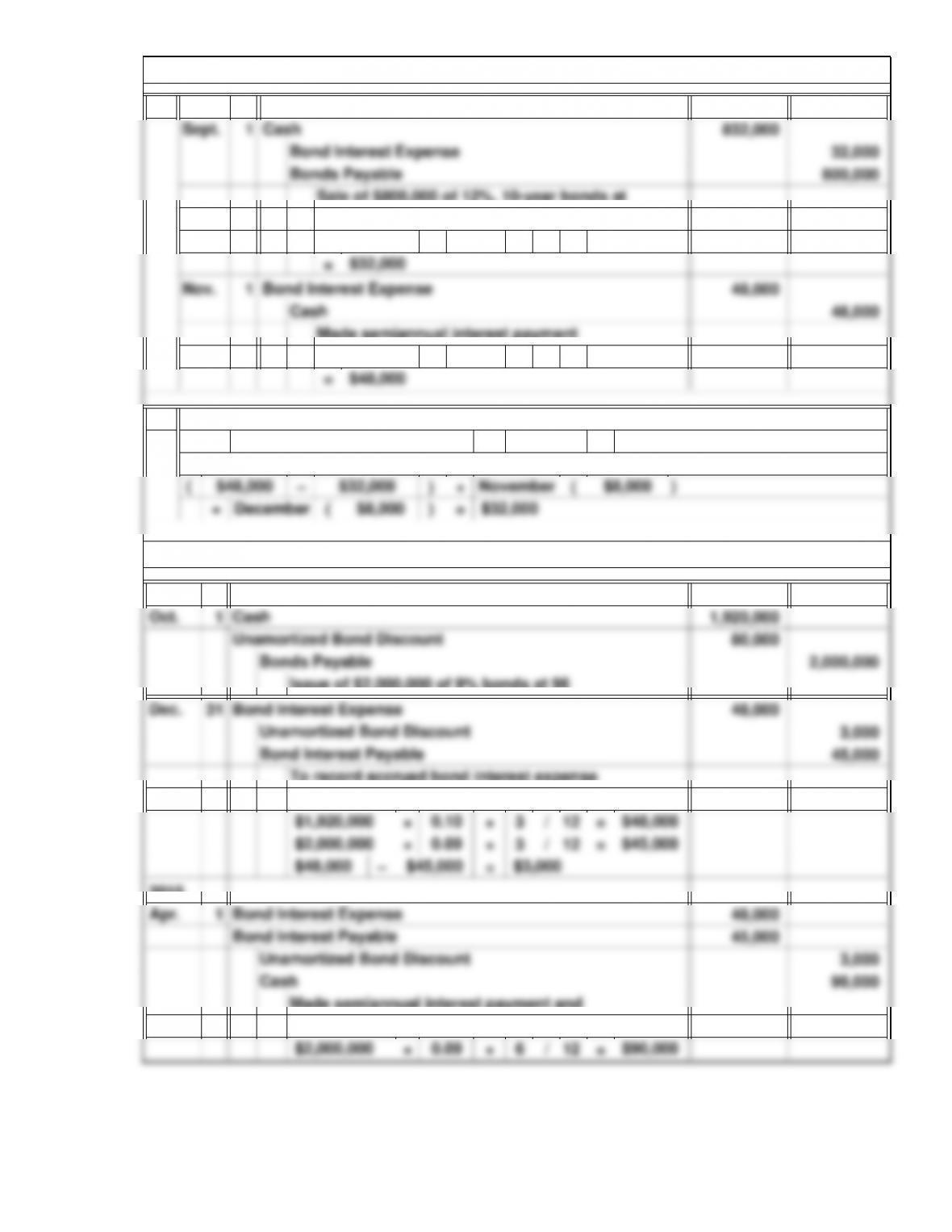
months (September–December) $32,000
2014
E15A. Bond Issue Between Interest Dates
$8,000
or
4
0.12
Made semiannual interest payment
Sale of $800,000 of 12%, 10-year bonds at
0.12
face value
$800,000 12
12
The bond interest expense for the year ended December 31, 2014, is $32,000:
$800,000
14-17
© 2014 Cengage Learning. All Rights Reserved. May not be scanned, copied, duplicated, or posted to a publicly accessible website, in whole or in part.
1.
+
+
*Rounded
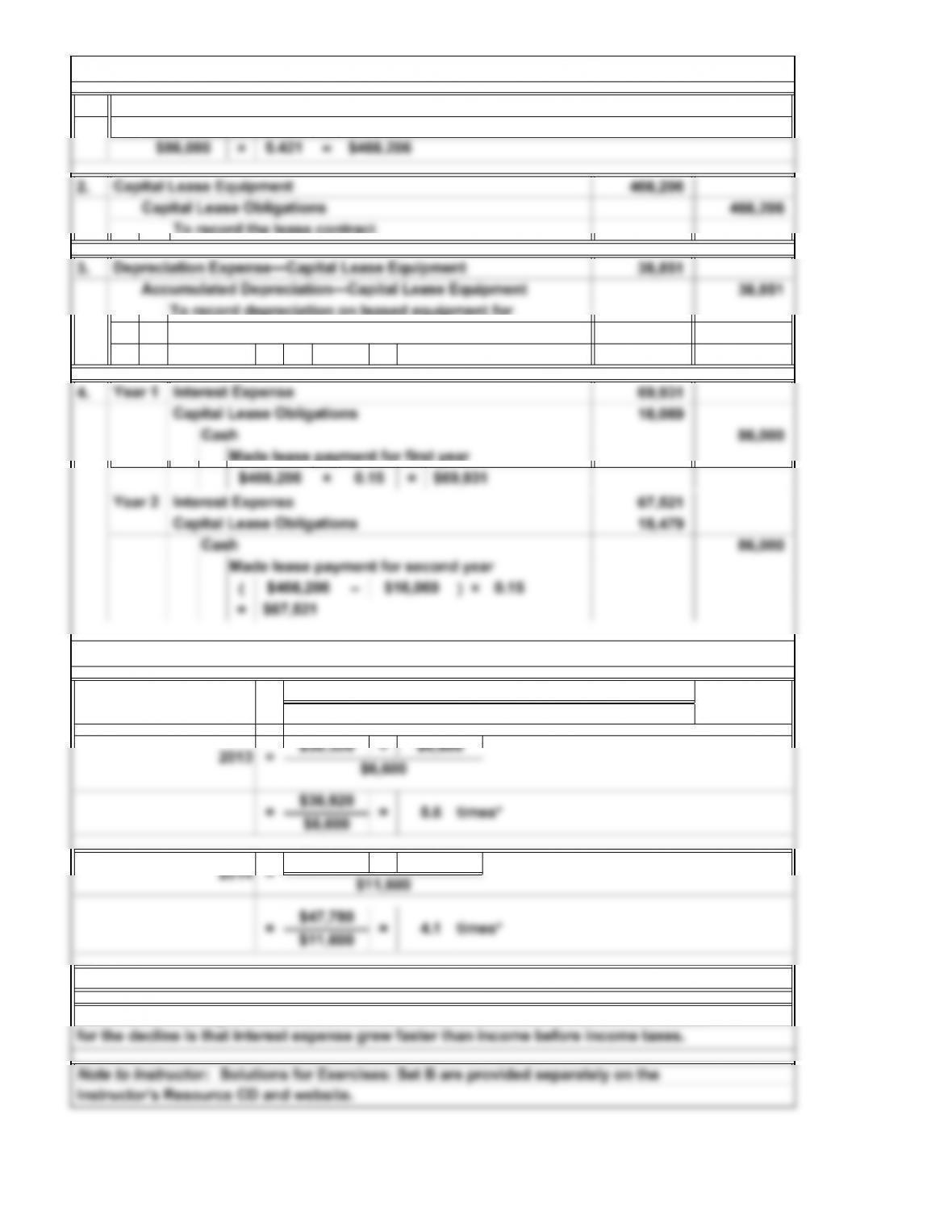
E17A. Recording Lease Obligations
Periodic Payment × Factor (Table 2 in Appendix B: 15%, 12 periods) = Present
Value of Lease
E18A. Interest Coverage Ratio
Interest
Coverage Ratio
Income Before Income Taxes + Interest Expense
Interest Expense
=
=$30,320 $6,600
$6,600
$36,920 = 5.6
2014 =
2013
=
$36,180 $11,600
$47,780 = 4.1
$11,600
$11,600
The interest coverage ratio declined from 2013 to 2014 from 5.6 to 4.1 times. The reason
times*
Instructor’s Resource CD and website.
14-18
© 2014 Cengage Learning. All Rights Reserved. May not be scanned, copied, duplicated, or posted to a publicly accessible website, in whole or in part.
1. 1. 10.
2. 11.
3. 12.
4. 13.
5. 14.
6. 15.
7. 16.
8. 17.
9.
2.
P1. Bond Terminology
m
k
c
A decrease in the market interest rate will increase the price of the bond, therefore
Problems
n
l
o
i
h
dq
j
g
e
a
b
p
f
14-19
© 2014 Cengage Learning. All Rights Reserved. May not be scanned, copied, duplicated, or posted to a publicly accessible website, in whole or in part.
1. a.
d.
(1)
(2)
(3)
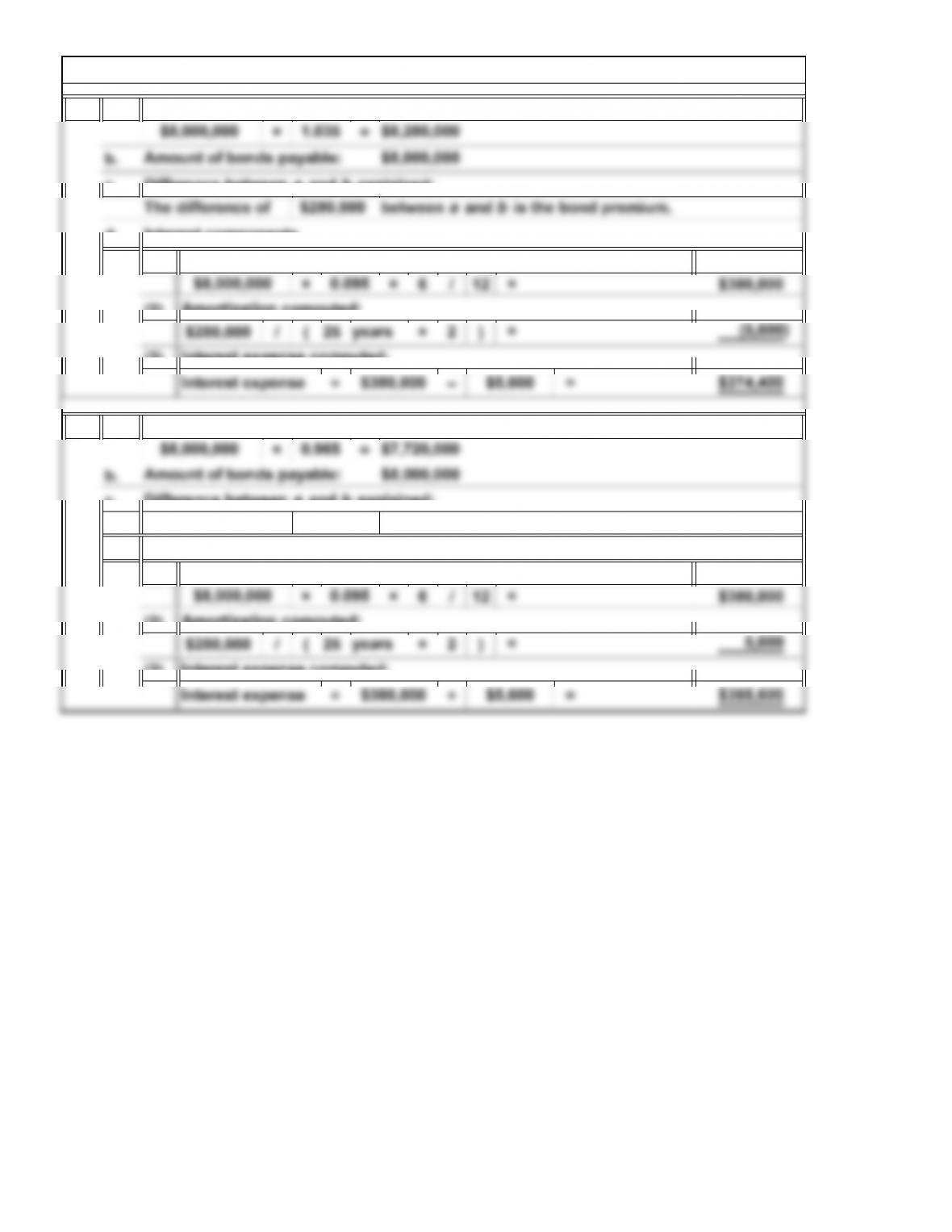
2. a.
(2)
(3)
Calculation of cash received:
Calculation of cash received:
Amortization computed:
Interest expense computed:
Amortization computed:
P2. Bond Basics—Straight-Line Method, Retirement, and Conversion
Cash paid in interest:
Interest components
Interest expense computed:
14-20
© 2014 Cengage Learning. All Rights Reserved. May not be scanned, copied, duplicated, or posted to a publicly accessible website, in whole or in part.
3. a.
b.
4. a.
b.
/ × = shares
c.
5.
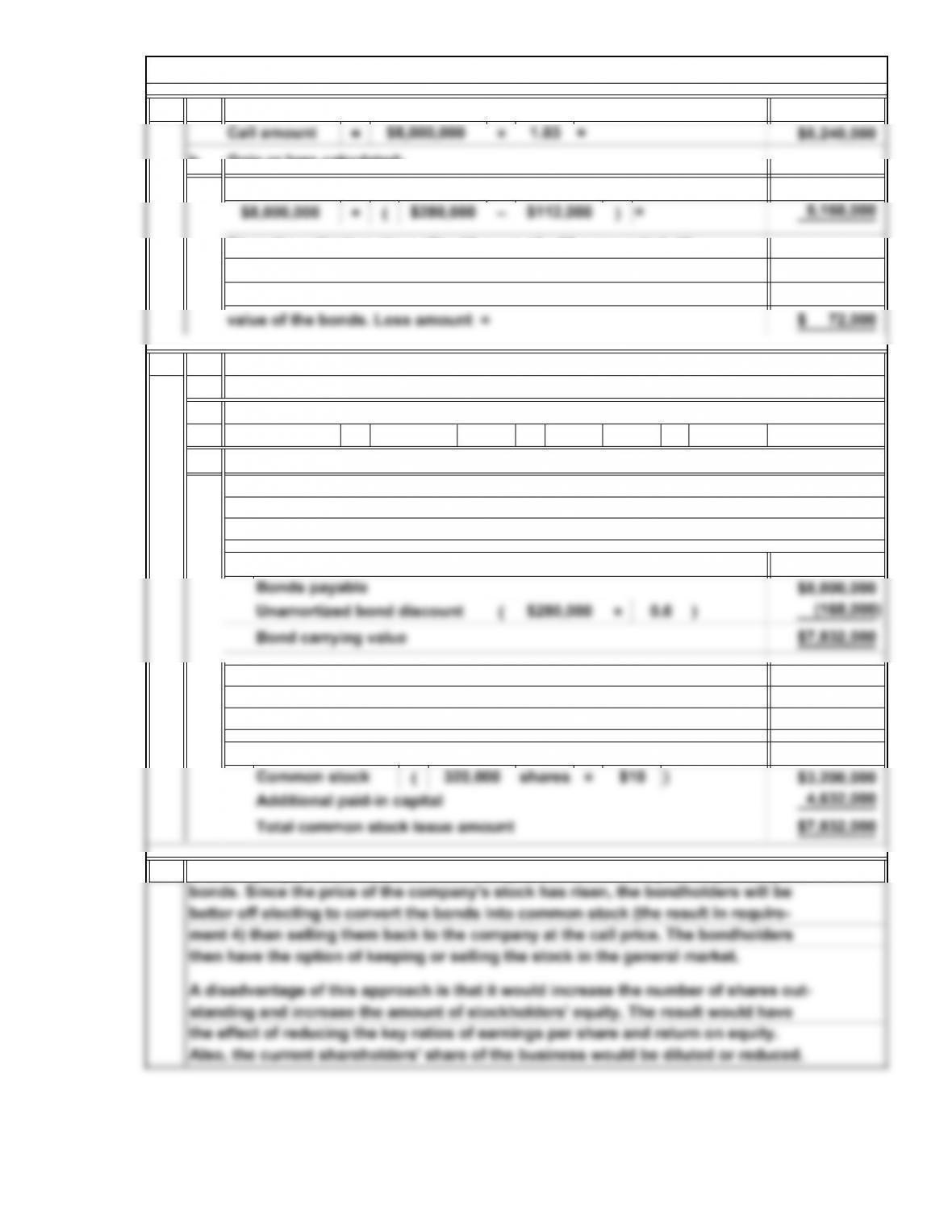
Gain or loss calculated:
Carrying value:
No gain or loss occurs in a bond conversion because the issued stock is re-
320,000
standing and increase the amount of stockholders’ equity. The result would have
the effect of reducing the key ratios of earnings per share and return on equity.
Also, the current shareholders’ share of the business would be diluted or reduced.
ment 4) than selling them back to the company at the call price. The bondholders
A disadvantage of this approach is that it would increase the number of shares out-
$8,000,000
shares
Decrease in liabilities:
Numbers of shares of common stock computed:
$1,000
then have the option of keeping or selling the stock in the general market.
better off electing to convert the bonds into common stock (the result in require-
The company can improve its debt to equity ratio without using cash by calling the
stockholders’ equity.
Bonds payable and its accompanying unamortized discount will be reduced in
corded at the carrying value of the bonds that are converted.
P2. Bond Basics—Straight-Line Method, Retirement and Conversion (Concluded)
Effects of liabilities and stockholders’ equity shown:
the liabilities. Common stock and additional paid-in capital will be increased in
Cash to retire bonds:
bonds 40
14-21
© 2014 Cengage Learning. All Rights Reserved. May not be scanned, copied, duplicated, or posted to a publicly accessible website, in whole or in part.
(××6/12)−
(××6/12)=
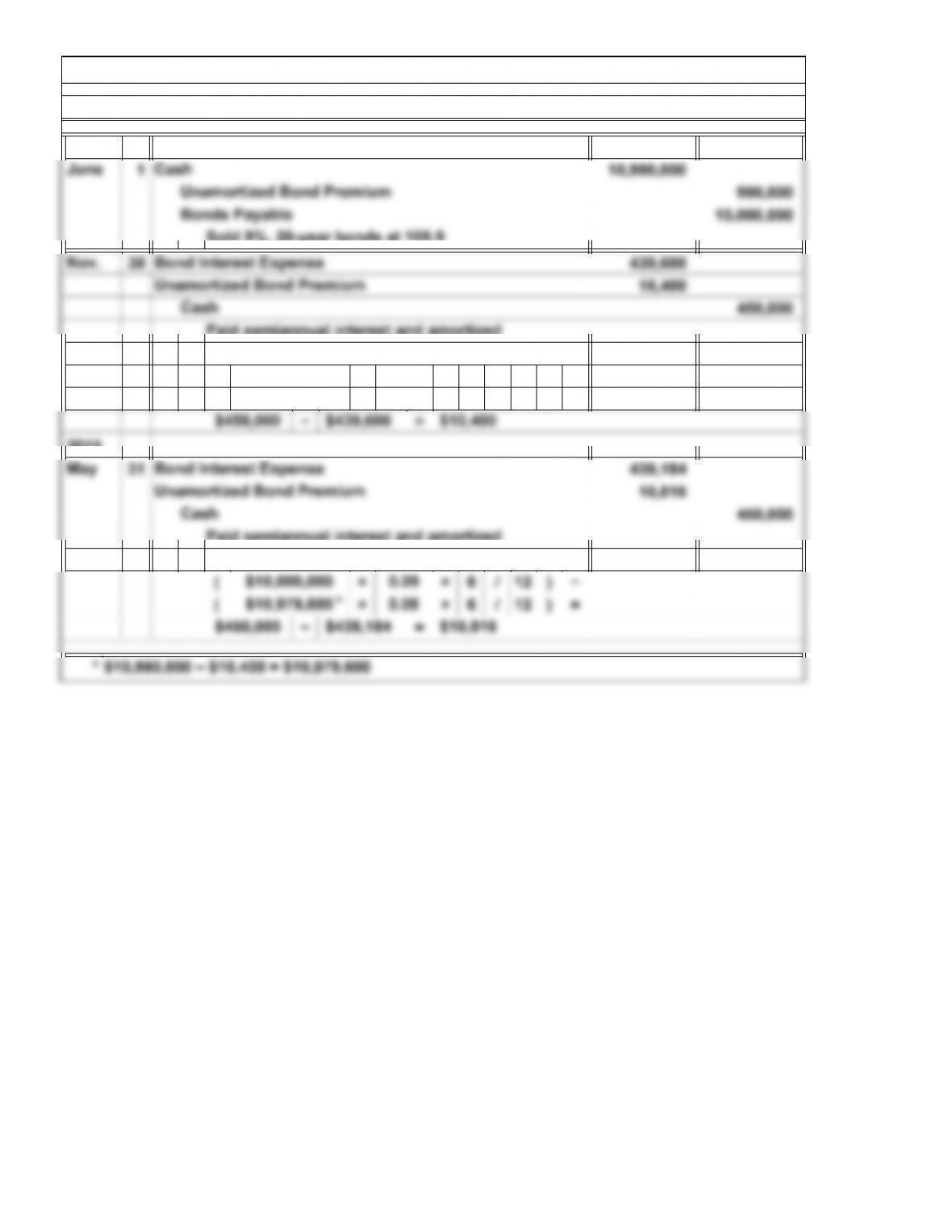
P3. Bond Transactions—Effective Interest Method
2014
0.08$10,990,000
1.
2015
Paid semiannual interest and amortized
the premium on 9%, 20-year bonds
0.09$10,000,000
14-22
© 2014 Cengage Learning. All Rights Reserved. May not be scanned, copied, duplicated, or posted to a publicly accessible website, in whole or in part.