PROBLEMS
1. USERS OF INFORMATION
a. S
i. T
2. GENERAL MODEL FOR AIS
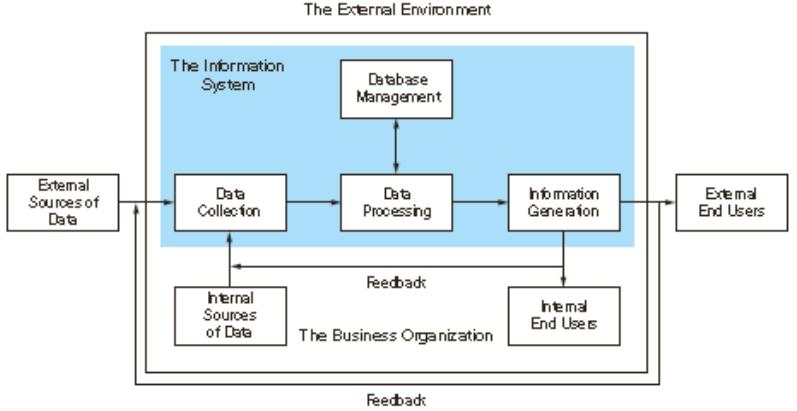
Redraw the diagram presented for Problem 2. Label each element in the
diagram and briefly describe its role and key features.
ANS:
Chapter 1 Page 2
Chapter 1 Page 3
End users are both external and internal. External users include creditors,
stockholders, potential investors, regulatory agencies, tax authorities,
Data sources are financial transactions that enter the information system from
either internal or external sources. External financial transactions are economic
exchanges with other business entities and individuals outside the firm.
Examples include the sale of goods and services, the purchase of inventory,
Data collection is the first operational stage in the information system. The objective
is to ensure that event data entering the system are valid, complete, and free
Chapter 1 Page 4
Data processing involves converting data into information. Examples of data
processing tasks include mathematical algorithms (such as linear programming
Database management is responsible for administering the organization’s data
repository, which involves three fundamental tasks: storage, retrieval, and
Information generation is the process of compiling, arranging, formatting, and
presenting information to users. Information may take the form of an
operational document such as a sales order, a structured report, or a message
Feedback is a form of output that is sent back to the system as a source of data and
is used to initiate or alter a process. For example, an inventory status report
signals the inventory control clerk that items of inventory have fallen to, or

Chapter 1 Page 5
3. INFORMATION SYSTEM ACQUISITION
Commercial.
This company has non-unique information needs that can be satisfied with a
commercial system that is completely finished, tested, and ready for
implementation. Typically, commercial systems are general-purpose or
Custom.
Larger organizations such as this one with unique information needs often develop
systems in in-house. That would be the solution in this case, assuming that no
commercial package is available to this company.
ERP.
This large organization’s needs are diverse and complex, but not unique. Large
scale enterprise resource planning (ERP) systems are comprised of thousands of
4. INFORMATION SYSTEM CATEGORIZATION
a. FRS

Chapter 1 Page 6
k. MRS
Chapter 1 Page 7
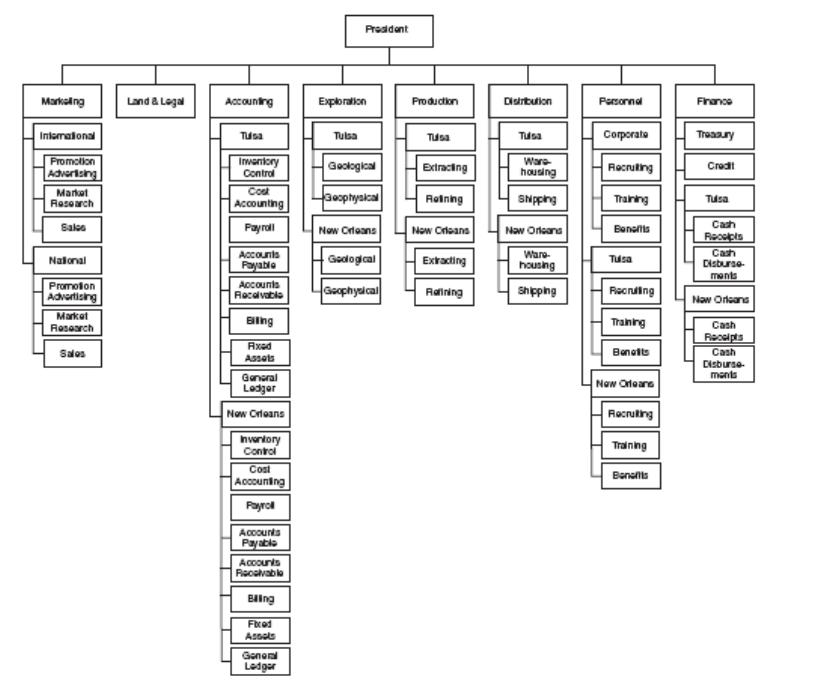
5. Organization Functions
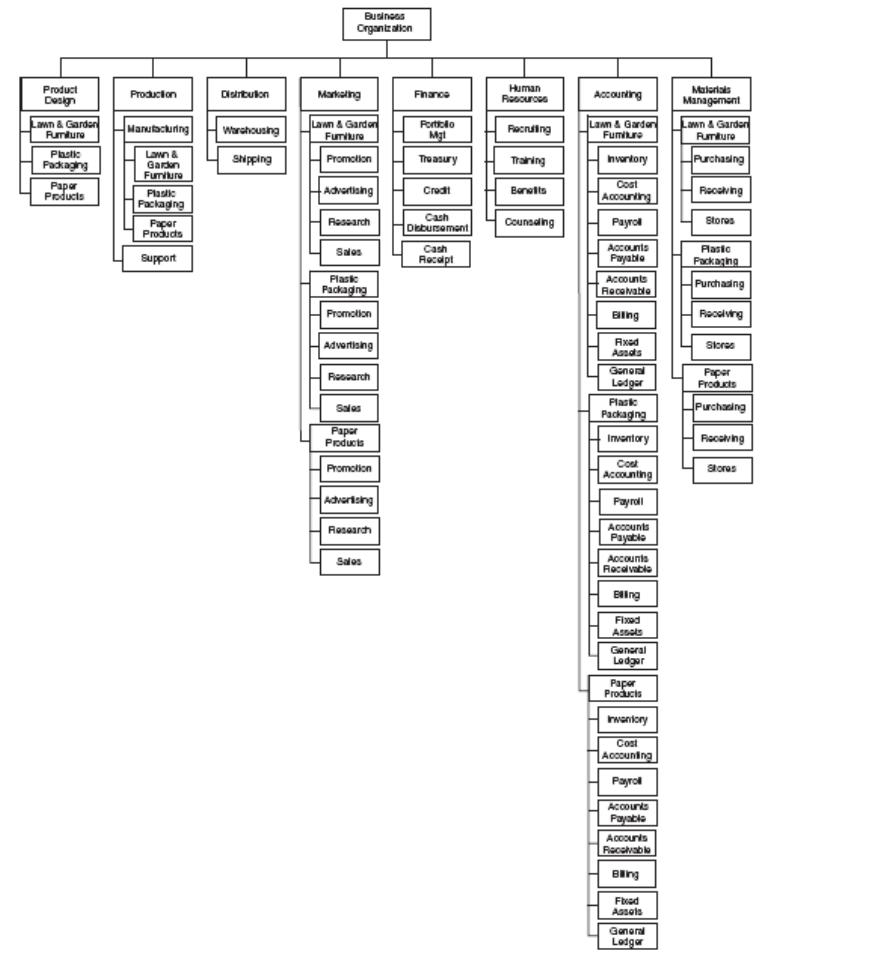
6. ORGANIZATION FUNCTIONS
Chapter 1 Page 8
7. FUNCTIONAL SEGMENTATION
Chapter 1 Page 9
a. The production department’s vice president or manager should not
supervise the inventory management tasks. The production department uses
the raw materials and therefore should not have any custodial tasks over the
storage of the inventory items. A separate materials management department
separate since this department tracks the costs of the production process. If
the cost accountants report to the production manager, they may be influenced
to overlook some cost items or alter the amounts to make the cost center look
better. Also, the production manager should not be in charge of payroll, he or
she may have paychecks written for fictitious employees. The sales
department should not be in charge of credit approvals. Salespeople’s
compensation is typically tied to their sales figures, and thus salespeople have
an incentive to write as many sales as possible without regard to the financial
Chapter 1 Page 10
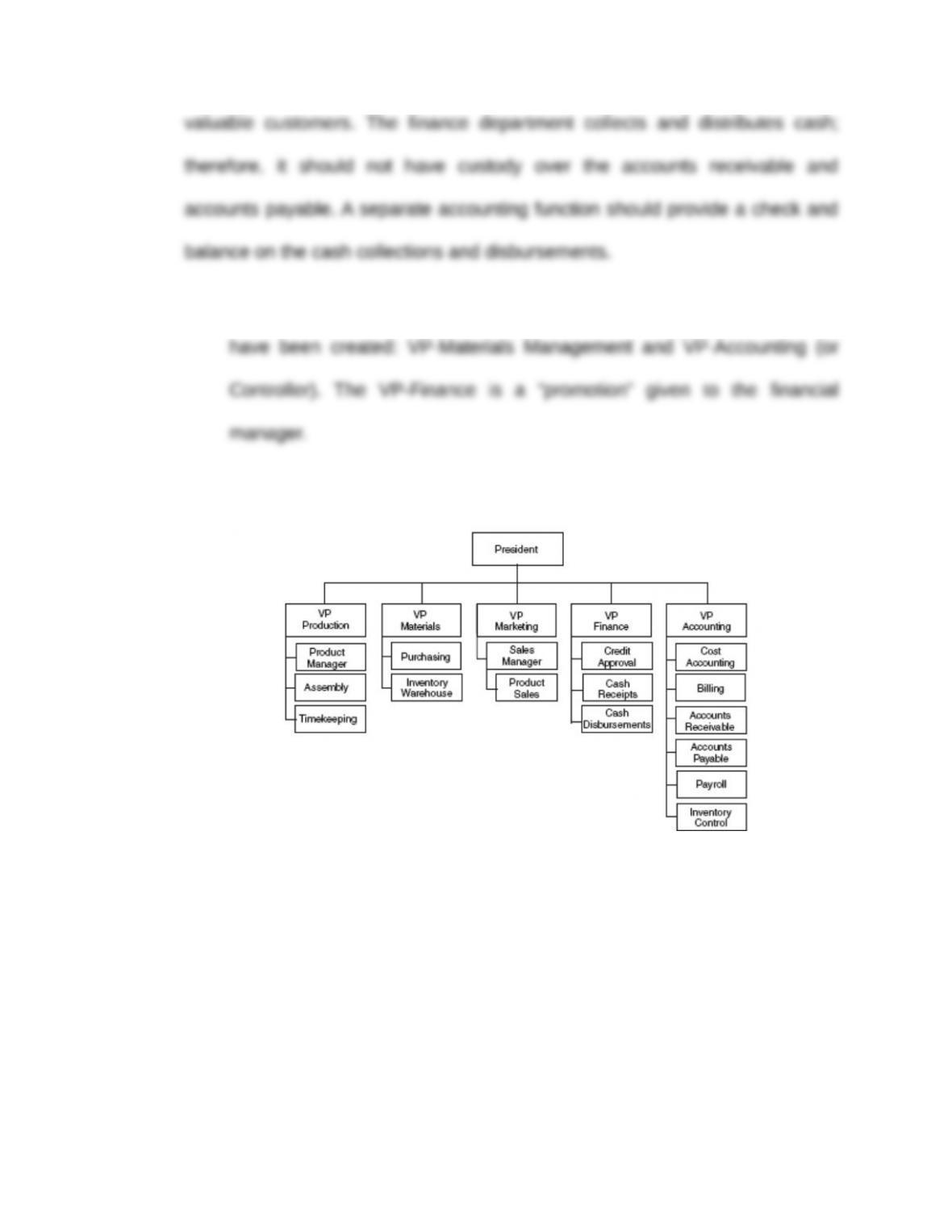
b. A reorganization is presented in the following diagram. Two new positions