Answers to End of Chapter Questions
1. A bank’s credit culture determines the performance of the loan portfolio. The culture
indicates the importance of risk assessment and having proper controls in place to allow
2. Business development and credit analysis generates loan applicants and then evaluates the
3. Character: Is the borrower honest? Does the borrower intend to repay the loan?
Capital: Does the borrower possess the !nancial resources to withstand any deterioration in
wealth or income? Does the borrower show a commitment to the project?
The 5 C’s of bad credit include:
Complacency: over-reliance on past record of borrower
4. Credit risk management is forward looking. What is the likelihood of charge-offs in future
periods? Historical charge-offs may reflect a different composition of the loan portfolio and
5. The process of credit scoring involves using standardized information, such as !nancial
statement information and a borrower’s credit history, to mechanically evaluate a
borrower’s credit quality. It assigns a score to the data utilized. As such, it does not require
6. Banks generate fee income, obtain balances to invest, and earn interest on loans. These
revenues must exceed the bank’s loan administration expense, loan charge-offs, and the cost
7.
a. Controls cash outflows and helps the !rm !nance growth internally.
8. The practice of ‘perfecting the bank’s security interest’ involves performing the
documentation necessary to ensure that the bank’s claim against a loan and access to
9. Permanent working capital needs are those representing a !rm’s minimum level of current
assets minus the minimum adjusted current liabilities. Adjusted current liabilities are current
10. Bank move loans off-balance sheet by selling loan participations to other lenders, and by
acting as loan brokers. As loan brokers, banks make loans but place them with other
investors. Banks also securitize loans by packaging standardized assets into pools and selling
11. With adjustable rate mortgages, lenders transfer interest rate risk to the borrower. Rates on
these mortgages are typically below !xed rates as an inducement to borrowers to accept the
12. Loans collateralized by inventory and receivables are risky to the extent that these assets
may not be worth the amount of the loan. Thus banks lend some fraction less than 100%
against the estimated value. With fad items, the inventory will be potentially volatile in value
13. Loans can be readily securitized if they have standardized features that lenders or investors
can easily understand and if the loans have predictable default rates. Of the loans listed,
14. Open credit lines: loans up to some pre-speci!ed limit for a !xed period of time; returns
arise from fees and interest on actual borrowings; risk is that the borrower determines the
Asset-based loans: loans secured by the borrower’s assets, typically inventory and
Term commercial loans: long-term !nancing for the purchase of depreciable assets,
Short-term real estate loans: loans with maturities under 1 year, secured by real estate;
15. Agriculture loans are used to !nance the purchase of land, equipment, and working capital.
Farmers need inventory in the form of seed, fertilizer, and pesticides. These constitute
16. A farmer’s receivables typically consist of sales related to whatever is produced, such as
corn, soybeans, tobacco, peaches, etc. Farmers who handle livestock generate sales from
17. Consumer credit card lending has produced substantial pro!ts for banks with large
portfolios. Many consumers are not rate sensitive such that consumer card loan rates are
18. If the days cash-to-cash cycle is longer for assets than liabilities, the borrower does not
19. Control credit risk
a. Loan covenants provide practical guidelines or constraints on the borrower’s behavior.
b. Risk rating systems provide information about general trends in the quality of speci!c
c. Position limits provide a maximum exposure to any one borrower, to any speci!c line of
Problem
RSM Publishing Co.
3. General concerns: what will the loan proceeds be used for? What is the source and timing of
repayment? What is the value of existing inventory and equipment in market terms?
4. RSM’s extraordinary amount of equity reduces its interest expense and the need for working
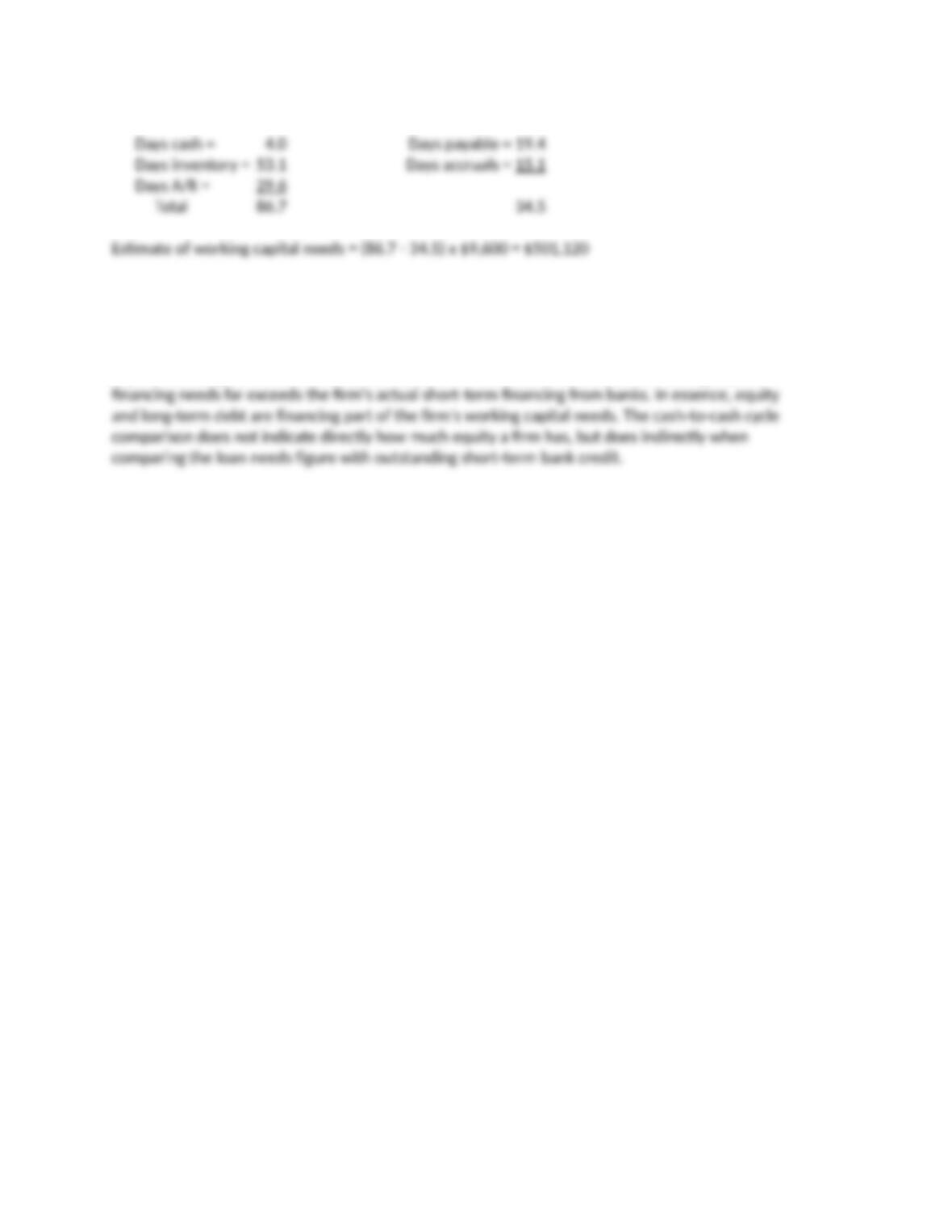
capital !nancing. This is revealed by the fact that the estimate of $501,120 for working capital