Balanced Snacking
Teaching Note
Eric Berglind and Andrew Zacharakis
Class Teaching Plan
1) Idea and case background (15 minutes).
a) Ask the class to detail the Balanced Snacking idea concept; how did the entrepreneurs find
this idea. This question is meant to evoke thoughts around how an idea can begin and be
developed.
– Gautam struggled with his weight when he was younger, however decided before
b) Why were Gautam and Ken well–suited to find and exploit this concept? Is it wise to start a
business with a close friend?
– The differentiator for Gautam and Ken was that they were not only friends but had also
c) How did the relationship between Gautam and Ken help the business progress (what skills
did each bring to the venture)?
– Both Ken and Gautam had skills that were crucial to the creation of Balance Snacking.
2) Start a conversation around whether business model or technological innovation is more important
when considering starting a business (10 minutes).
a) What is a business model innovation?
b) How does business model innovation differ from technology innovation?
c) Where is Balanced Snacking innovating?
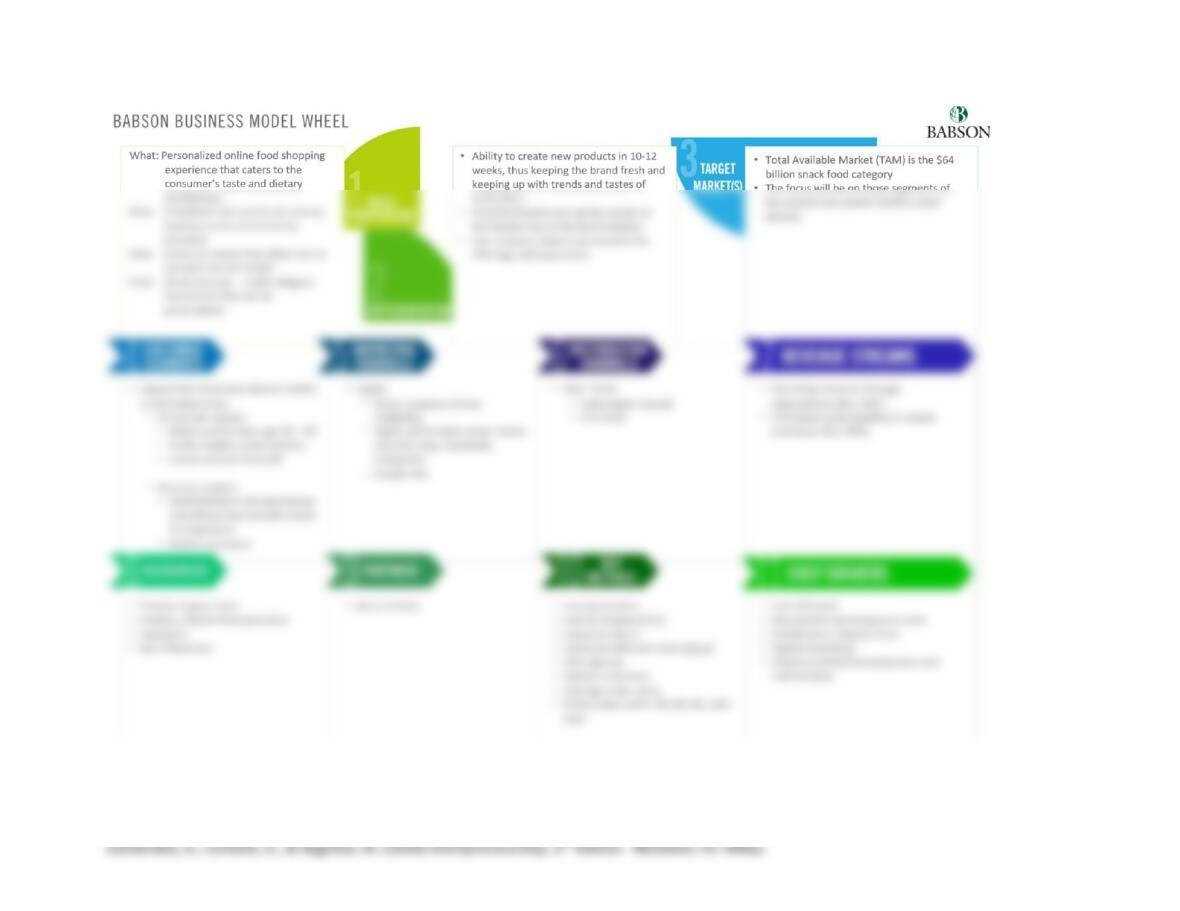
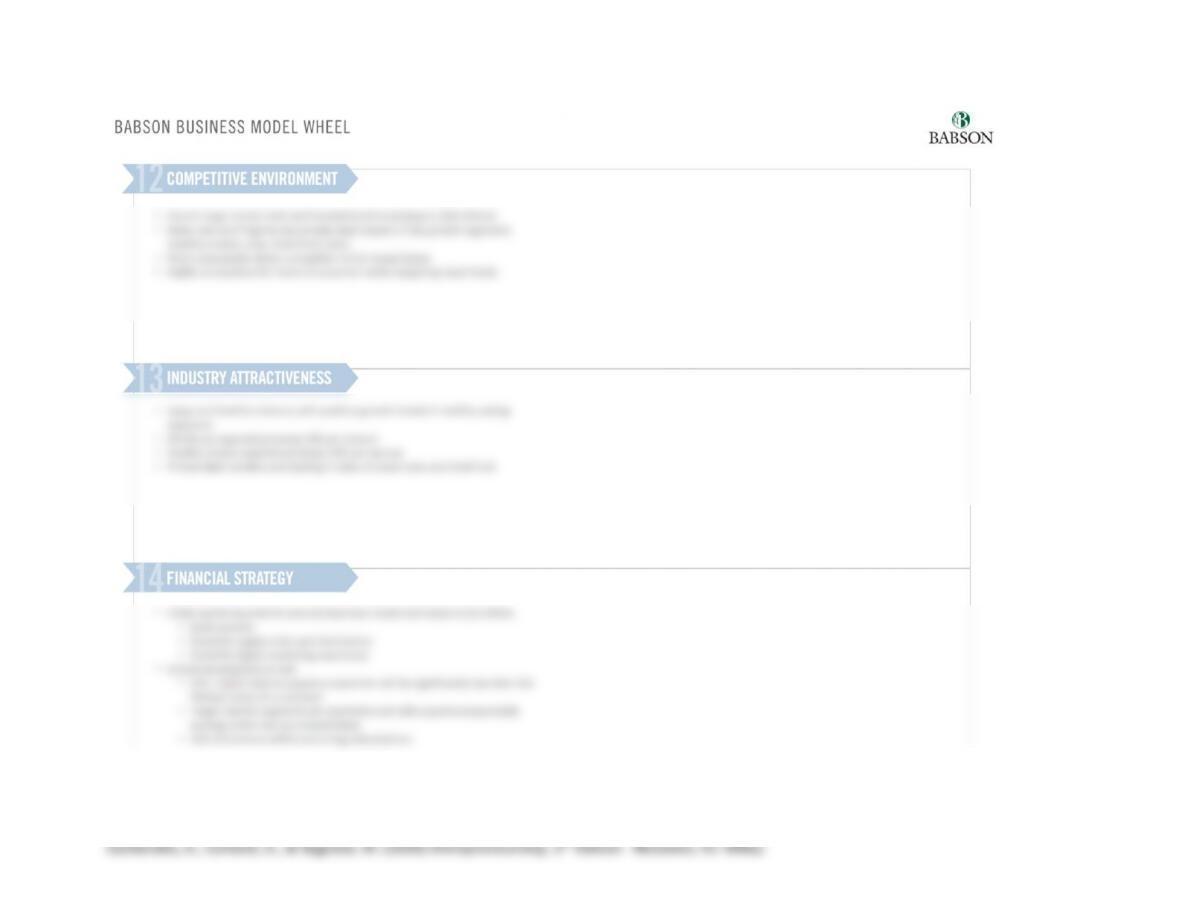
d) The appendix has a completed Business Model Wheel for Healthy Snacking
3) The case gets at the importance of rapid prototyping as a venture moves to a minimally viable
product (MVP). The key is to move towards an MVP at the lowest possible cost so that you can
learn and pivot along the way. The case highlights the first such prototype, a landing page where
they then go to Costco and fulfill the few orders they receive (10 minutes).
a) What have Gautam and Ken learned from this first experience?
Zacharakis, A., Corbett, A., & Bygrave, W. (2020) Entrepreneurship, 5th Edition. Hoboken, NJ: Wiley.
– Make sure students keep in mind the idea of low cost, rapid prototyping. It is easy for
them to jump ahead and start building out a pitch to raise money and create the final
product, but if they do this, they may build a product that no one wants. The first test
has illustrated some demand, but they also need to see if they can sustain this demand
month–over–month, create boxes at cost that allows for strong margins, deliver the box
in a time and cost effective manner and so on.
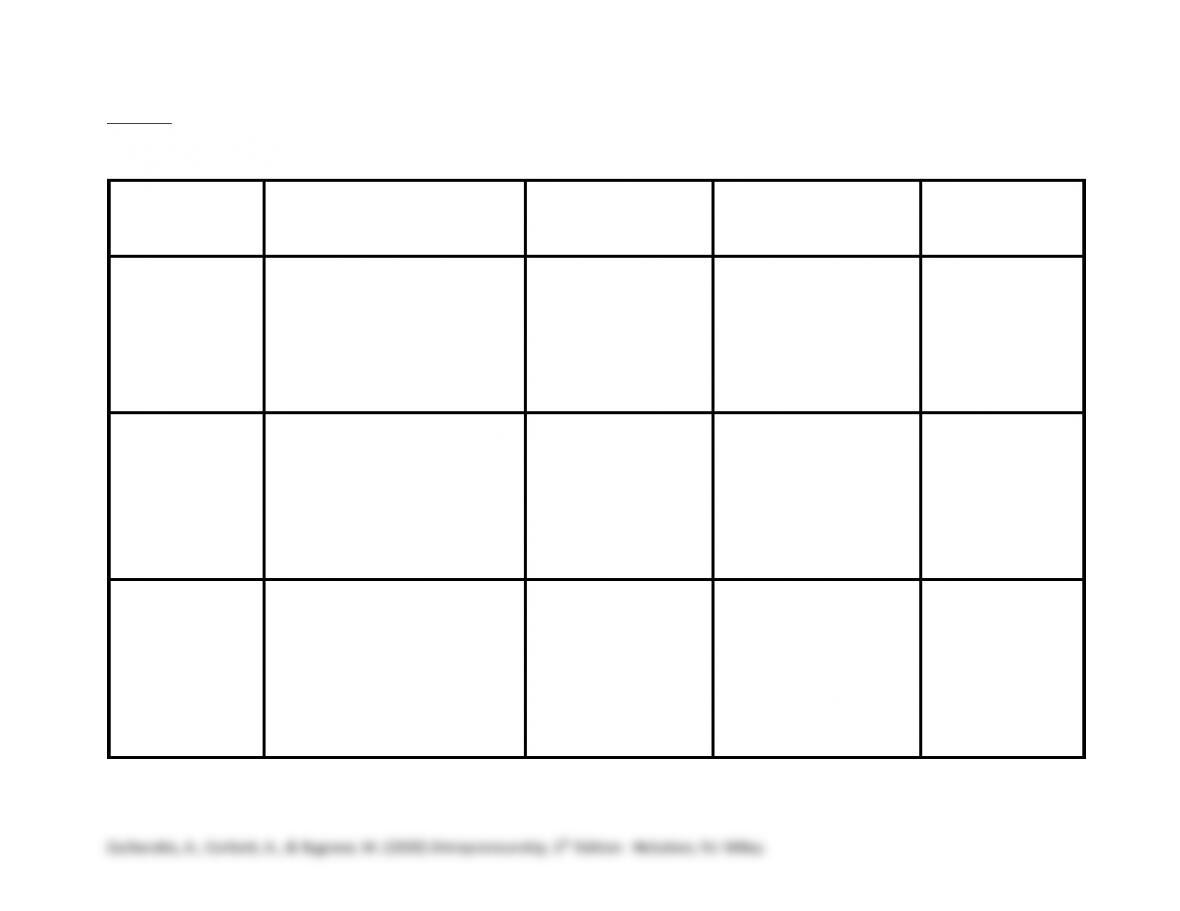
4) Class Breakout Exercise (30 minutes). Using the appendix at the end of the teaching note, have
students break out and develop several hypotheses that still need to be tested, detail some
prototyping methods they might use (keeping in mind the lowest possible cost). This worksheet is
also useful in a project based class where students are developing their own ventures. When the
teams are finished after 5–10 minutes, write their ideas up on the board and talk about why they
believe this information is the most pertinent to deciding to go into business.
5) Thinking ahead (10 minutes). If the prototyping is successful, ask:
a) What are the keys to future success
b) This is meant to get the class to think about the next steps in the life of the business, so that
they can move past the beginning stage and start to identify the best strategies for growth.
Epilogue – as of 2/29/16
The actual name of the company is NatureBox
(https://naturebox.com/?afid=google_brand&gclid=CMvwlde58MoCFdcRgQodQfEGSg). Gautam and
Ken secured venture capital funding initially through Gautam’s connection to General Catalyst (this is
not very typical and should be stated to the class). The seed round of funding raised $2M led by
Gautam’s prior firm General Catalyst along with Redpoint Ventures in Dec. 2012. Six months later they
raised $8.5M in their series A funding round also led by General Catalyst. The latest round of funding
was finished in May 2015 at which point NatureBox had raised $58.5 million in total since their start.1
After the initial experiment with Facebook, Ken and Gautam decided to pursue their young
business venture. They quickly realized that they did not have the needed expertise around creating
healthy and balanced snacks. As opposed to other industries that utilized the “in–the–box” concept to
1 https://www.crunchbase.com/organization/naturebox#/entity

sell groupings of different brands (such as BirchBox or BespokePost), Gautam and Ken wanted to have
the company be branded solely as NatureBox.2 This approach required more intimate knowledge of the
packaged foods industry. They conducted research by attending trade shows and conferences to better
understand how to do this. In the process they formed supplier relationships that would help get
NatureBox up to speed with the packaged food industry.
Today Nature Box boasts about 100+ snacks that have been designed for almost every dietary
restriction. Their concept changed drastically from offering a grouping of generally considered healthy
and balanced snacks to sourcing information from their customers so that they could provide snacks
catered to their customers’ needs. Much like recommendation engines in companies such as Netflix or
Amazon, NatureBox has been able to analyze what are the most popular snacks with their customers so
that they can prototype other snacks that share similar attributes.3 NatureBox is constantly innovating
its products and was projected to ship five million boxes of healthy snacks in 2015.
Through all of its success and continued growth Gautam and Ken attributed a lot of their initial
success to creating a partnership built on trust and mutual respect along with focusing on an idea that
they were passionate about. By setting down these ground rules they were able to consider different
ideas and experiments from a focused point of view.
Appendix
Learning using prototyping
What do we need to
learn in developing
our concept?
Articulate a hypothesis and specify
expected outcome
What “pretotyping” would
help? (see reverse for
reminder of techniques and
materials)
Who should we interview &
observe interacting with the
prototype?
Who in team does what
next?
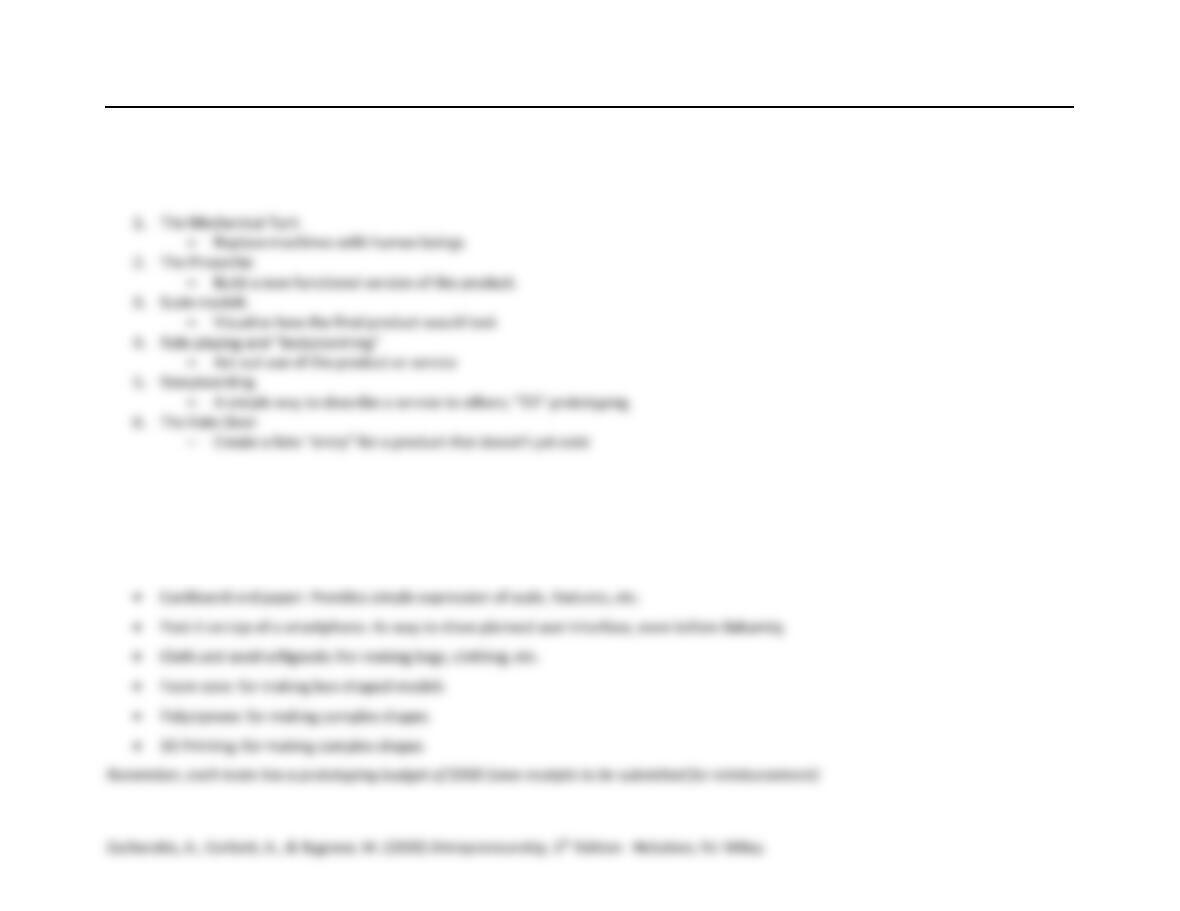
Prototyping techniques and materials:
Reminder of some early prototyping (“pretotyping”) techniques:
Prototyping materials that can be used include:

Zacharakis, A., Corbett, A., & Bygrave, W. (2020) Entrepreneurship, 5th Edition. Hoboken, NJ: Wiley.
Zacharakis, A., Corbett, A., & Bygrave, W. (2020) Entrepreneurship, 5th Edition. Hoboken, NJ: Wiley.