4
Valuation: Measuring and Managing the Value of Companies, Sixth Edition
Chapter 4 Solutions
The Expectations Treadmill
1. Total returns to shareholders (TRS) represent the return earned by shareholders from
2. The expectations treadmill refers to the fact that recent growth builds expectations of future
growth. The efforts by managers to constantly grow earnings to meet expectations of
3. A well-performing company may not deliver a high TRS if the expectations include knowledge of
the performance. This circumstance relates to the adage that a good company may not be a
4. Bad actions by managers include any perverse action to increase the share price without
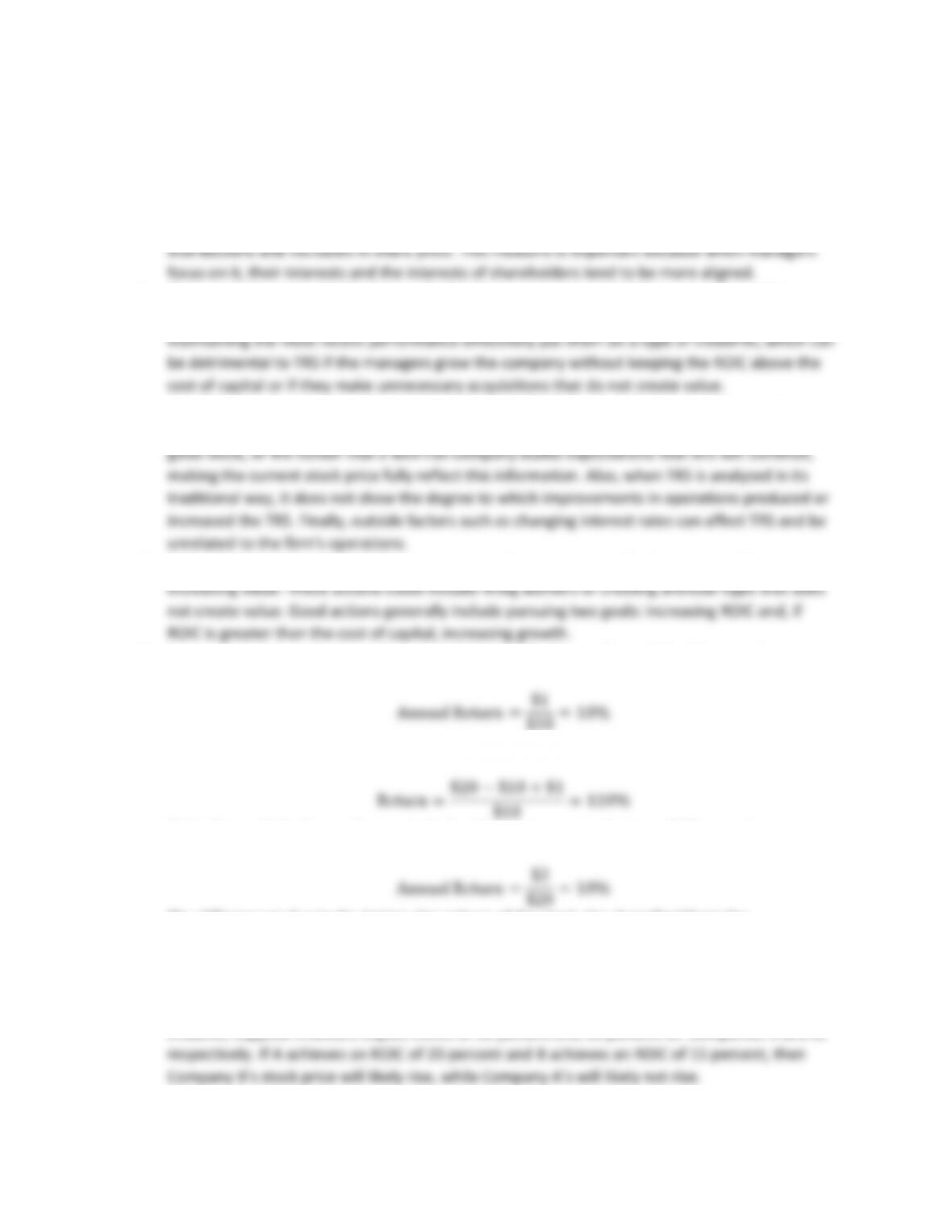
5. Your expected annual return when you initially bought the stock would be 10 percent:
Upon the announcement of the increased dividend, your realized return would be 110 percent:
Going forward, the buyer of your stock should expect an annual return of 10 percent:
The difference is due to the timing of purchase of the stock. You benefited from the
announcement of the increased dividend, while the buyer of the stock paid the higher price,
based on expectations of higher dividends going forward.
6. Company B can have higher TRS than Company A despite lower performance on key value
drivers if the expectations were low enough for Company B at the start of the period. For
instance, suppose investors expect ROICs of 20 percent and 10 percent for Companies A and B,
5
7. The breakdown omits three important points. First, it does not indicate the source of the
8. The TRS earned if there were no growth and if investors had no change in expectations would be
9. A company should measure management performance in terms of the company’s performance,