Core Concepts of Accounting Information Systems, 13th Edition, by Simkin, Rose, and Norman
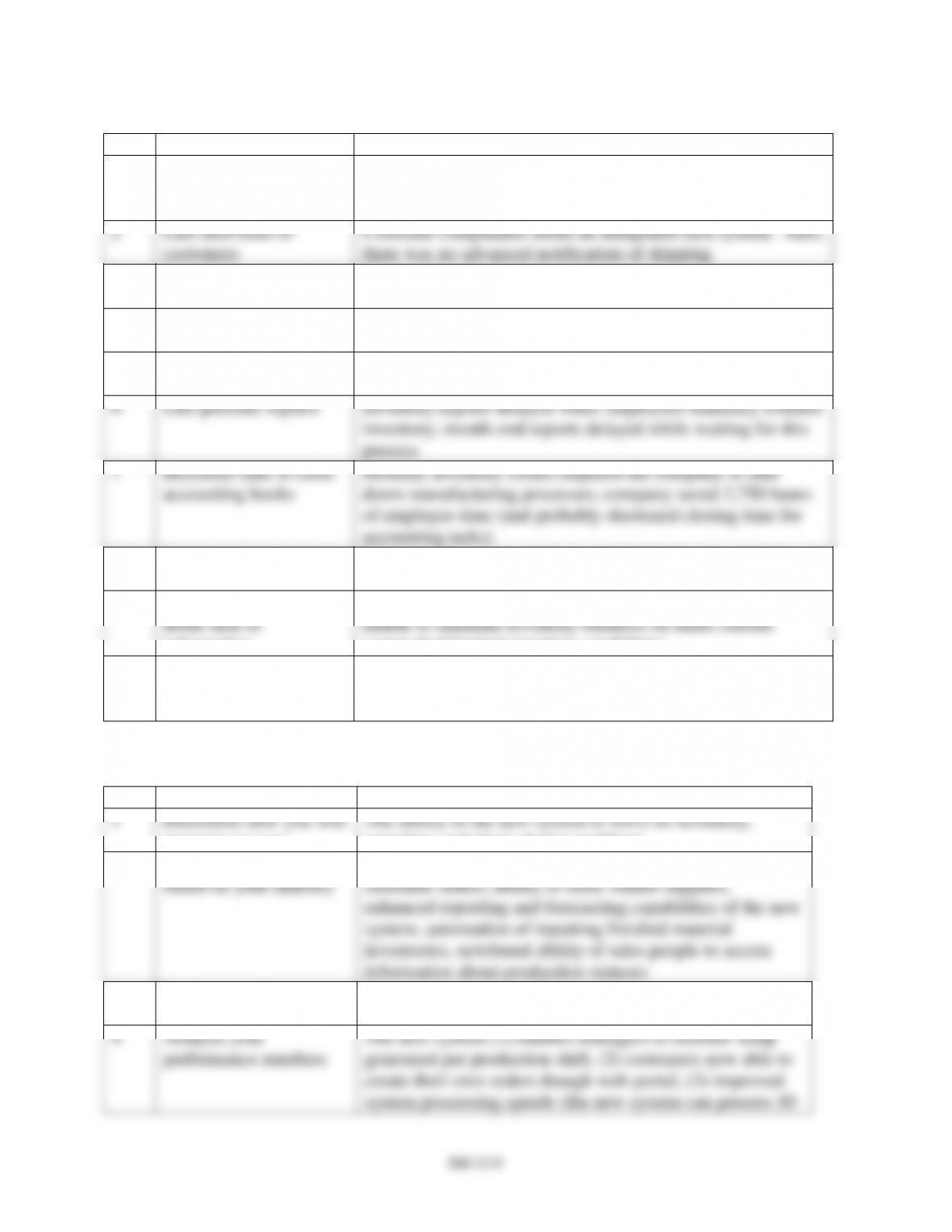
Item
Indicator
Case example
1
Late payment of vendor
invoices
Current system did not provide a way to add or reduce
vendor managed inventory based on shipments and
consumption
2
Late deliveries to
customers
Customer complained about an antiquated EDI system. Also,
there was no advanced notification of shipping
3
Growth in inventories
Not stated explicitly, but employees “spent an average of 6
hours per day verifying inventory”
4
Slowdown in inventory
turnover
NA
5
Increased time in
collecting receivables
NA
6
Late periodic reports
Inventory reports delayed while employees manually counted
inventory; month-end reports delayed while waiting for this
process
7
Increased time to close
accounting books
Monthly inventory counts required the company to shut
down manufacturing processes; company saved 2,750 hours
of employee time (and probably shortened closing time for
accounting tasks)
8
Managerial concern
about cash flows
NA
9
Managerial complaints
about lack of
information
Consigned inventory difficult to manage; inventory system
unable to maintain inventory balances on hand; current
system had limited reporting capabilities
10
Owner worries about
cash flows, taxes, and
profitability
NA
2. Value of an ERP system.
Item
Task
Case examples
1
Determine how you will
measure success
The ability of the new system to solve its inventory,
reporting, and plant-closing problems
2
Set up specific metrics
based on your industry
Reduction in time spent on inventory, time to handle
customer orders, ability to track vendor supplies,
enhanced reporting and forecasting capabilities of the new
system, automation of inputting finished material
inventories, newfound ability of sales people to access
information about production statuses
3
Perform regular post-
implementation audits
NA
4
Analyze your
performance numbers
The new system (1) enables managers to monitor scrap
generated per production shift, (2) customers now able to
create their own orders though web portal, (3) improved
system processing speeds (the new system can process 10
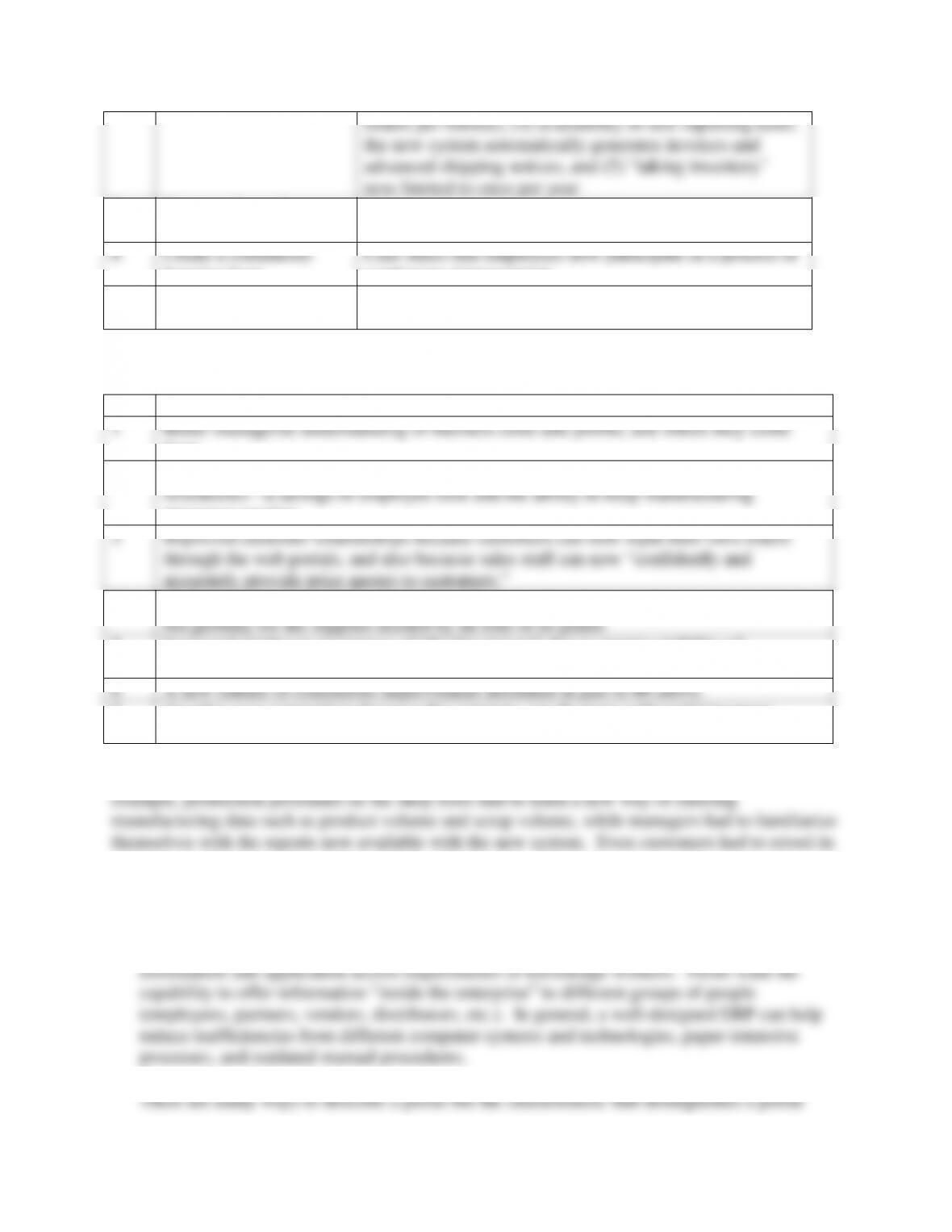
orders per minute), (4) availability of new reporting tools:
the new system automatically generates invoices and
advanced shipping notices, and (5) “taking inventory”
now limited to once per year
5
Set up universal
processes
NA
6
Create a continuous
learning loop
Case states that employees now participate in a process of
continuous improvement
7
Prepare for inevitable
security failures
NA
3. List of intangible benefits
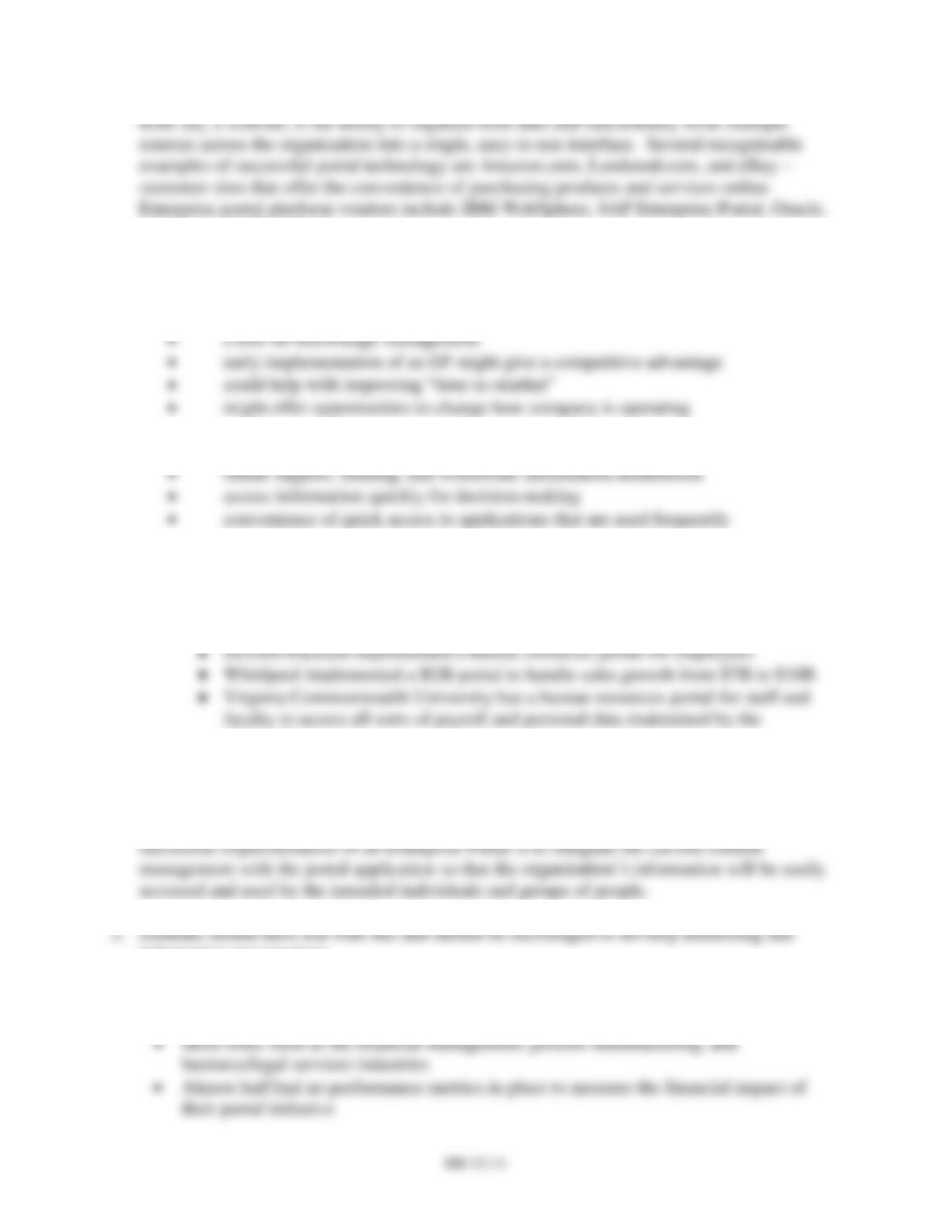
Item
Benefit
1
Better managerial understanding of business costs and profits, and where they come
from
2
Increased accuracy of inventory records, because there is now no need to take monthly
inventories—a savings of employee time and the ability to keep manufacturing
processes running
3
Improved customer relationships because customers can now input their own orders
through the web portals, and also because sales staff can now “confidently and
accurately provide price quotes to customers.”
4
Ability to better negotiate volume prices from suppliers because the company can now
bid globally for the supplies needed by all four of its plants
5
Increased employee awareness of “the big picture” due to greater visibility of
departmental efforts and newly-available data
6
A new culture of continuous improvement attributed in part to #6 above
7
An edge over competitors because the company can do more without hiring more
employees
4. Did any business process reengineering take place at Mar-Bal? Almost assuredly, it did. For
order to use the new web portals available with the new software.
12-23. The RETAIL Cooperative (Creating an Enterprise Portal)
1. Enterprise portals (EPs) are gaining in popularity because of their ability to address the
Core Concepts of Accounting Information Systems, 13th Edition, by Simkin, Rose, and Norman
SM 12–11
and Microsoft SharePoint.
Some of the advantages of an ERP portal include:
For the organization:
For employees:
For suppliers, partners, customers, and those with strategic alliances:
opportunity to place orders, confirm status, or search resources at any time;
presumably this will also increase loyalty to the firm with the portal
Examples:
university
As you might imagine, organizations have a wealth of structured and unstructured
information that is stored across the enterprise in a variety of enterprise applications,
databases, content repositories, archives, and perhaps legacy systems. The challenge for a
informative presentations.
3. Surveys of companies who implemented EPs indicate that:
SM 12–12
The EP implementations were usually accomplished by a cross-functional team
issues with individuals, software, technology, etc.)
of the department
The project team should next work with IT people (and perhaps consultants) to identify
the systems requirements and determine what is feasible
one is disabled
4. Depending on how many EP vendors are considered, students might come up with a variety
hopefully benefit from) such an application when they are in the workforce.
1. Probably the ERP adopted by most universities is the Banner Suite that includes the
following modules: Student, Financial Aid, Human Resources, Finance, and Advancement.
The source for the following information about each of these modules is:
http://www.ellucian.com/Software/
advise students.
SM 12–13
web).
inquiries, personnel and payroll information.
Finance module: makes data available 24×7 to all key stakeholders—from procurement and
Advancement module: facilitates relationships with alumni, donors, friends, parents,
community members, corporations, foundations, and other organizations. Offers fundraising
2. The business processes that would be most affected would be those that correspond to the
3. A number of the benefits are identified above in the descriptions of the modules, such as:
Some of the typical costs include:
Cost of the software package
Consultants to help implement the ERP
SM 12–14
realize benefits of the new system
4. As we discussed in the chapter, and included in Figure 12-6, consultants can help implement
Examples of the different types of support that a consultant can offer are:
5. A number of articles discuss timelines for implementing an ERP (for example, see
implementation across the university.
Provost. They should defend their insight.
12-25. Springsteen, Inc. (Planning for an ERP System)
This is a fun case to use in class. It’s also a good way for students to understand the various
Patricia (CEO) – she might mention that the new system could help the company to redesign
training and upgrades.
SM 12–15
Clarence – is just a salesman! He should talk about the consultant’s role and the expectations the
Rosalita – can discuss the problems some projects encounter. One of the primary reasons for